
جدول المحتويات
- Understanding the Main Bible Binding Options
- Perfect Bound vs Smyth Sewn vs Casebound
- When to Choose a Perfect Bound Bible
- When to Choose a Smyth Sewn Bible
- When to Choose a Casebound Bible
- Bible Format Recommendations by Project Type
- Bible Binding Specification Checklist
- Proofing and Quality Checks Before Production
- Choosing the Right Bible Binding
The right Bible binding depends on how often the book will be used, how it should open, its page count, target price, and expected service life. This guide explains the practical differences between perfect bound, Smyth sewn, and casebound construction.
Understanding the Main Bible Binding Options
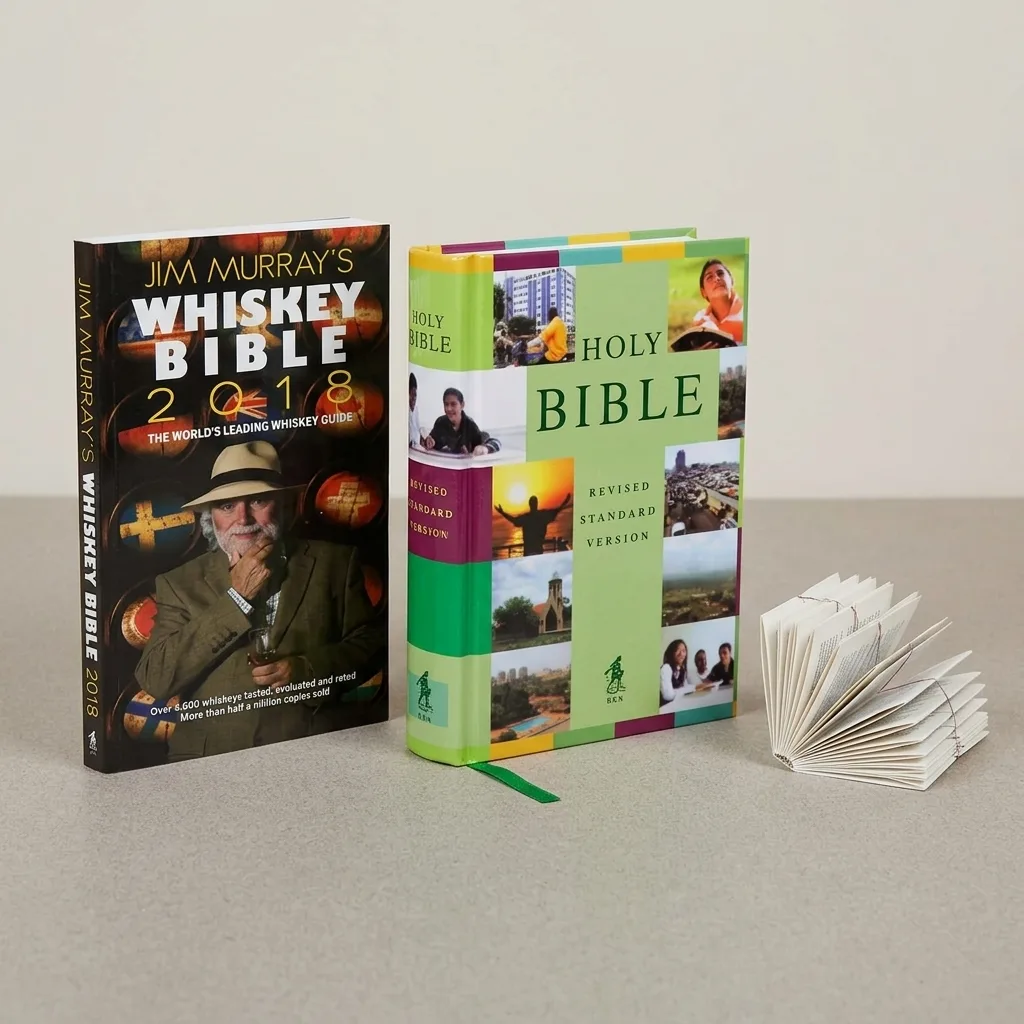
Bible binding options are best compared by separating the text-block construction from the cover construction. Perfect binding joins pages at the spine with adhesive. Smyth sewing joins folded signatures with thread. Case binding attaches the finished text block to a rigid hardcover case.
This distinction matters because مخيط بطريقة «سميث» و casebound are not competing terms. A premium hardcover Bible can be both Smyth sewn and casebound. A casebound Bible may also use an adhesive-bound text block, depending on its specifications.
For economical distribution, study materials, or shorter editions, a perfect bound Bible can be practical. For frequent reading and improved opening behavior, sewing is often the stronger choice. For presentation editions, institutional use, or projects requiring a rigid protective cover, case binding is usually appropriate.
The final decision should account for page count, paper caliper, trim size, margin design, frequency of use, cover material, desired opening behavior, quantity, and budget. Bible paper is often relatively thin, so production tests should confirm opacity, folding, adhesive compatibility, sewing performance, and spine shape before the full run.
Perfect Bound vs Smyth Sewn vs Casebound
The following comparison provides a practical starting point. Exact performance depends on the paper, adhesive, signature design, cover materials, text-block thickness, and manufacturing controls.
| Binding option | الإنشاءات | Opening behavior | المتانة | Relative cost | Common application |
|---|---|---|---|---|---|
| Perfect bound | Pages or gathered sections are prepared at the spine and held with adhesive inside a soft cover | Usually does not open as flat as a sewn book, especially when new | Suitable when properly specified, but less tolerant of intensive repeated opening | Generally lower | Distribution Bibles, study guides, promotional editions, and price-sensitive projects |
| مخيط بطريقة «سميث» | Folded signatures are sewn together with thread before cover attachment | Usually opens more comfortably and places less stress on individual leaves | Well suited to frequent use and thicker text blocks | Higher than adhesive-only binding | Reading editions, reference Bibles, study Bibles, and long-life books |
| Casebound | A text block is attached to a rigid board case using endpapers or another specified attachment system | Depends strongly on whether the text block is sewn and on the spine construction | The rigid cover provides strong external protection | Usually the highest of these options | Presentation editions, family Bibles, institutional books, and illustrated Bible titles |
A buyer seeking durable Bible binding should not evaluate the cover alone. A rigid case protects the outside, while sewing affects how the pages remain connected during repeated use. For demanding projects, these two features are commonly specified together.
When to Choose a Perfect Bound Bible
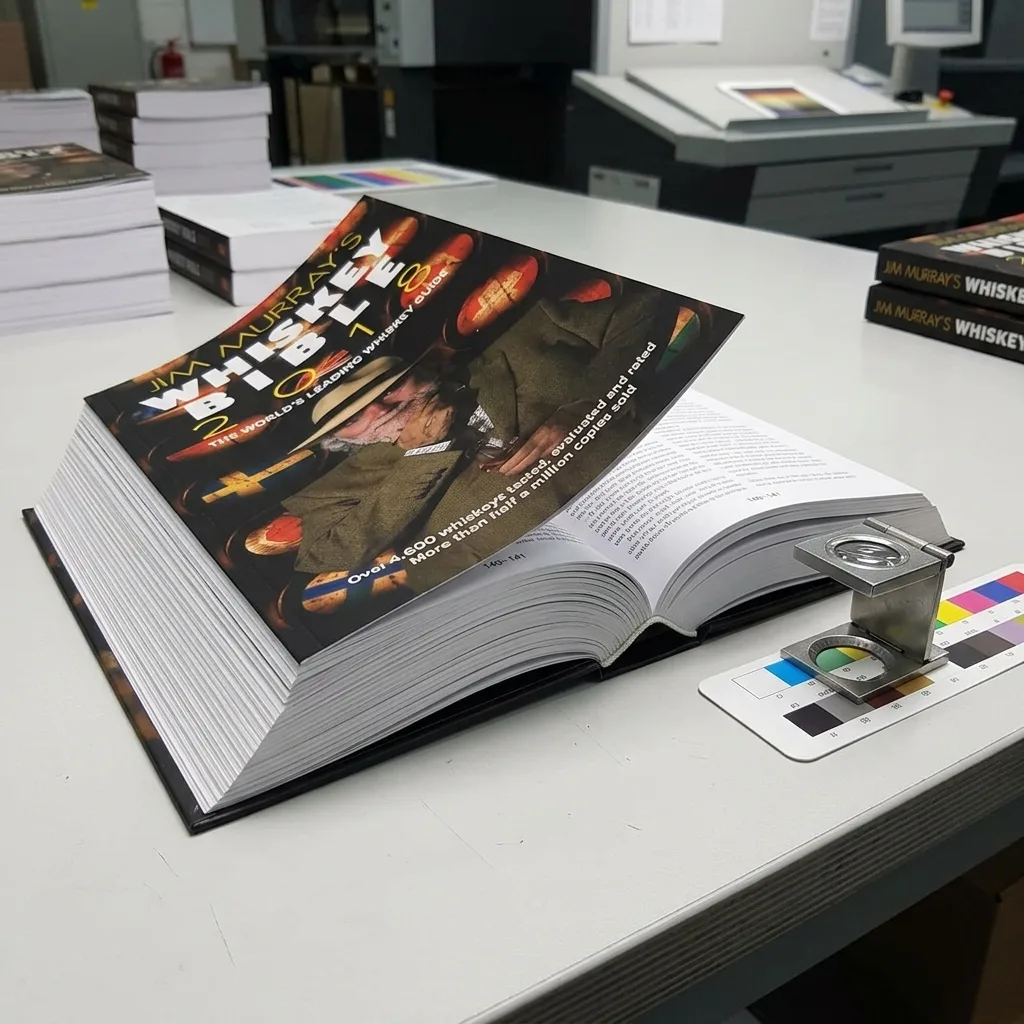
A perfect bound Bible uses adhesive to secure the text block to a flexible cover. It is often considered when unit cost, lower weight, and straightforward paperback construction are important.
This option can suit outreach editions, event distribution, supplementary scripture books, educational workbooks, or Bibles that are not expected to receive intensive daily use. Buyers can review an example of softcover perfect binding Bible book printing when planning this format.
Perfect binding has limitations. A thick text block may resist opening near the centre, and content positioned too close to the gutter can become difficult to read. Thin paper, heavy ink coverage, grain direction, spine preparation, and adhesive selection all affect production performance. PUR or other adhesive choices may be discussed with the printer, but the appropriate system depends on the selected paper and construction.
Allow adequate inner margins and avoid assuming that the book will lie flat. Confirm the final spine width only after paper, page count, and binding method are fixed. The guide to calculating book spine width before printing explains the main measurements involved.
When to Choose a Smyth Sewn Bible
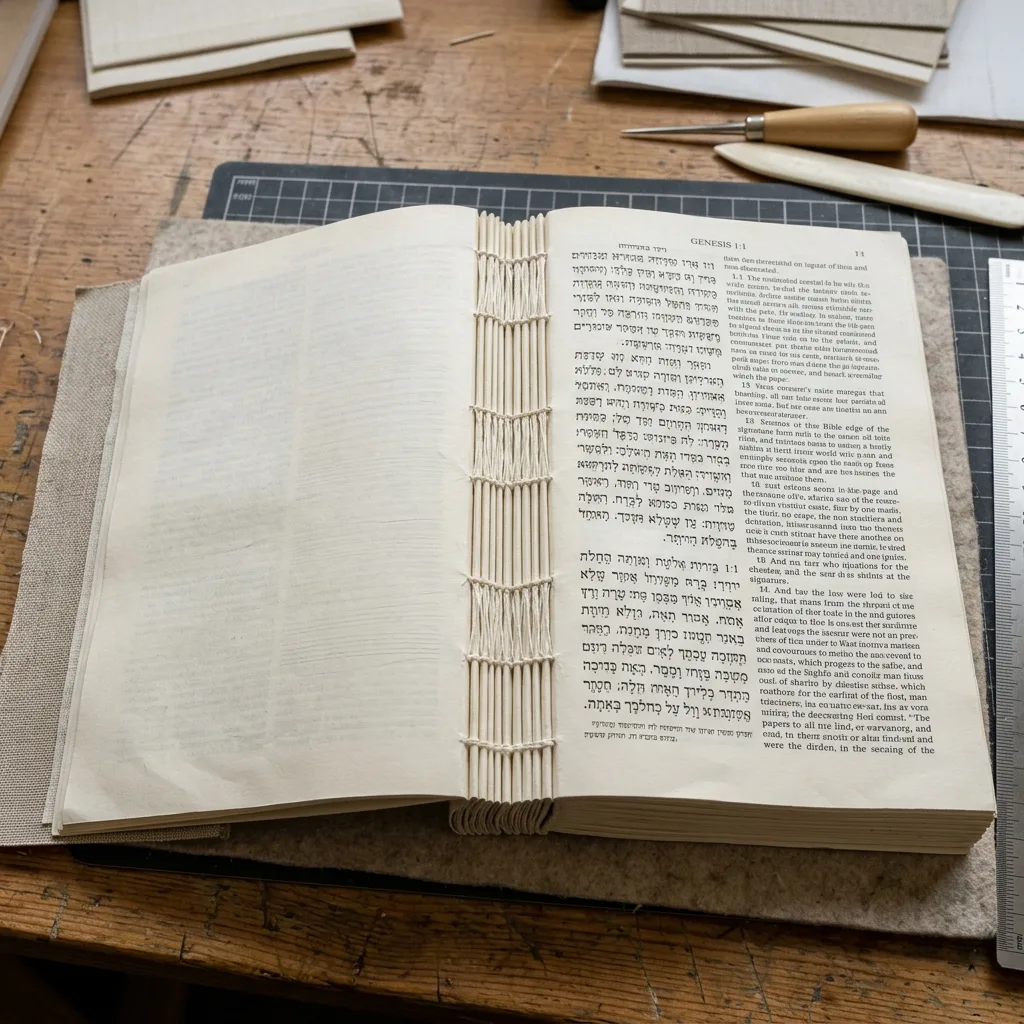
A Smyth sewn Bible is made from folded groups of pages called signatures. Each signature is stitched through its fold, and the signatures are joined to create the text block. The sewn block can then be attached to a soft cover, flexible cover, or hardcover case.
Sewing distributes stress through folded sections instead of relying only on adhesive at the edge of individual pages. This makes it a practical choice for Bibles that will be opened repeatedly, used for study, or retained for many years. It also generally provides more comfortable opening than adhesive-only binding, although a sewn Bible should not automatically be described as completely lay-flat.
The signature plan must match the total page count, paper, press format, and folding scheme. Blank pages may be required when the content does not fit the production imposition. Very thin stock also needs careful control during printing, folding, gathering, sewing, and trimming.
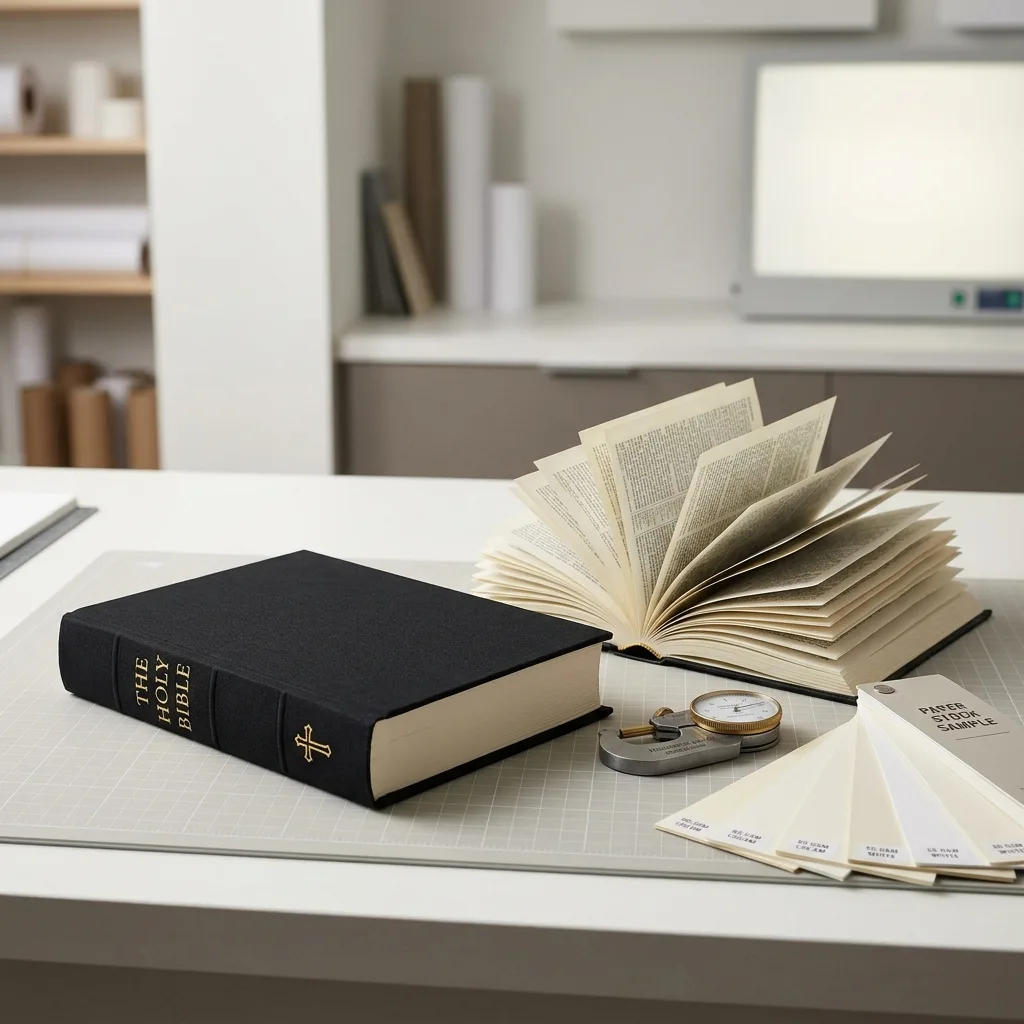
Paper selection remains critical. High opacity can reduce show-through, while suitable caliper helps control the overall thickness of a high-page-count Bible. Grain direction should normally run parallel to the spine for better folding and opening. Buyers comparing stocks can consult this practical guide to book printing paper types.
When to Choose a Casebound Bible
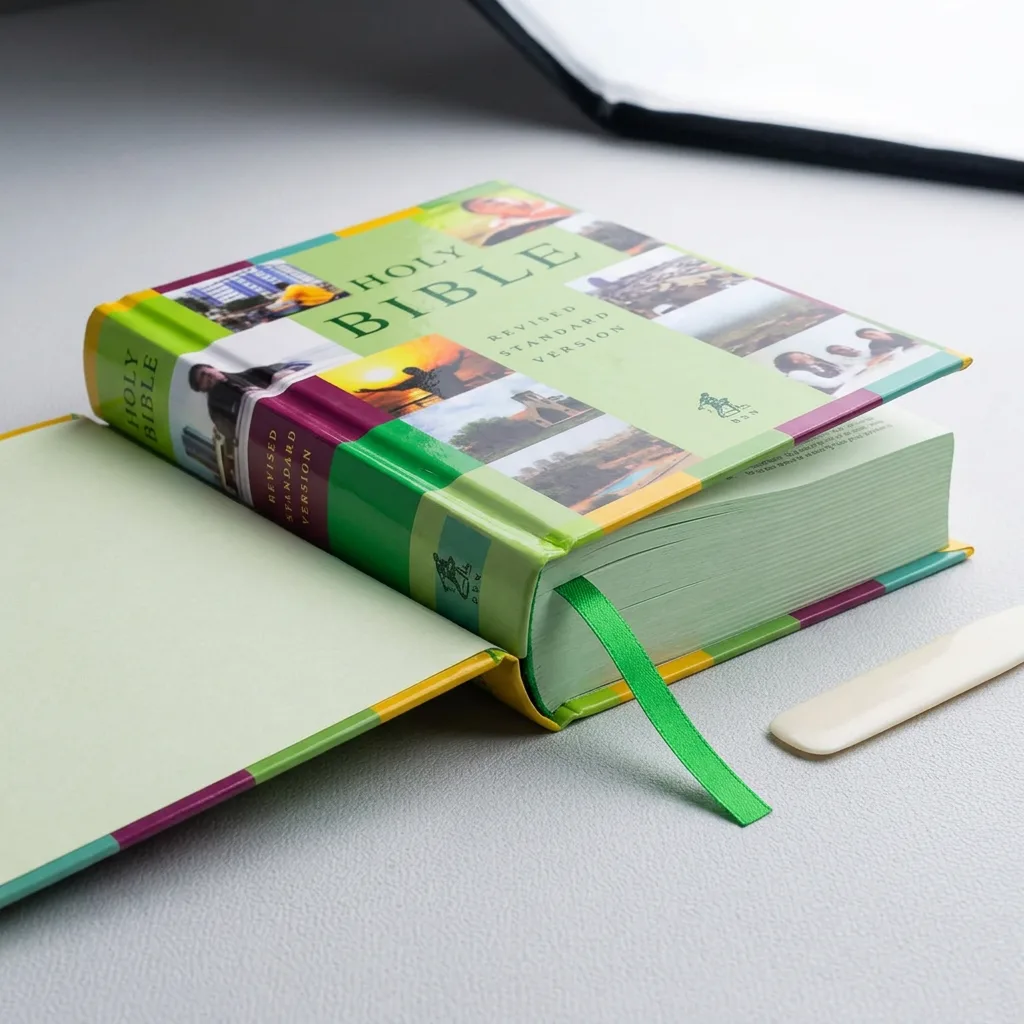
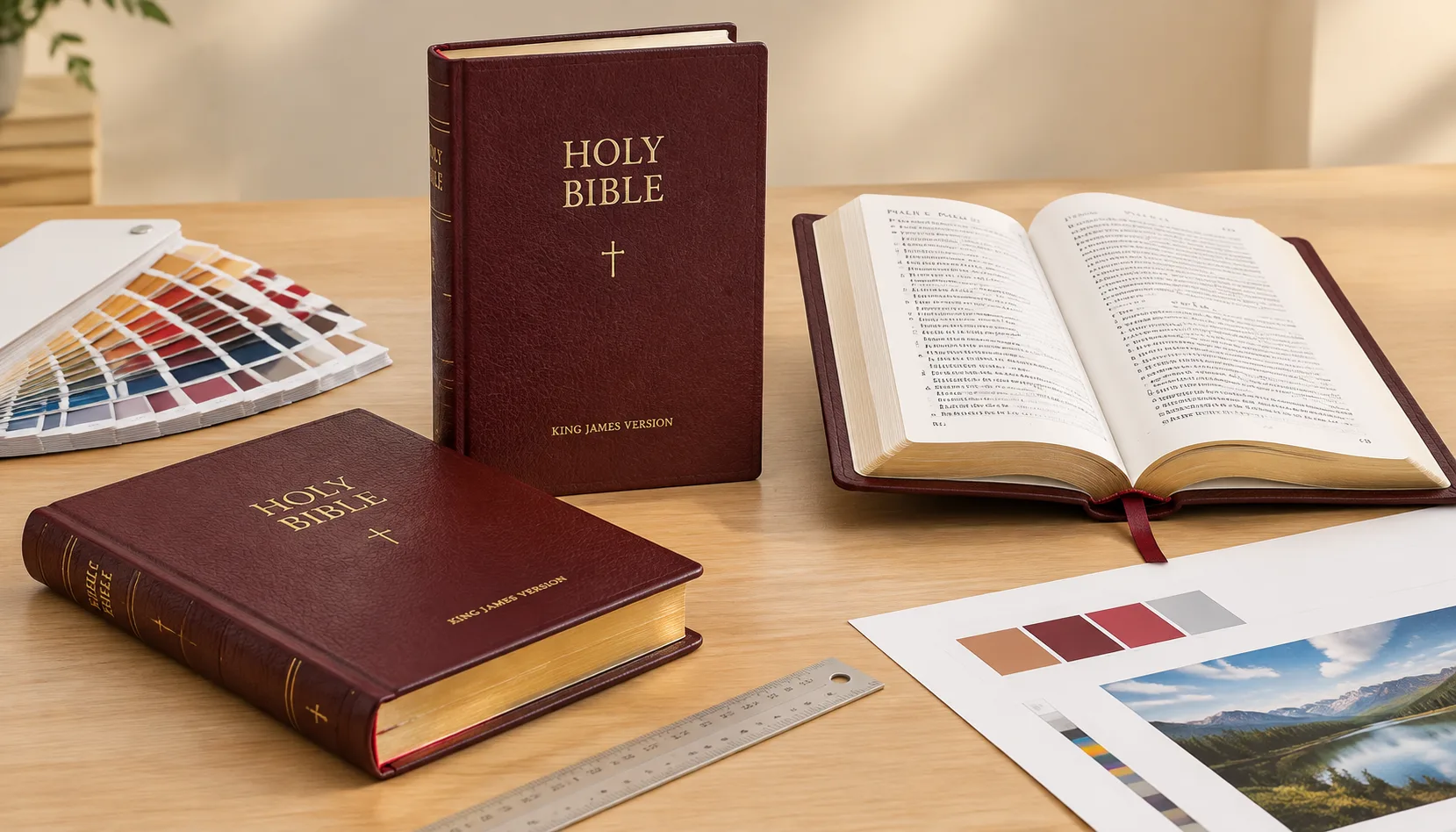
A casebound Bible has a rigid cover made from board wrapped with printed paper, cloth, synthetic material, or another approved covering material. The completed text block is attached to the case, commonly through endpapers. Head and tail bands, ribbon markers, foil details, edge treatments, or a rounded spine may be specified when appropriate to the project.
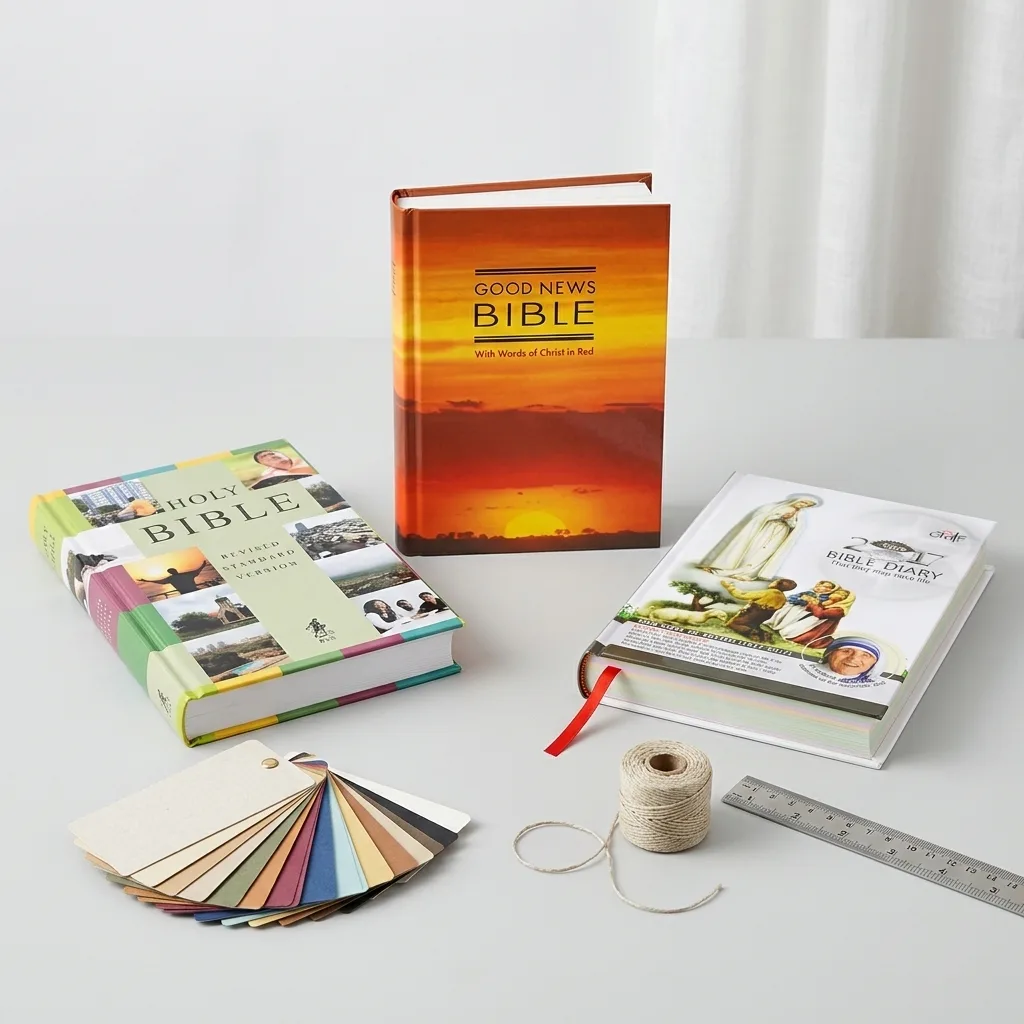
Case binding is suitable when cover protection, shelf presence, and a more substantial reading object are priorities. Common uses include family Bibles, presentation editions, pew Bibles, illustrated scripture books, and premium study editions. A round-spine casebound Bible provides a relevant construction reference.
The internal binding still needs to be specified. For frequent use, buyers often combine a sewn text block with a hardcover case. For projects with different cost or use requirements, another text-block construction may be evaluated.
Cover decisions affect both appearance and performance. Board thickness, spine shape, hinge width, endpaper strength, covering material, and stamping area should be confirmed using the final book dimensions. Ribbon marker count and length should also be stated in the specification rather than left as an assumption.
Bible Format Recommendations by Project Type
No binding is best for every project. Use the intended reader, expected handling, content format, and target budget to build a shortlist.
| Project requirement | Starting recommendation | Points to confirm |
|---|---|---|
| Economical distribution edition | Perfect bound softcover Bible | Page count, gutter margins, adhesive compatibility, cover lamination, and expected frequency of use |
| Frequently used study or reference Bible | Smyth sewn text block with a flexible or rigid cover | Signature plan, paper opacity, opening behavior, marker ribbons, and margin space for notes |
| Presentation or family edition | Casebound Bible, often with a sewn text block | Board, covering material, spine shape, endpapers, foil, ribbons, and protective packaging |
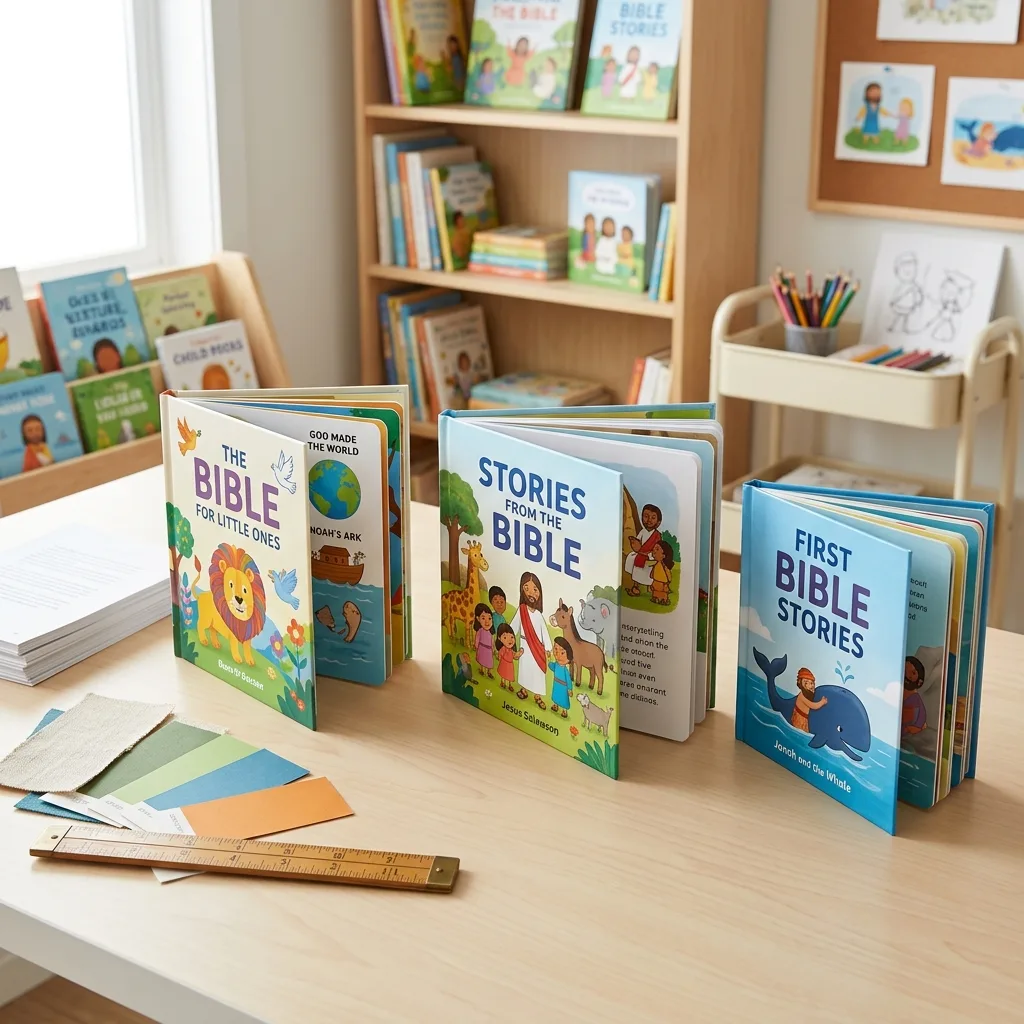
| Illustrated children’s scripture title or boxed collection | Casebound or other age-appropriate format based on page count | Image paper, handling requirements, cover finish, components, and set packaging; see this Bible story book set as a format reference |
These are starting recommendations rather than fixed production rules. A printer should review the complete specification and files before confirming feasibility, materials, cost, or schedule.
Bible Binding Specification Checklist
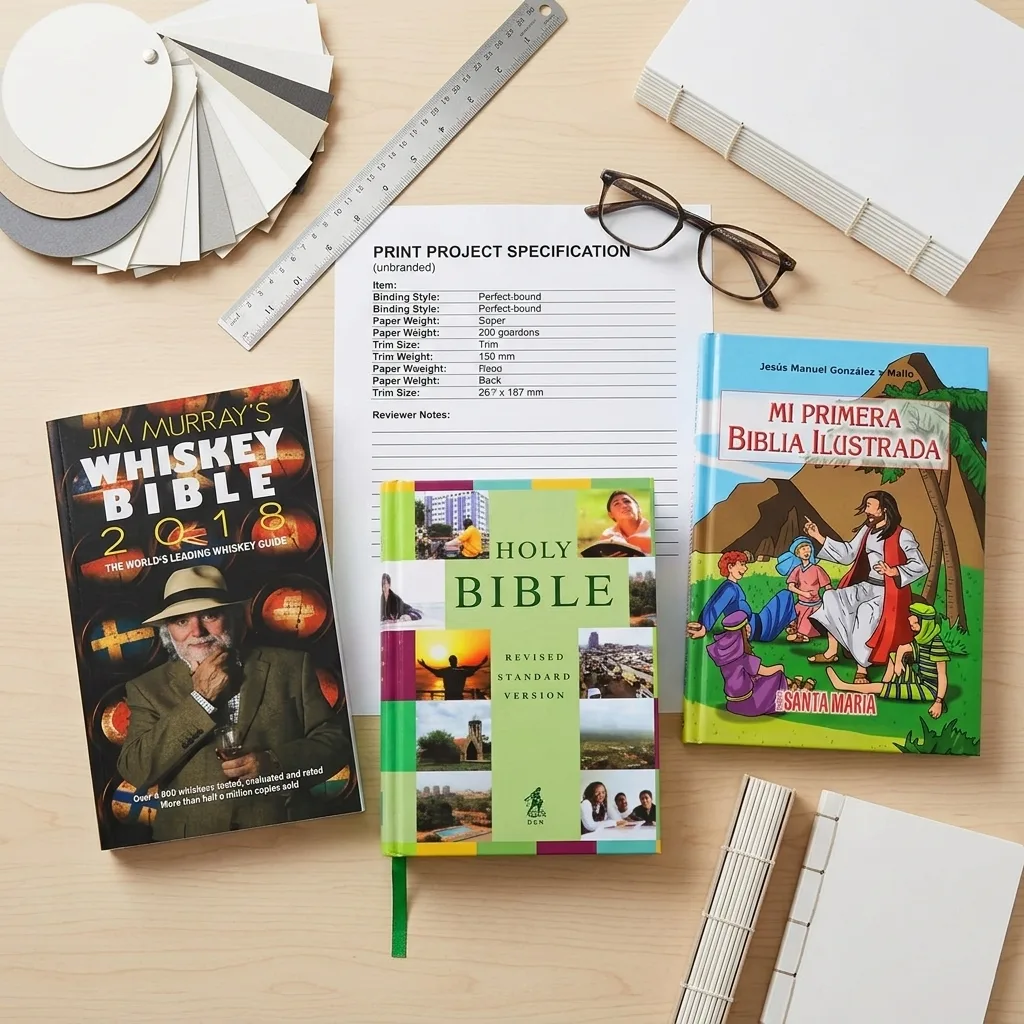
Provide the following information when discussing Bible book binding with a manufacturer:
- نوع المنتج: full Bible, New Testament, study Bible, scripture portion, story Bible, or multi-book set.
- Finished trim size: state width by height and confirm the measurement units.
- عدد الصفحات: identify whether the count includes front matter, maps, blank pages, and other inserts.
- الكمية: include the required production quantity and any planned split by version or cover design.
- ورق النص: provide the preferred paper type and weight, or describe the required opacity, thickness, colour, and image reproduction.
- التجليد: specify perfect bound, Smyth sewn, casebound, or request a recommendation based on use and budget.
- تصميم الغلاف: define softcover, flexible cover, or rigid case, together with covering material and board requirements.
- التشطيبات: list lamination, foil stamping, embossing, debossing, spot UV, ribbon markers, headbands, or edge treatment.
- الملفات: state whether interior and cover PDFs are print-ready or still being designed.
- التدقيق: identify whether you need a digital proof, printed proof, physical dummy, or another approval stage.
- Packing and destination: provide individual packing requirements, carton limits, destination country, and delivery postcode when available.
Price assumptions include trim size, page count, materials, binding complexity, finishing, quantity, packing, and shipping terms. Lead time assumptions include material availability, proof approvals, production complexity, quantity, and transport method. Print quality assumptions include the supplied colour space, image resolution, font embedding, black-text setup, paper opacity, and acceptable show-through.
Proofing and Quality Checks Before Production
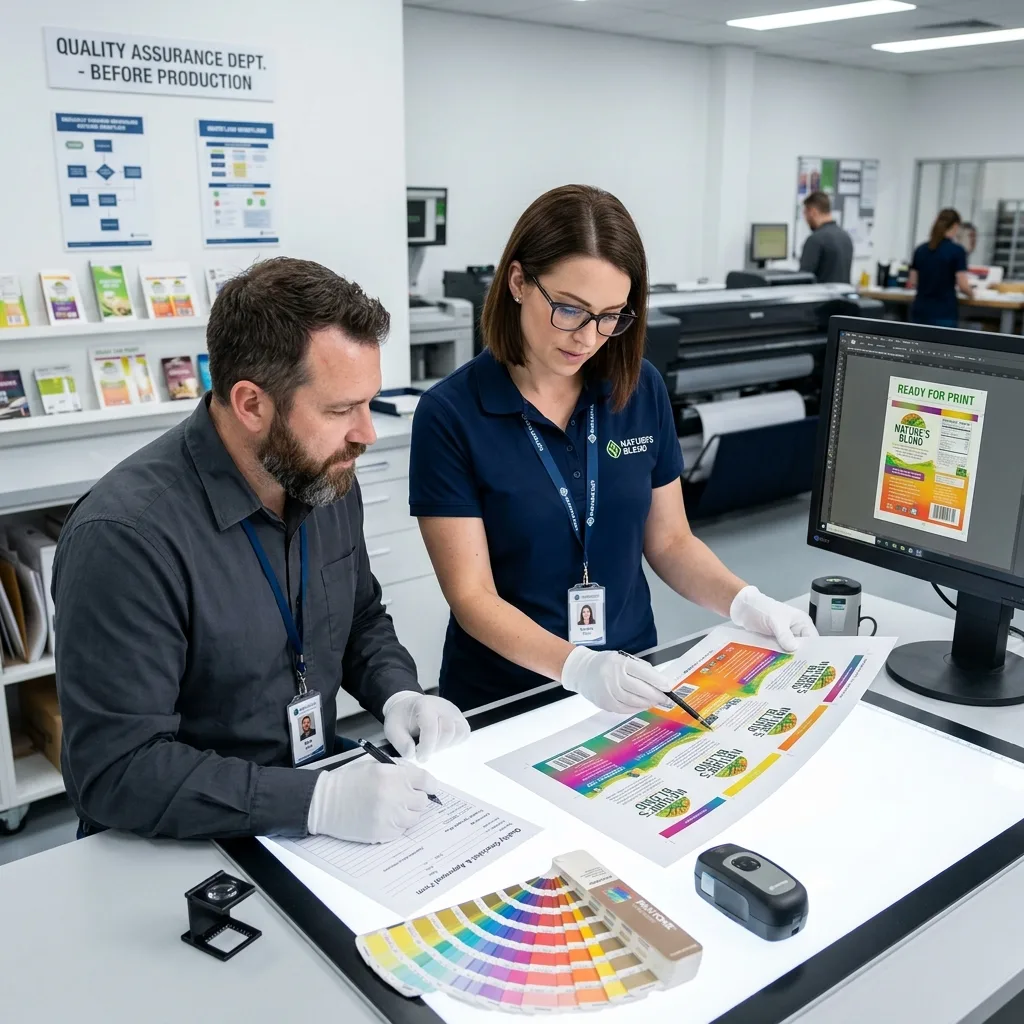
A screen PDF can confirm content and general layout, but it cannot fully represent paper opacity, physical opening, spine shape, book thickness, ribbon placement, or cover feel. For a new Bible specification, discuss which physical samples are appropriate before mass production.
A blank dummy made with the intended paper can help evaluate thickness, weight, margins, and handling. A printed proof can assist with text reproduction, image colour, and page sequence. A production-level sample may be relevant when the final materials and construction need closer review. The differences are explained in YBJ Printing’s guide to book dummies, proofs, and press samples.
Quality checks should cover page order, missing or repeated signatures, trimming, spine alignment, cover registration, adhesive application, sewing integrity, endpaper attachment, hinge movement, ribbon security, and packing. Acceptance criteria should be agreed before production because handmade samples and mass-produced books can have normal process tolerances.
Choosing the Right Bible Binding
Choose perfect binding when an economical softcover format fits the page count and expected use. Choose Smyth sewing when repeated opening, text-block integrity, and reader comfort are higher priorities. Choose case binding when the Bible needs a rigid protective cover and a more substantial presentation.
For a durable Bible binding, a Smyth sewn text block combined with a well-specified case is often a strong starting point, but it also adds materials and production steps. The correct choice should follow a review of the actual files, paper, format, quantity, finish, budget, and distribution requirements.
الأسئلة الشائعة
What is the most durable Bible binding?
A Smyth sewn text block combined with a properly constructed hardcover case is commonly selected for frequent use and long service. Durability still depends on paper, thread, adhesive, endpapers, cover materials, spine construction, and manufacturing quality.
Is a Smyth sewn Bible always casebound?
No. Smyth sewing describes how folded signatures are joined. The sewn text block can be fitted into a hardcover case, a flexible cover, or another compatible cover structure.
Will a Smyth sewn Bible lie completely flat?
Smyth sewing generally improves opening behavior, but it does not guarantee that every Bible will lie completely flat. Paper grain, signature thickness, spine lining, cover construction, trim size, and how far the book has been opened all affect the result.
Can a high-page-count Bible use perfect binding?
It may be possible, but feasibility depends on the final text-block thickness, paper characteristics, trim size, gutter margins, adhesive system, and expected use. A physical dummy or construction sample can help assess handling before production.
Does casebound mean the pages are sewn?
No. Casebound describes the rigid cover construction. The internal text block may be Smyth sewn or made using another approved binding method, so both specifications should be stated separately.
What information is needed to quote custom Bible printing?
Provide the product type, trim size, page count, quantity, paper or binding preference, cover and finish requirements, file status, packing needs, and destination country. A delivery postcode and target schedule are also useful for evaluating shipping options and production planning.
Discuss Your Custom Bible Printing Project
Guangzhou YBJ Printing Co., Ltd can review your Bible format and help compare suitable binding constructions. For an accurate quotation, send the product type, trim size, page count, quantity, paper or binding preference, finish, file status, and destination country.