
جدول المحتويات
- What Are Board Book Printing Specifications?
- How Board Book Thickness Is Specified
- How to Plan Board Book Page Count
- Choosing Board Book Dimensions and Finished Size
- How Specifications Affect Cost and Production
- Board Book Specification Checklist
- Final Planning Advice
Board book printing specifications should be planned around three connected decisions: the thickness of each board page, the total page count, and the finished book dimensions. Together, these choices affect durability, usability, shipping weight, artwork setup, and production cost.
What Are Board Book Printing Specifications?
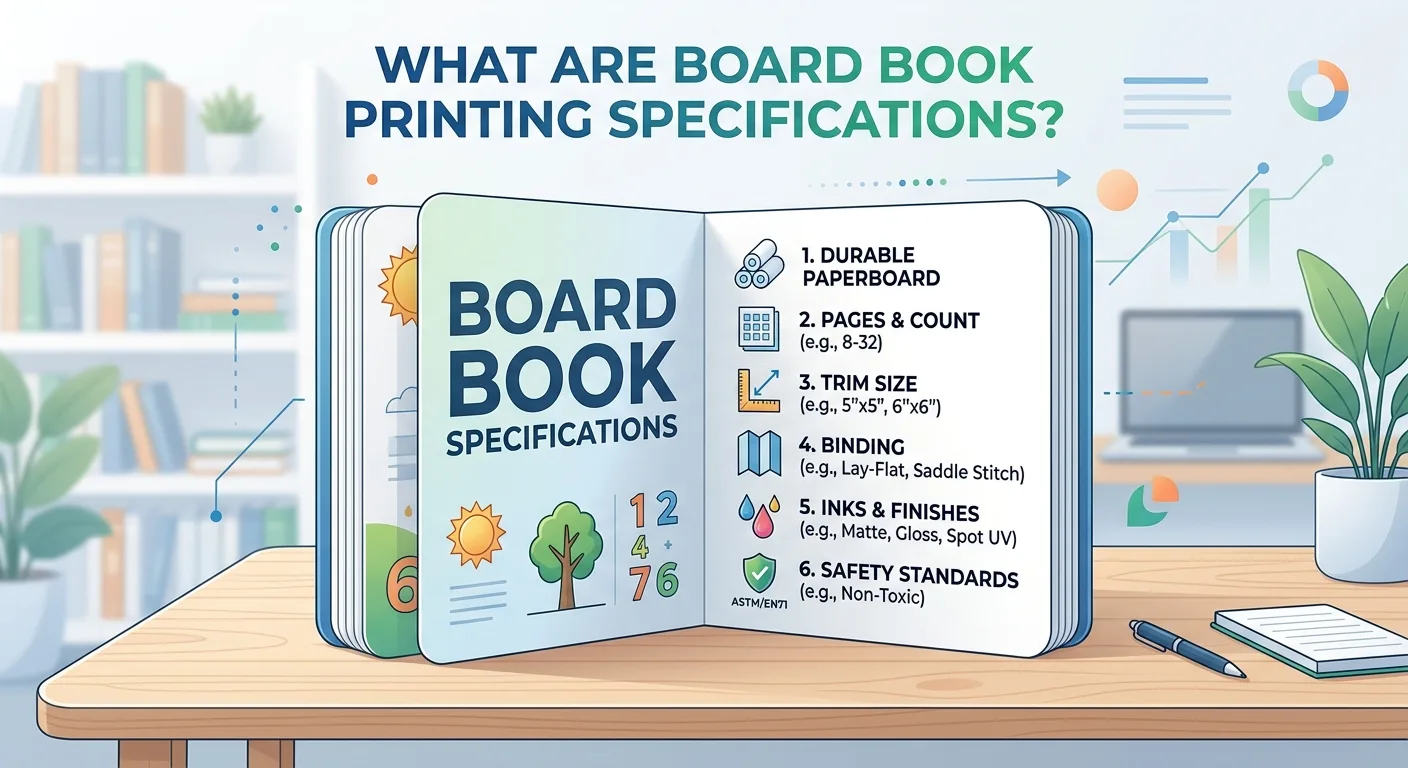
Board book printing specifications are the technical decisions that define how a board book will be manufactured, handled, and presented. The main specifications are the thickness of the board pages, the number of pages or spreads, the finished trim size, the binding and corner treatment, the coating or lamination, and the artwork file requirements.
Unlike a standard paperback, a board book uses rigid printed pages rather than flexible text paper. Each page is made from a board structure that is printed, finished, and assembled into a durable book block. This construction makes the book suitable for repeated handling, but it also means that size, thickness, and page count must be considered together.
For example, increasing the finished size can improve illustration visibility but may increase material use, shipping volume, and the force required to turn a spread. Increasing board thickness can improve stiffness, but it may also increase the overall bulk of the book and affect how many pages can be assembled comfortably.
Specifications should therefore be confirmed before final artwork is prepared. The assumptions that most affect a quotation are the trim size, number of leaves or spreads, board construction, print coverage, coating, special die-cutting, order quantity, packaging requirements, and destination country.
How Board Book Thickness Is Specified
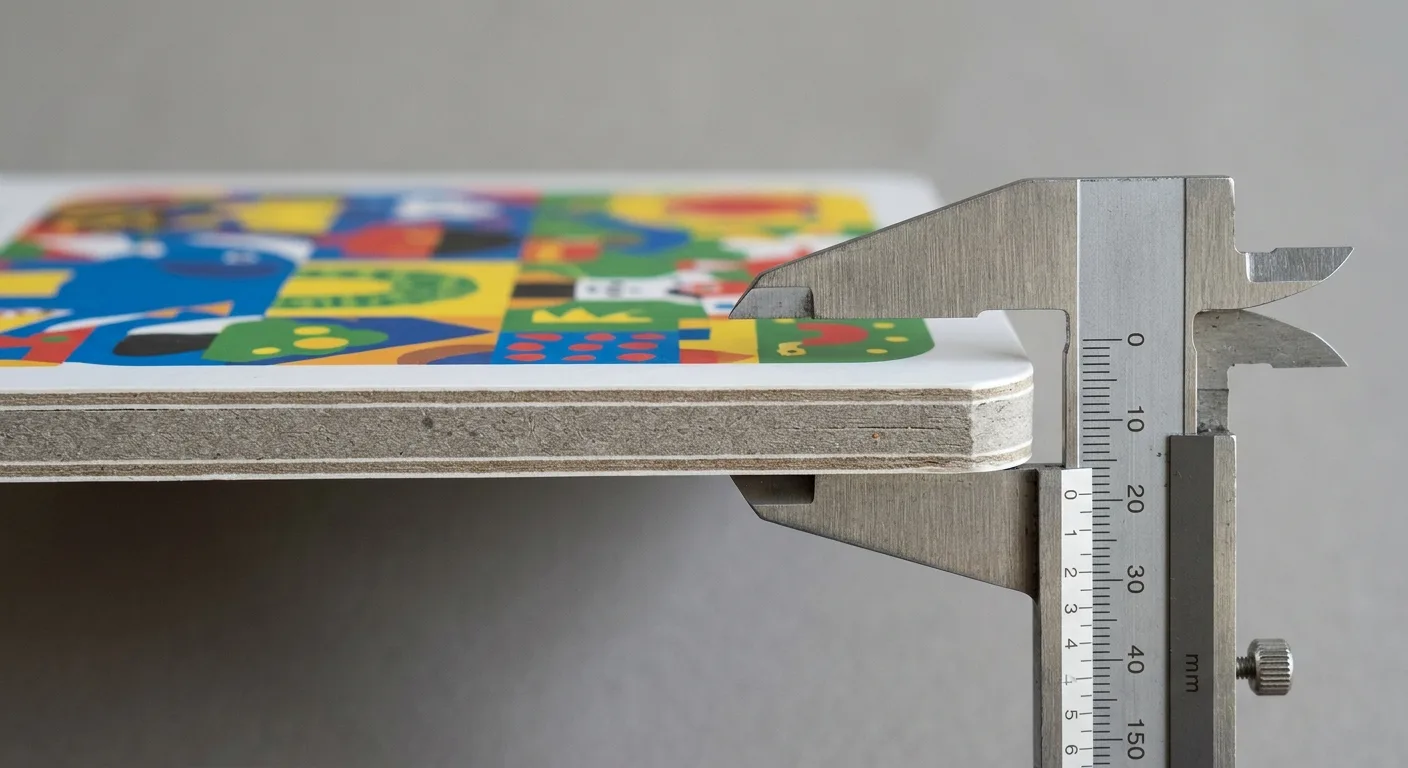
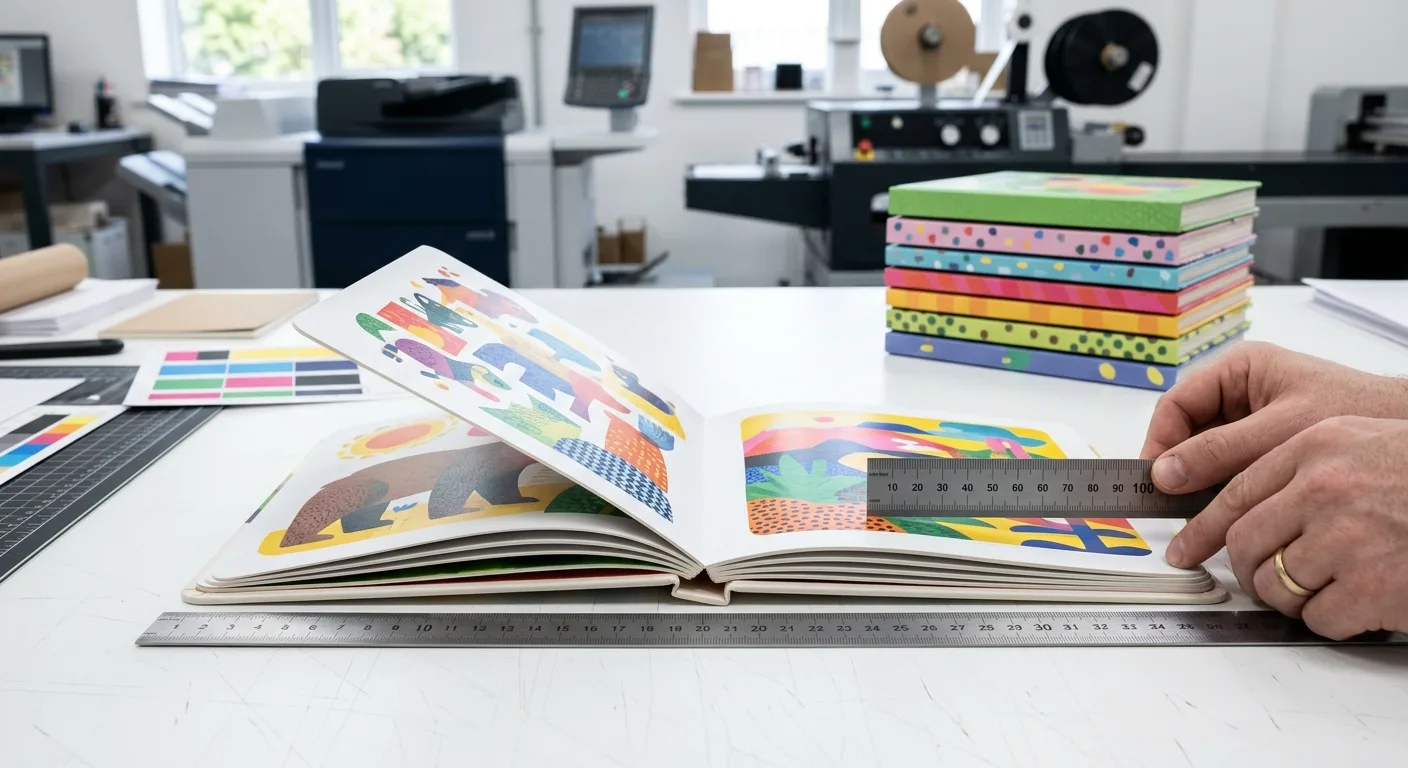
Board book thickness normally refers to the thickness of the rigid page material, not simply the thickness of the finished book. It may be discussed in millimetres, points, or as a material description. Because board construction and finishing can vary, a stated thickness should always be confirmed with the printer using a physical sample, material specification, or approved proof.
Page board thickness
Thicker board generally feels more rigid and substantial. It can be appropriate for books intended for frequent handling by young children or for formats with larger pages. Thinner board can reduce weight and bulk, which may be useful for smaller books, mailing projects, or products with a higher page count. The correct choice depends on the intended age range, finished size, number of pages, corner design, and target retail position.
Single-layer and laminated constructions
A board page may use a printed sheet mounted to a board core, with one or more layers combined during production. The visible print surface, board core, adhesive, and protective finish all contribute to the final feel. The construction should be evaluated as a complete page rather than by looking only at the nominal core thickness.
Thickness and rounded corners
Rounded corners are common in children’s board books because they remove sharp square corners. The corner radius must be planned with the finished size and artwork. If the radius is too large, it can remove important illustration details; if it is too small for the selected construction, the result may not match the intended appearance. Ask the manufacturer to confirm the available corner treatment for the selected board and format.
Do not specify board thickness in isolation. A practical specification should state the intended rigidity, page construction, surface finish, corner treatment, and whether the book contains die-cuts, flaps, tabs, sound components, or other additions.
How to Plan Board Book Page Count
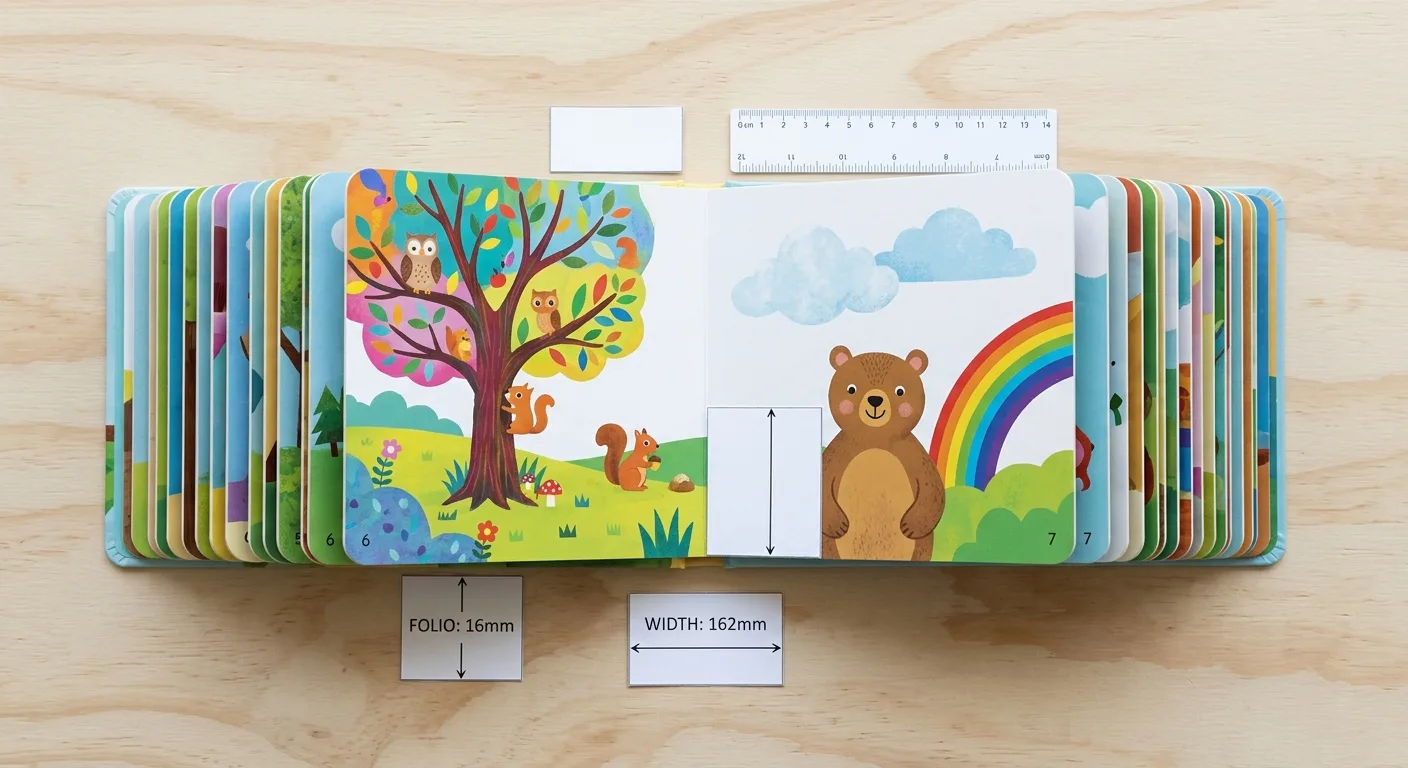
Board book page count should be defined clearly because suppliers may count a page, leaf, side, or spread differently. In a buyer specification, state both the total number of printed sides and the number of physical board leaves whenever possible. This prevents confusion during quotation and artwork preparation.
A physical leaf has two printed sides. A spread is the open left-and-right view of the book and normally contains two pages. The cover may be counted separately from the interior, depending on the supplier’s quotation format. For this reason, a request such as “12 pages” should be clarified: it may mean 12 printed sides, 12 interior pages plus covers, or 12 physical leaves in some production discussions.
Page count and reading flow
Plan the story, activity sequence, endpapers, title information, and final page before confirming the manufacturing count. A board book often benefits from simple page turns and a clear visual rhythm. If an activity needs to continue across a spread, reserve the complete left-and-right area during pagination rather than treating the two pages as separate designs.
Page count and construction
More pages increase the thickness and weight of the finished book. They may also affect how easily the book opens and closes, especially when thicker board or additional components are used. A short book with large pages can require a different construction approach from a compact book with many small pages.
Ask the printer to confirm the minimum and practical page counts for the chosen construction. The answer can depend on the board thickness, page size, binding method, cover structure, and whether the book includes rounded corners, inserts, flaps, or sound components. These details should be resolved before the final pagination is delivered.
Choosing Board Book Dimensions and Finished Size
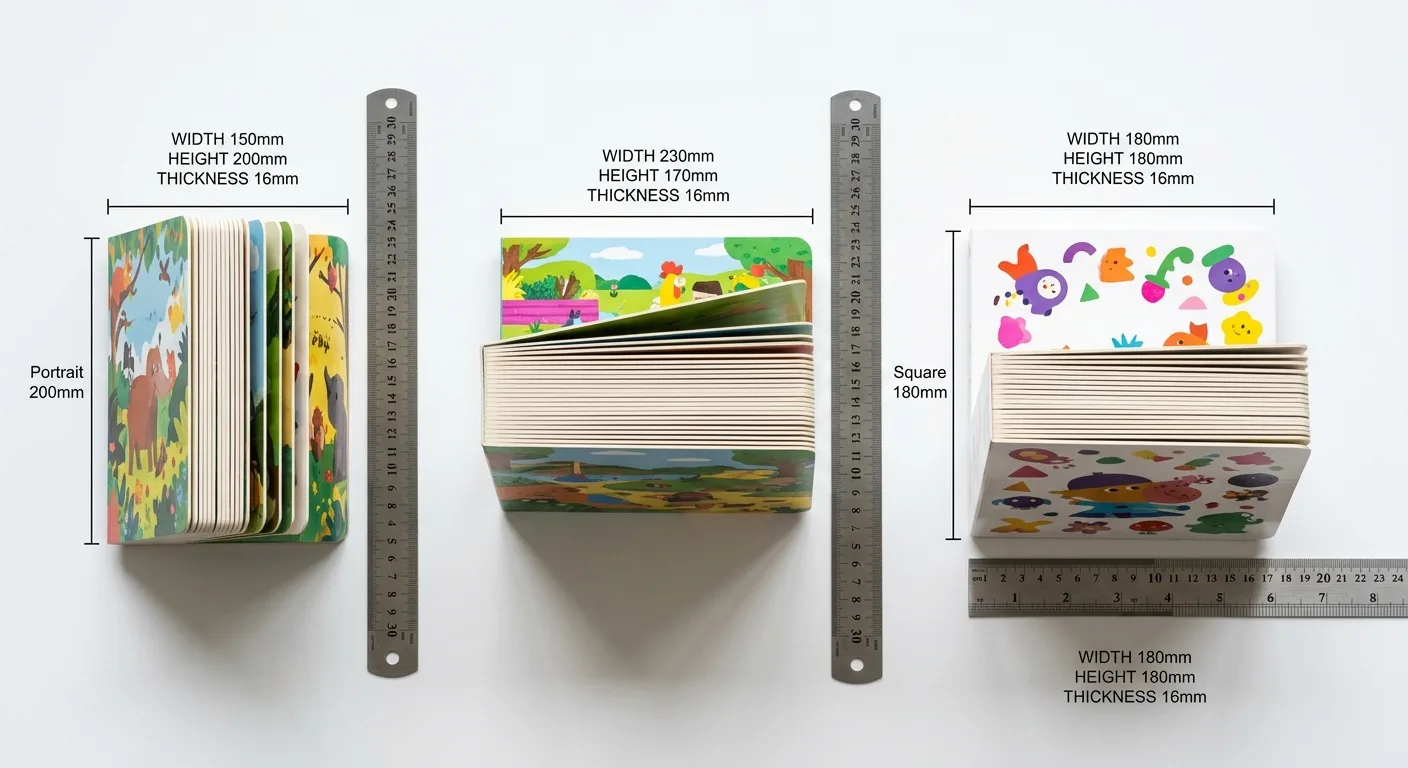
Board book dimensions describe the final trimmed width and height of the closed book. The finished size should be specified in a consistent unit, such as millimetres or inches, and should distinguish between portrait, landscape, and square formats. Do not rely only on the document size in a design file, because bleed and safety margins are added outside the finished trim area.
Format and handling
Portrait formats support character-led stories and vertical illustrations. Landscape formats can work well for scenes, vehicles, animals, and visual sequences that move from left to right. Square formats provide a balanced canvas but may use more material than a similarly sized rectangular format. The best choice depends on the artwork, the reader’s grip, shelf presentation, packaging, and shipping plan.
Dimensions and artwork
Large pages can show more detail, but they may be heavier and less comfortable for small hands. Small pages can be easier to carry and may reduce material use, but they require careful type sizing and image simplification. Important text and facial details should remain comfortably inside the safe area, away from the trim and rounded corners.
Dimensions and finishing
Die-cut windows, shaped edges, tabs, and lift-the-flap structures can change the usable design area and the manufacturing dimensions. If you are developing a shaped format, the cutting line should be treated as a manufacturing specification as well as an artwork element. A separate dieline and clear instructions help the printer review the intended shape.
Finished size also affects carton packing and freight planning. Before approval, confirm whether the quoted dimensions refer to the closed book, the open spread, or the die-cut outline. Also confirm tolerance expectations for trimming, corner rounding, lamination, and board assembly.
How Specifications Affect Cost and Production
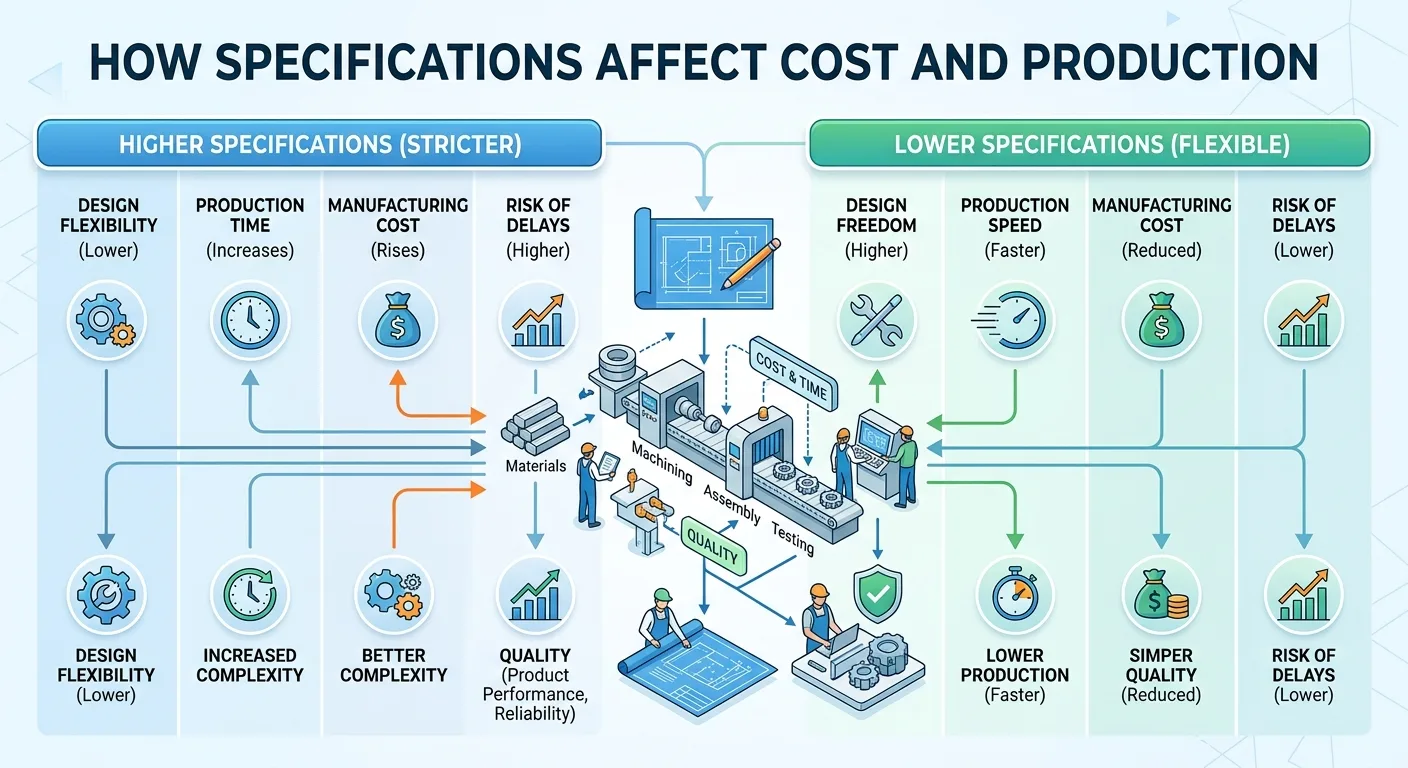
Board book pricing is based on the complete manufacturing specification rather than a single dimension. Board thickness affects material consumption and weight. Finished size affects sheet utilisation, cutting, packing, and freight volume. Page count affects the quantity of board components and assembly work. Quantity, print coverage, coating, special effects, die-cutting, packaging, and destination country also influence the quotation.
Production timing is similarly dependent on the approved specification. A standard rectangular book with conventional finishing is usually simpler to prepare than a book with multiple shapes, moving parts, special inserts, or electronic components. Artwork readiness matters as well: incomplete files, revised dielines, or colour corrections can add review rounds before production begins.
For an accurate quotation, provide the product type, closed trim size, orientation, page or leaf count, board thickness preference, cover construction, print colours, coating or lamination, corner treatment, quantity, file status, packaging requirements, and destination country. If you are unsure about one of these items, describe the intended use and target market so the manufacturer can suggest a practical specification for review.
Board Book Specification Checklist
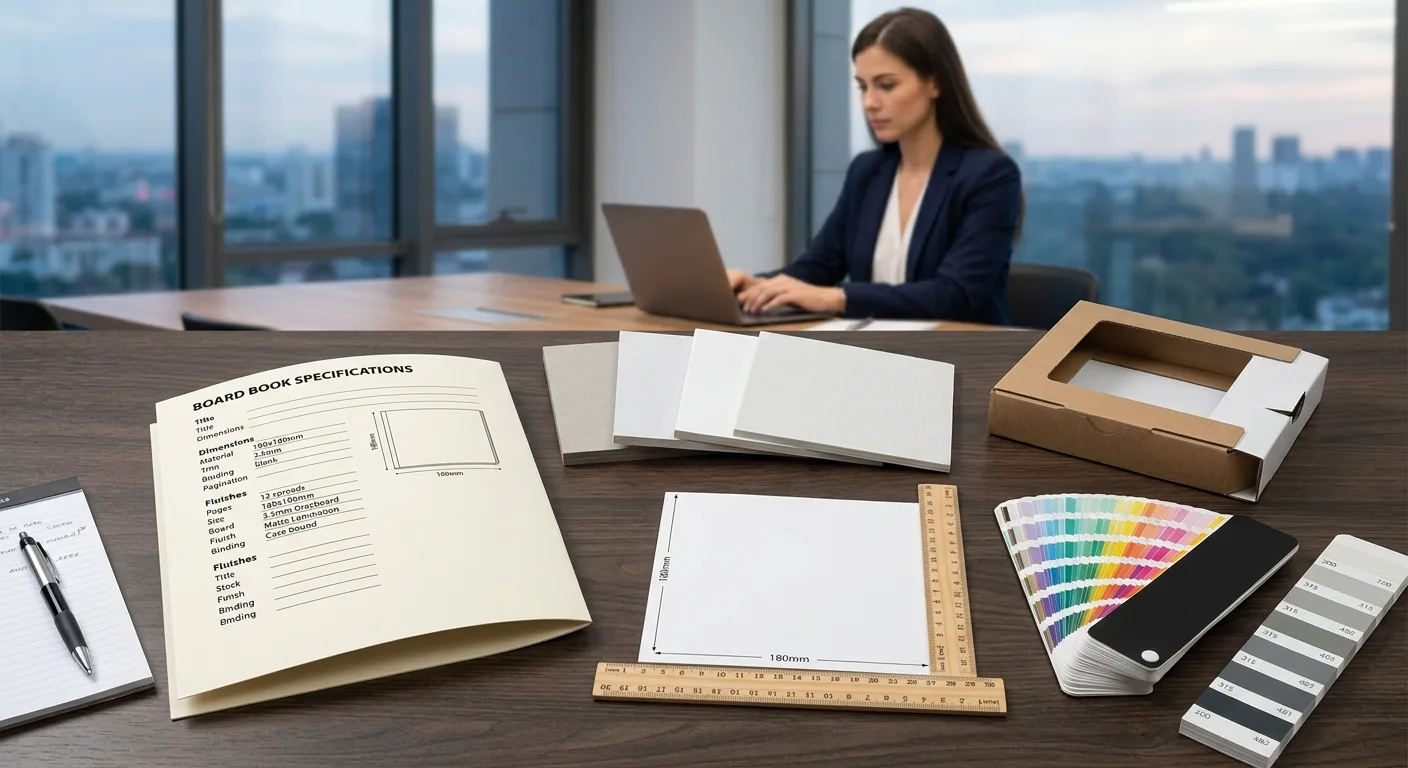
Use the following checklist when preparing a request for quotation or production brief:
- شكل المنتج: standard board book, shaped board book, lift-the-flap book, sound book, or another interactive format.
- Finished dimensions: closed trim width and height, orientation, unit of measurement, and whether the format is rectangular, square, or custom-shaped.
- عدد الصفحات: total printed sides, physical leaves, interior pages, cover pages, and the number of spreads.
- Board construction: preferred board thickness, rigidity requirement, surface paper, and any mounting or lamination requirements.
- Edges and corners: square or rounded corners, proposed corner radius, and any special edge treatment.
- Printing and finish: colour process, print coverage, coating, lamination, foil, embossing, spot effects, or other decoration.
- الميزات الخاصة: die-cuts, windows, flaps, tabs, inserts, magnets, buttons, batteries, or sound modules.
- حالة العمل الفني: concept stage, design in progress, print-ready PDF, dieline-ready files, or files requiring prepress review.
- التفاصيل التجارية: quantity, packing preference, destination country, and any retail or compliance documentation requested by the buyer.
It is also useful to request a digital quotation summary that repeats all assumptions. This gives the buyer and printer a shared reference and makes later changes easier to evaluate.
Final Planning Advice
The most reliable board book specification starts with the intended reading experience and works backward to the manufacturing details. Choose dimensions that suit the artwork and reader, select board thickness according to handling and format, and define page count using clear terms such as printed sides, leaves, and spreads.
Because thickness, page count, finished size, finishing, and packaging interact, changes to one specification can affect the others. Confirm the complete construction with your printing partner before final file preparation. A clear brief helps reduce quotation revisions, artwork changes, and production misunderstandings.
Discuss Your Board Book Specification
Request a quotation from YBJ Printing for your custom board book project. To help us assess the construction accurately, please include the product type, trim size, page count, quantity, paper or board and binding preference, finish, file status, and destination country.