
جدول المحتويات
- What Is Pull-Tab Board Book Design?
- Choose the Movement Before Drawing the Page
- Compare Pull Tabs, Sliders and Push-Pull Actions
- Plan the Page Around the Mechanism
- Prepare Artwork and Die-Cut Files
- Choose Materials and Finishes for Repeated Use
- Match the Interaction to the Book Concept
- Prototype and Test the Complete Book
- قائمة مراجعة للمشتري قبل طلب عرض الأسعار
- What Affects Cost and Production Time?
- الخاتمة
A practical design guide for publishers and product teams planning pull-tab and slider board books, from choosing a movement to approving a production sample.
What Is Pull-Tab Board Book Design?
Pull tab board book design is the planning of printed board pages with a movable piece that a reader pulls, pushes or slides to change an image. The design must make the action easy to understand while leaving enough space for the moving piece, its travel path and the layers that hold it in place.
For a publisher, the first decision is not the illustration style. It is what the child should do on each spread and what changes as a result. A tab might reveal an animal, move a vehicle or complete a simple sequence. One clear action per scene is often easier to operate and to proof than several overlapping movements.
A moving part children’s book also needs more planning than a standard board book. Artwork, die cuts, assembly and binding must work together. This guide focuses on the design decisions to confirm with your printer before approving files or production.
Choose the Movement Before Drawing the Page
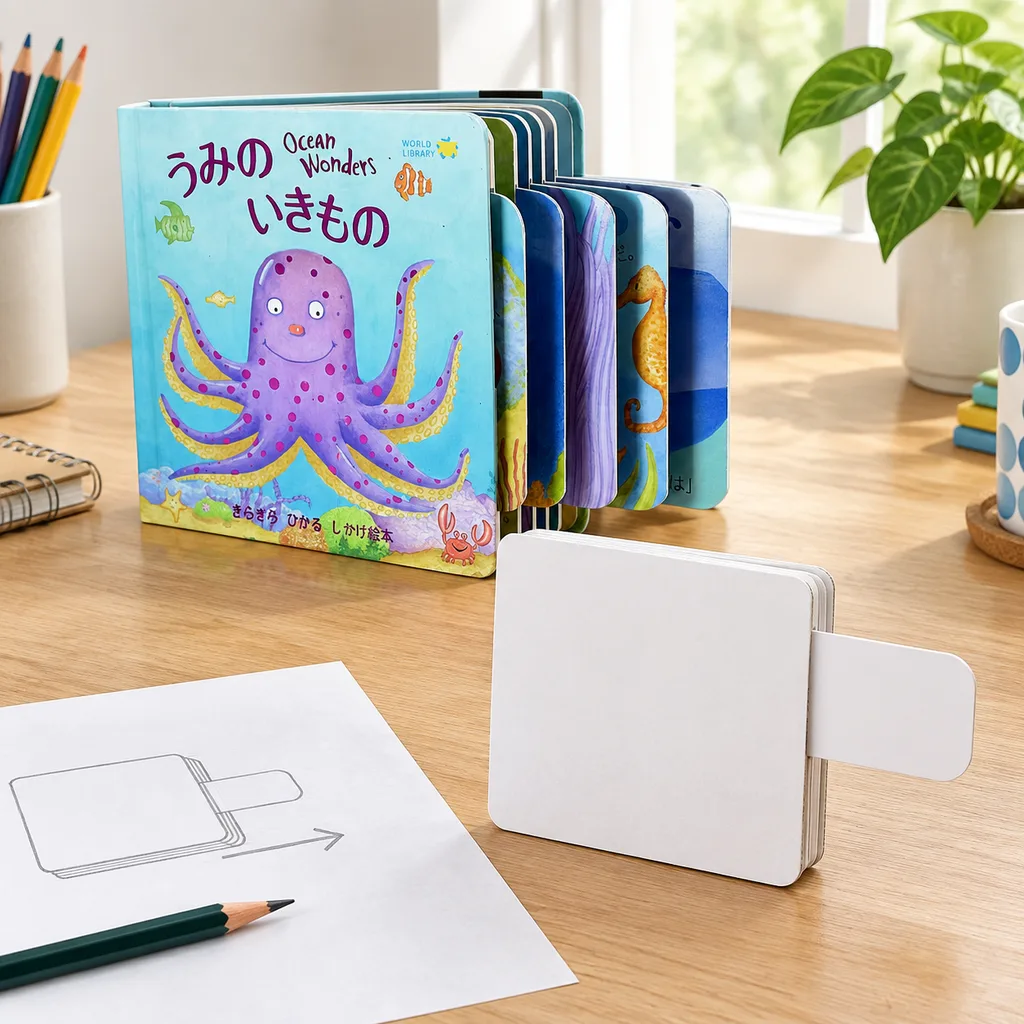
Write a short action description for every interactive spread: where the reader grips the piece, which direction it moves, what becomes visible and where it stops. That description becomes a useful brief for the illustrator and the production team.
Consider the reader’s reach. A tab that sits close to the gutter, under another page or too near a corner may be awkward to grasp. Keep essential text and faces away from openings and moving edges. Make the visual change obvious at both ends of the movement; a small change hidden beneath a finger may not reward the action.
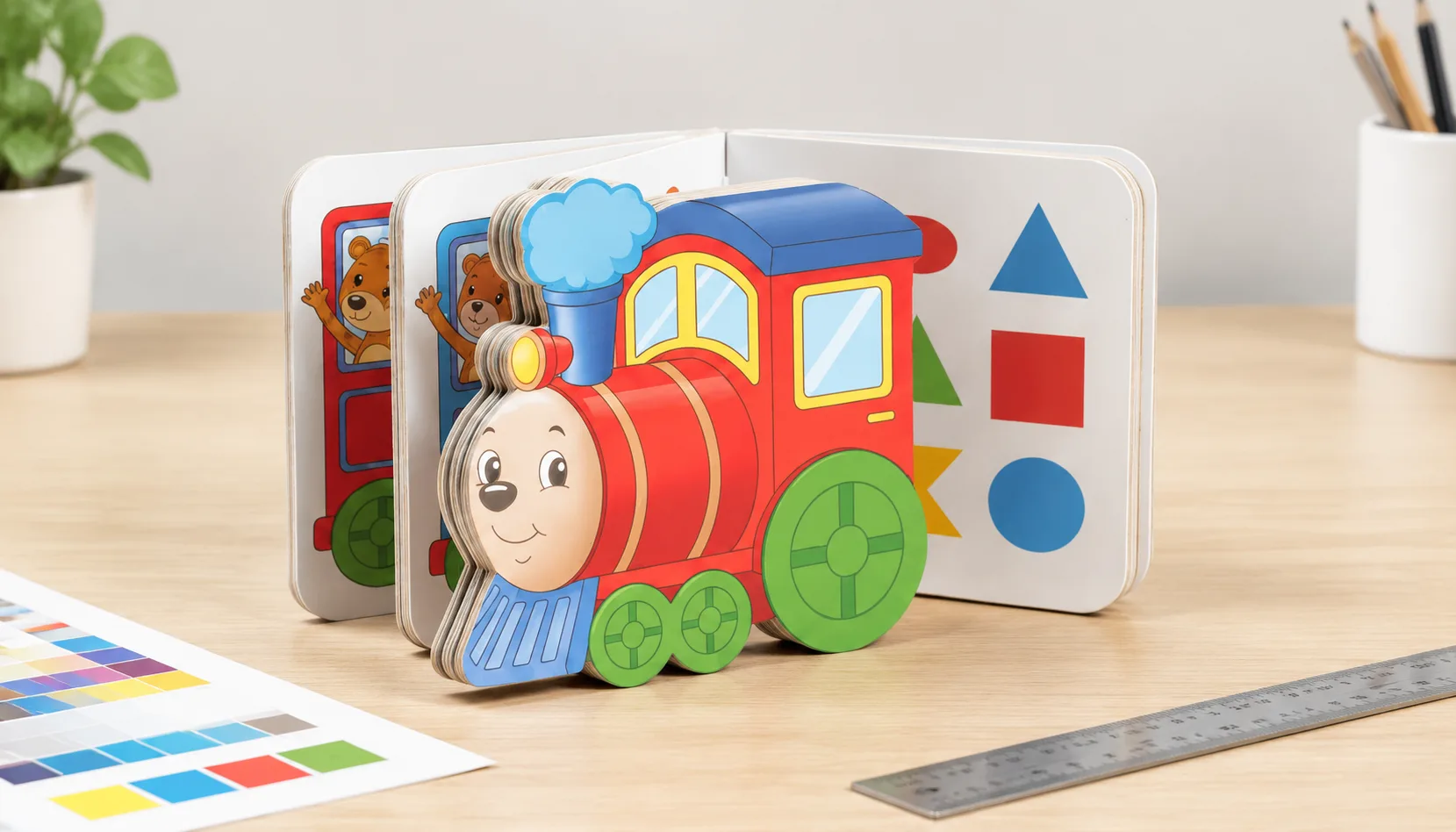
Use a paper dummy to test the sequence before refining illustrations. Mark the visible area, hidden artwork, travel distance and any position where a moving piece could catch. The push-pull tab and slide board book product example is a useful reference when discussing the intended format, but the mechanism for a new title should be specified from its own artwork and prototype.
Compare Pull Tabs, Sliders and Push-Pull Actions
These terms describe related interactions, but they do not define a single construction. Share a sketch or physical dummy with your printer so both teams are discussing the same movement.
| Interaction | Typical reader action | Useful design application | Main point to check |
|---|---|---|---|
| Pull tab | Pull a projecting piece outward | Reveal an image or extend a scene | Grip, travel limit and exposed edges |
| Slider | Move a piece along a guided path | Change a picture within a fixed window | Track clearance and smooth movement |
| Push-pull | Move the same piece in both directions | Show two states, such as open and closed | Control at both ends of the motion |
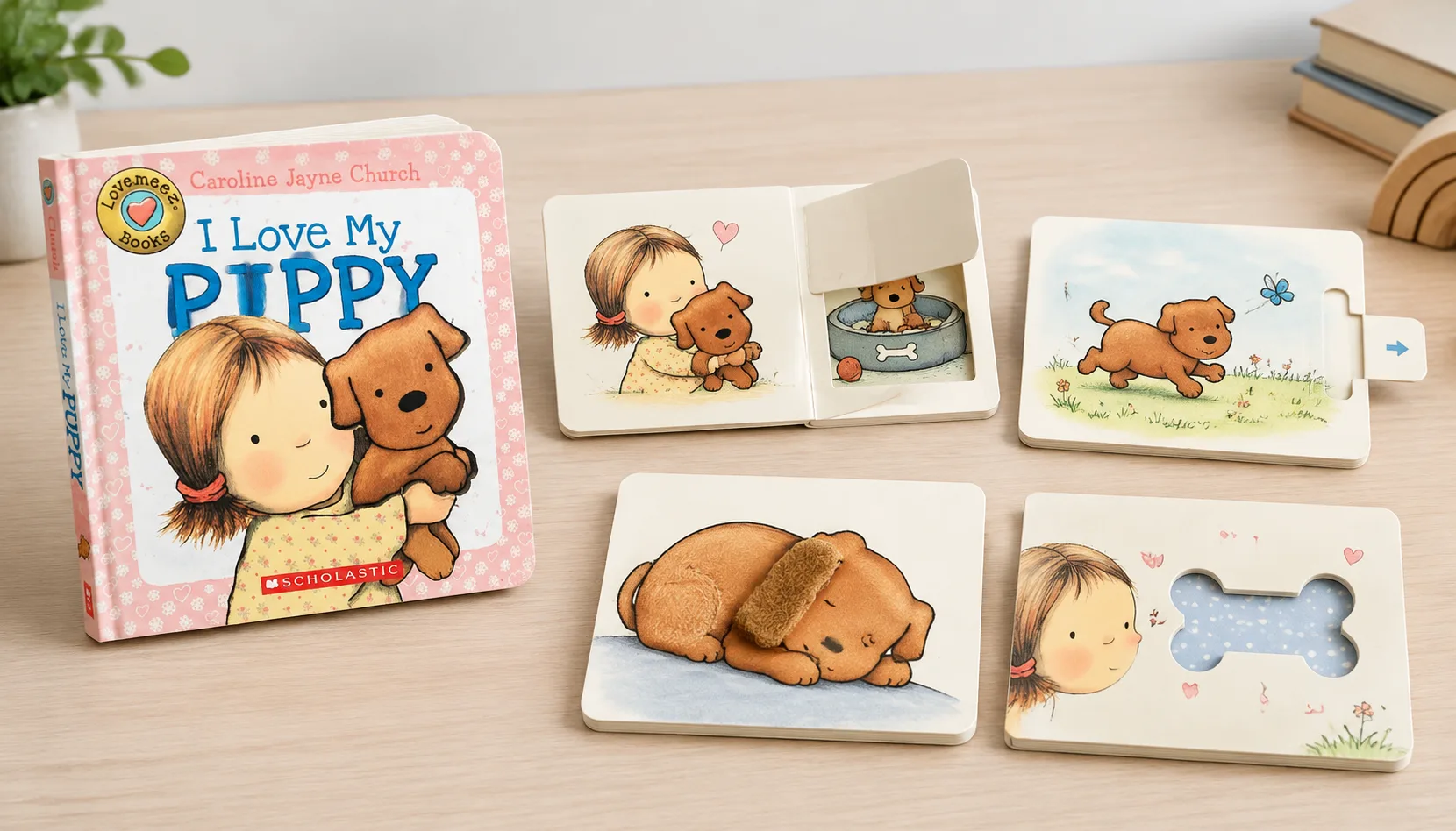
A pull tab book mechanism may use a slot, window, internal channel or layered board construction. The exact build depends on the artwork, finished size and desired movement. Avoid treating the table as a tooling specification: the printer should review the proposed shape, clearances and assembly method using a prototype.
Plan the Page Around the Mechanism
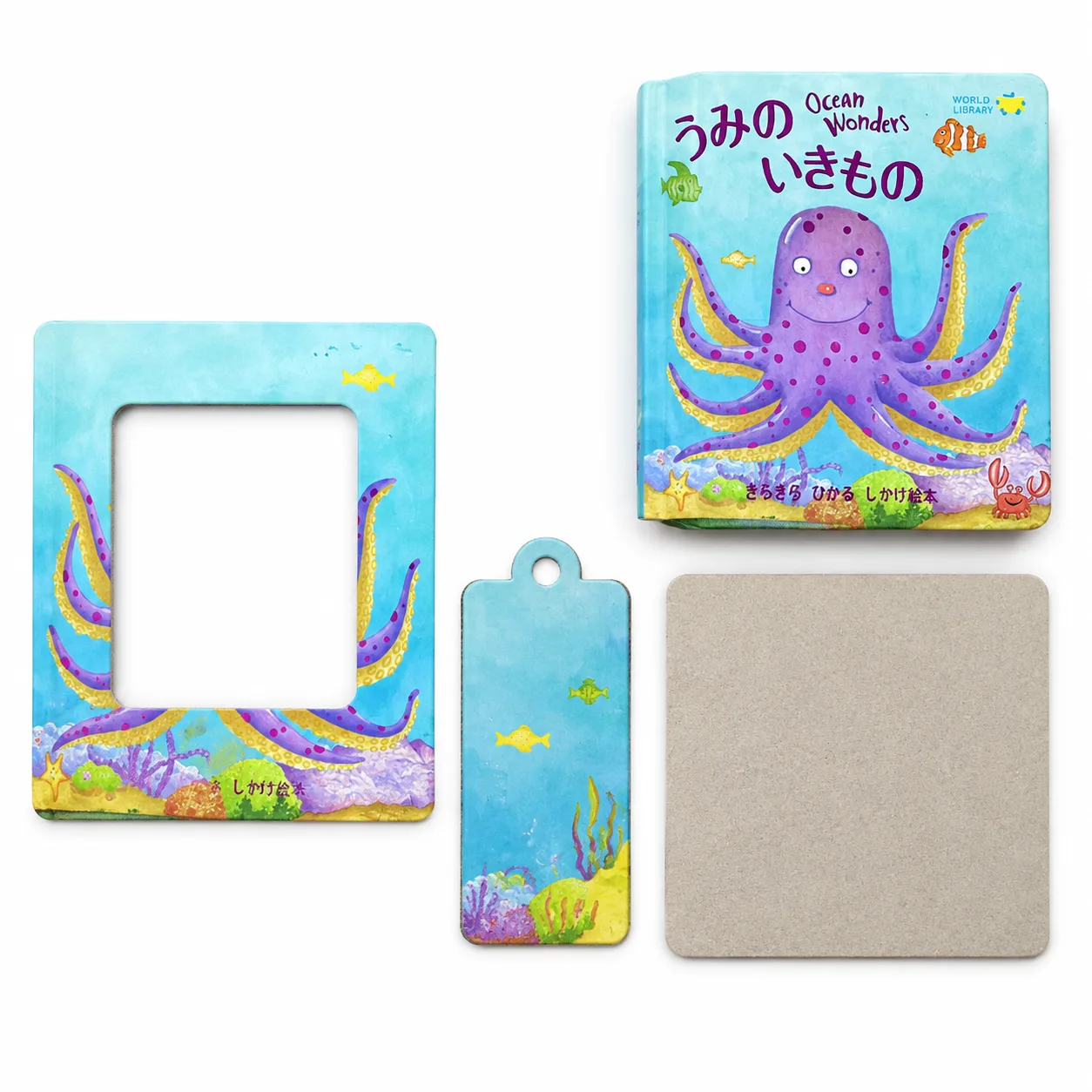
The visible page is only one part of the design. A moving element may need space behind it, a channel to guide it, a stop to limit its travel and an opening that exposes the changing picture. Those layers affect page thickness and how the spread closes.
Start by marking the finished trim, gutter, tab position and full movement path on a flat layout. Check the mechanism at both its starting and ending positions. Allow for the fact that printed, laminated and assembled components can behave differently from thin office-paper dummies. Final clearance and board specifications should be confirmed with the manufacturer, not guessed from a drawing.
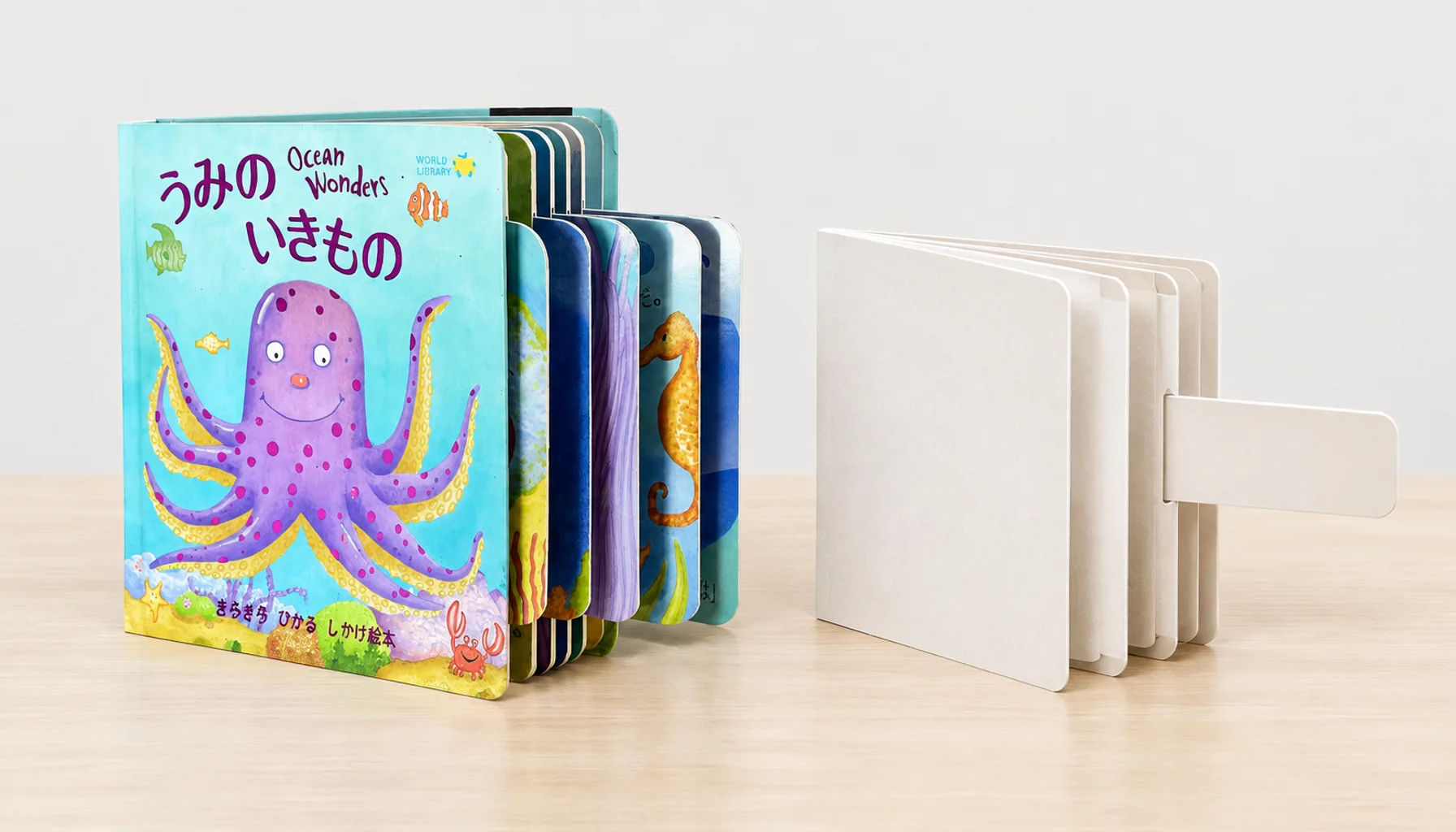
Placement also affects binding. A mechanism close to the spine can interfere with opening or create an uneven stack of pages. Discuss the page plan alongside the book’s binding structure; this guide to board book binding methods explains why specialty construction should be considered separately from a standard glued page.
Prepare Artwork and Die-Cut Files
Supply artwork for every visible state, including pictures that appear only after the tab moves. Label movable pieces and indicate which printed face points outward. A numbered spread list helps the printer connect each mechanism to its location in the bound book.
Keep die-cut paths separate from printable artwork. Identify cuts, slots and any score or fold lines clearly, and ask the printer which file layers, colours and export settings it prefers. Extend backgrounds beyond trimmed edges where required, while keeping text and important illustration details clear of cut lines and the gutter. The printer should provide or approve the final bleed, safe-area and clearance values for this particular construction.
Include a movement diagram with arrows and start/end positions. This is especially helpful for interactive slider book printing: a static PDF of the opening position alone cannot show which image should appear after the reader moves the piece. Before releasing final files, compare the drawing with the assembled dummy to catch reversed pieces, hidden text and artwork that no longer aligns with a window.
Choose Materials and Finishes for Repeated Use
Board thickness, printed paper, surface finish and adhesive choices all influence how a moving page feels. A thicker component is not automatically better: it may be harder to slide through a narrow channel or make the finished book bulky. A thinner component may need closer attention to bending and wear. Ask for a construction recommendation based on the page dimensions and mechanism, then judge a physical sample.
Consider how a finish changes friction, not just appearance. Test whether the tab grips comfortably, moves without sticking and remains readable under the chosen surface treatment. Check that cut edges, corners and exposed parts suit the intended age group and market. If the book will be sold as a children’s product, confirm applicable safety and testing requirements with the responsible seller and qualified testing partners; a print specification alone does not establish compliance.
Keep packaging and handling in view as well. A projecting tab may need protection during packing and transport, while an easily moved slider should not shift unpredictably inside the closed book.
Match the Interaction to the Book Concept
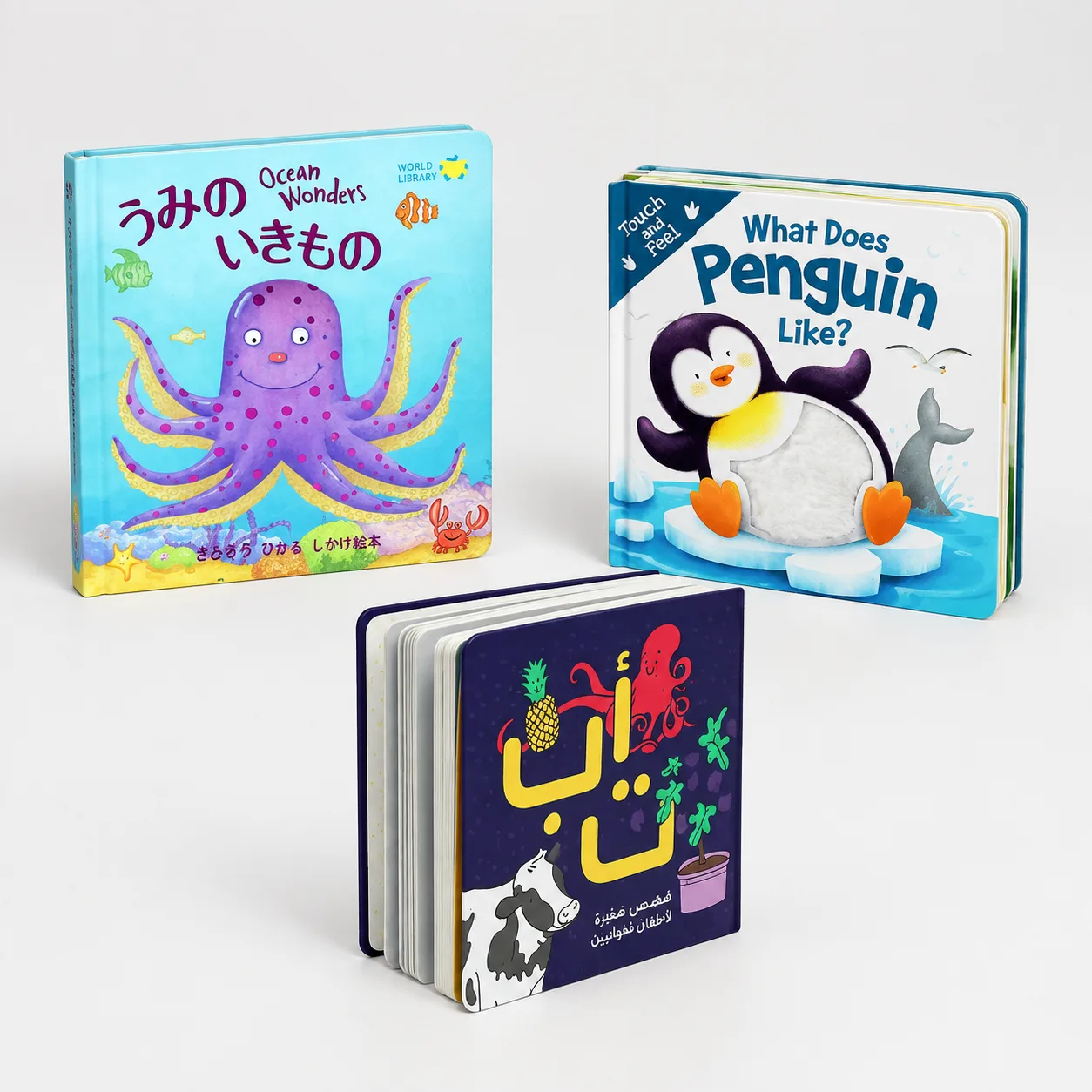
Not every interactive board book needs a moving paper mechanism. Choose the format that supports the learning or storytelling goal, then develop a specification for the individual project.
| Product example | Interaction to explore | Good starting brief |
|---|---|---|
| كتاب اللوح المشغول للأطفال المشغولين بالسحب والسحب | Push, pull or slide | A scene that changes when a piece moves |
| كتاب اللمس والتحسس اللوحي للطفل | Touch and texture | A sensory experience without a moving paper tab |
| طباعة كتاب لوحة الحروف الأبجدية العربية | Language-focused board book | Artwork and reading direction planned for the target language |
These are format references, not interchangeable specifications. For a push pull board book, brief the actual movement and number of mechanisms per spread. For a multilingual edition, check reading direction and tab placement with native-language editors before artwork approval.
Prototype and Test the Complete Book
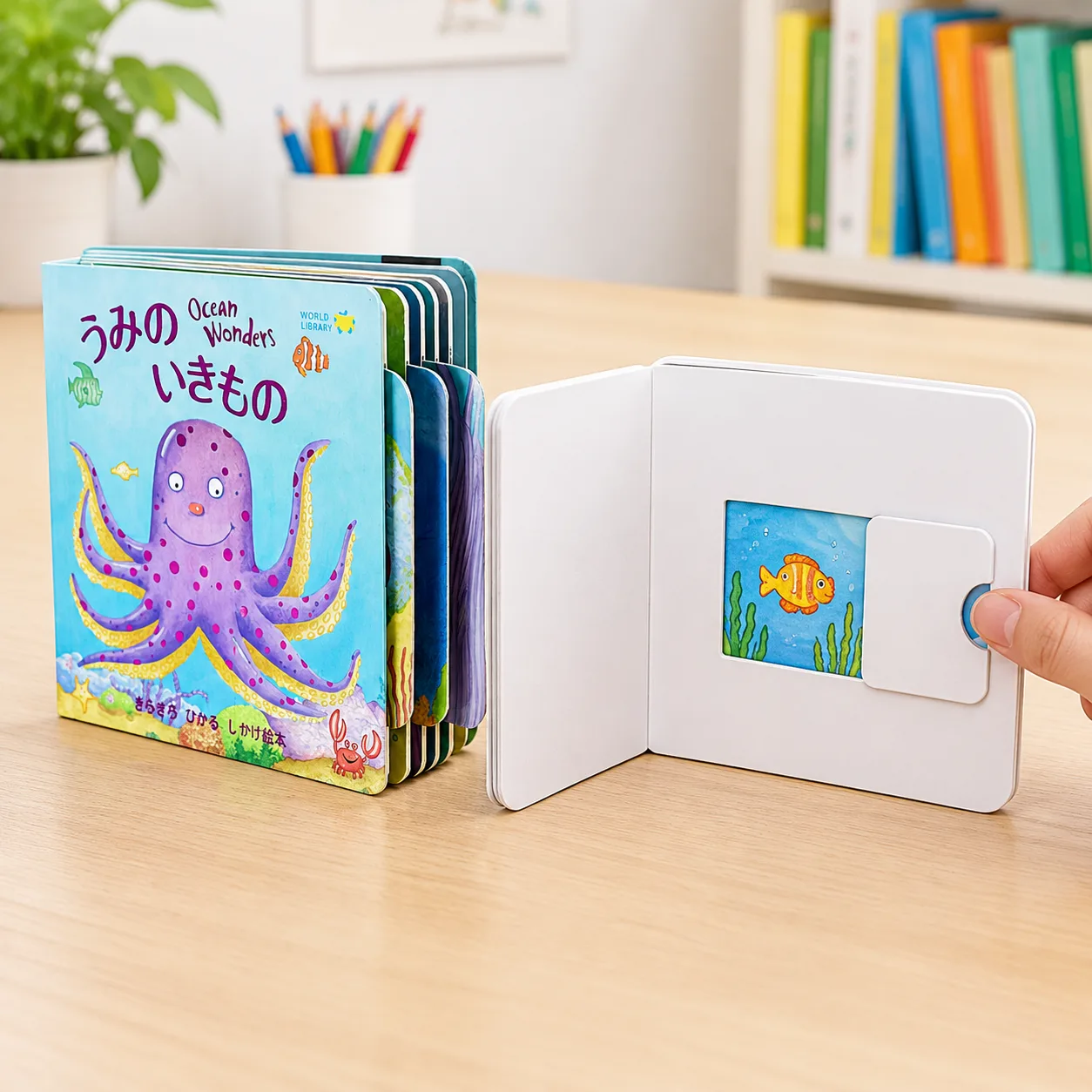
Test the mechanism in the assembled book, not only as a loose page. Open and close each spread, operate every moving part in both directions and check whether adjacent pages obstruct it. Try the action with the book flat and held at a typical reading angle. Record any sticking, misalignment, loose edges or difficulty returning the piece to its starting position.
Separate artwork approval from construction approval. A digital proof can help check text, image placement and colour expectations, but it cannot demonstrate the final motion or feel. Ask which type of physical prototype or production sample is appropriate for evaluating die cuts, layered assembly, binding and finishes. Confirm which materials and processes the sample represents, since a hand-built dummy may behave differently from the intended production build.
Share one consolidated list of corrections with marked photographs or spread numbers. After changes to a slot, board, finish or tab shape, retest the affected motion. Keep the approved sample and final files aligned so the production team has a clear reference.
قائمة مراجعة للمشتري قبل طلب عرض الأسعار
A concise brief gives the printer enough information to assess construction and identify open questions:
- State the intended reader, sales market and product type.
- Specify finished trim size, page count and planned binding.
- List each moving spread and its pull, push or slide direction.
- Show the grip point, opening, travel path and start/end artwork.
- Share a dummy, movement video or annotated layout if available.
- Identify paper or board preferences and any proposed finish.
- Give the quantity, file status, packaging needs and destination country.
- Flag any testing or market requirements for separate review.
Do not wait for every technical dimension to be final before opening the discussion. Mark unknowns clearly, and ask which measurements the printer needs to confirm after reviewing the construction. That distinction helps prevent an early estimate from being mistaken for a final production specification.
What Affects Cost and Production Time?
For slider board book printing, price depends on the book’s size and page count as well as the number, shape and complexity of its moving components. Material choices, die cutting, assembly steps, finishes, quantity, packaging and shipping destination also matter. Two books with the same trim size can therefore require different quotations.
Lead time depends on more than printing. Allow time to review the mechanism, prepare or revise artwork, make and approve samples, complete production and arrange delivery. A change to a tab path after sample approval may affect both files and assembly planning. Ask the printer to distinguish sample timing from production timing and shipping transit, and confirm the schedule against approved specifications rather than an early concept.
Print quality depends partly on file preparation and partly on physical fit: artwork must align in both movement positions, while the finished parts must move consistently. Confirming the construction with a representative sample is the most useful step before committing to the full order.
الخاتمة
A successful pull-tab or slider book starts with a clear action, then builds the artwork and page construction around it. Document each movement, review the complete assembled sample and resolve fit or alignment problems before production. The more clearly the mechanism is described, the more useful a printer’s construction advice and quotation can be.
الأسئلة الشائعة
What is the difference between a pull tab and a slider in a board book?
A pull tab typically extends outward from the page. A slider moves along a guided path, often changing an image within a window. The final construction depends on the artwork and approved prototype.
Do I need a physical prototype before printing a slider board book?
A physical prototype or suitable production sample is strongly recommended. It lets you check movement, fit, binding and finish in ways a digital proof cannot.
What files should I send for a pull-tab book quotation?
Send the book size, page count, quantity, movement sketches or a dummy, artwork status, material and finish preferences, packaging needs and destination country. Mark any specifications that are still undecided.
Can the same mechanism be used on every spread?
Possibly, but each placement still needs checking. Artwork, grip position, gutter clearance and adjacent page layers can change how the mechanism works.
Does board book printing automatically make an interactive book compliant for children?
No. The responsible seller should identify applicable requirements for its intended market and age group and arrange appropriate review or testing. Printing specifications alone do not establish compliance.
Discuss Your Interactive Board Book
Request a quotation or discuss your custom print project with YBJ Printing. Share the product type, trim size, page count, quantity, paper or binding preference, finish, file status and destination country. A sketch or dummy showing each tab’s movement will help the team review the construction.