
جدول المحتويات
- What Are Hardcover Book Cover Finishes?
- Lamination for Hardcover Covers
- Foil Stamping for Hardcover Books
- النقش وإزالة النقش
- Spot UV for Selected Details
- How to Choose the Right Finish
Hardcover book cover finishes affect appearance, tactile quality, durability and production cost. This guide explains how lamination, foil stamping, embossing and spot UV work, when to use each option, and what buyers should confirm before requesting a quotation.
What Are Hardcover Book Cover Finishes?
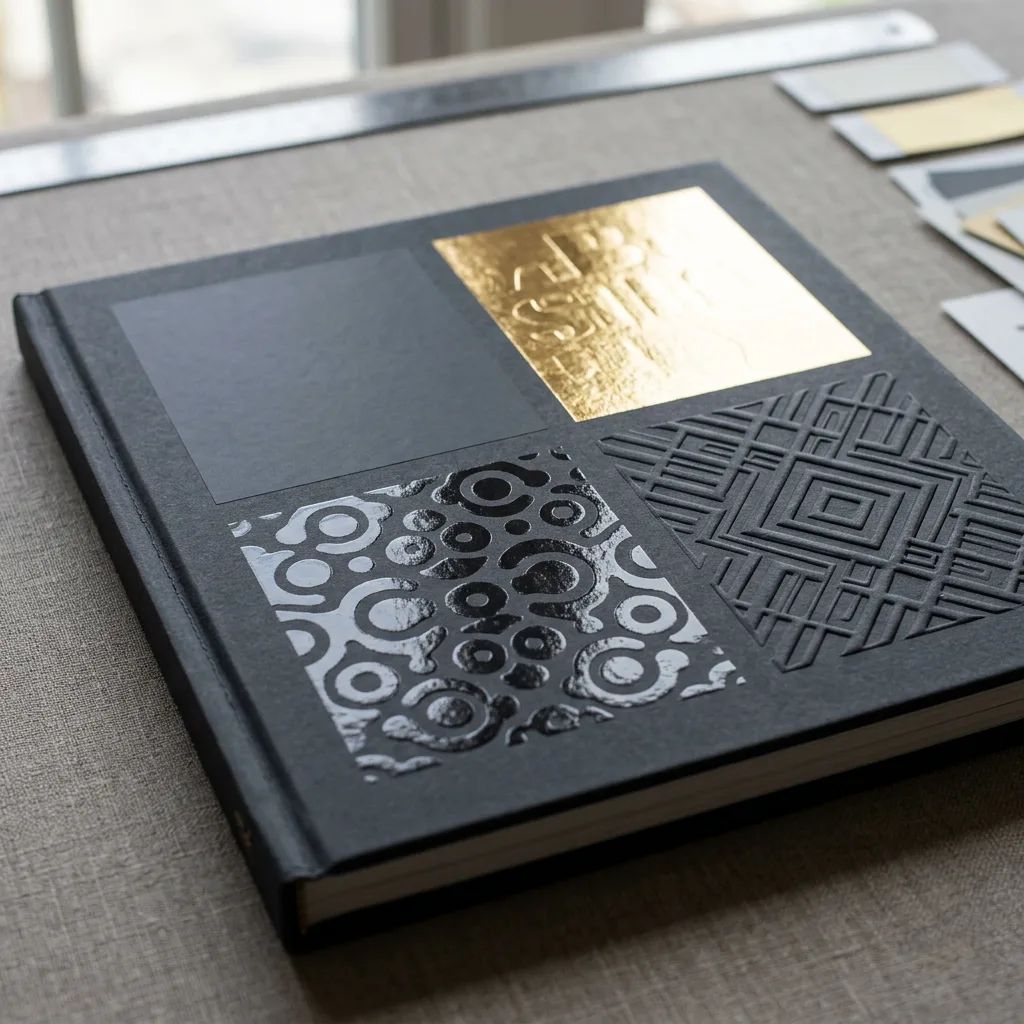
Hardcover book cover finishes are surface treatments or physical effects applied to a book’s case, printed cover paper, or selected cover details. They can protect the printed surface, change its sheen or texture, and draw attention to titles, logos, illustrations or decorative patterns.
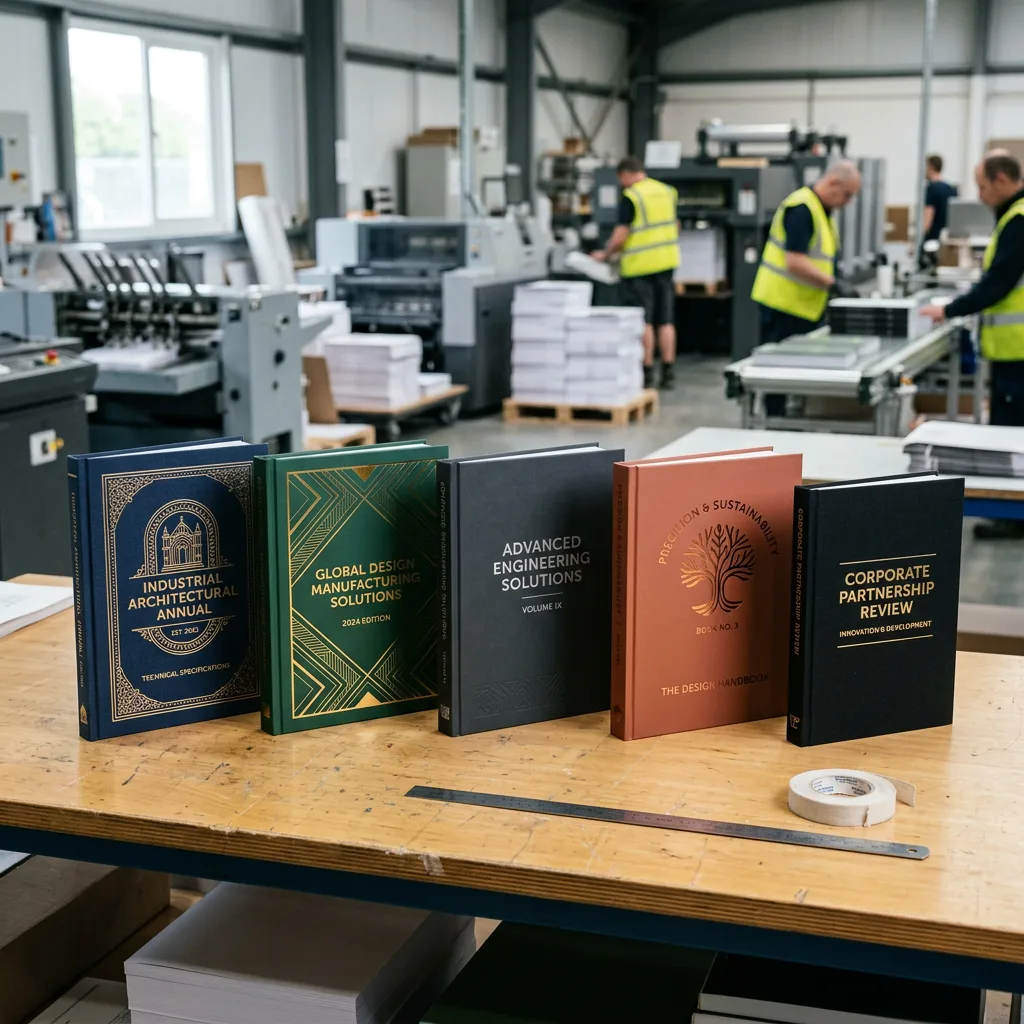
The most common options are lamination, foil stamping, embossing or debossing, and spot UV. These finishes serve different purposes. Lamination mainly protects and changes the overall surface. Foil creates a reflective metallic or pigmented detail. Embossing adds a raised shape, while debossing presses a shape into the cover. Spot UV adds a clear, glossy coating to selected areas.
For a successful result, the finish should match the cover material, artwork, book format, quantity and intended use. A premium finish does not automatically improve every design. Fine details, small type, textured materials and highly reflective effects may require different artwork preparation and production testing.
Hardcover construction also matters. Case-bound books may use printed paper wraps, coated cover paper, linen or other cloth materials, and different board thicknesses. The cover finish must be planned together with the binding structure, spine width and hinge areas. Buyers can review related guidance on حساب عرض ظهر الكتاب لأغراض الطباعة before finalizing a full-cover file.
Lamination for Hardcover Covers
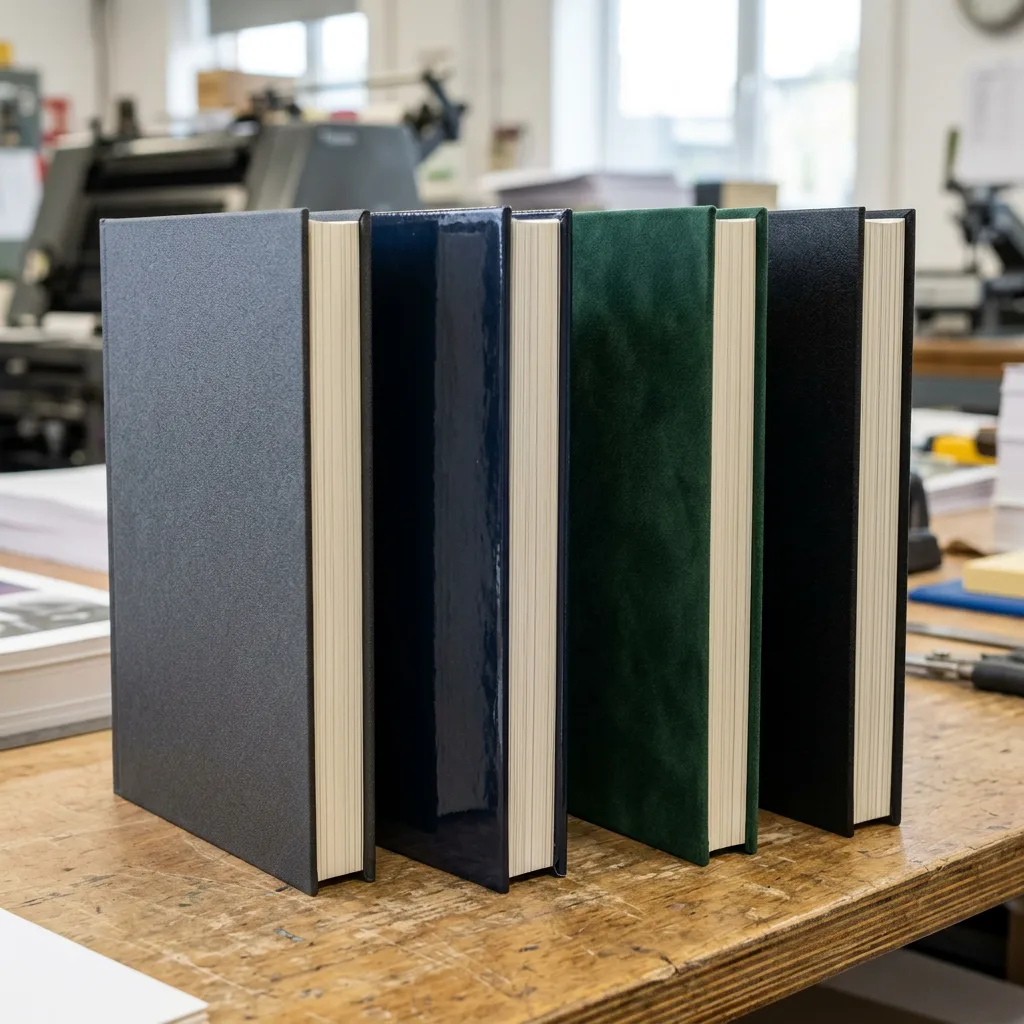
Lamination applies a thin film to a printed cover surface. It is commonly selected for protection against scuffing, handling and light moisture exposure, while also giving the cover a consistent visual appearance. The final result depends on the film, cover paper, adhesive, printing method and case-making process.
Gloss lamination
Gloss lamination produces a reflective surface with strong color contrast. It can make photographs and saturated artwork appear more vivid. However, glare and fingerprints may be more noticeable, especially under retail or exhibition lighting. Gloss can also compete with fine cover typography if the design contains many reflective areas.
Matte lamination
Matte lamination reduces reflection and creates a quieter, smoother appearance. It is often suitable for photography books, corporate books, literary titles and designs that rely on restrained color. Dark matte surfaces should be checked carefully because visible handling marks can vary by film and cover color.
تصفيح ناعم الملمس
Soft-touch film gives the cover a smoother, velvety feel. It is used when tactile quality is an important part of the product experience. It may require more careful handling during packing and finishing, so buyers should discuss the intended use, packaging and surface expectations with the printer.
Lamination normally covers a broad area rather than a small isolated design element. If the purpose is to highlight only a logo, title or pattern, spot UV or foil may be more appropriate. For premium photographic publications, the material and binding choices should be considered together; YBJ Printing’s large-format landscape photography book printing service is an example of a project where image presentation and book construction need to work together.
Foil Stamping for Hardcover Books

Foil stamping transfers a thin foil layer to the cover using heat, pressure and a dedicated stamping die. Gold and silver are widely used, but foil can also be available in other metallic, pigmented or specialty finishes depending on the project and material.
Foil is effective for titles, author names, logos, borders and small decorative features. Its reflective surface creates contrast against cloth, paper or laminated cover materials. The result is influenced by the foil color, base material, pressure, temperature, artwork detail and the relative position of the design on the case.
Foil works best when the design gives the effect enough visual space. Very small type, closely spaced lines and intricate patterns can be difficult to reproduce cleanly. The printer may recommend adjusting line weight, letter spacing or the size of the stamped area. Foil on textured cloth or uncoated materials may have a different edge definition than foil on a smooth printed surface.
Buyers should also ask whether the foil is applied to the printed wrap, directly to a cloth cover, or to another cover component. These are different production conditions. The chosen material can affect adhesion, reflectivity and the apparent color of the foil.
For books intended to feel more tactile and material-focused, a cloth-bound construction may be suitable. See the luxury cloth-bound hardcover coffee table book printing option for an example of how cover material and decorative treatment can be planned as one specification.
النقش وإزالة النقش
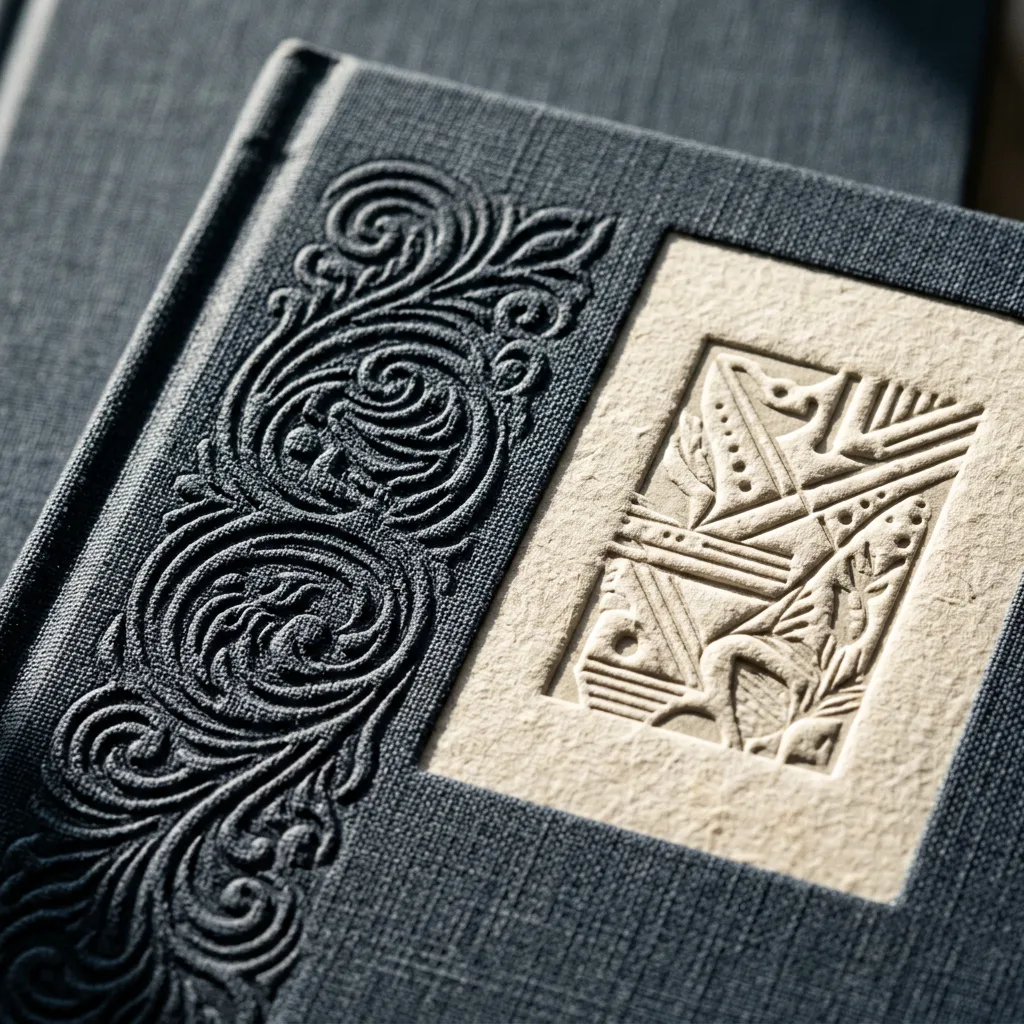
Embossing raises selected areas of the cover, while debossing presses those areas below the surrounding surface. Both effects are created with a shaped die and counterforce. They can be used alone or combined with foil, ink or lamination.
Embossing is useful for a title, emblem, illustration, border or repeating pattern that should be noticed through touch as well as sight. Debossing can create a more recessed, understated appearance, particularly on cloth, textured paper or natural-looking cover materials. The appropriate choice depends on the cover substrate and the desired visual language.
Physical depth is not the only consideration. The cover board, wrap material, artwork scale and distance from the spine or edges all affect the result. Large solid areas may require a different die approach from fine line art. Deep effects can also place additional demands on the cover material and case-making process.
Embossing and debossing can be paired with foil to create a raised metallic title or logo. This combination needs accurate registration between the stamped foil and the relief effect. A printer may recommend a sample or proof when the cover includes small type, multiple effects or a high-value final product.
Buyers planning a premium edition should also review the inside cover details. Printed or colored endpapers affect the opening experience and need to be specified with the case and cover finish. YBJ Printing explains options in this guide to customizing printed and colored endpapers.
Spot UV for Selected Details
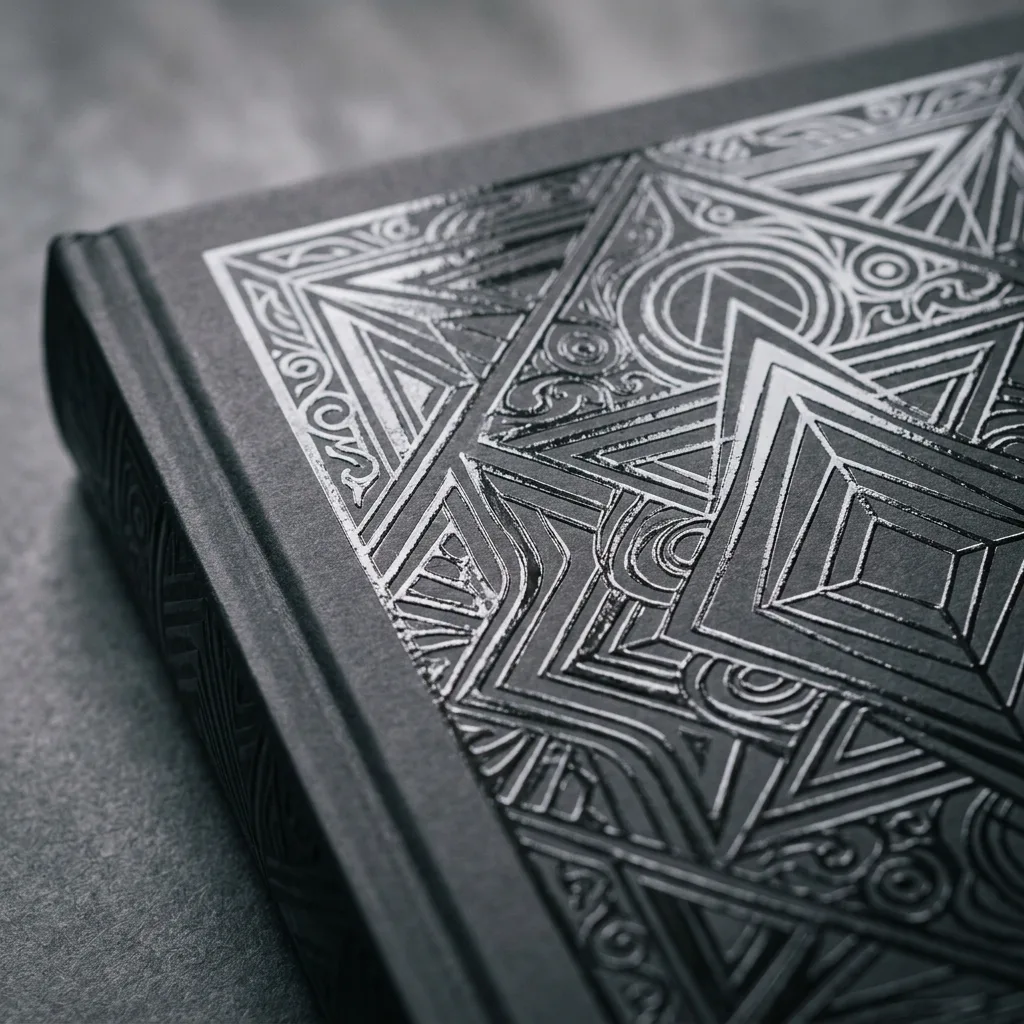
Spot UV is a clear, cured coating applied to selected areas of the cover rather than the entire surface. It creates a glossy highlight that contrasts with a matte or uncoated background. Common applications include logos, titles, line illustrations, patterns and image details.
The strongest visual contrast usually comes from placing spot UV on a matte-laminated surface. A gloss spot on an already glossy cover may be less noticeable, although it can still add a different surface level or highlight specific artwork. The effect is transparent, so the color beneath remains important.
Spot UV artwork is normally supplied as a separate mask that identifies the areas to receive coating. The mask must be aligned accurately with the printed cover. Fine details, tight registration, folds, hinges and areas close to the trim should be reviewed before production. The printer can advise on minimum detail requirements based on the selected process and substrate.
Spot UV is often a practical choice when a buyer wants selective emphasis without using a metallic effect or a physical relief. It can also be combined with foil or embossing, but every additional process increases specification complexity and may influence setup cost and production planning. A restrained design with one or two clear focal areas is generally easier to control than a cover covered with competing effects.
Cookbooks, branded publications and presentation books may benefit from selective gloss details, especially when the cover needs both a durable surface and a clear focal point. For a relevant example, review custom hardcover cookbook printing with spot UV.
How to Choose the Right Finish
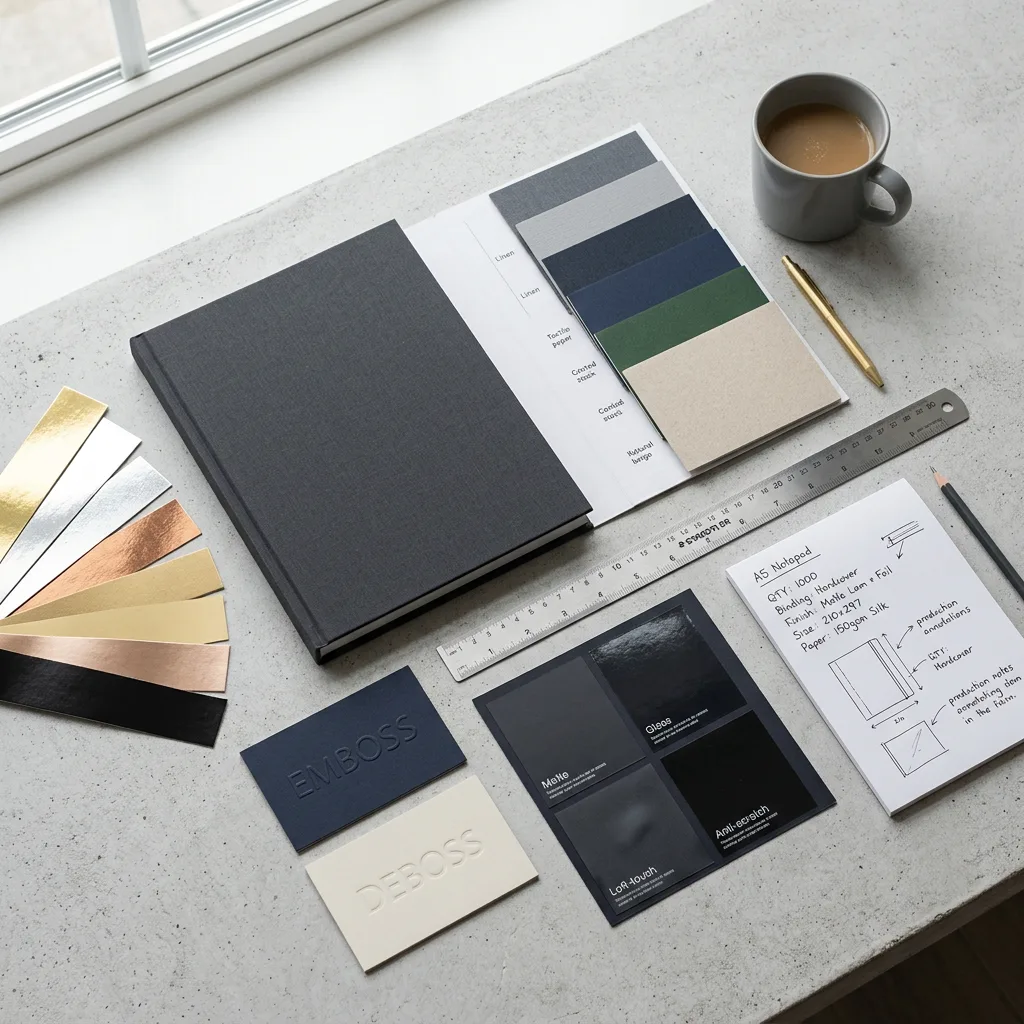
Start with the job the finish needs to perform. If the priority is broad surface protection, compare matte, gloss or soft-touch lamination. If the cover needs a reflective title or logo, consider foil stamping. If touch and dimensional detail are important, embossing or debossing may be suitable. If the design needs a selective glossy contrast, consider spot UV.
Buyer checklist
- Cover material: Confirm whether the finish will be applied to printed paper, coated stock, cloth or another case material.
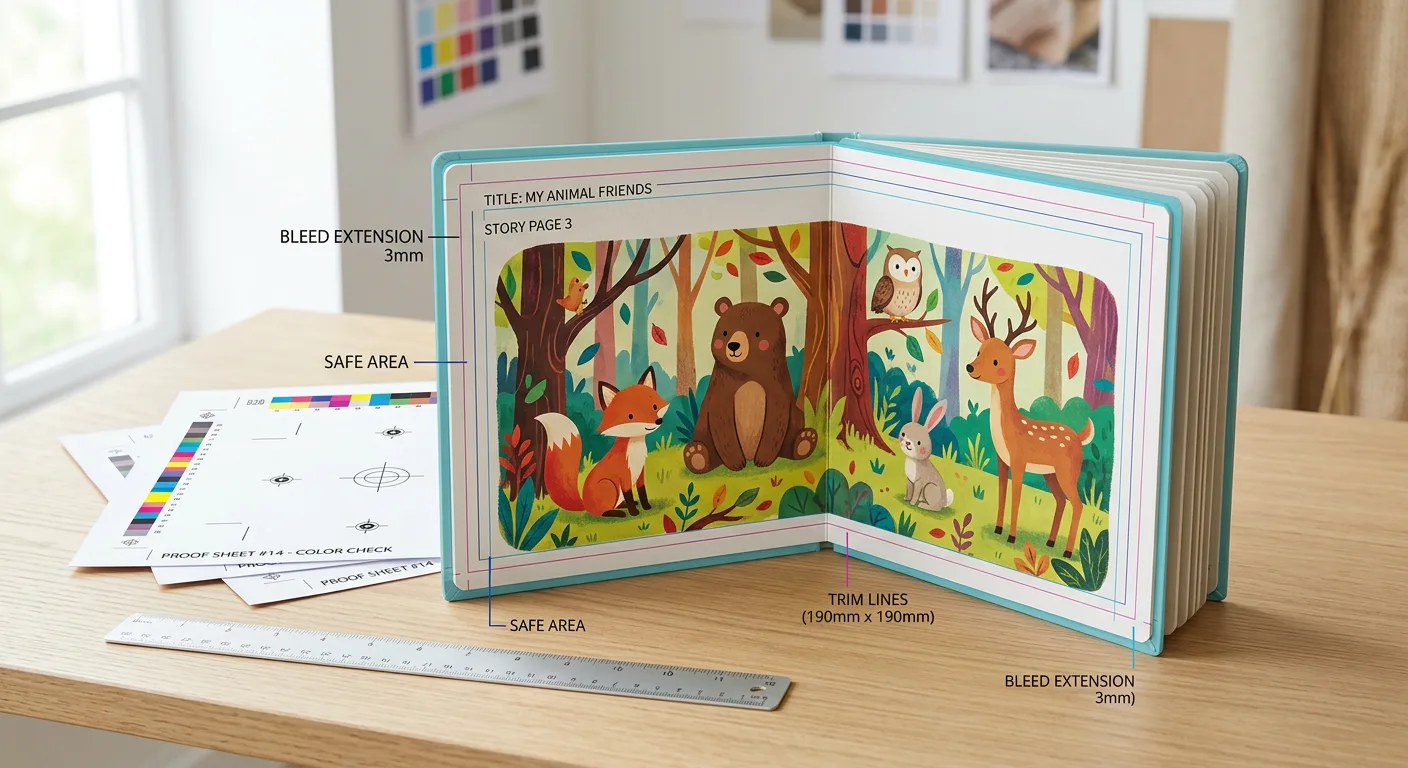
- Design detail: Check small type, thin lines, registration, bleed, hinge areas and the distance from trim and spine.
- Colour and contrast: Decide whether the effect should be reflective, glossy, tactile, subtle or highly visible.
- Use environment: Consider frequent handling, retail display, library use, photography, cooking or presentation use.
- الكمية: Setup, dies, masks and finishing operations may affect the quotation differently at different quantities.
- التدقيق: Ask whether a digital proof, physical mock-up or production sample is appropriate for the design.
- File preparation: Supply clear cover artwork and separate foil, embossing or spot UV layers when requested.
- Shipping destination: Confirm the destination country because packing, freight planning and import arrangements can affect the overall project.
Price and lead time depend on more than the selected finish. Important assumptions include trim size, page count, paper weight and quantity, as well as board thickness, binding method, cover material, number of finishing operations, file readiness, proof requirements, packing and destination country. A quotation should therefore be based on a complete specification rather than on the finish name alone.
Before approval, request confirmation of the cover construction, finish location, artwork requirements, proof method, packing plan and delivery terms. This helps ensure that the visual design, manufacturing process and commercial expectations are aligned.
Guangzhou YBJ Printing Co., Ltd has produced books and paper products for global customers since 1998. Its factory-direct project model combines manufacturing support with communication for custom book orders, while the final specification remains the basis for any quotation and production schedule. Learn more about the company on the YBJ Printing about page.