

جدول المحتويات
- What Sound Book Quality Control Includes
- Review the Print and Board Construction
- Test Audio, Buttons and Electronics
- Inspect Batteries and Safety Details
- Check Assembly, Durability and Packaging
- Complete the Pre-Production Approval
- Sound Book Quality Control Checklist
Sound book quality control should confirm that the printed pages, audio system, buttons, batteries and assembly work together safely and consistently before mass production begins. This checklist explains what publishers and brands should inspect during electronic book proofing and the final pre-production review.
What Sound Book Quality Control Includes
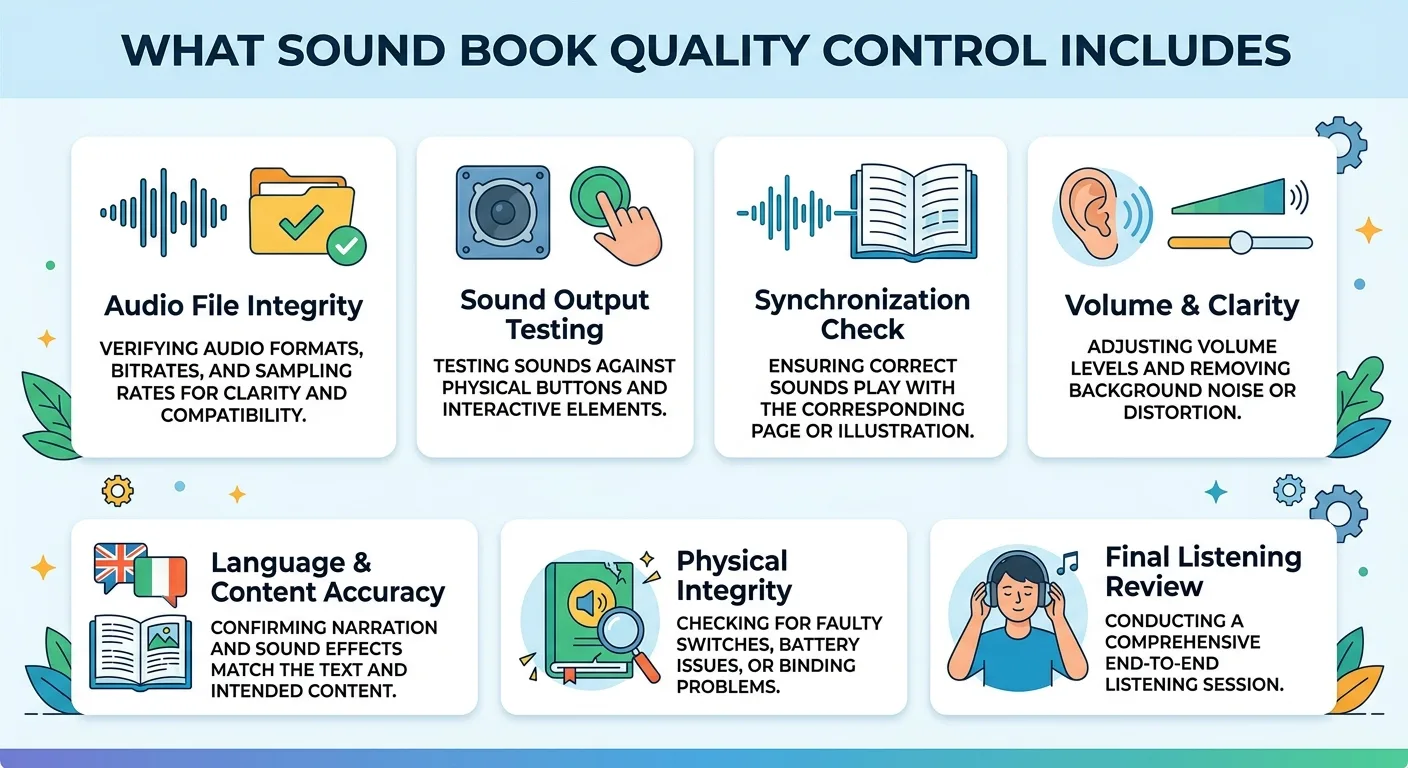
Sound book quality control is the structured inspection of a book’s printed components, electronic module, audio content, buttons, batteries and final assembly before mass production. The purpose is to confirm that the approved design can be manufactured consistently and used safely by children.
A sound book is both a printed product and a small electronic product. Checking only colour, trim size or page binding is not enough. A complete inspection should verify that every button activates the intended recording, the sound is clear, the module is securely installed, the pages turn correctly and the finished book matches the approved sample.
Quality requirements depend on the product specification. Important assumptions include the selected board thickness, number of sound buttons, audio format, battery type, packaging, destination country and any buyer or regulatory requirements. These details should be confirmed before quotation and prototype approval.
For background on the parts that make up a sound book, review sound book components such as buttons, modules and batteries. It is also useful to define the complete product specification in advance with a custom children’s sound book printing guide.
Review the Print and Board Construction
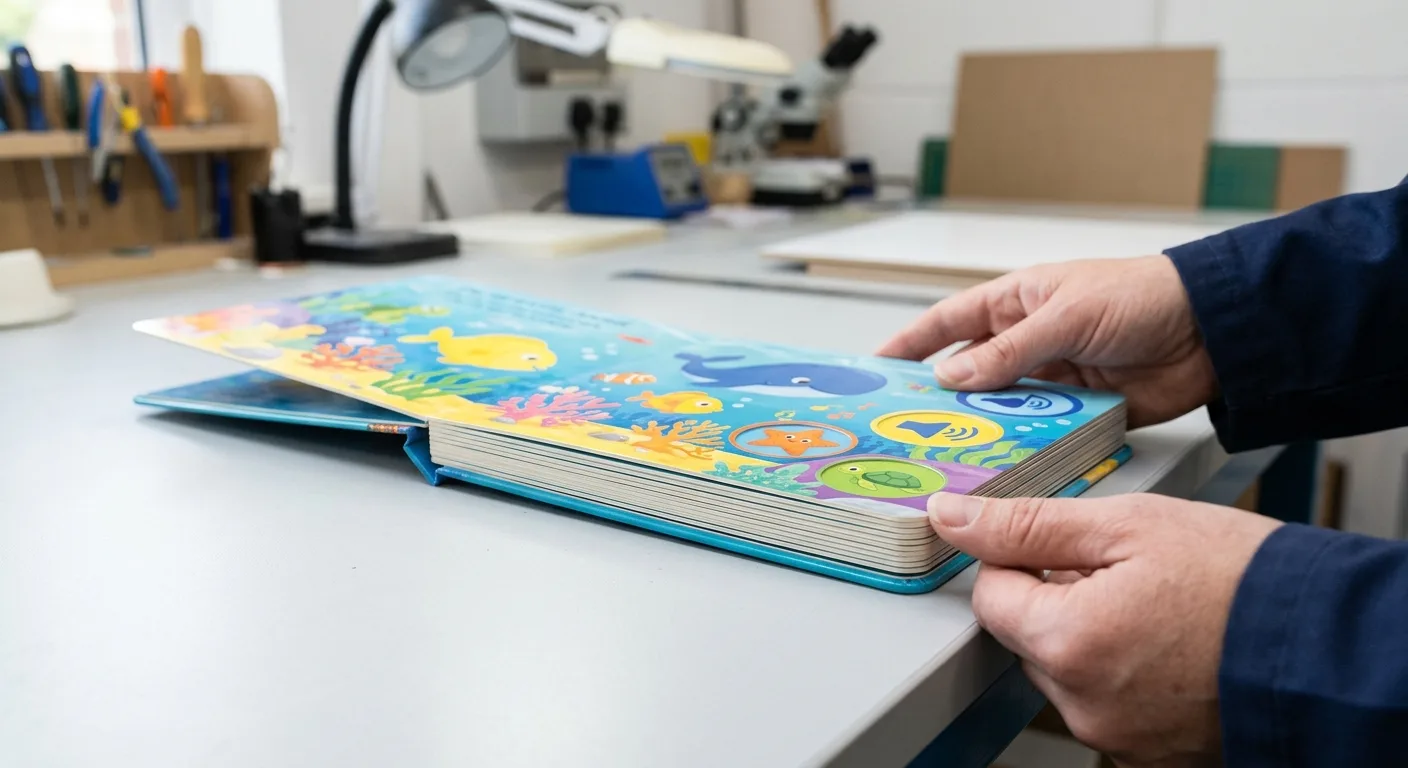
Begin with the printed book before testing the electronics. The artwork, board pages and cover create the physical structure that protects the module and supports repeated use.
Artwork and colour checks
- Compare the production proof with the approved artwork, including text, illustrations, page order and copyright information.
- Check trim, bleed, safe margins and the position of every sound icon or button label.
- Inspect colour consistency across the cover, pages and button areas. Pay particular attention to skin tones, large solid backgrounds and small text.
- Look for ink marks, scratches, banding, misregistration, uneven coating and visible contamination.
Board and binding checks
- Confirm the finished trim size, page thickness, corner shape and cover construction.
- Check that pages are securely laminated or assembled, with no lifting edges, exposed board or sharp corners.
- Open and close the book repeatedly to identify cracking, weak hinges or interference from the electronic compartment.
- Make sure the book lies flat enough for children to press the buttons without excessive force.
Die-cut openings, raised areas and other interactive features need their own inspection because they can affect both durability and button alignment. The guidance on interactive board book printing and physical features can help when the sound book includes more than standard pages.
Test Audio, Buttons and Electronics
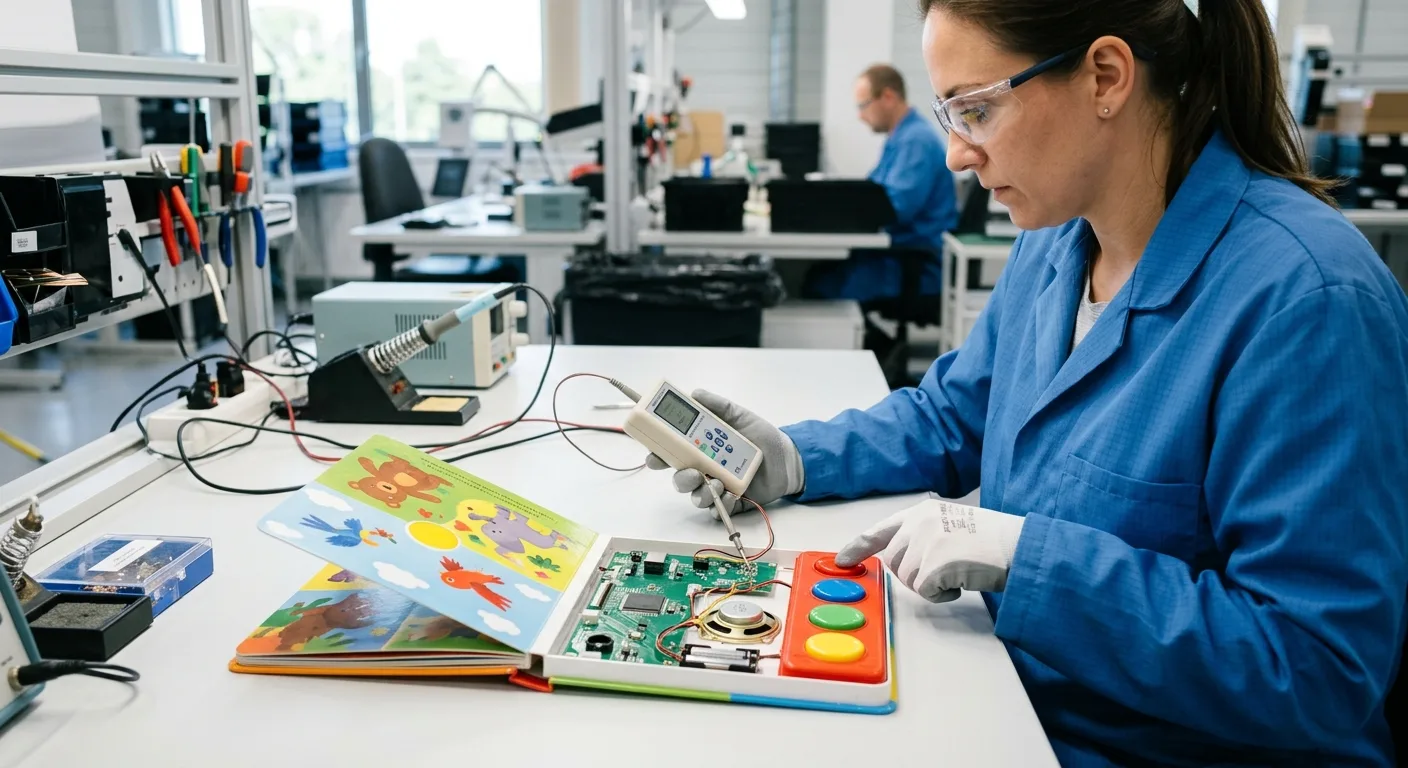
Electronic book proofing should test the interaction between the printed button map and the sound module. Do not approve audio by listening to isolated files only; test it inside the assembled book.
Audio content
- Confirm that every button plays the correct track and that the sequence matches the artwork.
- Check pronunciation, wording, language version, timing and recording completeness against the approved script.
- Listen for clipping, background noise, distortion, sudden volume changes and long unintended pauses.
- Test the volume in a quiet room and in a normal reading environment. The appropriate level depends on the speaker, enclosure and target age group.
Button and module operation
- Press each button at its centre and near its edges to check consistent activation.
- Confirm that buttons are not too stiff, too loose or likely to be pressed accidentally when pages are turned.
- Check that the printed symbol or instruction clearly identifies the related sound.
- Test repeated presses, rapid presses and presses by different users.
- Verify that the speaker produces clear output and that the module does not rattle inside the cover.
Use a written button-to-track map and record the result of every test. The file preparation stage should already define artwork, audio, button mapping and proofing requirements؛ الـ sound book file setup and proofing guide provides a useful reference.
Inspect Batteries and Safety Details
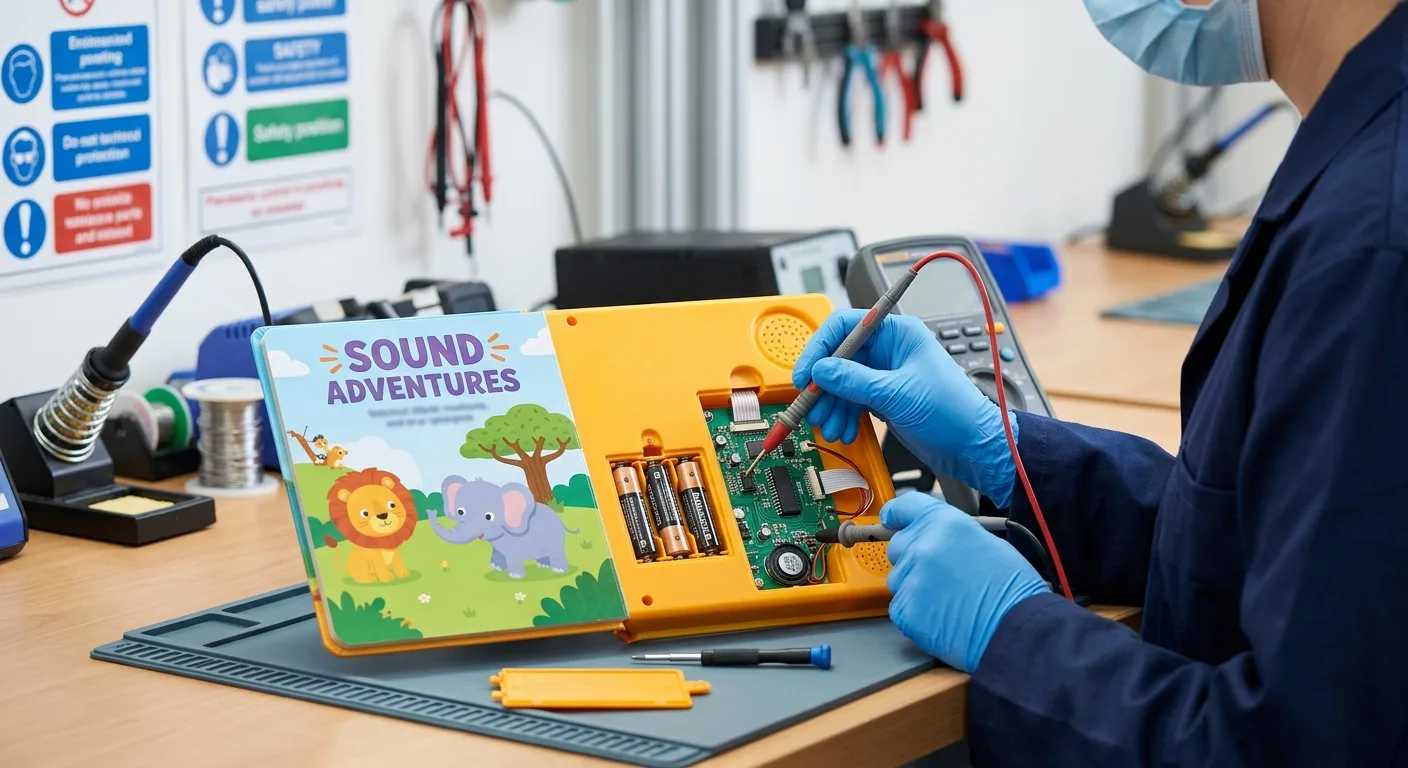
Children’s sound book inspection should include the battery compartment and all accessible electronic parts. The exact safety process depends on the battery type, product design, target market and buyer requirements, so these points should be agreed with the manufacturer before production.
- Confirm that the battery type and quantity match the approved specification.
- Check polarity, battery seating and electrical contact. The book should operate reliably without intermittent power.
- Inspect the battery compartment, cover and any fastening method. The compartment should not open unintentionally during normal handling.
- Look for exposed wires, loose solder joints, sharp edges or components that can move inside the book.
- Check that the on/off control, if included, is clearly identified and functions correctly.
- Review required warnings, battery information, disposal markings, age guidance and packaging labels for the destination country.
Ask the production partner which safety documents or testing records are available for the proposed design. Do not assume that a printed warning alone replaces product-specific assessment. Battery selection can also affect sound output, shelf storage and operating life, so it should be settled before the final prototype.
Check Assembly, Durability and Packaging
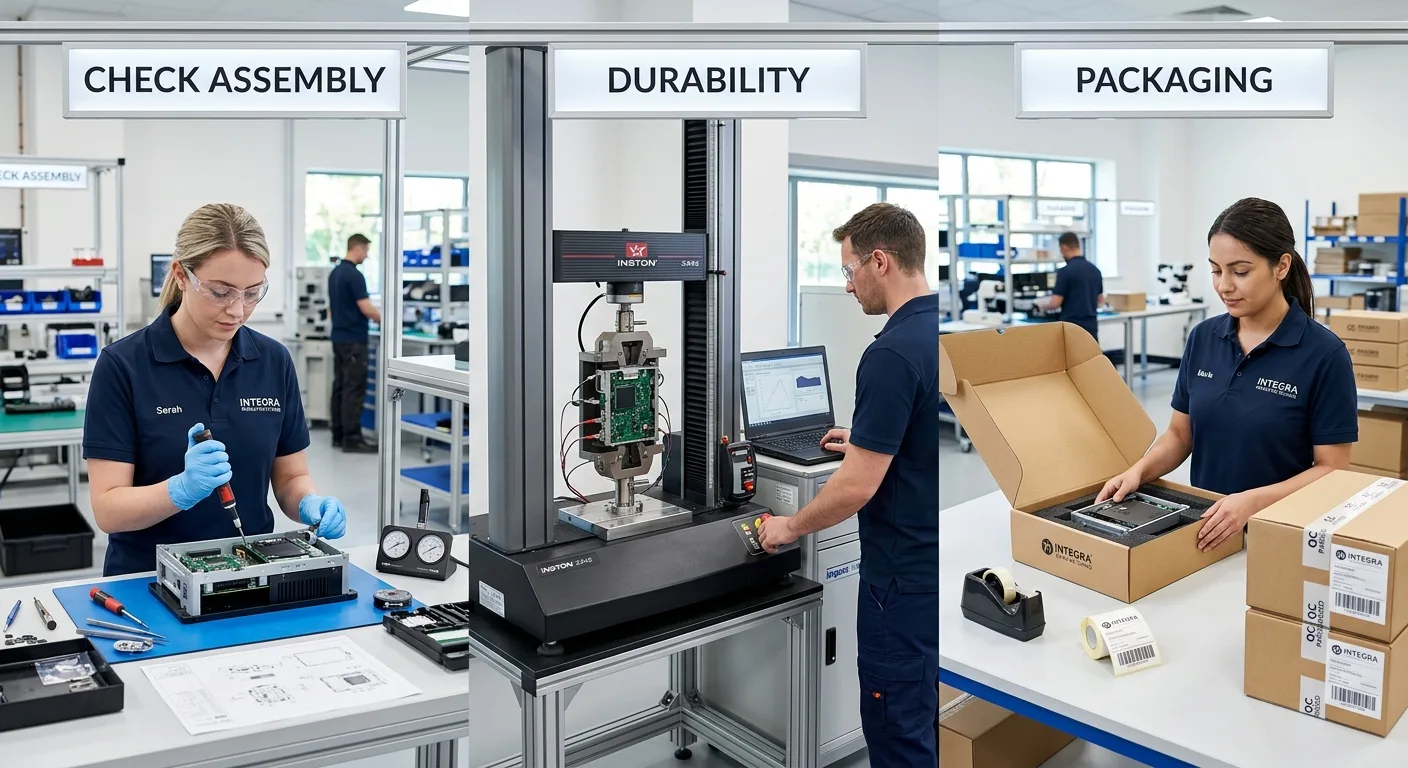
A sound book can pass an audio check and still fail in daily use if the assembly is weak. Inspect the relationship between the board pages, cover, speaker, module, buttons and packaging.
- Check adhesive application, page alignment, cover wrapping and the fit of the electronic housing.
- Turn pages repeatedly and press each button during and after handling.
- Inspect whether the speaker opening remains unobstructed and whether the sound changes when the cover is flexed.
- Review the book after transport simulation or agreed handling tests for dents, broken corners, loose pages and electronic faults.
- Confirm that packaging protects the book without pressing buttons continuously or activating the module during shipment.
- Check carton dimensions, inner protection, product count and shipping marks against the packing specification.
Durability expectations should be written into the approval criteria rather than left to interpretation. A buyer may require a particular number of handling cycles, a drop or compression test, or inspection of samples from different cartons. The appropriate method depends on the product and destination.
Complete the Pre-Production Approval

The final prototype or pre-production sample should be treated as the reference standard for mass production. Approve it only after the printed sample, audio files, electronics and packaging have been reviewed together.
Recommended approval process
- Freeze the specification. Record trim size, board construction, page count, finish, binding, module, speaker, buttons, batteries, audio tracks and packaging.
- Review a marked proof. Note any changes to artwork, button positions, text or audio in a controlled revision document.
- Test complete samples. Inspect more than one sample where possible to identify variation between units.
- Define acceptance criteria. Separate critical defects, such as a non-working button or exposed battery, from minor cosmetic issues.
- Sign and date the approval. State which sample, artwork version and audio version are approved.
- Plan production checks. Agree how the factory will inspect incoming components, assembly, function, packing and random finished units.
Keep photographs, audio references, inspection records and approved samples together. This creates a practical reference if a question arises during production or after delivery. Changes made after approval should trigger another review, especially if they affect the module, button layout, board thickness or packaging.
Sound Book Quality Control Checklist
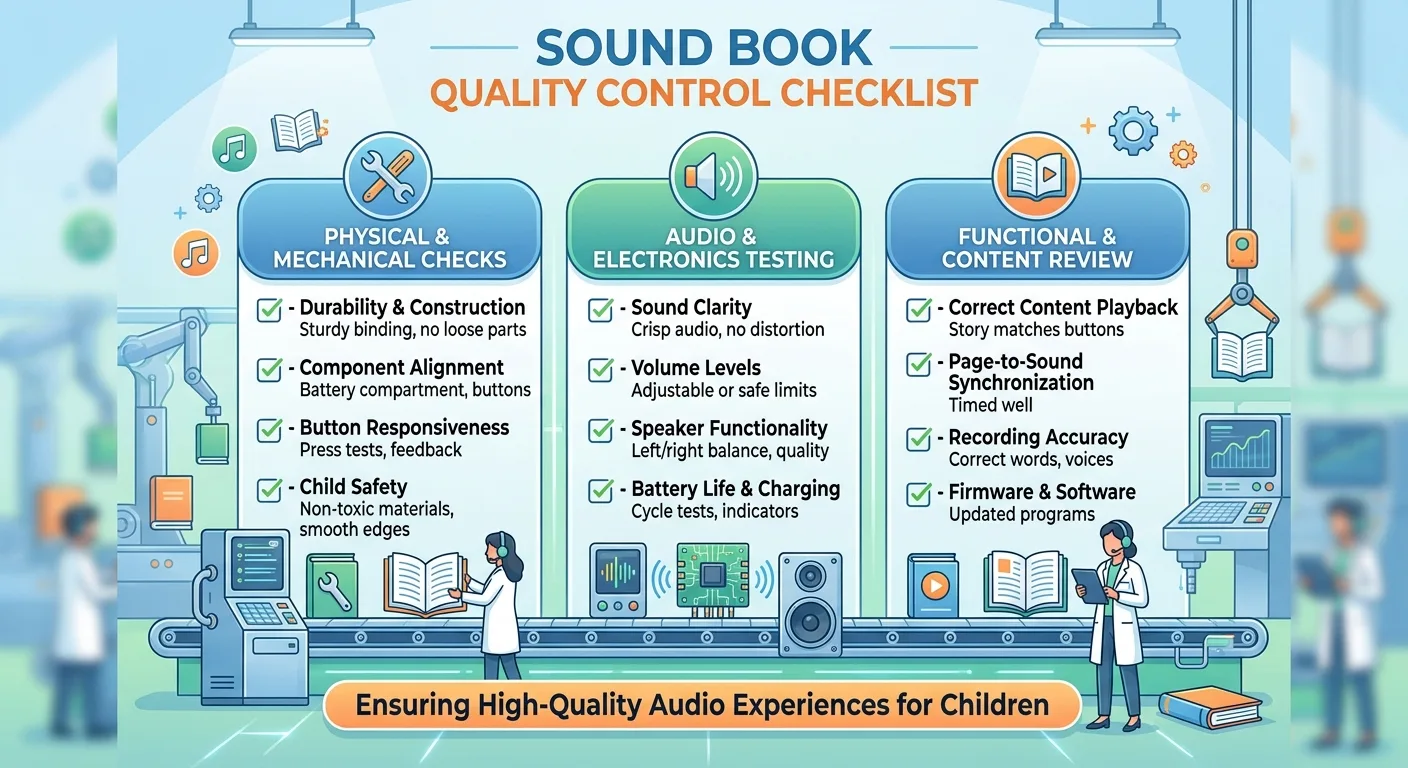
Use the following checklist when reviewing a pre-production sample:
- Artwork matches the approved file, including text, illustrations, page order and button labels.
- Trim size, board thickness, page alignment, corners and binding meet the specification.
- Colour, coating and surface finish are acceptable, with no major print defects.
- Every button activates the correct audio track.
- Audio is complete, clear, correctly pronounced and free from unwanted noise or distortion.
- Buttons activate consistently and are comfortable to press.
- Speaker output is clear and the module is securely positioned.
- Battery type, polarity, compartment and fastening meet the approved design.
- No accessible sharp edges, loose parts, exposed wires or unexpected movement are present.
- Pages, cover and electronic components remain secure during agreed handling tests.
- Packaging protects the product and does not activate or damage the electronics.
- Warnings, labels, documents and destination-market requirements have been reviewed.
The most important principle is to test the finished product as a child or end user would use it. Sound book testing should combine visual inspection, hands-on operation, repeated handling and a controlled comparison with the approved specification.
Quality control does not remove every production risk, but it makes requirements visible and gives the factory a clear standard to follow. Early electronic book proofing is usually more efficient than discovering a wrong recording, misaligned button or inaccessible battery after mass production.