
جدول المحتويات
- What Are Board Book Binding Methods?
- Glued Board Book Construction
- Sewn Board Book Construction
- Specialty Board Book Construction
- How to Choose a Board Book Binding Method
- The Board Book Manufacturing Process
- Board Book Binding Buyer Checklist
- الخاتمة
The most suitable board book binding method depends on the book’s page structure, expected use, design features, quantity, and budget. Glued construction is widely used for standard board books, while sewn and specialty methods may be appropriate for enhanced durability, lay-flat opening, folded formats, or interactive features. This guide explains how board books are bound and what buyers should confirm before requesting production.
What Are Board Book Binding Methods?
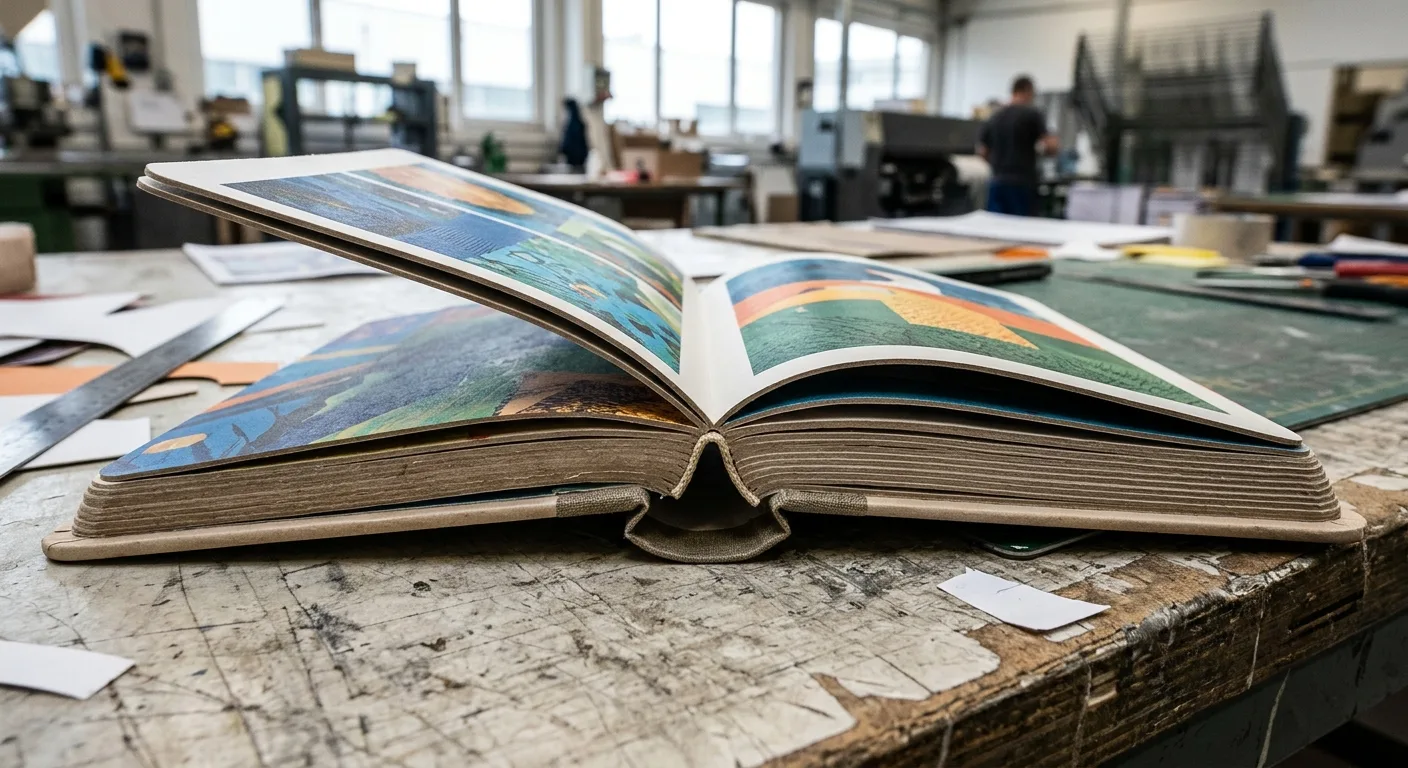
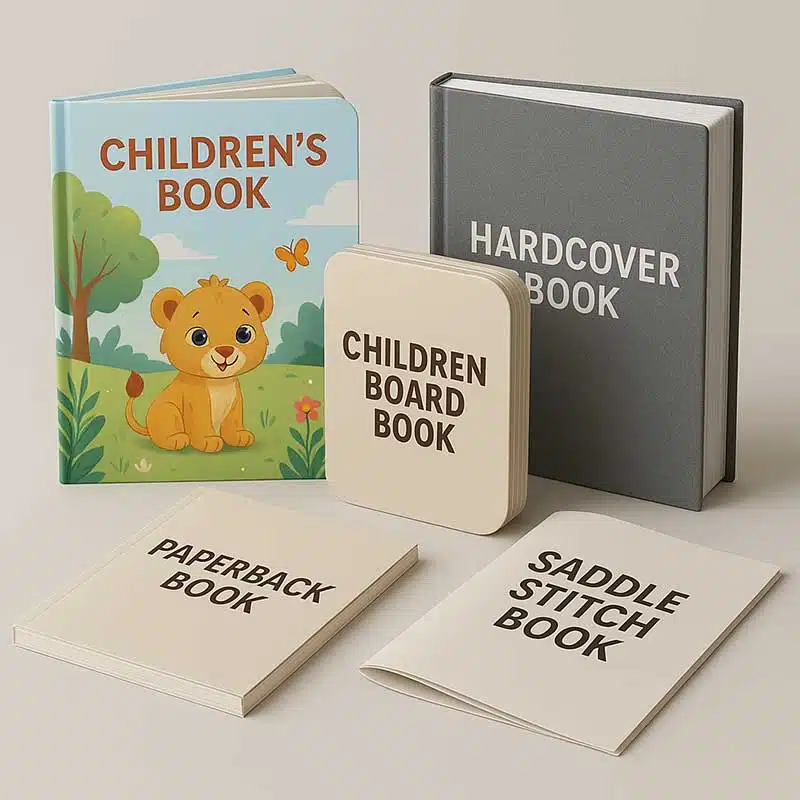
Board book binding methods are the ways printed paperboard pages, covers, folds, and special components are assembled into a durable finished book. For most standard board books, the printed sheets are mounted to rigid board or produced as thick paperboard leaves, then joined with adhesive and finished as a compact book block. Other constructions may use sewn sections, folded panels, concealed hinges, layered pieces, or interactive components.
Board books are different from ordinary hardcover books because the interior pages are usually thick, rigid, and designed to withstand frequent handling. Binding therefore involves more than selecting glue or thread. The construction must allow the pages to turn, keep the book square, protect the printed surfaces, and accommodate the required page thickness and features.
In practical terms, glued construction is often suitable for conventional rectangular board books. Sewn construction may be considered when the project requires additional reinforcement or a particular opening performance, although it is less common for simple board book leaves. Specialty construction is used when the format includes flaps, wheels, shaped pages, accordion folds, layered boards, or other paper-engineered elements.
The right choice depends on assumptions such as the final trim size, number of leaves, board thickness, page opening requirement, feature complexity, order quantity, finishing specification, and destination market. These details should be agreed before production pricing is finalised.
Glued Board Book Construction
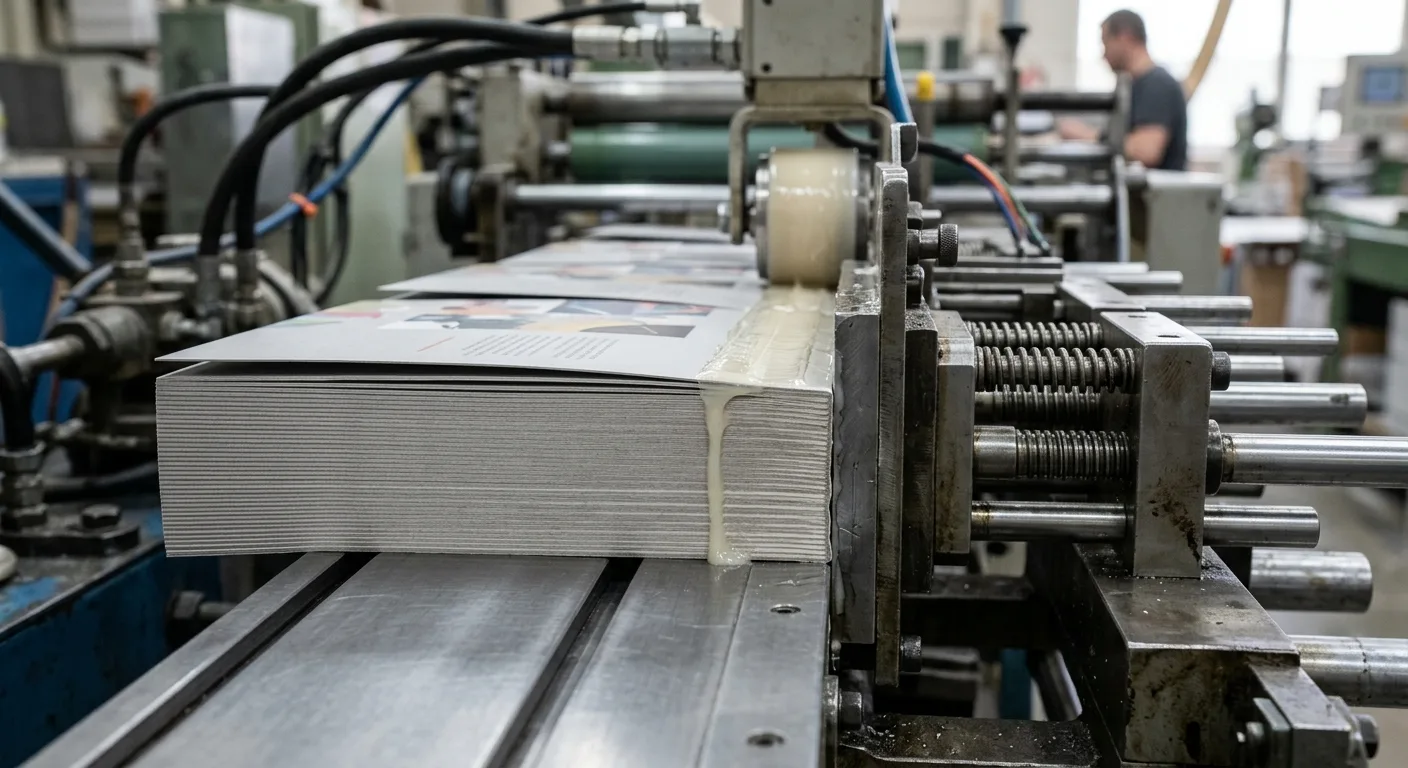
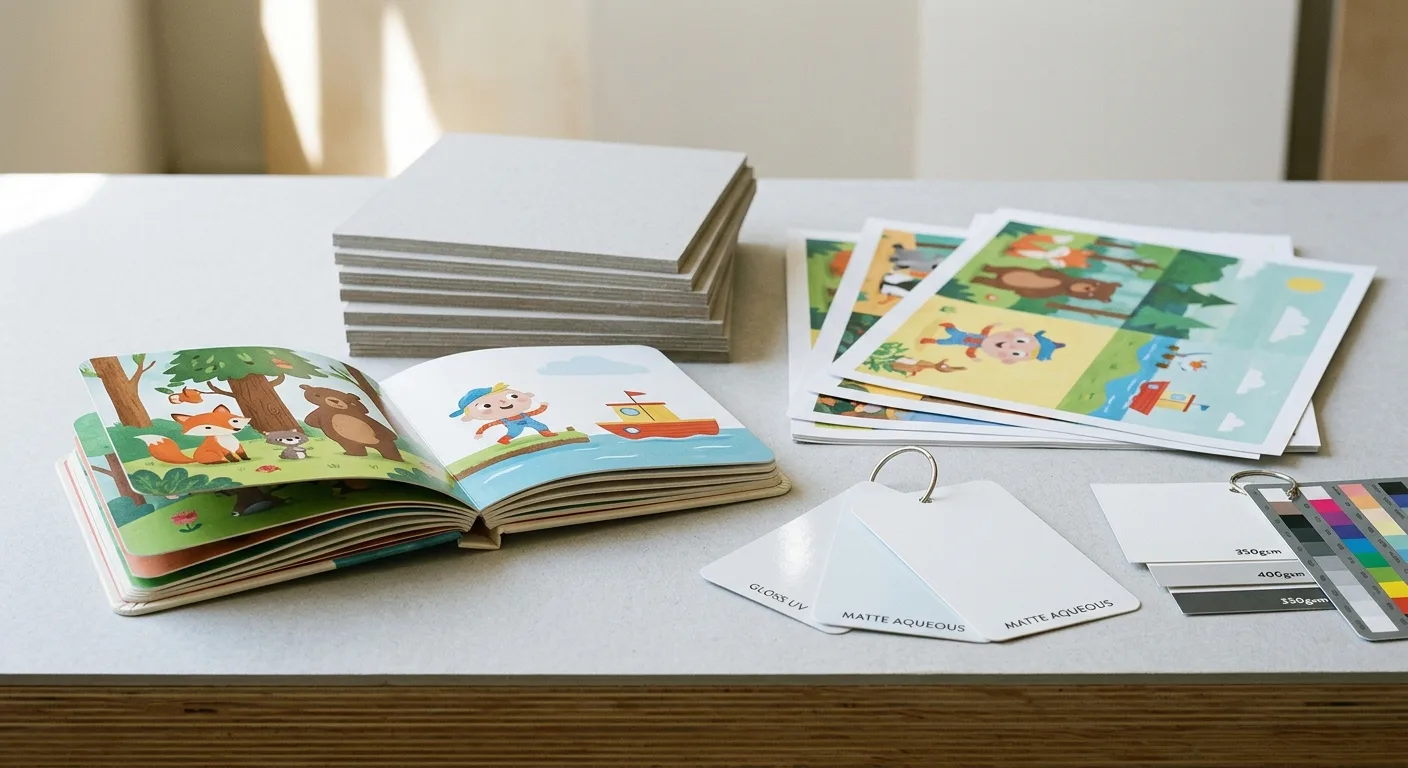
Glued construction uses adhesive to join the board book leaves or to secure printed paper and board layers together. Depending on the specification, a printer may print on suitable paper, laminate or mount the printed sheets to board, fold the material, and assemble the leaves into a finished book block. Adhesive is also used in some cover and hinge operations.
How glued board books are bound
The exact sequence varies by factory and design, but a typical process includes printing, surface finishing if required, mounting or laminating, drying or curing, trimming, gathering the leaves, applying adhesive at the joining areas, and pressing or forming the book. The book is then checked for alignment, page movement, adhesive coverage, and overall squareness.
Glued binding is a practical choice for standard board books with flat pages, regular page turns, and a conventional rectangular shape. It can support many children’s publishing formats, including simple storybooks, vocabulary books, first concept books, and basic educational titles. It also integrates well with printed case covers, rounded corners, and selected surface finishes.
Buyers should not assume that “glued” means every adhesive construction is identical. Glue type, application quantity, board absorbency, temperature, pressing time, hinge design, and the contact area between components can all affect the result. A physical or production proof is useful when the book has thick boards, tight tolerances, dark edge artwork, or pages that must open to a specific angle.
Glued construction is often considered first because it can provide a balanced combination of manufacturability, appearance, and cost for standard formats. However, the final quotation still depends on materials, page count, size, quantity, finishing, packaging, and shipping destination. For related cost factors, review this practical guide to book printing pricing.
Sewn Board Book Construction
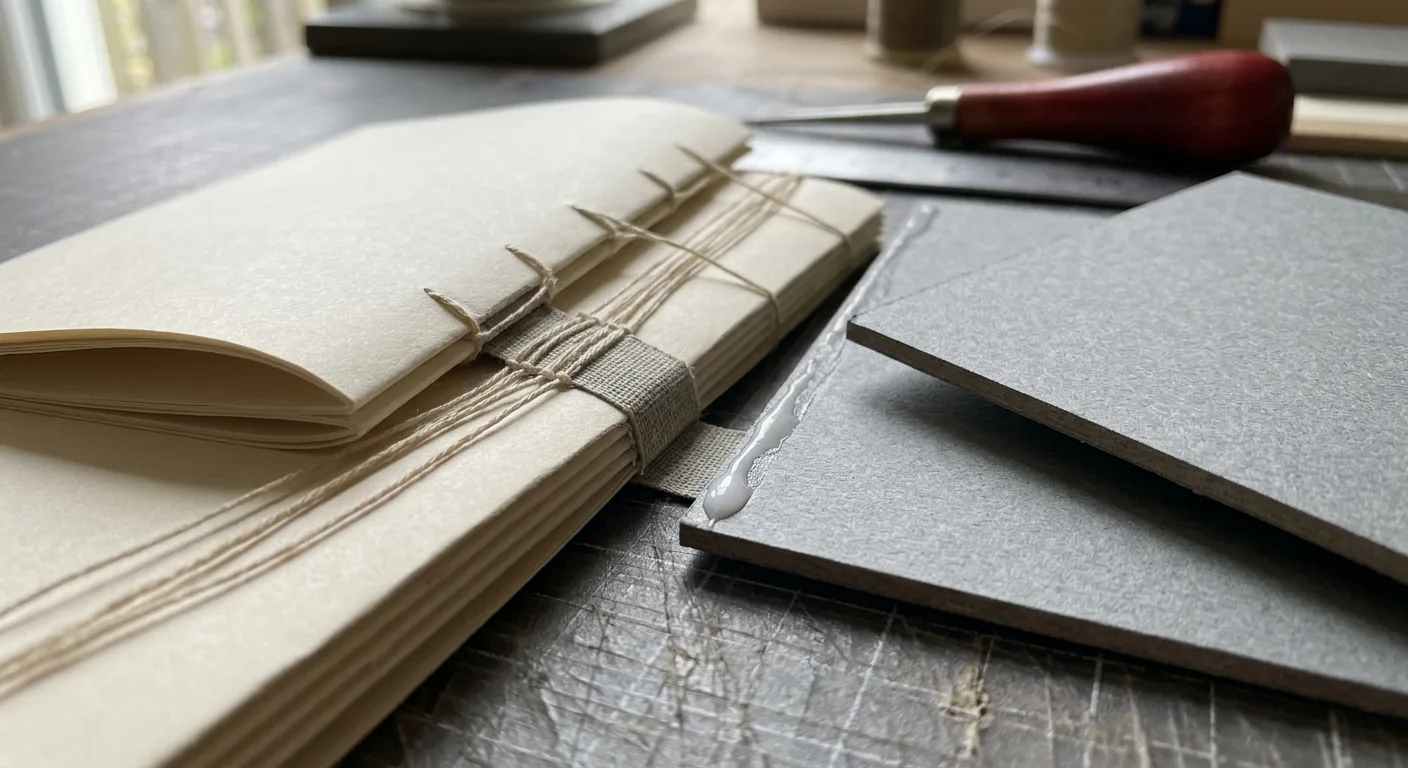
Sewn construction joins folded printed sections with thread before the sections are attached to a cover or other rigid components. In conventional book production, sewing helps keep sections connected and can support repeated opening and closing. For board books, however, the term needs careful clarification: many board books use individual rigid leaves rather than folded paper signatures, so traditional section sewing may not be the most direct construction.
A sewn approach may be considered for a hybrid format in which printed paper sections are sewn and then combined with board elements, or for a design that uses flexible sections, reinforced hinges, or a hardcover-style structure. The feasibility depends on the number and type of pages, the board thickness, the spine design, and how the rigid components are attached.
Potential benefits and limitations
The main potential benefit is reinforcement at the sewn sections. Sewing can also influence how a book opens and how stress is distributed through the book block. These advantages are more relevant when the design contains flexible printed sections or requires a particular opening behaviour.
There are also trade-offs. Sewing can add production steps, affect the spine profile, increase material and labour requirements, and limit some compact board book formats. A sewn structure may not be necessary for a short book with thick individual leaves. It may also require a different artwork and cover setup from a standard glued board book.
Ask the printer to define exactly what “sewn board book” means in the quotation. Confirm whether the thread joins paper sections, whether the rigid boards are sewn or adhesive-mounted, how the spine is formed, and whether the finished book will open flat, partially flat, or like a conventional hardcover. A sample or mock-up is especially valuable because names for hybrid binding constructions can vary between suppliers.
Specialty Board Book Construction
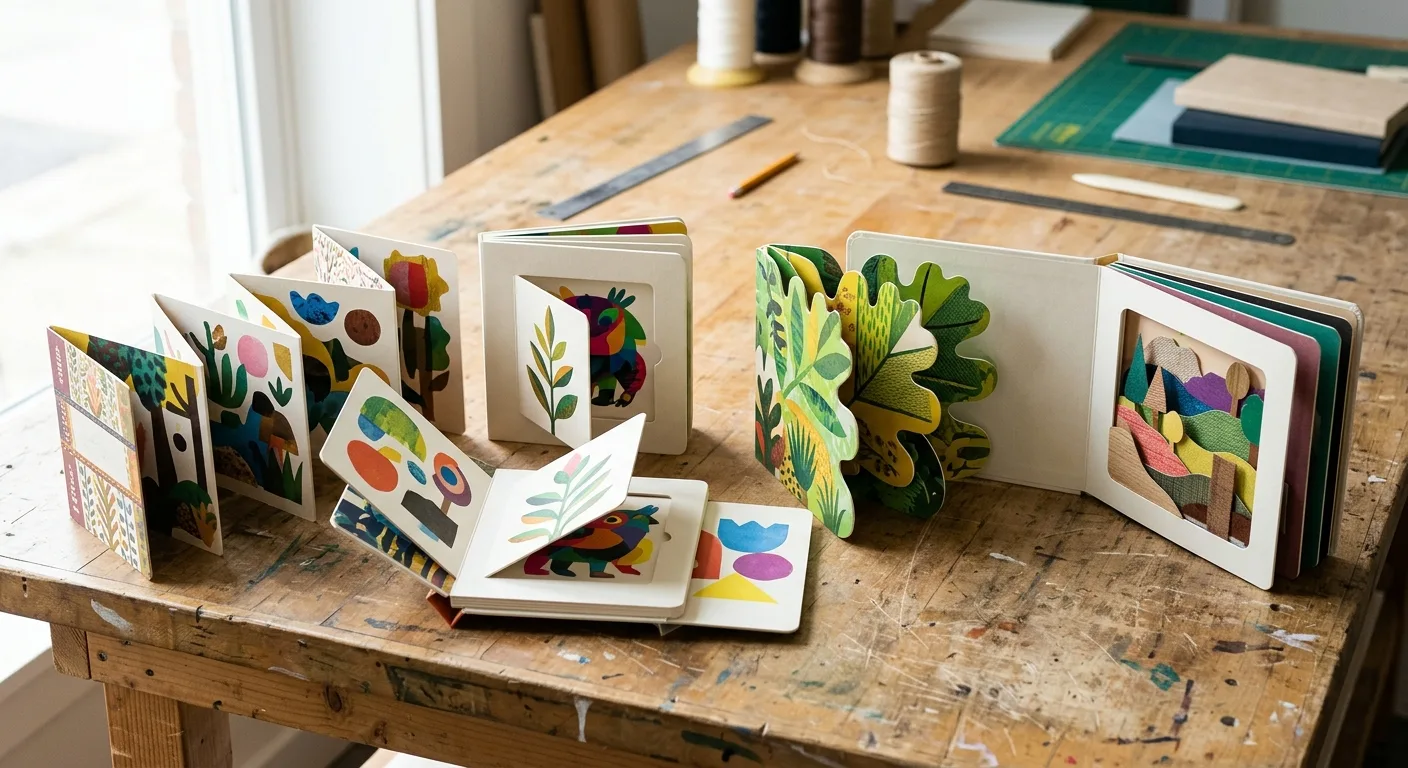
Specialty construction covers board books whose pages or assembly go beyond a standard flat, rectangular book block. These formats may use paper engineering, layered board, unusual folds, shaped trimming, or separate components. The binding decision is therefore part of the product design rather than a final finishing choice.
Common specialty approaches
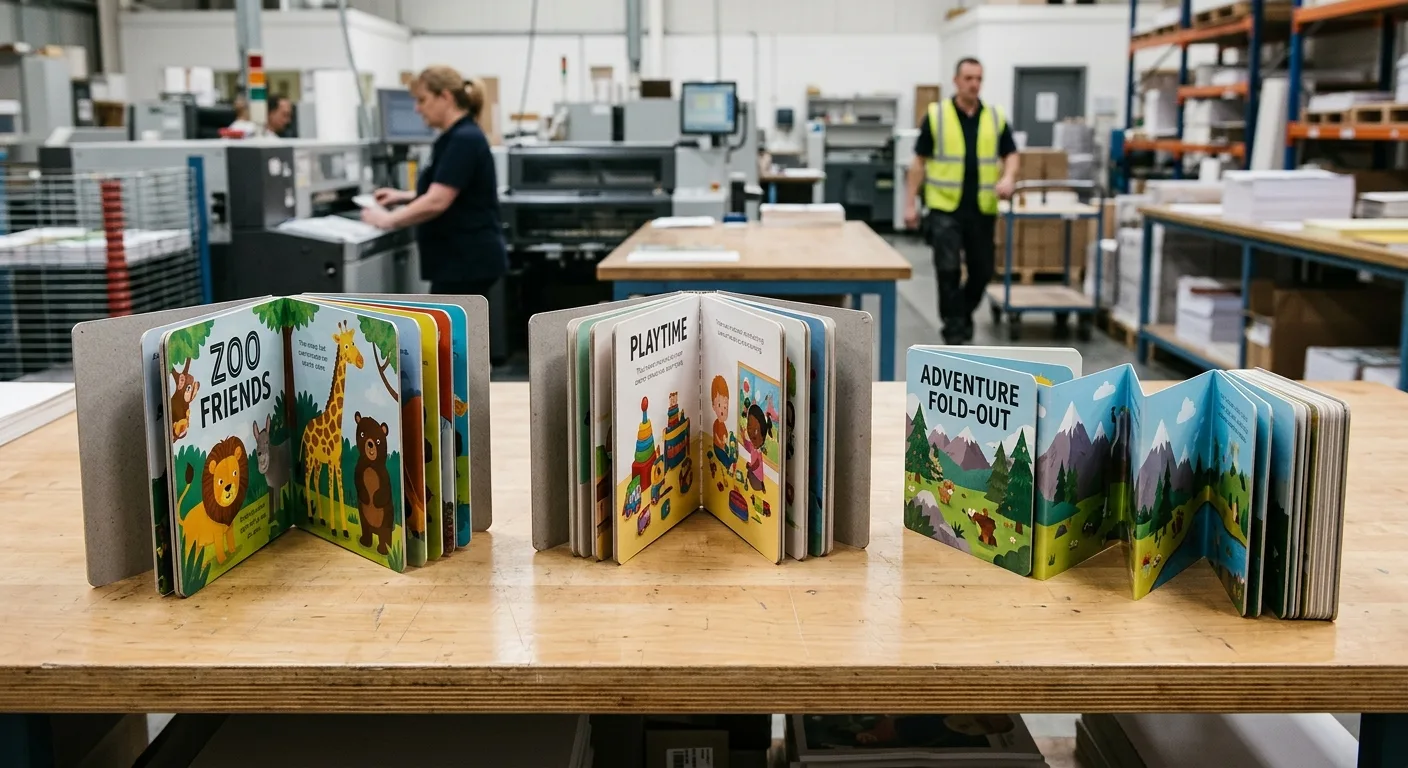
- Concertina or accordion construction: A continuous folded strip creates a sequence of panels. This can suit panoramic artwork, timelines, visual storytelling, and compact folded formats.
- Lift-the-flap construction: Additional flaps are attached to a base page. The hinge, flap size, folding direction, and clearance must be planned so the components do not interfere with one another.
- Layered or recessed construction: Multiple board or paper layers create depth, windows, or framed illustrations. Registration and adhesive control are important.
- Shaped or die-cut construction: The book or individual pages are cut to a non-rectangular profile. The shape affects nesting, trimming, corner safety, packaging, and production yield.
- Wheel, tab, and moving-part construction: Rotating discs, pull tabs, sliders, or other parts require additional assembly and careful tolerance planning.
- Fold-out or gatefold pages: Extended panels are folded into the book and need sufficient gutter, fold allowance, and clearance from adjacent pages.
Specialty formats can create a distinctive user experience, but they generally require more detailed technical review than a standard board book. Artwork may need separate dielines, layer files, fold indicators, glue zones, and safety margins. The first quotation may remain provisional until the printer reviews the structure, dimensions, materials, and assembly sequence.
For interactive formats, see our guide to durable binding options for children’s picture books and discuss the engineering requirements before final artwork is prepared.
How to Choose a Board Book Binding Method
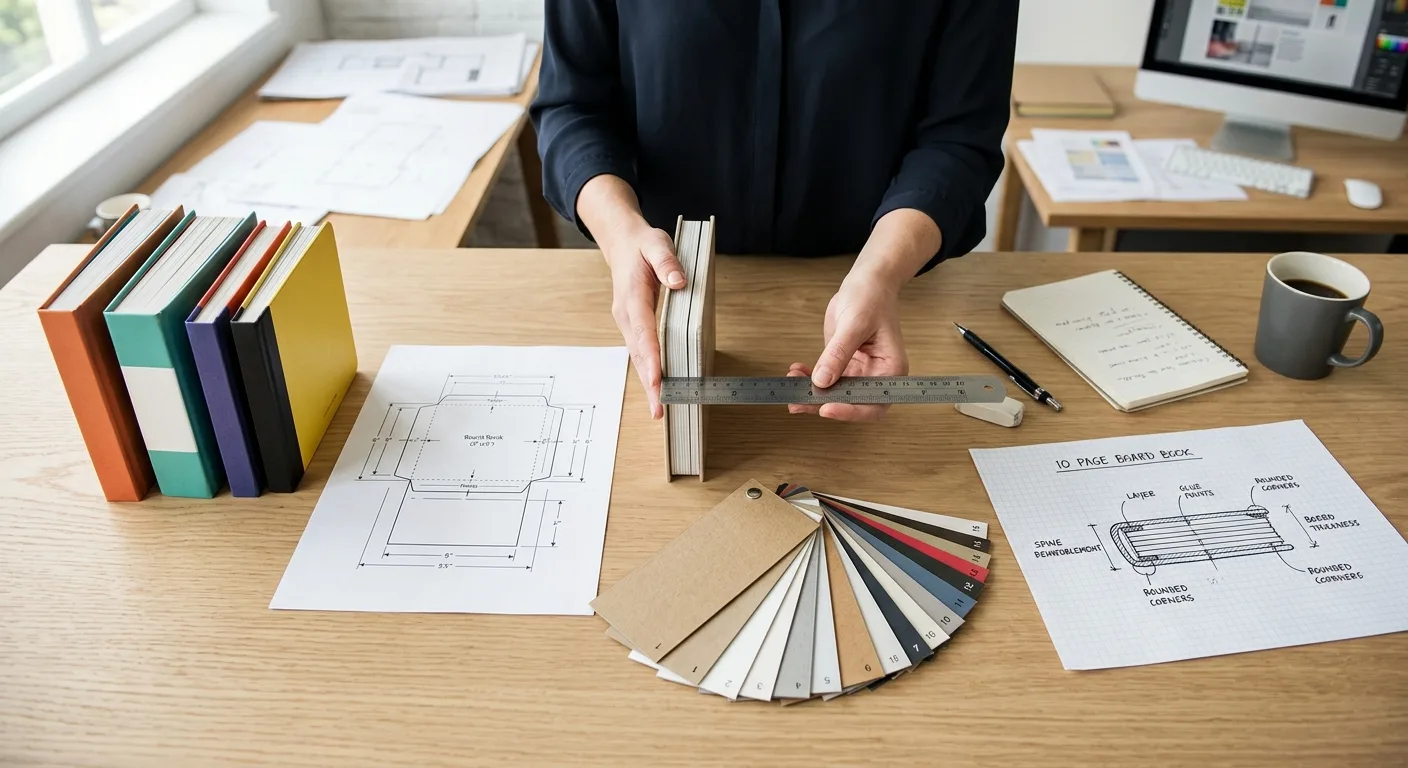
Start with the intended reading experience, then select the construction that supports it. A standard storybook with flat leaves usually has different requirements from a fold-out activity book or a shaped novelty format.
Key selection factors
- Page structure: Identify whether the book uses individual board leaves, folded sections, continuous panels, flaps, wheels, or layered pieces.
- Opening behaviour: State whether the book should open conventionally, lie relatively flat, display a panoramic spread, or fold into a compact shape.
- Expected handling: Consider the age group, frequency of use, retail environment, and whether the book will be handled by one child or shared in a classroom or library.
- Board and paper specification: Thickness, stiffness, coating, lamination, and surface texture affect folding, trimming, adhesive bonding, and page movement.
- عدد الصفحات وحجم القص: More leaves increase the closed thickness. A large trim size can also increase hinge stress and packaging requirements.
- Visual requirements: Full-bleed artwork, edge-to-edge colour, rounded corners, dark solids, and precise registration may influence the suitable construction.
- Budget and quantity: Specialty assembly and extra components may increase setup and unit costs. The effect depends on quantity and production method.
- Packaging and delivery: Thick or irregular books may need different carton packing and shipping calculations, particularly for international delivery.
There is no single binding method that is best for every board book. The printer should review the complete specification and explain which construction is technically suitable, what assumptions affect the quotation, and where a prototype is recommended.
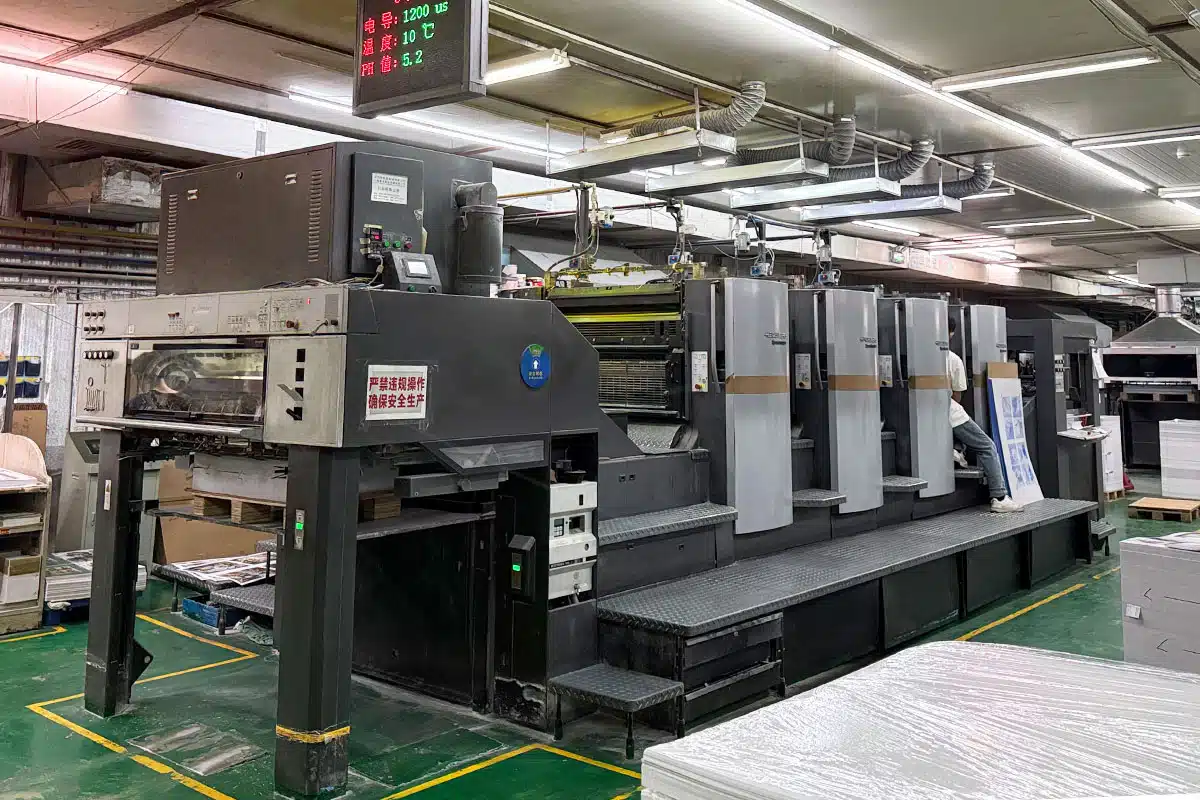
The Board Book Manufacturing Process
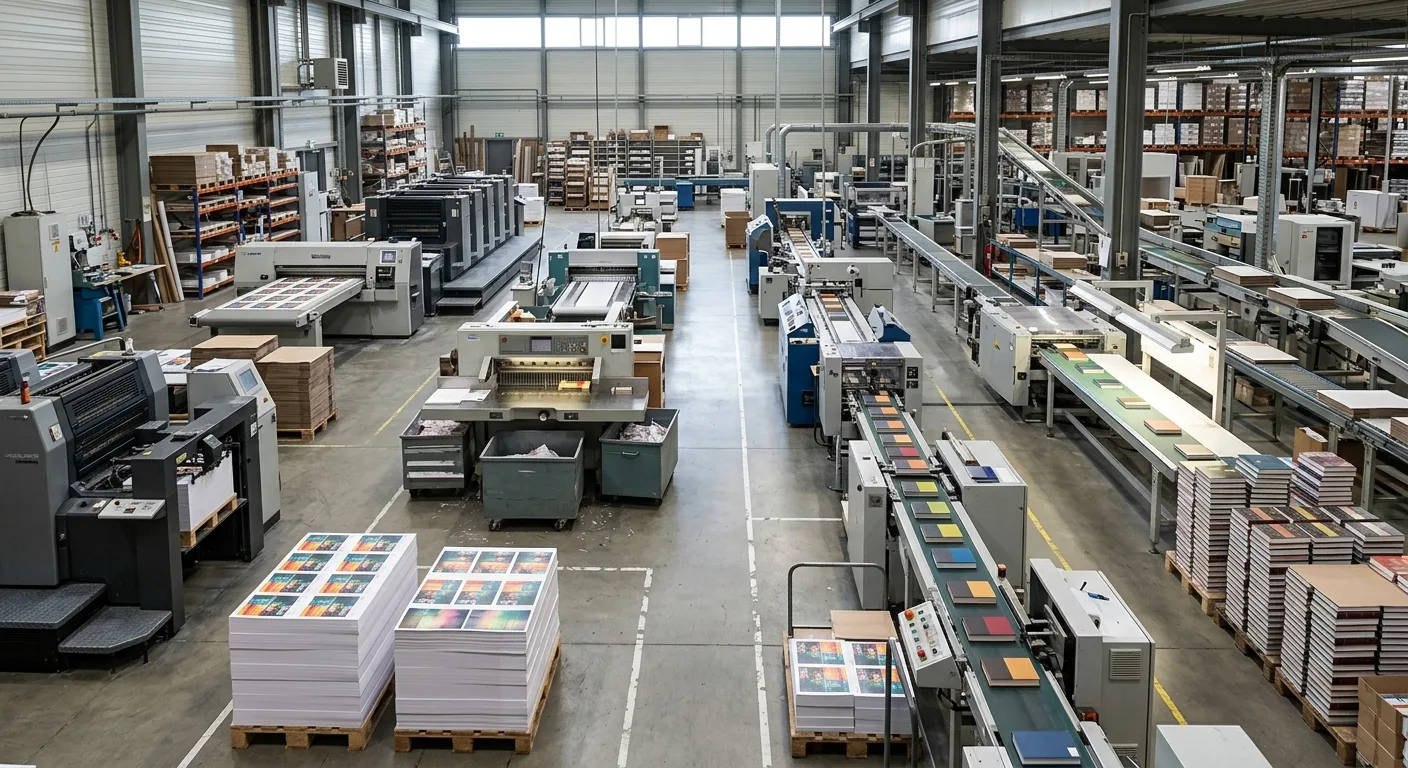
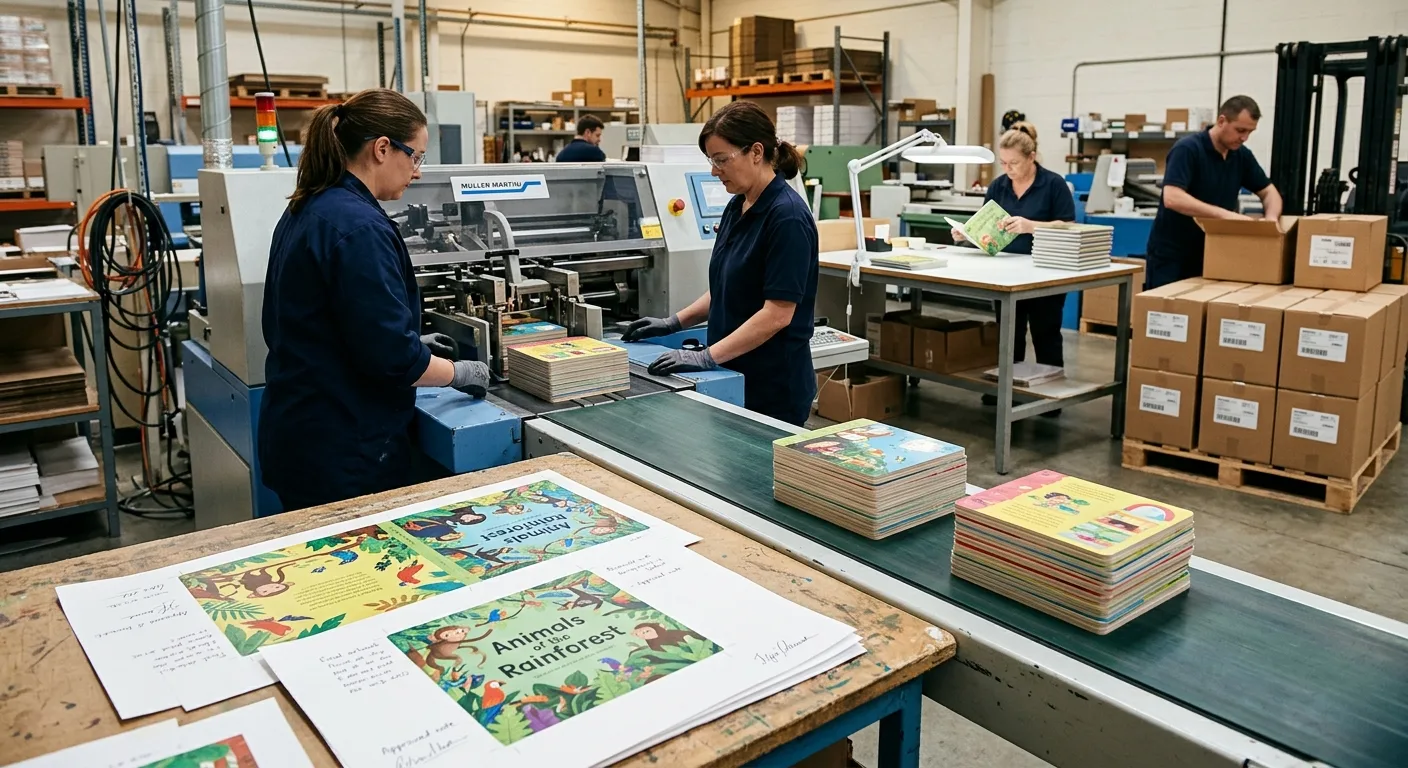
Understanding how board books are bound helps buyers provide better specifications and evaluate samples. The board book manufacturing process commonly includes the following stages:
- Structural planning: The printer reviews the trim size, page count, board thickness, binding concept, cover, features, and packaging requirements.
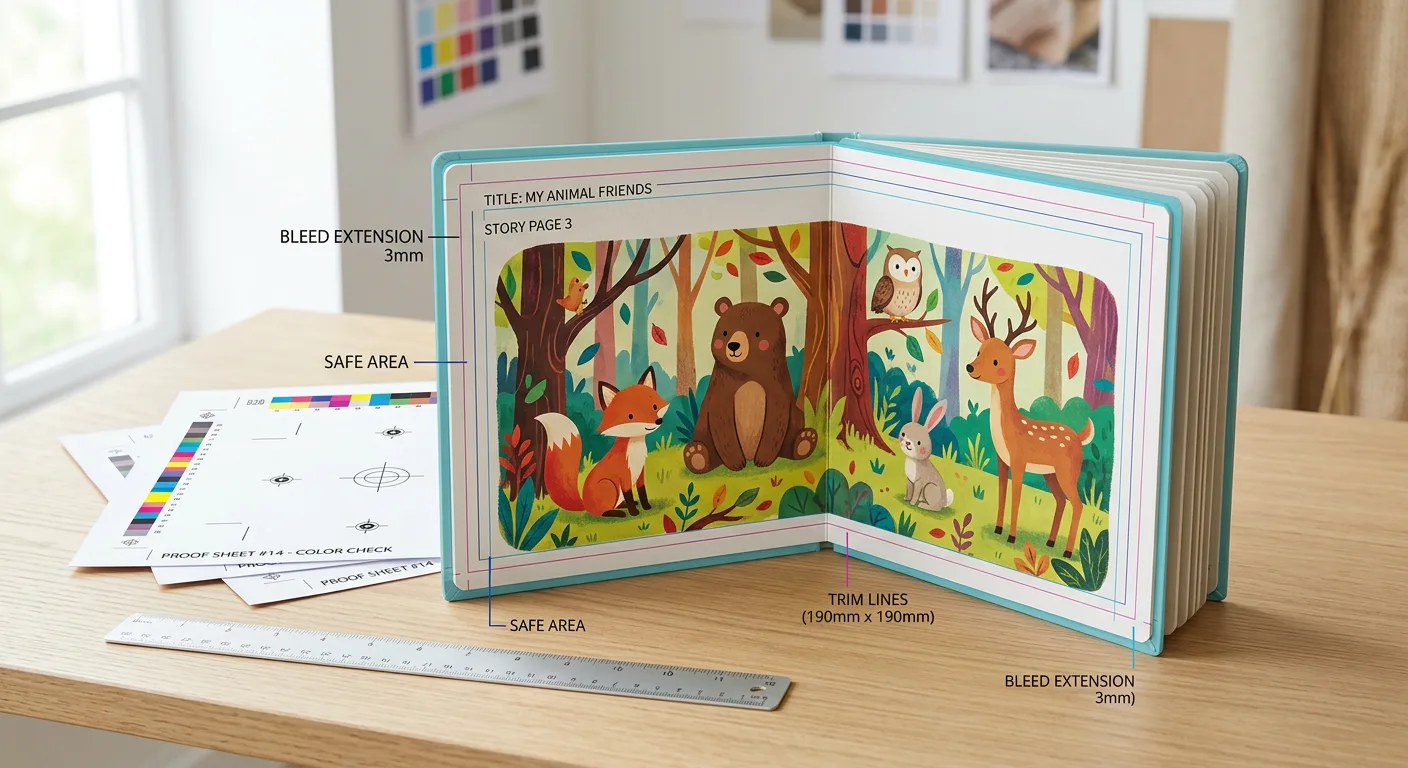
- Artwork and technical file review: Files are checked for trim, bleed, safe areas, spreads, folds, dielines, colour mode, image resolution, and separate layers where needed.
- Material preparation: Paper, board, cover stock, coatings, adhesive, thread, and any specialty components are selected according to the approved specification.
- الطباعة: Interior and cover artwork are printed using the agreed colour and production process.
- Mounting, folding, or sewing: Printed sheets may be mounted to board, folded into sections, sewn where applicable, or prepared for specialty assembly.
- Binding and assembly: Leaves, covers, hinges, flaps, wheels, tabs, and other components are joined and pressed or formed.
- التشطيب: The book may receive trimming, corner rounding, lamination, foil, embossing, or other approved finishing.
- Inspection and packing: Samples are checked for print quality, alignment, page order, adhesive or sewing quality, function, and packing condition before shipment.
Each stage can affect the final result. For example, a fold may change the visible artwork area, while a thicker board may alter the hinge and spine dimensions. Buyers should approve a proof or prototype when construction accuracy is important. Our book printing proof checklist explains what to review before authorising a production run.
Board Book Binding Buyer Checklist
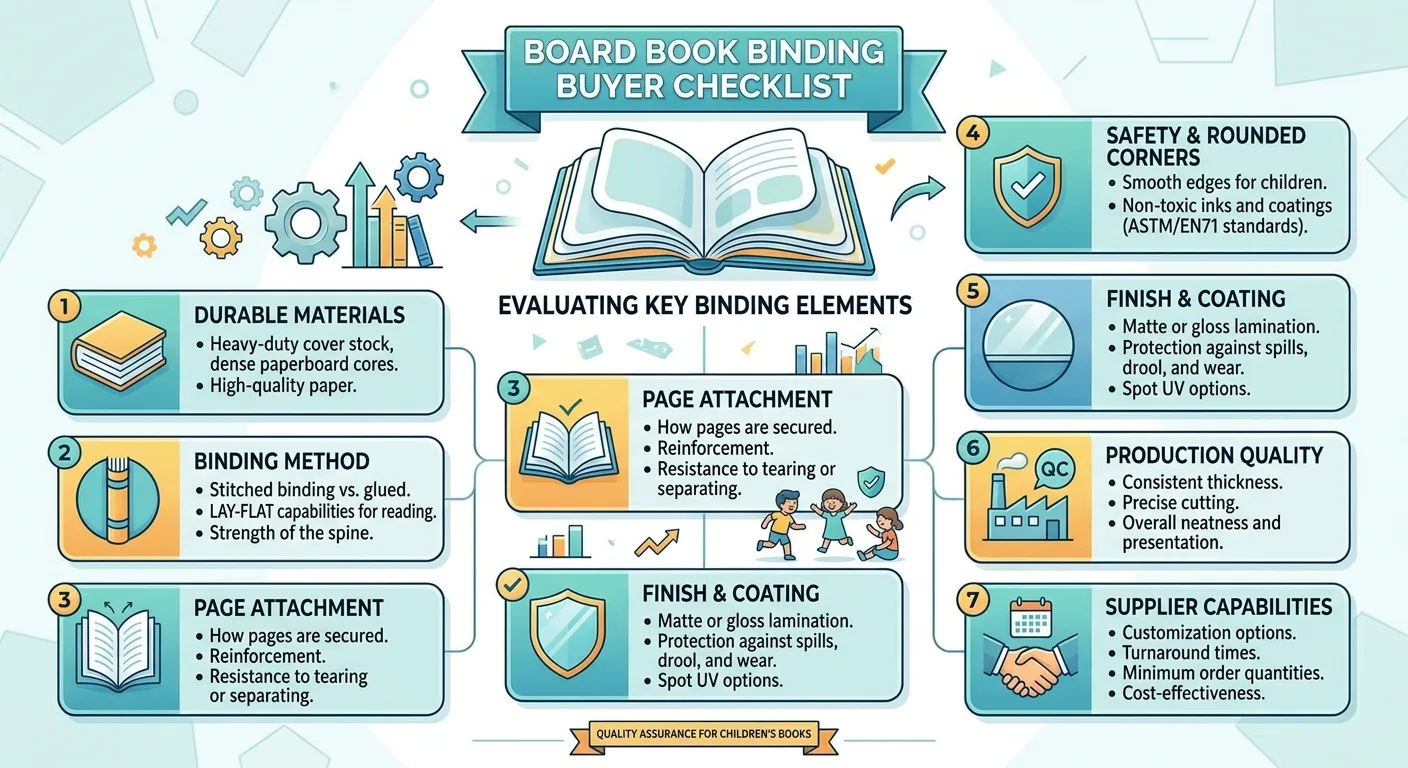
Before requesting a quotation, prepare the following information. Clear specifications reduce revisions and help the printer recommend a realistic construction.
- Finished trim size and whether dimensions are portrait, landscape, square, or custom.
- Number of pages or leaves, including covers, flaps, fold-outs, and other added parts.
- Interior board or paper preference, thickness, coating, lamination, and corner treatment.
- Preferred binding direction and required opening behaviour.
- Whether the project is a standard glued format, a sewn or hybrid format, or a specialty construction.
- Detailed drawings, sketches, dielines, reference samples, or photographs for unusual structures.
- Colour requirements, finishing, edge artwork, and any registration-sensitive elements.
- Quantity, packing preferences, destination country, and any delivery constraints.
- File status, including whether artwork is complete, being revised, or still at concept stage.
- Need for a digital proof, physical prototype, pre-production sample, or production inspection.
Also ask how the quoted price may change if the board thickness, page count, quantity, finish, assembly method, or shipping destination changes. A transparent quotation should identify assumptions rather than treating a complex structure as a standard book.
الخاتمة
For many conventional board books, glued construction is a practical starting point. Sewn or hybrid construction may be appropriate when the structure includes flexible sections or requires a specific opening and reinforcement approach. Specialty construction is the better category for accordion formats, flaps, die-cuts, layered pages, moving parts, and other engineered designs.
The best board book binding option is the one that matches the page structure, handling requirements, visual design, production quantity, and budget. Share the complete specification with your printer early, request clarification for non-standard terminology, and use a prototype when the finished movement or assembly cannot be judged from flat artwork alone.