
جدول المحتويات
- How Bible Printing Cost Is Calculated
- Main Factors Affecting Bible Printing Cost
- Bible Printing Quote Checklist
- Binding and Cover Cost Comparison
- Quantity and Printing Method
- Bible Manufacturing Options to Consider
- Files, Proofing and Quality Requirements
- Shipping and Landed Cost
- How to Compare Bible Printing Quotes
- Plan the Specification Before Comparing Prices
تعتمد تكلفة طباعة الكتاب المقدس على الشكل، وعدد الصفحات، ونوع الورق، وطريقة التجليد، وتصميم الغلاف، والتشطيب، والكمية، وحالة الملف، ووجهة التسليم. يشرح هذا الدليل العملي كيف تؤثر كل مواصفة على عرض السعر الخاص بطباعة الكتاب المقدس حسب الطلب، وما الذي يجب على المشترين تقديمه للحصول على أسعار دقيقة.
How Bible Printing Cost Is Calculated
Bible printing cost is calculated from the complete manufacturing specification rather than from page count alone. The main variables are trim size, page count, text paper, colour requirements, binding structure, cover material, special finishes, order quantity, file condition and delivery destination.
A compact monochrome Bible printed on thin paper and bound in a flexible cover has a different production path from a casebound study Bible with colour maps, ribbons, thumb indexes and gilded edges. For this reason, a supplier cannot provide a dependable custom Bible printing price from the quantity alone.
In general, a higher quantity can reduce the manufacturing cost per copy because plate making, machine setup, colour calibration and binding preparation are distributed across more books. However, the total order value, packing volume and freight cost rise with quantity. Buyers should therefore compare both the unit manufacturing price and the total landed cost.
The assumptions in this guide are that the project uses custom offset book production, the files are legally cleared for reproduction, and the final price will be confirmed after technical review. Changes to paper availability, exchange rates, packing, freight method or destination requirements may affect a quotation.
Main Factors Affecting Bible Printing Cost
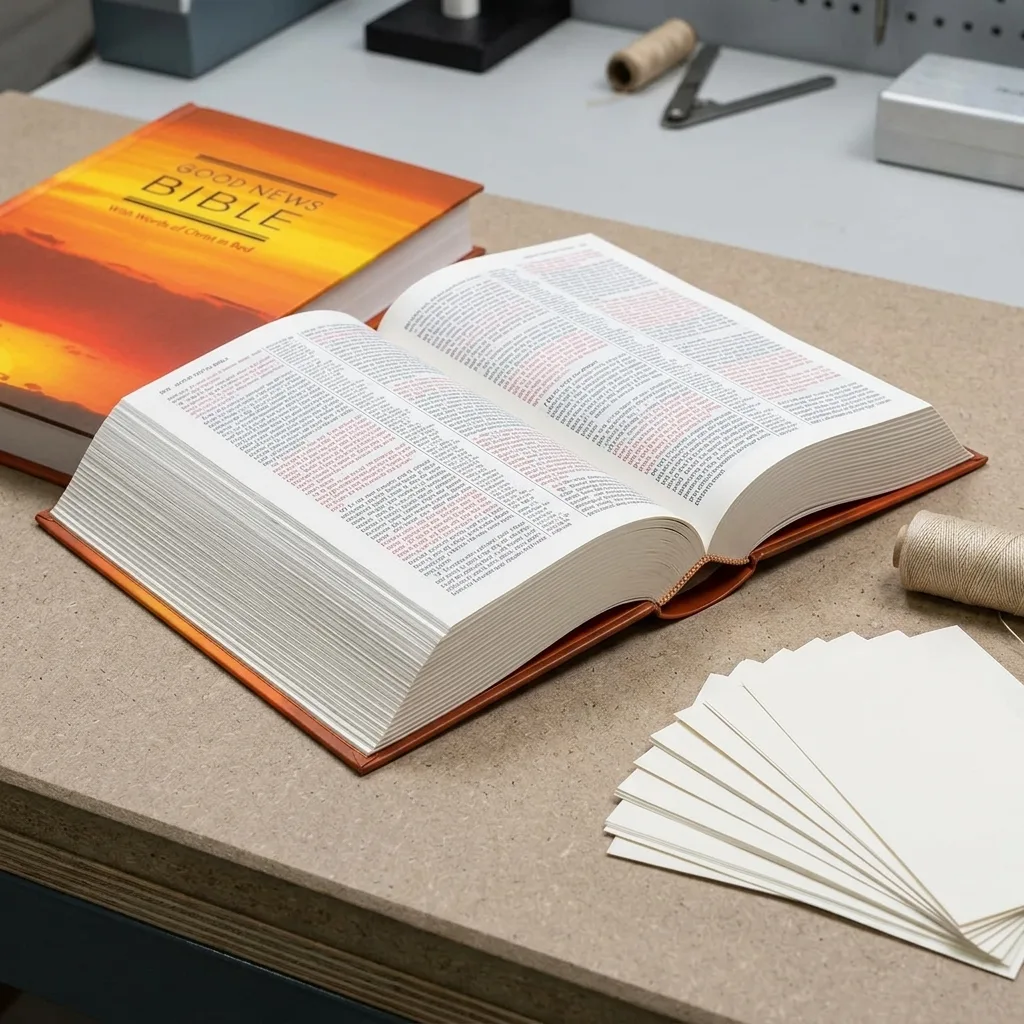
Trim size and page count: A larger page uses more paper, while a high page count increases printing, folding, gathering and binding work. Page count must also suit the printer’s signature layout. Adding or removing a few pages can sometimes change the number of required signatures.
ورق النص: Many Bibles use thin, lightweight paper to control thickness and weight. Paper opacity, caliper, shade, grain direction and press performance all matter. A low-opacity sheet may allow text from the reverse side to interfere with reading. Paper selection should balance readability, bulk, durability and cost. The practical differences are explained further in this guide to book printing paper types.
Ink and colour: One-colour black text normally requires fewer printing units than two-colour text, such as black text with red words. CMYK maps, illustrations or study sections add colour plates and press time. The quotation should identify whether colour appears throughout the book or only in selected signatures.
التجليد: Thread sewing, adhesive application, endpapers, spine lining, rounding, backing and case making can all contribute to Bible book manufacturing cost. The correct structure depends on page count, paper thickness, opening behaviour and expected use.
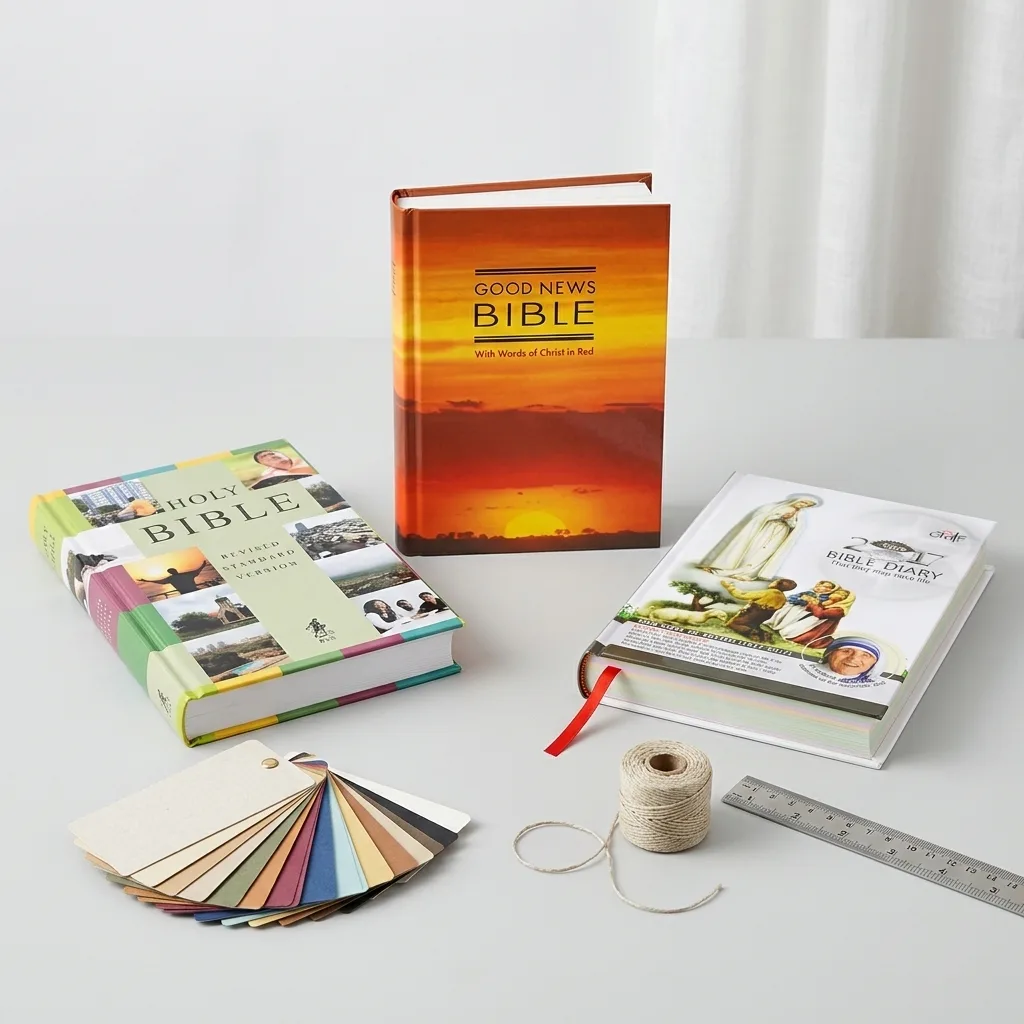
Cover and finishing: Printed paper cases, cloth, PU and genuine leather have different material and handling costs. Foil stamping, embossing, debossing, edge gilding, multiple ribbons, headbands, thumb indexing and protective packaging each add operations. Buyers considering flexible premium covers can review the practical differences between genuine leather and PU covers.
Bible Printing Quote Checklist
Prepare the following information before requesting a Bible printing quote:
- الحجم النهائي للصفحة واتجاهها
- Total page count, including front matter and blank pages
- Interior ink specification: black, black plus a spot colour, or CMYK
- Preferred paper type, weight, shade and opacity requirement
- Binding style and desired opening behaviour
- Cover material, board thickness and spine shape
- Finishes such as foil, embossing, gilding, thumb indexes or ribbons
- Required quantity and any split quantities by cover design or language
- Proofing or sample requirements
- Artwork status and planned file delivery date
- Individual packaging, carton marking and pallet requirements
- Destination country, city or postal code and preferred shipping method
If the paper or cover material has not been chosen, provide a reference copy, photographs and the intended market position. A physical sample is usually more useful than descriptions such as “premium” or “thin,” which do not define measurable specifications.
Also state whether the Bible needs a rounded or square spine. Spine construction influences appearance, case dimensions and binding operations; this round-back and square-back comparison provides additional planning guidance.
Binding and Cover Cost Comparison
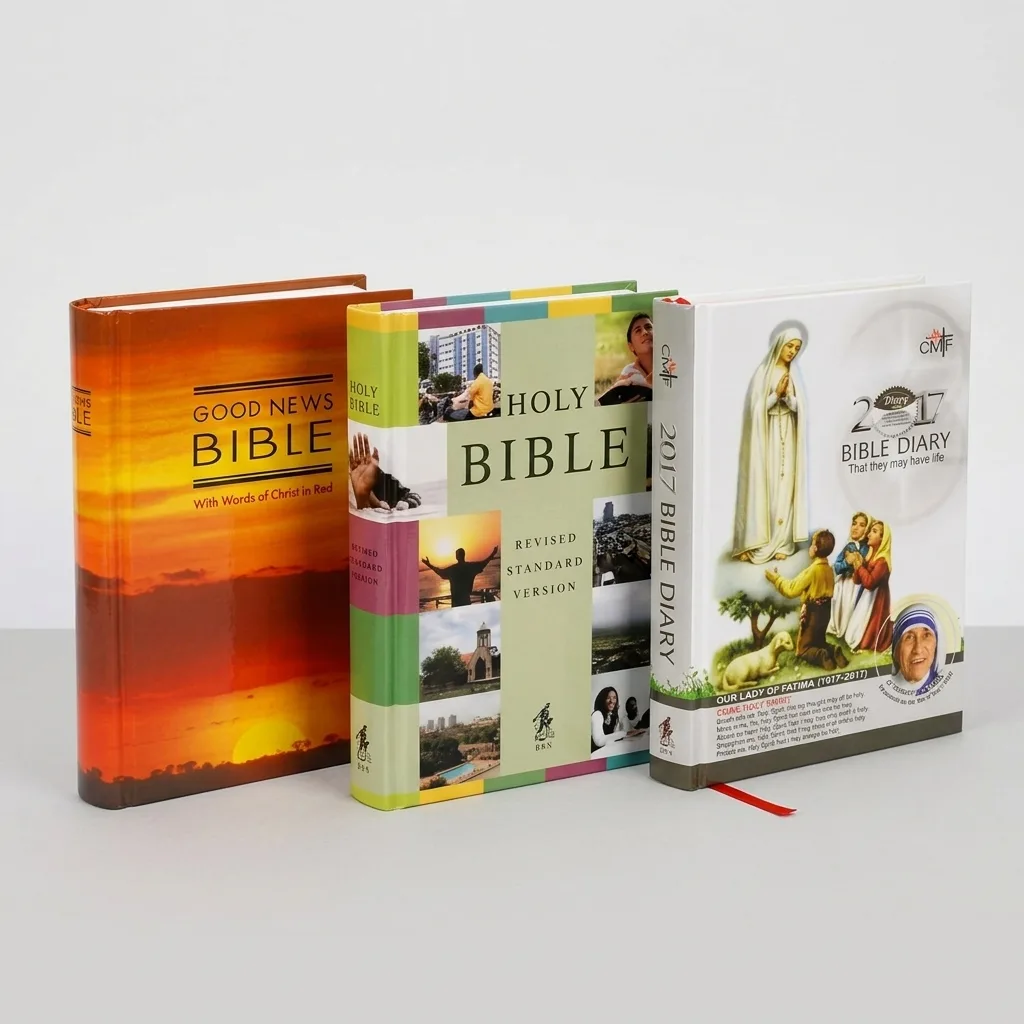
The table shows relative cost tendencies, not fixed prices. Actual results depend on dimensions, page count, materials, quantity and construction details.
| التنسيق | Typical construction | Relative cost tendency | Suitable buying priorities | Important quote details |
|---|---|---|---|---|
| Printed casebound | Sewn or adhesive-bound text block with a board case and printed cover wrap | معتدل | Durability, full-cover graphics and straightforward retail presentation | Board thickness, lamination, spine shape and endpapers |
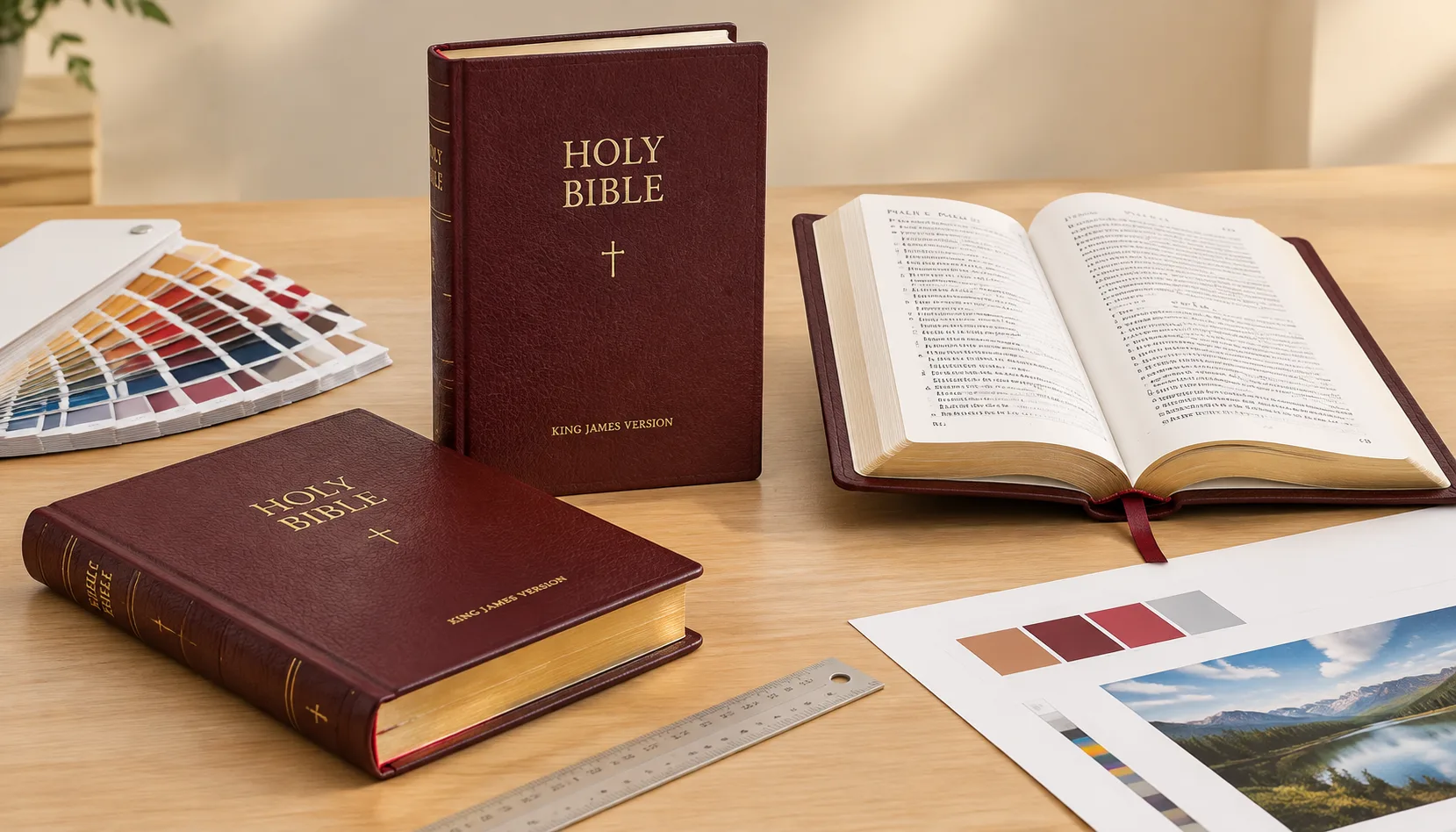
| Cloth casebound | Board case covered with cloth, often with foil or a jacket | Moderate to higher | Traditional appearance and presentation editions | Cloth grade, foil area, jacket and protective packing |
| PU flexible cover | Flexible or semi-flexible cover with decorative stamping | Varies from moderate to higher | Soft hand feel, portability and gift editions | PU specification, reinforcement, stitching and edge treatment |
| Genuine leather cover | Leather cover with specialised preparation and decoration | Higher | Premium editions and long-term use | Leather type, grading, thickness, lining and stamping |
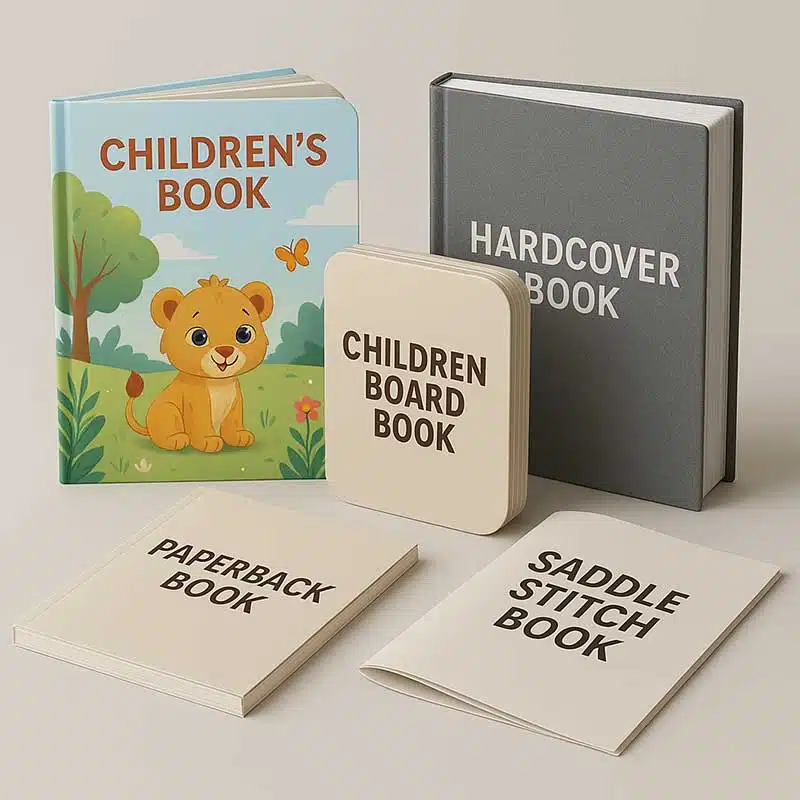
| Paperback | Printed flexible card cover with adhesive or sewn-and-glued binding | Generally lower | Distribution projects with firm budget and weight limits | Page count feasibility, cover stock, lamination and opening requirement |
A lower-cost binding is not automatically the best value. A very thick Bible must open comfortably and withstand repeated handling. Binding decisions should be evaluated with paper caliper, grain direction, sewing arrangement and text-block thickness.
Quantity and Printing Method
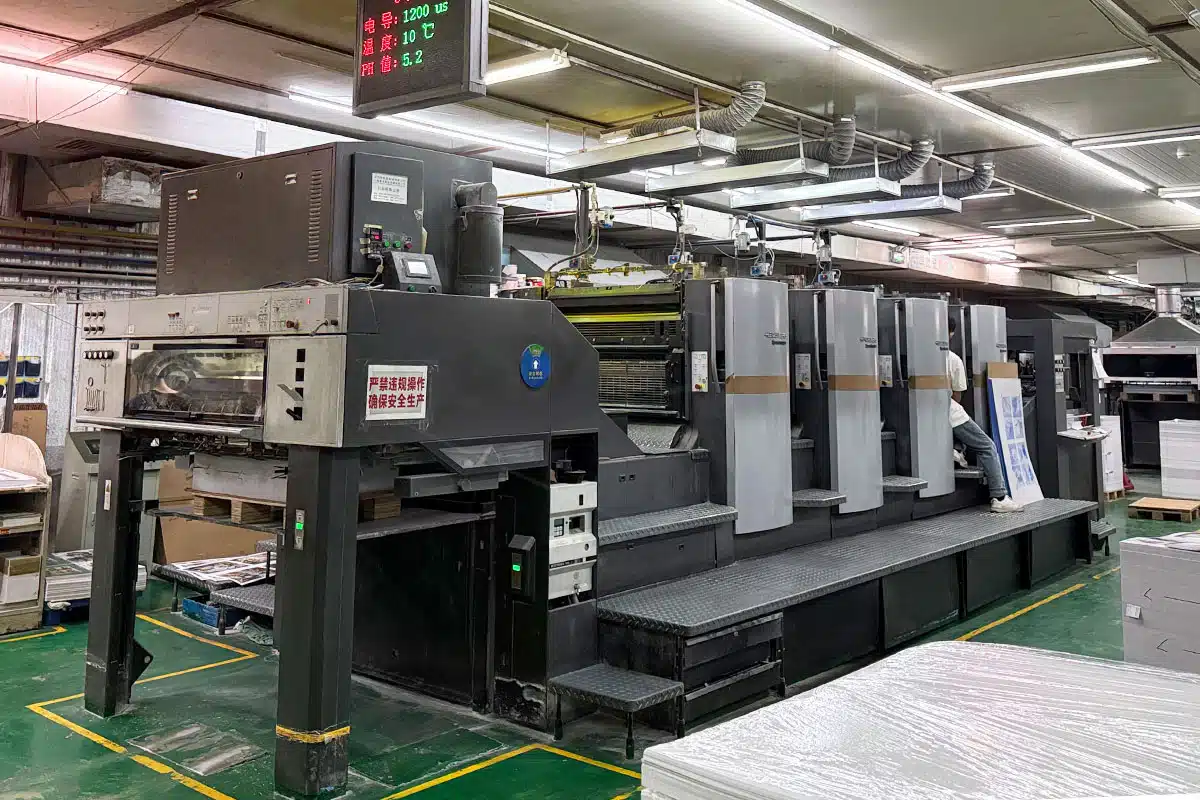
Quantity affects both total spending and unit economics. Offset printing involves fixed preparation costs, including plates and press setup, followed by comparatively efficient production over a longer run. Digital printing avoids some offset setup but may have a higher unit cost and different paper, colour, size or finishing constraints.
For a short test order, advance copy or limited edition, digital production may be worth evaluating. For bulk Bible printing cost calculations, offset printing is commonly assessed because long, repeated text pages and larger quantities can make efficient use of press signatures. The correct crossover point cannot be assumed without the specification and current production costs.
Buyers should request quotations at two or three realistic quantities, such as the initial requirement and a possible replenishment volume. Compare the total price, unit price, expected storage demand and freight impact. Ordering excess stock solely to obtain a lower unit price can increase warehousing costs and inventory risk.
For a detailed explanation of setup costs and volume economics, see this offset versus digital printing guide.
Bible Manufacturing Options to Consider
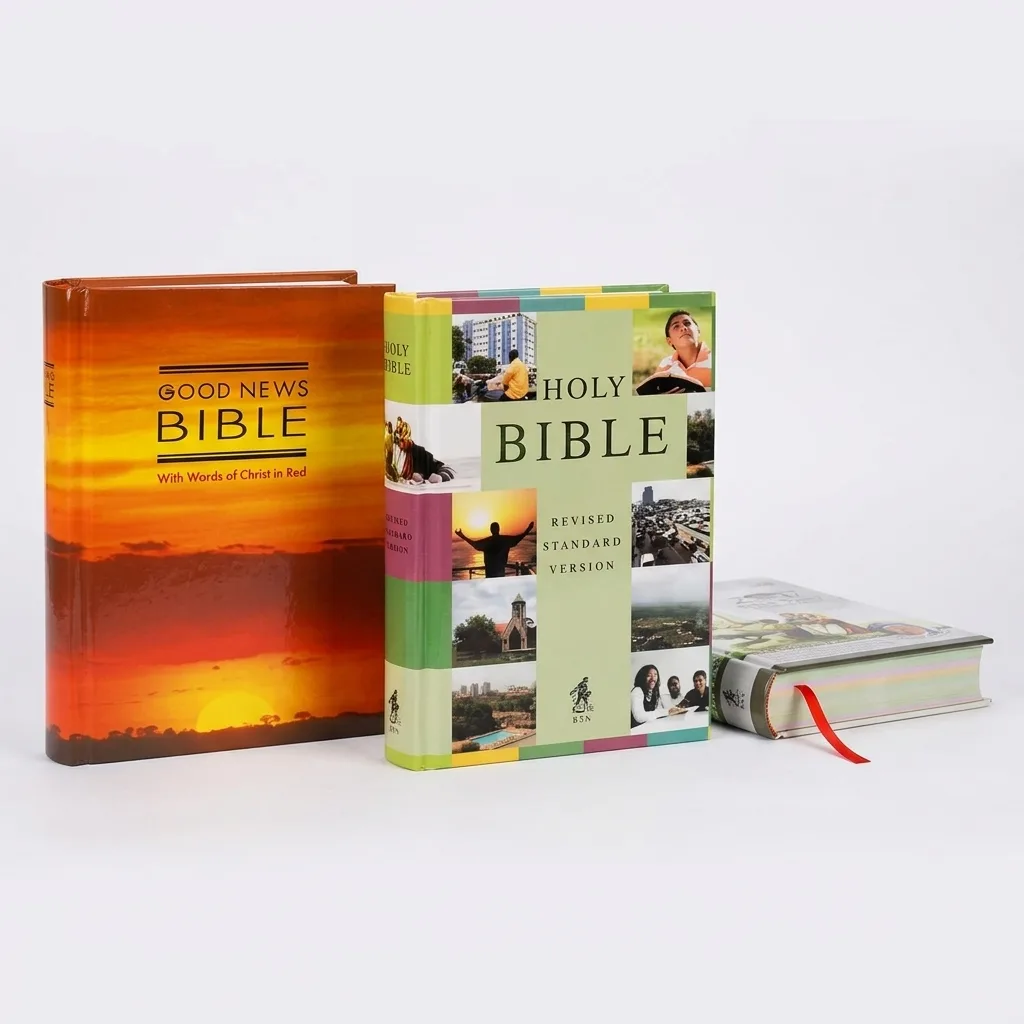
The most suitable production route depends on how the Bible will be used, its visual content and the required cover structure. The following options can help buyers organise an enquiry.
| Product option | Relevant project type | Specifications to confirm |
|---|---|---|
| Casebound Bible book printing | Durable editions requiring a rigid board case | Text paper, sewing, endpapers, board, spine shape, cover wrap and ribbons |
| Hardcover Bible book printing | Standard, study, educational or presentation editions | Page count, case style, printed colours, lamination and optional decoration |
| CMYK casebound Bible printing | Projects containing colour photography, maps, illustrations or designed study content | Colour-page distribution, image quality, proofing method and paper suitability |
These categories are starting points rather than fixed packages. A quotation should be based on the project’s actual dimensions, materials and finishing. If the design combines monochrome scripture pages with a limited number of colour signatures, identify the exact colour page positions so the printer can plan signatures accurately.
Files, Proofing and Quality Requirements
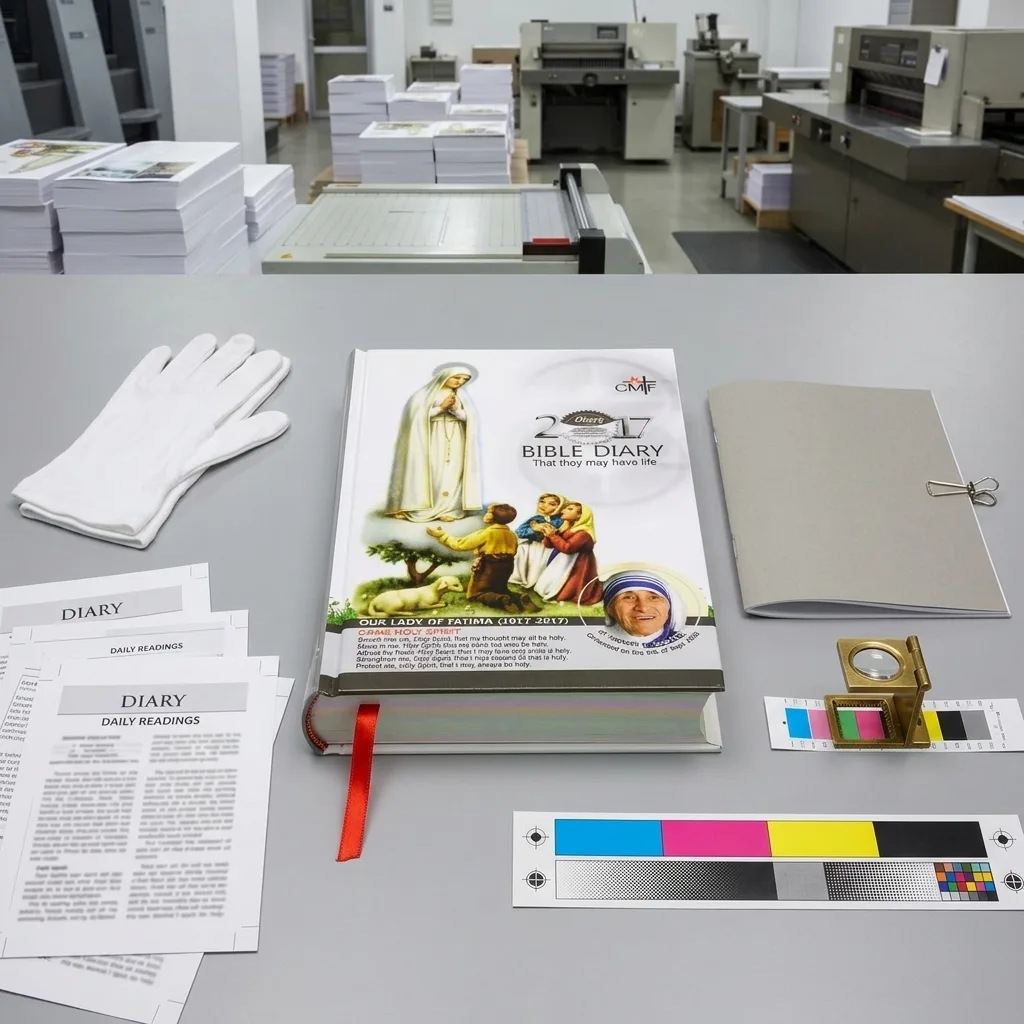
File condition can affect both cost and schedule. Print-ready files should use the confirmed trim size, bleed where required, embedded fonts, suitable image resolution and correctly defined colours. Very thin text paper also makes type design and ink coverage important. Heavy backgrounds, fine reversed type and excessive ink can create production or readability concerns.
Ask the printer to review page dimensions, page sequence, margins, blank pages, colour setup and cover geometry before production. The final spine width should be calculated using the selected paper’s actual caliper rather than an early design estimate.
Proofing should match the decisions that need approval. A digital proof can check content, page order and general colour interpretation. A blank dummy can demonstrate physical size, thickness, paper feel and binding structure without reproducing the final print. A printed sample may be appropriate when colour, fine type, thin-paper show-through or complex finishing requires closer evaluation.
Proofs and samples add cost and time, but they can reduce the risk of approving an unsuitable specification. Clarify whether sample charges, courier fees and revisions are included in the Bible printing quote.
Shipping and Landed Cost
The factory price is only one part of the cost to print Bibles internationally. Books are dense, and the combination of page count, quantity, carton size and packing method can make freight a significant part of the purchasing decision.
A useful quotation should state the applicable trade term and clarify what is included. Depending on the agreed arrangement, buyers may also need to budget for pickup, export handling, ocean or air freight, insurance, destination charges, customs clearance, duties, taxes, port storage and final delivery. These items vary by destination and shipment conditions.
Ask for the estimated packed weight, carton dimensions, copies per carton and total shipment volume. Compare air, sea and other available freight options according to urgency, quantity and destination. Air freight may suit samples or urgent small shipments, while sea freight may be evaluated for larger commercial orders. Neither option has a universal cost advantage without current shipment details.
Protective packing can also affect cost. Specify whether each Bible needs a polybag, paper wrap, sleeve, individual carton or presentation box, and confirm any carton labels or pallet rules required by the distributor.
How to Compare Bible Printing Quotes
Place competing quotations into a like-for-like comparison. A lower figure may reflect a different paper weight, lower opacity, simpler binding, fewer finishes, lighter packing or a freight term that excludes destination expenses.
Check each quote for the following:
- Exact trim size, page count and quantity
- Paper name or type, weight, shade and relevant physical properties
- Ink colours and the number or location of colour pages
- Binding method, sewing details and spine construction
- Cover substrate, decoration and edge treatment
- Number, colour and placement of ribbons
- Proof, dummy or sample scope
- Unit packing, export cartons and palletisation
- Overrun or underrun terms
- Production assumptions and quote validity
- Trade term, freight scope and destination
- Payment stages and responsibility for import charges
Also review the proposed production schedule by stages: file review, proofing, material preparation, printing, binding, finishing, packing and transit. Lead time depends on specification approval, material availability, capacity and shipping conditions, so it should not be treated as fixed until the supplier confirms the order details.
Plan the Specification Before Comparing Prices
An accurate Bible printing cost starts with a complete and consistent specification. Page count, thin-paper selection, colour arrangement, binding, cover material and finishing determine manufacturing requirements, while quantity, packing and destination determine the wider commercial picture.
Define the essential reading, durability and presentation requirements first. Then ask suppliers to price the same specification and identify optional upgrades separately. This makes it easier to reduce cost without unintentionally changing opacity, opening performance, durability or appearance.
الأسئلة الشائعة
How much does it cost to print a custom Bible?
There is no reliable standard price because the cost depends on trim size, page count, paper, colours, binding, cover material, finishes, quantity, packing and destination. A complete specification is required for an accurate quotation.
Does thin Bible paper always cost more than standard book paper?
Not always. Cost depends on the exact paper grade, weight, opacity, availability, required quantity and press performance. Thin paper can reduce book thickness and shipping weight, but it also requires careful printing and binding control.
Why does the unit cost usually change with order quantity?
Plate making, press setup, colour calibration and binding preparation are fixed or semi-fixed costs. Larger runs distribute those costs across more copies, although total manufacturing, storage and freight spending still increases.
Which Bible finishes have the greatest effect on a quote?
Material-intensive or labour-intensive options generally have a noticeable effect. Examples include genuine leather, complex foil or embossing, edge gilding, thumb indexing, several ribbons and individual presentation boxes. The impact must be calculated for the actual design and quantity.
What files are needed for a Bible printing quote?
Initial pricing can usually begin with trim size, page count, colour plan and cover details. For technical review, provide interior and cover PDFs, font and colour information, finishing artwork, and a clear indication of whether the files are final or still being prepared.
How can buyers reduce Bible printing cost without reducing readability?
Standardise the trim size, limit unnecessary colour sections, compare practical cover materials, simplify decorative operations and select a quantity based on realistic demand. Do not reduce paper opacity, margins, type size or binding strength without reviewing a physical dummy or sample.
Request a Custom Bible Printing Quote
Discuss your custom Bible project with Guangzhou YBJ Printing Co., Ltd. For an accurate quotation, provide the product type, trim size, page count, quantity, paper or binding preference, required finishes, file status and destination country. Reference photos or a physical sample can also help define paper, cover and finishing expectations.