
Impresión interactiva: mucho más que tinta sobre papel
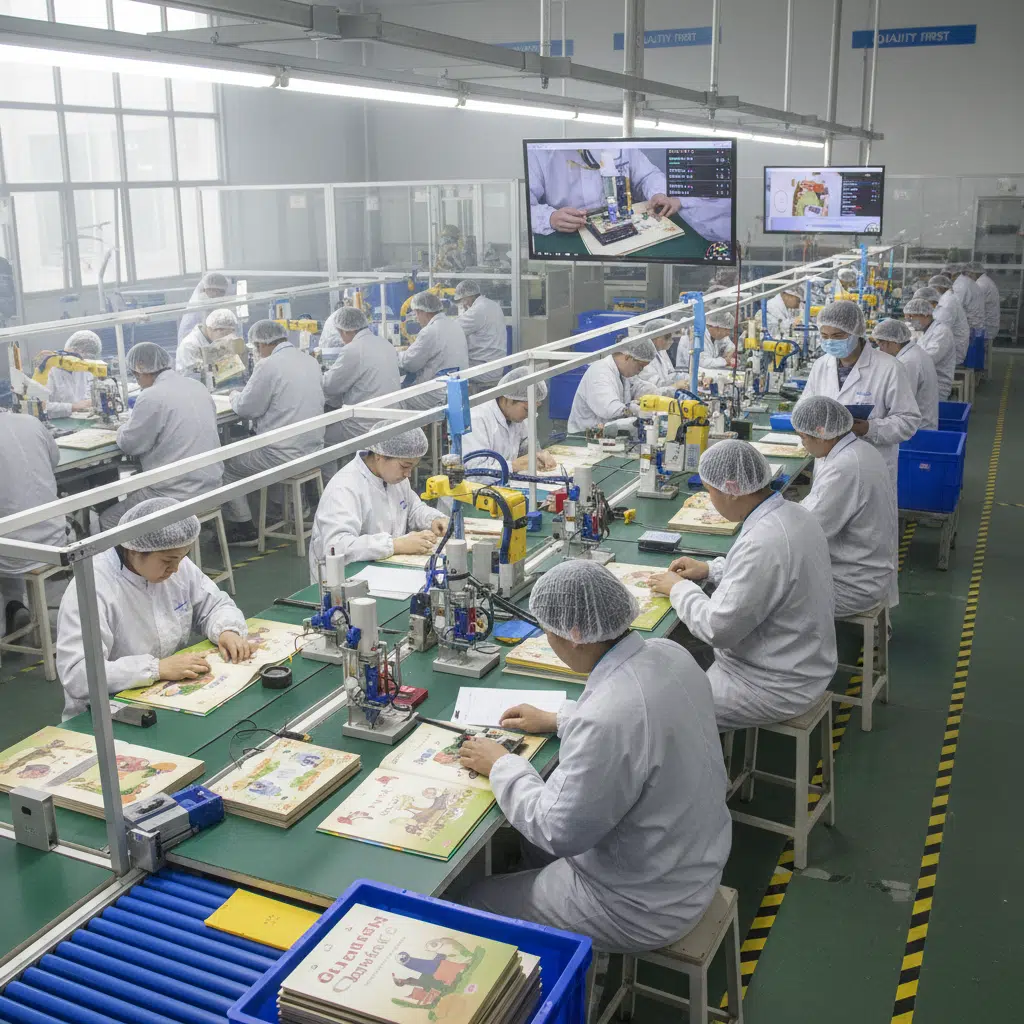
Para los editores y los propietarios de marcas, la transición de los libros de cartón estáticos a los libros interactivos con sonido supone un importante avance en el valor del producto, así como en la complejidad de su fabricación. La incorporación de componentes de audio transforma una experiencia de lectura convencional en una experiencia sensorial, pero también introduce en el proceso de producción el montaje de componentes electrónicos, el cumplimiento de las normas de seguridad relativas a las pilas y requisitos precisos de troquelado.
Esta guía aborda los aspectos técnicos y operativos de la fabricación de libros infantiles con sonido. Analizamos la integración estructural de los módulos de sonido, las diferencias entre los mecanismos de activación y las normas de seguridad fundamentales necesarias para la distribución internacional.
Tipos de módulos de sonido y mecanismos de activación
La selección del módulo adecuado es el primer paso del proceso de ingeniería. Esta elección influye en el grosor del libro, su maquetación y la experiencia del usuario. La mayoría de los proyectos de libros de sonido industrial utilizan una de estas dos tecnologías principales.
1. Módulos de pulsadores (interruptores de membrana)
Este es el mecanismo más habitual en los libros de cartón para niños. Se coloca una pastilla de carbón o un interruptor de cúpula metálica debajo del papel o dentro de una carcasa de plástico.
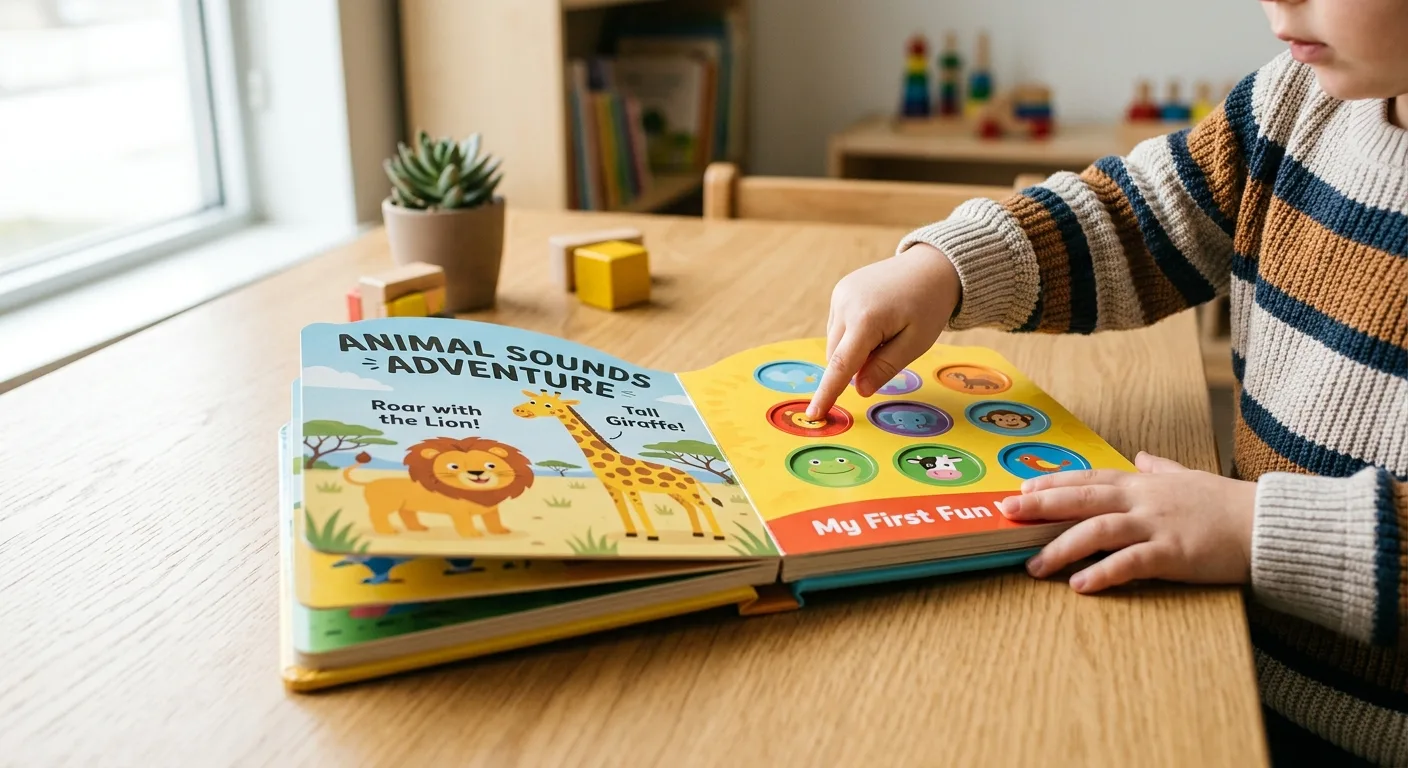
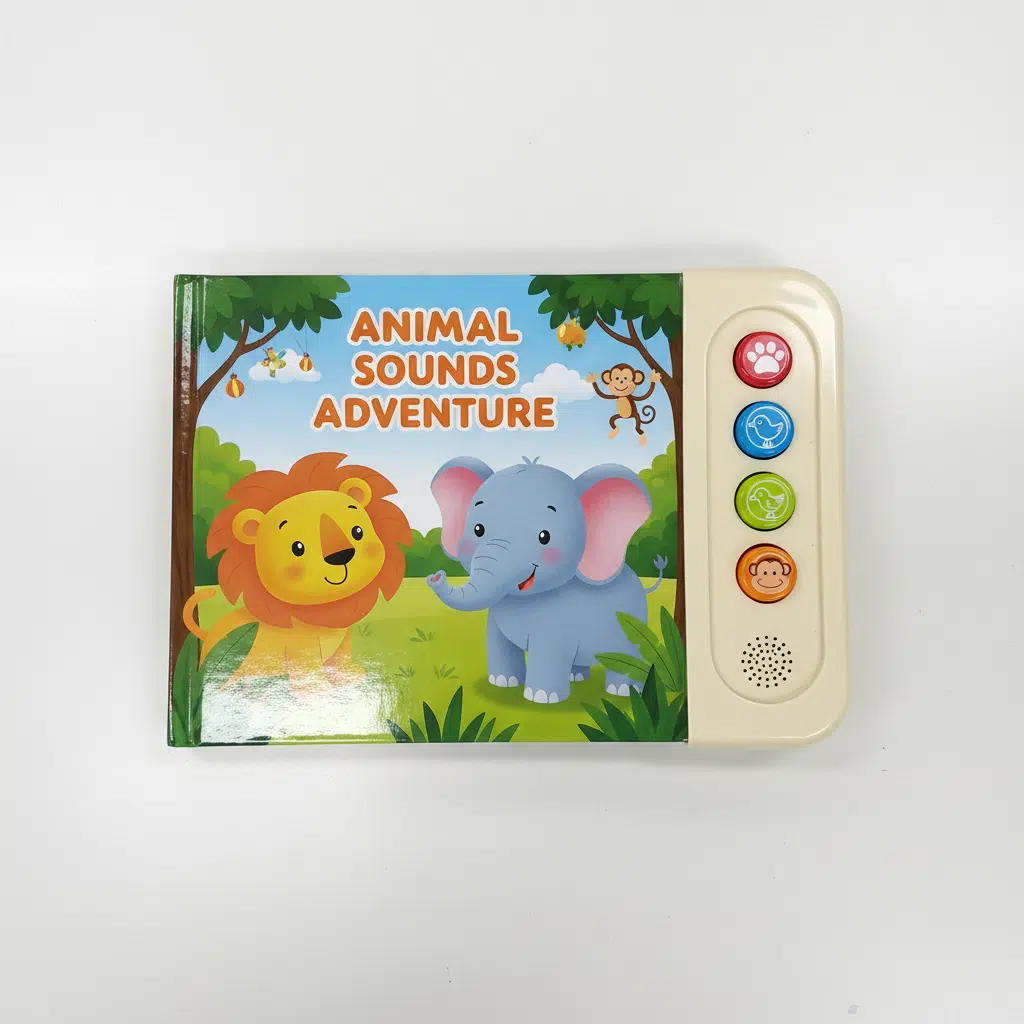
- Panel lateral / Estilo piano: El módulo de sonido está alojado en una carcasa de plástico visible fijada al lateral o a la parte inferior del libro. Los botones son bien diferenciados y fáciles de pulsar para los niños pequeños. Se trata de una solución rentable, ya que requiere un troquelado menos complejo del propio bloque del libro.
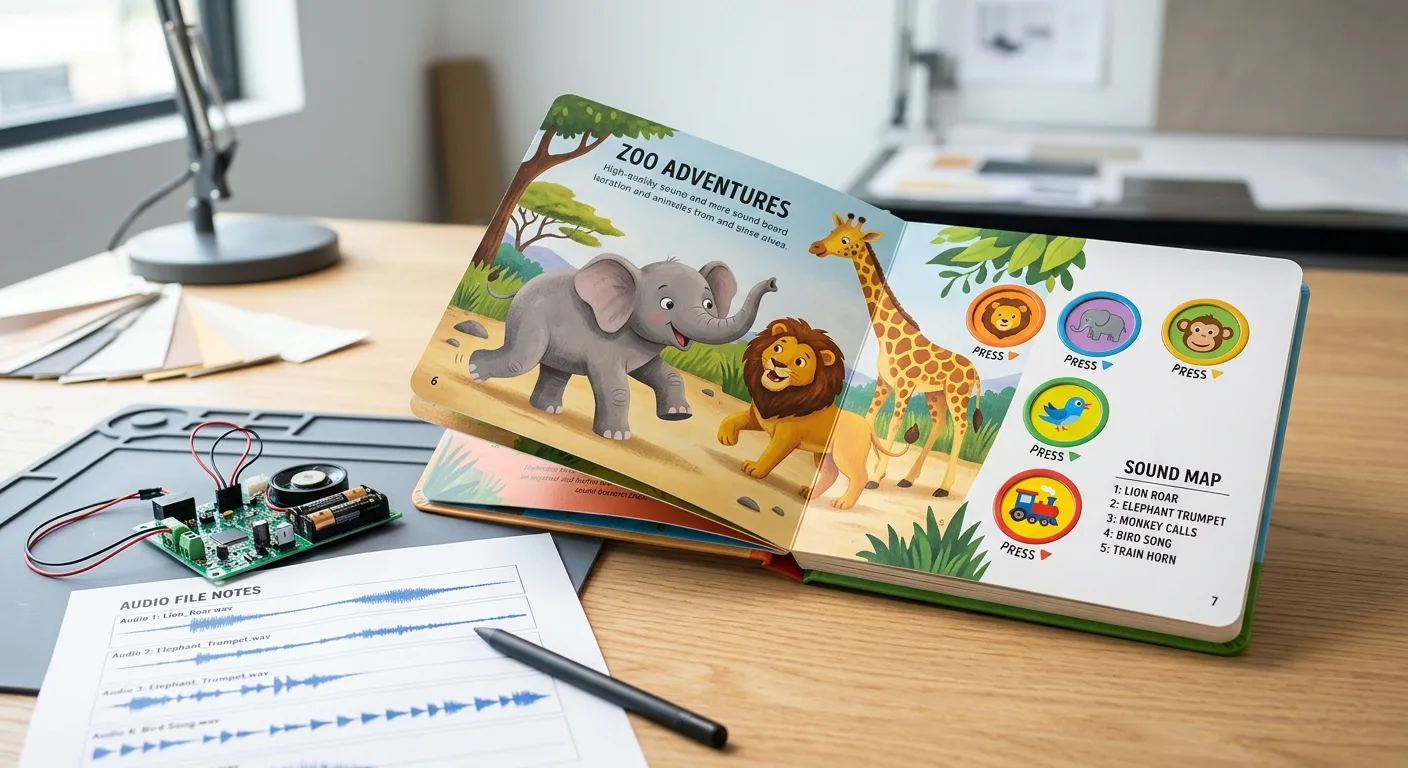
- Incorporado / Activado por página: El mecanismo está oculto entre las capas del cartón. El lector pulsa un icono concreto de la página para activar el sonido. Para ello es necesaria una alineación precisa entre el diseño impreso, el orificio troquelado en el cartón y el interruptor de membrana subyacente.
2. Módulos sensores de luz (fotosensibles)
Los sensores de luz se utilizan a menudo en libros de gama alta o novedosos. El sensor queda oculto en el lomo o en una abertura troquelada. Al pasar una página, la luz ambiental incide sobre el sensor, lo que activa el archivo de audio asociado a esa doble página.
- Pros: Crea una experiencia mágica y fluida, sin botones visibles.
- Contras: Para su funcionamiento, requiere una luz ambiental constante; su fabricación exige tolerancias extremadamente estrictas para garantizar que el sensor no se active accidentalmente mientras el libro está cerrado.
Especificaciones técnicas para la integración de audio
El éxito de la producción depende de que los archivos de origen sean de alta calidad y de que se elija el hardware adecuado.
Duración y calidad del audio
Los chips de sonido varían en función de su capacidad de memoria, que suele medirse en segundos (por ejemplo, 6 s, 12 s, 30 s o hasta varios minutos). Un audio más largo requiere chips de memoria de mayor capacidad, lo que repercute en el coste unitario.
- Formato: Los fabricantes suelen exigir archivos WAV o MP3 de alta fidelidad.
- Frecuencia de muestreo: Los juguetes convencionales suelen utilizar frecuencias de muestreo más bajas para ahorrar memoria, pero en el caso de los libros educativos (por ejemplo, para el aprendizaje de idiomas), es necesaria una frecuencia de muestreo más alta para garantizar la claridad.
- Control de volumen: Los niveles de decibelios deben calibrarse de modo que sean audibles pero seguros para los oídos de los niños, cumpliendo normas como la EN71.
Altavoz y carcasa
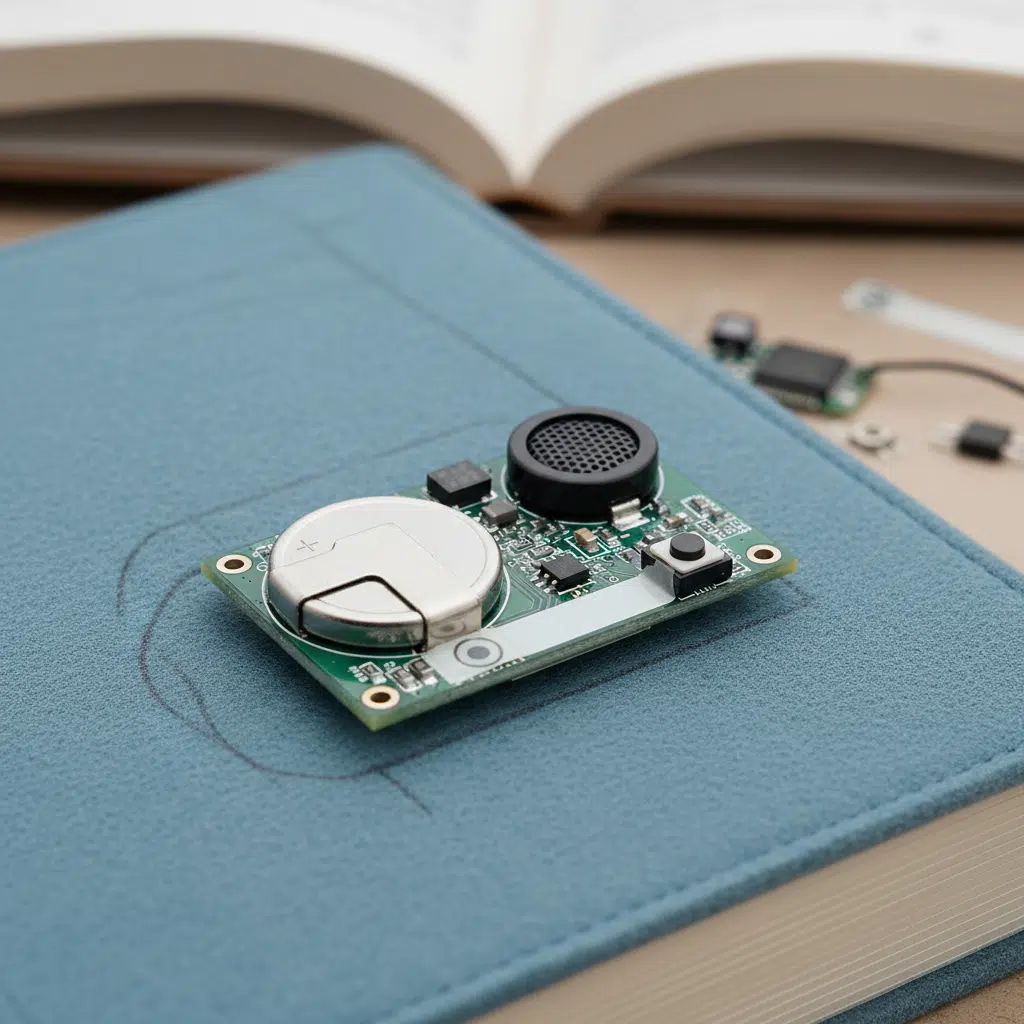
El tamaño del altavoz (normalmente 27 mm, 29 mm o 40 mm) determina el volumen y la respuesta de los graves. La carcasa de plástico debe estar diseñada para amplificar el sonido sin que se oigan vibraciones. En el caso de los libros de cartón, el módulo suele pegarse en un hueco troquelado en la contraportada, lo que requiere que el bloque del libro tenga el grosor suficiente para que la carcasa quede empotrada a ras.
Normas de seguridad y cumplimiento en materia de baterías
La seguridad es un aspecto ineludible en la fabricación de libros de calidad. Dado que estos productos contienen piezas pequeñas (pilas) y están destinados a los niños, están sujetos a un estricto control por parte de las autoridades aduaneras y los organismos reguladores de seguridad (CPSC, normas de la UE).
Seguridad del compartimento de las pilas
Para evitar riesgos de ingestión, el compartimento de las pilas debe fijarse con un tornillo que un niño no pueda quitar. Las tapas a presión no suelen cumplir con la normativa para productos destinados a niños menores de tres años.
Lengüetas aislantes (lengüetas de tracción)
Para preservar la vida útil de la batería durante el transporte y el almacenamiento, se inserta una lengüeta aislante de plástico en el circuito para interrumpir la conexión. El consumidor retira esta lengüeta la primera vez que utiliza el producto. Durante el montaje, comprobar que estas lengüetas estén correctamente insertadas es un punto de control de calidad fundamental.
Requisitos de certificación
Los editores deben asegurarse de que su socio fabricante pueda suministrar productos que cumplan con:
- CE / EN71 (Europa): Aborda las propiedades mecánicas y la migración de determinados elementos.
- ASTM F963 (EE.UU.): Especificación normalizada de seguridad de los juguetes para los consumidores.
- RoHS/WEEE: Directivas relativas a las sustancias peligrosas en los aparatos electrónicos y a la gestión de residuos.
El flujo de trabajo de fabricación
La integración de componentes electrónicos en los productos de papel modifica el proceso tradicional de encuadernación.
1. Impresión y troquelado
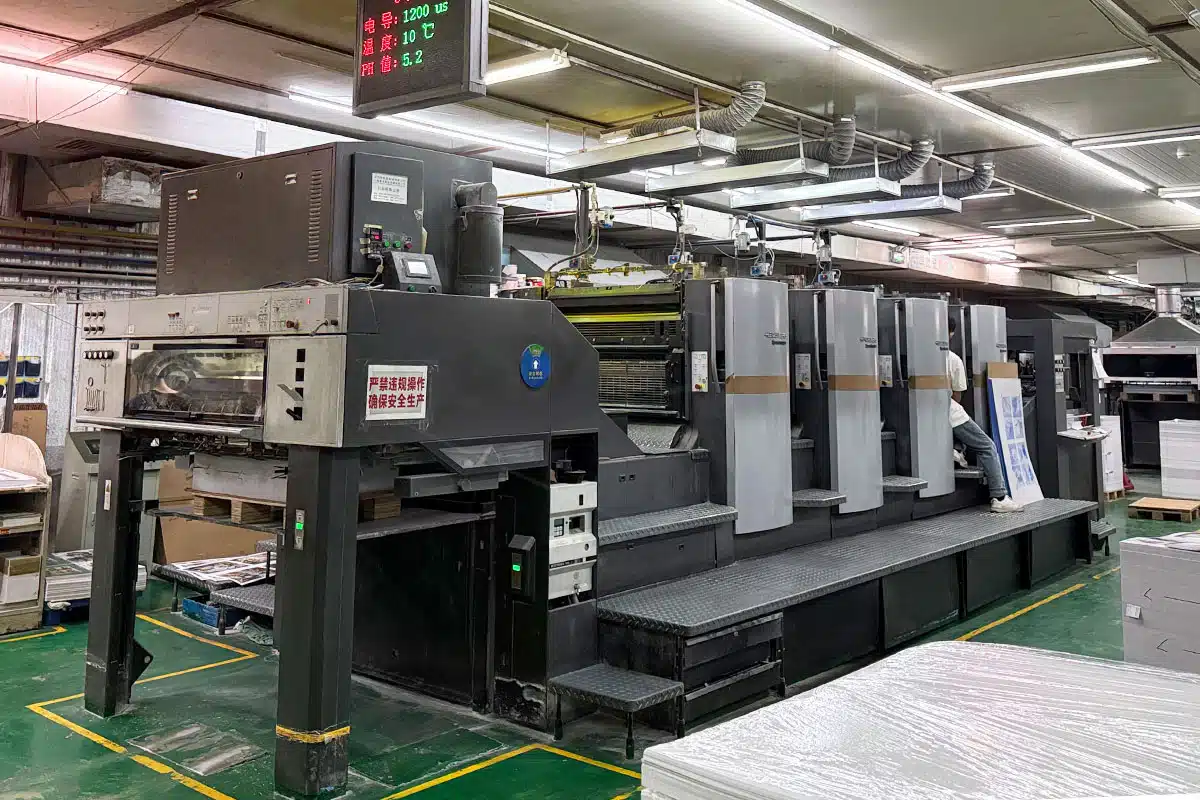
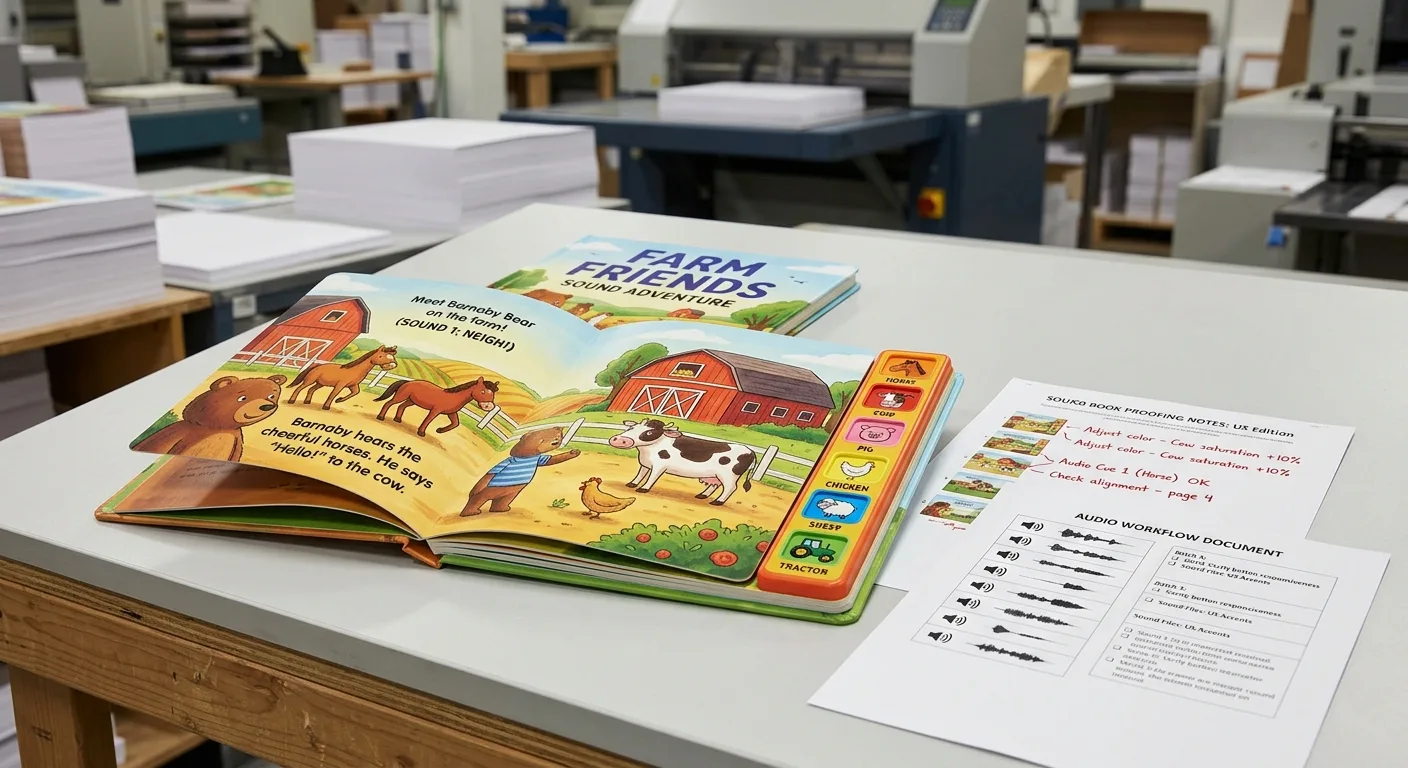
Primero se imprime y se plastifica el cartón. A diferencia de los libros normales, los libros sonoros requieren un troquelado complejo para crear cavidades para el módulo y orificios por los que salga el sonido (rejillas de los altavoces). La precisión es fundamental; una desalineación de 1 mm puede bloquear un sensor u ocultar un botón.
2. Montaje del módulo
Los módulos de sonido suelen venir premontados y probados antes de llegar a la línea de encuadernación. Se programan con los archivos de audio del cliente y se comprueba la claridad del sonido.
3. Fijación y adhesión
El módulo se adhiere al bloque del libro. En el caso de los módulos integrados, esto se realiza capa por capa. En el caso de las carcasas externas, el módulo se pega a la contraportada extendida. Se utilizan adhesivos de calidad industrial para garantizar que el módulo no se desprenda durante las pruebas de caída.
Protocolos de garantía de calidad (GC)
Las tasas de defectos en los productos de impresión electrónica pueden ser más elevadas que en los libros convencionales si no se aplica un control de calidad riguroso. Un proceso de inspección sólido incluye:
- Pruebas de funcionalidad: Normalmente, se comprueba cada unidad (prueba 100%) para garantizar que todos los botones activen los sonidos correctos.
- Prueba de caída: Se lanzan muestras aleatorias desde alturas estándar para garantizar que la carcasa no se agriete y que el compartimento de la batería permanezca bien fijado.
- Pruebas de ciclo de vida: garantizar que los botones puedan soportar miles de pulsaciones sin fallar.
Guía de compra: Preparación para la producción
A la hora de solicitar un presupuesto para libros sonoros, proporcionar detalles concretos permite a los fabricantes ofrecer precios y plazos precisos.
Información clave necesaria
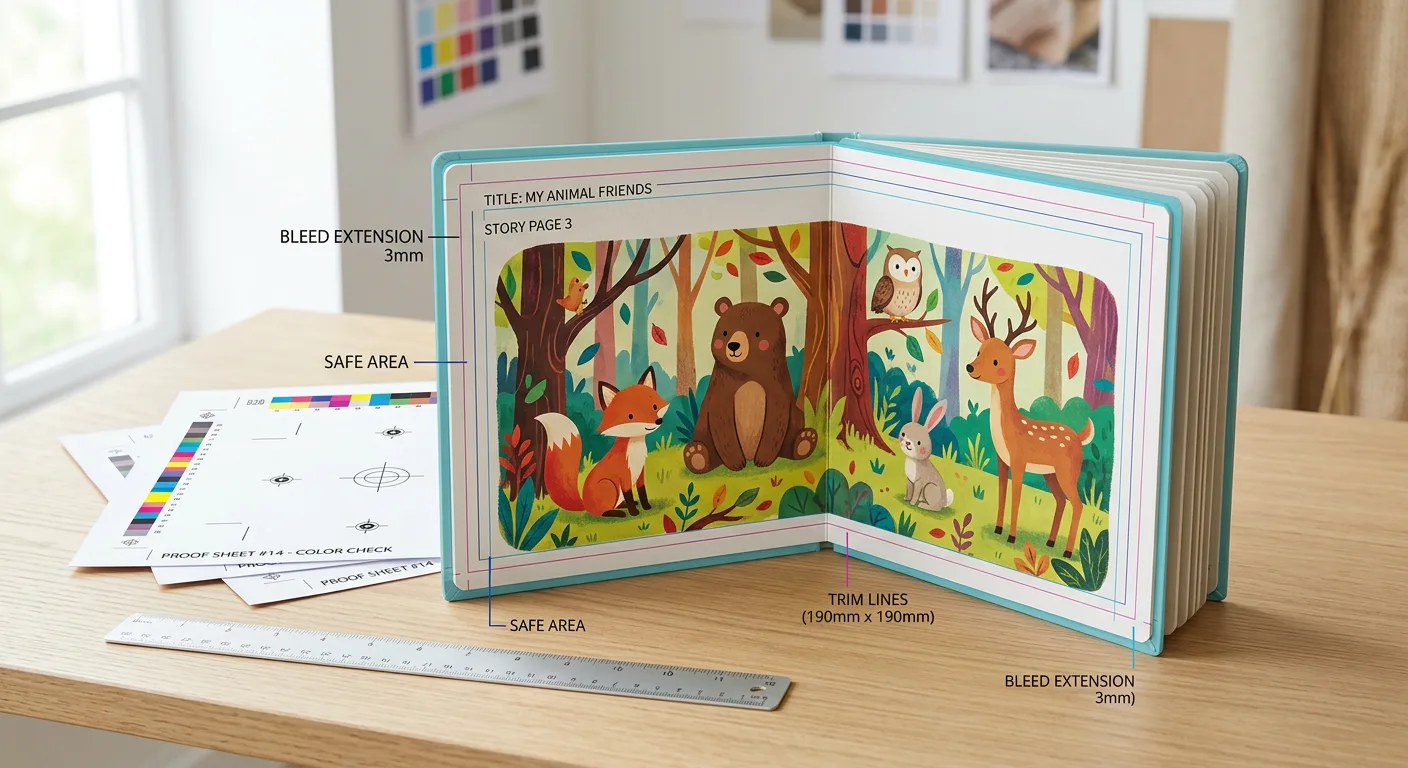
- Tamaño de corte y extensión: Dimensiones del libro y número de páginas.
- Tipo de módulo: Piano, botón integrado o sensor de luz.
- Número de sonidos: ¿Cuántos botones o gatillos distintos hay?
- Duración total del audio: La suma de la duración de todos los fragmentos de audio en segundos.
- Cantidad mínima de pedido (MOQ): Los componentes electrónicos suelen tener cantidades mínimas de pedido (MOQ) más elevadas (normalmente entre 3.000 y 5.000 unidades) debido a los costes de programación de los chips y de configuración de los moldes.
Creación de prototipos
Antes de la producción en serie, solicita una «maqueta en blanco» con el módulo electrónico en funcionamiento. Esto te permitirá comprobar la presión de los botones, el volumen del sonido y el tacto del libro antes de aplicar el diseño gráfico.
Preguntas frecuentes
¿Puedo cambiar las pilas de los libros con sonido?
Sí, la mayoría de los libros con audio de alta calidad cuentan con pilas recargables (normalmente AG10/LR1130 o AAA), a las que se accede a través de un compartimento con cierre de tornillo situado en la contraportada.
¿Cuál es el plazo de entrega habitual de los libros de sonido?
Los plazos de entrega son más largos que los de los libros habituales debido a la adquisición de los chips electrónicos. El plazo estimado es de 4 a 6 semanas para los componentes electrónicos y otras 4 semanas para la impresión y el montaje, lo que supone un total de 8 a 10 semanas tras la aprobación de la prueba de imprenta.
¿Tengo que proporcionar los archivos de sonido?
Sí, el cliente proporciona los archivos de audio definitivos. A continuación, el fabricante los programa en los chips. Se recomienda proporcionar archivos con una calidad superior a la requerida; los ingenieros de la fábrica los comprimirán para que quepan en la memoria del chip, optimizando al mismo tiempo la claridad del sonido.
¿Cómo os aseguráis de que los botones no sean demasiado difíciles de pulsar para los niños?
Esto viene determinado por la «fuerza de activación» del interruptor de membrana. Los fabricantes con experiencia calibran este parámetro específicamente para los productos infantiles. La mejor forma de verificarlo es realizar pruebas con una muestra física.
¿Estás listo para dar vida a tu proyecto de libro interactivo? Ponte en contacto con nuestro equipo hoy mismo para comentar las especificaciones, solicitar una muestra del módulo de sonido u obtener un presupuesto personalizado para tu próxima tirada de producción.