
Satisfacer la demanda mundial de cadenas de suministro ecológicas
Para las marcas internacionales, la sostenibilidad ya no es sólo una palabra de moda en marketing, sino un componente esencial de la gestión de la cadena de suministro y la responsabilidad corporativa. Dado que los consumidores y los organismos reguladores de la UE y Estados Unidos exigen cada vez más transparencia, los equipos de compras se enfrentan al reto de abastecerse de materiales impresos que cumplan las estrictas normas medioambientales sin comprometer la calidad ni la rentabilidad.
La transición a la impresión sostenible implica algo más que elegir papel reciclado. Requiere un enfoque holístico de los materiales, la seguridad química y los procesos de fabricación. Tanto si produce envases como material de marketing o libros de tapa dura, comprender las especificaciones técnicas de la impresión ecológica es esencial para mantener la integridad de la marca y cumplir los requisitos internacionales.
Materiales básicos: Papel, tinta y adhesivos
La base de cualquier proyecto de impresión sostenible está en las materias primas. Para los compradores B2B, el objetivo es equilibrar el impacto medioambiental con la imprimibilidad y la durabilidad.
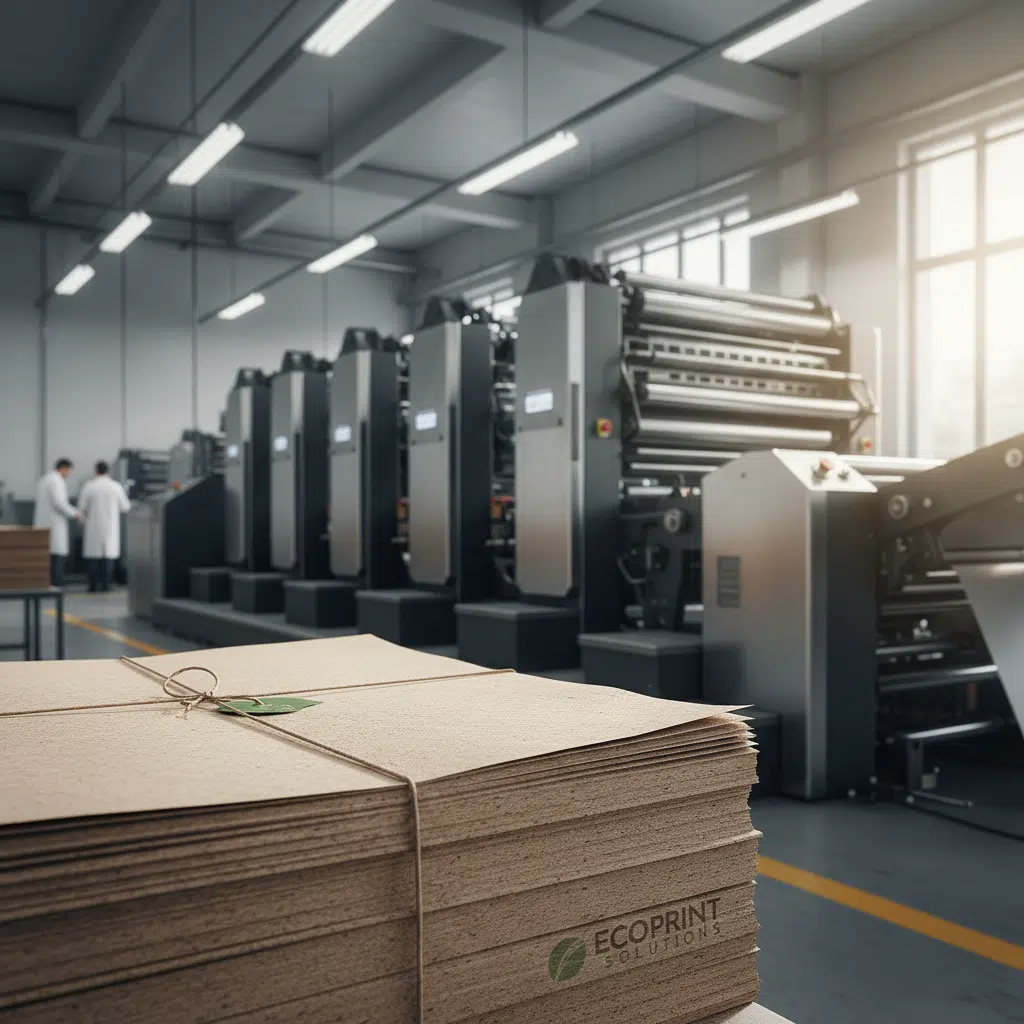
Papeles reciclados y con certificación FSC
El abastecimiento de papel es la variable más significativa de la huella de carbono de un trabajo de impresión. Hay que tener en cuenta dos categorías principales:
- Papel con certificación FSC: El Consejo de Administración Forestal (FSC) certifica que la pasta de madera procede de bosques gestionados de forma responsable. Esto es crucial para las marcas que exportan a mercados con estrictas normativas madereras.
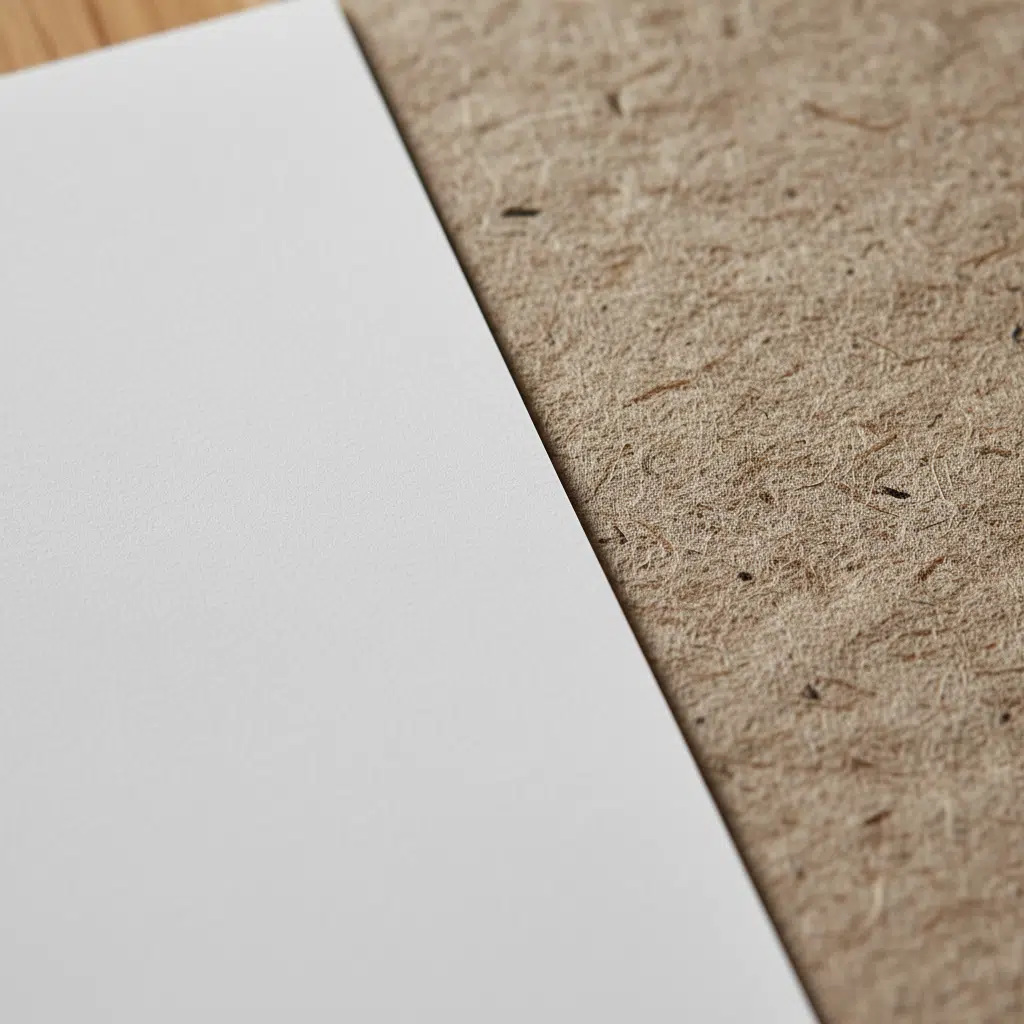
- Papel reciclado de residuos postconsumo (PCW): Este papel se fabrica a partir de papel usado y reciclado. Aunque el 100% PCW ofrece el mayor beneficio medioambiental, puede tener una textura o un brillo ligeramente diferentes en comparación con la fibra virgen.
Para profundizar en cómo afectan estos sustratos al producto final, lea sobre <a href="Ventajas del papel ecológico para la impresión de libros">Las opciones de papel respetuoso con el medio ambiente para la impresión de libros pueden aportar información específica sobre las compensaciones entre textura y opacidad.
Tintas vegetales y de soja
Las tintas tradicionales a base de petróleo suelen contener altos niveles de compuestos orgánicos volátiles (COV), que pueden ser perjudiciales tanto para el medio ambiente como para los trabajadores de las fábricas. La norma moderna de la industria para la impresión sostenible es el uso de tintas de origen vegetal, principalmente tinta de soja.
Las tintas de soja ofrecen varias ventajas técnicas más allá de la sostenibilidad:
- Vibración: El aceite de soja es más claro que el de petróleo, lo que a menudo permite que los pigmentos parezcan más vibrantes.
- Reciclabilidad: El papel impreso con tinta de soja es más fácil de desentintar durante el proceso de reciclaje, lo que cierra el ciclo de vida del producto.
Para saber cómo interactúan estas tintas con los distintos sustratos, consulte nuestra guía sobre <a href="Impresión sostenible de libros: Guía del papel ecológico y la tinta de soja">impresión sostenible de libros y aplicaciones de la tinta de soja.
Cumplimiento de la normativa en los mercados de la UE y EE.UU.
Cuando se importan productos impresos a los principales mercados occidentales, el cumplimiento va más allá de las etiquetas ecológicas voluntarias. A menudo implica marcos jurídicos estrictos en materia de seguridad química y deforestación.
Normativa de la UE (REACH y EUDR)
Para la Unión Europea, el cumplimiento es riguroso. El sitio Reglamento REACH (Registro, Evaluación, Autorización y Restricción de Sustancias Químicas) restringe el uso de determinadas sustancias peligrosas en productos manufacturados, incluidas tintas y barnices. Además, la próxima Reglamento de la UE sobre deforestación exigirá a los operadores que demuestren que productos como el papel y el cartón no contribuyen a la deforestación.
Normas estadounidenses (Ley Lacey y CPSIA)
En Estados Unidos, el Ley Lacey prohíbe la importación de productos de madera talada ilegalmente, por lo que una Cadena de Custodia verificada (como la del FSC) es fundamental para mitigar los riesgos. Además, si sus materiales impresos están destinados a los niños (por ejemplo, libros de cartón o kits educativos), deben cumplir con la Ley de mejora de la seguridad de los productos de consumo (CPSIA)que establece límites estrictos para el plomo y los ftalatos en tintas y revestimientos.
Consideraciones técnicas para una impresión sostenible
El cambio a materiales ecológicos puede requerir ajustes en sus expectativas de diseño y producción. Estos son los factores técnicos clave que debe comentar con su impresor:
Tiempos de secado y velocidad de producción
Las tintas de base vegetal se secan por oxidación, a diferencia de las tintas UV, que se curan instantáneamente, o las tintas de petróleo, que se secan por evaporación y absorción. Esto puede dar lugar a tiempos de secado ligeramente más largos, sobre todo en materiales reciclados no estucados. Los compradores deben tener esto en cuenta a la hora de planificar los plazos de entrega para evitar manchas o problemas de desprendimiento durante el acabado.
Absorción del papel y gestión del color
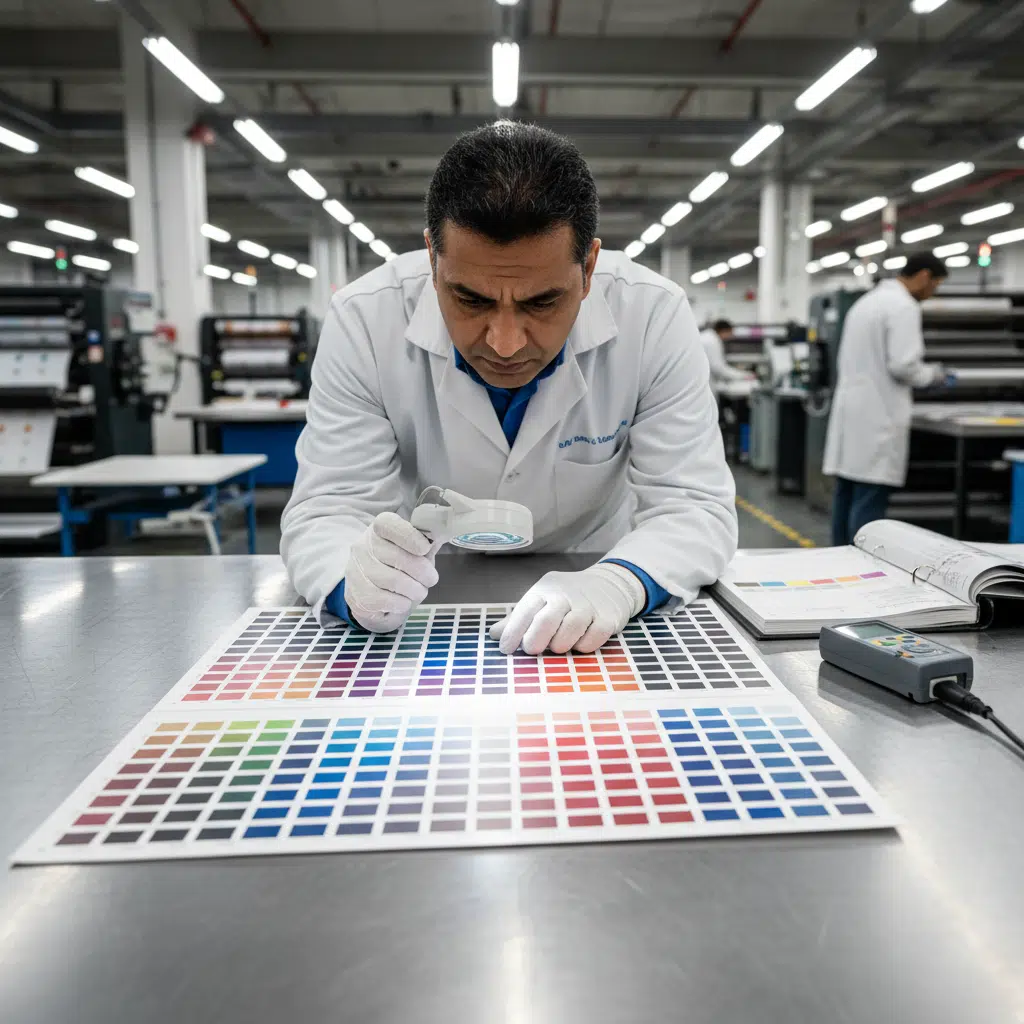
Los papeles reciclados suelen ser más absorbentes que los papeles vírgenes estucados. Esto da lugar a una "ganancia de punto", en la que la tinta se extiende ligeramente a medida que se absorbe, lo que puede oscurecer las imágenes. Los impresores experimentados lo solucionan ajustando las curvas de preimpresión y aplicando perfiles de color diseñados específicamente para papeles no estucados o reciclados.
Guía de compra: Cómo abastecerse de impresión sostenible
La adquisición eficaz de soluciones de impresión ecológicas requiere una comunicación clara de las especificaciones. Utilice esta lista de comprobación cuando solicite presupuestos:
1. Defina sus criterios "verdes
Sea concreto. ¿Necesita contenido reciclado 100%, o es aceptable 30% para mantener el brillo? ¿Necesita el logotipo FSC impreso en el material gráfico? Definirlo con antelación evita retrasos.
2. Comprobar las cantidades mínimas de pedido (CMP)
Las existencias estándar suelen estar disponibles en cualquier cantidad. Sin embargo, los papeles ecológicos especiales (por ejemplo, texturas específicas o alto contenido de PCW) pueden requerir un pedido de papel personalizado a la fábrica, que a menudo viene con un MOQ más alto (normalmente de 1 a 3 toneladas de papel dependiendo de la fábrica).
3. Solicitar fichas de datos de seguridad (MSDS)
Si la conformidad es una preocupación importante, pida a su socio fabricante las hojas de datos de seguridad o los informes de pruebas de las tintas y colas utilizadas. Así se asegurará de que cumplen las restricciones sobre metales pesados para su mercado objetivo.
Preguntas frecuentes (FAQ)
¿Es más cara la impresión sostenible?
Puede ser. Aunque las tintas de soja tienen ahora precios competitivos, el papel reciclado de alta calidad o los papeles con certificación FSC pueden tener un sobreprecio debido a los costes de procesado y a la demanda del mercado. Sin embargo, la optimización del tamaño de su producto para reducir el desperdicio de papel puede compensar a menudo estos costes de material.
¿Puedo utilizar colores metalizados o fluorescentes en la impresión ecológica?
Sí, pero con advertencias. Las tintas metalizadas contienen partículas metálicas que pueden dificultar el reciclaje del papel. Algunas marcas optan por colores Pantone a base de soja que simulan un aspecto premium sin utilizar pigmentos metálicos.
¿El papel reciclado parece "sucio"?
No necesariamente. Aunque algunas marcas prefieren el aspecto moteado y natural del papel reciclado como señal de sostenibilidad, existen papeles reciclados de alta calidad casi indistinguibles del papel virgen en términos de blancura y suavidad.
¿Cómo puedo verificar las afirmaciones de la impresora?
Pida sus códigos de certificación (por ejemplo, el código de licencia FSC) y verifíquelos en la base de datos pública del organismo certificador. Las imprentas reputadas son transparentes en cuanto a la documentación de su cadena de suministro.
Asociarse para un futuro más verde
Implementar soluciones de impresión sostenibles es una forma eficaz de alinear sus productos físicos con los valores de su marca. Seleccionando los materiales adecuados y asociándose con un fabricante que conozca el panorama técnico y normativo, puede producir materiales de impresión de alta calidad que satisfagan tanto a sus clientes como al planeta.
¿Listo para empezar su proyecto de impresión sostenible? Póngase en contacto con nosotros hoy mismo para solicitar un presupuesto o pedir un kit de muestras con nuestras opciones de papel y tinta ecológicos.