
Índice
- What Does Sound Book Localization Involve?
- Start with a US Localization Plan
- Adapt the Text and Audio Together
- Review Culture, Illustrations and Interaction
- Prepare the Print and Sound Module Design
- Build a Practical Localization Quality Checklist
- Approve Proofs Before Full Production
- Plan Localization as One Print and Audio Workflow
Localizing a custom sound book for the US market involves more than translating text. Buyers must adapt language, narration, illustrations, sound interactions, safety information and print files for American children and caregivers. This guide explains a practical workflow for producing a multilingual or US-focused sound book with consistent print and audio quality.
What Does Sound Book Localization Involve?
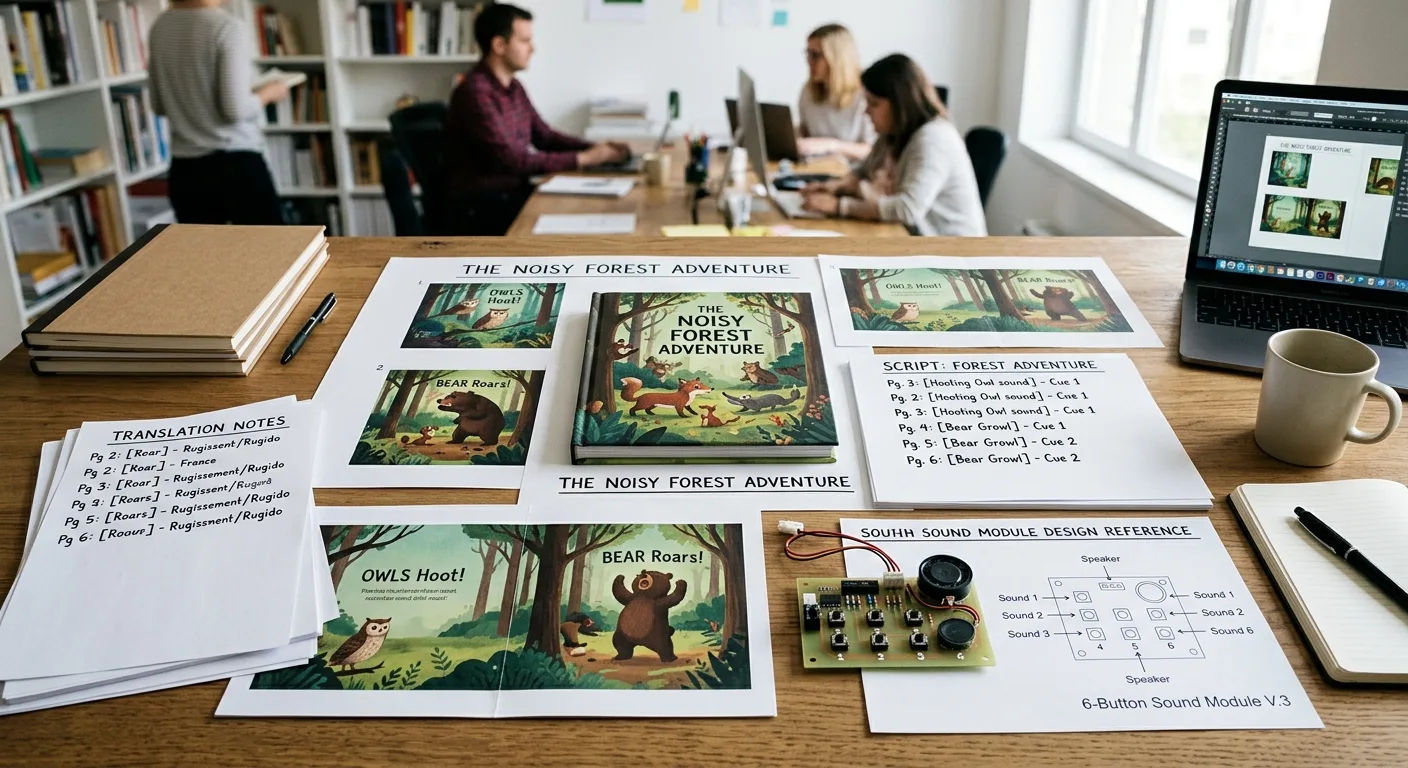
To localize children’s sound books for the US market, adapt the complete reading experience—not only the printed words. A successful US edition aligns the English text, narration, pronunciation, illustrations, interactive prompts, sound effects, packaging and production files with the expectations of American children and caregivers.
This process is different from direct translation. A translated sentence may be grammatically correct but too long for the original page, difficult for a child to repeat or unnatural when spoken aloud. The audio may also need a different rhythm, voice style or pronunciation guide. Early coordination between the language team, audio producer, designer and printer helps prevent expensive changes after files are prepared.
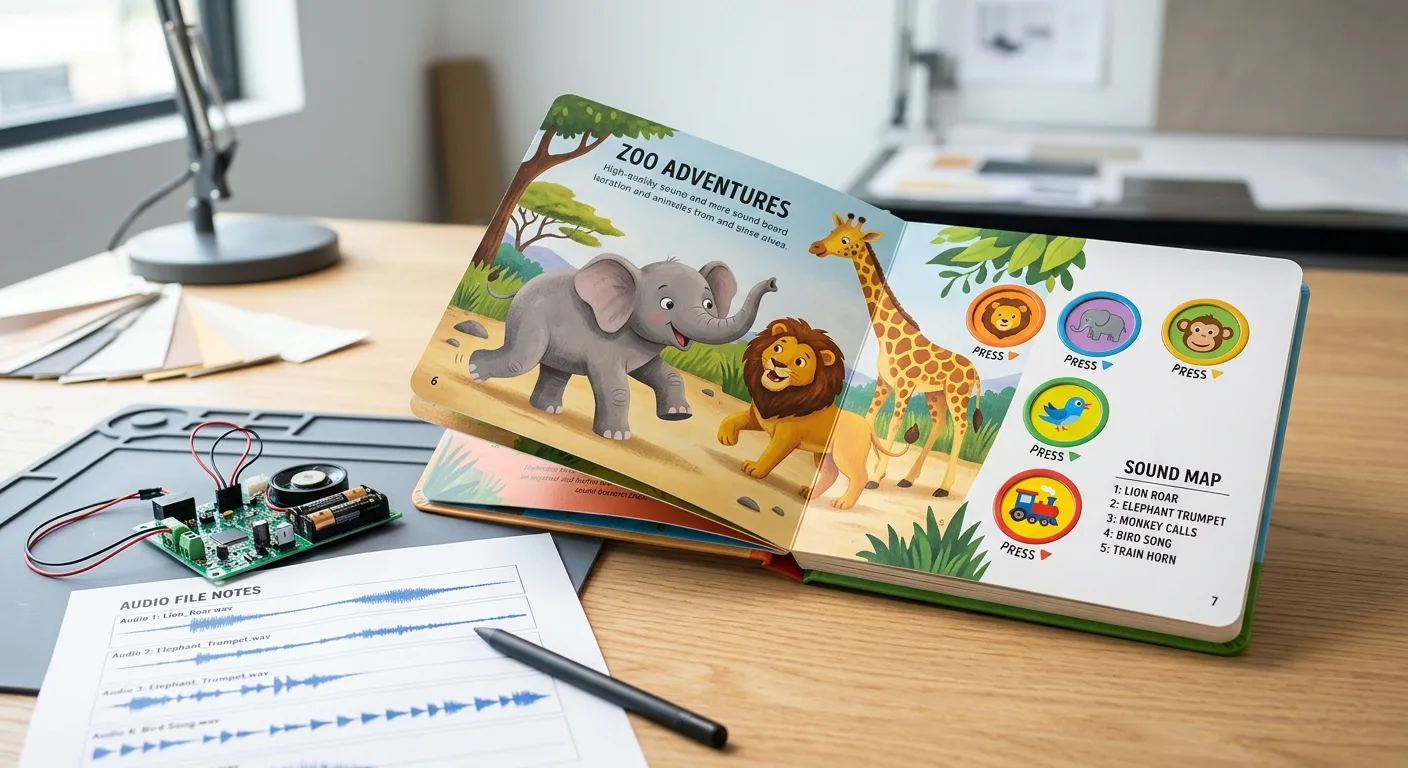
For a custom sound book, localization normally covers:
- US English translation, adaptation or copy editing
- Child-friendly vocabulary, sentence length and tone
- Native-speaker narration and pronunciation review
- Illustration, character, measurement and cultural checks
- Button labels, sound prompts and audio sequencing
- Print-ready artwork, sound-module placement and proof approval
Start with a US Localization Plan
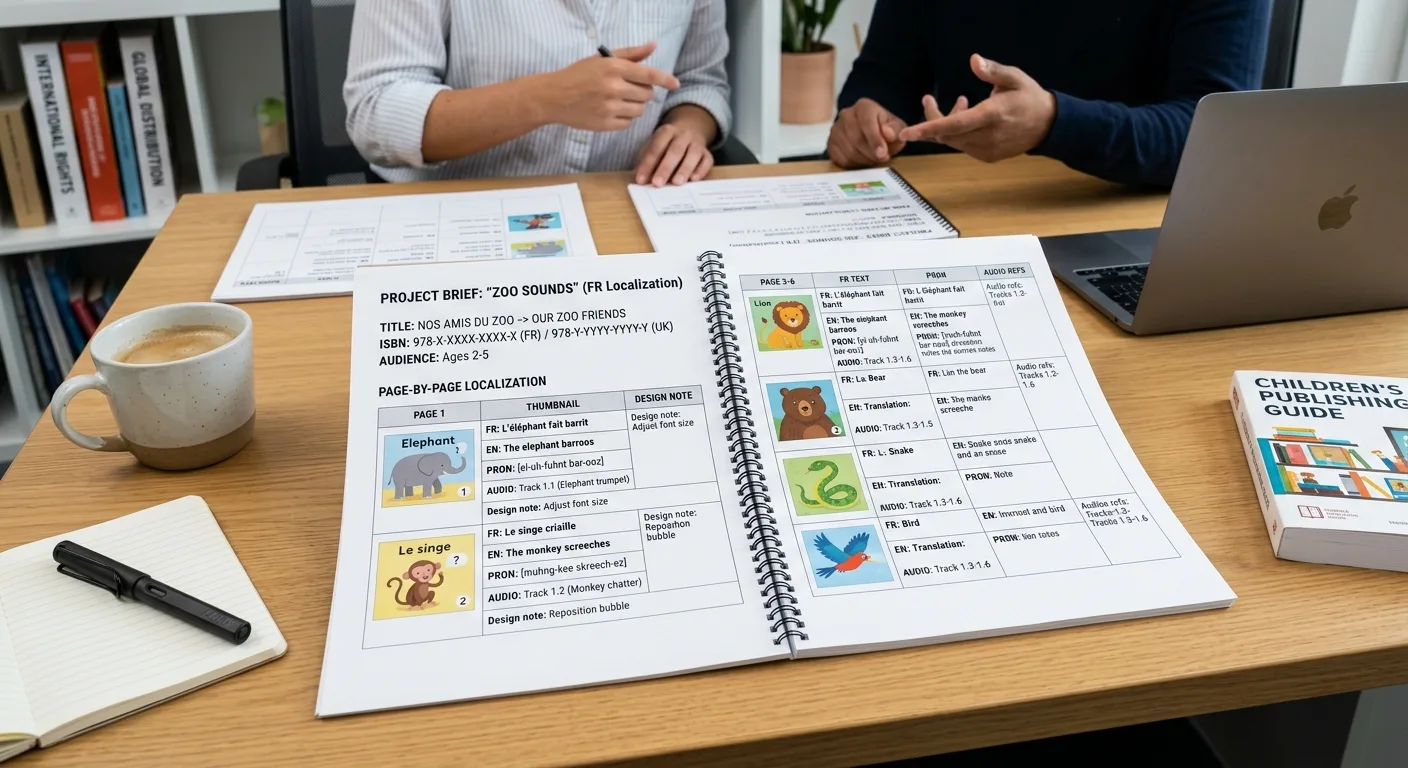
Before rewriting pages or recording audio, define what will remain unchanged and what must be adapted. This is particularly important for multilingual sound books, where every language version may have different word lengths, reading patterns and recording requirements.
Define the audience and reading situation
Identify the intended age range, reading level and primary user. Is the book designed for independent use by a young child, shared reading with an adult, classroom use or gift retail? These decisions affect vocabulary, narration speed, button layout and the amount of explanatory text needed for caregivers.
Create a localization brief
A useful brief should record the source text, approved US English copy, pronunciation notes, audio script, illustration notes, button actions and review status for each page. Include decisions about regional terms, names, rhymes, units of measurement and the treatment of songs or sound effects.
Also confirm the commercial specifications early: trim size, page count, quantity, board or paper construction, binding, sound-module location and destination country. These details can influence available design space, production setup, shipping planning and quotation accuracy. If you are still comparing formats, review this guide to choosing hardcover or paperback book printing.
Adapt the Text and Audio Together
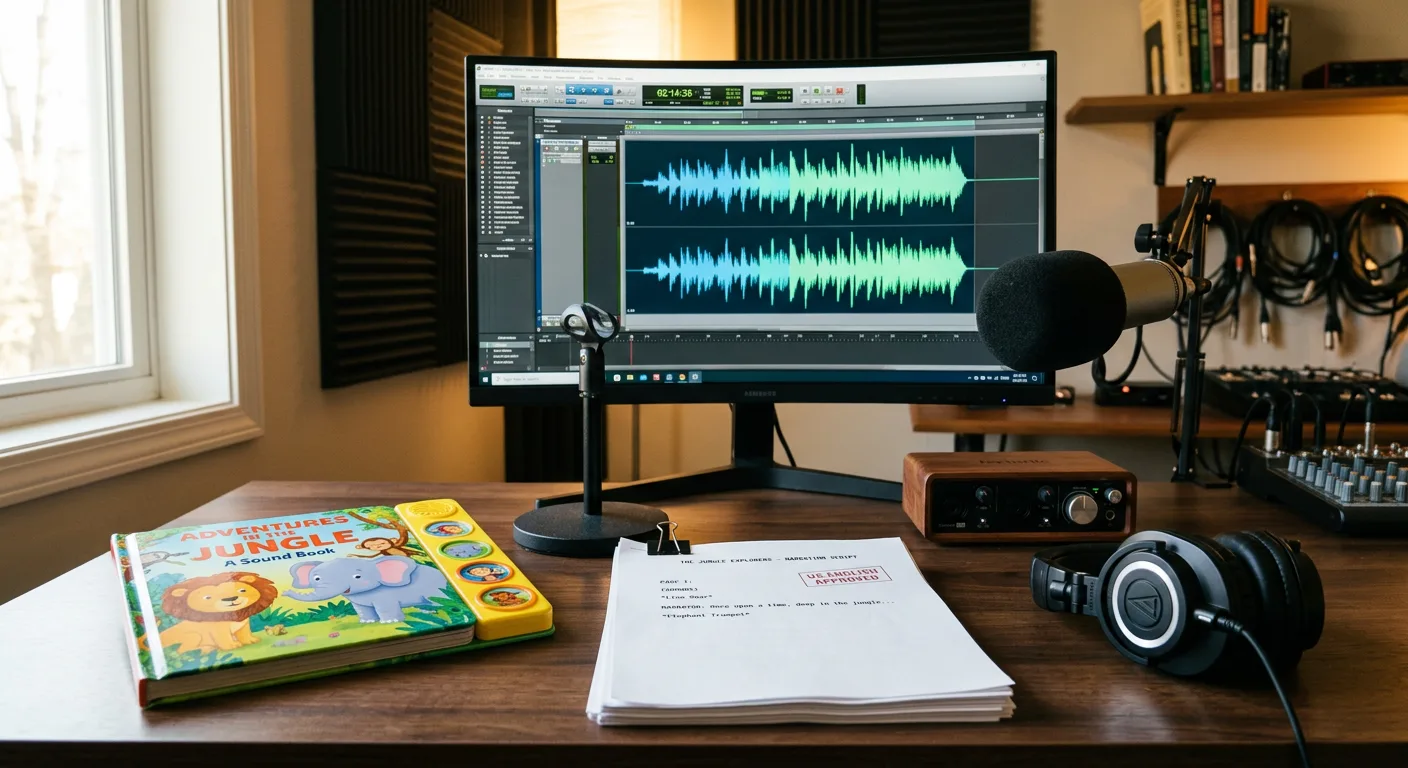
Sound book translation and audio should be developed as one content workflow. Do not finalize the printed translation and then ask a narrator to read it without review. Spoken language often needs different punctuation, line breaks and sentence structure from text intended only for silent reading.
Use natural US English
Choose words that a US child is likely to hear and understand at the intended age. Review names, idioms, animal sounds, exclamations and instructions for natural usage. A literal translation of a rhyme may lose its rhythm, while a heavily rewritten version may change the educational or storytelling purpose. Decide whether the priority is meaning, rhyme, repetition, phonics or emotional tone before adaptation begins.
Plan audio for interaction
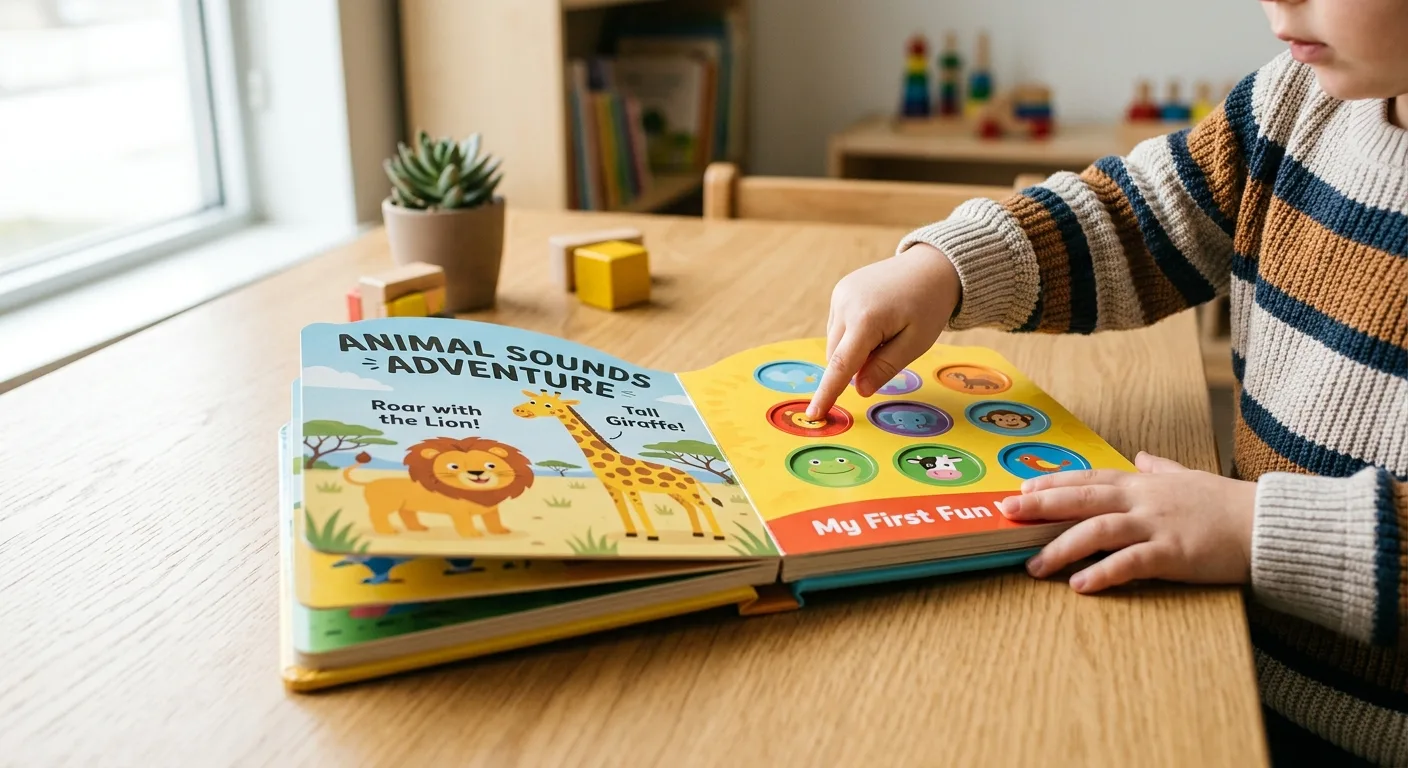
Match each printed prompt to a clear audio action. If a button asks the child to identify an animal, the narration should make the task understandable without relying on a visual cue that may be unclear. Keep track of the sequence for every button, including page number, trigger, file name, spoken content and sound effect.
Use a native US English reviewer for pronunciation, stress and child-appropriate delivery. Check proper names, regional vocabulary and words that can have more than one pronunciation. If the project includes several languages, maintain separate approved scripts and audio files rather than assuming that a direct text substitution will fit the same page or interaction.
Review Culture, Illustrations and Interaction
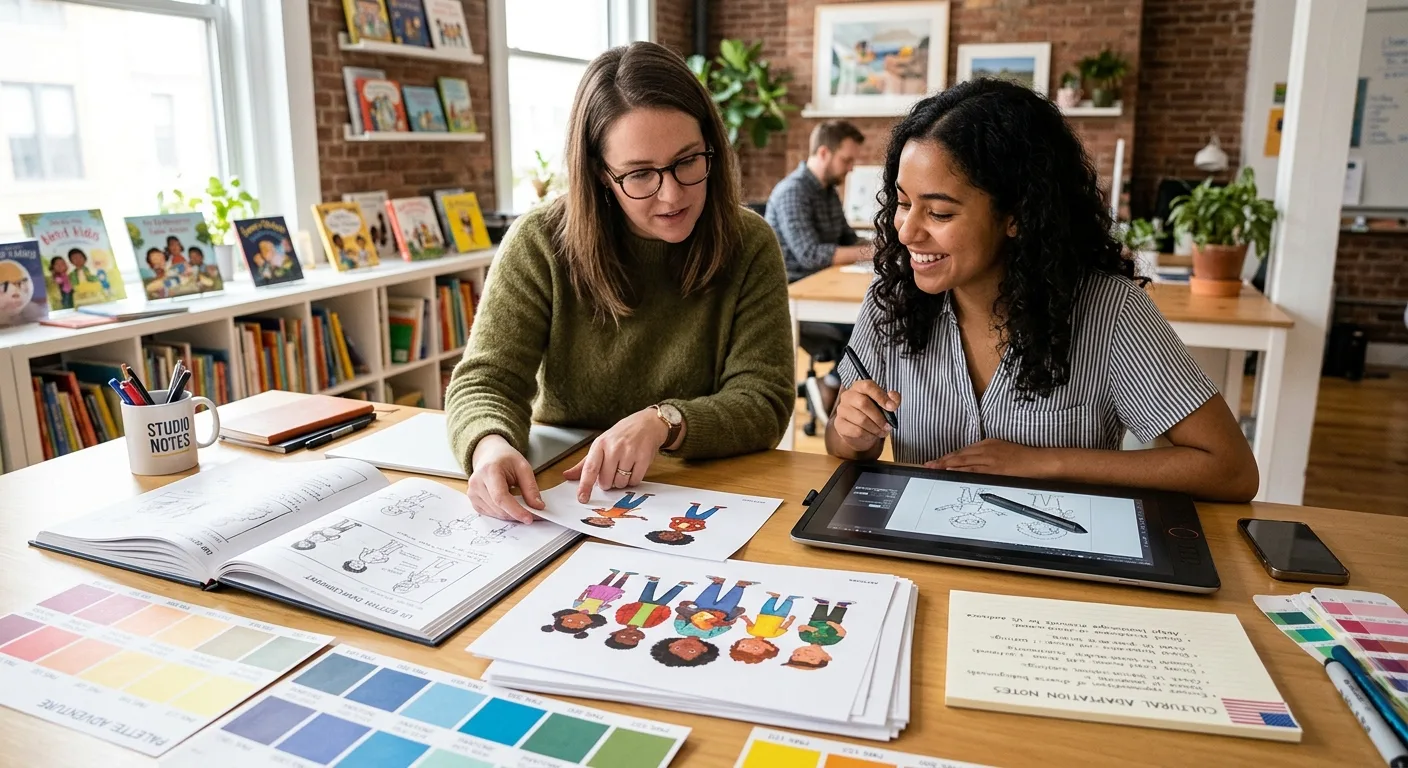
US children’s book localization should include a cultural and visual review, even when the original story is simple. Children may interpret family roles, clothing, foods, classroom settings, holidays, animals and gestures differently across markets.
Review whether the illustrations support the localized text. If the English version changes a food, object, character name or setting, the artwork may also need revision. Check text embedded in illustrations, labels on props, maps, calendars and signs. A mismatch between the picture and the US English narration can confuse young readers.
Interactive elements need the same review. Confirm that buttons are large enough for the intended user, labels are readable and prompts correspond to the correct page or sound. Consider whether a child can understand what to press from the visual design alone. Caregiver instructions, battery information and other packaging copy should be written for the US market and reviewed separately from the story text.
Keep a change log for every adaptation. It should show the original wording, localized wording, reason for change, reviewer and approval date. This record is useful when multiple language editions, designers or production partners are involved.
Prepare the Print and Sound Module Design
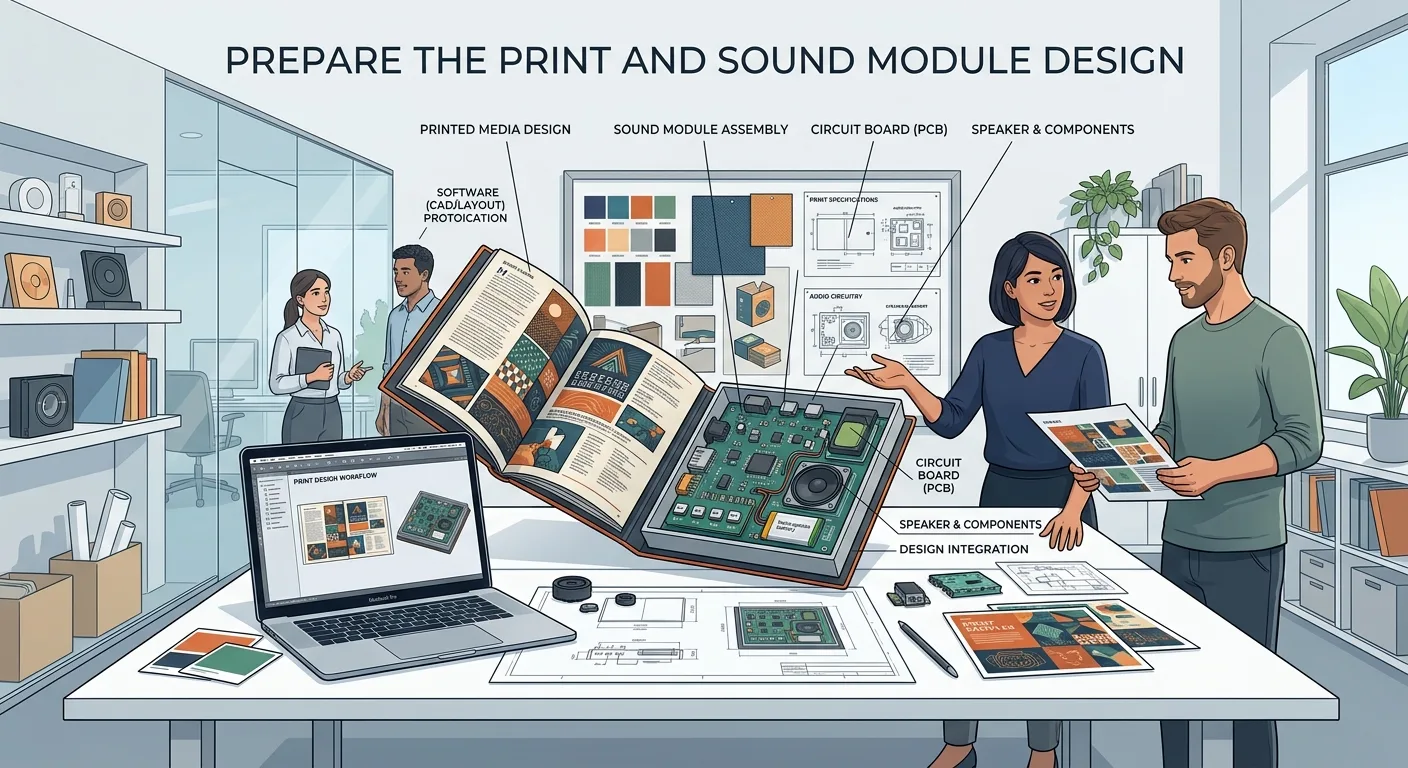
Localization can change the physical layout of a book. US English copy may expand or contract compared with the source language, and revised text may require different line breaks, font sizes or illustration placement. Make these changes before the final prepress check.
Check the page architecture
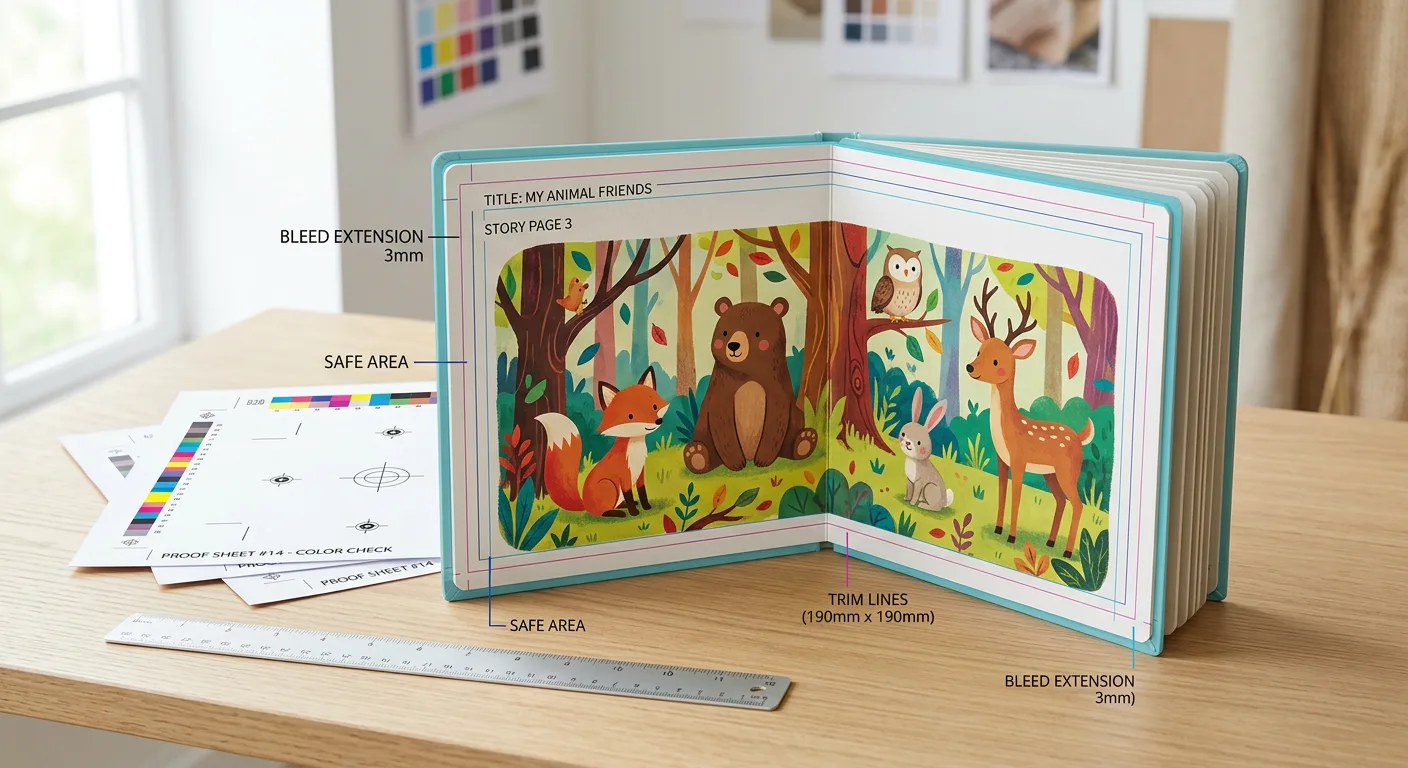
- Reserve safe space around buttons, speakers, switches and battery compartments.
- Keep important text away from folds, hinges, board edges and die-cut areas.
- Confirm that translated words do not cross trim, bleed or binding zones.
- Use consistent typography for titles, labels, instructions and phonetic content.
- Check colour contrast and legibility at the final printed size.
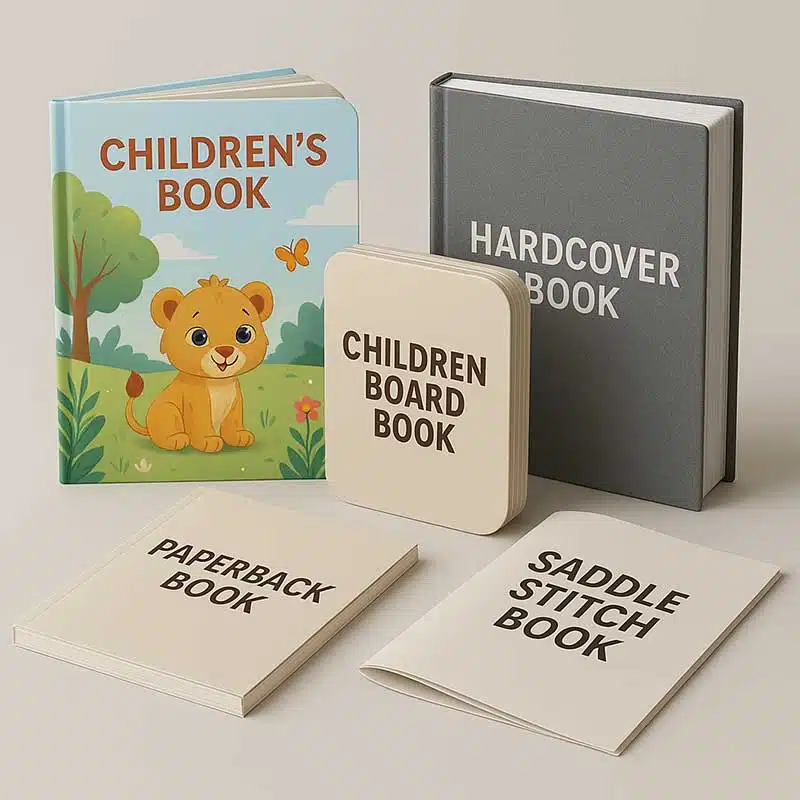
A sound book may use a board-book or hardcover construction, depending on the product concept and durability requirements. The cover design must account for the actual binding and finishing process. For file setup, consult this print-ready book file requirements checklist. If the project uses a casebound cover, the hardcover cover file preparation guide explains how to account for the cover, spine, wrap and hinges.
Finishing choices also affect the localized edition. Lamination, foil, embossing or spot UV can change the tactile and visual presentation, but each option should be evaluated against the book’s intended use and budget. See the guide to hardcover book cover finishes for practical considerations.
Build a Practical Localization Quality Checklist
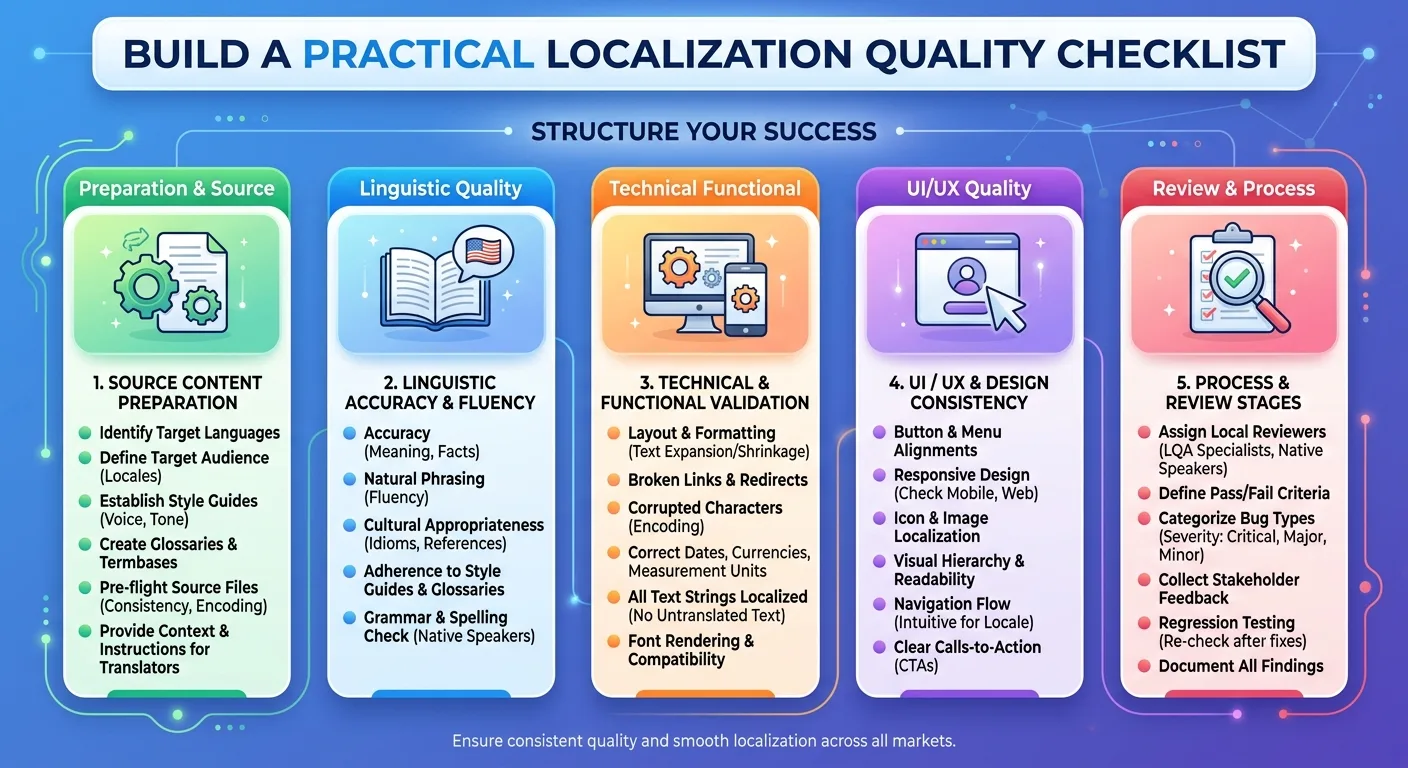
Use separate reviews for language, audio, artwork, interaction and print production. One person can coordinate the process, but relying on a single final review makes it easier to miss problems that appear only in another format.
Language and editorial checks
- US spelling, punctuation, grammar and vocabulary are consistent.
- Text suits the intended age and reading level.
- Names, repeated phrases and educational terms are used consistently.
- Line breaks do not create confusing word divisions or awkward emphasis.
Audio checks
- Every button triggers the intended track.
- Narration matches the approved printed text.
- Pronunciation, volume, pacing and sound effects are reviewed.
- Audio starts and ends cleanly without unintended silence or clipping.
Physical and visual checks
- Artwork matches the localized story and labels.
- Text remains readable at the final trim size.
- Buttons and interactive areas are correctly positioned.
- Cover, spine, bleed, colour and finishing files match the specification.
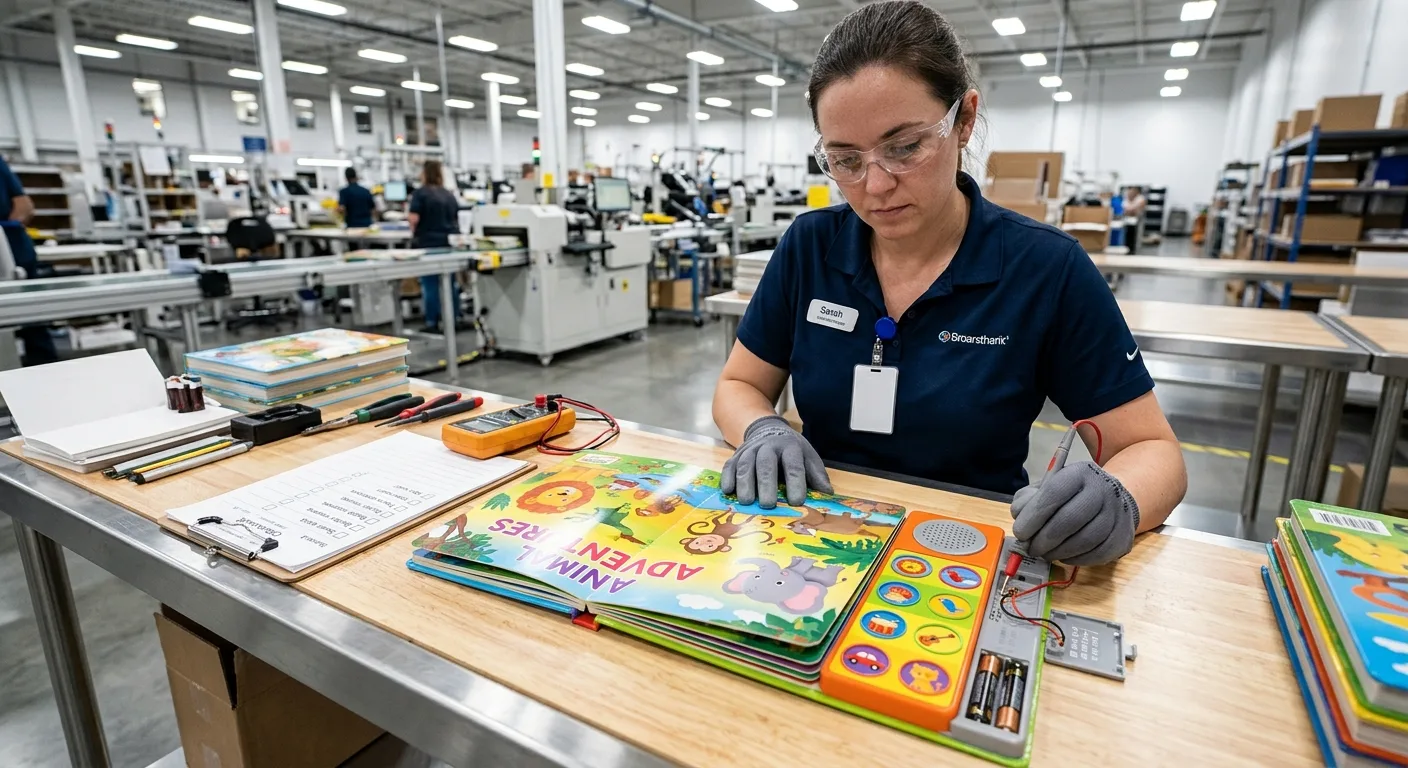
Ask reviewers to test the physical sample as a child and caregiver would use it. Turn pages, press every button, listen in sequence and inspect the cover from different angles. Record issues with page references and corrected file versions.
Approve Proofs Before Full Production
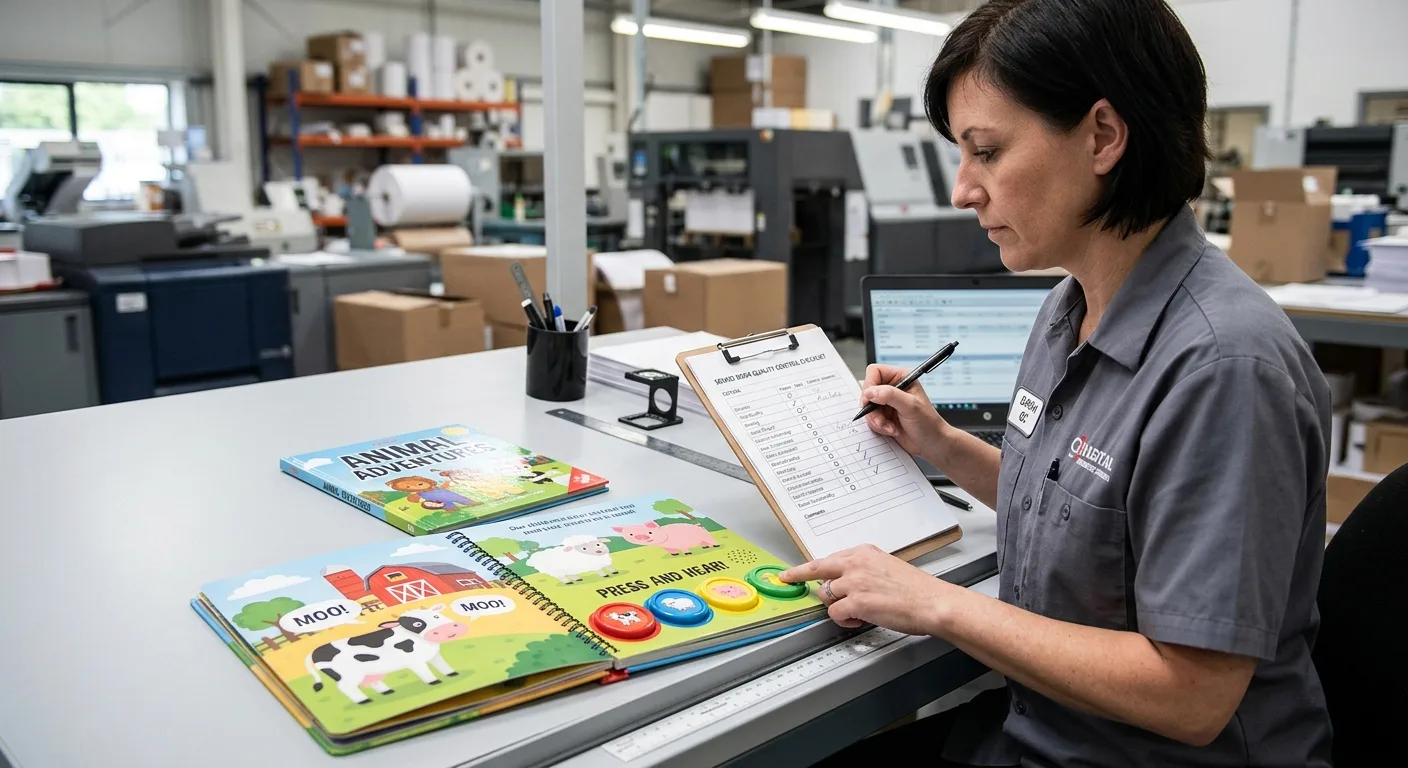
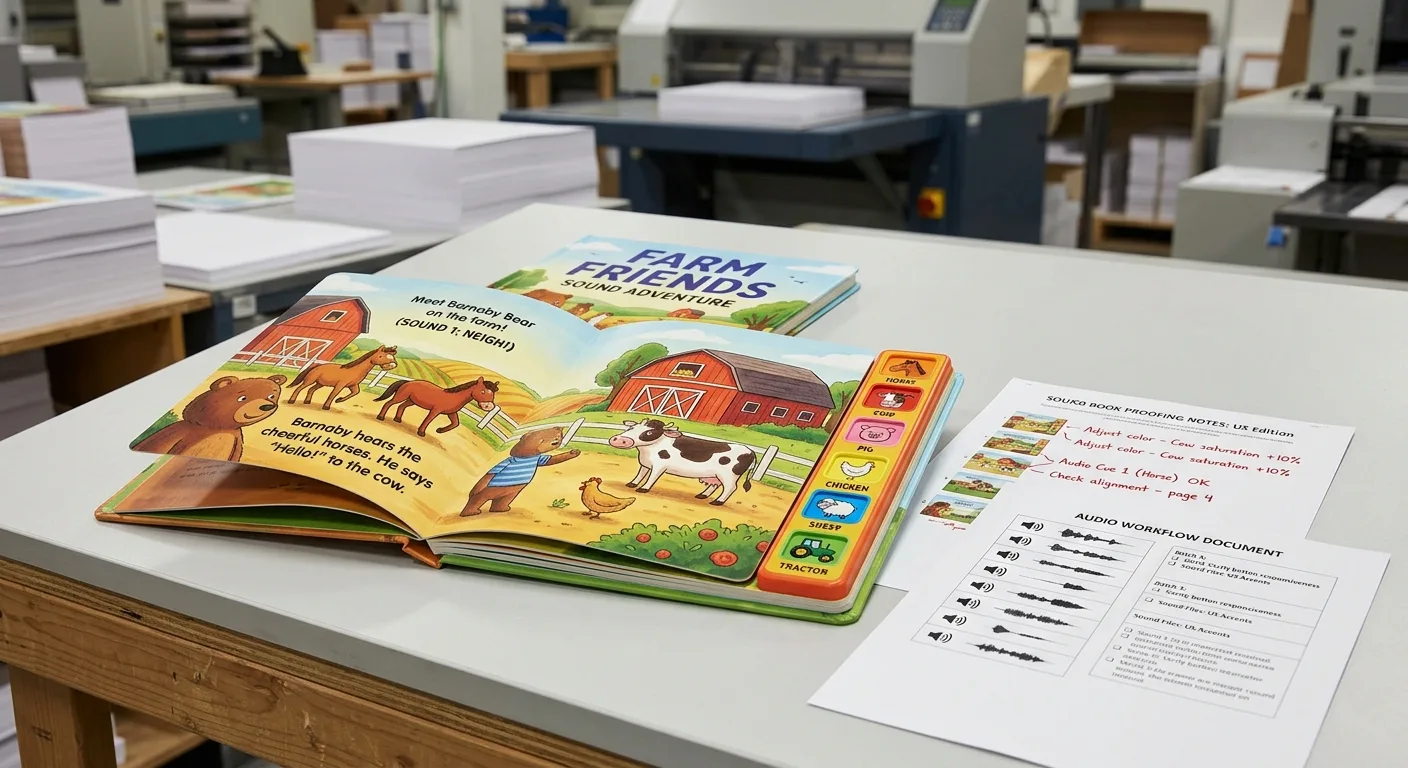
A proof is the practical checkpoint between approved localization and full manufacturing. For a custom sound book, review more than a digital PDF. The final approval should cover the printed pages, cover, binding, button placement, audio behaviour and packaging information.
Compare the physical proof with the approved localization brief. Verify page order, text position, colour, images, material feel and the operation of every sound function. Listen to the audio in the assembled book rather than only through separate files, because the physical construction can affect how the interaction feels to the user.
Make sure all corrections are consolidated before production. Late changes to translated text, audio files or artwork can require new prepress work and may affect the project schedule or cost. The assumptions that most often affect a quotation include product dimensions, number of pages, quantity, paper or board material, binding, cover finish, sound-module requirements, packaging, file readiness and delivery country.
YBJ Printing can review these details with buyers before production. For broader planning, this book printing pricing guide explains why specifications and order quantities influence the cost of a custom project.
Plan Localization as One Print and Audio Workflow
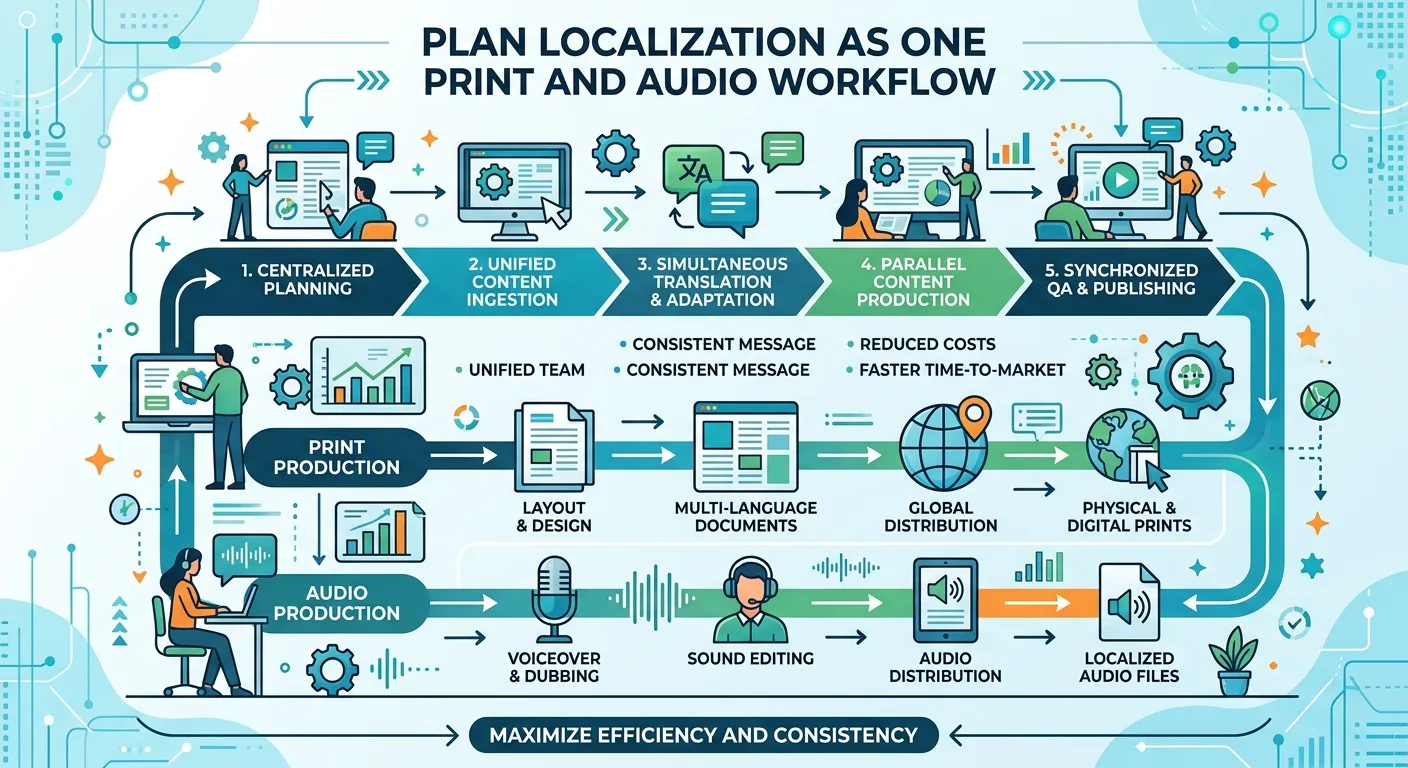
The best way to localize children’s sound books for the US market is to treat language, narration, artwork, interaction and manufacturing as connected decisions. Start with a clear localization brief, use native-language review, adapt text and audio together, check cultural details, and test a physical proof before approving the production run.
When requesting a quotation, provide the product type, trim size, page count, quantity, paper or board preference, binding, cover finish, sound-module requirements, file status and destination country. Clear specifications allow the printer to assess the project more accurately and identify questions before production begins.
Comenta tu proyecto de «Sound Book» personalizado
If you are planning a US edition or multilingual sound book, share your product type, trim size, page count, quantity, paper or board preference, binding, finish, file status and destination country. YBJ Printing can discuss the production requirements and prepare a project quotation based on your specifications.