
Índice
- What Is Large Print Book Printing?
- Large Print Book Layout: Start with Reading Comfort
- How Typography Changes Large Print Page Count
- Choose a Practical Format and Binding
- Paper Opacity and Ink Show-Through
- Large Print Edition Binding Options
- Large Print Book Production Workflow
- Large Print Printing Buyer Checklist
- Conclusión
Large print book printing requires more than increasing the font size. Typography, trim size, line spacing, paper opacity, page growth, binding and shipping weight must be planned together.
What Is Large Print Book Printing?
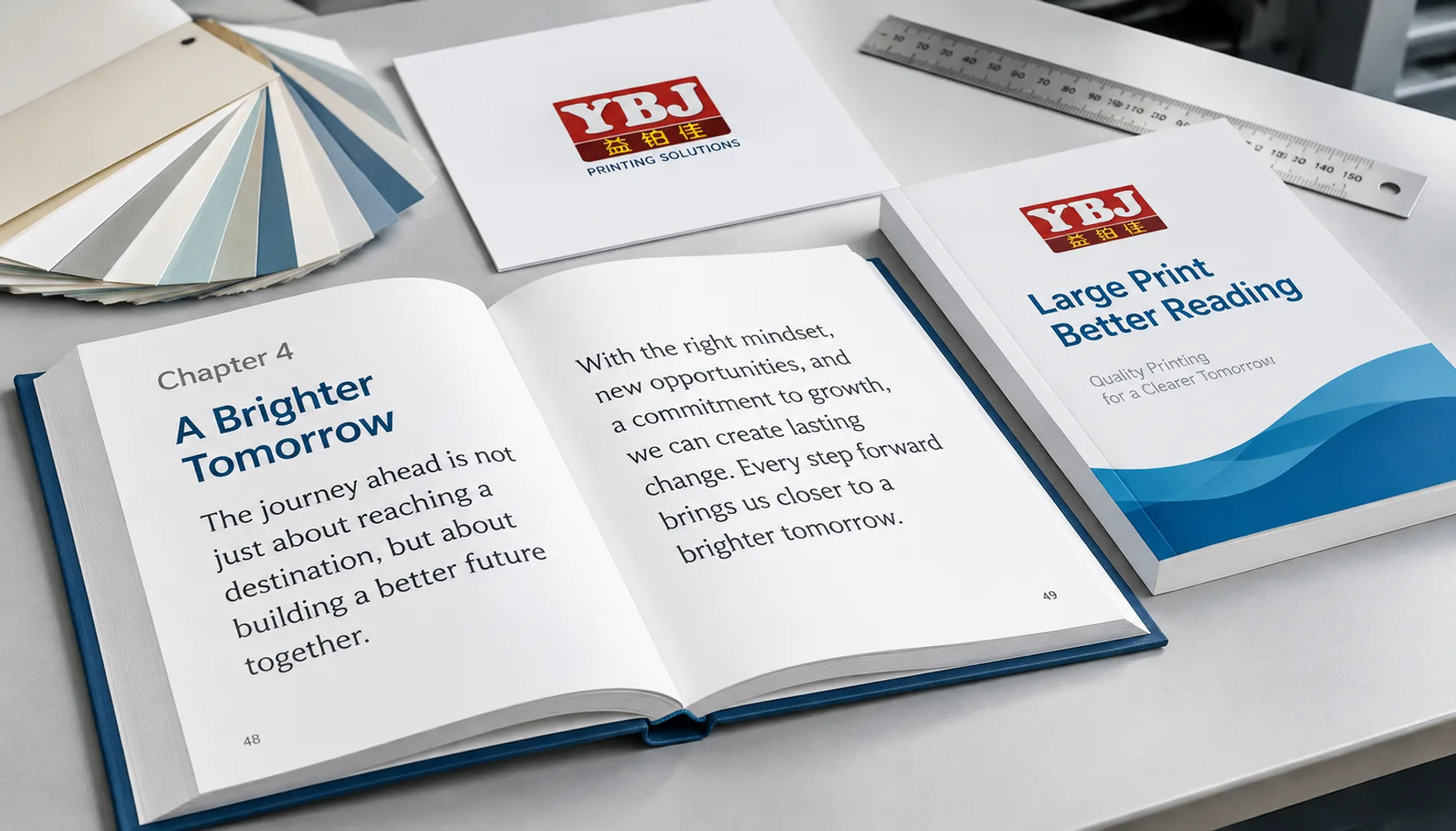
Large print book printing is the production of books designed for easier reading through larger type, generous spacing, clear contrast and a practical page design. It is not simply a standard book file with the font enlarged. Increasing type size can change line breaks, page count, spine width, paper consumption, binding choice, carton weight and shipping cost.
Working definition: A large print edition is a deliberately designed version of a book in which typography and page architecture are adjusted for reading comfort while keeping the finished book manageable to manufacture and use.
The right specification depends on the audience and use case. A novel for older readers may need a different layout from a reference manual, devotional book or classroom text. Before requesting a quotation, confirm the intended reading distance, target market, preferred trim size, approximate type size, quantity and whether the book must lie relatively flat.
There is no single font size that suits every reader or every publishing market. A useful process is to create representative sample pages, print or proof them at the intended finished size, and review them with the people who will use the book. Accessibility requirements may also apply. The W3C guidance on resizing text is a useful reference for digital accessibility, but a printed book still needs physical proofing and audience testing.
For a China-made edition, also allow time to compare paper, approve a proof, confirm binding construction and coordinate international delivery. These decisions affect both reader experience and the final quotation.
Large Print Book Layout: Start with Reading Comfort
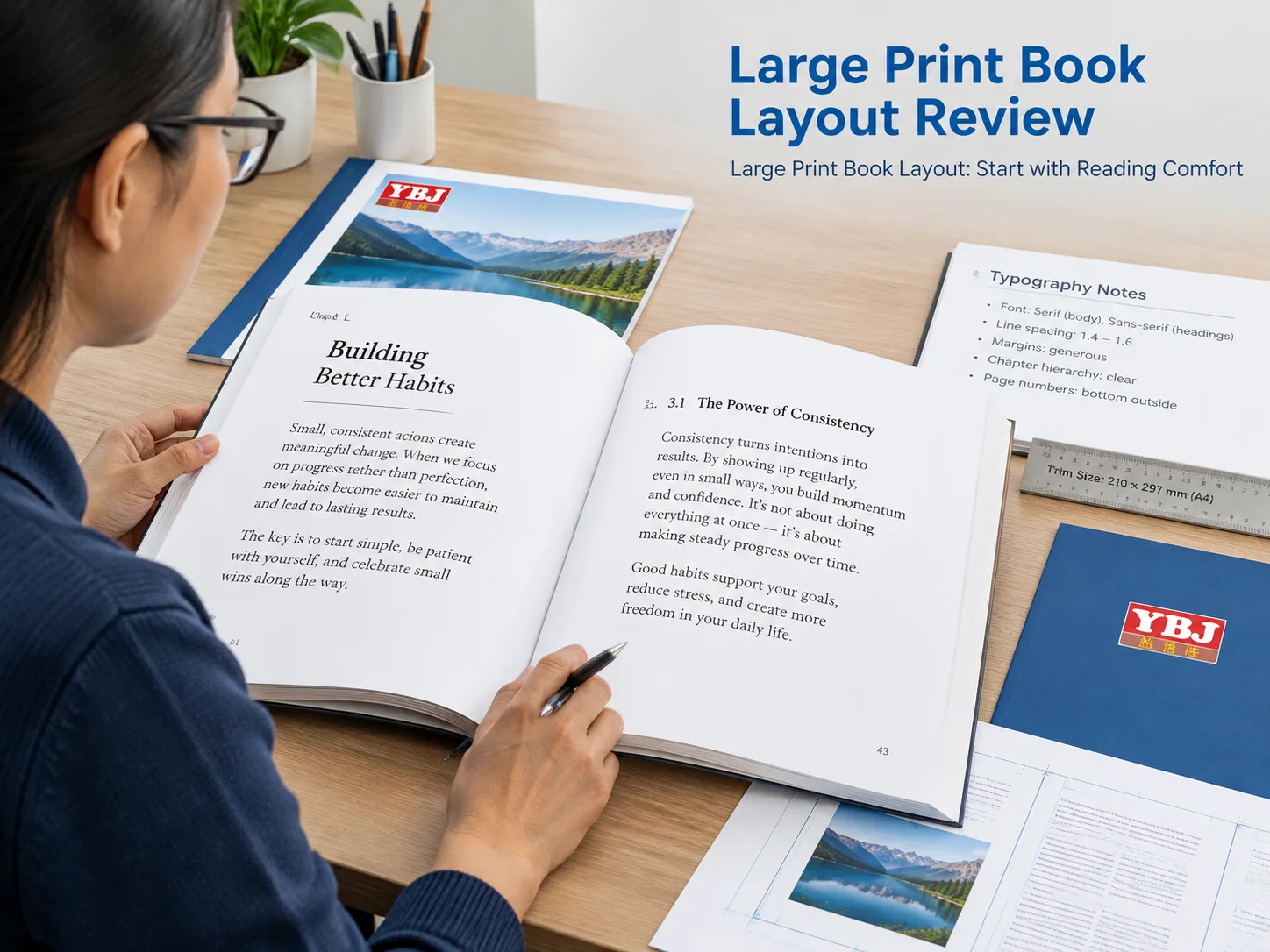
A successful large print book layout balances type size with line length, leading, margins and page navigation. Enlarging the body type without adjusting the rest of the page can create awkward breaks, crowded headings or very short lines that slow reading.
Set readable book typography
- Body type: Choose a typeface with open counters, distinct letterforms and clear punctuation. Serif and sans-serif families can both work when the design is well tested.
- Type size: Many large print projects begin around 14–18 point type, but the correct size depends on the typeface, language, audience and trim size. Treat this as a testing range, not a universal standard.
- Leading: Increase line spacing enough to separate lines clearly. Tight leading can make a large type setting feel dense, while excessive leading increases page count without necessarily improving comfort.
- Line length: Use a moderate measure rather than stretching text across a very wide page. Shorter lines can help tracking, but lines that are too short create frequent returns and a choppy rhythm.
- Margins and gutter: Allow sufficient inner margin for the binding. A reader should not need to force the book open or lose words close to the spine.
- Navigation: Make chapter openings, running heads, page numbers and section labels easy to locate. Strong hierarchy is particularly useful in manuals and educational books.
Keep contrast high for ordinary text, and avoid placing small type over images or textured backgrounds. If the book includes charts, footnotes, captions or tables, review these separately; a large body font does not automatically make supporting information readable.
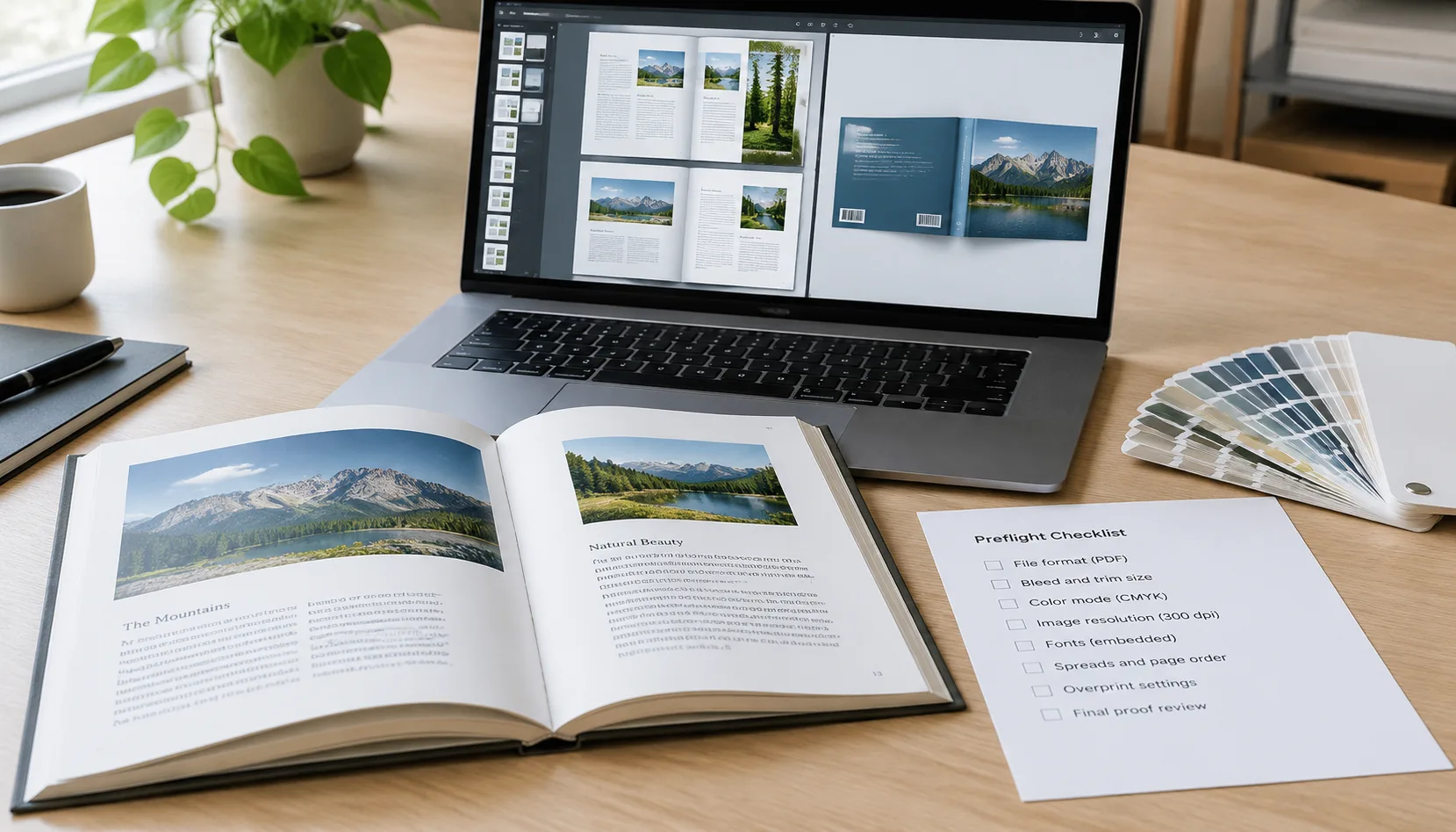
When the layout is approved, export production files using the printer’s specifications for bleed, color space, fonts and page order. YBJ Printing’s print-ready PDF and preflight workflow provides a practical file preparation reference.
How Typography Changes Large Print Page Count
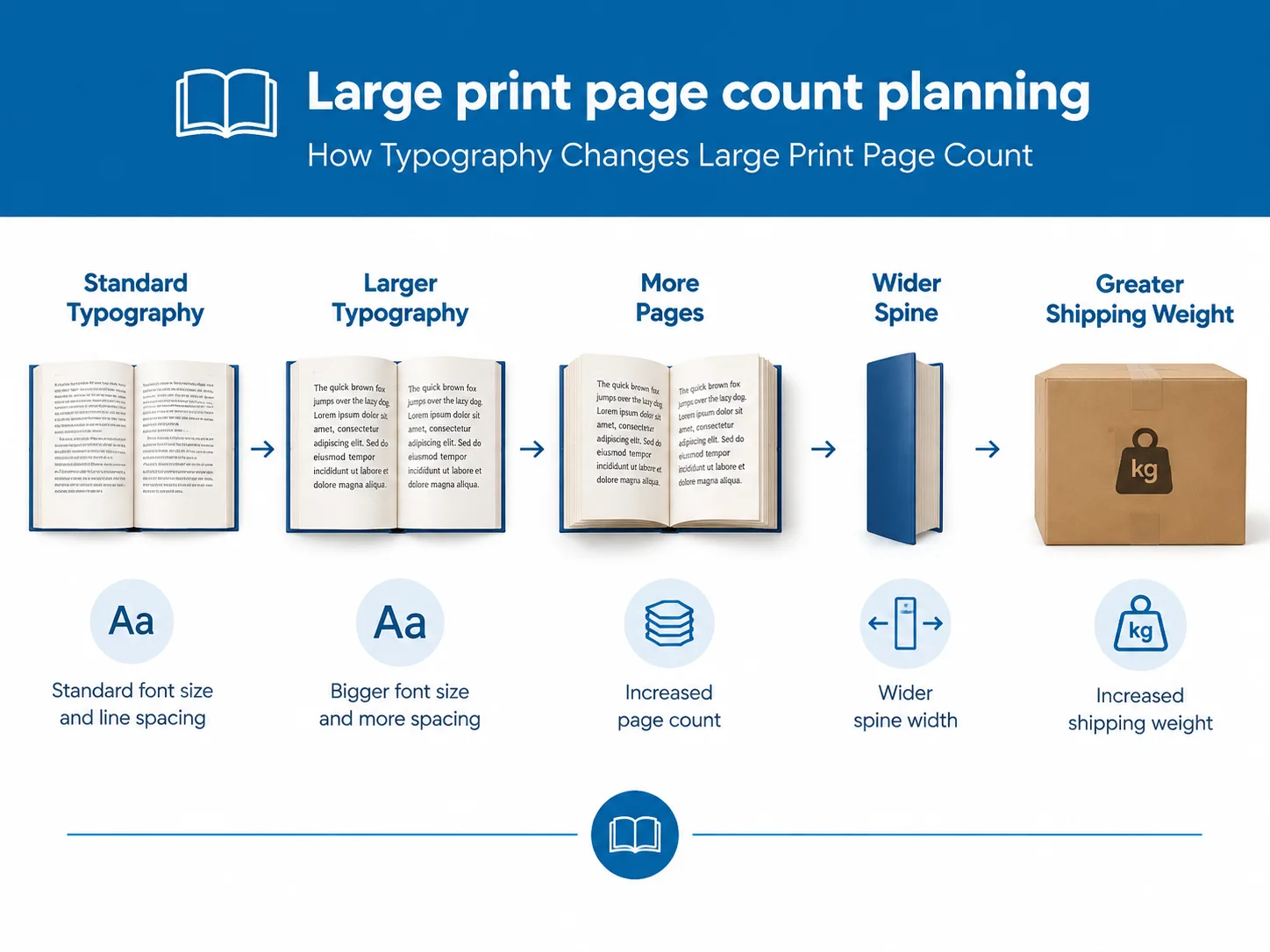
Large print page count usually increases because larger type, wider leading and more generous margins allow fewer words on each page. The final increase cannot be calculated reliably from font size alone. It also depends on the typeface, language, chapter structure, illustrations, front matter and trim size.
Use this planning sequence:
- Make a duplicate of the standard edition file.
- Set the proposed large print type, leading, margins and heading hierarchy.
- Flow the complete manuscript and record the resulting text pages.
- Add title pages, copyright information, contents, blanks, illustrations and notes.
- Check whether the total page count suits the chosen binding and printer’s production format.
For a preliminary estimate, compare a representative 10- to 20-page sample rather than extrapolating from one page. A sample should include ordinary paragraphs, a chapter opening, dialogue, lists, tables and any recurring special elements. This exposes layout issues before the entire book is typeset.
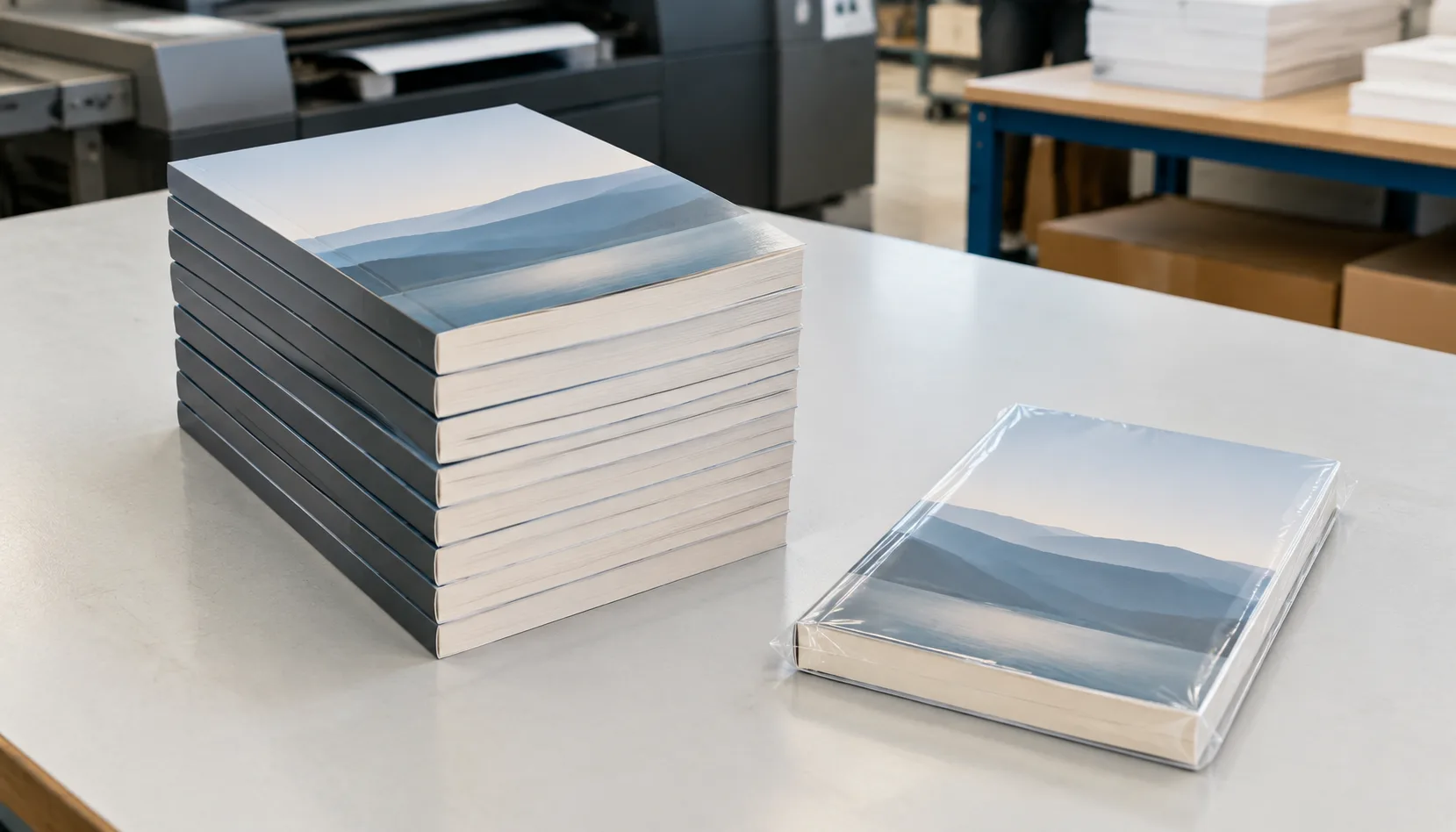
Page growth affects more than the interior quotation. It can require a wider spine, more paper, additional cartons and greater shipment weight. A long book may become uncomfortable to hold if the trim size and binding are not reconsidered. Conversely, a slightly larger trim size may fit more characters per line and reduce total page growth, but it may be less convenient for the intended reader.
Confirm whether the printer counts the cover separately and whether the interior must be supplied in single pages or reader spreads. Check the required page-count increment for the selected binding before finalizing the PDF. These production assumptions should be written into the quotation request.
Choose a Practical Format and Binding
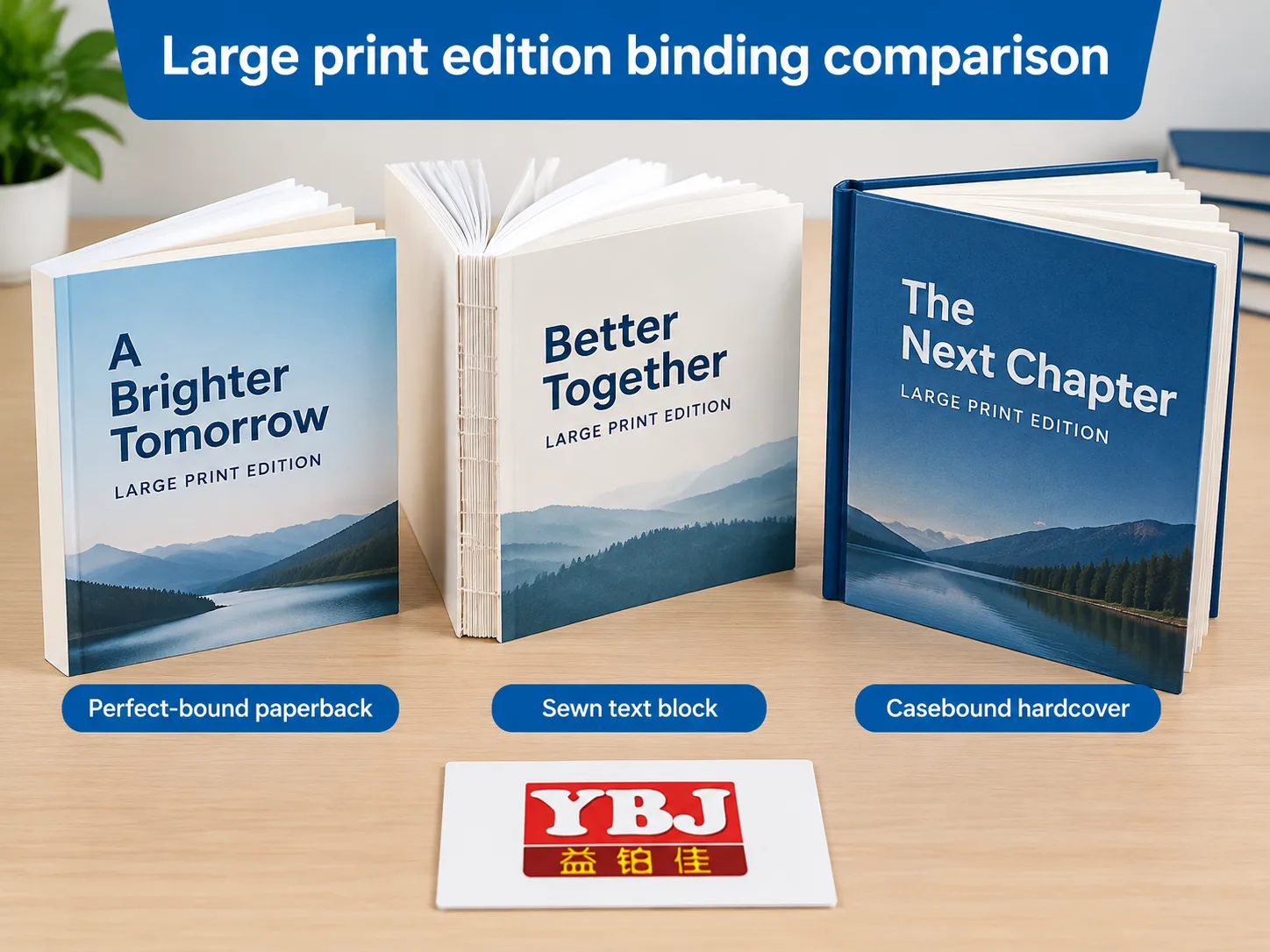
Format selection should reflect how the book will be read, stored and transported. The table below is a starting point for comparing common large print configurations. Actual suitability depends on final page count, paper, cover construction, quantity and destination.
| Configuration | Useful when | Advantages | Points to verify |
|---|---|---|---|
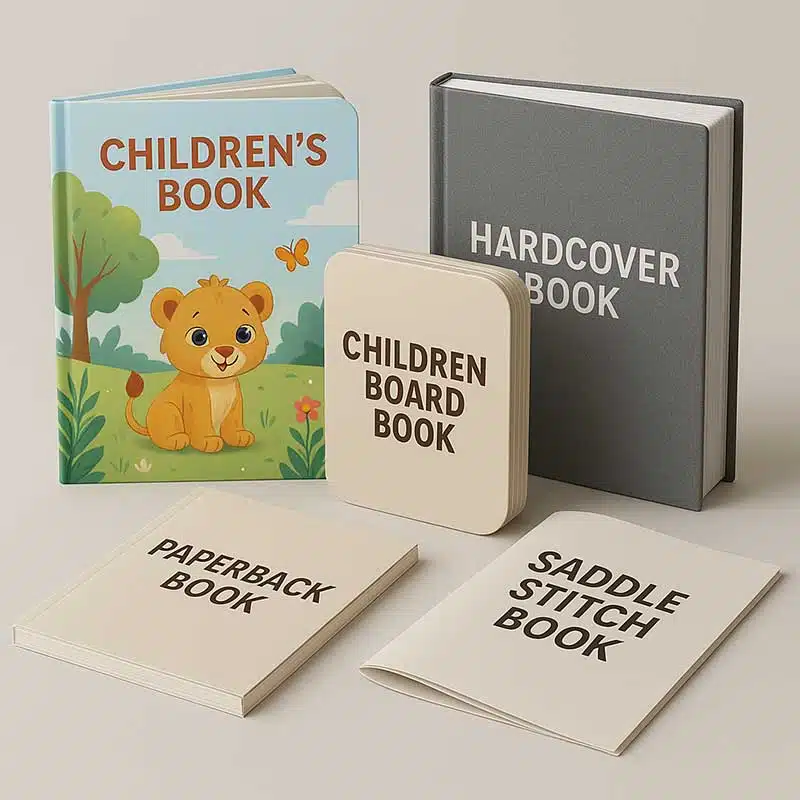
| Large print paperback, perfect bound | Novels, short nonfiction and moderate-volume distribution | Lower cover weight and a familiar retail format | Spine width, opening comfort and maximum practical thickness |
| Large print paperback, sewn or reinforced | Books that receive frequent handling | Improved page security and potentially better opening behavior | Construction details, cost and page-count requirements |
| Large print hardcover, casebound | Library, institutional, gift or long-life editions | Rigid boards protect the text block and support repeated use | Case material, hinge area, finished weight and carton protection |
| Large-format edition | Reference content, diagrams or readers who benefit from a larger page | More room for type, tables and illustrations | Handling comfort, shelf fit, shipping dimensions and binding stress |
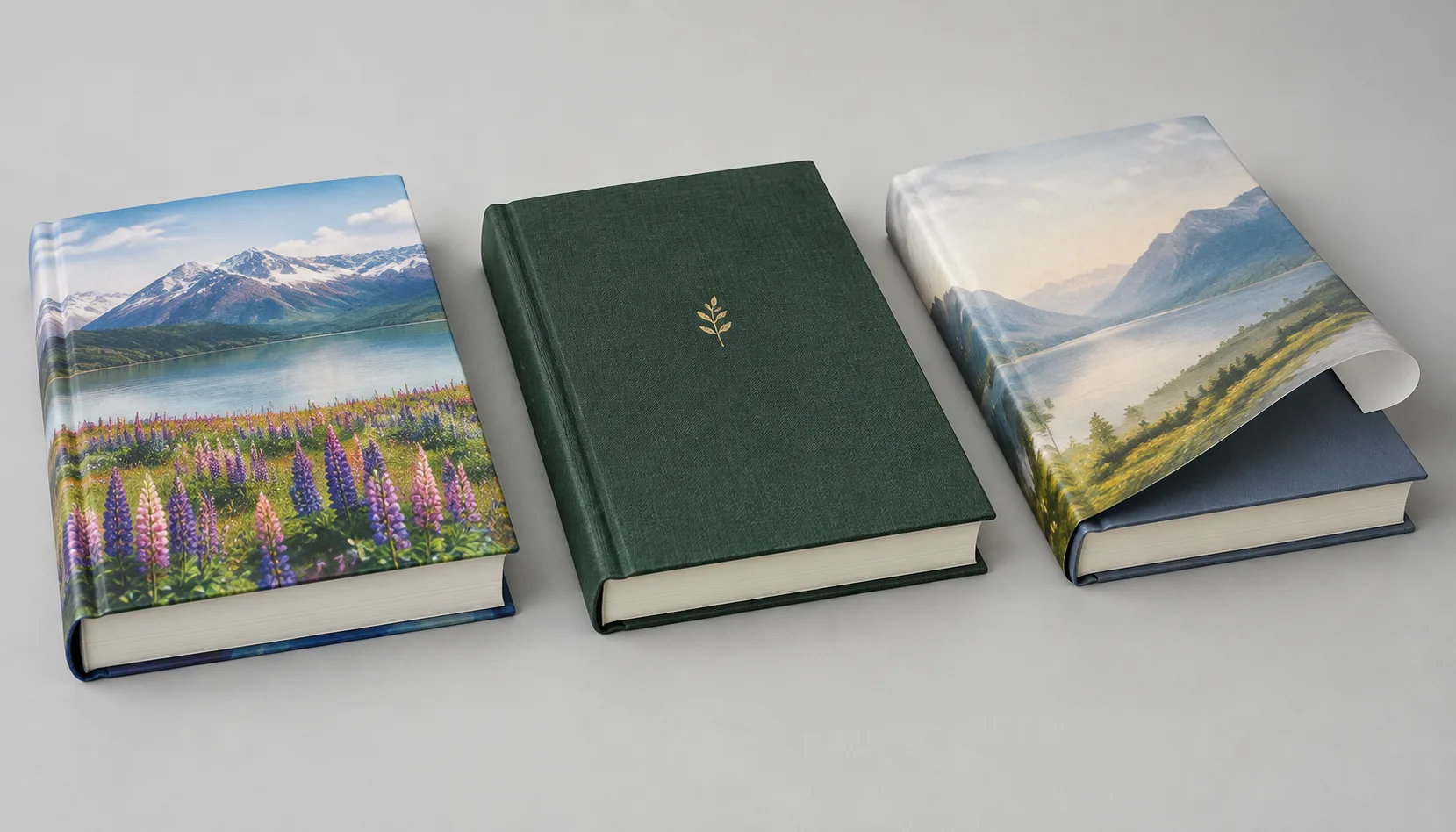
A perfect-bound book may be a practical choice for a moderate page count, but a thick large print novel can be harder to open and handle. A sewn text block or casebound construction may be more appropriate when durability and repeated use matter. Compare the cover materials and hinge options before approving the design; YBJ’s guide to hardcover case materials and cover options can help structure that discussion.
If the book includes full-bleed illustrations or photographs, the paper and binding decision may change. A large-format visual book has different priorities from a text-led accessible edition.
Paper Opacity and Ink Show-Through
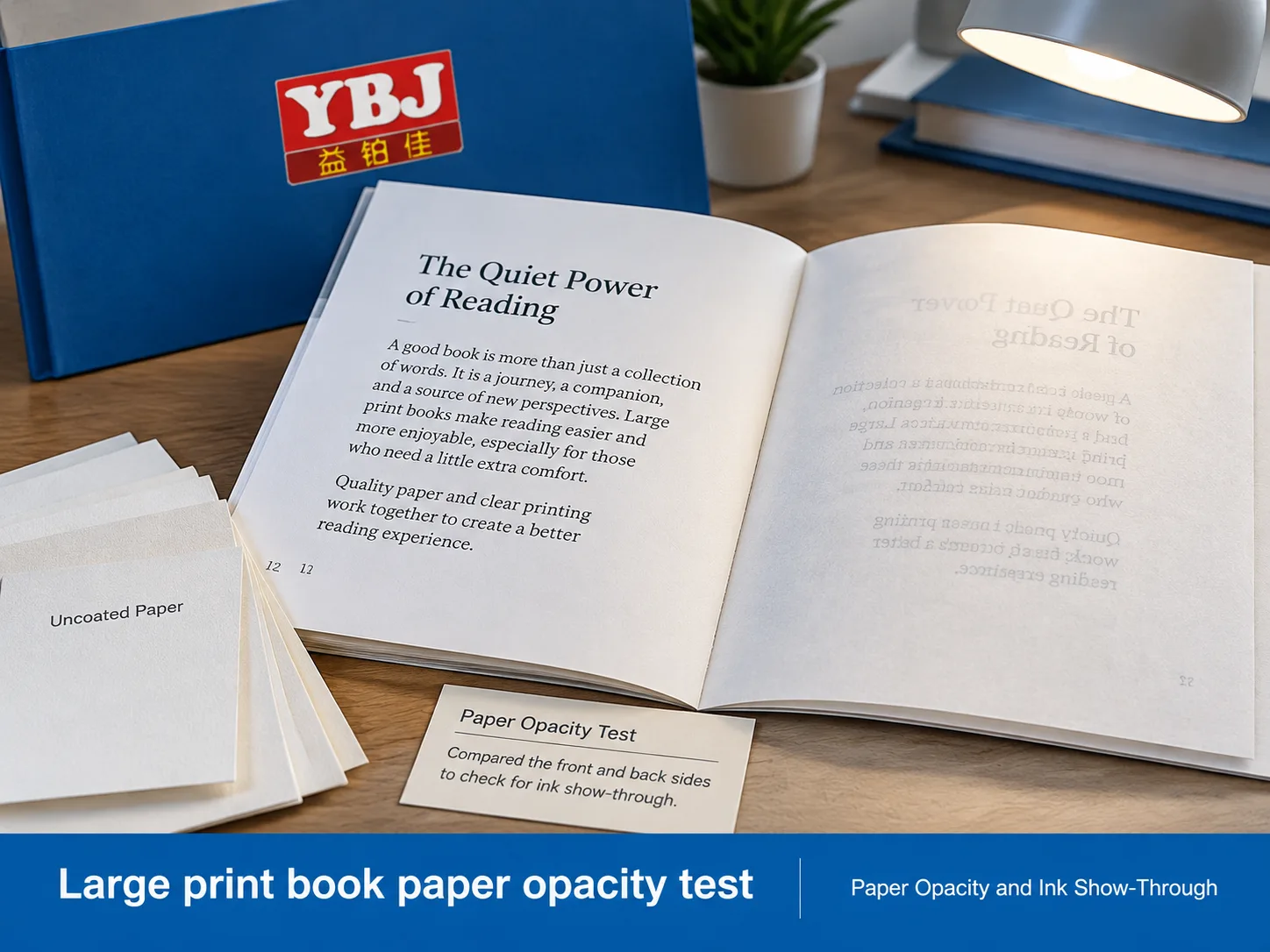
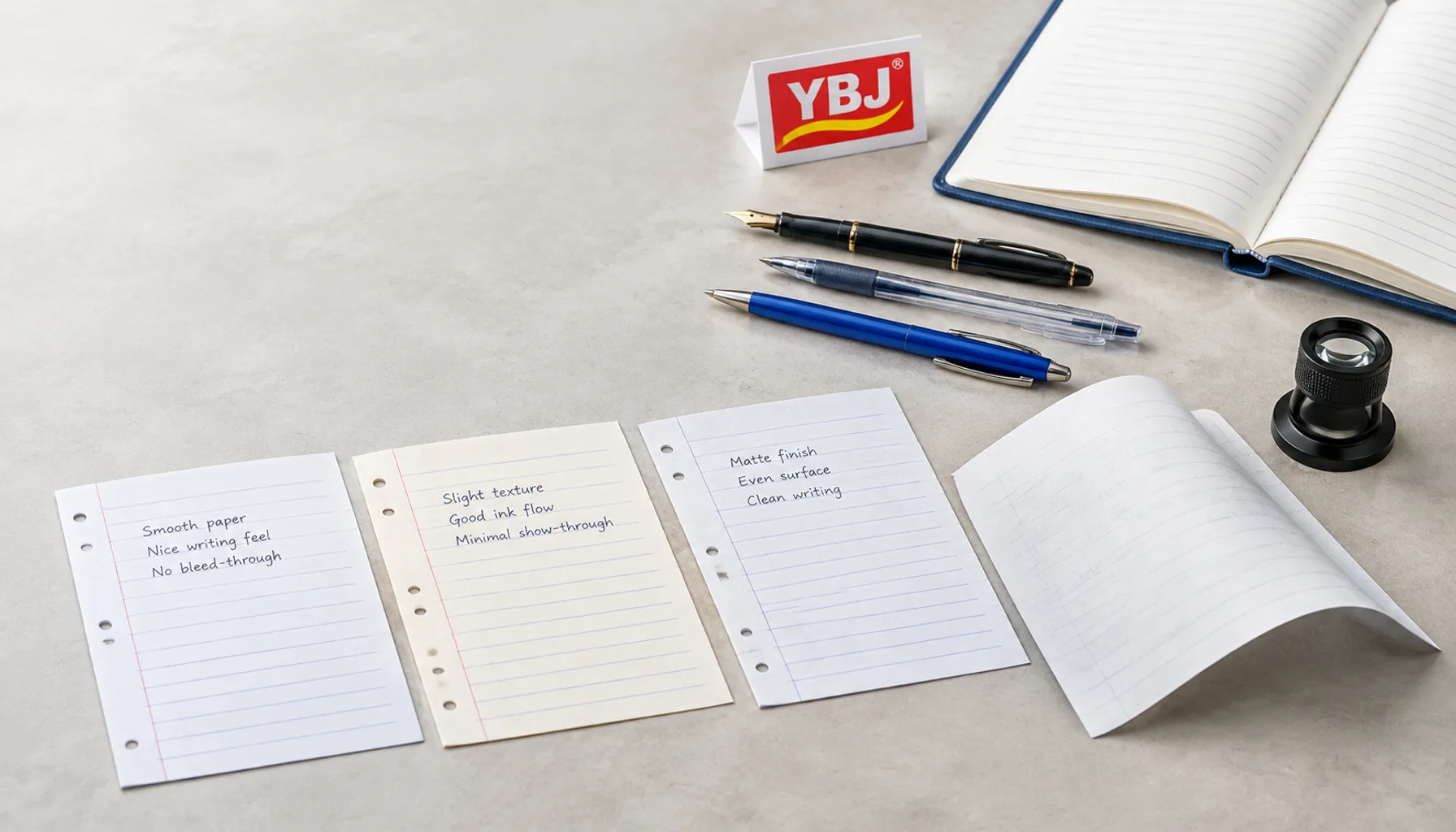
Book paper opacity describes how much the sheet resists light passing through it. Higher opacity generally reduces the visibility of text and images from the reverse side, which is important when large, dark type occupies more of the page. Show-through can make reading tiring even when the type size and contrast are otherwise suitable.
Paper selection involves trade-offs:
- Uncoated book paper usually provides a comfortable, non-glare reading surface and is commonly considered for text-heavy books.
- Higher-basis-weight or more opaque stock can reduce show-through, but it may increase bulk, page weight and shipping cost.
- Papel estucado can improve image sharpness and color density, but glare and surface feel may be less suitable for a text-led large print edition.
- Natural or cream shades may be preferred for some reading applications, but the actual result depends on ink coverage, lighting and contrast.
Do not choose paper by grammage alone. Opacity depends on fiber composition, thickness, formation, color and the relationship between the paper and ink coverage. Ask for a paper sample or printed proof using representative pages, especially if the book contains solid black areas, photographs, maps or dense tables.
When comparing samples, inspect both sides under normal reading light. Check whether the text on the reverse interrupts the current page, whether the sheet feels too heavy, and whether the book becomes difficult to hold as page count rises. A paper recommendation should be made together with the trim size and binding, not in isolation. For additional background on stock choices, see this guide to paper, proofing and binding considerations; the examples focus on photo books, but the comparison process is also useful for large print projects.
Large Print Edition Binding Options
The best large print edition binding is the one that supports the final page block without making the book unnecessarily heavy or difficult to open. Binding should be chosen after the layout has produced a realistic page count.
Encuadernación perfecta
Perfect binding uses adhesive to attach the gathered text block to the cover. It can be efficient for paperback editions and gives a clean spine for title and author information. For a thick large print book, ask about spine flexibility, adhesive construction and how comfortably the book opens near the center.
Encuadernación cosida
Sewn sections can improve page security and opening behavior, especially for books intended for repeated handling. It may add production steps and cost, so confirm whether the page structure is suitable and whether the desired quantity justifies the construction.
Case binding
Casebound books use rigid boards covered with printed or wrapped materials. They can protect a large print text block in library, education and institutional settings. The extra board and covering material increase weight and may influence freight packaging, so request a landed-cost comparison rather than judging only the unit price.
Wire-o or spiral formats can open flat, but they may not suit every retail, library or shelving requirement. They can also affect the visual appearance of the spine and storage efficiency. If hands-free reference use is essential, include that requirement in the first specification rather than adding it after the quotation.
Large Print Book Production Workflow
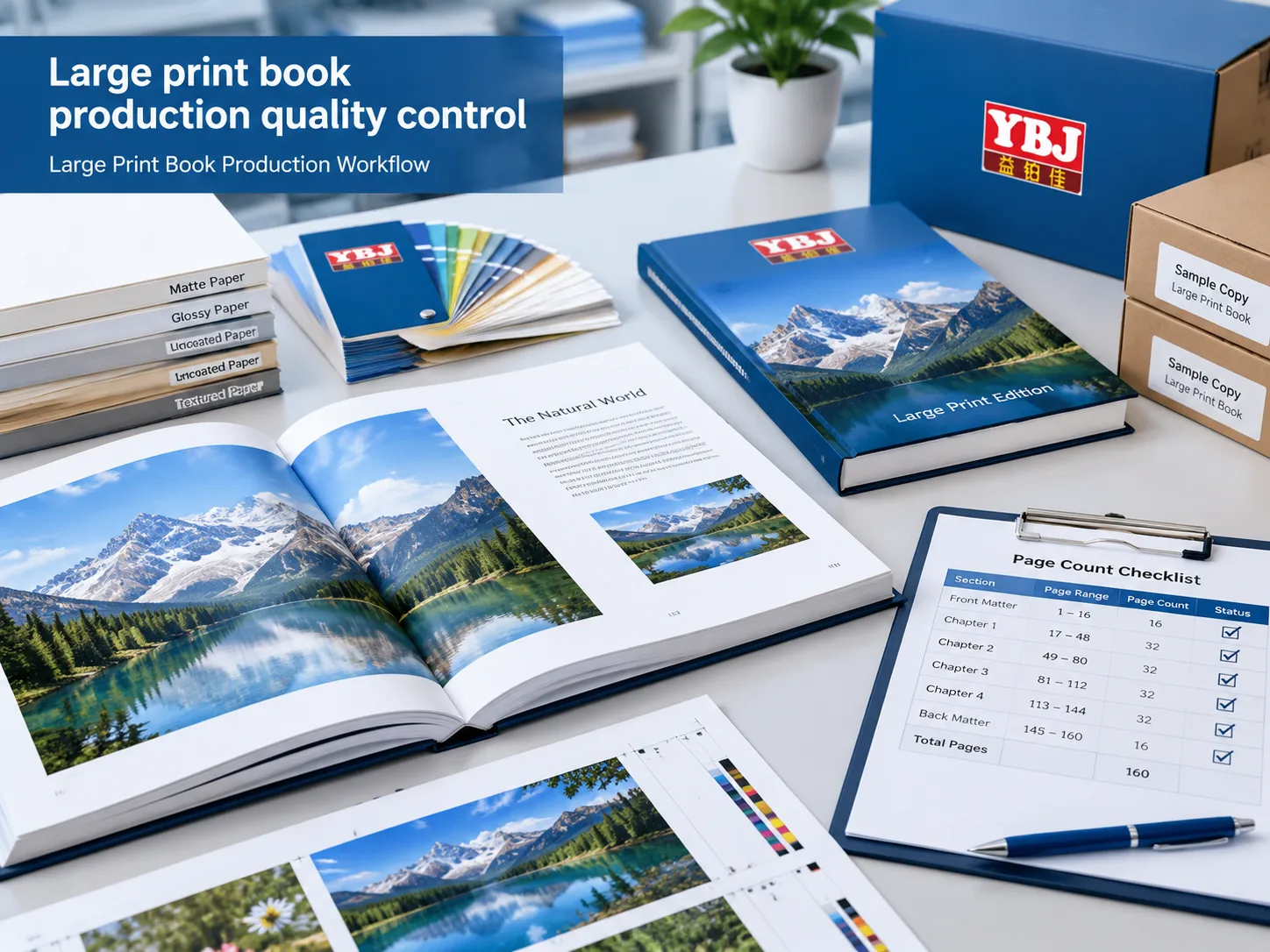
A clear production workflow reduces late changes that can alter page count, spine width or shipping plans. A practical sequence for large print book printing is:
- Define the reader and use case. Record the market, language, expected reading environment, durability needs and distribution channel.
- Set the design specification. Confirm trim size, typeface, type size, leading, margins, heading hierarchy, image treatment and page-number style.
- Create representative pages. Include the most difficult content, such as tables, lists, captions, maps, chapter openings and dense paragraphs.
- Build the complete interior. Reflow the manuscript, check widows and orphans, review navigation and calculate the actual page count.
- Compare paper and binding. Use samples or a proof to assess opacity, surface, handling, opening behavior and cover construction.
- Prepare the quotation package. Supply product type, trim size, page count, quantity, paper, binding, finishes, file status and destination country.
- Approve proofing. Check type size at finished scale, page sequence, crop and bleed, color, cover text, barcode position and visible show-through.
- Confirm production and logistics. Agree on the approved specification, packing method, shipping terms and delivery address before mass production.
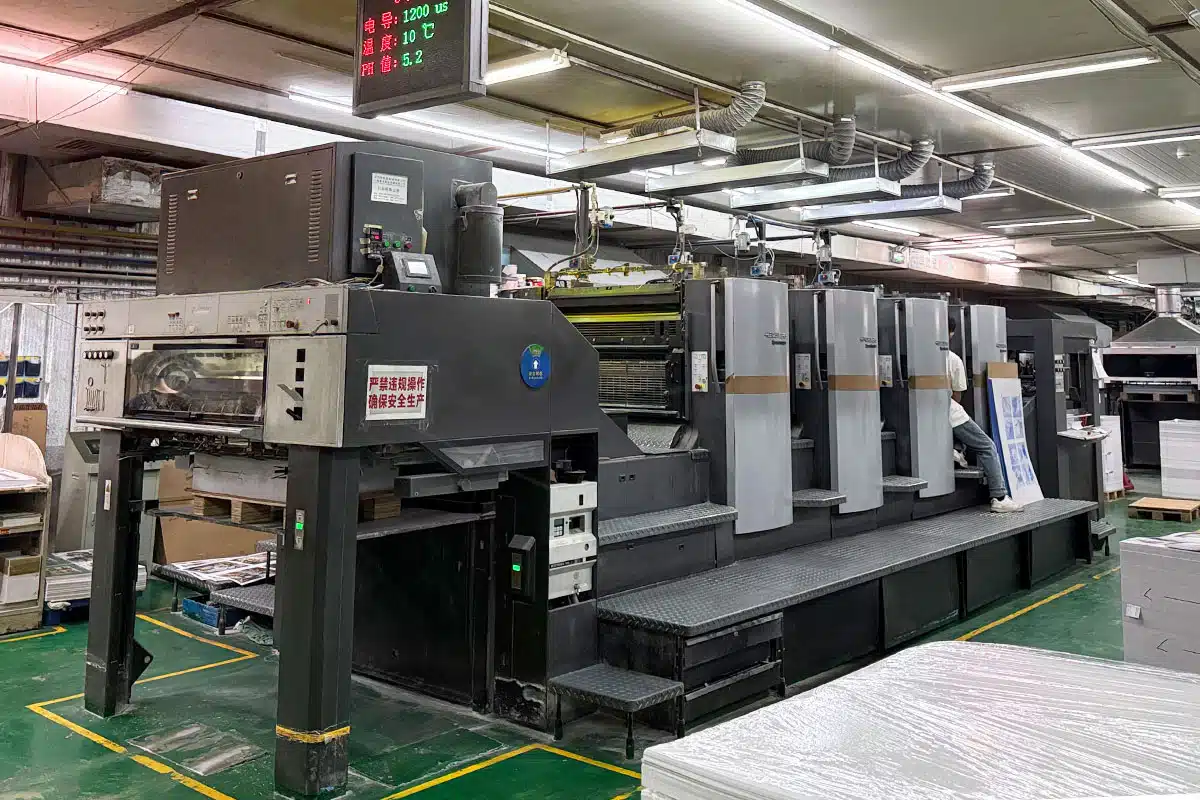
Offset printing may be appropriate when the planned quantity supports setup and inventory, while print on demand can reduce upfront stock for smaller or uncertain demand. The decision should consider unit cost, cash flow, storage and fulfillment, not just the press method. YBJ’s comparison of offset printing and print on demand outlines these trade-offs.
Price, lead time and print quality depend on assumptions such as quantity, page count, paper availability, binding construction, proofing method, order queue and destination. Request those assumptions in writing so different supplier quotations can be compared fairly.
Large Print Printing Buyer Checklist
Use this checklist before asking a factory or book printer for a quotation:
Key takeaways
- Design for reading comfort rather than enlarging the standard file without review.
- Use a realistic sample to estimate large print page count.
- Evaluate paper opacity with representative printed pages.
- Choose binding after confirming the completed text-block thickness.
- Compare production and shipping assumptions together.
| Quotation item | Information to provide |
|---|---|
| Product | Novel, textbook, manual, devotional, reference book or another format |
| Dimensions | Finished trim size, orientation and whether the cover has bleed |
| Interior | Page count, color or black and white, illustrations and file status |
| Tipografía | Typeface, approximate type size, leading and any accessibility objectives |
| Paper | Preferred stock, shade, surface and opacity requirement |
| Encuadernación | Perfect bound, sewn, casebound, spiral or another construction |
| Acabado | Lamination, foil, embossing, spot effects or uncoated cover treatment |
| Order and logistics | Quantity, packaging preference, destination country and required shipping method |
Also ask whether the quotation includes proofing, carton packing and shipping separately or together. Confirm the minimum order quantity, payment terms, file review process, sample approval method and what happens if the final page count changes after typesetting. These details help prevent a low initial estimate from becoming an incomplete comparison.
YBJ Printing has supported custom book and paper-product production since 1998. The company works with international buyers on specifications, prepress checks, proofing, binding and delivery coordination. A clear brief gives the production team enough information to recommend a practical combination of size, paper and construction without making assumptions on your behalf.
Conclusión
Large print book printing works best when typography, page growth, paper opacity, trim size, binding and logistics are planned as one production system. Start with representative layouts, test the finished reading experience, then confirm the paper and binding against the actual page count. A complete quotation brief will help the printer assess cost, production requirements and delivery assumptions accurately.
PREGUNTAS FRECUENTES
What font size is normally used for a large print book?
Many projects test a body size around 14–18 point, but there is no universal setting. Typeface design, language, line spacing, trim size and reader needs all affect perceived readability. Approve a finished-size sample before finalizing the complete book.
How much does a large print edition increase the page count?
There is no reliable fixed percentage. Page growth depends on type size, leading, margins, typeface, trim size, chapter structure and illustrations. Flow a representative sample or the full manuscript to establish the actual large print page count.
Which paper is suitable for large print books?
Text-heavy editions often use an uncoated, non-glare book paper with enough opacity to limit show-through. The best choice depends on ink coverage, page count, desired weight and budget. Compare printed paper samples rather than choosing by grammage alone.
Is perfect binding suitable for a large print book?
It can be suitable for paperback editions with a manageable text-block thickness. If the book becomes very thick or will receive frequent handling, compare sewn or casebound construction for opening comfort and durability.
What information does a printer need to quote a large print book?
Provide the product type, trim size, page count, quantity, paper or binding preference, finish, file status and destination country. It is also useful to provide the intended type size, color requirements, proofing preference and packaging needs.
Ready to Plan Your Custom Printing Project?
Tell YBJ Printing about your product type, trim size, page count, quantity, paper or binding preferences, finish requirements, file status and delivery destination. Our team can discuss practical large print options and prepare a factory-direct quotation based on your specification.