
Índice
- What Sound Book Packaging Needs to Do
- Choosing a Retail Carton for Sound Books
- Labels and Product Information to Plan
- Protecting Sound Books During Shipping
- Design and Production Checklist
- Information Needed for an Accurate Packaging Quote
Sound book packaging must protect printed boards, buttons, speakers and batteries while presenting the product clearly at retail. This guide explains how to choose cartons, labels and shipping protection for children’s electronic book packaging.
What Sound Book Packaging Needs to Do
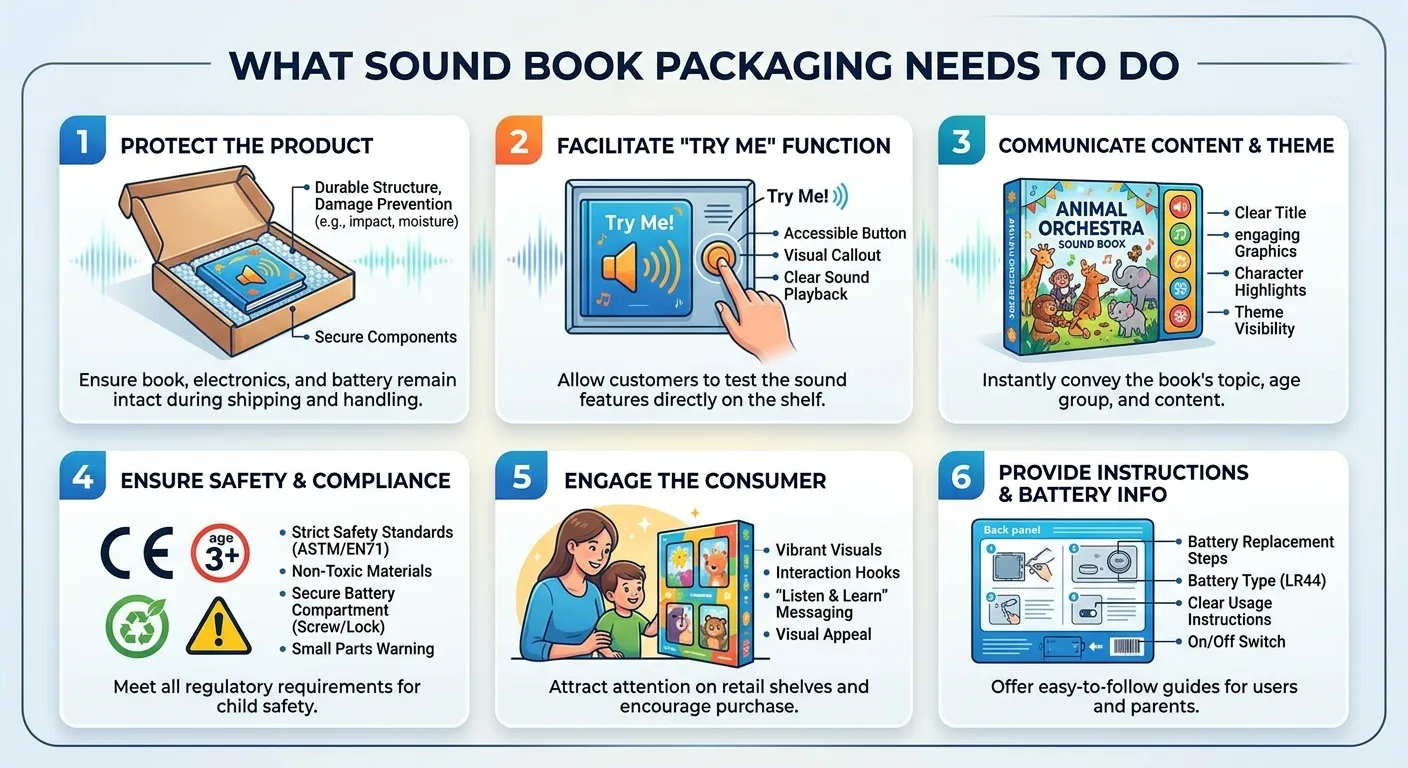
Sound book packaging should protect the book, electronic components and retail presentation at the same time. A suitable package helps prevent crushed corners, scuffed covers, accidental button activation, battery damage and moisture exposure during storage and transport.
Unlike ordinary children’s books, sound books contain additional components such as buttons, speakers, wiring, circuit boards and batteries. The package therefore needs enough internal clearance and structural support for the finished product. It should also communicate important product information to retailers, warehouse teams, caregivers and end customers.
Packaging decisions should be made after the sound book’s final dimensions and component layout are confirmed. The thickness of the book, location of buttons, speaker openings, battery compartment and any protruding parts can all affect carton size and insert design.
For background on the book itself, see our guide to Impresión de libros infantiles interactivos personalizados. If the product uses board pages, our article on Características de seguridad y durabilidad de los libros de cartón can also help with material planning.
- Protección: Reduce impact, abrasion, compression and movement inside the package.
- Retail presentation: Make the cover and product concept visible without weakening structural protection.
- Product information: Show the title, age guidance, operating instructions and relevant battery details clearly.
- Handling efficiency: Use a practical carton format for packing, palletising, warehousing and delivery.
Choosing a Retail Carton for Sound Books
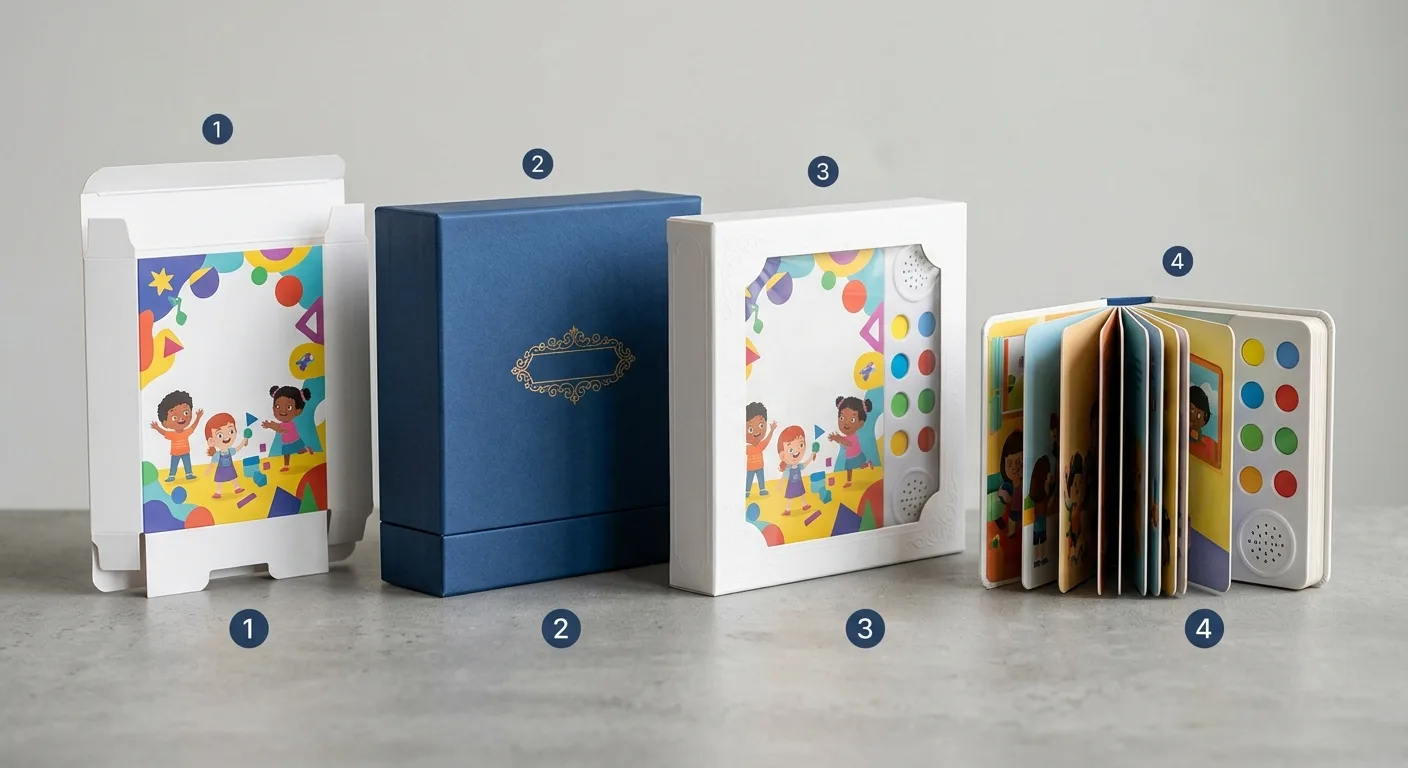
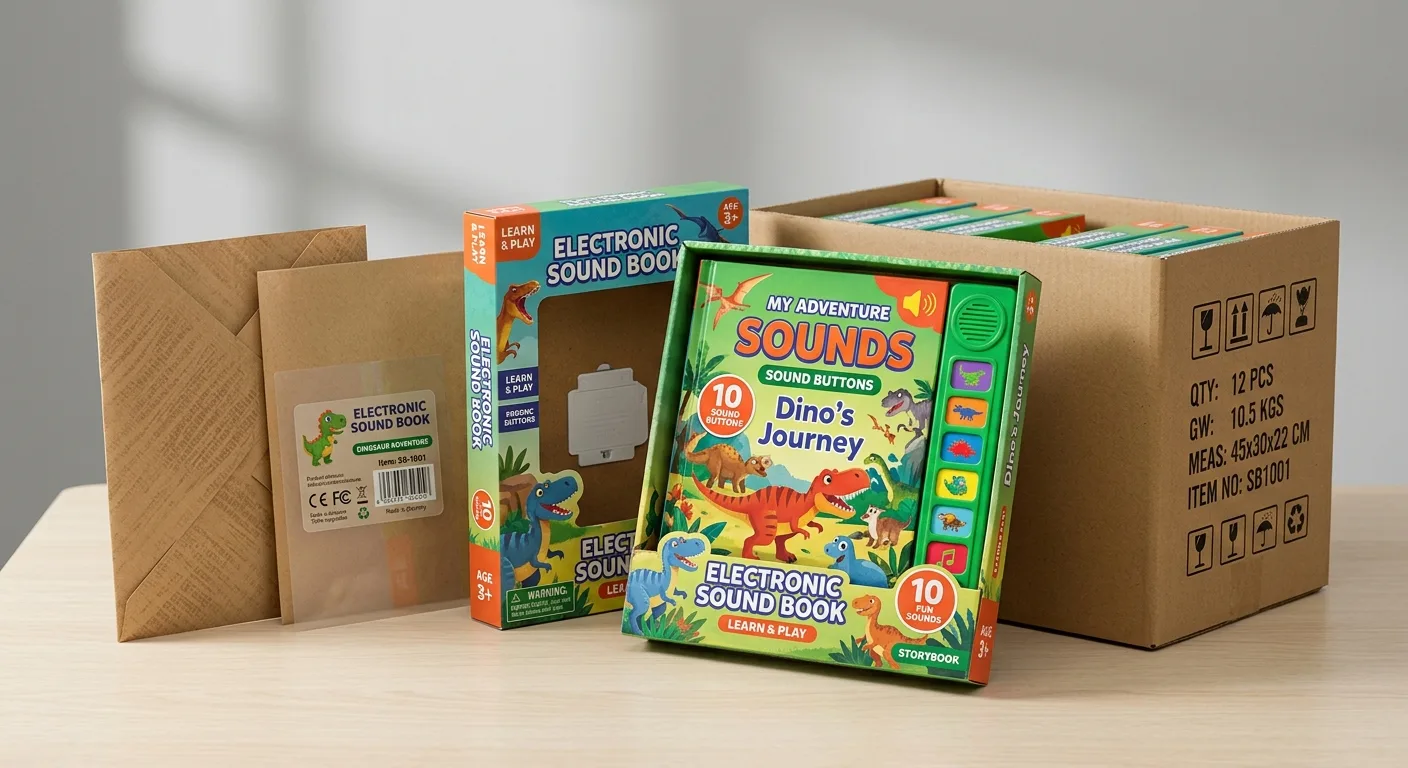
The carton format should match the sales channel, product dimensions and required level of visibility. Common options for sound book retail packaging include folding cartons, rigid setup boxes, mailer-style boxes and cartons with windows. The best choice depends on whether the product will be sold on a shelf, displayed in a gift section, shipped directly to consumers or supplied to another distributor for repacking.
Folding cartons
Folding cartons are a practical option for many retail programmes because they can be printed on the outside and supplied flat before packing. They are often suitable when the sound book is already reasonably compact and the carton does not need to carry a heavy internal load. A tuck-end or crash-lock construction can be selected according to packing requirements.
Rigid setup boxes
Rigid boxes provide a more substantial presentation and can offer additional resistance to compression. They may suit premium editions, gift products or collections that require a stronger unboxing experience. However, their higher material volume and storage profile should be considered when calculating shipping and warehouse costs.
Window cartons and open display features
A window can allow shoppers to see the book cover or press a demonstration button, but it also creates design and structural considerations. The opening should not expose sensitive electronic areas unnecessarily, and a demonstration mode may be needed to reduce accidental battery drain. The window material, adhesive and folding structure should be checked during sampling.
Internal supports can be made from paperboard or other agreed packaging materials. They should hold the book in position without pressing continuously against buttons, the speaker grille or the battery compartment. If a separate accessory, insert or instruction sheet is included, reserve a defined position for it rather than allowing it to move freely.
Carton dimensions should be based on the packed product, not only the closed book. Include the thickness of protective wraps, inserts, accessories and any required clearance. For board book format decisions, see our guide to Tamaños y número de páginas de los libros de cartón.
Labels and Product Information to Plan
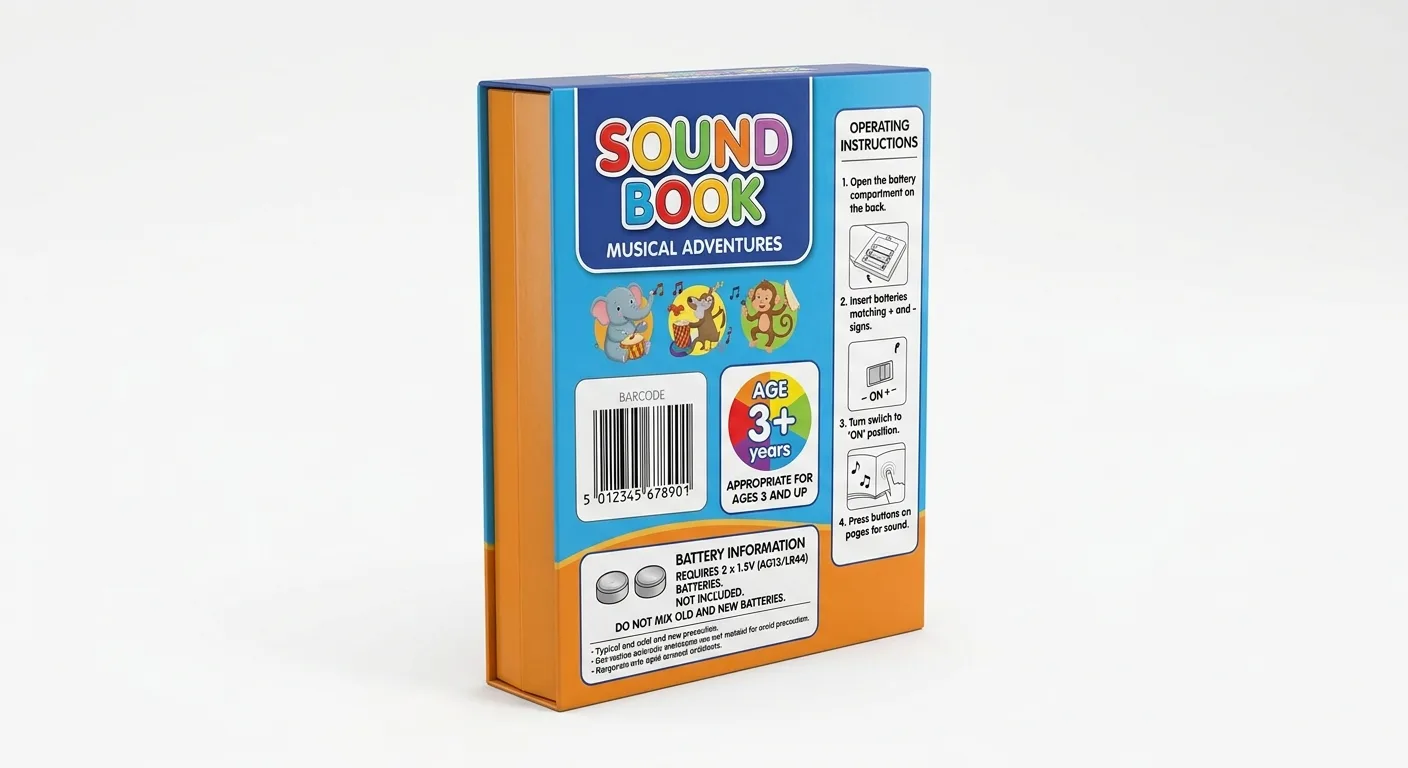
Labels are part of the product experience and the supply-chain workflow. A sound book package may need printed information on the carton, a label applied to the product or a separate instruction panel. The exact requirements depend on the destination market, retailer and product configuration, so buyers should confirm them before artwork is finalised.
Retail-facing information
- Product name and subtitle
- Age range or intended user group, where applicable
- Number of sounds, songs or interactive functions, if confirmed
- Short operating instructions
- Battery type and replacement information
- Barcode, SKU, item number or retailer reference
- Country-of-origin or importer information where required
Handling and battery information
Electronic books may require warnings about small components, batteries or safe use. Some products are supplied with batteries installed, while others use a pull tab or require activation after purchase. The packaging artwork should match the actual electrical configuration and the approved product instructions.
Do not add regulatory symbols, recycling marks or transport statements unless they have been checked for the destination country and the product’s battery arrangement. Requirements can vary by market and may also depend on whether the battery is installed, packed separately or permanently integrated.
Barcode placement
Barcodes need a clean, sufficiently quiet area with adequate contrast. Avoid placing them across folds, corners, window edges, textured coatings or areas likely to be damaged during packing. Confirm the final barcode artwork and required size with the retailer or distribution partner.
For the electronic book itself, review the planning guidance in sound book components, buttons and batteries. The packaging should reflect the actual component layout and user instructions.
Protecting Sound Books During Shipping
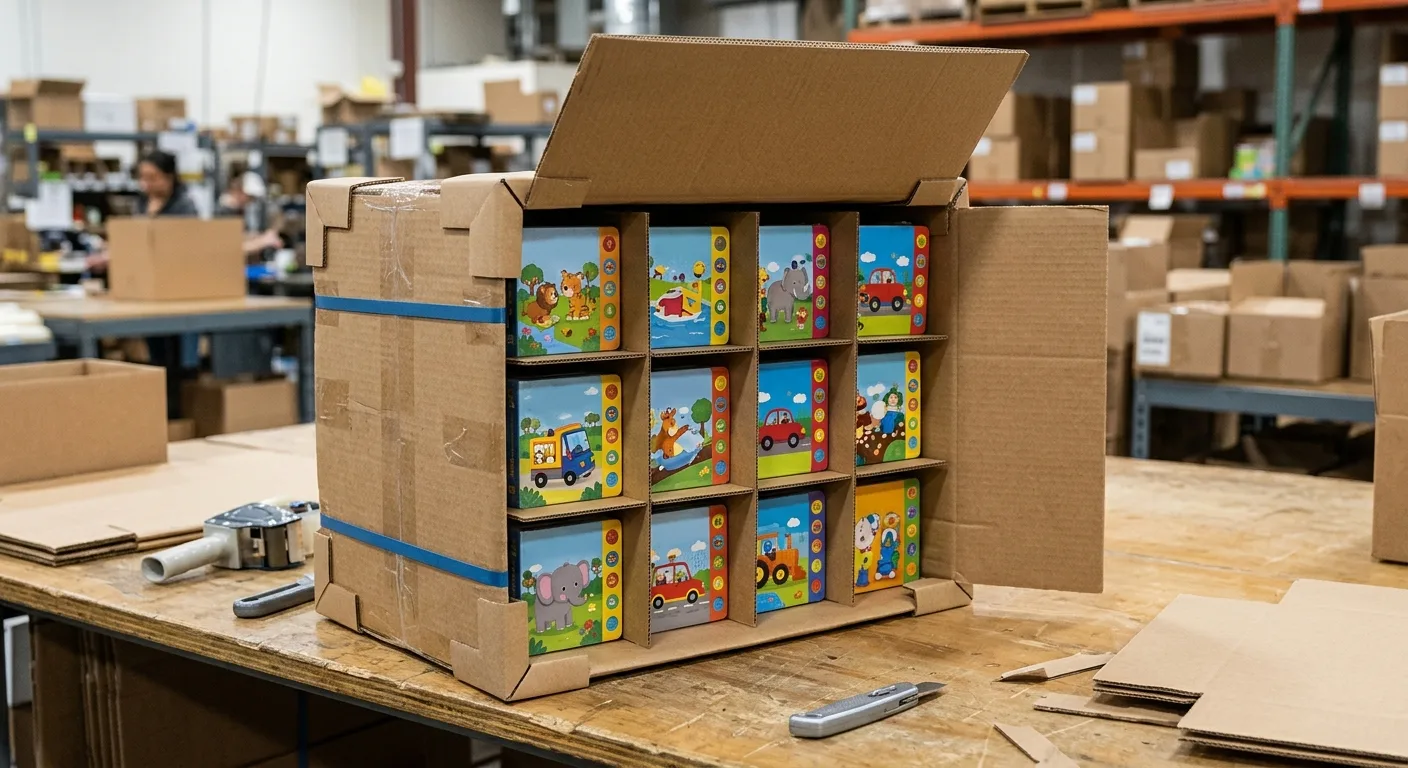
Shipping sound books requires protection at several levels: the individual product package, the inner carton and the outer shipping case. A retail carton can look attractive but still fail if products move inside the case, corners carry too much load or cartons are exposed to moisture and rough handling.
Individual package protection
The retail carton should prevent the book from sliding and should limit direct contact between buttons, speaker openings and external surfaces. Paperboard inserts, folded supports or protective sheets may be used where appropriate. Avoid loose filler that can obstruct buttons or create an untidy retail presentation.
Inner and master cartons
Master cartons should be sized for stable packing. Excess empty space increases movement and impact risk, while excessive compression can damage retail cartons and book corners. Consider carton orientation, stacking pattern, case weight, hand holes and pallet configuration. Products should be packed consistently so that the heaviest areas do not press against delicate components.
Moisture, abrasion and corner damage
Printed cartons and paper products can be affected by humidity, friction and compression. A suitable outer case, consistent packing method and appropriate storage conditions can reduce these risks. If the shipment will pass through multiple warehouses or climate zones, packaging trials should reflect the expected handling environment.
Packaging validation should include a packed sample review. Check whether the book can move inside the carton, whether buttons can be activated during handling, whether the speaker area is exposed to pressure and whether the retail surface arrives clean. The required test method depends on the buyer’s distribution channel and logistics requirements; no single packaging design is suitable for every route.
Sound book packaging and product construction should be developed together. Our guide to sound book artwork, audio and proofing explains why file preparation and physical sampling need to be coordinated.
Sound Book Packaging Design and Production Checklist
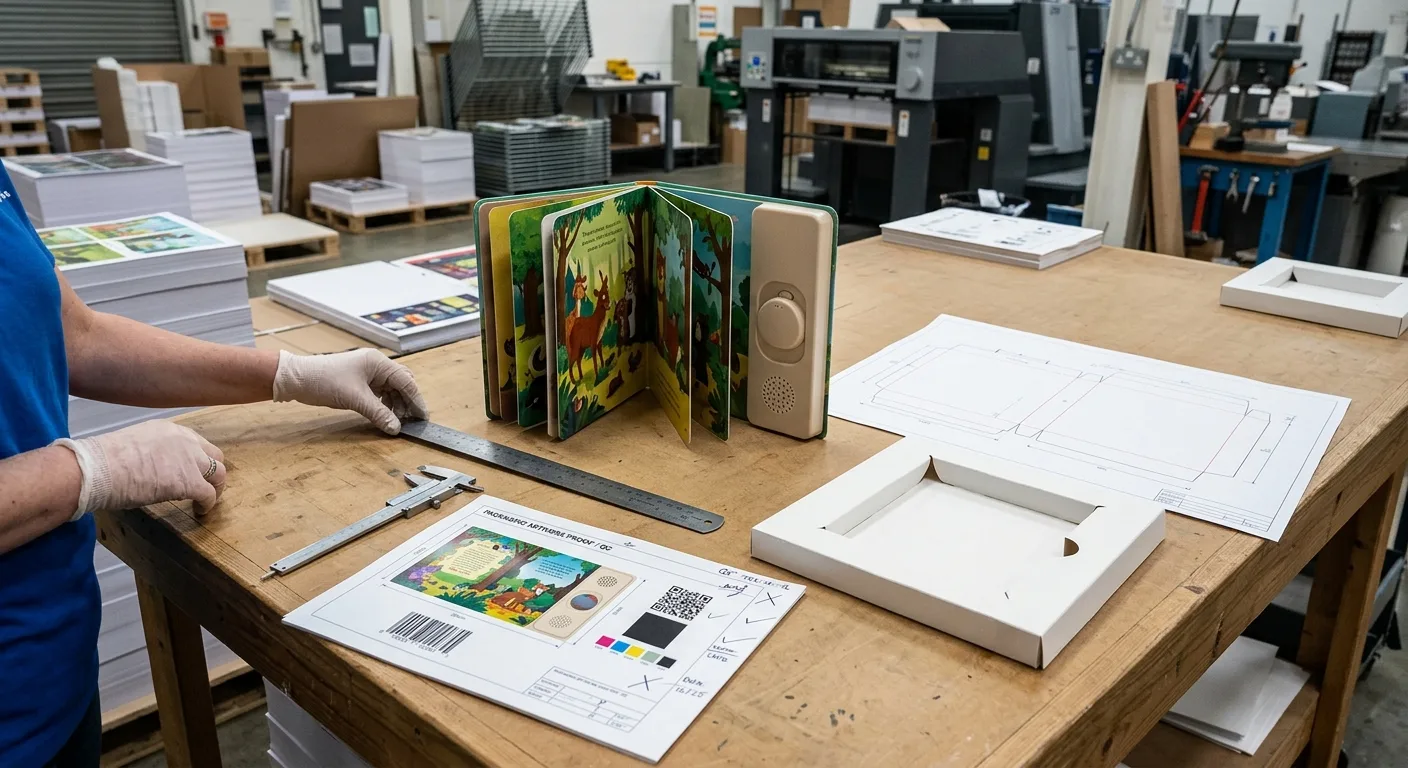
Use the following checklist before approving a packaging structure or releasing final artwork:
- Confirm the packed dimensions: Measure the finished sound book with batteries, protective parts, accessories and inserts included.
- Map pressure-sensitive areas: Mark buttons, speaker openings, wiring zones and battery compartments so the carton does not apply unwanted pressure.
- Select the carton structure: Decide whether a folding carton, rigid box, mailer or window format suits the retail channel and packing process.
- Define the internal support: Specify the insert position, material and clearance. Confirm that the product can be packed quickly and consistently.
- Prepare the label information: Finalise product text, instructions, barcode, battery details and market-specific marks before printing.
- Check artwork and finishes: Keep important text away from folds and cuts. Consider whether gloss, matte, lamination or spot effects will affect scuff resistance and barcode readability.
- Plan the master carton: Confirm units per case, case dimensions, gross weight, orientation and pallet requirements.
- Approve a physical sample: Inspect fit, visibility, button clearance, opening method and packed appearance before mass production.
Packaging cost depends on carton style, dimensions, paperboard or rigid materials, printing coverage, windows, inserts, finishing, quantity, assembly and delivery destination. Lead time also depends on artwork readiness, sampling, component coordination, production scheduling and shipping method. These assumptions should be confirmed in the quotation rather than estimated from the book size alone.
Information Needed for an Accurate Packaging Quote
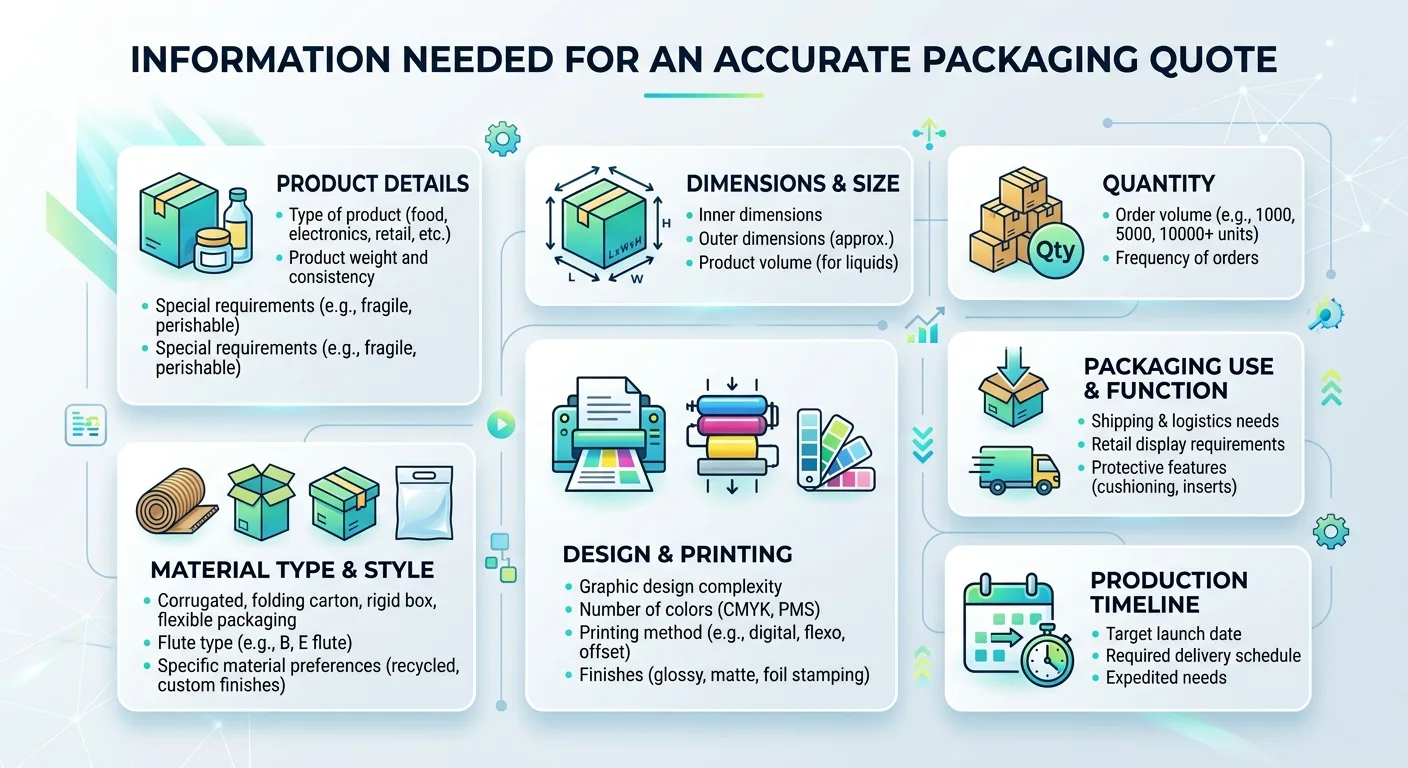
A packaging quotation is more useful when it covers the complete packed product rather than the carton alone. Provide the product type, finished trim size, closed thickness, page or board count, quantity, preferred carton style, paperboard or rigid material, printing requirements, finish, insert details, battery configuration, file status and destination country.
It is also helpful to share a dieline if one already exists, product photographs or a physical reference sample, retailer packaging guidelines and the expected units per master carton. If the package needs a window, demo button, hanging hole, tamper feature or special opening, include those details at the enquiry stage.
YBJ Printing can discuss the relationship between the sound book, retail carton and shipping case so that the packaging plan supports both presentation and practical distribution. The final recommendation should be based on approved specifications and sampling.
Discuss Your Sound Book Packaging Project
If you are planning children’s electronic book packaging, contact YBJ Printing to discuss the book, retail carton and shipping protection as one project. For an accurate quotation, please include the product type, trim size, page count, quantity, paper or binding preference, finish, file status and destination country.