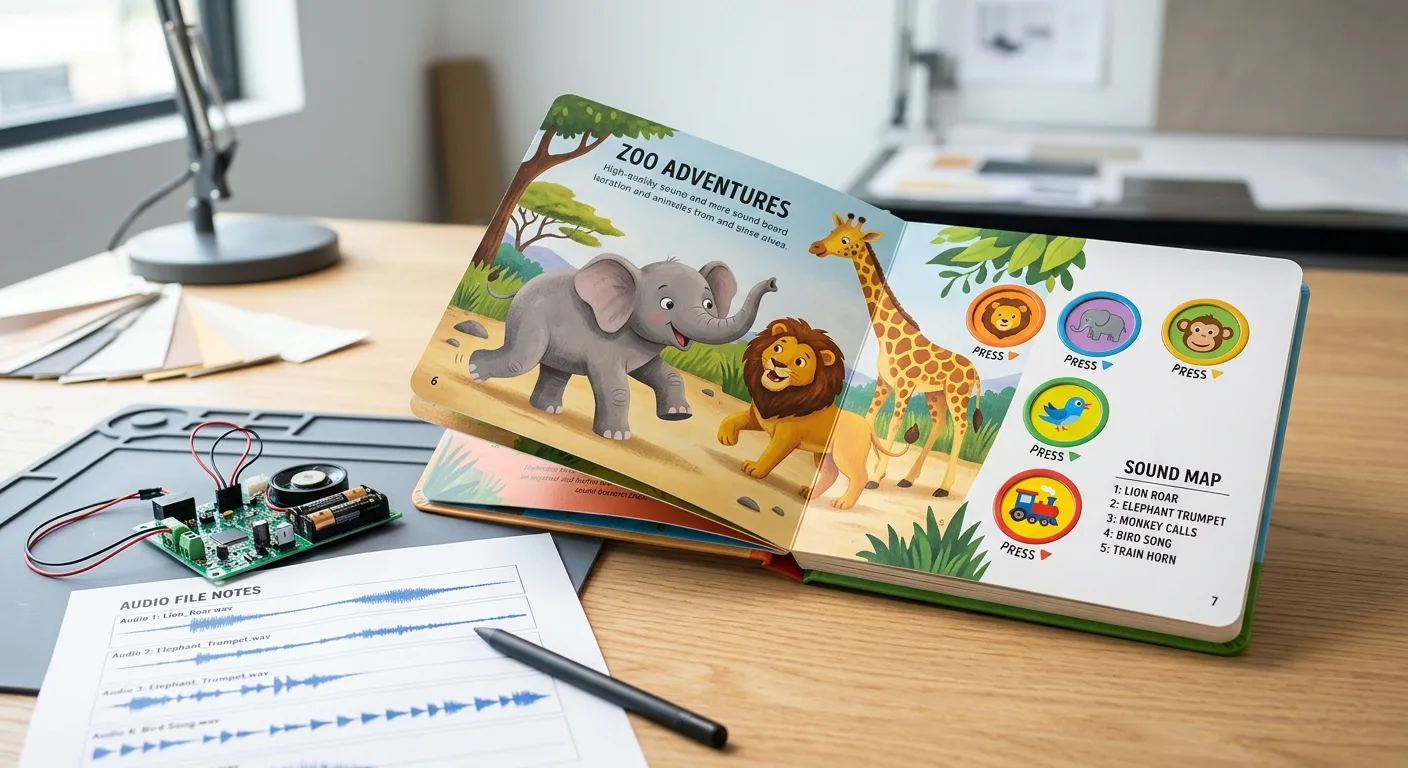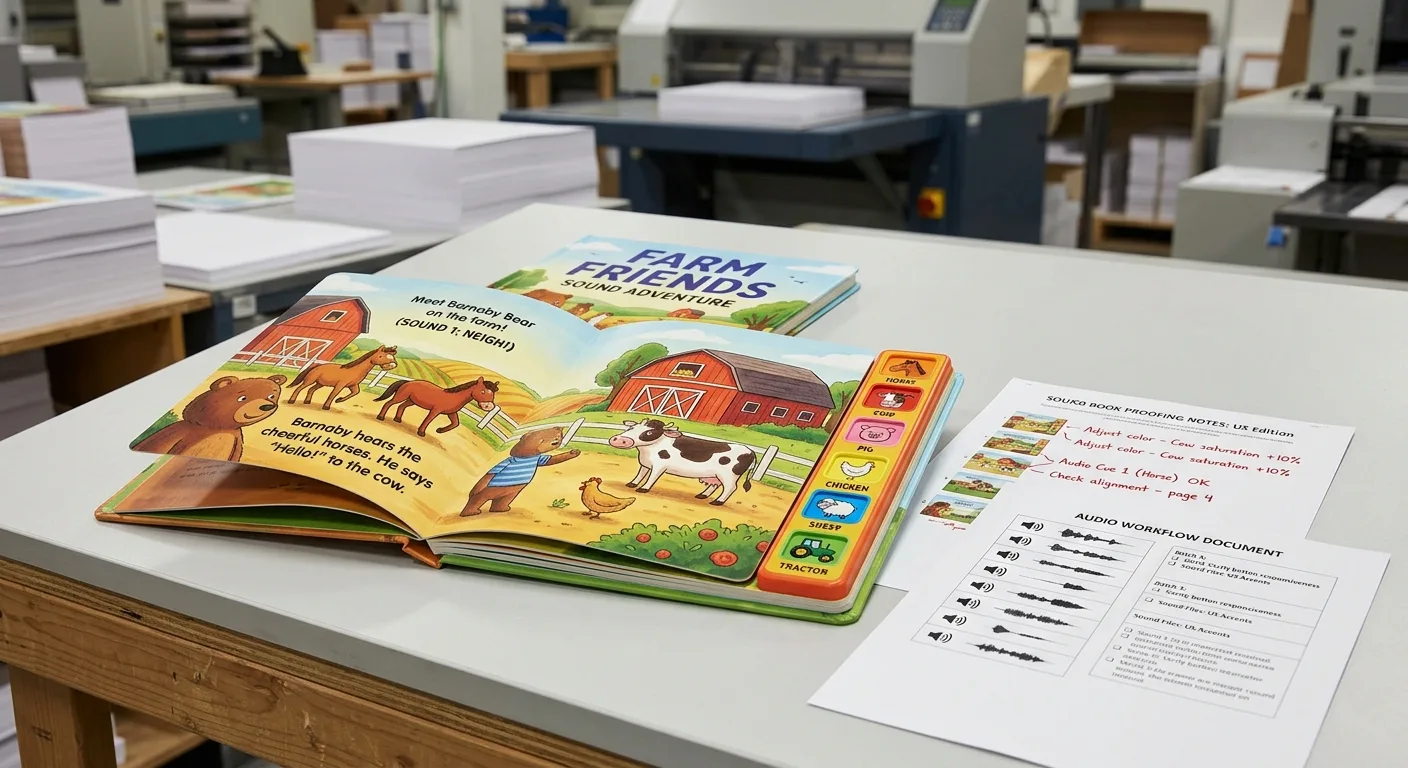

Impression interactive : Plus que de l'encre sur du papier
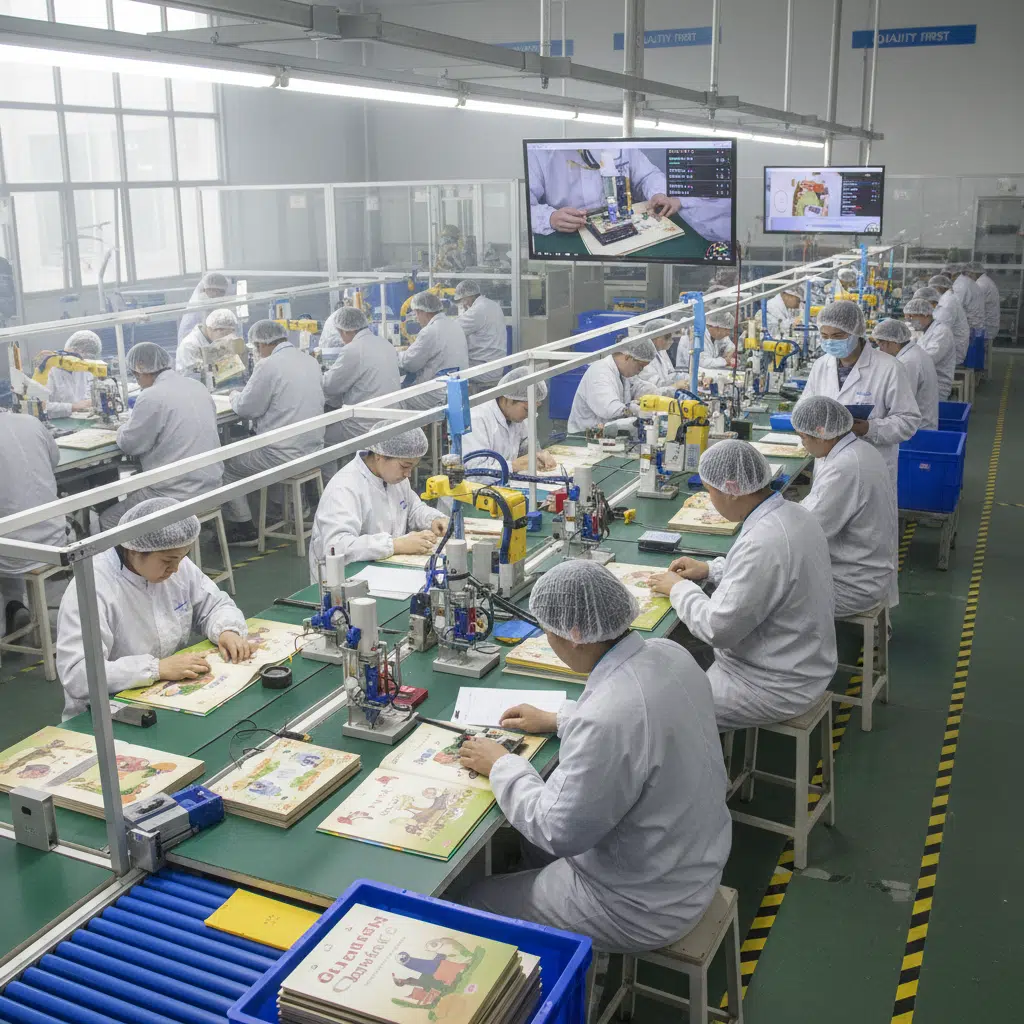
Pour les éditeurs et les propriétaires de marques, la transition des livres statiques aux livres sonores interactifs représente un saut significatif dans la valeur du produit et dans la complexité de la fabrication. L'ajout de composants audio transforme une expérience de lecture standard en une expérience sensorielle, mais il introduit également l'assemblage électronique, la conformité aux normes de sécurité des piles et des exigences précises en matière de découpe dans le flux de production.
Ce guide aborde les réalités techniques et opérationnelles de la fabrication de livres sonores pour enfants. Il explore l'intégration structurelle des modules sonores, les différences entre les mécanismes d'activation et les normes de sécurité essentielles requises pour la distribution internationale.
Types de modules sonores et mécanismes d'activation
La sélection du bon module est la première étape du processus d'ingénierie. Le choix a un impact sur l'épaisseur du livre, la mise en page et l'expérience de l'utilisateur. La plupart des projets de livres sonores industriels utilisent l'une des deux technologies principales.
1. Modules de boutons-poussoirs (interrupteurs à membrane)
Il s'agit du mécanisme le plus courant pour les livres cartonnés pour enfants. Un interrupteur à pilule de carbone ou à dôme métallique est encastré sous le papier ou dans un boîtier en plastique.
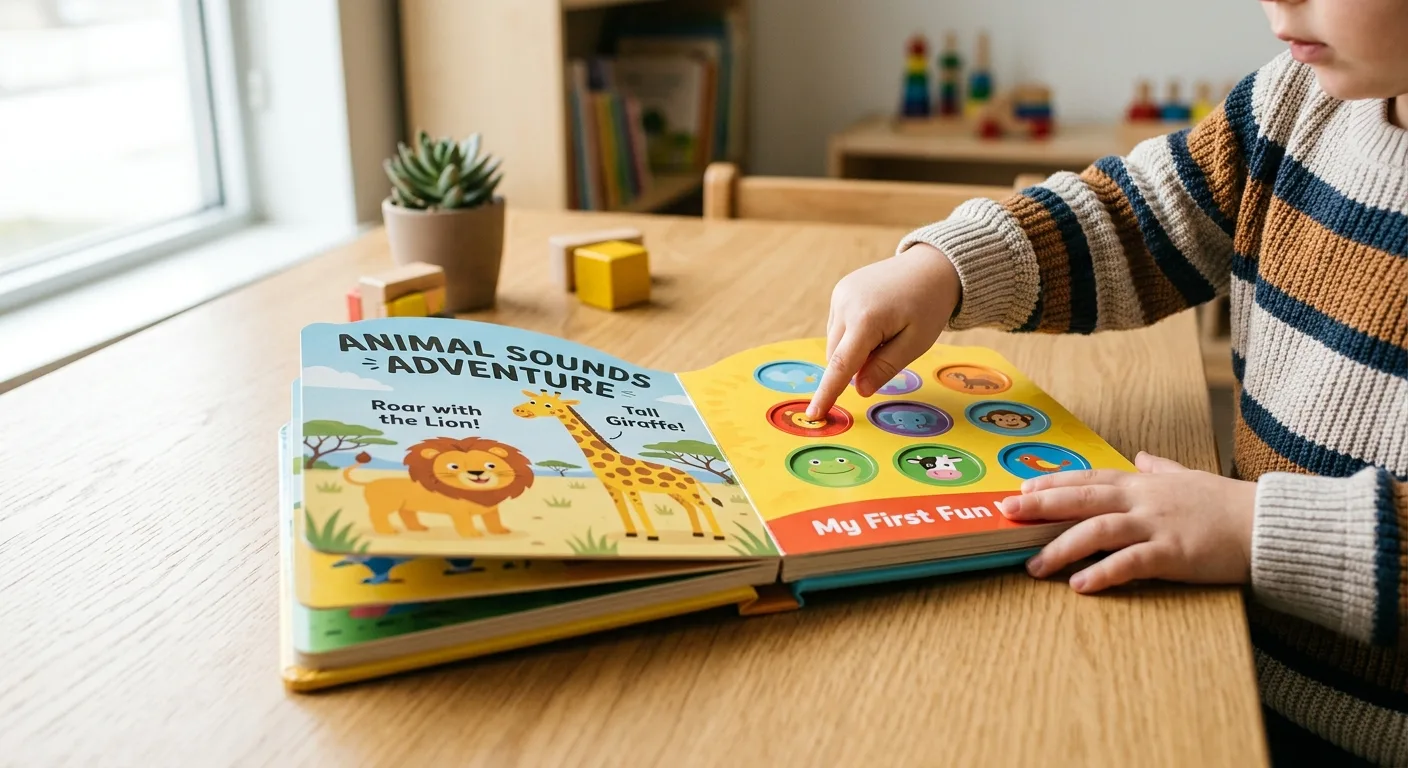
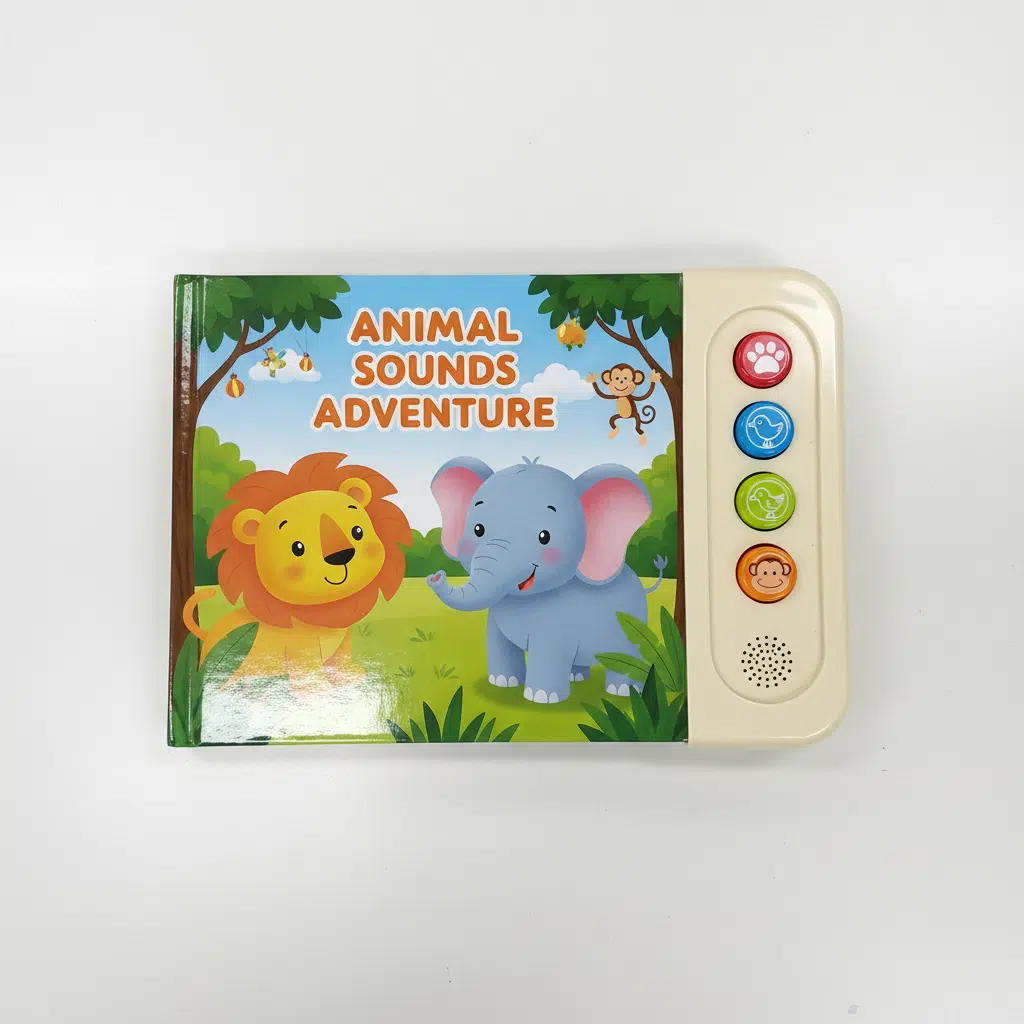
- Panneau latéral / Style piano : Le module sonore est logé dans un boîtier en plastique visible fixé sur le côté ou le bas du livre. Les boutons sont distincts et faciles à actionner pour les tout-petits. Cette solution est rentable car elle nécessite une découpe moins complexe du corps du livre lui-même.
- Intégrée / Déclenchée par la page : Le mécanisme est caché entre des couches de carton. Le lecteur appuie sur une icône spécifique de la page pour déclencher le son. Cela nécessite un alignement précis entre l'illustration imprimée, le trou découpé dans le carton et l'interrupteur à membrane sous-jacent.
2. Modules de capteurs de lumière (photosensibles)
Les capteurs de lumière sont souvent utilisés dans les livres haut de gamme ou de fantaisie. Le capteur est dissimulé dans le dos ou dans une ouverture découpée. Lorsqu'une page est tournée, la lumière ambiante frappe le capteur, ce qui déclenche le fichier audio associé à cette page.
- Pour : Crée une expérience magique et transparente sans boutons visibles.
- Cons : La fabrication nécessite des tolérances extrêmement strictes afin de garantir que le capteur ne se déclenche pas accidentellement lorsque le livre est fermé.
Spécifications techniques pour l'intégration audio
Une production réussie repose sur des fichiers sources de haute qualité et une sélection appropriée du matériel.
Durée et qualité de l'audio
Les puces sonores varient en fonction de leur capacité de mémoire, généralement mesurée en secondes (par exemple, 6s, 12s, 30s, ou jusqu'à plusieurs minutes). Les données audio plus longues nécessitent des puces de mémoire plus grandes, ce qui a une incidence sur le coût unitaire.
- Format : Les fabricants exigent généralement des fichiers WAV ou MP3 de haute fidélité.
- Taux d'échantillonnage : Les jouets standard utilisent souvent des taux d'échantillonnage plus faibles pour économiser de la mémoire, mais pour les livres éducatifs (par exemple, l'apprentissage des langues), un taux d'échantillonnage plus élevé est nécessaire pour la clarté.
- Contrôle du volume : Les niveaux de décibels doivent être calibrés pour être audibles mais sans danger pour les oreilles des enfants, conformément à des normes telles que la norme EN71.
Haut-parleur et boîtier
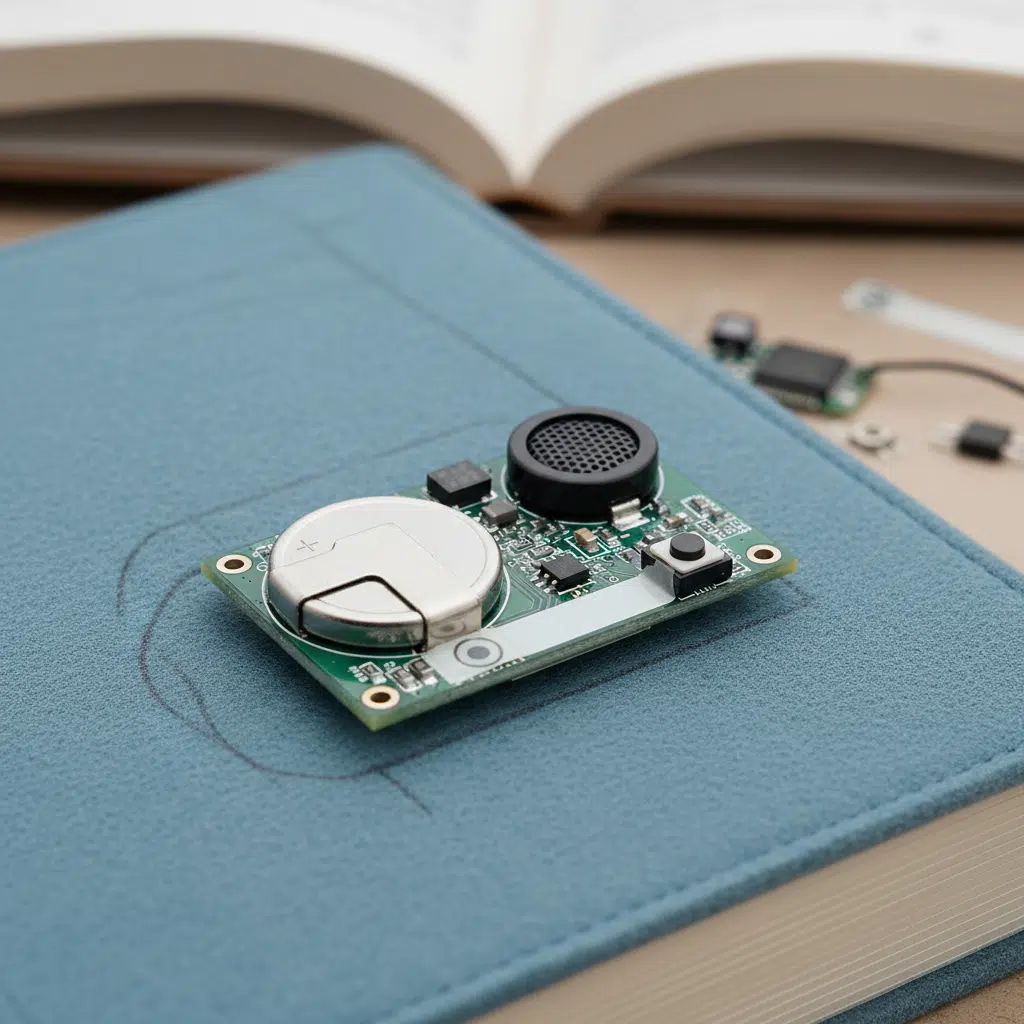
La taille du haut-parleur (généralement 27 mm, 29 mm ou 40 mm) détermine le volume et la réponse des basses. Le boîtier en plastique doit être conçu pour amplifier le son sans faire de bruit. Pour les livres cartonnés, le module est souvent collé dans une cavité découpée à l'emporte-pièce dans le dos de la couverture, ce qui exige que le corps du livre soit suffisamment épais pour que le boîtier soit encastré.
Normes de sécurité et de conformité des batteries
La sécurité est l'aspect non négociable de la fabrication des livres sonores. Comme ces produits contiennent de petites pièces (piles) et sont destinés aux enfants, ils font l'objet d'une surveillance stricte de la part des autorités douanières et des organismes de réglementation en matière de sécurité (CPSC, normes européennes).
Sécurité du compartiment des piles
Pour éviter tout risque d'ingestion, le compartiment à piles doit être fixé par une vis qui ne peut être retirée par un enfant. Les couvercles encliquetables ne sont généralement pas conformes pour les produits destinés aux enfants de moins de trois ans.
Languettes d'isolation (Pull-Tabs)
Pour préserver la durée de vie de la batterie pendant le transport et l'entreposage, une languette d'isolation en plastique est insérée dans le circuit pour couper la connexion. Cette languette est retirée par le consommateur lors de la première utilisation. Lors de l'assemblage, l'insertion correcte de ces languettes est un point de contrôle critique du contrôle de qualité.
Exigences en matière de certification
Les éditeurs doivent s'assurer que leur partenaire de fabrication est en mesure de fournir des produits conformes à ces normes :
- CE / EN71 (Europe) : Couvre les propriétés mécaniques et la migration de certains éléments.
- ASTM F963 (USA) : Spécification standard de sécurité des consommateurs pour la sécurité des jouets.
- RoHS/WEEE : Directives relatives aux substances dangereuses contenues dans les équipements électroniques et à l'élimination des déchets.
Le processus de fabrication
L'intégration de l'électronique dans les produits papier modifie le processus traditionnel de reliure.
1. Impression et découpage
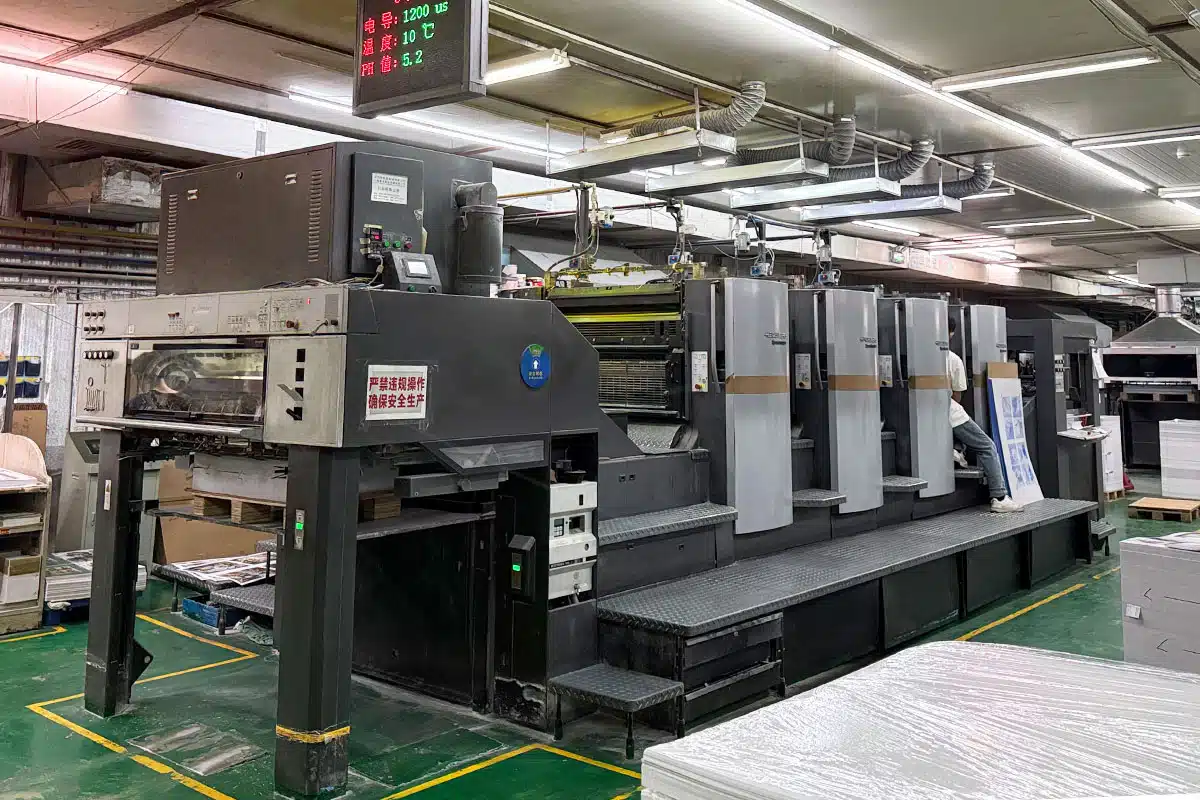
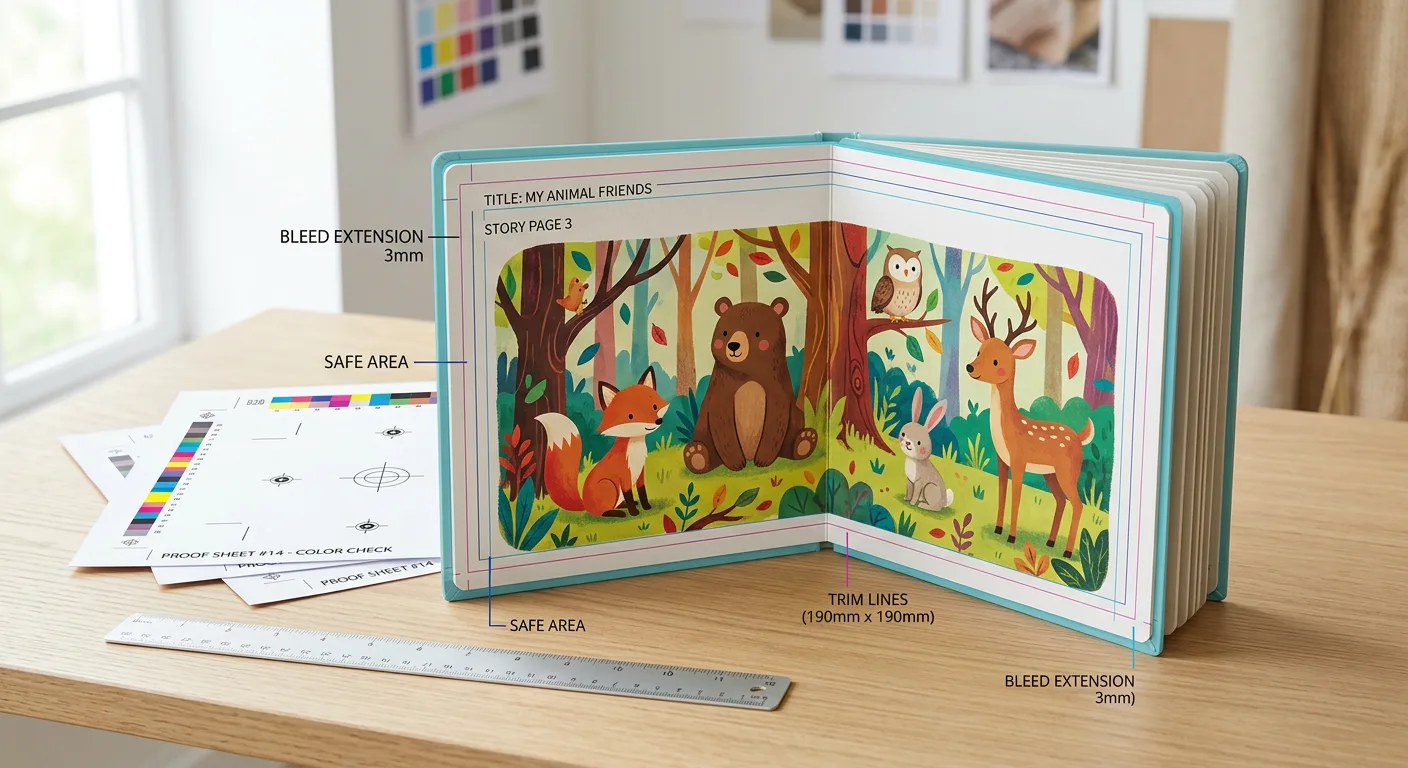
Le carton est d'abord imprimé et laminé. Contrairement aux livres classiques, les livres sonores nécessitent une découpe complexe pour créer des cavités pour le module et des trous pour que le son s'échappe (grilles de haut-parleur). La précision est essentielle : un décalage de 1 mm peut bloquer un capteur ou couvrir un bouton.
2. Assemblage du module
Les modules sonores sont généralement pré-assemblés et testés avant d'arriver sur la ligne de reliure. Ils sont programmés avec les fichiers audio du client et inspectés pour vérifier la clarté du son.
3. Montage et adhésion
Le module est collé au bloc de livres. Pour les modules intégrés, cette opération s'effectue couche par couche. Pour les boîtiers externes, le module est collé à la couverture arrière étendue. Des adhésifs de qualité industrielle sont utilisés pour garantir que le module ne se détache pas lors des tests de chute.
Protocoles d'assurance qualité (AQ)
Le taux de défectuosité des produits imprimés électroniques peut être plus élevé que celui des livres standard si un système d'assurance qualité rigoureux n'est pas appliqué. Un processus d'inspection rigoureux comprend
- Test de fonctionnement : Chaque unité (100% check) est typiquement testée pour s'assurer que tous les boutons déclenchent les sons corrects.
- Test de chute : Des échantillons aléatoires sont lâchés d'une hauteur standard pour s'assurer que le boîtier ne se fissure pas et que le compartiment à piles reste sécurisé.
- Test du cycle de vie : garantissant que les boutons peuvent supporter des milliers de pressions sans défaillance.
Guide d'achat : Préparation à la production
Lors d'une demande de devis pour des livres sonores, des détails spécifiques permettent aux fabricants de fournir des prix et des délais précis.
Informations clés nécessaires
- Taille et étendue de l'ouvrage : Dimensions du livre et nombre de pages.
- Type de module : Piano, bouton intégré ou capteur de lumière.
- Nombre de sons : Combien de boutons/déclencheurs distincts ?
- Durée totale de l'audio : La somme de tous les clips sonores en secondes.
- Quantité de commande (MOQ) : Les composants électroniques ont souvent des MOQ plus élevés (généralement de 3 000 à 5 000 unités) en raison de la programmation des puces et des coûts de mise en place des moules.
Prototypage
Avant la production en série, demandez un "mannequin blanc" dont le module électronique fonctionne. Cela vous permet de vérifier la pression du bouton, le volume du son et la sensation physique du livre avant l'application de la maquette.
Questions fréquemment posées
Puis-je changer les piles des livres sonores ?
Oui, la plupart des livres sonores de haute qualité sont équipés de piles remplaçables (généralement AG10/LR1130 ou AAA), accessibles par un compartiment vissé au dos de l'appareil.
Quel est le délai de livraison habituel pour les livres sonores ?
Les délais de livraison sont plus longs que pour les livres standard en raison de l'approvisionnement en puces électroniques. Il faut compter 4 à 6 semaines pour les composants électroniques et 4 semaines supplémentaires pour l'impression et l'assemblage, soit un total de 8 à 10 semaines après l'approbation de l'épreuve.
Dois-je fournir les fichiers sonores ?
Oui, le client fournit les fichiers audio finaux. Le fabricant les programme ensuite sur les puces. Il est recommandé de fournir des fichiers d'une qualité supérieure à celle requise ; les ingénieurs de l'usine les compresseront pour les adapter à la mémoire de la puce tout en optimisant la clarté.
Comment s'assurer que les boutons ne sont pas trop durs pour les enfants ?
Celle-ci est déterminée par la "force d'activation" de l'interrupteur à membrane. Les fabricants expérimentés calibrent cette force spécifiquement pour les produits destinés aux enfants. Le test d'un échantillon physique est le meilleur moyen de le vérifier.
Prêt à donner vie à votre projet de livre interactif ? Contactez notre équipe dès aujourd'hui pour discuter des spécifications, demander un échantillon de module sonore ou obtenir un devis personnalisé pour votre prochaine production.