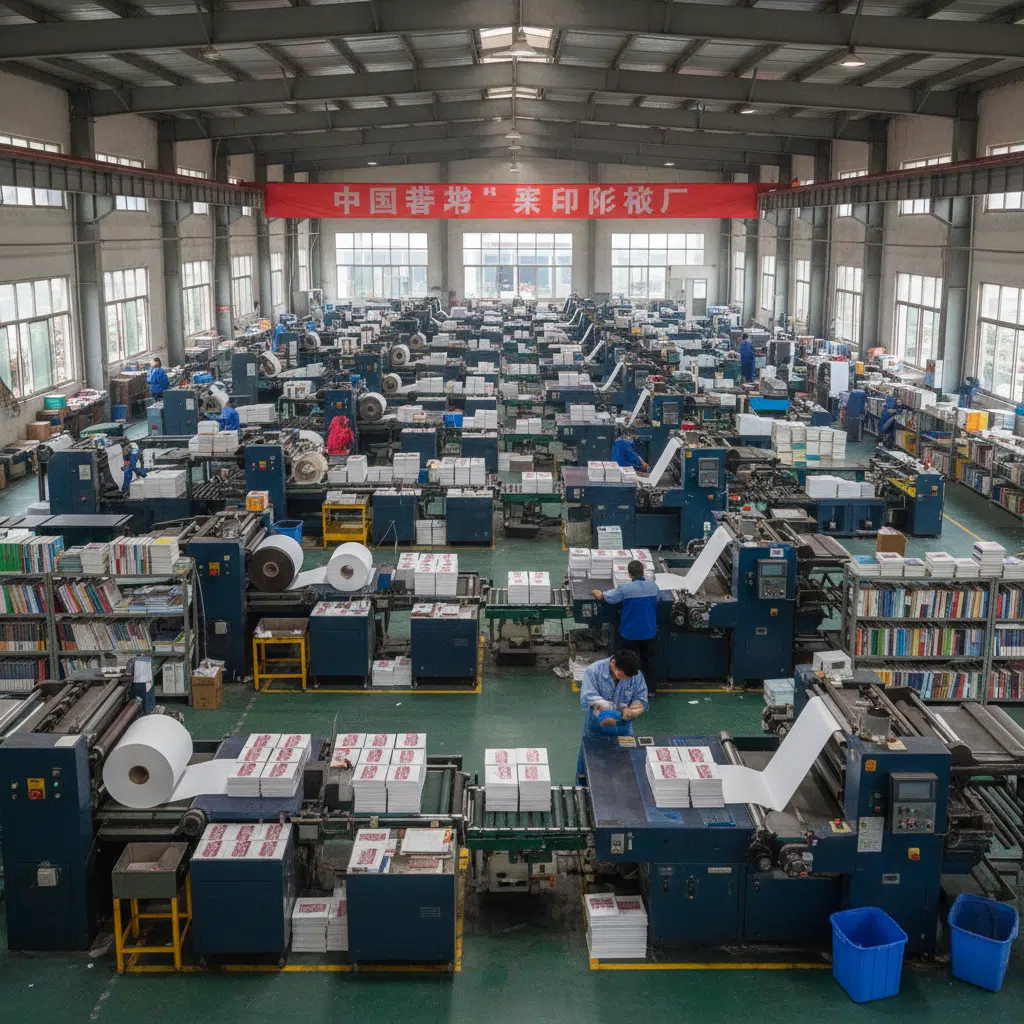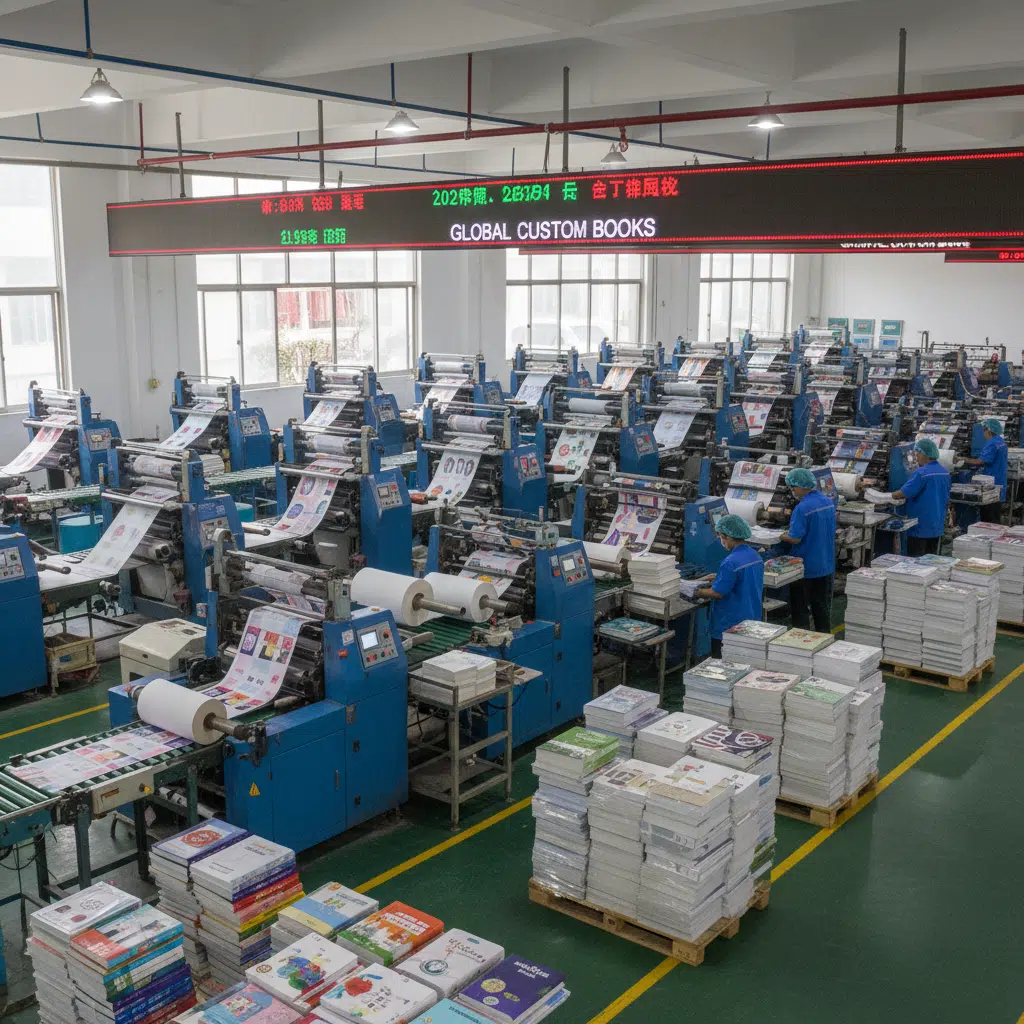

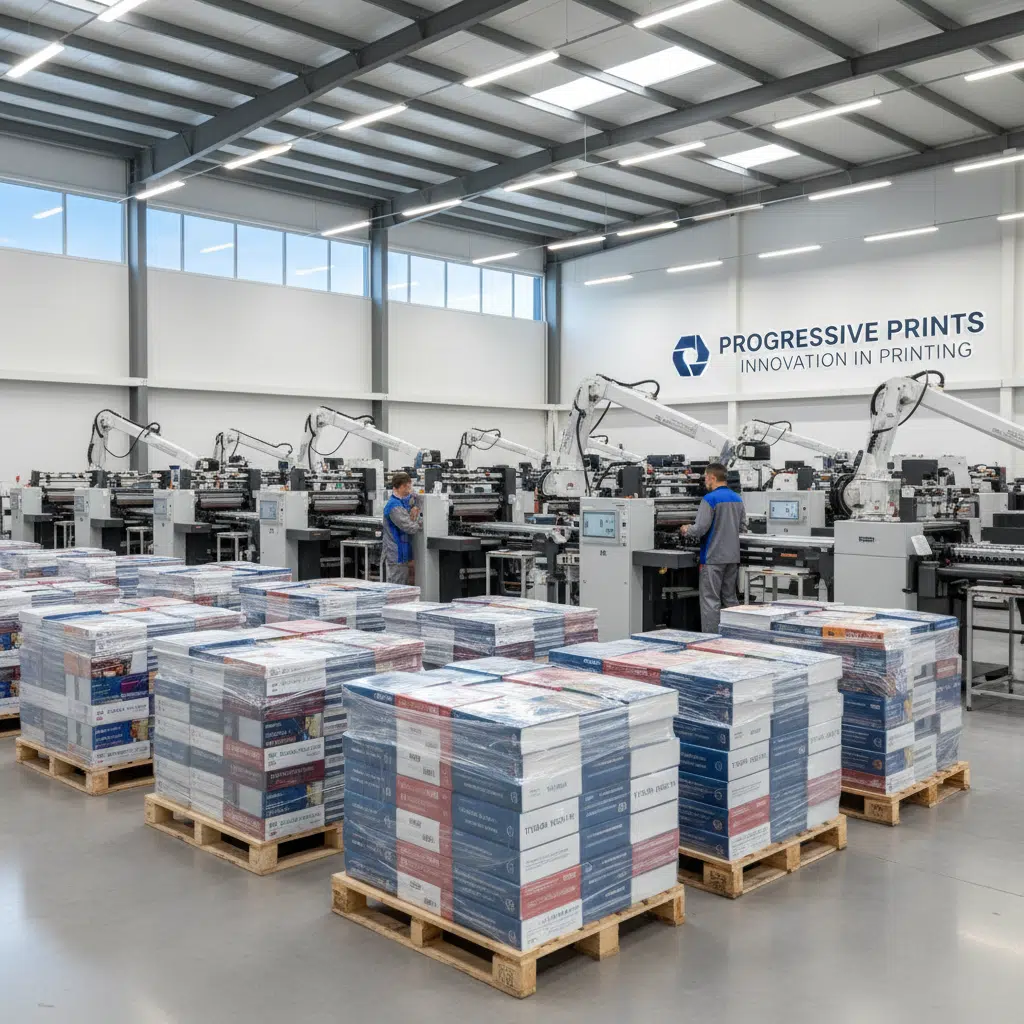
For international publishers, educational institutions, and corporate brand owners, sourcing commercial book printing services is often a balance between cost efficiency, print quality, and reliable logistics. When production volumes exceed 500 or 1,000 units, moving production to specialized overseas printing factories—particularly in hubs like China—becomes a strategic necessity to maintain healthy margins without compromising on the physical product’s integrity.
This guide examines the technical and operational considerations of bulk book printing, from choosing the right printing method to understanding binding durability and export logistics.
Offset vs. Digital: Choosing the Right Production Method
The first decision in any commercial print project is selecting the manufacturing process. While digital printing dominates the print-on-demand (POD) market, offset printing remains the gold standard for high-volume commercial orders.
Offset Printing (Lithography)
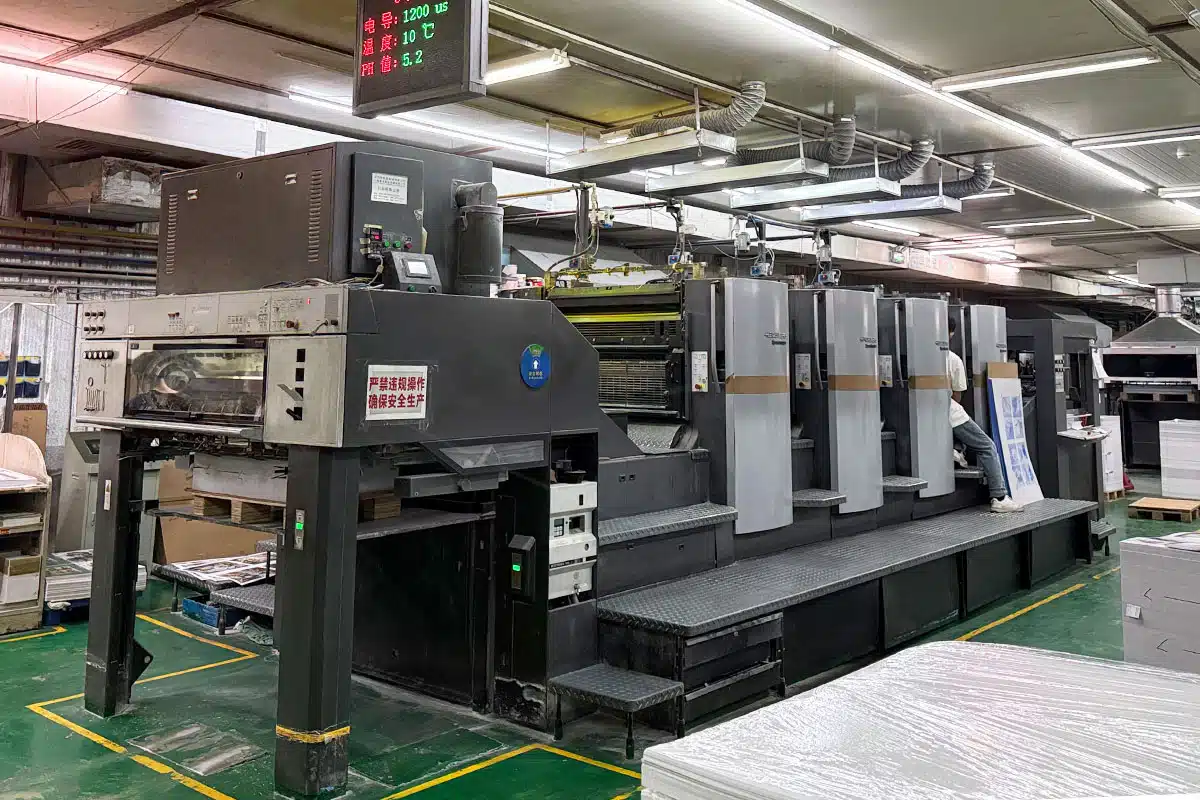
Offset printing involves transferring an inked image from a plate to a rubber blanket, then to the printing surface. It is the preferred method for bulk orders due to its economies of scale.
- Cost Structure: High setup costs (plates and make-ready) but significantly lower unit costs as volume increases.
- Quality: Offers superior color fidelity and consistency, especially for projects requiring Pantone (PMS) spot colors.
- Paper Versatility: Can print on a wider variety of paper stocks and textures compared to digital presses.
- Meilleur pour : Runs of 1,000+ copies, coffee table books, textbooks, and high-fidelity catalogs.
Impression numérique
Digital printing eliminates plates, applying toner or liquid ink directly to paper.
- Cost Structure: Minimal setup cost, but the unit cost remains flat regardless of volume.
- Vitesse : Faster turnaround for small batches since there is no plate-making process.
- Meilleur pour : Short runs (under 500 copies), advance reader copies (ARCs), or variable data printing.
Binding Specifications for Durability and Aesthetics
The longevity of a book is largely determined by its binding. Commercial printers offer several industrial binding techniques tailored to different usage scenarios.
Couverture rigide (reliée en étui)
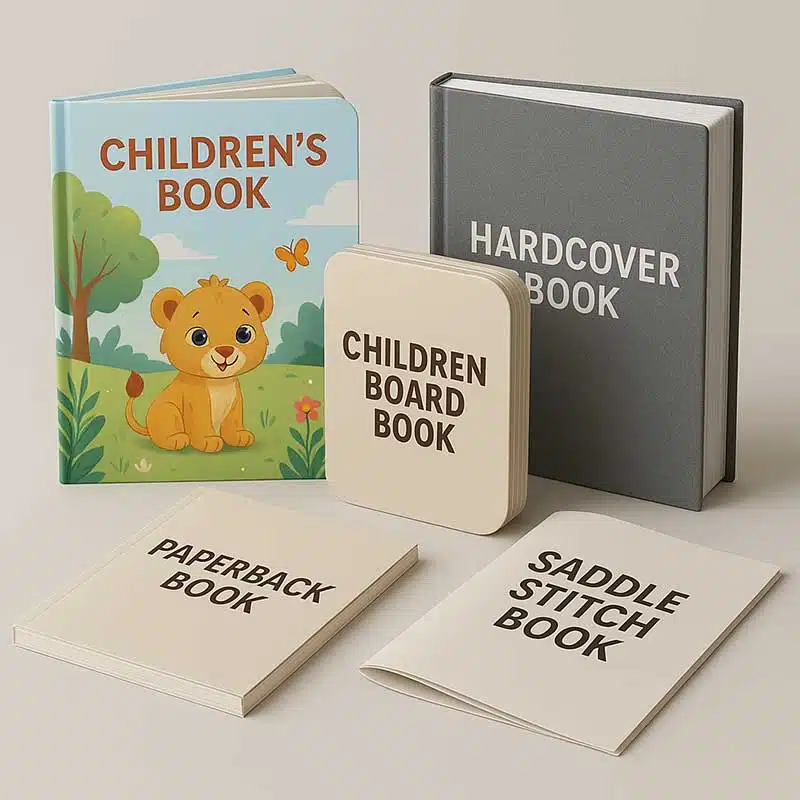
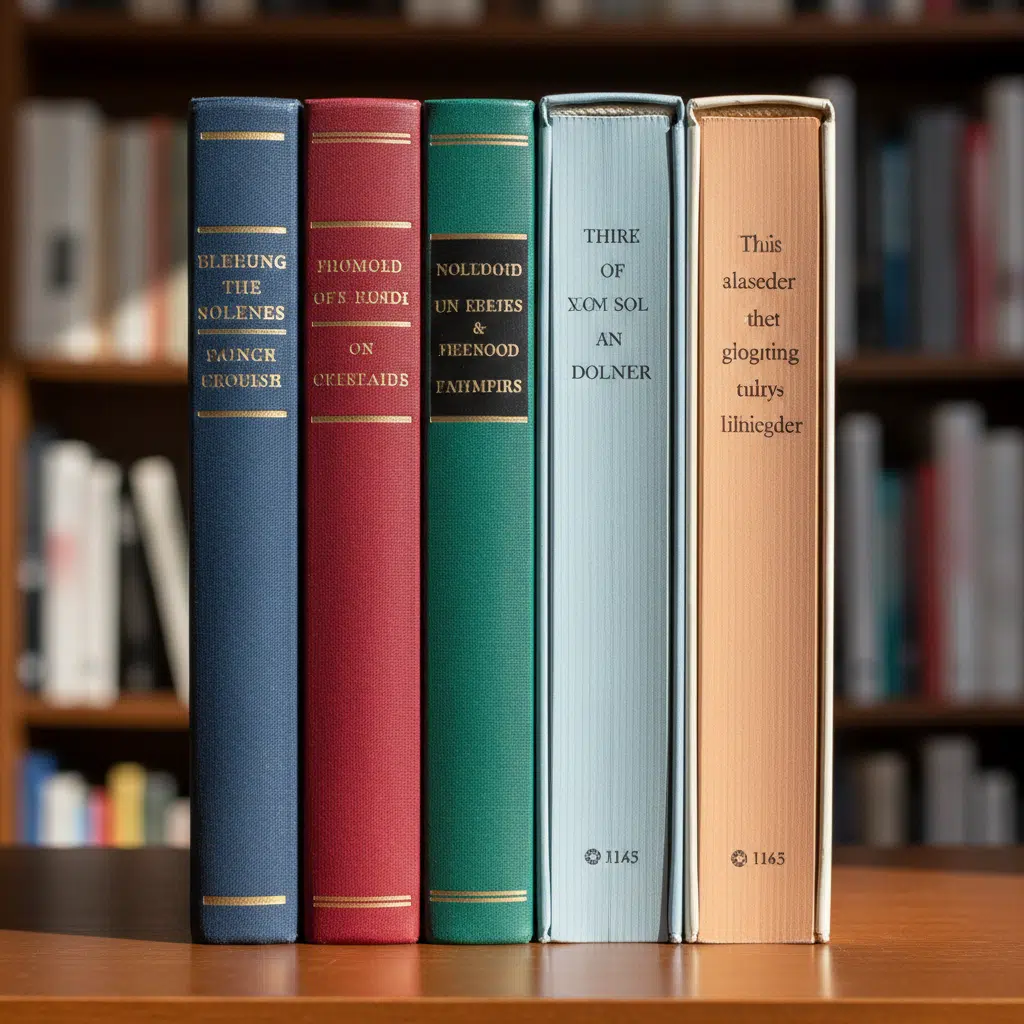
Case binding is the most durable option, involving a rigid cover (case) wrapped in printed paper, cloth, or leatherette. The internal pages (book block) are typically Smyth sewn—a process where signatures are stitched together before being glued into the spine. This allows the book to lay flat and withstand heavy use.
Reliure parfaite (couverture souple)
Standard for paperbacks, catalogs, and magazines. Pages are glued to the spine of a flexible cover. For commercial projects, it is critical to specify the type of glue:
- EVA Glue: Standard hot melt, suitable for most general fiction or lightweight books.
- PUR Glue: Polyurethane Reactive adhesive is significantly stronger and more flexible. It is highly recommended for coated papers or heavy ink coverage, as it prevents pages from falling out when the book is opened wide.
Point de selle
Pages are folded and stapled through the fold line. This is cost-effective but limited by page count (usually under 64 pages depending on paper thickness). Ideal for brochures, children’s workbooks, and quarterly reports.
Mechanical Binding (Wire-O / Spiral)
Uses a metal wire or plastic coil threaded through punched holes. This method allows the book to open 360 degrees, making it the standard for cookbooks, training manuals, and journals.
Paper Stocks and Finishes
Selecting the correct paper weight and coating affects both the reading experience and shipping weight. Paper is typically measured in GSM (grams per square meter).
- Coated Art Paper (Gloss/Matte): Enhances ink holdout, making colors pop. Standard for photography books and art catalogs. Typical weights: 105gsm, 128gsm, 157gsm.
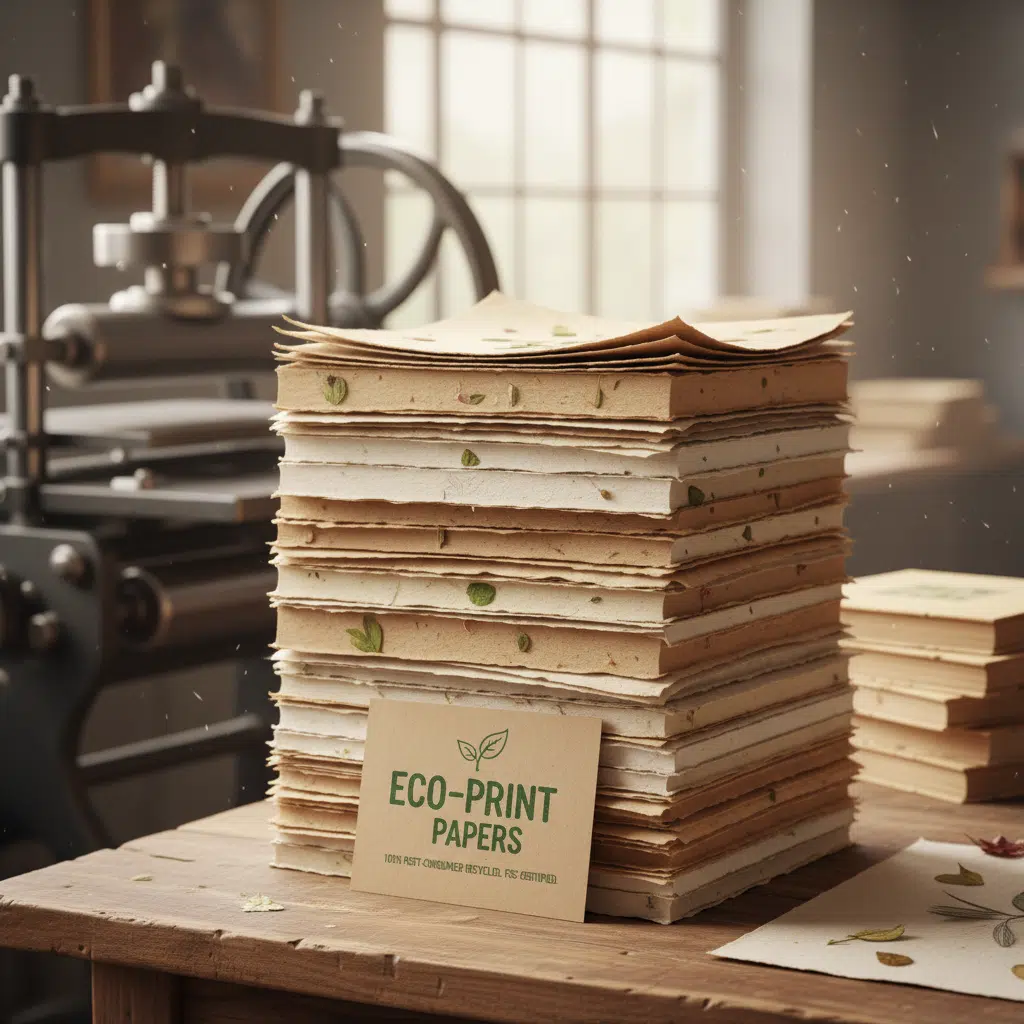
- Uncoated (Woodfree/Offset): Provides a tactile, non-glare surface. Easier to write on and easier on the eyes for text-heavy books like novels. Typical weights: 80gsm, 100gsm, 120gsm.
- C1S (Coated One Side): Often used for paperback covers or postcards.
Surface Finishes
Finishes protect the cover and enhance shelf appeal:
- Lamination : Gloss, matte, or soft-touch (velvet) lamination adds a protective plastic layer.
- Spot UV : Applies a high-gloss coating to specific areas (like the title) for contrast.
- Marquage à la feuille : Uses heat to press metallic foil (gold, silver, etc.) into the cover.
Quality Control and Pre-Press
When working with an overseas printing factory, the pre-press stage is your primary checkpoint to prevent errors.
- File Preparation: Artwork should be submitted in CMYK color mode with at least 3mm bleed. Images must be 300 DPI or higher.
- Épreuves numériques : The printer sends PDF proofs for layout verification.
- Hard Proofs (Wet Proofs): For color-critical projects, request a physical proof printed on the actual paper stock. This ensures the colors match your expectations before mass production begins.
- Dummy Samples: An unprinted bound sample helps verify the paper thickness, weight, and binding strength.
Logistics and Export Considerations
Shipping printed matter involves significant weight. Experienced commercial printers handle the complexities of export packaging to ensure goods arrive undamaged.
- Moisture Protection: Sea freight exposes cargo to humidity. Books should be shrink-wrapped or packed in polybags inside the cartons.
- Carton Strength: Double-wall corrugated cartons are essential to prevent crushing during stacking.
- Palletization: Goods should be palletized and strapped securely for forklift handling at the destination port.
Buying Guide: Sourcing Checklist
Before requesting a quote, gather the following specifications to ensure accuracy:
- Quantity: (e.g., 1,000, 3,000, 5,000 copies)
- Taille : Trim size (e.g., A4, 8.5″ x 11″, custom)
- Page Count: Total pages (including blanks)
- Colors: 4C/4C (Full color) or 1C/1C (Black & White)
- Paper: Weight and type for both cover and interior pages
- Binding: Type of binding and any special sewing requirements
- Finishing: Lamination, foil, embossing, etc.
Questions fréquemment posées
What is the typical lead time for bulk book printing?
Production times usually range from 2 to 4 weeks after proof approval, depending on complexity and volume. Sea freight shipping adds additional time (typically 3–6 weeks depending on the destination).
What is the Minimum Order Quantity (MOQ)?
While digital printing allows for single copies, commercial offset printing typically becomes cost-effective at MOQs of 500 to 1,000 units.
Can you match specific Pantone colors?
Yes, offset printing is ideal for PMS color matching. Ensure you specify the Pantone codes in your artwork file.
Do you handle customs clearance?
Many printers offer various Incoterms. FOB (Free on Board) is common, where the buyer handles shipping from the port. However, DDP (Delivered Duty Paid) options may be available where the printer handles delivery to your door, including customs.
Ready to start your printing project? Professional commercial printing requires attention to detail and a partner who understands international standards. Contact us today to discuss your specifications and request a custom quote.