
Material Selection Defines Product Value

For publishers and brand owners, the cover material of a journal or bible is the primary indicator of value. It determines the tactile experience, the durability of the product, and the final unit cost. While design and layout are critical, the physical binding material creates the first impression for the end user.
In the premium book printing market, three main categories dominate: Genuine Leather, Bonded Leatheret Polyurethane (PU) Leather. Each has distinct characteristics regarding manufacturing consistency, finishing suitability, and price point. This guide compares these materials to help you make informed procurement decisions for your next print run.
Genuine Leather: The Premium Standard
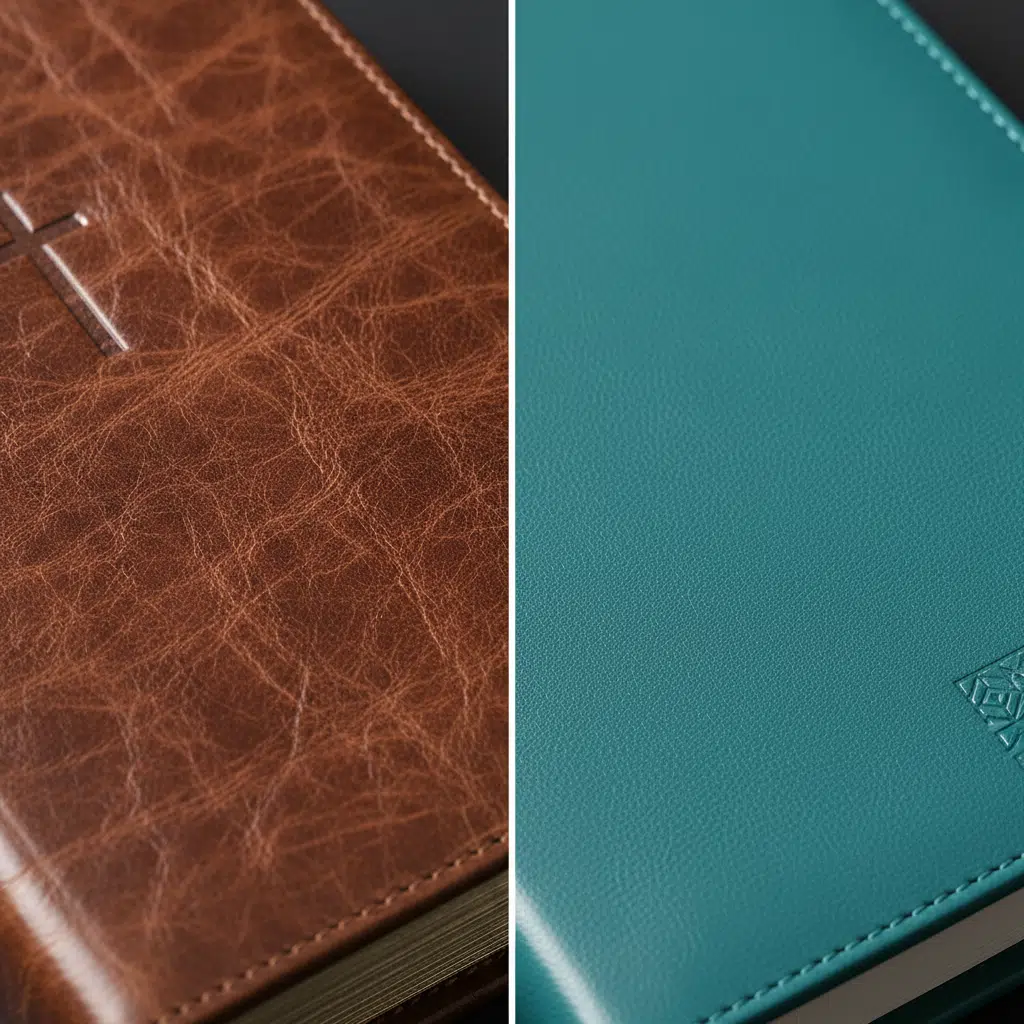
Genuine leather remains the benchmark for high-end bibles, heirloom journals, and corporate gifts. Sourced typically from cowhide, goatskin, or pigskin, it offers a prestige that synthetic alternatives struggle to replicate perfectly.
Characteristics and Advantages
- Natural Variation: Every hide is unique. The grain pattern and texture vary, giving each book a distinct character.
- Durabilité : Genuine leather is incredibly resilient. It resists tearing and ages well, often developing a patina over time rather than degrading.
- Sensory Appeal: The distinct smell and warm touch of real leather are significant selling points for luxury markets.
Manufacturing Considerations
Using genuine leather requires skilled craftsmanship. Because hides have irregular shapes and natural blemishes (scars or insect bites), cutting must be done carefully to maximize yield, which increases waste compared to materials supplied on rolls. Publishers should anticipate higher Material Costs (BOM) and slightly longer lead times for sourcing specific grades or colors.
Bonded Leather: The Cost-Effective Hybrid
Bonded leather is an engineered material made by shredding leather scraps and fibers, then bonding them with polyurethane or latex binders onto a fiber sheet. It is widely used in bible production to achieve a "leather" classification at a fraction of the cost of top-grain hides.
Pros and Cons
- Cost Efficiency: It is significantly cheaper than genuine leather while retaining some leather content (often 80-90% leather fibers).
- Consistency: Unlike genuine hides, bonded leather is uniform in thickness and grain, making it easier to automate in binding processes.
- Durability Limitations: Over time, bonded leather is more prone to peeling or cracking compared to high-quality PU or genuine leather, especially at hinge points (the spine).
Polyurethane (PU) Leather: Versatility and Performance
PU leather (often called faux leather or vegan leather) has become the dominant material for premium journals and notebooks. Unlike PVC (vinyl), which can feel plastic-like and brittle, modern high-end PU is soft, flexible, and chemically engineered for performance.
Why PU is Popular for Journals
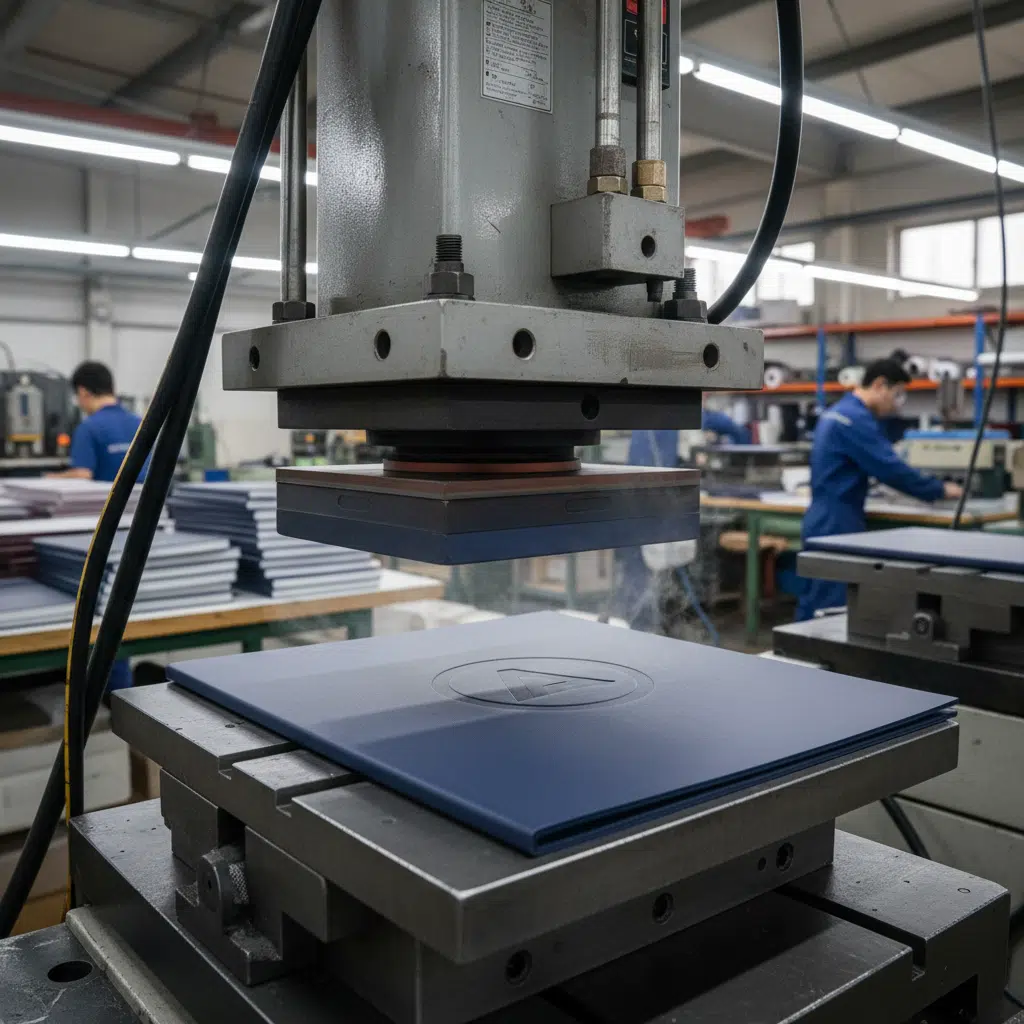
- Thermo-Reactive Properties: Many premium PU materials are "Thermo-PU." When heat-embossed, the material darkens significantly, creating a high-contrast, two-tone effect without the need for ink or foil. This is the industry standard for branded corporate notebooks.
- Color and Texture Range: PU can be manufactured in any Pantone color and embossed with virtually any grain pattern (Saffiano, lizard, linen, or smooth).
- Consistency and Yield: Supplied in rolls, PU has near-zero waste and consistent thickness, streamlining the mass-production process.
Comparative Analysis: Cost vs. Finishability
When selecting a material, consider how it reacts to post-press finishing techniques like foil stamping and embossing.
| Fonctionnalité | Genuine Leather | Bonded Leather | Thermo-PU |
|---|---|---|---|
| Coût unitaire | High | Medium | Low to Medium |
| Durabilité | Excellent (decades) | Moderate | High (water-resistant) |
| Consistency | Low (natural variation) | High | Very High |
| Thermal Embossing | Good (texture change) | Fair | Excellent (color change) |
| Marquage à la feuille | Excellent | Good | Excellent |
Technical Factors for Buyers
1. Minimum Order Quantities (MOQs)
PU: Standard colors are often available in stock, allowing for lower MOQs (e.g., 500–1,000 units). Custom Pantone-matched PU usually requires higher volumes (e.g., 3,000+ meters) to justify the production run.
Genuine Leather: Leather is bought by the hide or square foot. While MOQs can be flexible, the high cost of entry usually restricts this to smaller, premium runs or large religious publishing contracts.
2. Binding Style Suitability
For flexible covers (flexibound), PU and bonded leather are excellent choices. Genuine leather is often used for "limp binding" in bibles (where the cover is flexible without a rigid board) or over rigid boards for hardcover journals. Ensure your manufacturing partner understands the grain direction of the board and material to prevent warping.
3. Environmental Considerations
European and North American markets increasingly demand compliance with standards like REACH or CA Prop 65. High-quality PU is often preferred here as it avoids the tanning chemicals associated with leather, though "vegetable-tanned" genuine leather is an eco-friendly (albeit expensive) alternative.
Buying Guide: How to Request a Quote
To get an accurate quote for your book printing project, provide the following specifications:
- Cover Material Class: Specify if you need "Thermo-PU," "Bonded Leather," or "Genuine Leather (Cow/Goat)."
- Texture/Grain: Do you want a smooth finish, a pebble grain, or a linen texture?
- Finishing Effects: Clearly state if you plan to use blind debossing (heat) or foil stamping, as this dictates the type of PU required.
- End-Use Environment: Mention if the book needs lay-flat binding or heavy-duty wear resistance (e.g., for field manuals or daily-use bibles).
Questions fréquemment posées
Can PU leather last as long as genuine leather?
High-quality PU is very durable and water-resistant, often outlasting bonded leather. However, genuine leather typically has the longest lifespan and can last for decades if cared for properly.
What is the best material for custom logo embossing?
Thermo-PU is the superior choice for blind embossing. The heat from the die causes the material to darken, creating a crisp, high-contrast logo that looks sophisticated and clean.
Is bonded leather considered "real" leather?
Legally, definitions vary by country. It contains real leather fibers, but because it is an engineered product bound with adhesives, it cannot be sold simply as "Leather" in many jurisdictions without the qualifier "Bonded."
Can I print full-color images on these materials?
Screen printing or UV printing works well on PU and bonded leather. Genuine leather is rarely printed on directly; instead, foil stamping or debossing is preferred to maintain its premium aesthetic.
Selecting the right cover material balances aesthetics, longevity, and budget. Whether you need the prestige of genuine leather or the versatile performance of Thermo-PU, we can guide you through the manufacturing process.
Ready to start your project? Demande de devis or contact our team to discuss material swatches and production timelines.