
Achieving High-Contrast Visuals in Mass Production
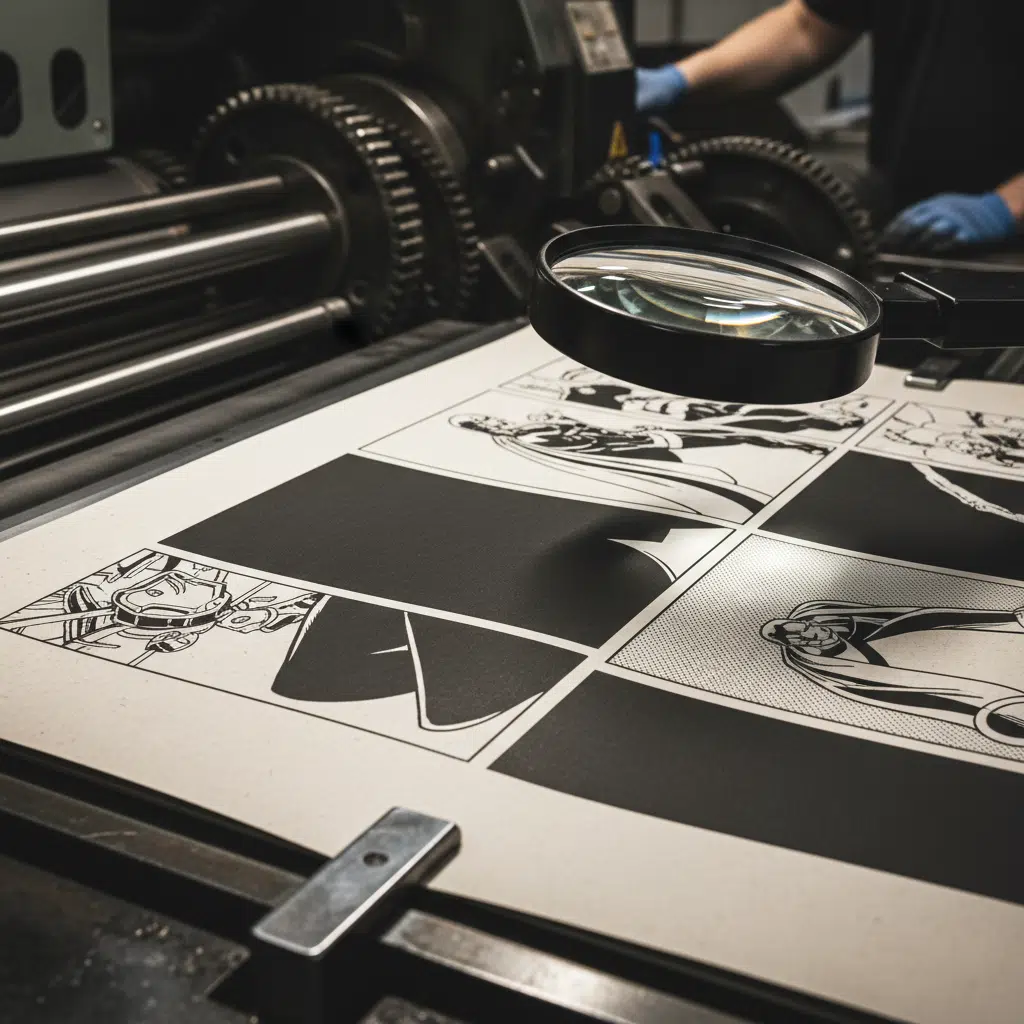
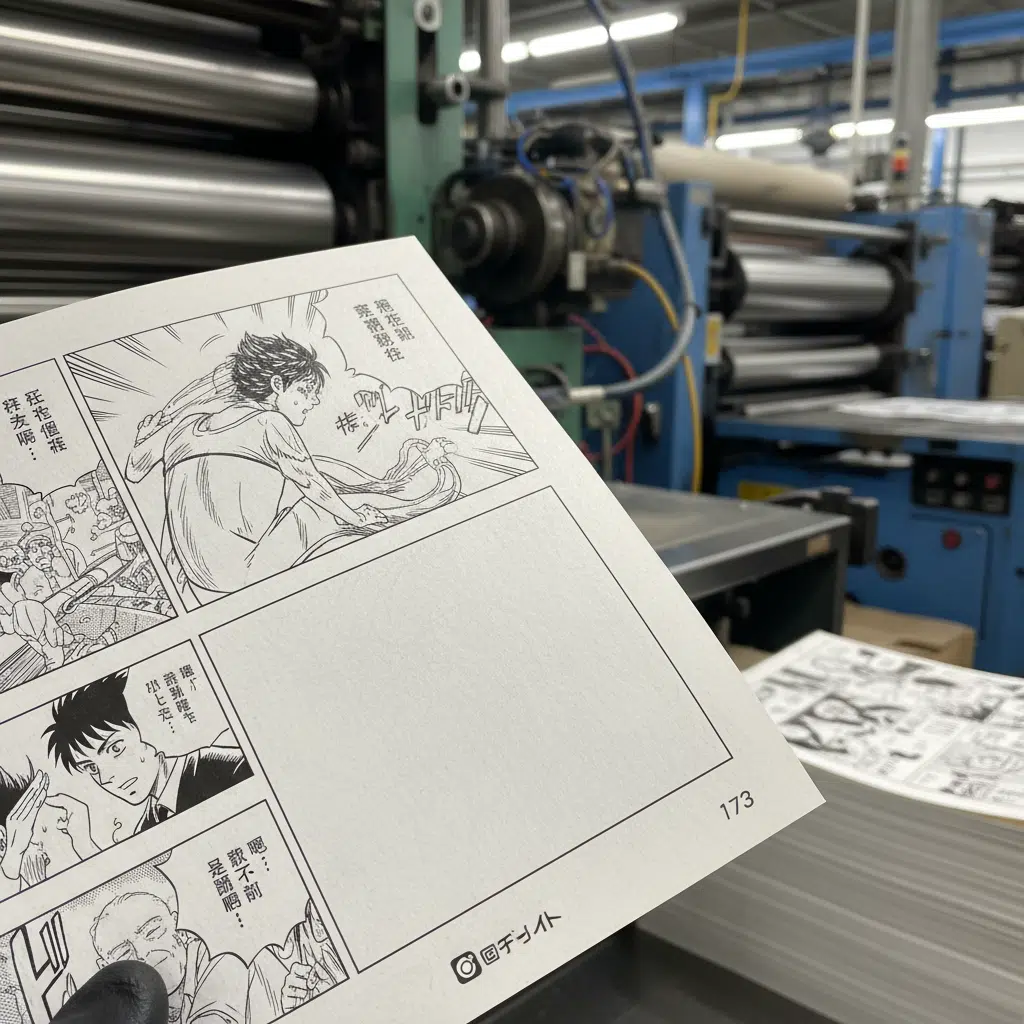
For publishers of graphic novels and manga, the physical reading experience is just as important as the narrative. Unlike text-heavy trade books, comics rely entirely on visual storytelling. This places unique demands on the manufacturing process, particularly regarding paper opacity and ink density.
The challenge is balancing the traditional aesthetic—often uncoated, tactile paper—with the technical requirement of reproducing deep, heavy blacks without bleed-through. When sourcing offset printing for manga or graphic novels, understanding the interplay between paper stock, ink coverage, and binding methods is essential for a professional finish.
The Critical Role of Paper Opacity
Manga and noir-style graphic novels frequently feature pages with high ink coverage. If the paper stock lacks sufficient opacity, artwork from the reverse side will show through (ghosting), ruining the readability of the current page. This is a common pitfall in cost-driven printing projects.
Uncoated Woodfree vs. Mechanical Paper
Most manga publishers prefer uncoated paper to avoid glare and provide a natural texture. There are two primary categories to consider:
- Uncoated Woodfree (Offset) Paper: Offers a brighter white surface and higher strength. It is excellent for graphic novels requiring sharp contrast and durability. However, standard offset paper can be less opaque than high-bulk options unless you increase the weight (GSM).
- High-Bulk Mechanical / Creamy Paper: This is the industry standard for traditional manga. It is often slightly textured and creamy or grayish. The key advantage is “bulk”—the paper is thicker relative to its weight, offering better opacity than standard white paper of the same GSM. This allows you to use a lighter weight (e.g., 70gsm or 80gsm) while maintaining the thickness and opacity needed for heavy ink application.
Weight Recommendations
For standard black-and-white manga, 70gsm to 100gsm is the typical range. Going below 70gsm increases the risk of show-through unless a specialized high-opacity grade is selected. For full-color graphic novels, 100gsm to 120gsm woodfree paper is recommended to handle the heavier ink load without buckling.
Managing Ink Density and “Rich Black”
In offset printing, achieving a true, deep black is more complex than simply setting K=100 in your design file. However, uncoated paper absorbs ink, which can lead to dot gain (where ink spreads slightly) and drying issues if not managed correctly.
Standard Black vs. Rich Black
- Standard Black (100% K): Used for text and fine line art. It ensures crisp edges. On uncoated paper, large areas of 100% K can sometimes appear dark gray or washed out rather than pitch black.
- Rich Black (C+M+Y+K): By adding percentages of Cyan, Magenta, and Yellow (e.g., C40 M30 Y30 K100) to the black, you create a denser, darker tone. This is ideal for large fill areas or backgrounds.
Warning: When printing on uncoated manga stock, the Total Area Coverage (TAC)—the sum of all ink percentages—should generally not exceed 280% to 300%. Exceeding this limit causes ink to saturate the paper fibers, leading to smudging, set-off (ink transferring to the facing page), and extended drying times.
Binding Styles for Wide Spreads
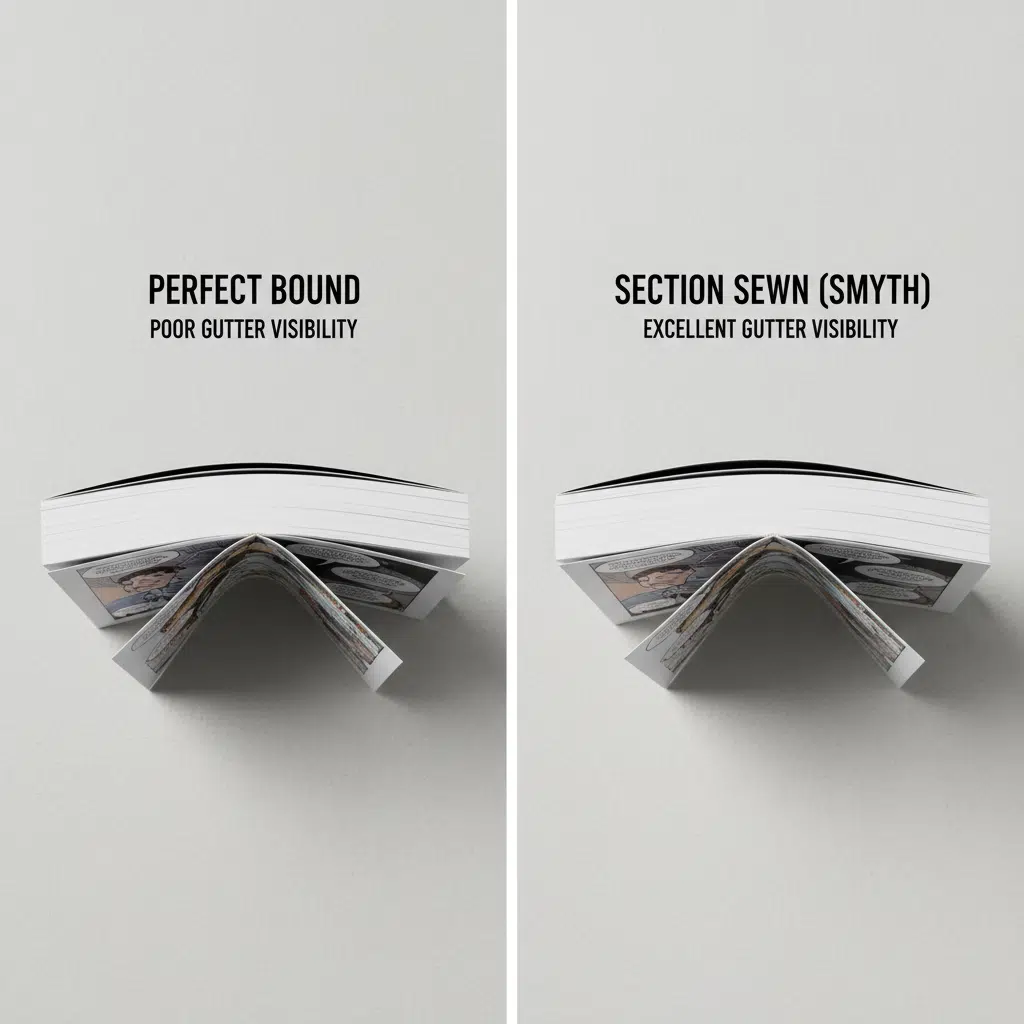
Graphic novels often utilize double-page spreads where artwork flows seamlessly across two pages. The choice of binding directly affects whether the reader can see the center of the image (the gutter) without breaking the spine.
| Binding Method | Pros | Cons | Best For |
|---|---|---|---|
| Perfect Binding (PUR) | Cost-effective; clean square spine; strong adhesion with PUR glue. | Does not lay completely flat; some image loss in the gutter (2-4mm). | Standard trade paperbacks; high-volume manga. |
| Section Sewn (Smyth Sewn) | Lays almost perfectly flat; extreme durability; premium feel. | Higher cost; slightly longer production time. | Collector’s editions; art-heavy graphic novels; hardcovers. |
Pre-Press Checklist for Publishers
Before sending files to print, ensure your production team addresses these technical specifications to avoid quality issues during the offset run:
- Gutter Safety: For perfect bound books, avoid placing crucial dialogue or facial features within 5mm of the spine center.
- Résolution : While 300 DPI is standard for color, black-and-white line art (bitmap mode) should ideally be 600 DPI to 1200 DPI to prevent jagged edges on uncoated paper.
- Trapping: Ensure proper trapping settings are applied if you are printing spot colors or interacting CMYK layers, though modern RIP software handles much of this automatically.
Buying Guide: Ordering Manga and Graphic Novels
When requesting a quote for comic printing, clarity on specifications will result in more accurate pricing and faster lead times.
- MOQ (Minimum Order Quantity) : Offset printing becomes economical typically around 500 to 1,000 copies. Below this, digital printing is an option but may struggle with the heavy ink coverage required for noir styles.
- Sampling: Always request a “wet proof” or at least a paper dummy. A paper dummy allows you to feel the weight and bulk of the book before printing. For critical art, a few printed sheets on the actual stock can verify that the blacks are dense enough without bleeding through.
- Emballage : Graphic novels are heavy. Ensure your quote includes robust export cartons and palletization to prevent corner damage during shipping.
Questions fréquemment posées
Can I print manga on coated glossy paper?
Yes, but it is unconventional. Glossy paper reflects light, making reading tiring, and it is difficult to read under direct light. Matte or uncoated stock is preferred for the genre.
What is the difference between “Black & White” and “1-Color” printing?
They are usually the same (using Black ink). However, some manga use a specific Pantone spot color (like a dark blue or sepia) instead of black for a stylistic effect. This is still considered 1-color printing but may incur a small surcharge for the spot ink mixing.
How do I prevent the cover from curling?
Cover curling is often caused by moisture differences between the lamination and the paper. Using a high-quality C1S (Coated One Side) cover stock of at least 250gsm, combined with a lay-flat lamination (nylon/thermal), helps maintain a flat cover.
Ready to Print Your Series?
High-quality manga printing requires a partner who understands the balance between ink density and paper selection. Whether you are printing a standard tankōbon or a deluxe hardcover anthology, we can guide you through the material options.
Demande de devis today to discuss your project specifications or ask for a sample pack of our uncoated book stocks.