
Índice
- Which booklet binding should you choose?
- Start with page count and format
- When to choose saddle stitch binding
- When to choose perfect binding
- When sewn, case, or lay-flat binding makes sense
- Match the binding to the booklet’s use
- Booklet binding quotation checklist
- Make the final binding decision
The right booklet binding depends on more than appearance. Match your page count, opening requirements, durability expectations, cover style, and budget to the appropriate binding method before requesting a quotation.
Which booklet binding should you choose?
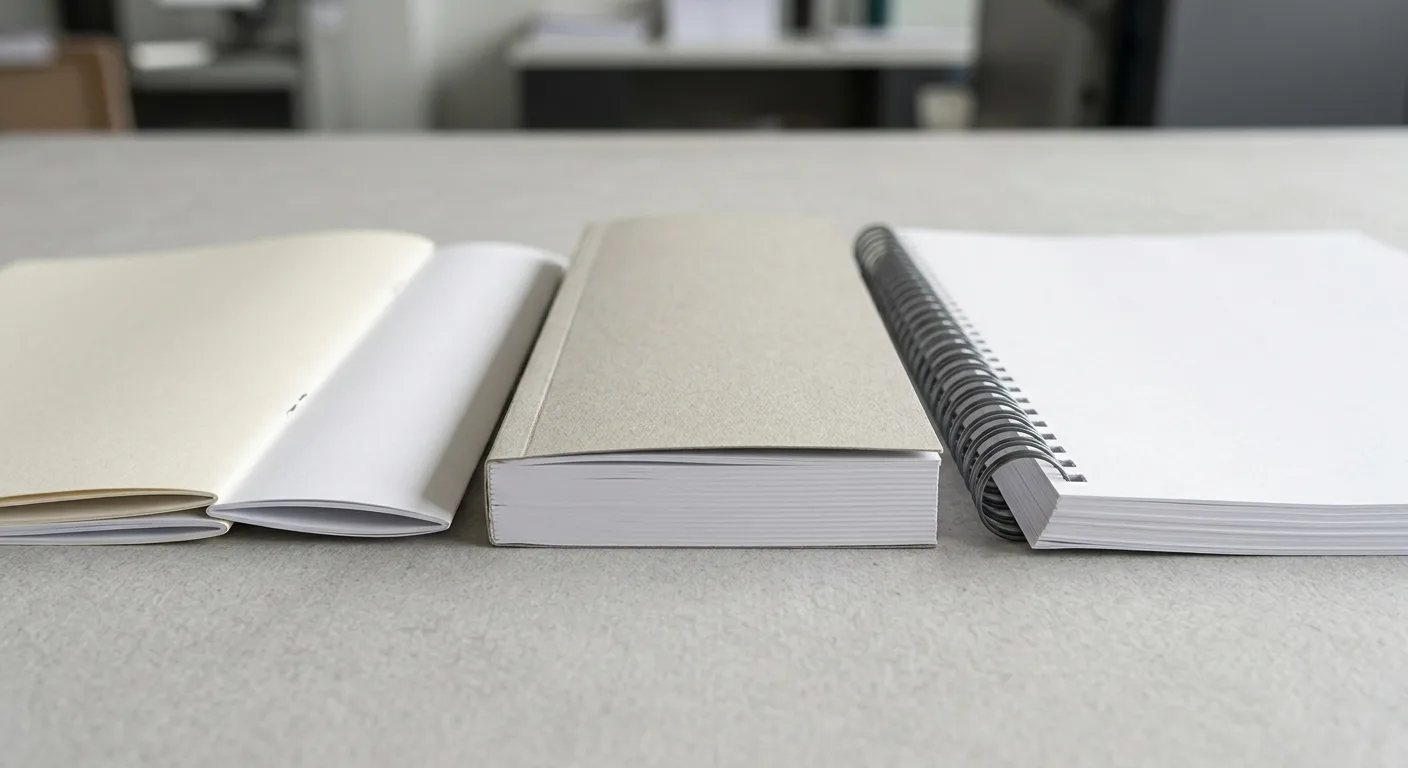
The best booklet binding is usually punto elástico for short, lightweight booklets and encuadernación perfecta for thicker publications that need a flat spine and a more book-like appearance. For demanding use, ask about sewn or case binding, while wire-o or other lay-flat formats may be better when readers need the booklet to remain open.
Page count is the first filter, but it is not the only one. The correct choice also depends on how the booklet will be handled, whether it must open completely flat, whether it will be mailed or displayed on a shelf, and how much cover and spine space your design requires.
This guide explains the main booklet printing binding options so purchasing teams, publishers, designers, and marketing departments can select a practical construction before sending files for quotation.
Start with page count and format
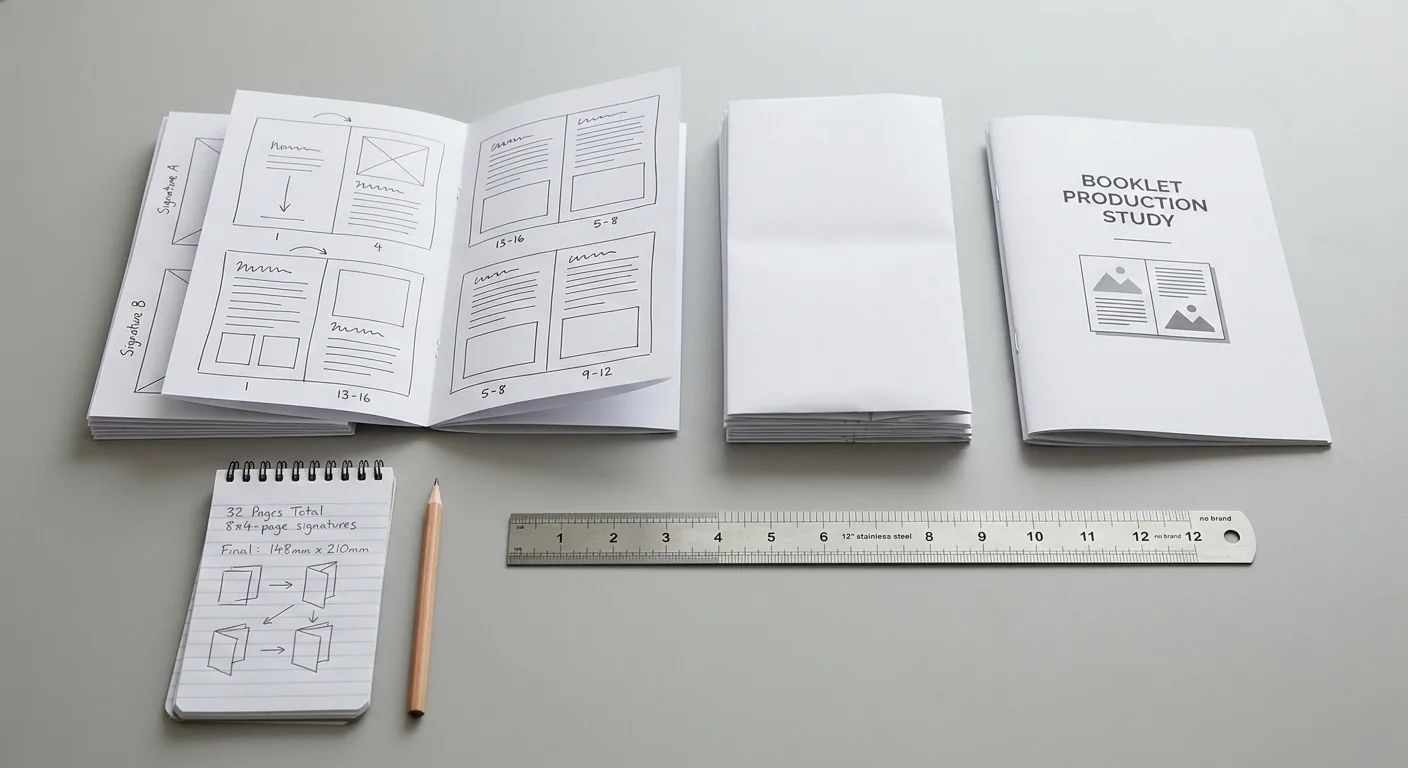
Before comparing finishes, confirm the finished size and total page count. A booklet page count normally refers to the pages in the finished publication, but suppliers may quote the cover separately from the interior. State clearly whether your number includes the cover, inserts, foldouts, or gatefold pages.
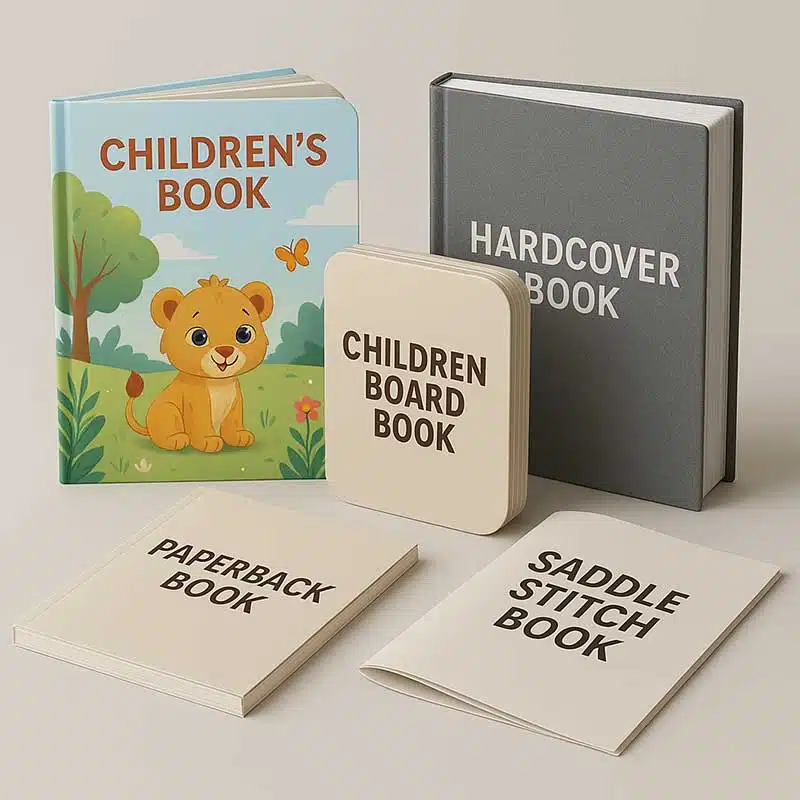
A saddle stitch booklet is made from folded sheets nested inside one another and secured through the fold with staples. Because each folded sheet creates four pages, the total count normally needs to be a multiple of four. The practical range varies with paper, size, and production equipment, so treat any page limit as a starting point rather than a universal rule.
A perfect bound booklet has separate pages or folded sections gathered at the spine, trimmed, and attached to a wraparound cover with adhesive. It can accommodate a wider range of thicknesses, but the finished spine must be thick enough for reliable construction and readable spine artwork. Very thin contents may not provide useful spine width.
Also consider the finished trim size. A compact booklet may be efficient for handouts and mailing, while a larger format can improve diagrams, product photography, or instructional content. You can review common format decisions in this book trim size guide.
When to choose saddle stitch binding
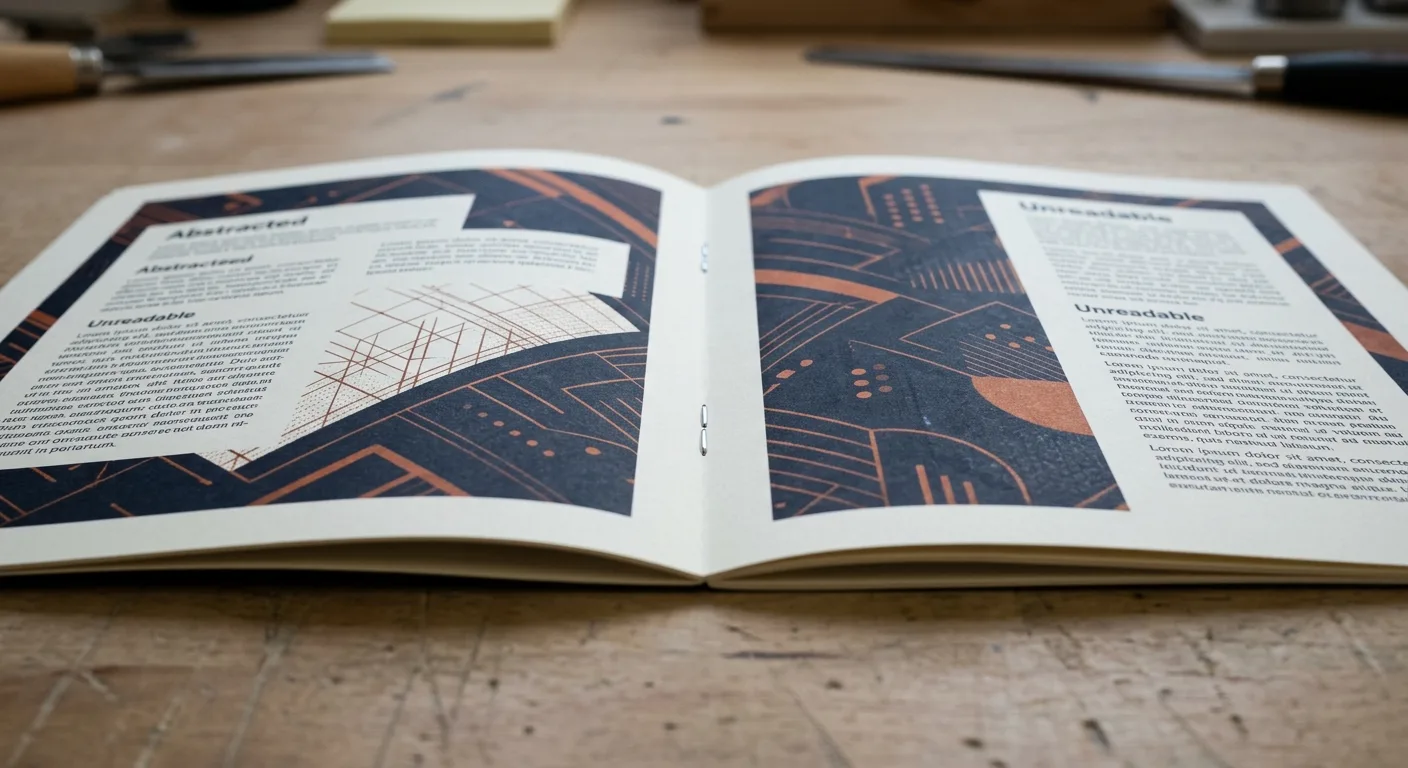
Saddle stitch is often the most efficient choice for short publications. Two or more staples are placed through the centre fold, creating a lightweight booklet that opens naturally and can be produced without a visible glued spine.
Choose this method when your booklet is intended for:
- event programmes, brochures, catalogues, and sales presentations;
- instruction sheets, educational handouts, and product guides;
- magazines, newsletters, and promotional mailers;
- short calendars, planners, and other publications used for a limited period.
Its main advantages are a low material profile, convenient handling, and a clean two-page spread. It is also useful when the booklet will be mailed, distributed at an event, or replaced regularly. However, thick page counts can make the booklet difficult to fold neatly and may cause the outer pages to extend slightly beyond the inner pages before trimming. This effect is known as creep and should be considered during imposition and design.
Saddle stitch is not always the best fit for a publication that must stand upright on a shelf, show a printed spine, or withstand frequent heavy handling. For a practical example of this construction, see the information on custom saddle-stitched booklet calendar printing.
When to choose perfect binding
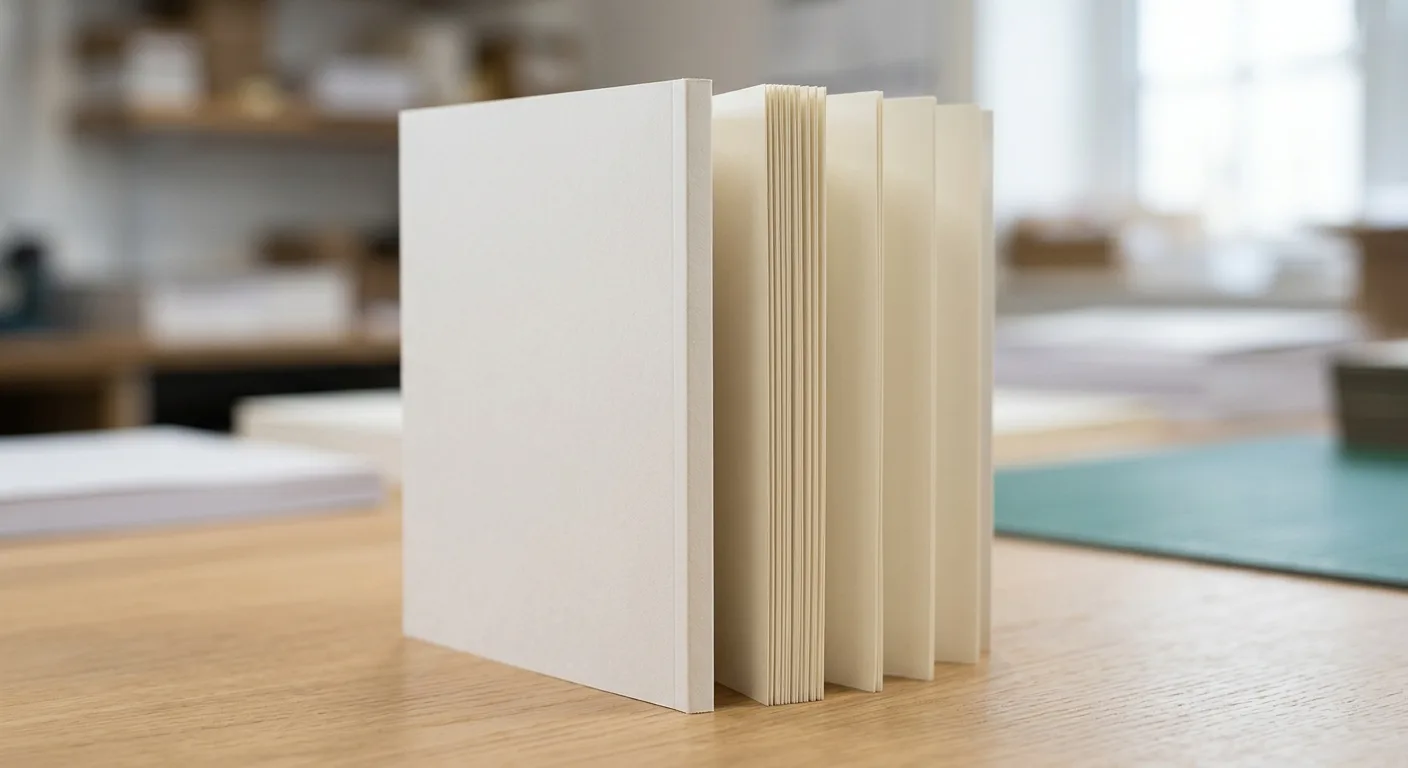
Perfect binding is suitable when a booklet needs a square spine and a more substantial presentation than staples provide. The pages are gathered, the spine edge is prepared, and adhesive joins the text block to a cover that wraps around the front, spine, and back.
A perfect bound booklet can work well for:
- product catalogues and company profiles;
- training manuals, reports, and technical guides;
- lookbooks, portfolios, and retail publications;
- longer marketing publications that need a shelf-ready appearance.
The method gives you a printable spine when the thickness is sufficient, which helps with storage and identification. It also separates the cover from the interior construction, allowing a heavier cover stock or protective finish. The trade-off is that the book generally does not open as flat as a saddle-stitched booklet, and the adhesive area must be planned correctly for the selected paper and page count.
Do not select perfect binding only because the page count is high. Confirm whether the publication needs a strong spine, frequent opening, or long service life. For a broader discussion of glued and case-style construction, read case binding versus perfect binding.
When sewn, case, or lay-flat binding makes sense
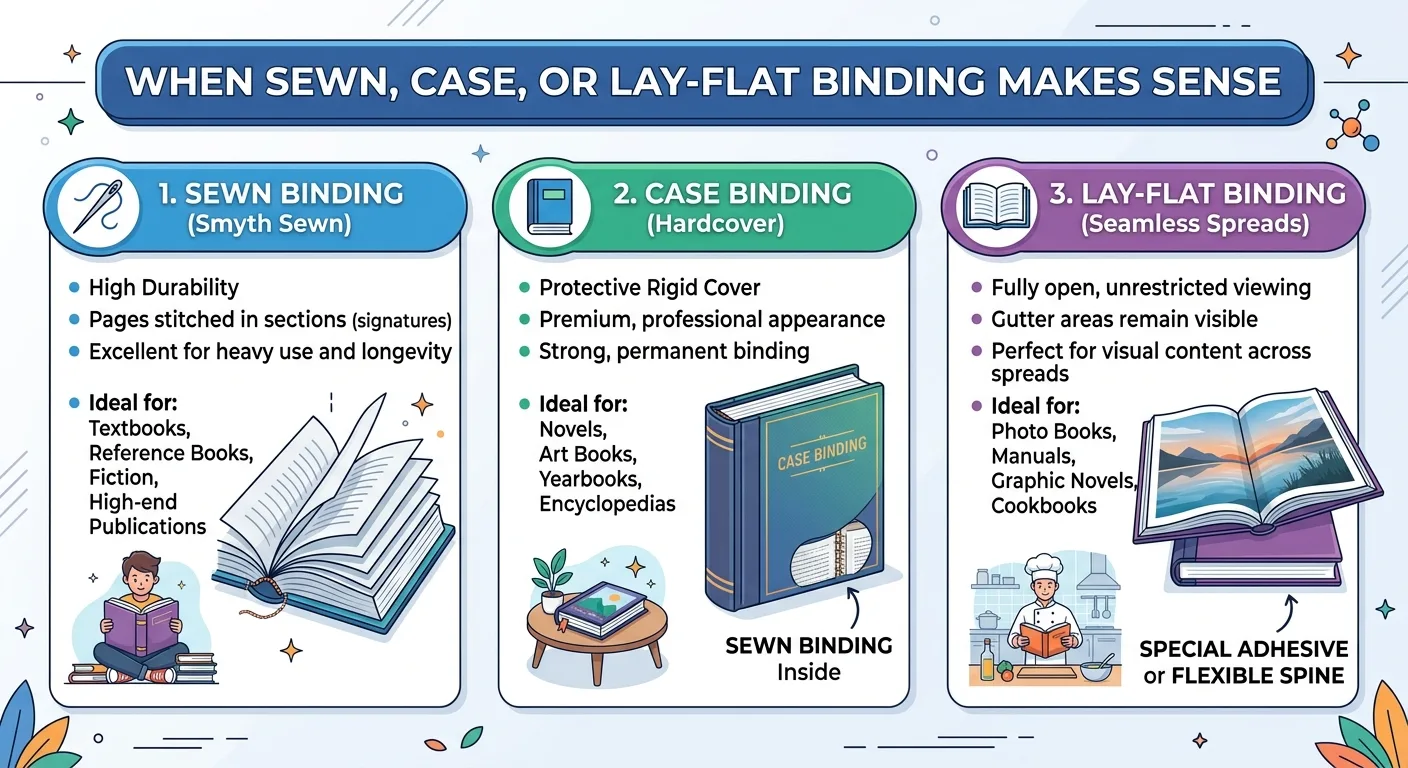
Some projects need more than the two common booklet formats. If the publication will be opened repeatedly, handled roughly, or kept for a long time, ask whether thread-sewn sections are appropriate. Sewing can improve section security and durability, although it may add production steps, cost, and thickness.
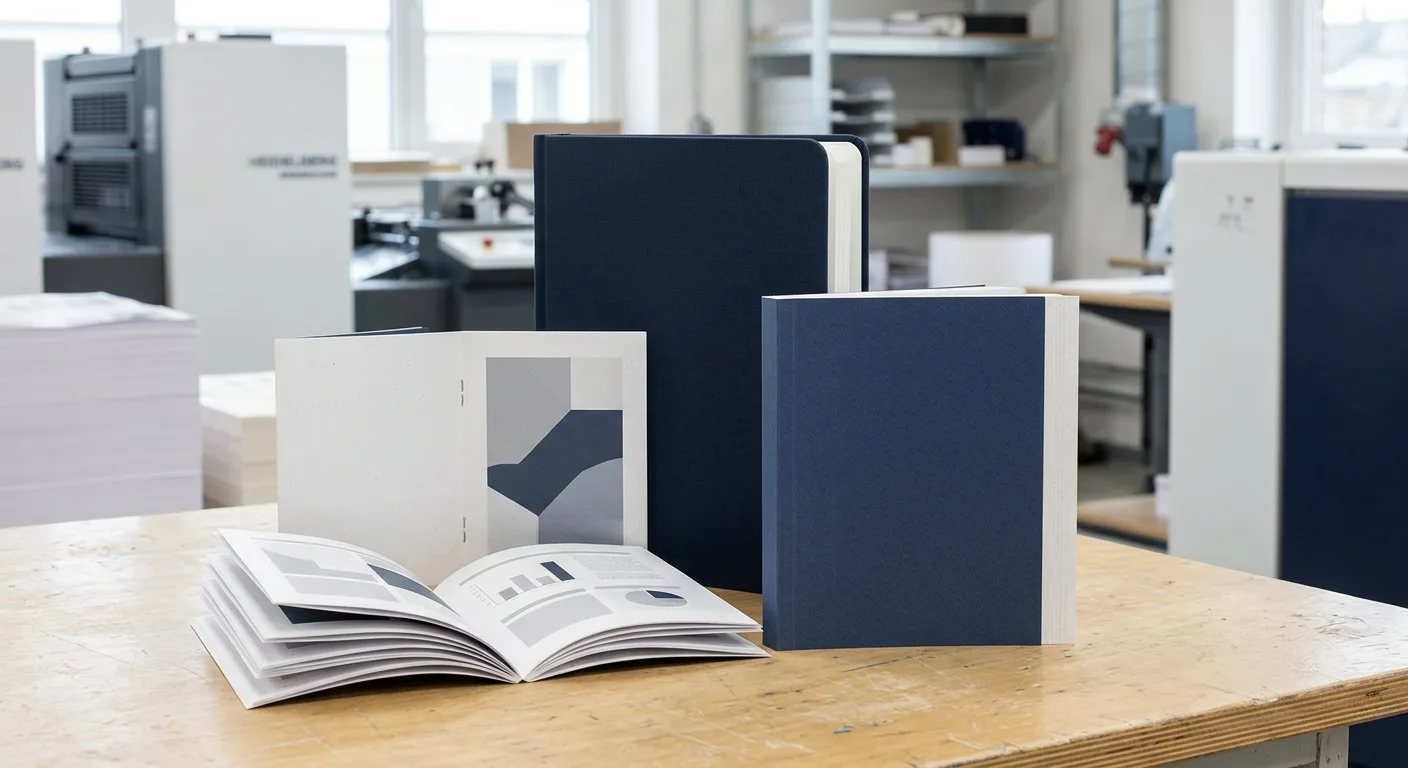
Case binding uses a rigid cover and is normally selected for premium books, reference products, presentation volumes, and editions where protection and long-term use are priorities. It is usually more substantial than a conventional booklet and may not be practical for a lightweight promotional handout. If you are deciding between a hard cover and a flexible cover, compare the construction, handling requirements, and budget rather than treating one as universally better.
Wire-o, spiral, or other mechanical bindings can be useful when the booklet must lie flat or fold back on itself. They may suit workbooks, training materials, planners, and manuals that readers consult while writing or performing a task. These formats require their own drilling, margin, cover, and page-turning considerations.
Availability for sewn, case, and mechanical formats varies by supplier and specification. Confirm the binding method, sample construction, minimum order requirements, and production schedule before finalising artwork.
Match the binding to the booklet’s use
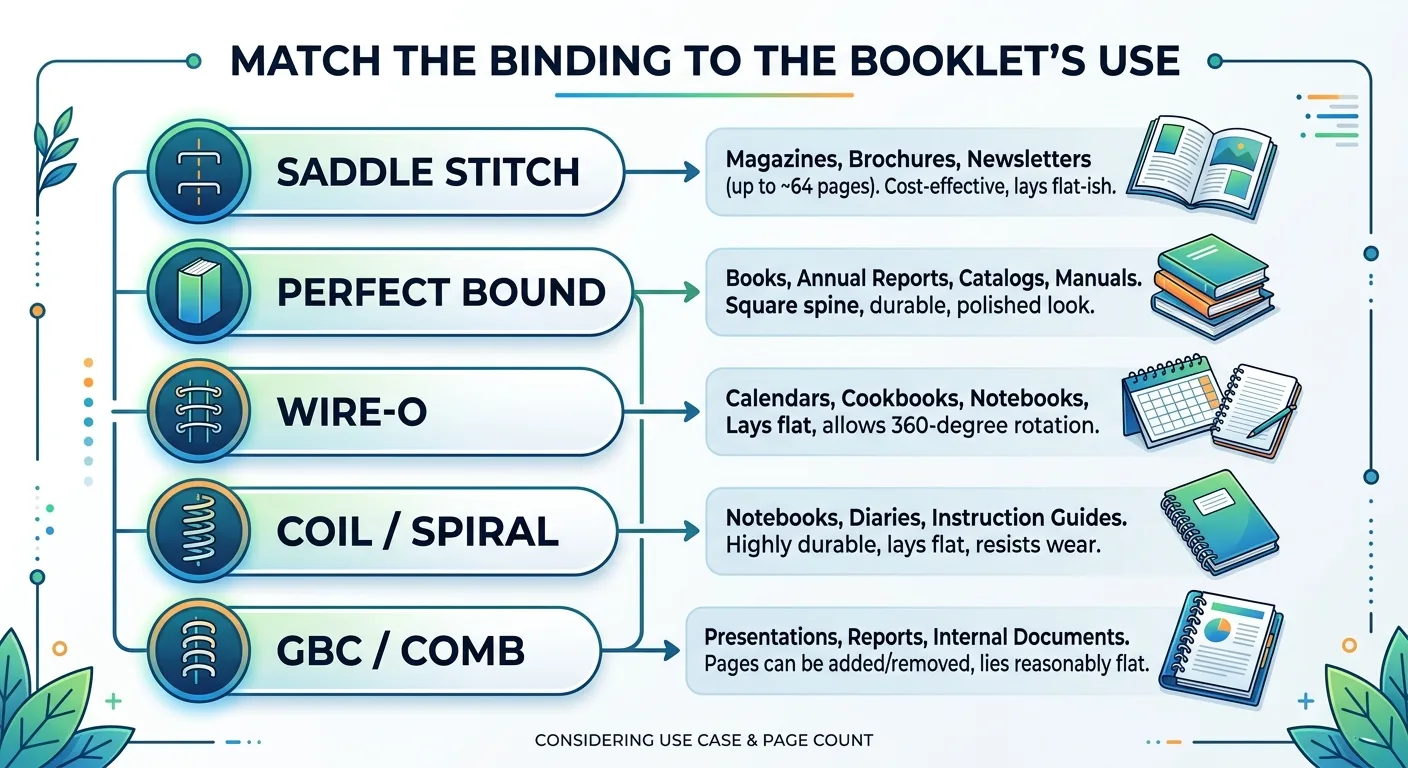
Once the page count has narrowed the options, evaluate the booklet’s real working conditions. The same number of pages may justify different bindings depending on whether the product is a one-day handout or a reference document used for years.
- Opening behaviour: Choose saddle stitch or a lay-flat mechanical format when readers need wide spreads. Perfect binding can be suitable when a neat spine matters more than completely flat opening.
- Handling frequency: Repeated reference, writing, folding, and transport can favour sewing or mechanical binding, subject to supplier recommendations.
- Display and storage: A square spine helps identify a publication on a shelf. Saddle stitch is better suited to stacks, racks, envelopes, and direct distribution.
- Cover protection: A thicker cover, lamination, or other finish may be useful for retail handling or outdoor distribution, but it changes weight and cost.
- Quantity and replenishment: A short-run promotional piece may be specified differently from a recurring catalogue or institutional publication. Ask for production advice based on the complete order plan.
- Envío: Finished size, packed quantity, carton configuration, and destination country affect freight planning. A compact, lightweight construction may be more practical for international distribution.
These choices can affect price, lead time, and print quality. Paper bulk, cover stock, ink coverage, coatings, colour requirements, finishing, packing, order quantity, file readiness, proofing, and destination country should all be stated when comparing quotations.
Booklet binding quotation checklist

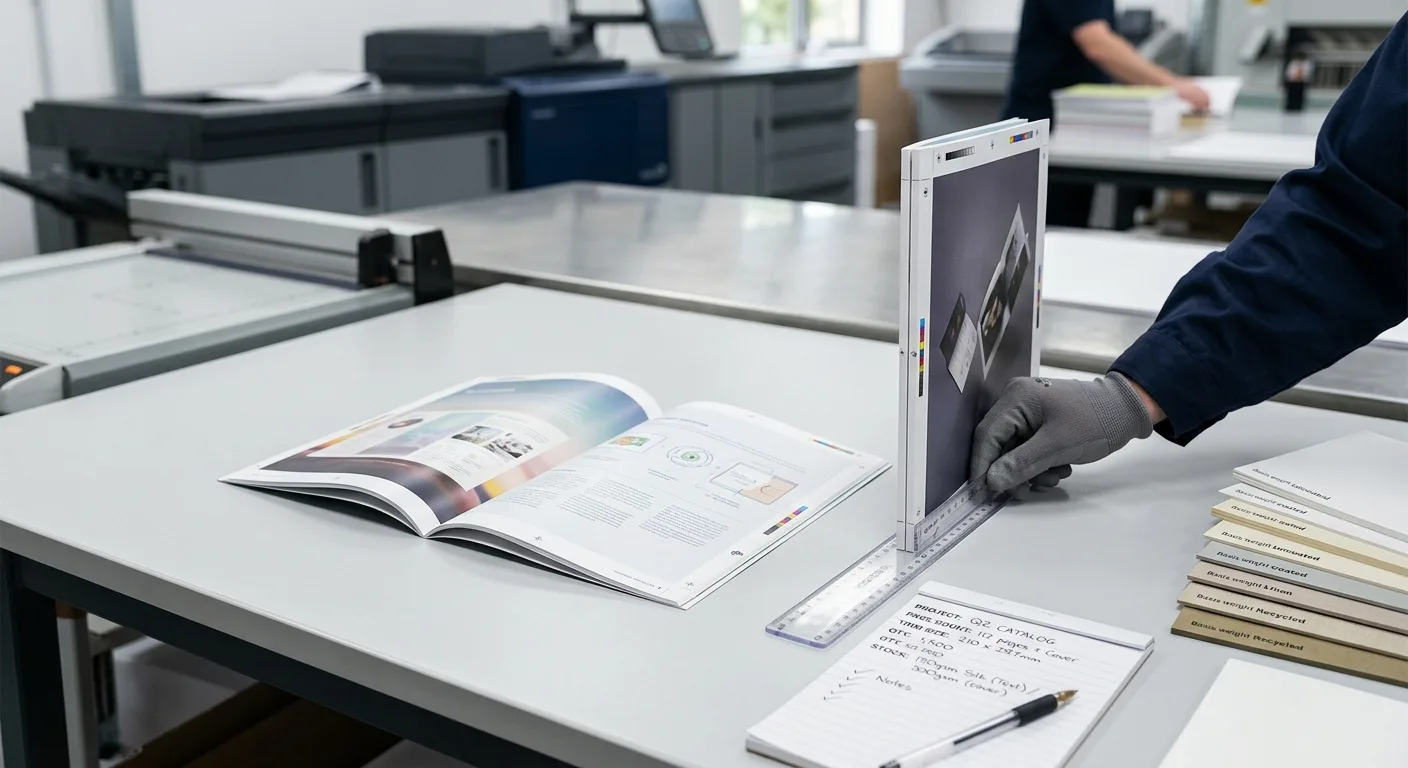
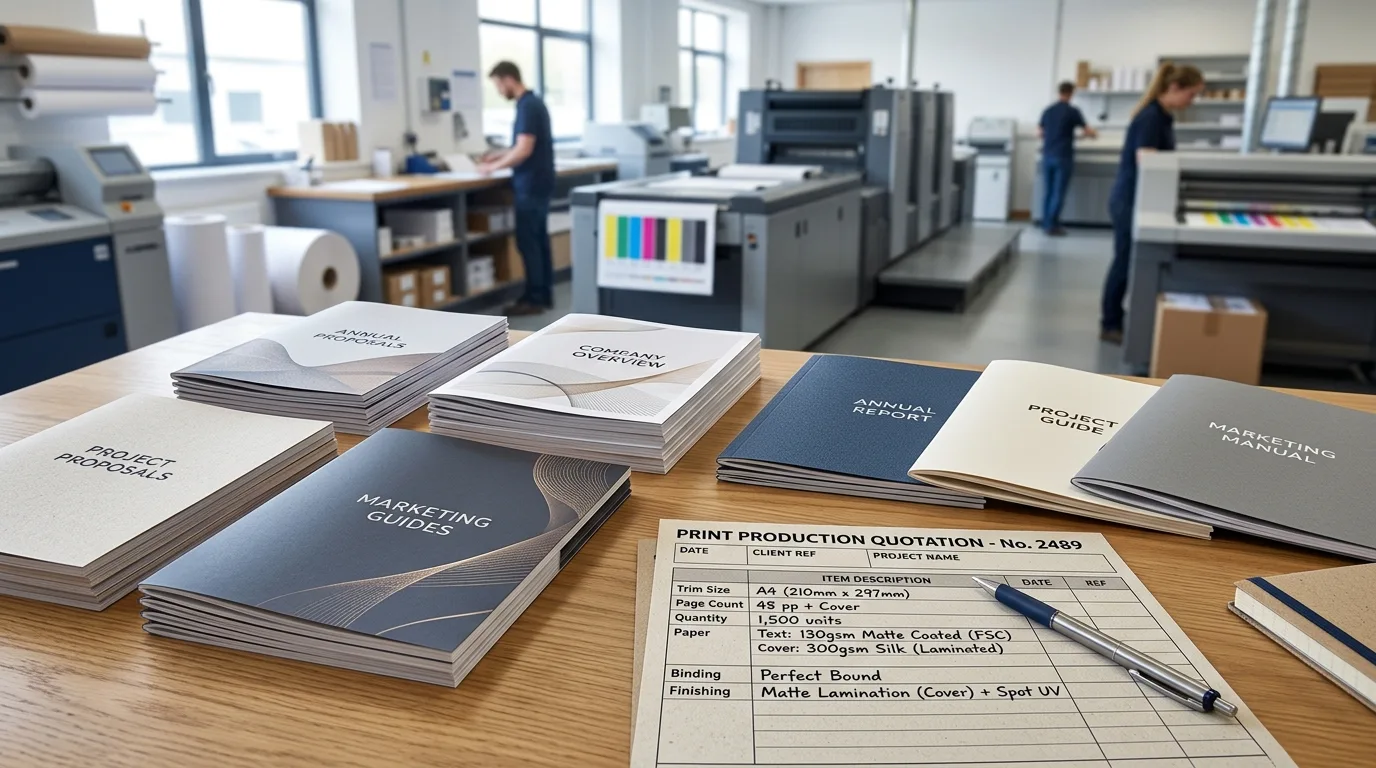
A clear specification helps a printer recommend the right construction and prevents comparisons between different assumptions. Include the following information in your enquiry:
- Tipo de producto: brochure, catalogue, manual, planner, calendar, report, or another booklet application.
- Finished trim size: width and height, including the measurement unit and whether the size is portrait, landscape, or square.
- Número de páginas: total pages, interior pages, cover pages, inserts, and any foldouts listed separately.
- Cantidad: initial order volume, repeat-order expectations, and whether multiple versions or languages are required.
- Paper and cover: interior paper type or weight, cover stock, colour pages, and any special board or material requirements.
- Binding preference: saddle stitch, perfect binding, sewn, case, wire-o, or an open request for the printer to recommend a method.
- Acabado: lamination, varnish, foil, embossing, die cutting, rounded corners, or other finishing operations.
- Estado del archivo: final print-ready PDF, draft artwork, separate cover file, or artwork that still needs prepress review.
- País de destino: the delivery location and any packing, labelling, or documentation requirements.
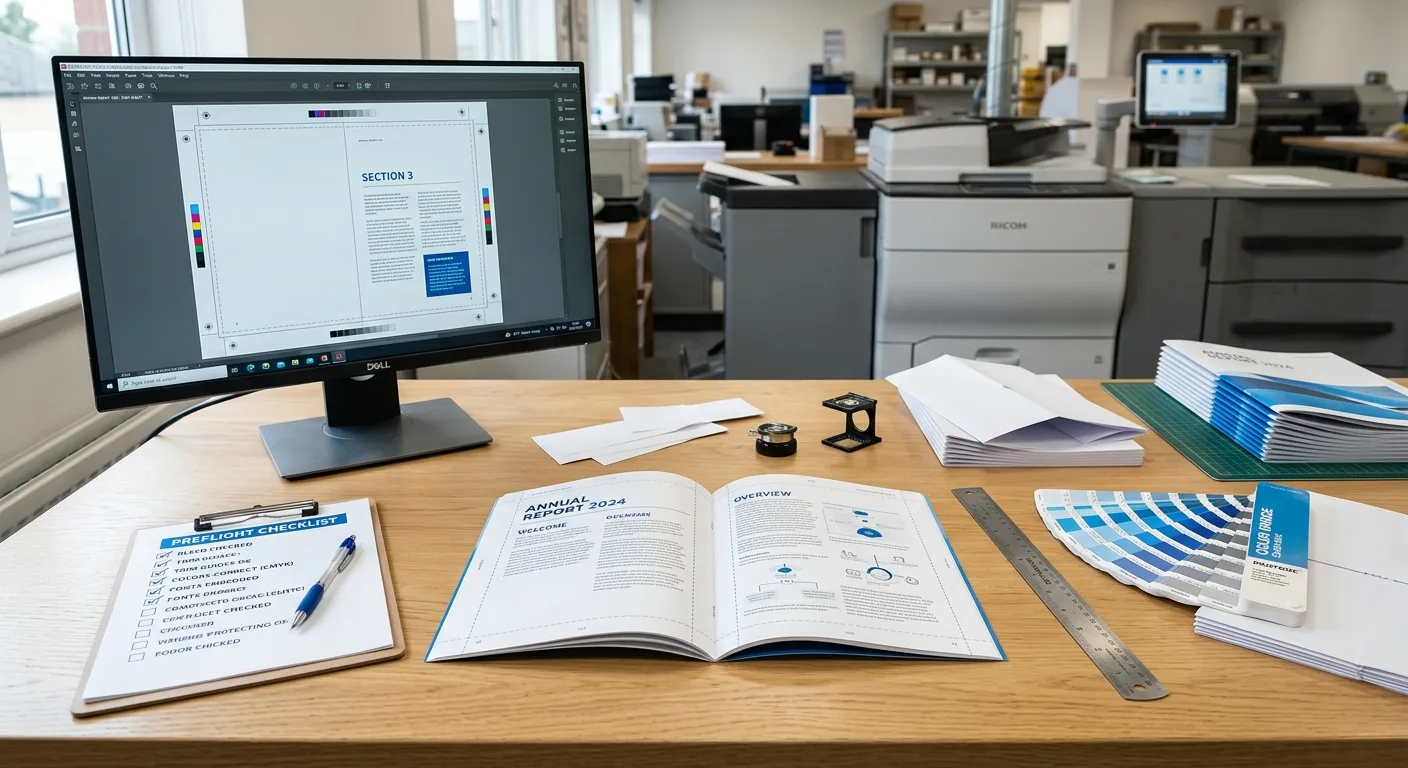
For artwork preparation, review this print-ready book file checklist. It covers practical items such as trim, bleed, safe areas, colour, images, fonts, cover files, and proofing questions that also matter for booklet production.
Make the final binding decision
Use page count to create a shortlist, then select the construction that supports the booklet’s intended life. Saddle stitch is a sensible starting point for short, lightweight publications that need easy opening and efficient distribution. Perfect binding is more suitable when the page block needs a square spine, stronger visual presence, or a book-like format. Sewn, case, or lay-flat mechanical binding should be considered when durability, repeated opening, or writing convenience is central to the project.
There is no single best booklet binding for every page count. The right recommendation depends on the relationship between thickness, paper, size, cover, handling, finish, quantity, and destination. Ask the printer to confirm page-count compatibility, spine requirements, file setup, sample or proof options, packing assumptions, and the factors that may change the quotation.
For international B2B projects, a factory-direct manufacturer such as Guangzhou YBJ Printing Co., Ltd can review the complete specification and advise on a practical production route. A well-defined brief gives both sides a clearer basis for quality review and commercial comparison.
Discuss your booklet binding specification
Need help selecting a practical booklet binding? Request a quotation from YBJ Printing with your product type, trim size, page count, quantity, paper or binding preference, finish, file status, and destination country. Our team can review the requirements and discuss suitable production options.