
Table des matières
- What makes a board book safe and durable?
- Construction features that affect durability
- Safety design considerations for publishers
- Artwork and finishing choices
- Board book specification checklist
- Plan quality checks before production
- Conclusion
La qualité d'impression d'un livre cartonné résistant ne se résume pas à l'épaisseur des pages. Les éditeurs doivent préciser dès le départ la composition du carton, le traitement des coins, les encres, les finitions, la reliure, les illustrations ainsi que les exigences de sécurité spécifiques au marché.
What makes a board book safe and durable?
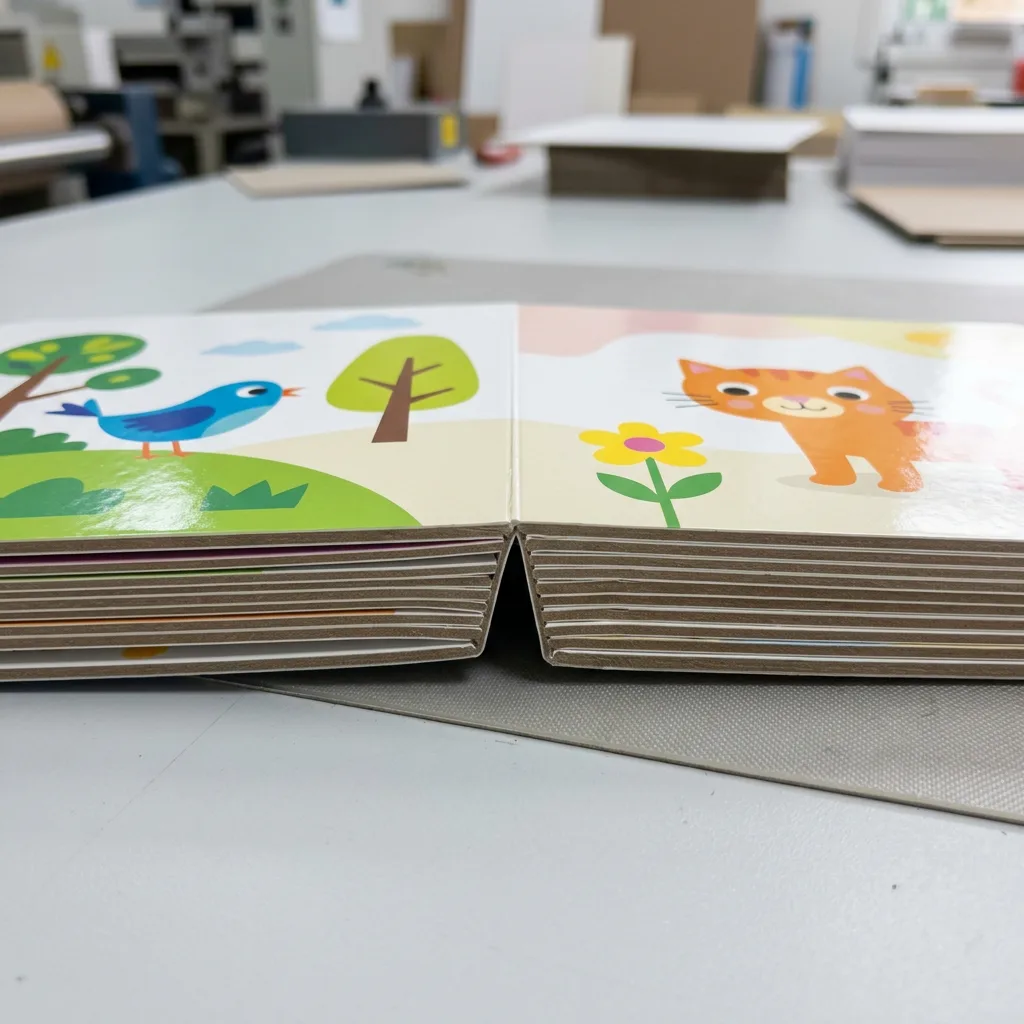
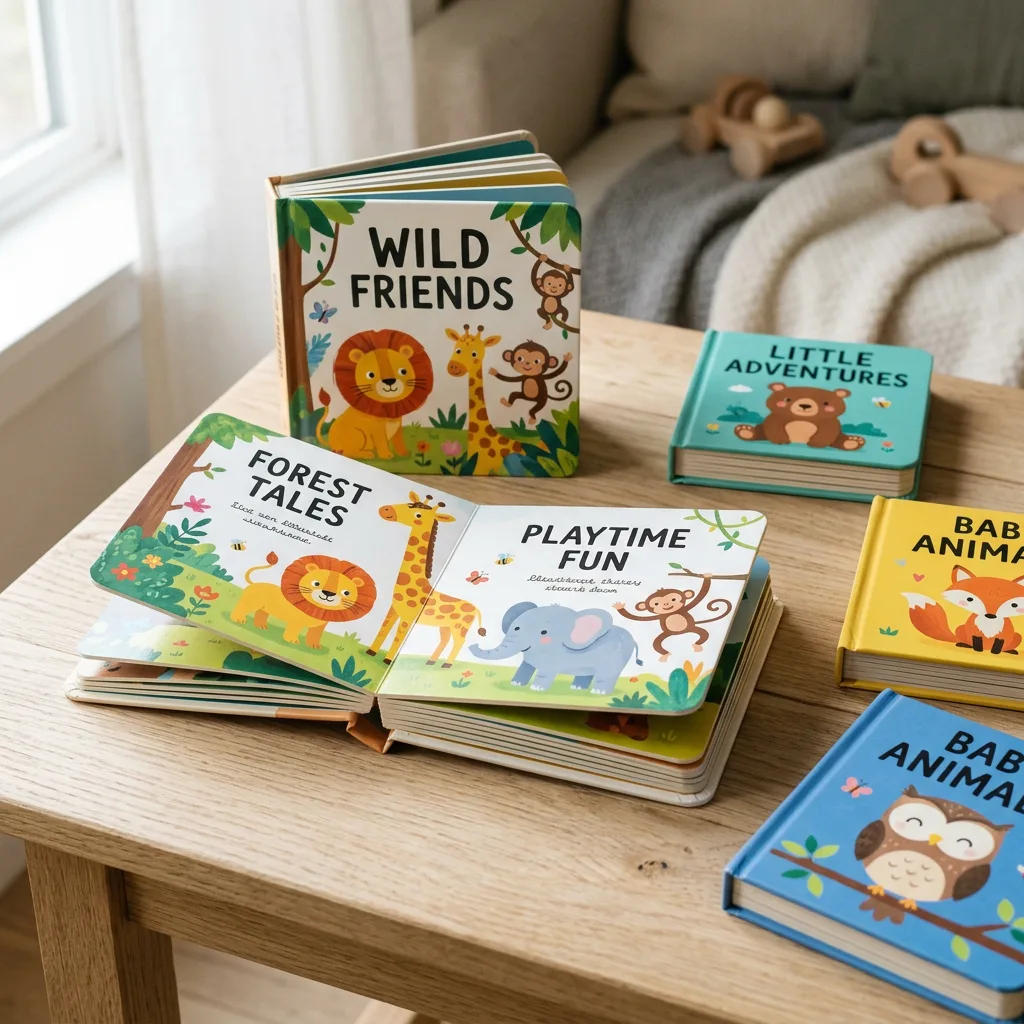
Durable board book printing combines rigid laminated pages, secure page assembly, child-considered edge treatment and a finish selected for frequent handling. Unlike a paper-page picture book, a board book is built to withstand turning, chewing, dropping and repeated reading by young children. However, durability alone does not establish product safety: publishers must also identify the destination market and arrange the appropriate compliance review and testing for that market.
The most reliable results come from deciding the intended age group, format and use case before artwork is finalised. A bedtime book for babies, an early-learning title for toddlers and an interactive novelty book can require different construction decisions. Page count, board thickness, corner radius, lamination, die-cuts and any added components all affect the finished product.
For standard rectangular formats, board book production generally begins with printed sheets mounted to board. The sheets are folded, wrapped and assembled so each spread forms a substantial, rigid page. This construction creates a familiar chunky format that is easier for small hands to turn than thin paper pages.
Construction features that affect durability
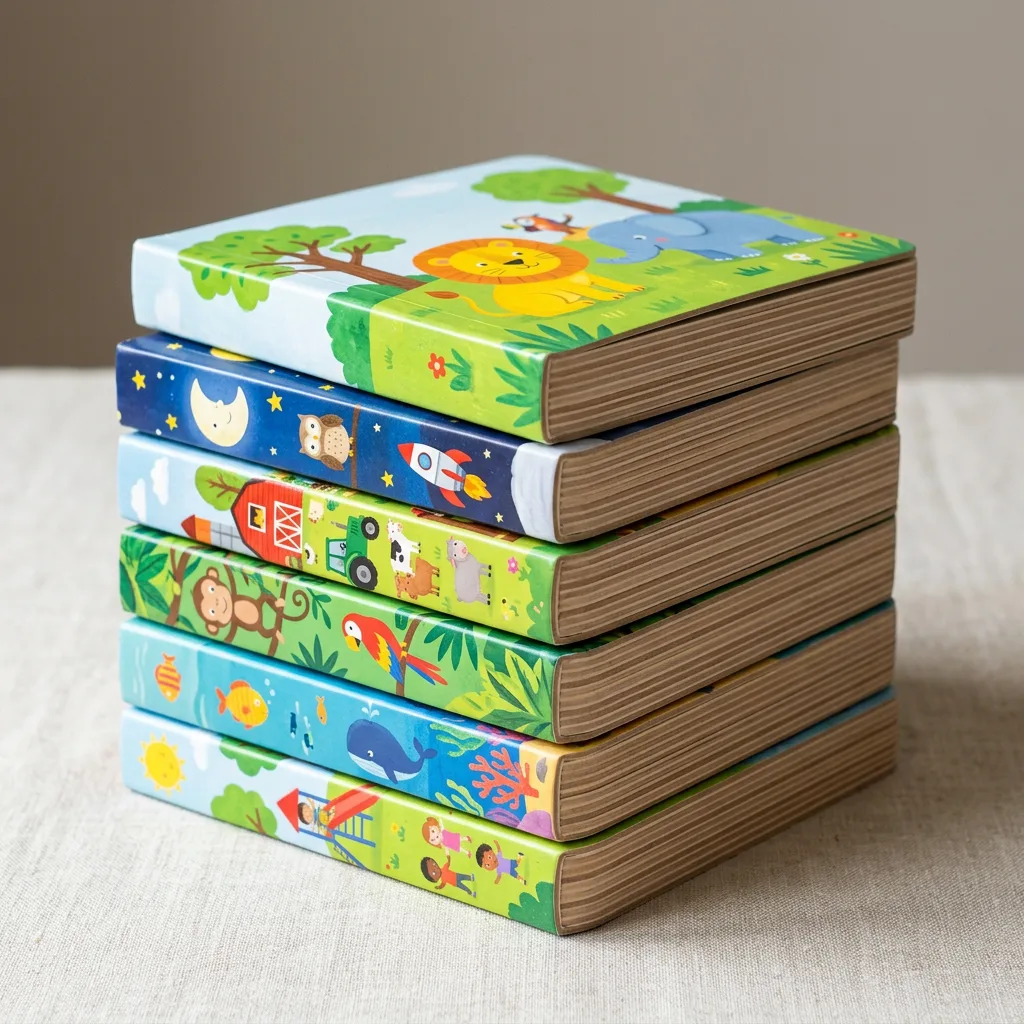
Board thickness is one of the first specifications to discuss. A thicker board can provide a more substantial feel and greater resistance to bending, but it also changes the book’s weight, spine bulk, material use and freight profile. The appropriate choice depends on trim size, number of spreads and how the book will be used.
Secure page assembly and hinge performance
Each spread needs consistent mounting and clean fold lines so pages open smoothly without delaminating at the hinge. Tight tolerances during cutting, mounting and folding help create an even page block. Publishers should avoid designs that place critical small details directly on fold lines, where visual interruption is unavoidable.
For very small books, wide landscape formats or titles with many spreads, discuss the format with the printer early. These factors influence how the book handles in use and whether the final object remains practical for its intended reader.
Rounded corners and smooth edges
Rounded corners are a practical feature for books intended for younger children. They reduce pointed corner exposure and are less likely to become visibly dog-eared through repeated use. Edge quality also matters: accurate trimming and properly bonded layers help keep the board page neat and comfortable to handle.
Novel shapes can make a title distinctive, but they introduce more exposed contours and manufacturing steps. When considering handles, tabs, silhouettes or windows, review the smallest radii, narrow points and remaining board strength. Our Service d'impression de livres cartonnés aux formes découpées sur mesure is relevant when the format needs a shaped outer edge rather than a conventional rectangle.
Safety design considerations for publishers

Children’s publishing safety planning should start with the age grading, sales countries and product concept. Requirements vary by market, so a manufacturer cannot assume that one country’s assessment or test approach applies everywhere. The publisher or brand owner should confirm the applicable rules with its compliance specialist, importer or test laboratory before placing a production order.
Consider components as part of the product
A conventional board book has no loose attachments, but add-ons can change the risk assessment. Examples include sound modules, batteries, plastic parts, mirrors, magnets, fabric, ribbons and attached toys. Each component needs to be evaluated for secure retention, intended use, age suitability and the applicable product requirements.
Sound books deserve particularly early planning because the electronic module, button position, battery compartment, speaker opening and board structure interact. Read this guide to sound book components, buttons, modules and batteries before finalising an audio concept. For a broader production overview, see the guide to Impression de livres sonores personnalisés pour enfants.
Materials, inks and finishes
Ask for clear material and finish information during quotation and sampling. Where regulatory documentation or laboratory testing is needed, define the target standard, test scope, product age grade and destination market in writing. Do not leave this request until after mass production has begun. Testing needs, component selection and corrective work can all affect lead time and cost.
Designers should also choose finishing that supports the book’s real-life use. A protective laminated surface can improve resistance to scuffs and everyday moisture, while the preferred finish—such as gloss or matt—also changes appearance and tactile feel. The correct selection depends on artwork, handling expectations and brand positioning.
Artwork and finishing choices that support long-term use
Well-prepared artwork supports both quality and efficient production. Supply print-ready files with the agreed trim size, bleed, safe area, colour specification and page order. Keep text, faces and other critical elements away from trim edges, corners and centre folds. This is especially important for small-format board books, where the available safe area is limited.
Large solid colour areas, dark backgrounds and high-touch covers may show scuffs more readily than lighter or textured designs. This does not mean they should be avoided, but it is sensible to review a physical sample and choose a suitable protective finish. Foil, spot effects, embossing and other decorative processes may be appropriate for covers, provided they suit the book’s intended age group and use conditions.
If the concept includes audio, plan the visual design and physical layout together. Button icons must be easy to identify, instructions should be age-appropriate, and important art should not be obscured by the module. The article on conception sonore pour un livre audio personnalisé destiné aux enfants explains why content decisions should be made alongside structural decisions.
Board book specification checklist for buyers
Use this checklist when briefing a printer or comparing quotations for a children’s board book:
- Audience and market: intended age range, sales countries and any identified safety or compliance requirements.
- Format : finished trim size, portrait or landscape orientation, rectangular or die-cut shape, and number of spreads.
- Construction : preferred board thickness, corner treatment, page assembly expectations and whether the title has tabs, windows or other structural details.
- Print and finish: colour requirements, cover and page finish, special effects, and the level of scuff resistance expected in distribution and use.
- Components: sound module, buttons, batteries, plastic or textile elements, magnets, mirrors, inserts or packaging, if any.
- Files and approval: artwork status, dielines, colour references, proofing requirements and physical sample needs.
- Commercial details: quantity, packing preference, destination country and requested delivery window.
Price is principally affected by format, page count, board specification, quantity, finishing, special structures, added components, packaging and freight destination. Lead time is affected by artwork readiness, sampling, materials, complexity, testing arrangements and shipping method. Print quality depends on the supplied files, approved colour expectations, chosen materials and production tolerances.
Plan quality checks before production
A written specification provides a useful reference for pre-production review and final inspection. It should identify the approved trim size, page count, board construction, finish, artwork version, component placement and packing method. For colour-sensitive titles, communicate approved colour targets or references before production.
Where practical, inspect a sample that represents the intended construction and finish. Check page alignment, fold operation, bonded edges, corner smoothness, print appearance, finish consistency and the usability of any interactive elements. For sound titles, agree how audio content, activation, button response and battery-related details will be checked.
YBJ Printing has produced custom books, paper products and packaging since 1998. Early technical discussion helps identify production considerations while format and files can still be adjusted. Learn more about the company on the YBJ Printing company page.
Conclusion
A successful board book balances child-friendly handling, robust construction and a specification suited to its intended market. Start with the reader’s age and use case, then define the board format, rounded corners, finish, artwork constraints and any added components. Confirm compliance responsibilities early and allow time for sampling or testing where required. This approach gives publishers a clearer basis for evaluating durable board book printing options and avoiding avoidable changes later in the project.