
Introduction: The Structural Integrity of Your Publication
For publishers of textbooks, art books, and high-end fiction, the binding method is not merely an aesthetic choice—it is a structural necessity. The longevity of a printed product directly impacts brand perception and end-user satisfaction. A book that loses pages after a month of heavy use damages the publisher’s reputation, while a volume that lays flat and withstands years of reference builds trust.
Two of the most common binding methods in industrial book manufacturing are Perfect Binding and Smyth Sewing (also known as section sewing). While perfect binding dominates the mass-market paperback sector due to cost-efficiency, Smyth sewing remains the gold standard for archival quality and usability.
This guide provides a technical comparison of these two methods, focusing specifically on durability, lay-flat properties, and manufacturing considerations for international buyers.
Defining the Contenders
What is Perfect Binding?
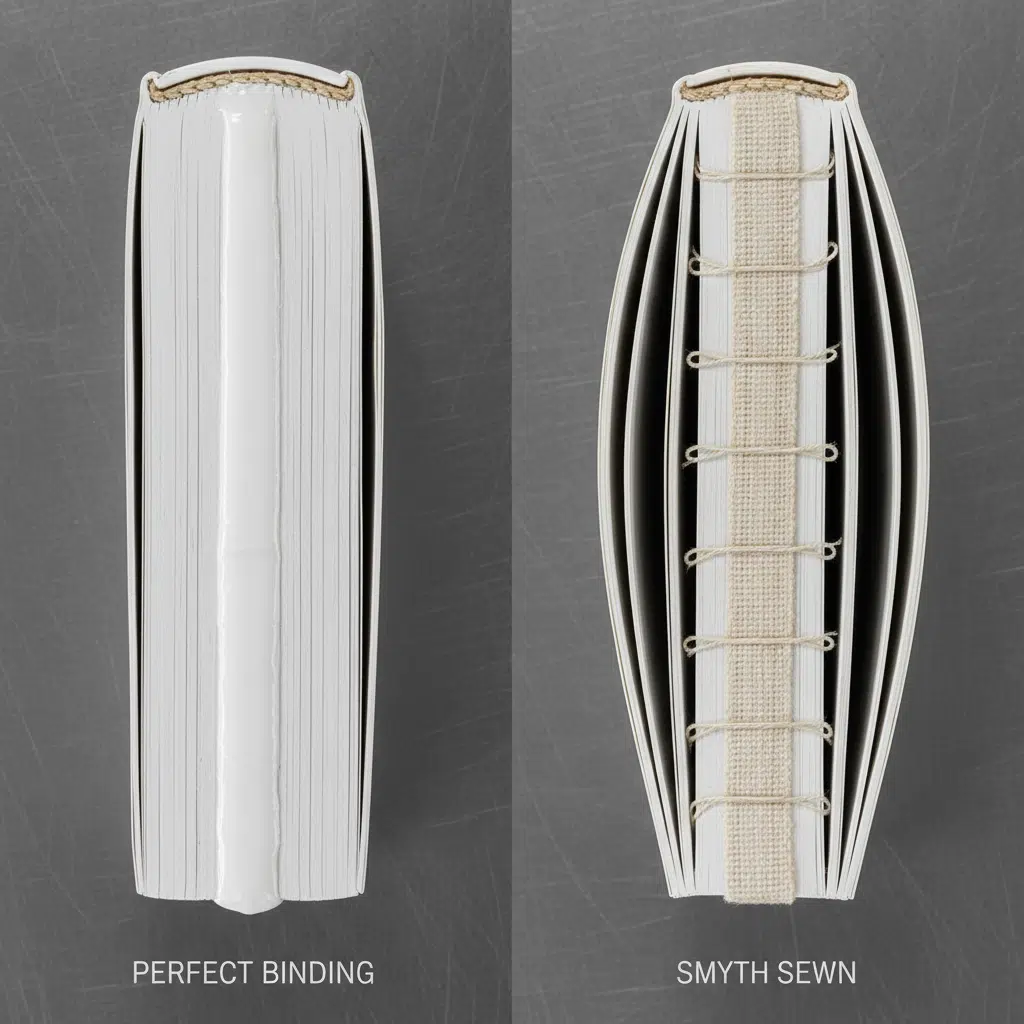
Perfect binding is the industry standard for softcover books and catalogs. In this process, the book block is formed by gathering folded pages (signatures) or loose sheets. The spine edge is milled (ground down) to create a rough surface, exposing the paper fibers. A strong adhesive—typically Ethylene Vinyl Acetate (EVA) or Polyurethane Reactive (PUR)—is applied to the spine, and the cover is wrapped around and glued into place.
Key characteristic: The pages are held together solely by adhesive.
What is Smyth Sewn Binding?
Smyth sewing is a method where the book is constructed from signatures (sheets folded into groups of 16 or 32 pages). These signatures are sewn together individually through the fold using high-tensile thread. Once the book block is sewn, the spine is reinforced with a light layer of glue and a strip of fabric (mesh or mull) to maintain structure before being attached to the cover (casing in).
Key characteristic: The pages are physically linked by thread; glue is secondary.
Comparative Analysis: Durability and Longevity
Tensile Strength and Page Pull
The primary failure point in bookbinding is page fallout.
- Perfect Binding: The durability relies entirely on the chemical bond between the paper fiber and the glue. Over time, standard EVA glues can become brittle, especially when exposed to extreme temperatures or if the book is flexed repeatedly. While PUR glue offers significantly higher flexibility and pull-strength than EVA, it still cannot match the mechanical strength of thread.
- Smyth Sewn: Because the thread passes through the center of the fold, it is mechanically impossible for a single page to fall out without ripping the paper itself. This method is essential for textbooks and library editions intended for decades of use.
Spine Flexibility and Cracking
Rigidity is often the enemy of longevity.
- Perfect Binding: To secure the pages, a layer of glue must be applied to the spine. This creates a rigid block. When a user forces a perfect-bound book open too wide, the glue spine may crack, causing the cover to detach or the book block to split in half.
- Smyth Sewn: The thread linkage creates a flexible spine. The book block can move and adjust as the book is opened, absorbing the stress rather than resisting it. This prevents the “snapping” effect common in thick adhesive-bound books.
The “Lay-Flat” Factor
For cookbooks, music books, academic textbooks, and art journals, the ability to lie flat on a table without being held open is a critical functional requirement.
Why Smyth Sewn Lays Flat
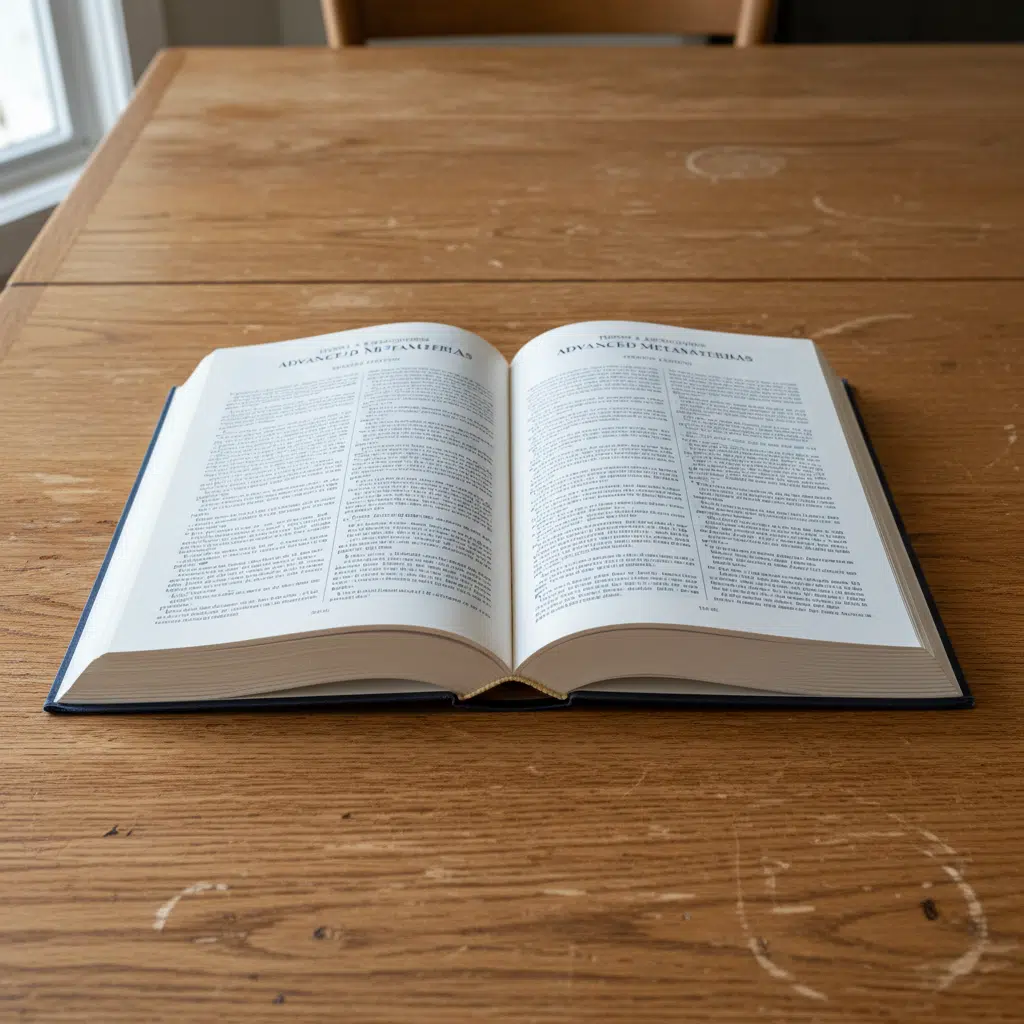
Smyth sewing allows the signatures to rotate independently on the thread. When the book is opened, there is no thick layer of glue restricting the gutter (the inner margin). This allows the book to open to nearly 180 degrees, providing a hands-free reading experience and allowing images to span across two pages (crossovers) with minimal visual interruption.
The Perfect Binding Limitation
Standard perfect binding has a “clamp” effect. The glue penetrates slightly between the pages at the spine (typically 3mm to 5mm). This area becomes unusable and stiff. If a user tries to force a perfect-bound book to lie flat, they usually have to break the spine to do so. While Otabind (a variation of perfect binding with a floating spine) improves this, it is still less effective than true sewing.
Technical Specifications & Manufacturing Considerations
Paper Grain Direction
Regardless of the binding method, paper grain direction is paramount. For the best opening experience, the paper grain must run parallel to the spine.
- Risk in Perfect Binding: If the grain is perpendicular (cross-grain), the pages will resist turning and the adhesive bond is more likely to fail as the paper expands and contracts with humidity changes.
- Risk in Smyth Sewing: Cross-grain paper in a sewn book will result in “mousetrapping” (the book snaps shut) and potential waviness in the signatures.
Production Timelines
Buyers should account for different lead times during procurement:
- Perfect Binding: Highly automated. Thousands of units can be bound per hour on inline binding lines. Ideal for tight deadlines.
- Smyth Sewing: Requires an extra step. The gathering and sewing process is slower than simple gathering and milling. Expect an additional 3–5 days in production lead time depending on volume.
Cost Implications
Smyth sewing is a premium process. The cost differential is driven by the slower machine speeds and the specialized equipment required.
- Low Volume (500–1,000 units): The setup cost for sewing makes the unit price significantly higher (often 20–30% more than perfect binding).
- High Volume (5,000+ units): The price gap narrows as efficiencies of scale kick in, but sewing will consistently remain the more expensive option.
Summary Comparison Table
| Feature | Perfect Binding (EVA/PUR) | Smyth Sewn (Section Sewn) |
|---|---|---|
| Primary Bond | Chemical (Adhesive) | Mechanical (Thread + reinforced glue) |
| Lay-Flat Ability | Low (Springs shut) | Excellent (Opens 180°) |
| Durability | Moderate (Good for 1-5 years) | High (Archival quality, decades) |
| Ideal Page Count | 40 to 400 pages | 60 to 1,000+ pages |
| Cost | Economical | Premium |
| Common Applications | Paperbacks, Magazines, Catalogs | Textbooks, Hardcovers, Photo Books |
Buying Guide: When to Upgrade
When requesting a quote from your printing partner, consider upgrading to Smyth sewing if your project meets any of the following criteria:
- Heavy Usage Environment: Textbooks, manuals, or reference guides that will be opened daily.
- Premium Price Point: If you are selling a hardcover book at a premium retail price, customers expect the durability of a sewn binding.
- Cross-Spread Imagery: Photography or art books where images span across the center gutter. Sewing ensures the center of the image isn’t lost in the spine glue.
- Thick Volumes: Books exceeding 2 inches (50mm) in thickness are difficult to handle if perfect bound; sewing improves usability significantly.
File Preparation Notes
For Smyth sewn projects, ensure your imposing layout accounts for signatures (usually multiples of 16 or 32 pages). While printers handle the imposition, designing your total page count to fit these multiples prevents blank pages at the end of the book.
Frequently Asked Questions
Can a paperback book be Smyth sewn?
Yes. This is often called “Sewn Softcover” or “Limply Bound.” It offers the flexibility and lay-flat benefits of sewing with the lower cost and weight of a soft cover. It is popular for high-end literary fiction and journals.
Is PUR binding a good alternative to Smyth sewing?
PUR (Polyurethane Reactive) binding is a bridge between standard perfect binding and sewing. It is significantly stronger and more flexible than traditional EVA glue. For projects where budget does not permit sewing but durability is a concern, PUR is an excellent compromise.
What is the Minimum Order Quantity (MOQ) for Smyth sewing?
Because of the setup time required for the sewing stations, most industrial printers suggest an MOQ of 500 to 1,000 units. Below this, the unit cost becomes prohibitive compared to digital adhesive binding methods.
Does Smyth sewing take longer to produce?
Yes. It adds a mechanical stage to the bindery process. You should generally plan for an additional week in your production schedule compared to standard perfect binding.
Conclusion
Choosing between Smyth sewn and perfect binding is a calculation of budget versus longevity. For marketing materials, catalogs, and mass-market paperbacks, perfect binding offers efficiency and speed. However, for publications intended to last—specifically textbooks, hardcovers, and brand-critical art books—Smyth sewing is the investment that protects the integrity of the product.
Ready to determine the best specification for your next print run?