
Table of Contents
- What the board book production process includes
- Step 1: Artwork review and prepress preparation
- Step 2: Proofing and artwork approval
- Step 3: Printing and material preparation
- Step 4: Mounting printed sheets to board
- Step 5: Cutting, rounding and finishing
- Step 6: Quality inspection and approval
- Step 7: Packing and global delivery
- Buyer checklist for a smoother production schedule
The board book production process includes artwork checks, proof approval, paper and board preparation, printing, mounting, finishing, quality inspection and export packing. Understanding each stage helps publishers plan accurate files, control quality and coordinate international delivery.
What the board book production process includes
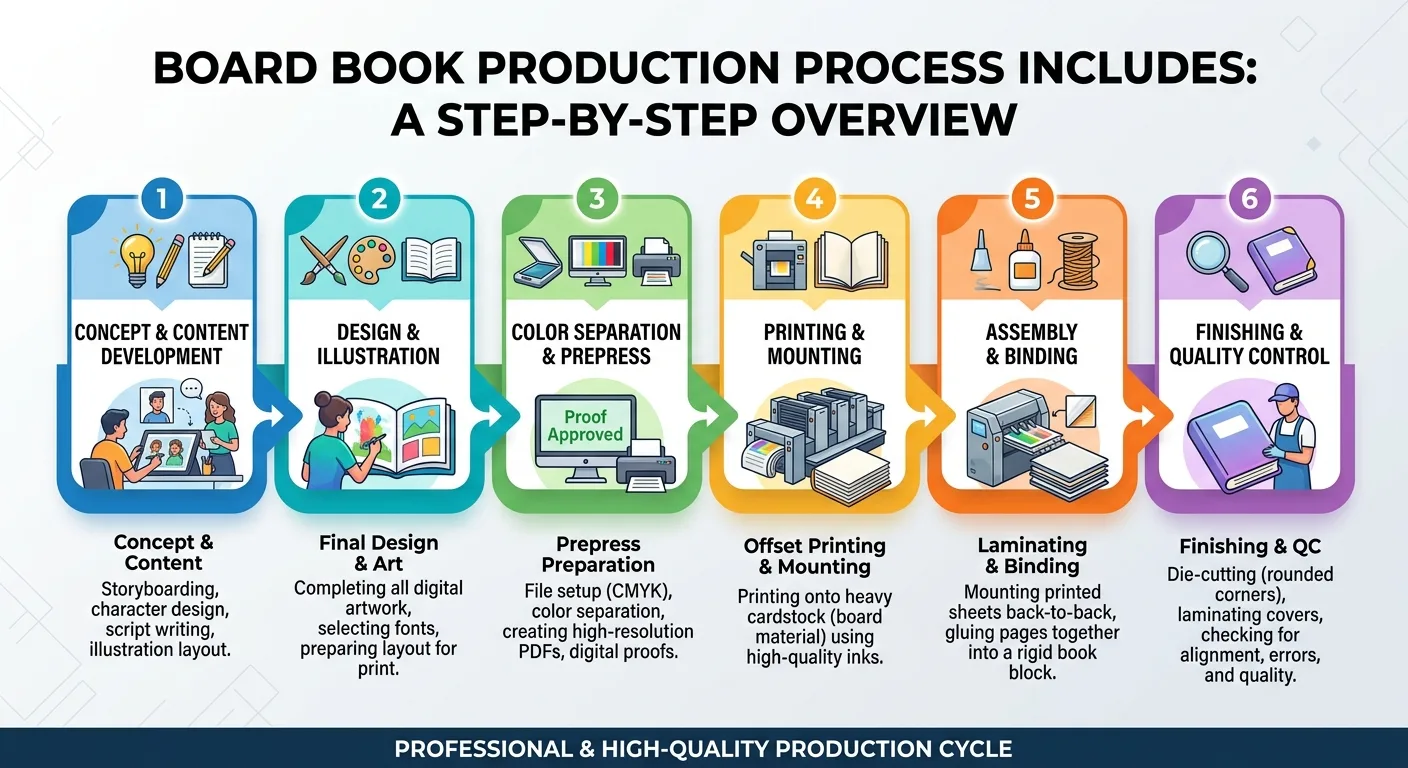
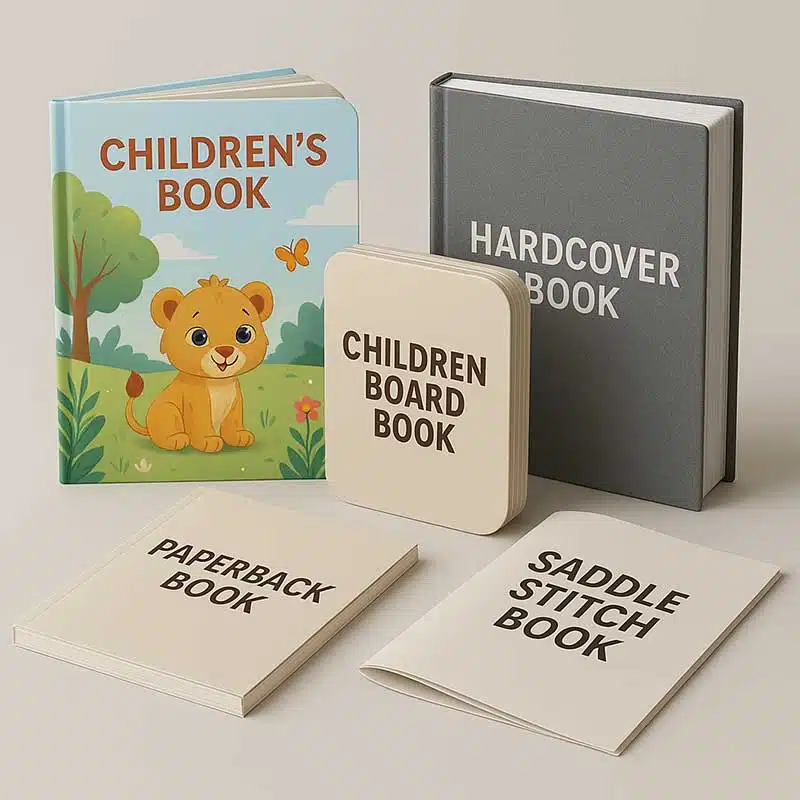
The board book production process turns approved artwork into a sturdy, assembled book made from printed paper mounted to rigid board. Unlike a standard paperback, a board book requires coordinated steps for page thickness, folding or assembly, edge treatment, durability and packing.
For a typical custom project, the sequence is:
- Review specifications and print-ready artwork.
- Prepare files and confirm the production layout.
- Make and approve a proof.
- Print the paper sheets.
- Mount printed sheets to board and assemble the pages.
- Cut, round, fold or finish the book as specified.
- Inspect samples and production output.
- Pack the books for shipment and arrange delivery.
Exact methods depend on the trim size, page count, board thickness, corner style, finish, quantity and destination country. These variables should be confirmed before quotation because they affect material use, production handling, packing volume and freight.
Step 1: Artwork review and prepress preparation
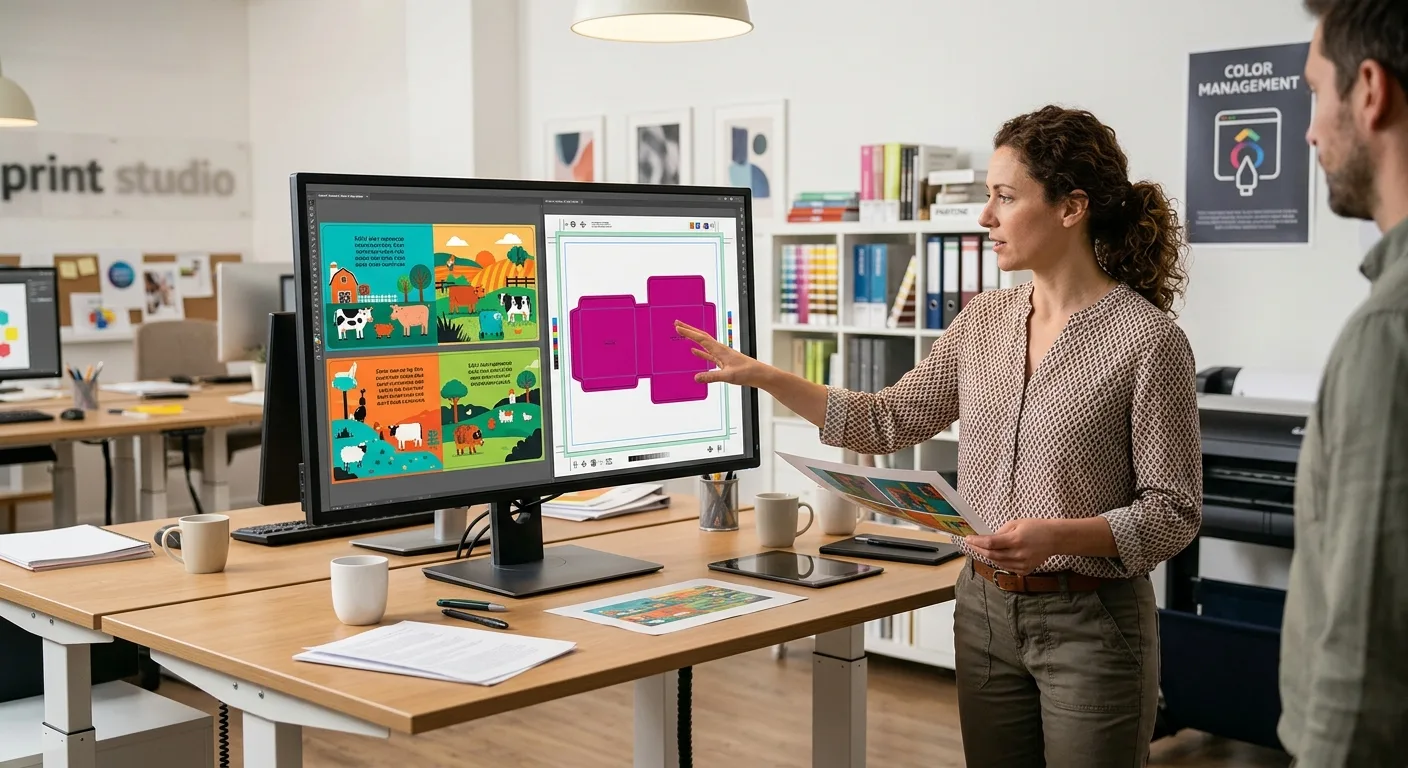
Production begins when the printer reviews the buyer’s specifications and artwork. The purpose is to identify technical issues before paper, board and printing time are committed.
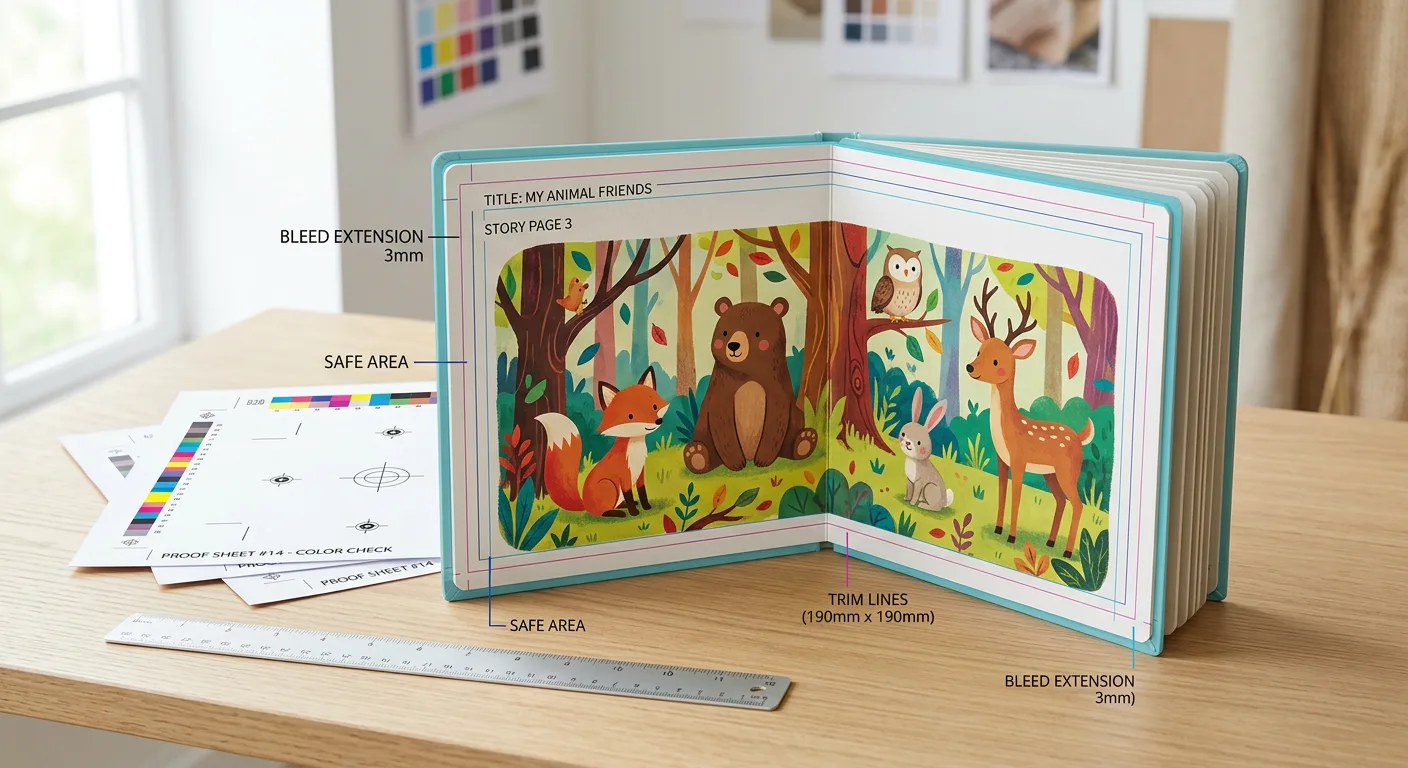
For board books, the review should confirm the final trim size, number of pages or spreads, reading direction, cover construction, board thickness, corner treatment and any special features. The file is also checked for bleed, safe areas, image resolution, colour mode, font handling and the correct page sequence.
Artwork for a board book is commonly supplied as press-ready PDF files, but the required setup may vary by construction. A printer may need separate files for the cover, interior pages, end components or die-cut elements. It is important to distinguish the visible page size from the full printed sheet size, which includes bleed and any wrap or folding allowance.
Buyers should also identify elements that need careful registration, such as borders, repeated patterns, small type, foil or spot effects. A small shift can be more noticeable on a simple children’s illustration than on a complex photographic page. For detailed guidance, review this hardcover cover file preparation guide, while confirming the final template with the production team.
Step 2: Proofing and artwork approval
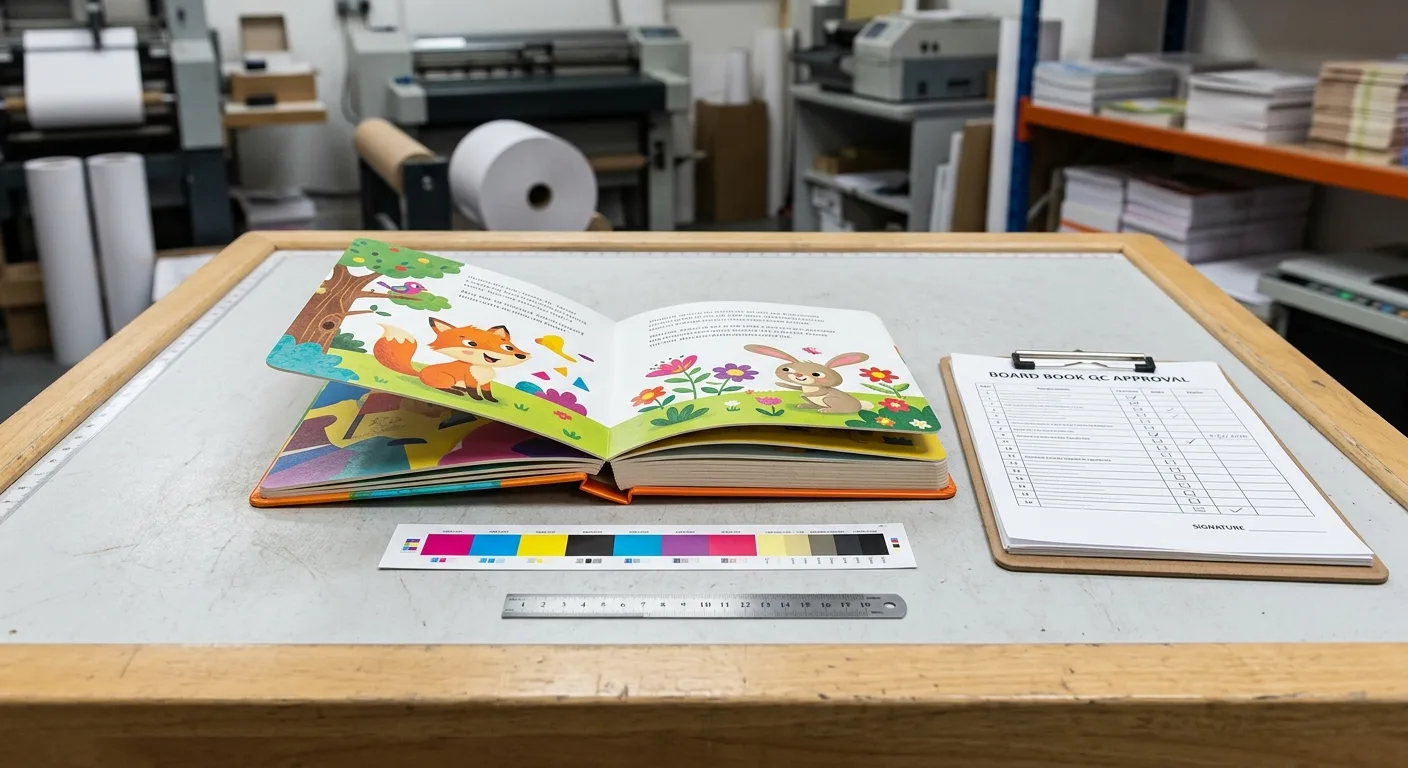
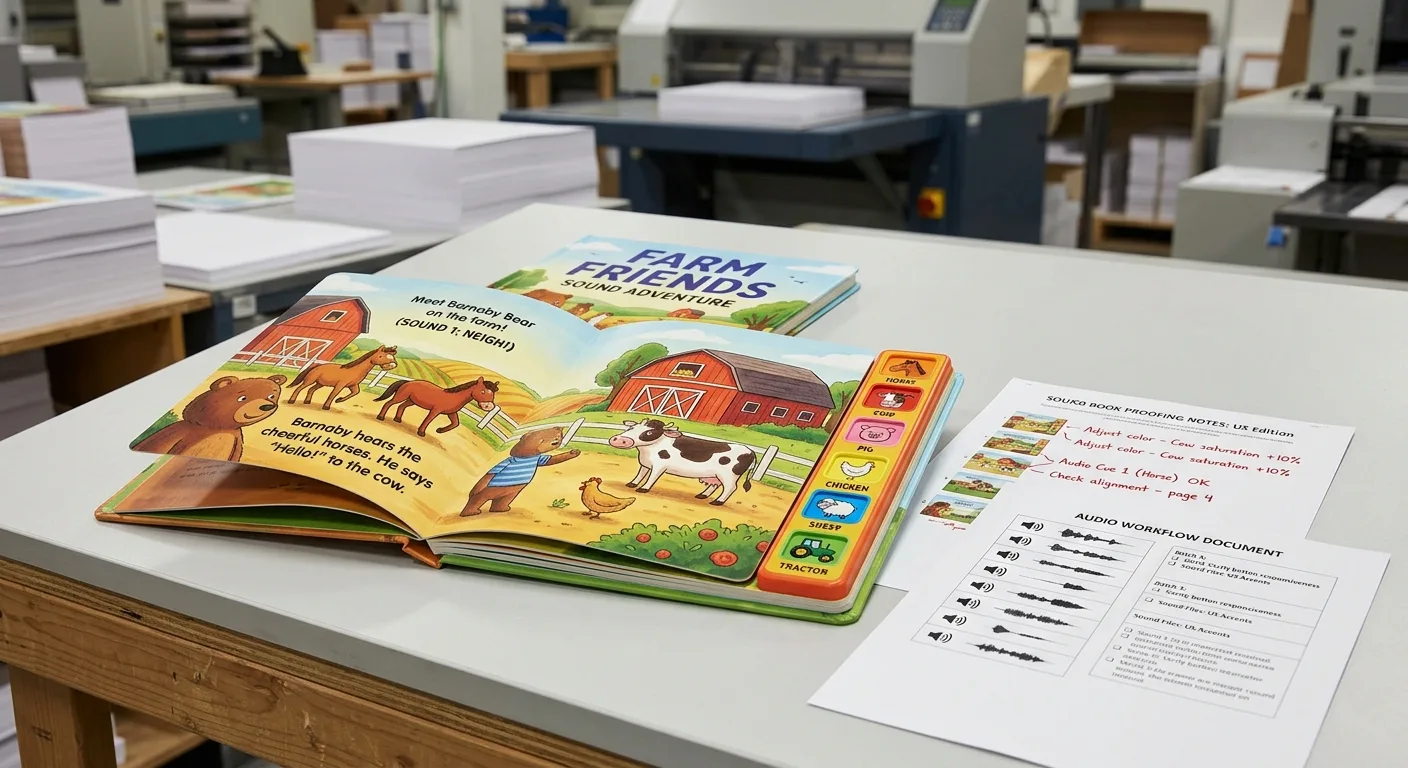
After prepress preparation, the printer provides a proof or approval sample according to the project plan. Proofing gives the buyer an opportunity to check the appearance, content and construction before mass production.
A digital proof is useful for reviewing text, page order, image placement, bleed and general layout. It does not always reproduce the final colour, paper surface, board stiffness or assembled feel. A physical proof or production sample is more useful when the project depends on colour matching, page thickness, rounded corners, lamination or a particular opening behaviour.
The approval stage should cover:
- Spelling, punctuation, translations and page order.
- Trim position, bleed and safe margins.
- Colour appearance and image detail.
- Cover-to-page alignment.
- Board thickness, corner treatment and surface finish.
- Any inserts, die cuts or interactive components included in the specification.
Once the buyer approves the proof, later changes can require file revision, a new proof or additional production time. A written approval record helps both parties work from the same version.
Step 3: Printing and material preparation
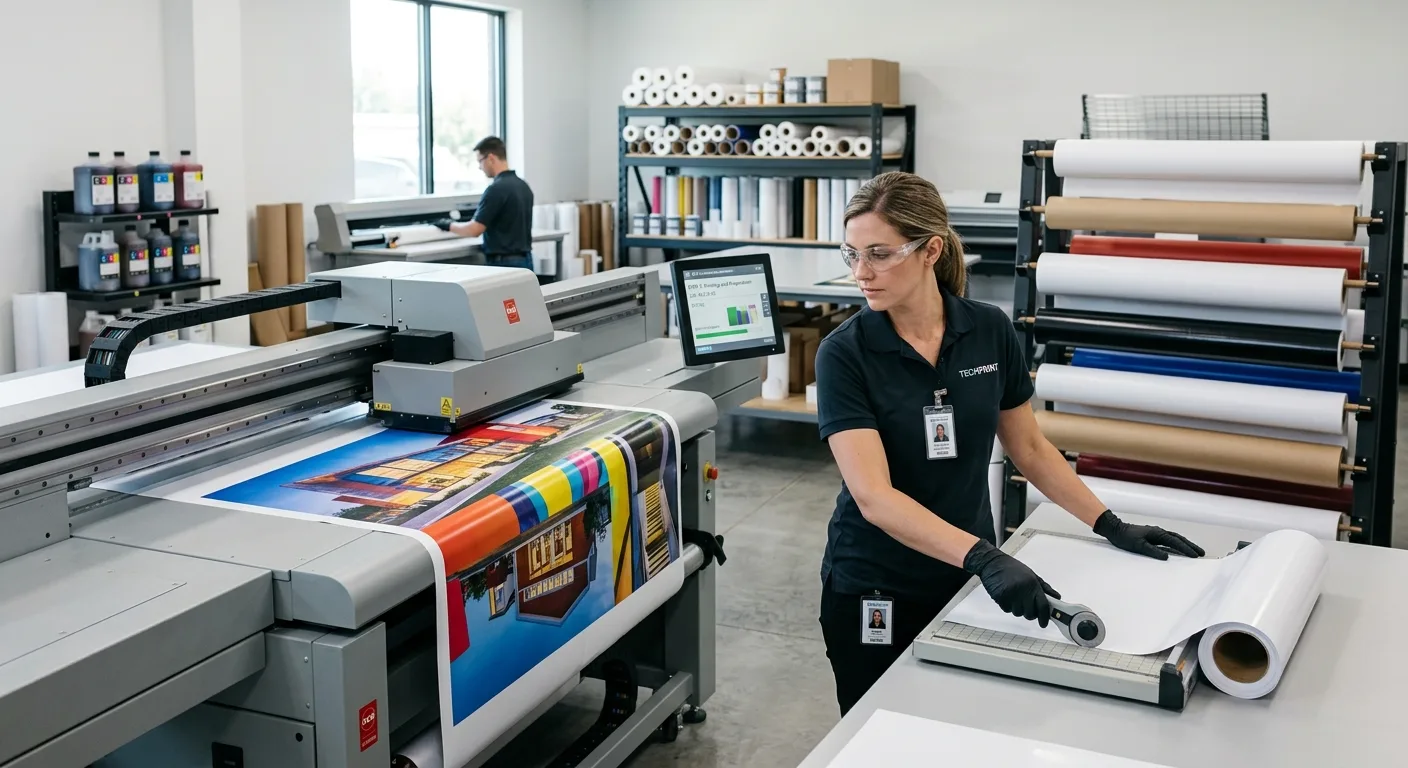
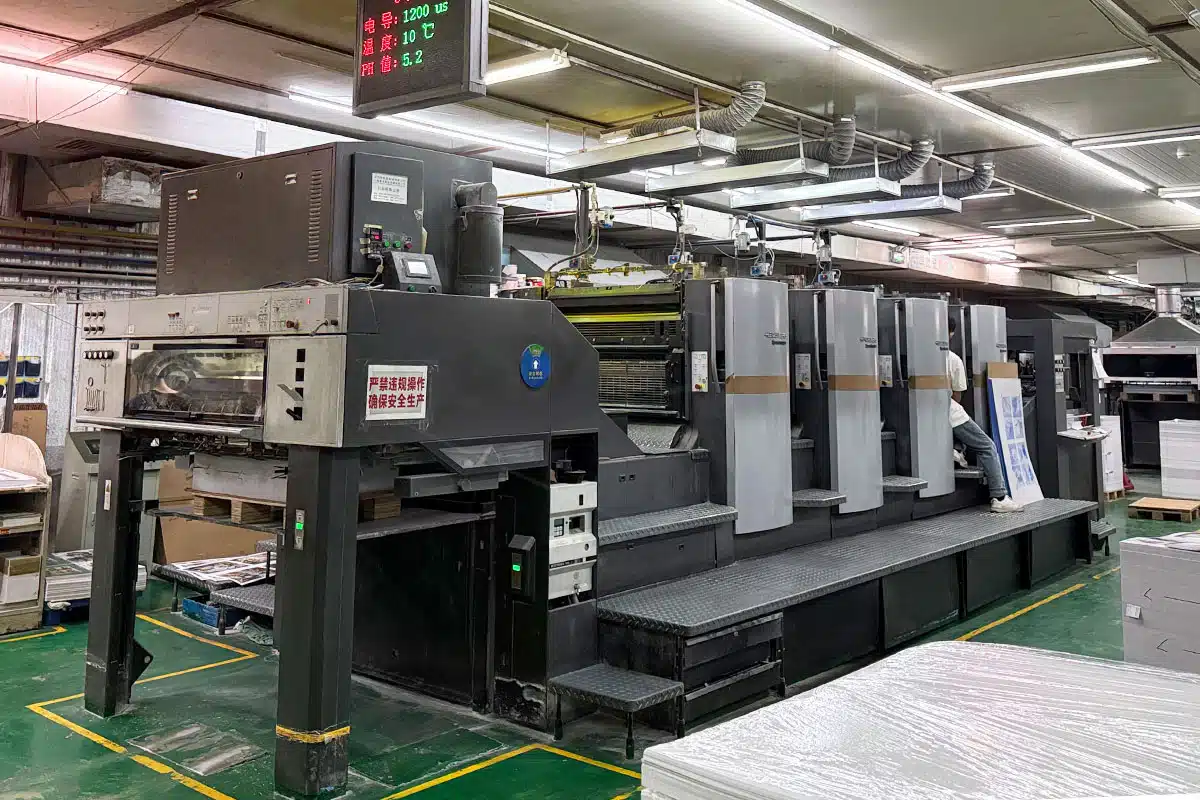
Once artwork is approved, the paper components are printed using the method selected for the quantity, colour requirements and project schedule. Printing may involve process colour, spot colours or other agreed specifications. The paper stock and surface influence ink appearance, drying, coating and the final feel of the book.
At this stage, the rigid board and other materials are also prepared. The board thickness must suit the intended construction and page count. If the book includes a printed cover sheet, the cover artwork may be printed separately from the interior sheets. Materials should be checked for shade, surface consistency and visible damage before assembly.
Colour expectations should be agreed in advance. The appearance of a printed page can change with paper whiteness, coating, ink coverage, lamination and viewing light. Pantone references, approved samples or other colour instructions may be useful where brand consistency matters, but the agreed proof remains the practical reference for production approval.
For buyers comparing book construction options, this guide to case binding versus perfect binding explains why binding decisions affect durability and production requirements. Board books use a different rigid-page construction, but the principle is similar: the binding and material choice should be made before final artwork setup.
Step 4: Mounting printed sheets to board
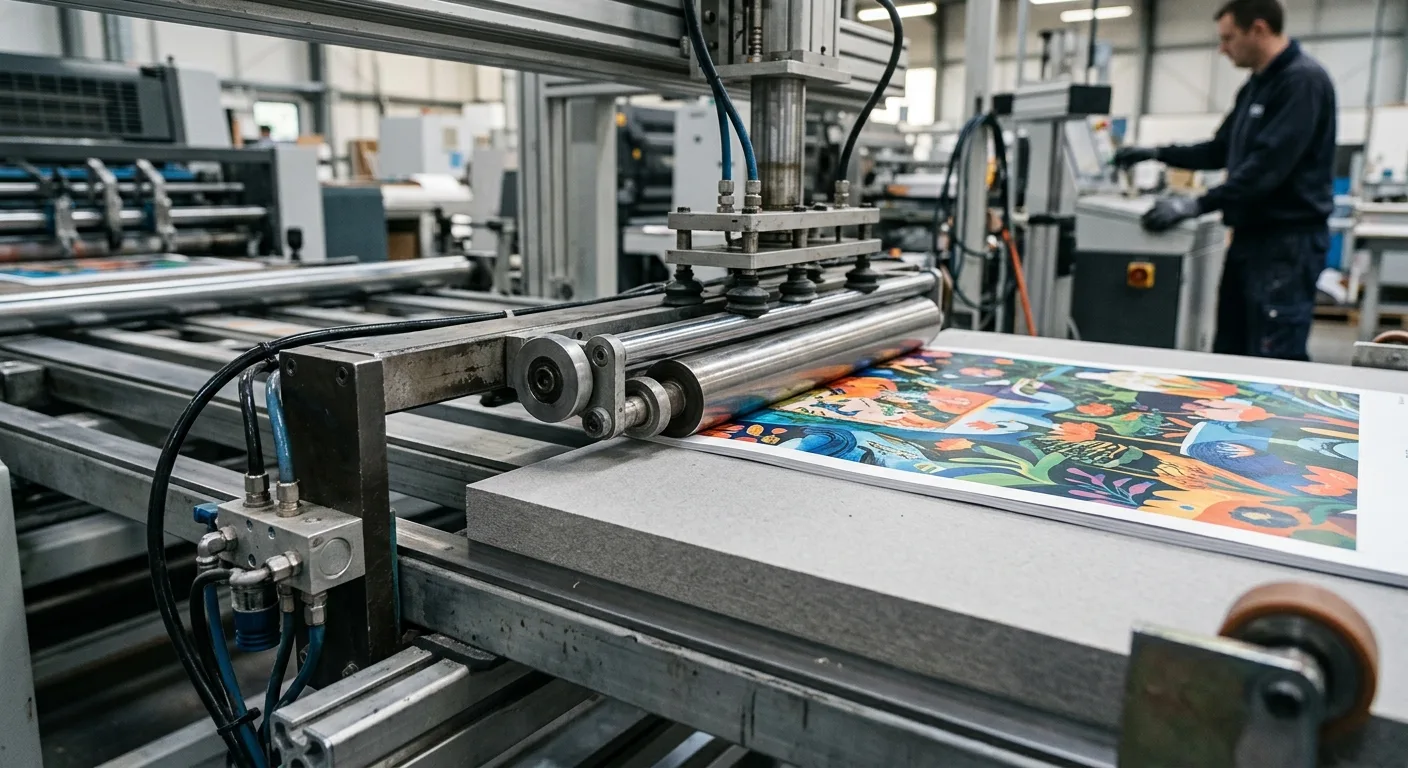
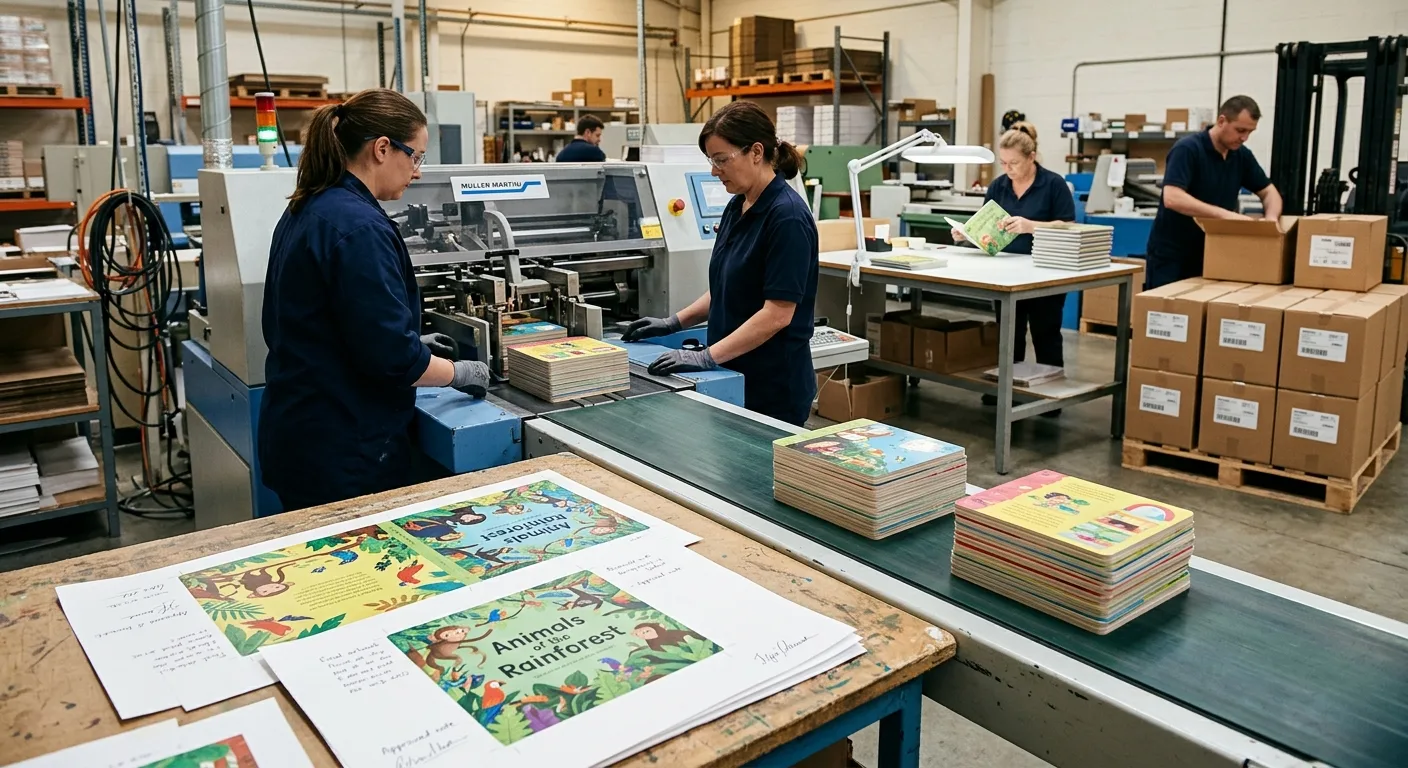
Mounting is one of the defining board book manufacturing steps. Printed paper is laminated, glued or otherwise mounted to rigid board according to the approved construction. The goal is to create firm, clean pages while maintaining accurate alignment between the printed image and the finished trim.
The production team must manage adhesive application, pressure, drying or setting time and sheet positioning. Excess adhesive can affect edges or create visible marks, while insufficient or uneven adhesion can cause lifting. Printed sheets also need to be handled carefully so that scuffing, creasing and contamination are limited.
Page assembly may involve folding, gathering, joining or stacking depending on the book’s design. The order of pages is checked during assembly because a board book can be difficult to correct after multiple rigid pages have been joined. If the design includes flaps, windows or other added parts, each component requires a defined position and inspection point.
Step 5: Cutting, rounding and finishing
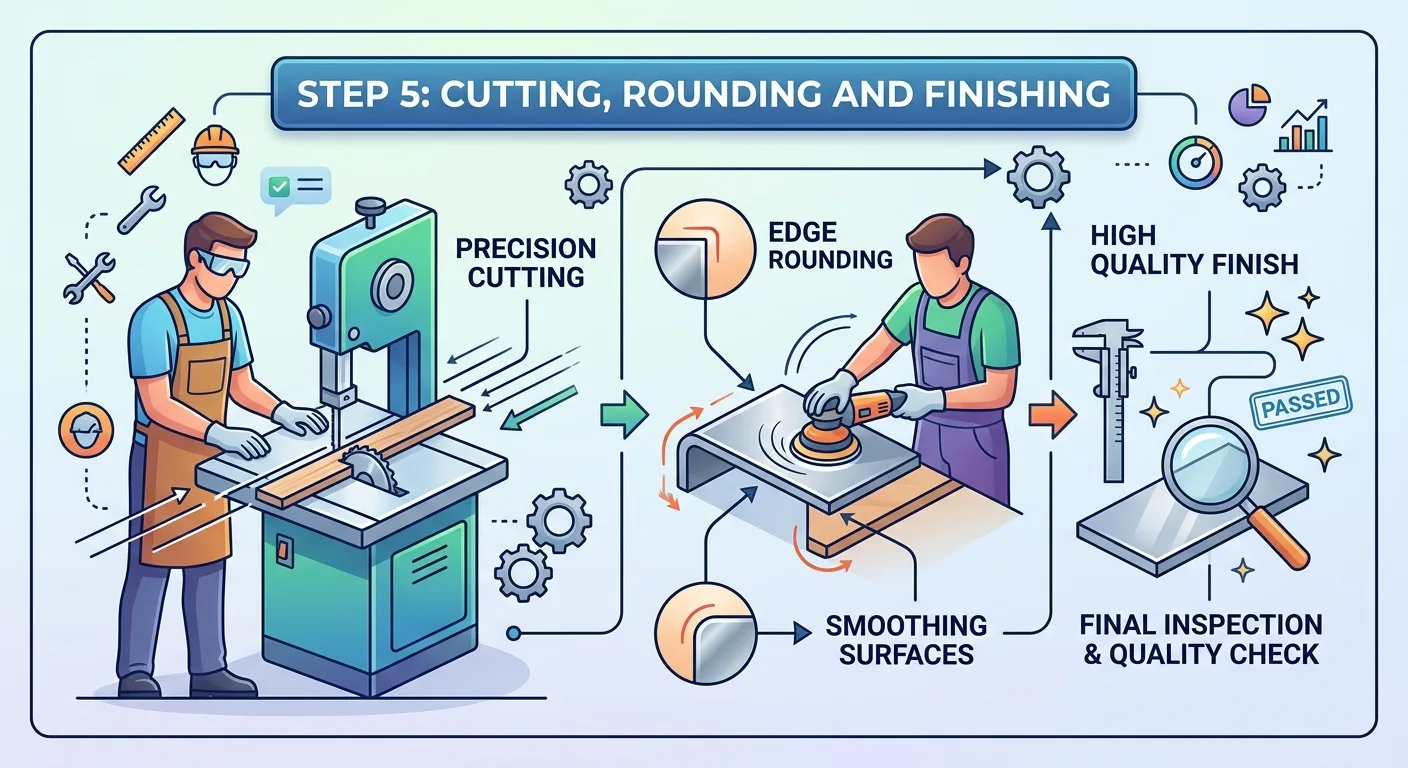
After mounting and setting, the assembled pages are trimmed to the required size. Depending on the specification, the book may receive rounded corners, edge treatment, lamination or other finishing. These operations influence both the visual result and how the book feels in the hand.
Rounded corners are often selected for children’s products because they remove sharp square corners, but the radius must be confirmed during specification. The trim must remain consistent across the run, and the printed image should not be cut into an important character, letter or other design element.
Finishing can include a protective film or coating on printed surfaces. Lamination may change colour perception, gloss level and tactile feel, so it should be assessed during proofing where appearance is important. Decorative cover treatments should be selected with the board construction and intended use in mind. The guide to lamination, foil, embossing and spot UV can help buyers compare common cover finish effects.
Step 6: Quality inspection and approval
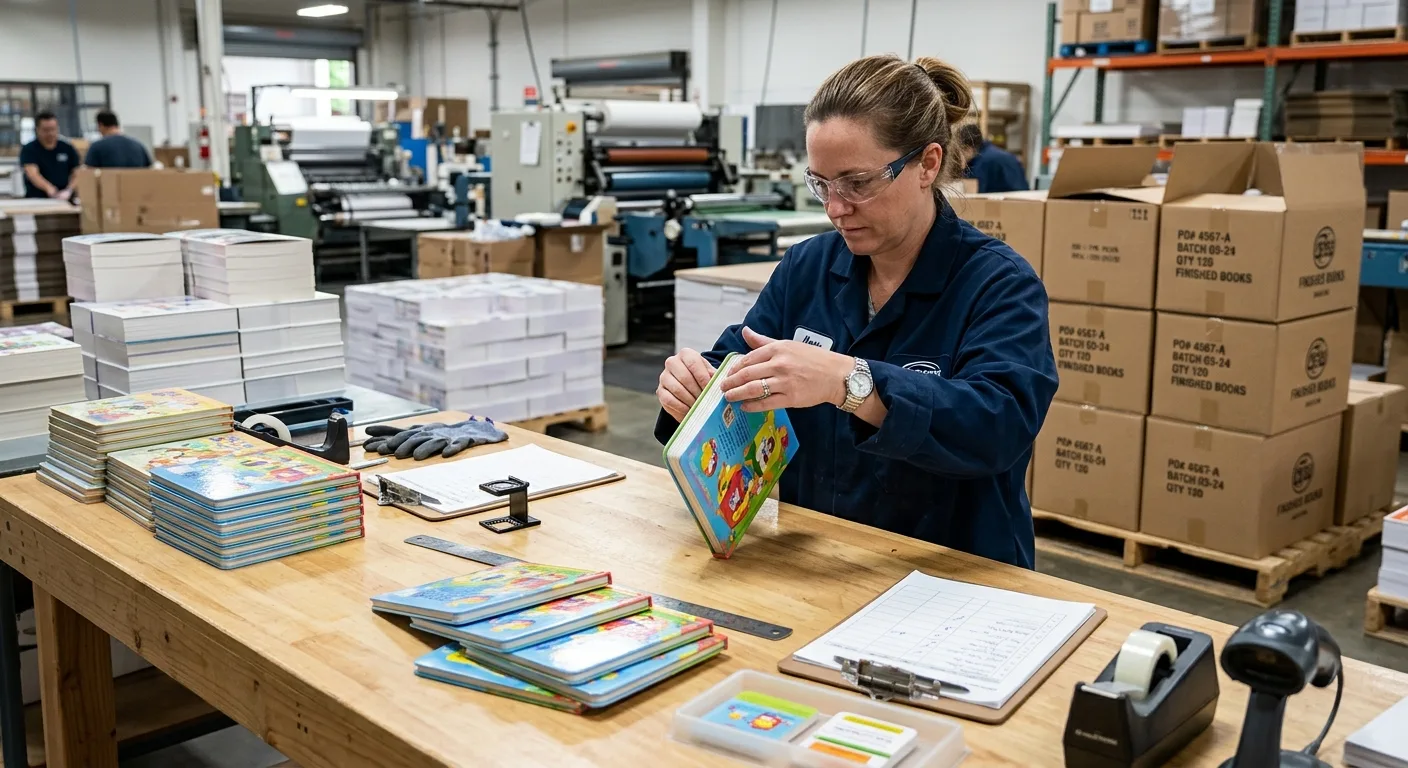
Quality inspection checks whether the finished books match the approved specifications. Inspection can take place during production and after assembly, with the exact sampling or inspection method agreed for the project.
Useful checks include:
- Trim size, page count and page sequence.
- Colour consistency and print clarity.
- Alignment of artwork, cover elements and edges.
- Adhesion, delamination, bubbles and visible glue marks.
- Corner shape, edge condition and surface scratches.
- Page opening, assembly strength and overall appearance.
- Carton quantity, labels and product identification.
Buyers should provide a clear quality reference before production begins. This may include an approved proof, signed specification, colour reference or sample with notes. Tolerances should be discussed where exact millimetre-level consistency is not practical across a large production run.
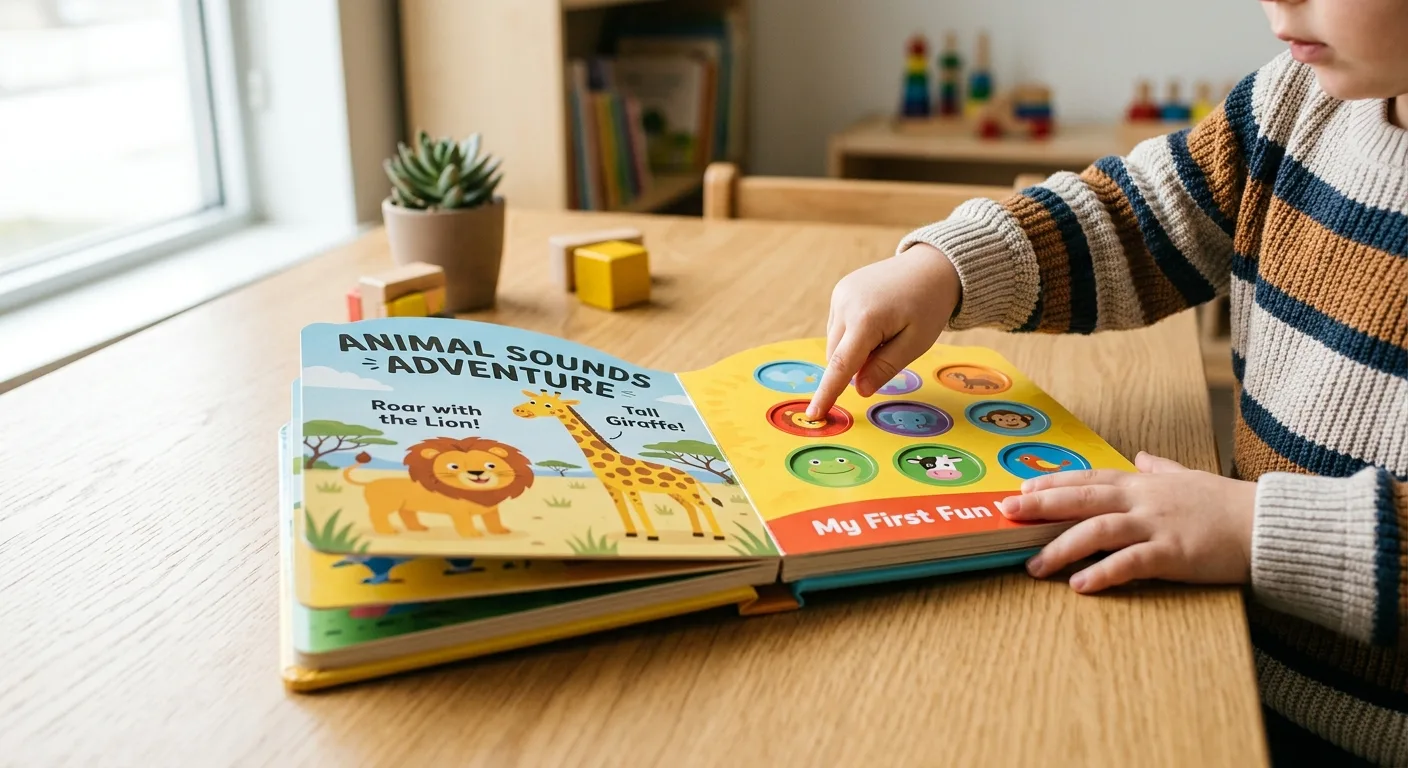
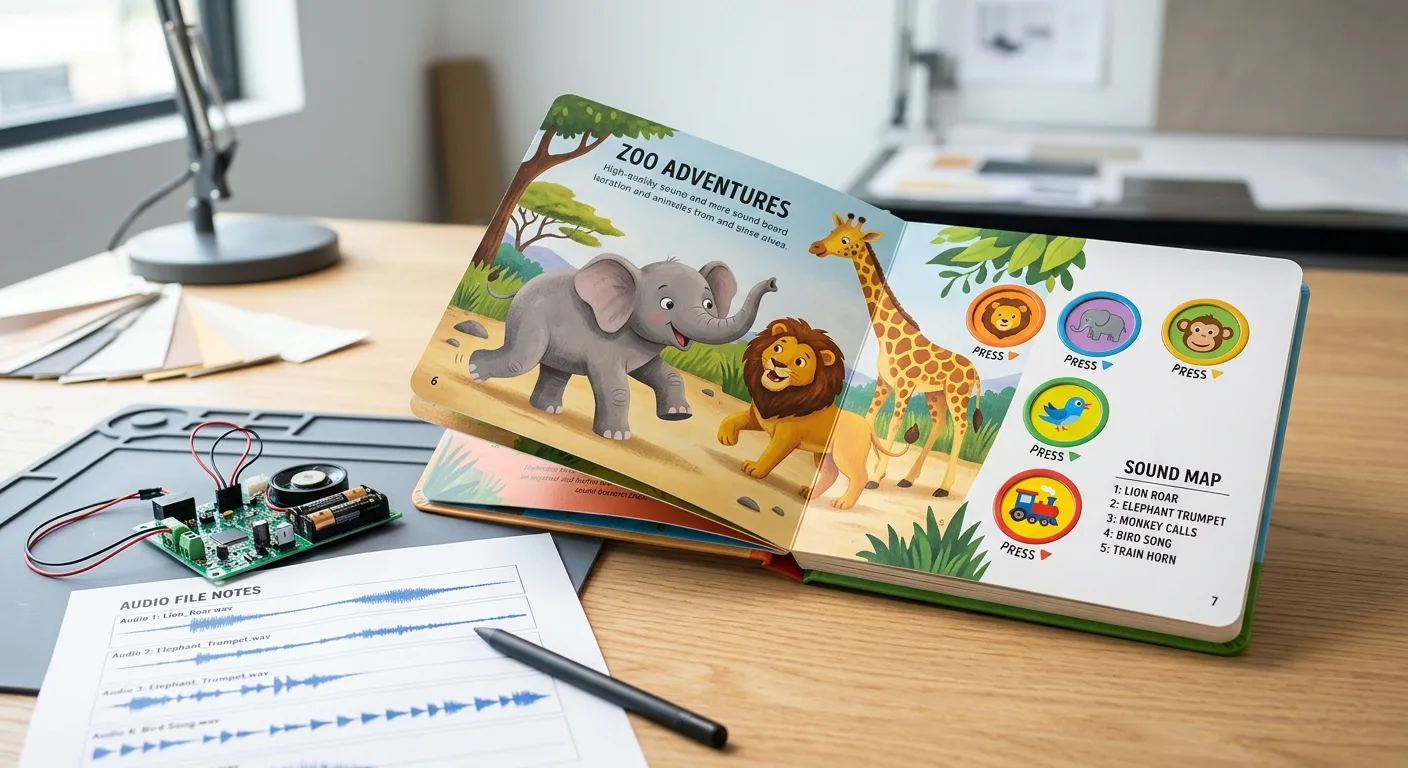
For projects with electronic or interactive features, inspection must also cover those components separately. A sound book, for example, needs a coordinated check of printed pages, buttons, audio modules, batteries and assembly; this sound book quality control checklist illustrates the additional inspection considerations.
Step 7: Packing and global delivery
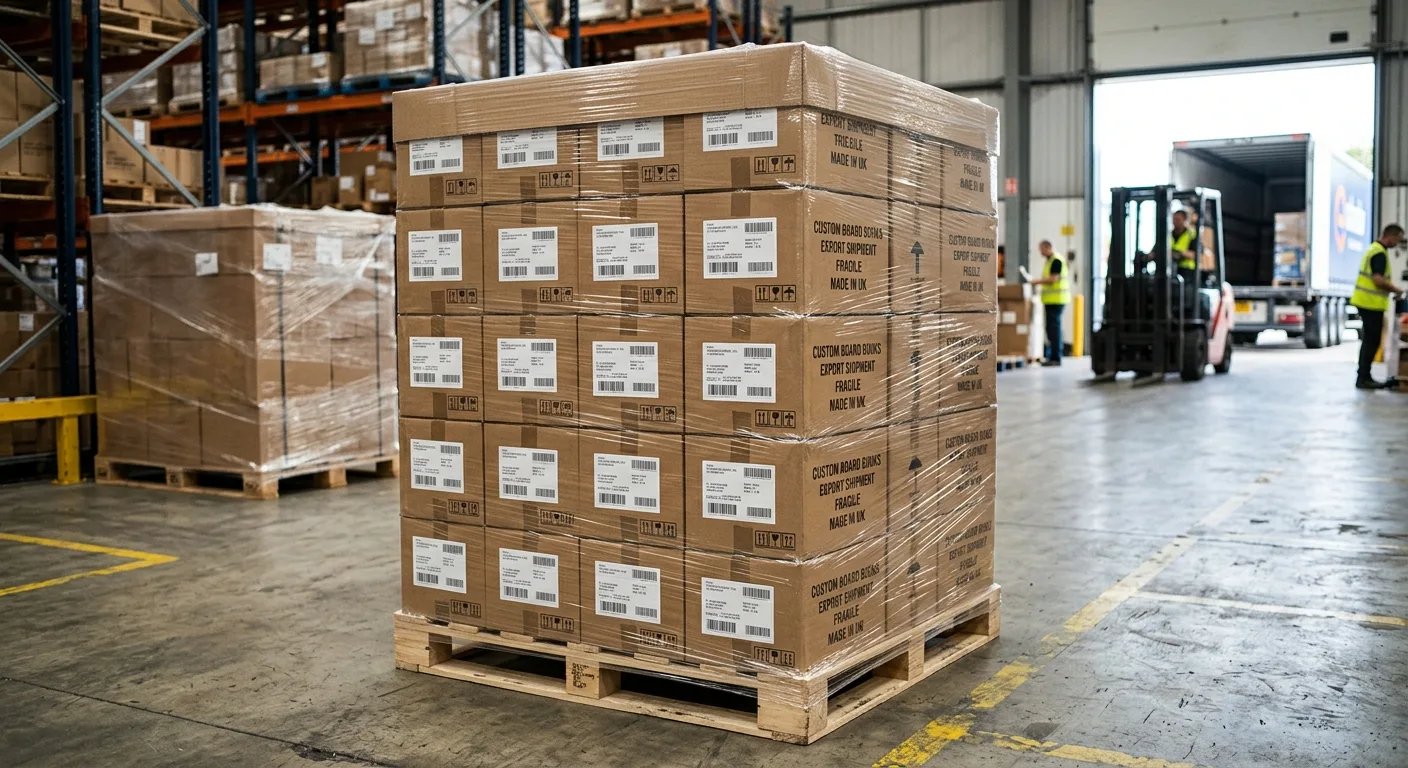
After inspection, board books are counted, packed and prepared for export. Because rigid books are heavier and more compact than many paperback products, packing design affects carton weight, pallet or container utilization, handling and freight cost.
Before shipment, the buyer and manufacturer should confirm the packing method, carton dimensions, quantities per carton, carton markings, shipping documents and destination details. Retail projects may also need barcode labels, product labels or specific pallet instructions. The destination country can affect documentation, customs arrangements, taxes and the choice of transport service.
Global delivery planning should begin before production is complete. The quotation should state the delivery basis and clarify whether freight, customs clearance, duties and local delivery are included or arranged separately. Transit time is influenced by the destination, carrier, route, shipping method and seasonal conditions, so it should be treated separately from manufacturing time.
Buyers seeking packaging ideas for products with additional components can review this article on retail cartons, labels and shipping protection. Board book packaging requirements will differ, but the planning principles remain useful.
Buyer checklist for a smoother production schedule
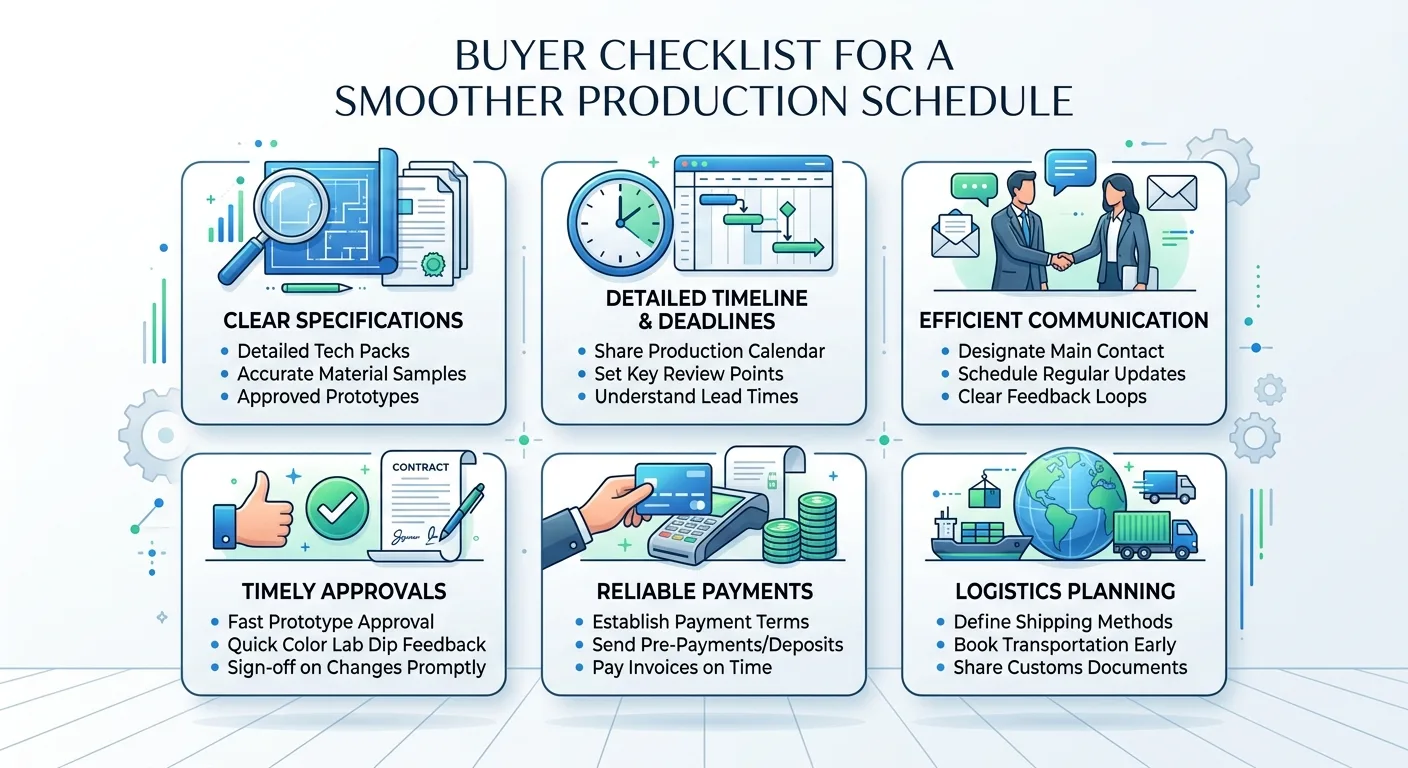
Clear information at the quotation stage reduces revisions and makes the custom board book printing process easier to coordinate. Prepare the following details:
- Product format: trim size, portrait or landscape orientation and reading direction.
- Content: page count, spread structure, cover design and any added components.
- Materials: paper preference, board thickness, surface treatment and corner style.
- Printing: colour requirements, special inks or decorative finishes.
- Quantity: target order volume and whether multiple versions or languages are needed.
- Files: artwork status, file format, fonts, linked images and whether a printer template is required.
- Quality: proof preference, colour reference and acceptance criteria.
- Logistics: destination country, delivery address, preferred shipping method and packaging or labelling needs.
Price and lead time are not determined by page count alone. Board thickness, assembly complexity, proof type, quantity, finishing, packing and destination all affect the final quotation and schedule. Confirming these assumptions early gives the manufacturer a more useful basis for planning.
Conclusion: plan each production handoff clearly
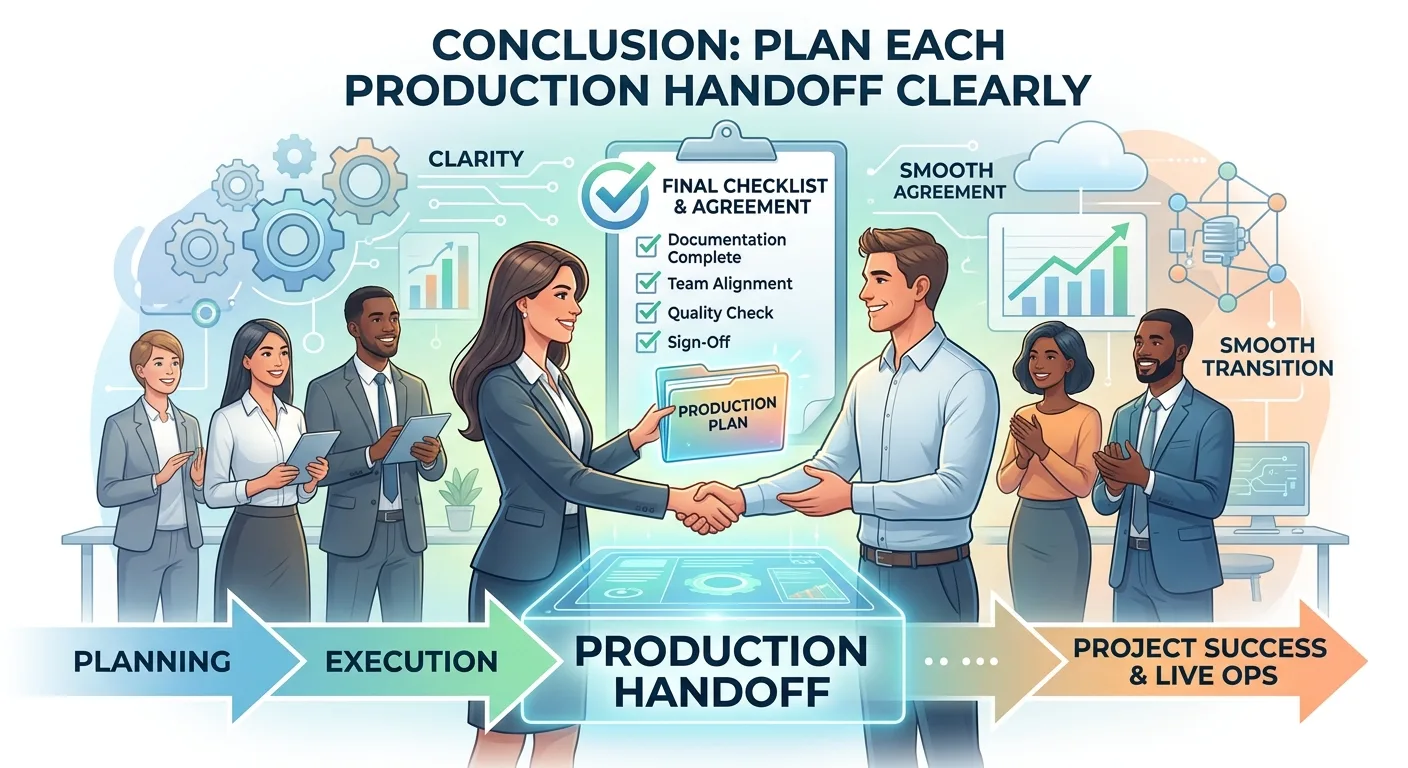
Understanding how board books are manufactured helps buyers manage artwork, approvals, materials and delivery with fewer surprises. The most important handoffs are the approved file, confirmed physical specification, signed proof, production inspection reference and agreed shipping plan.
For factory-direct board book projects, Guangzhou YBJ Printing Co., Ltd can discuss the required format, materials, finishing and delivery arrangements for your market. Request a quotation with the key project details so the production team can review the correct assumptions.
Discuss your custom board book project
Request a project review and quotation from YBJ Printing. To prepare an accurate estimate, please share the product type, trim size, page count, quantity, paper or binding preference, finish, file status and destination country.