
Table des matières
- What Materials Are Used in Board Book Printing?
- Choosing the Printed Paper Surface
- Understanding the Board Core
- Selecting a Board Book Coating
- Board Book Material Selection Checklist
- What Affects Material Cost and Production?
- Conclusion
The right board book printing materials affect durability, colour reproduction, safety considerations, handling, and production cost. This guide explains how to select the printed paper surface, board core, and coating for a custom board book project.
What Materials Are Used in Board Book Printing?
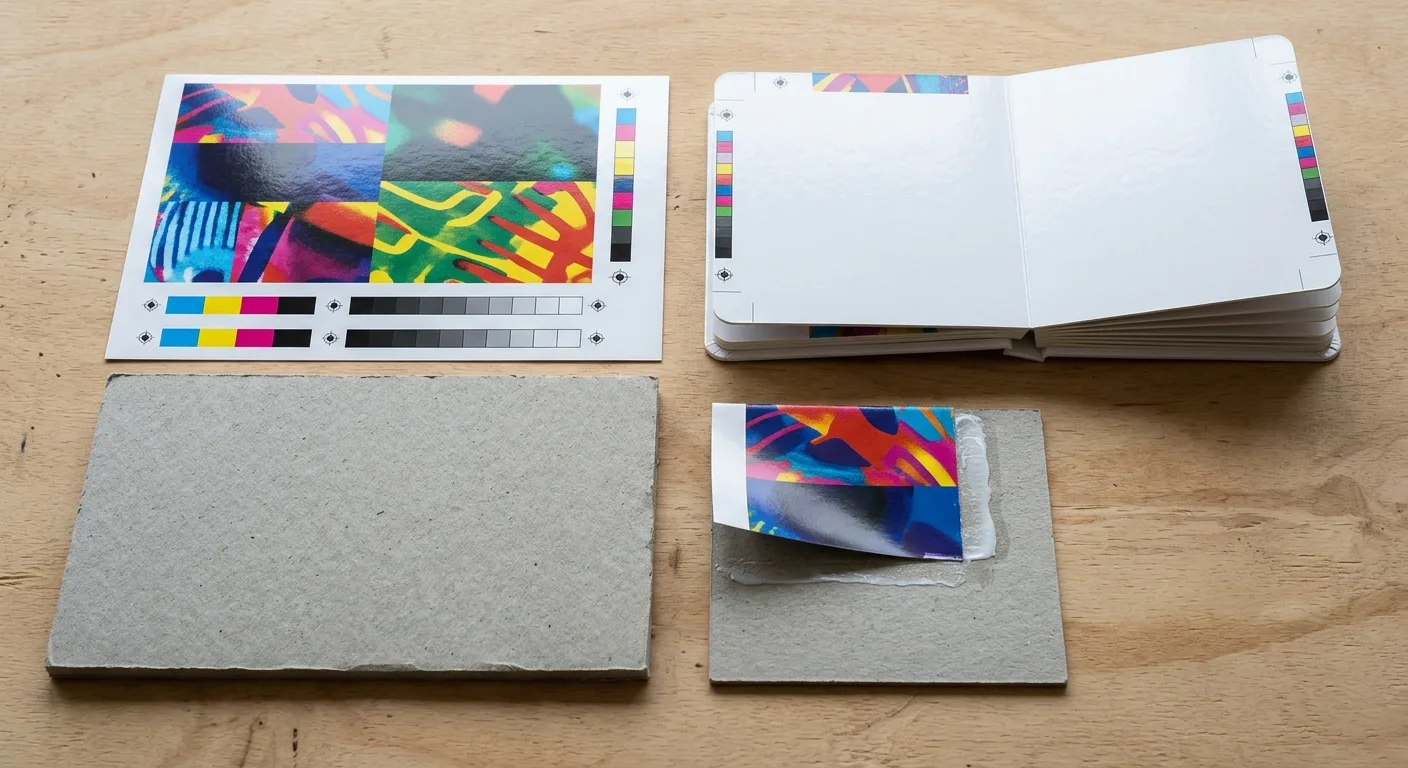
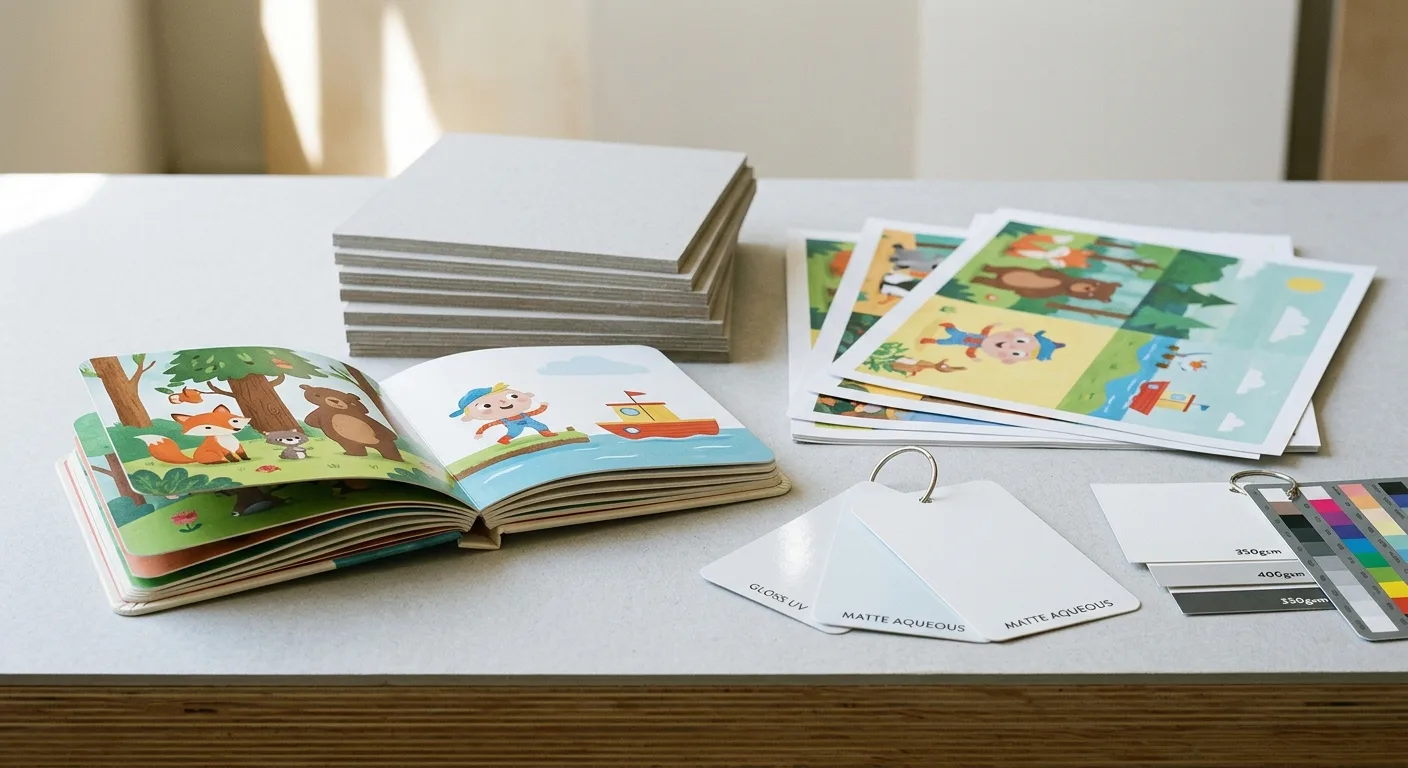
Board book printing materials normally include a printed paper surface, a rigid paperboard core, adhesive or wrapped construction layers, and a protective coating or finish. Together, these materials determine how the book looks, feels, handles, and withstands repeated use.
For most children’s board books, the key decision is not simply choosing the thickest material. The better approach is to match the paper surface, board thickness, coating, page size, corners, and construction to the intended age group, artwork, handling conditions, quantity, and budget.
Material choices also affect production details such as folding, creasing, trimming, die-cutting, colour consistency, packing, and shipping weight. A material specification that works for a small picture book may not be suitable for a large-format board book or an interactive design.
Before requesting a quotation, define the trim size, finished page thickness, page count, colour requirements, intended use, and destination country. These assumptions can change both the recommended specification and the final production cost.
Choosing the Printed Paper Surface
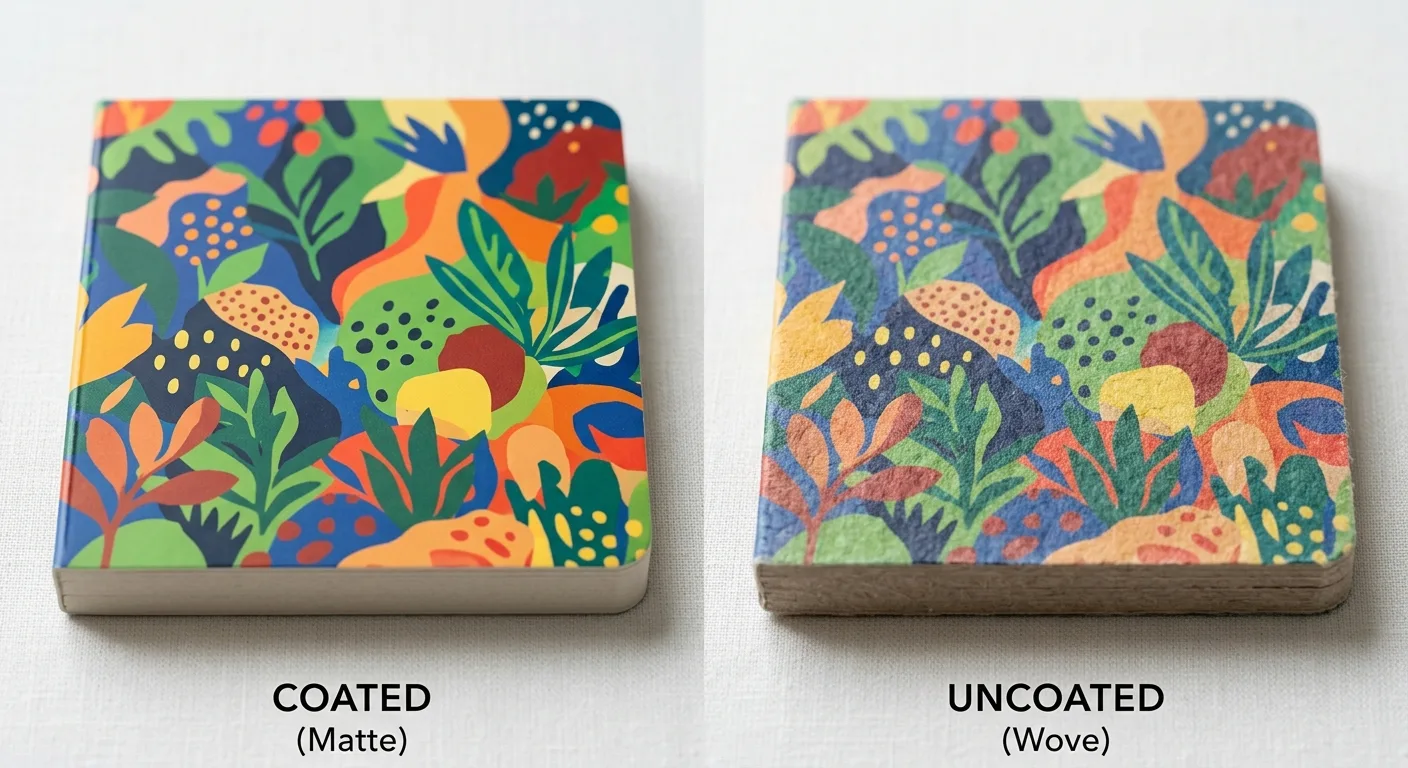
Board book paper is the visible printed layer that carries the cover and page artwork. It is usually selected for printability, surface appearance, folding or wrapping performance, and compatibility with the chosen coating. Because the paper is bonded to a rigid core, it should be assessed as part of the complete structure rather than as an independent sheet.
Coated paper for colourful artwork
A coated paper surface is commonly considered when the design contains illustrations, photographs, gradients, or large solid colour areas. Its smoother surface can support clean detail and a more even visual appearance. Gloss, silk, or matte appearances may be available depending on the requested specification and finishing plan.
Uncoated paper for a softer tactile effect
Uncoated paper can create a more natural, subdued, or tactile appearance. It may suit minimalist artwork, activity-led concepts, or brands that prefer a less reflective surface. However, the final colour and surface resistance should be checked with a proof because uncoated stocks can reproduce images differently from coated stocks.
Paper weight is not the same as finished board thickness
Paper grammage describes the weight of the paper surface, while the board core determines much of the finished rigidity and thickness. Increasing the paper weight alone does not necessarily create a stronger board book. Ask the printer to confirm the complete material structure and finished caliper.
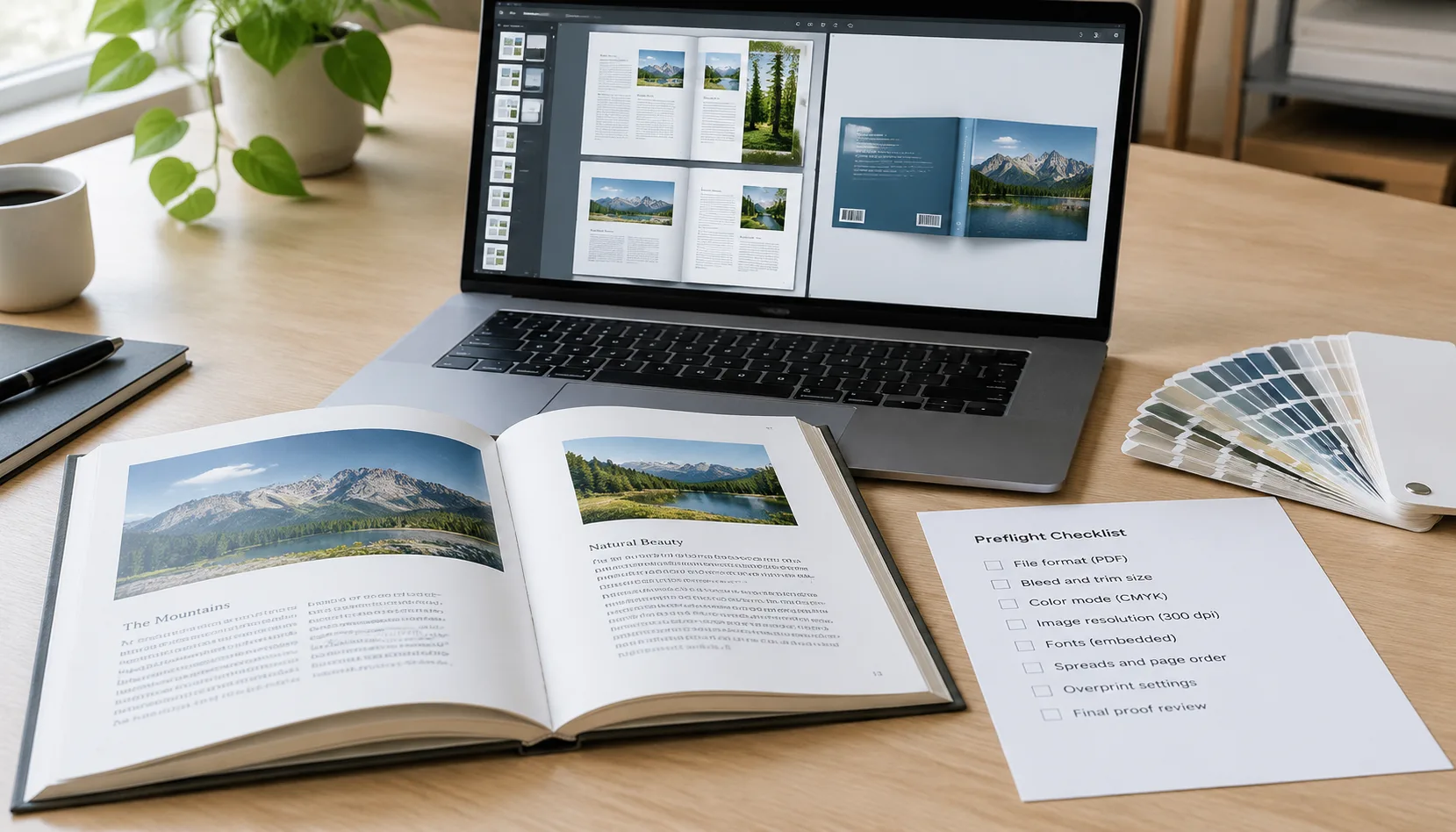
For designs with full-bleed artwork, strong contrast, or fine type, request guidance on ink coverage, trapping, bleed, and proofing. You can also review the book printing file requirements checklist before submitting artwork.
Understanding the Board Core
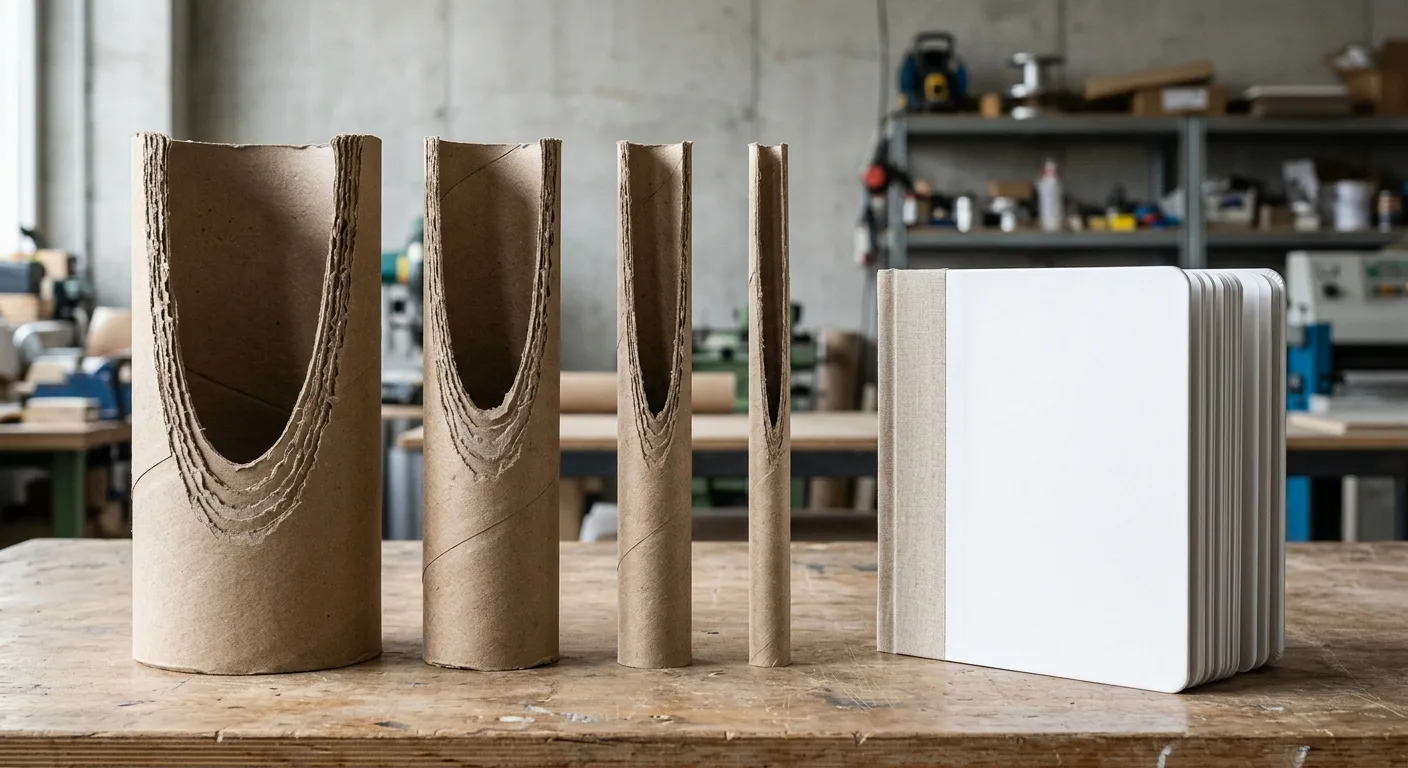
The board core provides the rigid structure that distinguishes a board book from a standard paper book. It influences page stiffness, edge appearance, book weight, turning feel, and resistance to bending during normal handling.
Thickness and rigidity
A thinner core may be suitable for compact formats, shorter books, or projects where lower weight is important. A thicker core may be considered for larger pages, books intended for very young readers, or designs that require a more substantial hand feel. The correct choice depends on the finished size, page count, construction method, and expected use.
Surface and edge quality
The board should provide a suitable surface for bonding and wrapping. Its cut edges should be clean and consistent, especially when the book has exposed board edges, rounded corners, or die-cut openings. For a premium appearance, buyers should ask how the paper layer is applied around the board and how corners are formed.
Weight and logistics
Board thickness adds weight. This can affect carton quantities, pallet planning, freight calculations, warehouse handling, and destination-country shipping costs. A specification that feels excellent in the hand may be inefficient for a large international order if the extra weight is not needed.
When comparing samples, assess stiffness, page-turning, corner treatment, surface bonding, and the relationship between size and weight. Do not compare only the nominal board thickness; confirm the finished sample and production specification.
Selecting a Board Book Coating
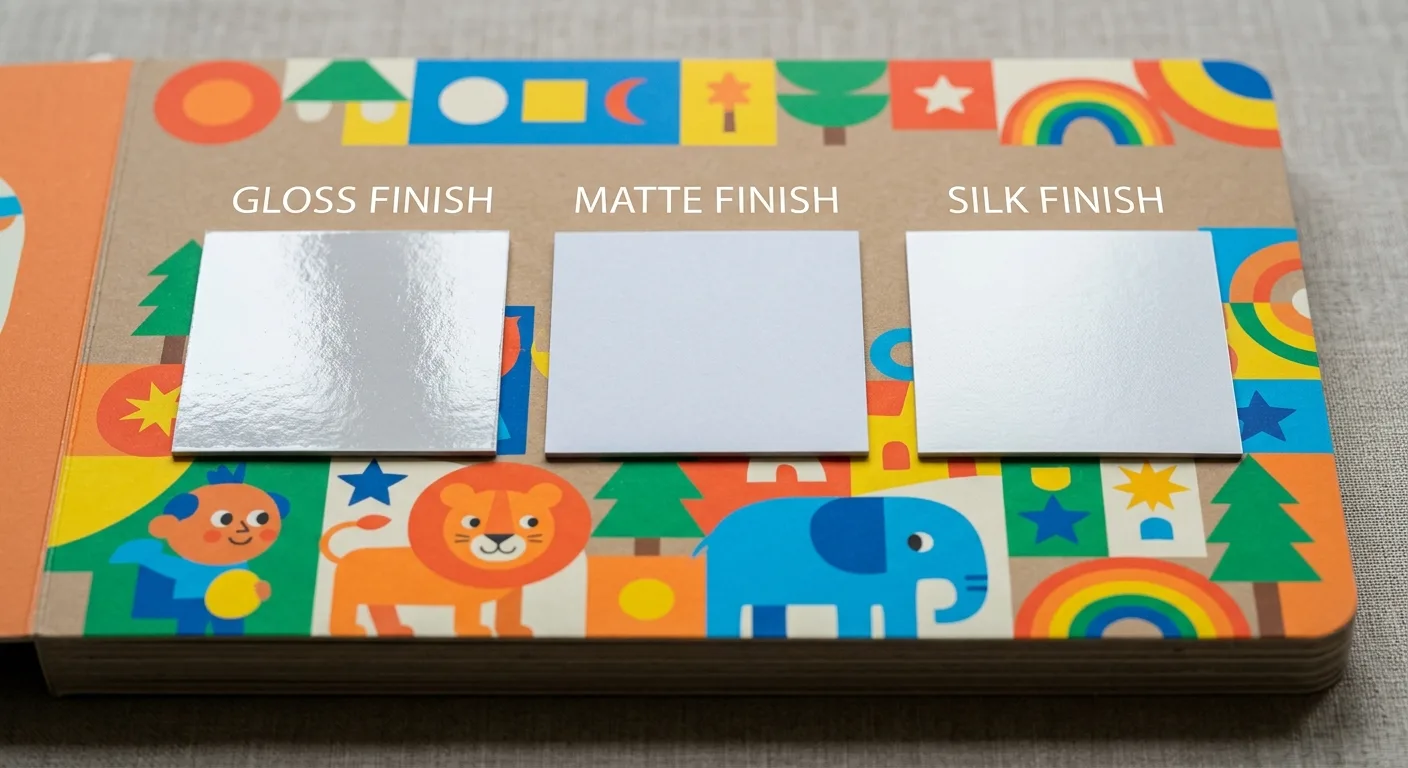
A board book coating protects the printed surface and changes its appearance and tactile response. The most suitable option depends on the artwork, expected handling, cleaning requirements, glare sensitivity, and desired retail presentation.
Gloss coating
Gloss finishes can make colours appear more vivid and create a reflective surface. They may suit bright illustrated books and covers that need visual impact. The trade-off is that reflections can make some pages harder to read under strong lighting, and fingerprints may be more visible.
Matte coating
Matte finishes reduce surface reflection and provide a softer visual effect. They can work well for calm, premium, or typography-led designs. Depending on the specific finish, heavy handling may make marks or scuffs more noticeable, so a physical sample is useful.
Silk or satin coating
Silk or satin surfaces are often considered when the buyer wants a balance between colour presentation and reduced glare. The exact appearance varies by material and supplier, so names should be confirmed against a sample or approved specification.
Specialty finishes
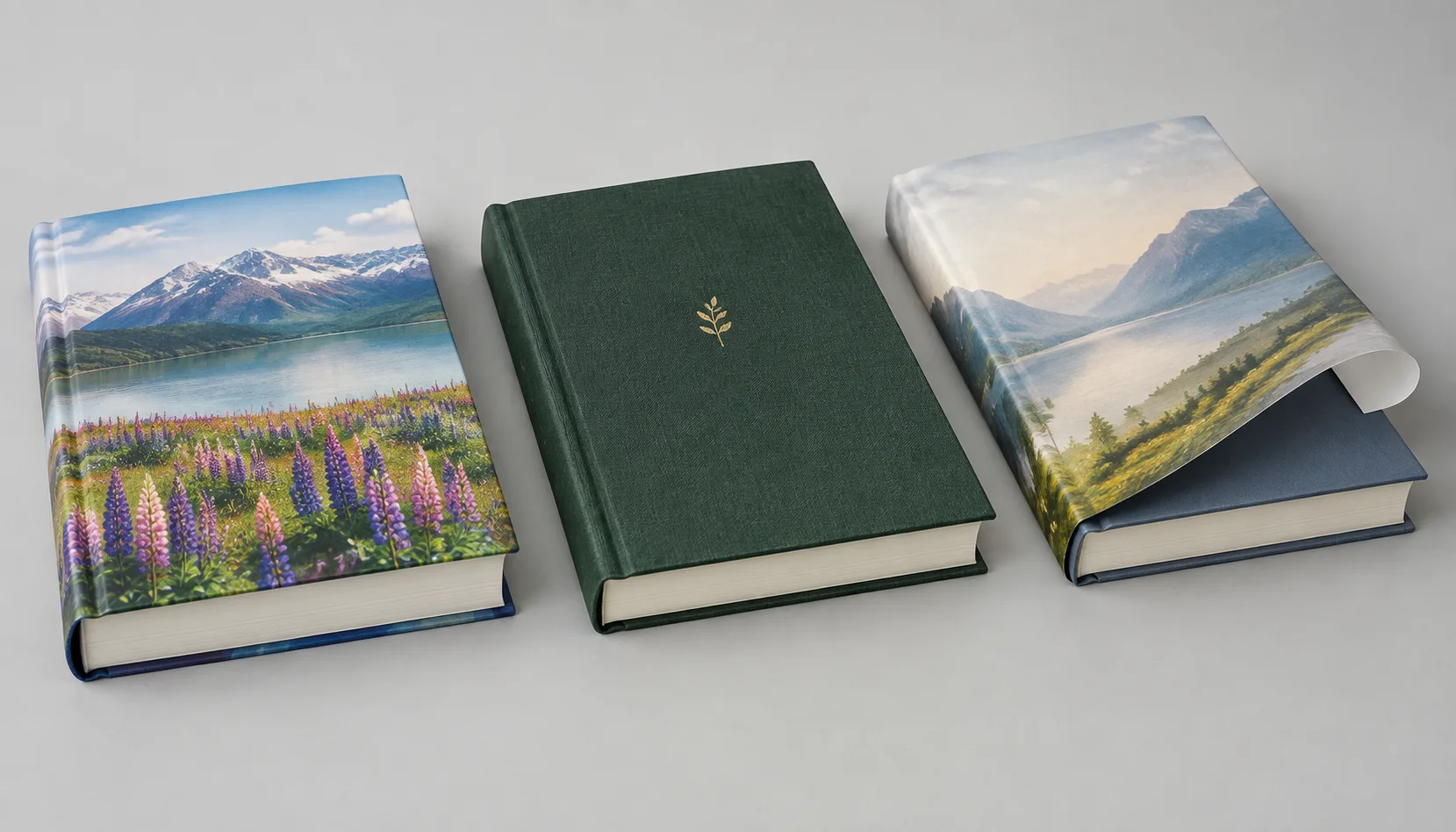
Foil stamping, embossing, debossing, and spot UV can highlight a logo, title, character, or selected illustration detail. These processes add setup and production considerations and may not be necessary for every children’s board book. The guide to hardcover book cover finishes explains how common decorative treatments affect appearance and production planning.
Coating is not a substitute for appropriate construction or responsible product design. Buyers should still confirm edge finishing, corner shape, adhesive performance, and any market-specific requirements that apply to the finished product.
Board Book Material Selection Checklist
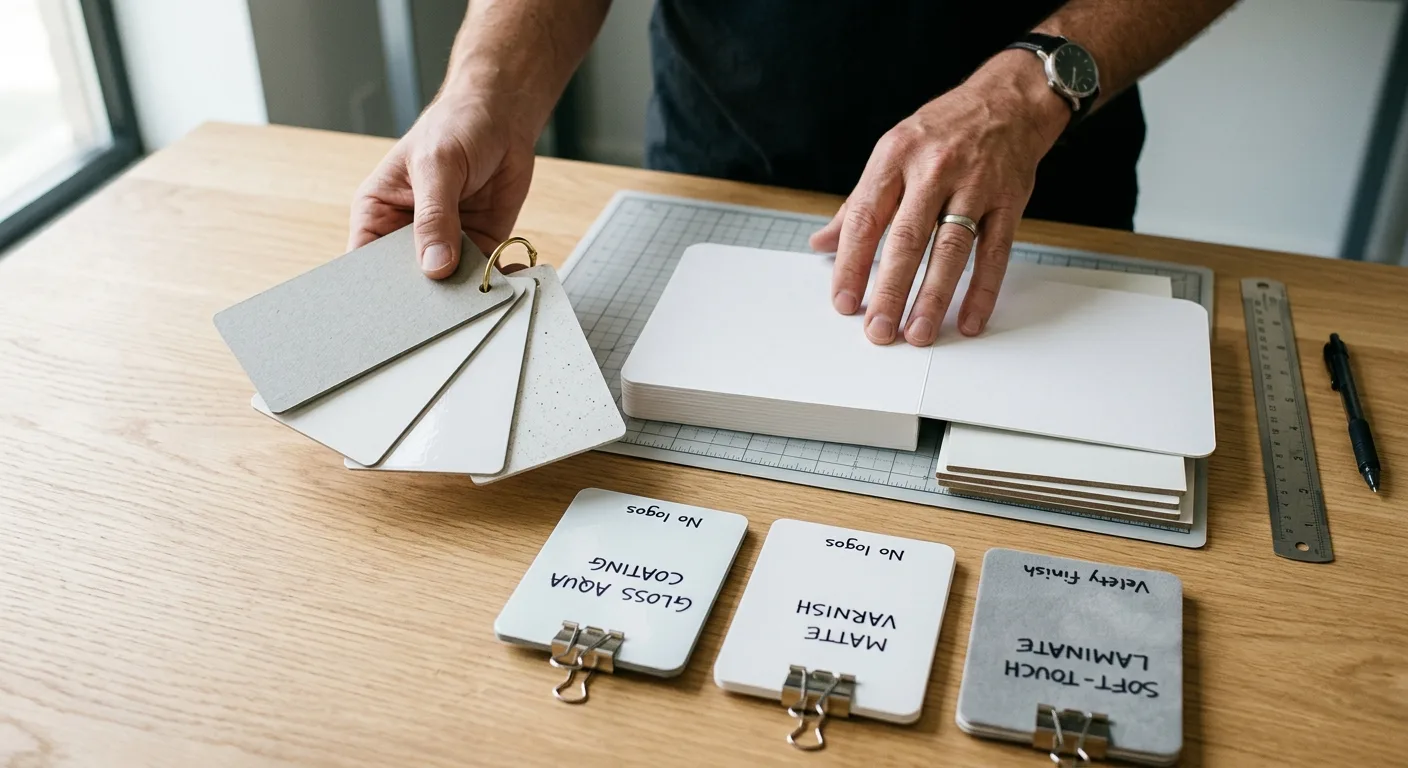
Use the following checklist when preparing a board book materials brief for a printing manufacturer:
- Format de coupe : State the closed dimensions and whether the book uses a square, portrait, landscape, or custom shape.
- Age and use case: Explain whether the book is for early learning, gifting, retail sale, promotional use, or another application.
- Finished thickness: Specify the preferred page feel or ask the printer to recommend a suitable board core.
- Œuvre d'art : Note whether the design uses photographs, flat colours, gradients, fine lines, or extensive dark coverage.
- Surface appearance: Choose a preferred gloss, matte, silk, satin, or uncoated effect, subject to sample approval.
- Handling features: Identify rounded corners, die-cut shapes, tabs, flaps, windows, or other special construction details.
- Quantity and packing: Provide the target order quantity and any carton or retail-packing requirements.
- Destination: State the country receiving the goods so shipping and packing assumptions can be reviewed.
- Épreuve : Decide whether a digital proof, physical proof, or production sample is needed before the full run.
For shaped formats, material selection should be reviewed together with the cutting layout and safe areas. The custom shaped board book printing service is relevant when the design does not use a standard rectangular format.
What Affects Material Cost and Production?
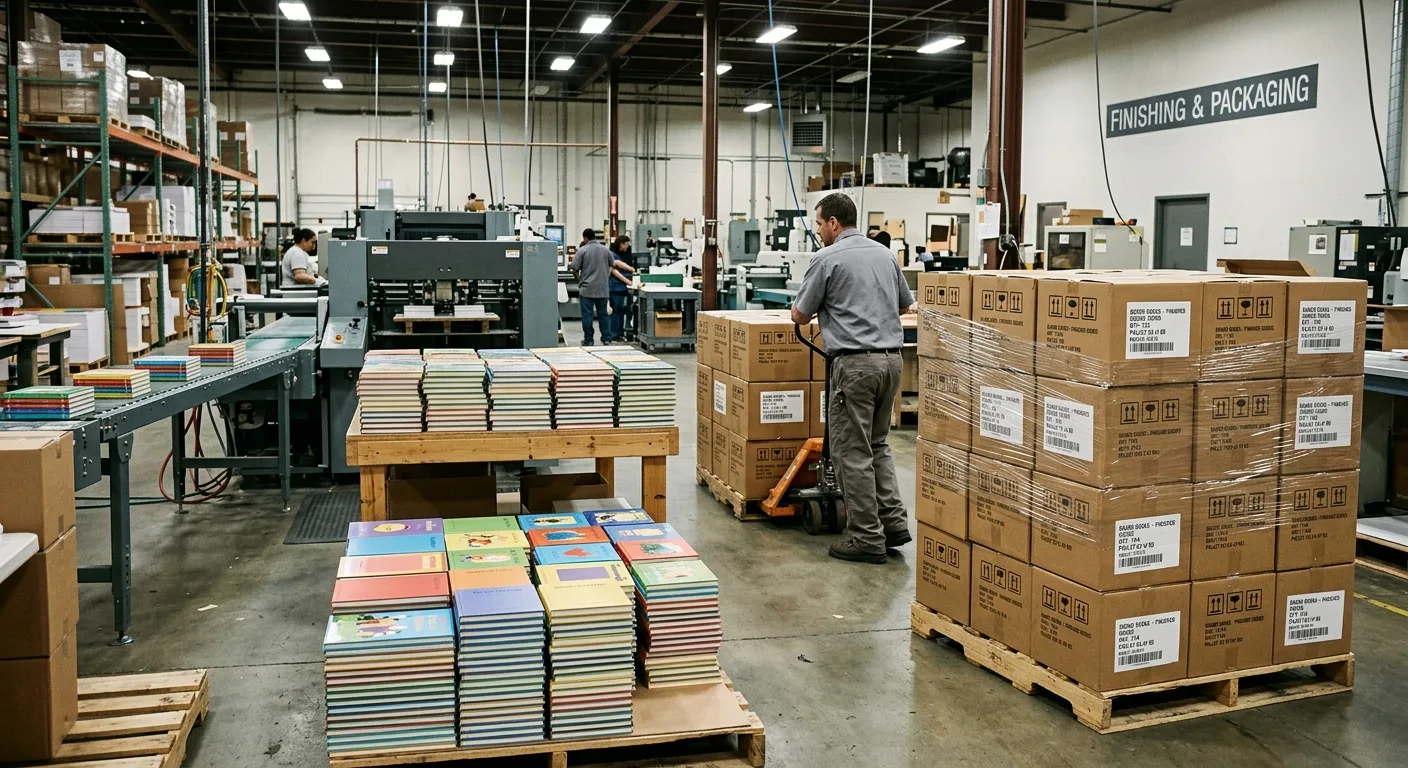
Material cost is only one part of the total board book quotation. The main variables usually include finished size, board thickness, paper surface, colour specification, coating, page count, binding or assembly method, special cutting, quantity, packing, and delivery destination.
Thicker board can increase material consumption and shipping weight. Specialty coatings and decorative effects may add tooling or handling steps. Large formats can increase sheet usage and make packing less compact. Die-cut pages, rounded corners, tabs, and interactive elements may require additional production planning.
Quantity also changes the economics of the project because setup costs are distributed across the order. However, the most suitable material should be selected for the product requirements rather than choosing a specification only because it appears less expensive. Ask for a quotation based on a clearly defined specification, and request alternatives if you are comparing two material structures.
For broader budgeting guidance, see the practical article on book printing cost factors. The final quotation should state the assumptions used for materials, finishing, packing, quantity, and shipping.
Conclusion
The best board book printing materials create a balanced result: a paper surface that reproduces the artwork well, a board core that provides the required rigidity without unnecessary weight, and a coating that suits the intended appearance and handling conditions.
Because paper, board, coating, construction, and logistics are connected, material decisions should be reviewed as one specification. A printer can recommend suitable options more accurately when the brief includes trim size, page count, quantity, artwork, preferred finish, file status, and destination country.