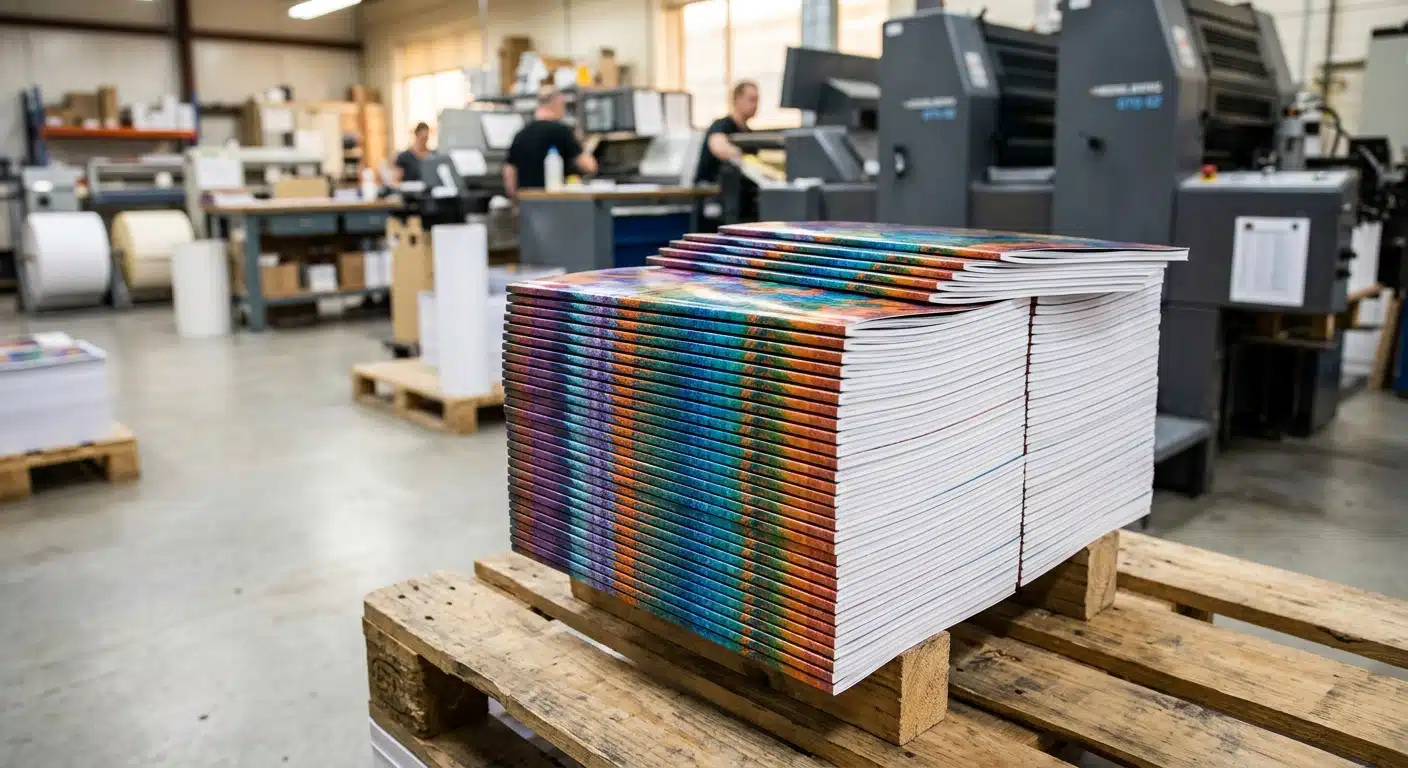

Introduction: Elevating High-End Photography and Publishing
For professional photographers, boutique publishers, and brand owners, a photo book is more than just printed paper—it is a physical portfolio and a lasting memory. When delivering high-end memory books to clients, standard commercial printing often falls short of expectations. High-resolution images demand structural integrity, color accuracy, and seamless presentation.
This guide explores the technical aspects of manufacturing premium photo and memory books, focusing specifically on the advantages of lay-flat binding and the critical selection between luster and matte paper finishes. By understanding these manufacturing variables, procurement teams and creative directors can make informed decisions that balance unit cost with exceptional product quality.
Key Concepts in Premium Photo Book Manufacturing
Manufacturing a premium memory book requires a departure from standard trade book production. Two primary elements define the high-end photo book category:
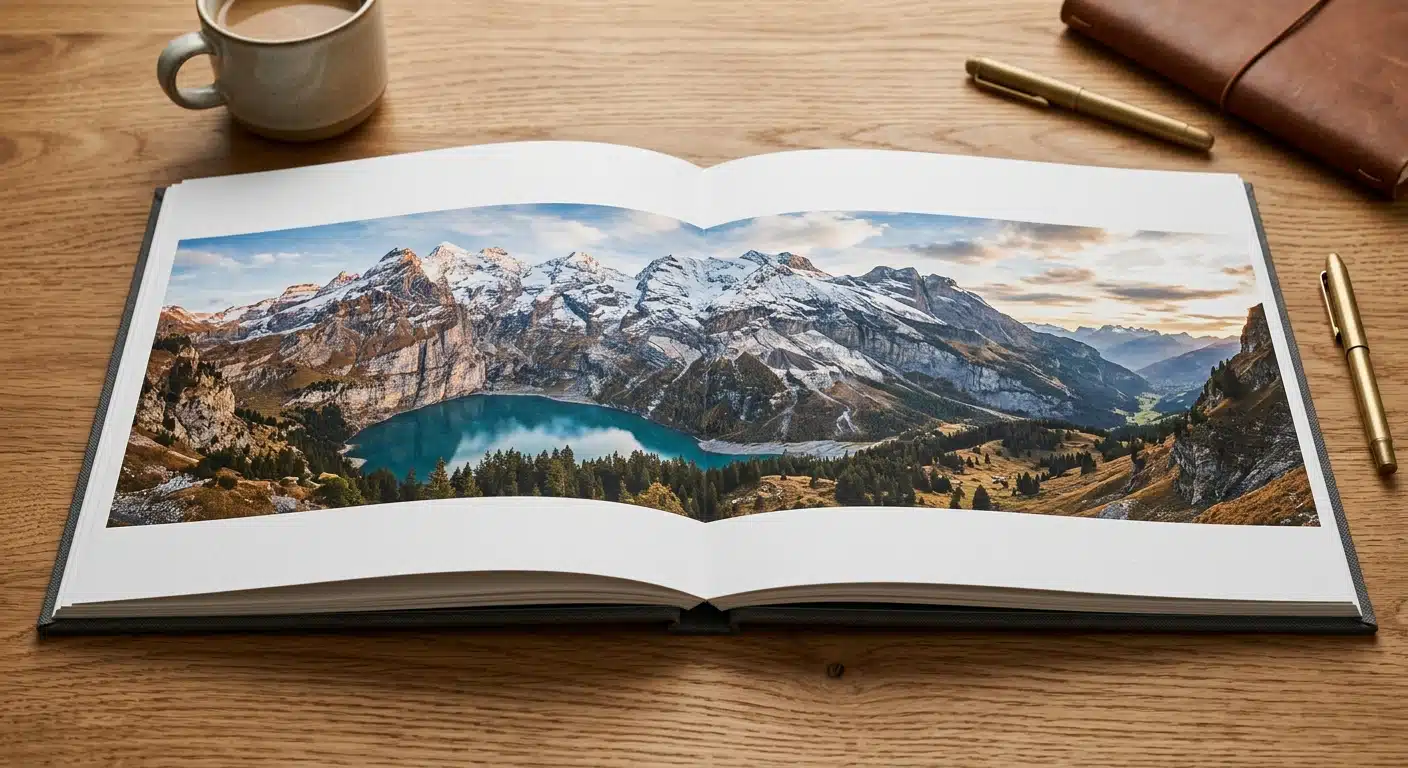
- Reliure à plat : A specialized binding technique that allows the book to open completely flat at 180 degrees without a central gutter break, ensuring panoramic images are displayed seamlessly across a two-page spread.
- Premium Paper Finishes: The use of specialized coated or uncoated papers (typically luster or matte) designed to hold high ink densities, maximize the color gamut, and provide a specific tactile experience.
Lay-Flat Binding: Options and Advantages
Unlike standard perfect binding or PUR binding, which pinches the inner margins of the pages into the spine, lay-flat binding ensures that no part of the image is lost in the gutter. This is crucial for architectural photography, landscape spreads, and high-end wedding albums.
1. Flush Mount (Leporello Binding)
In flush mount binding, continuous sheets of photo paper are folded down the middle and glued back-to-back, often with a rigid substrate (like a board core) inserted between them.
- Pour : Ultra-thick, rigid pages; entirely seamless image spreads; highly durable.
- Cons : Higher unit cost; heavier weight; typically limits the maximum page count (usually under 100 pages).
- Meilleur pour : Premium wedding albums, luxury brand portfolios, and high-ticket memory books.
2. Hinged Paper Lay-Flat
This method uses flexible paper (rather than board-mounted pages). A flexible hinge is built into the paper near the spine, allowing the page to fall completely flat when opened.
- Pour : Accommodates much higher page counts; lighter weight; more cost-effective for larger print runs.
- Cons : Pages are thinner than flush mount; slight visible hinge line on the page edge.
- Meilleur pour : Commercial photo books, travel memory books, and high-volume photography publishing.
Paper Selection: Luster vs. Matte Finishes
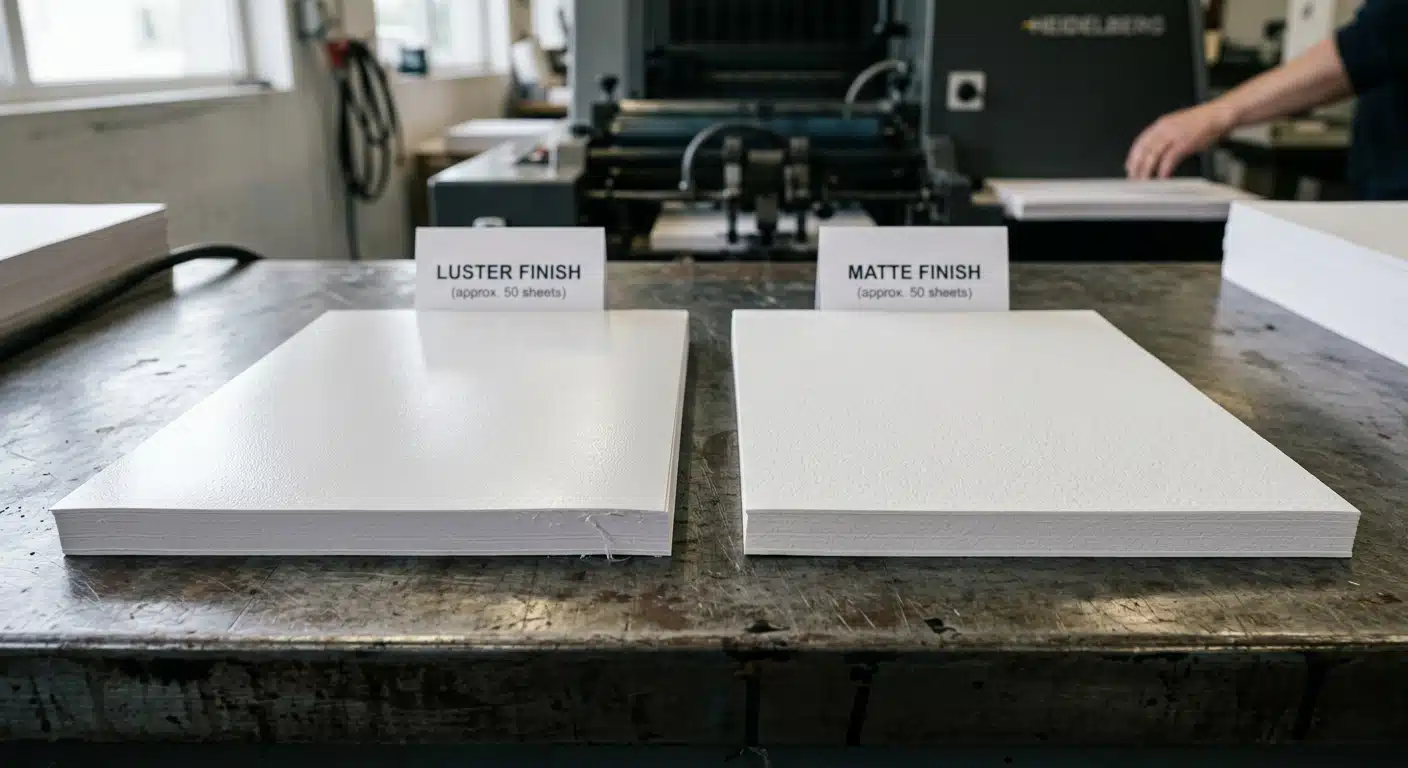
The substrate you choose directly impacts how ink is absorbed, how light reflects off the page, and the overall perceived value of the book. For high-resolution images, luster and matte are the industry standards.
| Fonctionnalité | Luster Paper | Matte Paper |
|---|---|---|
| Surface Finish | Slight sheen, pebbled or pearl-like texture. | Flat, smooth, zero glare. |
| Color & Contrast | High saturation, deep blacks, vibrant colors. | Softer contrast, muted and artistic tones. |
| Durabilité | Highly resistant to fingerprints and minor scuffs. | Prone to scuffing; often requires a protective varnish. |
| Meilleur cas d'utilisation | Vibrant color photography, commercial portfolios. | Fine art, black-and-white photography, minimalist designs. |
Technical Specifications and Considerations
When briefing a print manufacturer for premium photo books, clearly define the following technical parameters:
- Paper Weight (GSM): For hinged lay-flat books, typical interior paper weights range from 150gsm to 250gsm. For flush mount books, the combined board-and-paper thickness can exceed 600gsm.
- Color Profiles: Ensure your manufacturer uses calibrated workflows. Files should generally be submitted in CMYK using standardized ICC profiles (such as Fogra39 or GRACoL), though some high-end digital presses accept RGB files and convert them via proprietary RIP software to maximize the color gamut.
- Archival Quality: For memory books meant to last generations, specify acid-free (pH neutral) paper to prevent yellowing and degradation over time.
Manufacturing, Quality Control, and Testing
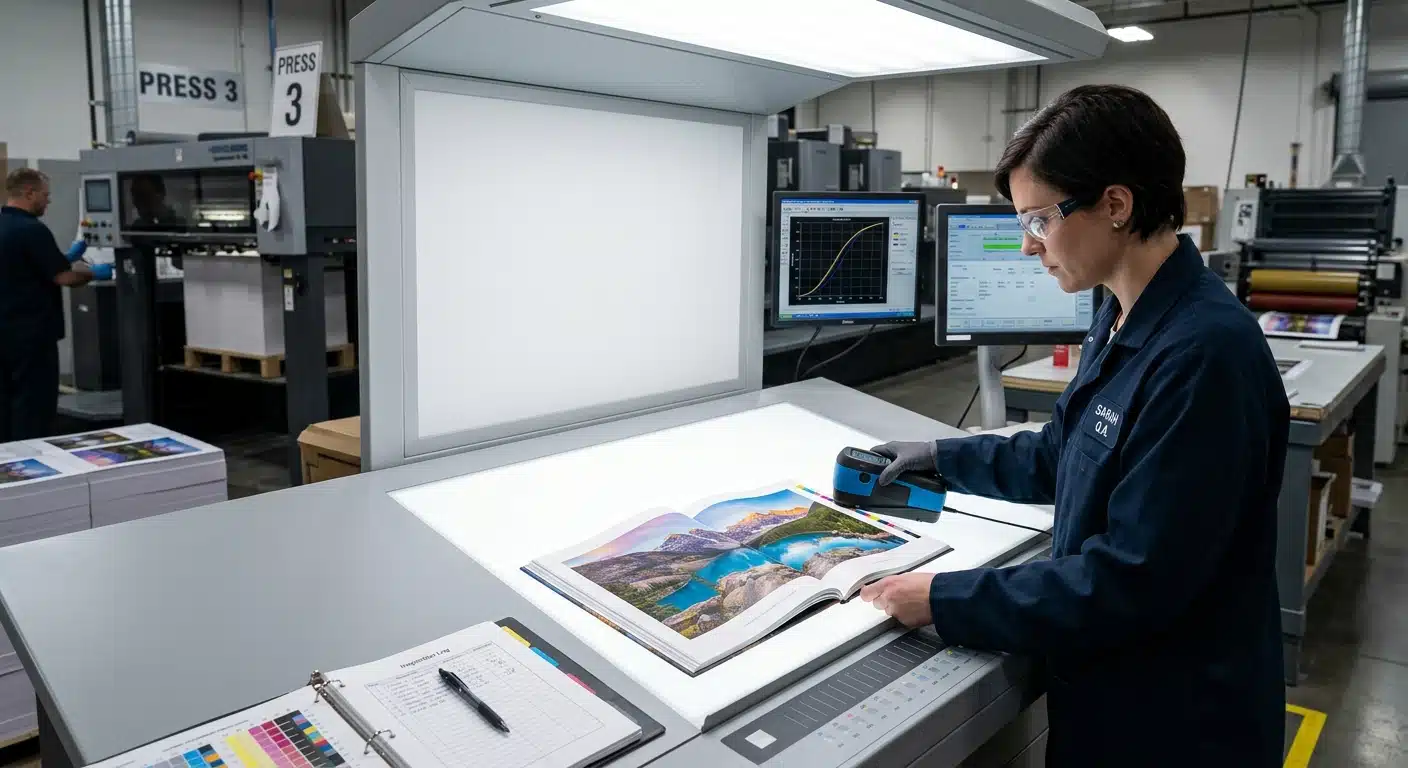
Consistent quality in photo book manufacturing requires rigorous quality assurance (QA) protocols. Reputable printers implement several checkpoints:
Prépresse et épreuvage
Before mass production, digital soft proofs and physical hard proofs are generated. Hard proofs are crucial for verifying color accuracy on the actual chosen substrate (luster or matte), as screen calibration rarely matches physical ink-on-paper exactly.
Binding Durability Testing
Lay-flat bindings are subjected to page-pull tests and flex tests to ensure the adhesives (often specialized hot-melt or cold glues for flush mounts) withstand repeated opening and closing without the spine cracking or pages detaching.
Buying Guide for Publishers and Photographers
If you are sourcing a manufacturing partner for custom photo books, keep the following logistics in mind:
- Quantités minimales de commande (QMC) : While digital printing allows for short runs (sometimes as low as 1 to 50 units), offset printing for larger publishing runs typically requires an MOQ of 300 to 500 units to be cost-effective.
- Options de personnalisation : Look for manufacturers offering custom cover treatments. Foil stamping, debossing, spot UV, and custom slipcases add significant retail value to memory books.
- Préparation du dossier : Artwork must include proper bleed (usually 3mm to 5mm) and a safe zone to account for trimming tolerances. For flush mount lay-flat books, images should be designed as continuous two-page spreads rather than single pages.
- Délais : Standard production for custom bound books takes 15 to 25 days post-proof approval, excluding shipping. Factor this into your product launch or client delivery schedules.
Foire aux questions (FAQ)
1. What is the difference between standard perfect binding and lay-flat binding?
Perfect binding glues individual pages into the spine, creating a gutter that curves inward and obscures the center of the image. Lay-flat binding allows the pages to open 180 degrees completely flat, ensuring panoramic images are fully visible without distortion.
2. Should I choose luster or matte paper for a wedding album?
Luster is the most popular choice for wedding albums due to its vibrant color reproduction, deep blacks, and fingerprint resistance. Matte is preferred for a softer, fine-art aesthetic, particularly for black-and-white photography.
3. Can we request physical samples before mass production?
Yes. It is highly recommended to request a physical hard proof or a full prototype sample to verify color accuracy, paper texture, and binding quality before committing to a full production run.
4. How should artwork be prepared for lay-flat spreads?
Files should be set up as full spreads (e.g., left and right pages combined into one file) rather than individual pages. Ensure your high-resolution images (minimum 300 DPI) span across the center without placing critical elements like faces exactly on the fold line.
5. Are the papers used in premium memory books archival?
Premium manufacturers typically use acid-free, archival-quality papers and inks designed to resist fading and yellowing. Always confirm archival specifications with your printing partner if longevity is a primary selling point for your brand.
Prêt à lancer votre projet d'impression ?
Choosing the right binding and paper is the foundation of a successful premium photo book. Whether you are a photographer delivering client albums or a publisher planning a high-end art book, precise manufacturing makes all the difference.
Demander un devis / Obtenir un échantillon today to discuss your project specifications and experience our premium printing capabilities firsthand.