
For publishers, businesses, and procurement managers, selecting the right book printing method is as critical as the content itself. The choice between offset printing, digital printing, and print-on-demand (POD) directly impacts your unit costs, inventory strategy, turnaround time, and final product quality.
While the end result—a bound book—may look similar to the untrained eye, the manufacturing processes behind these methods differ significantly. Understanding these differences allows B2B buyers to optimize their supply chain, whether producing 50 technical manuals or 50,000 hardcover trade books.
This comprehensive guide breaks down the mechanics, economics, and use cases for the three primary book printing technologies available today.
Offset Printing: The Standard for High-Volume Production
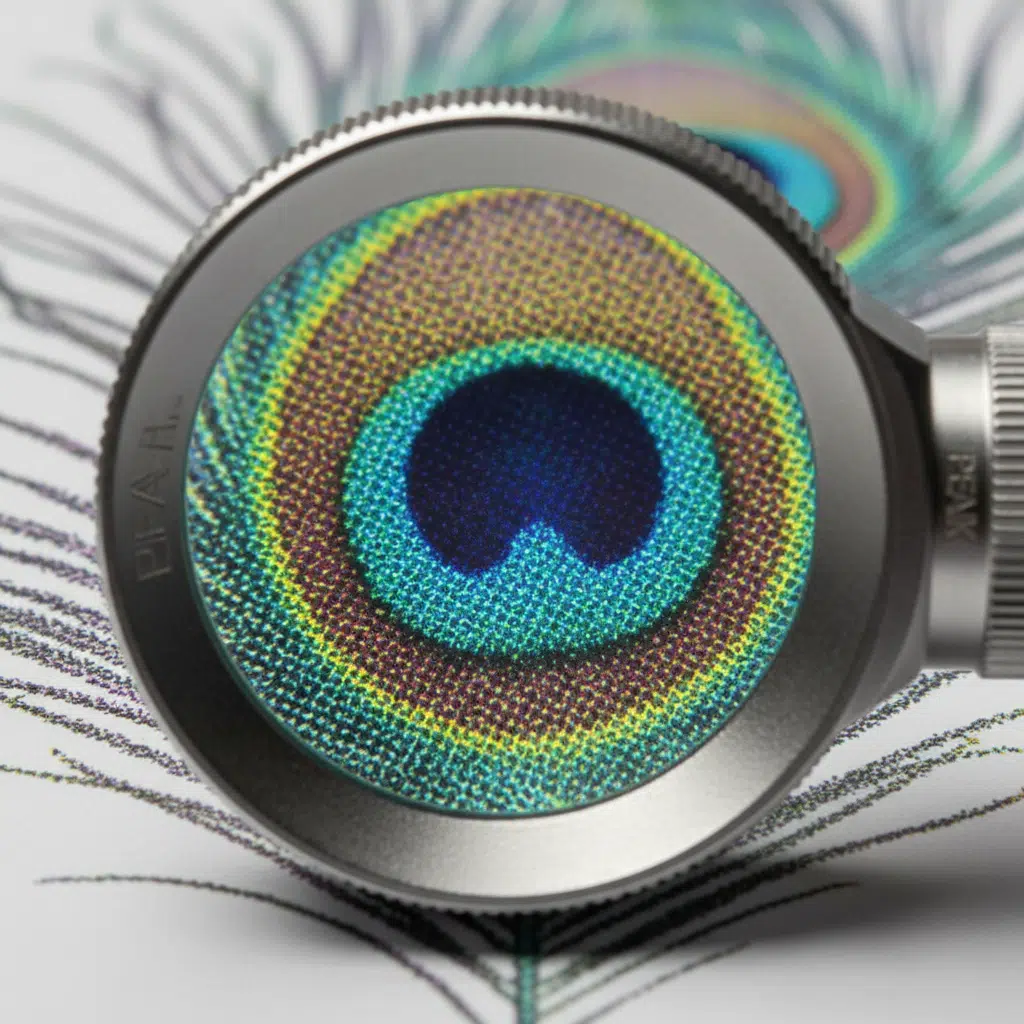
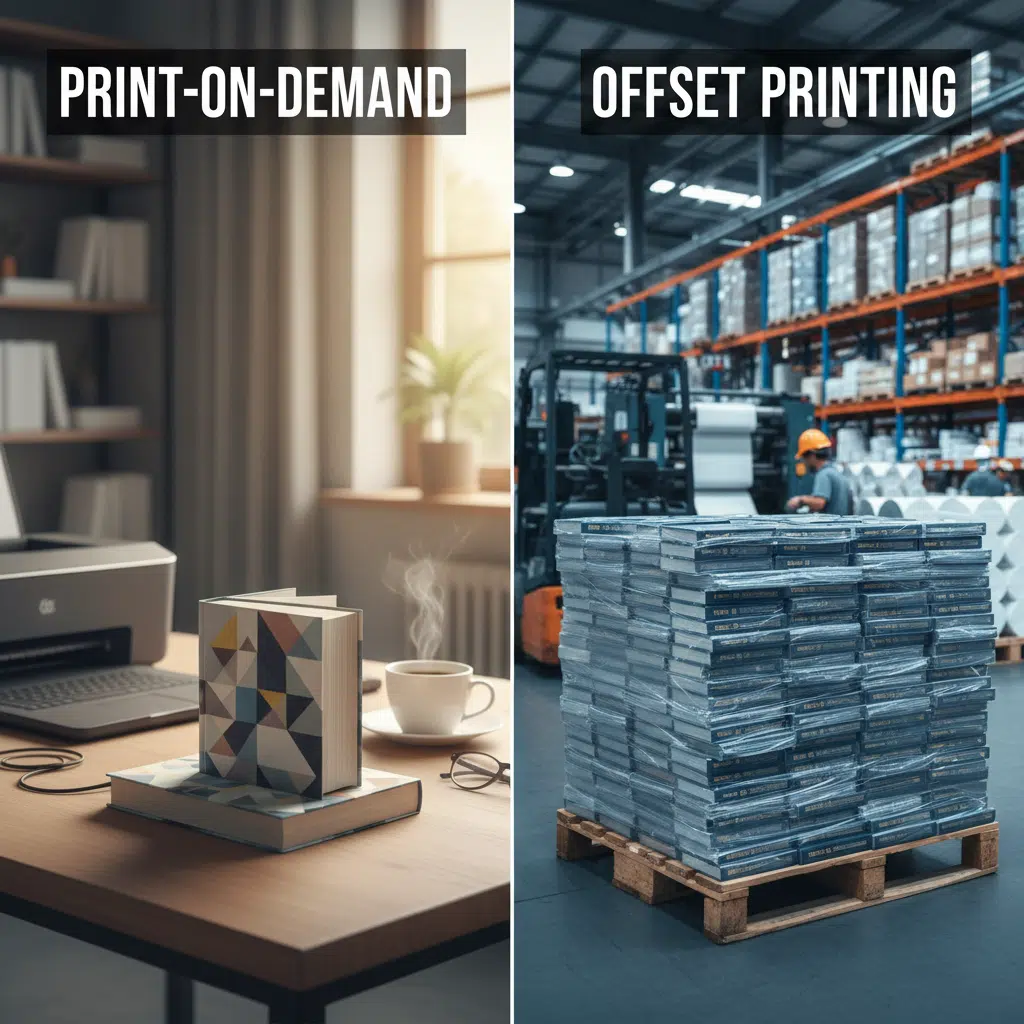
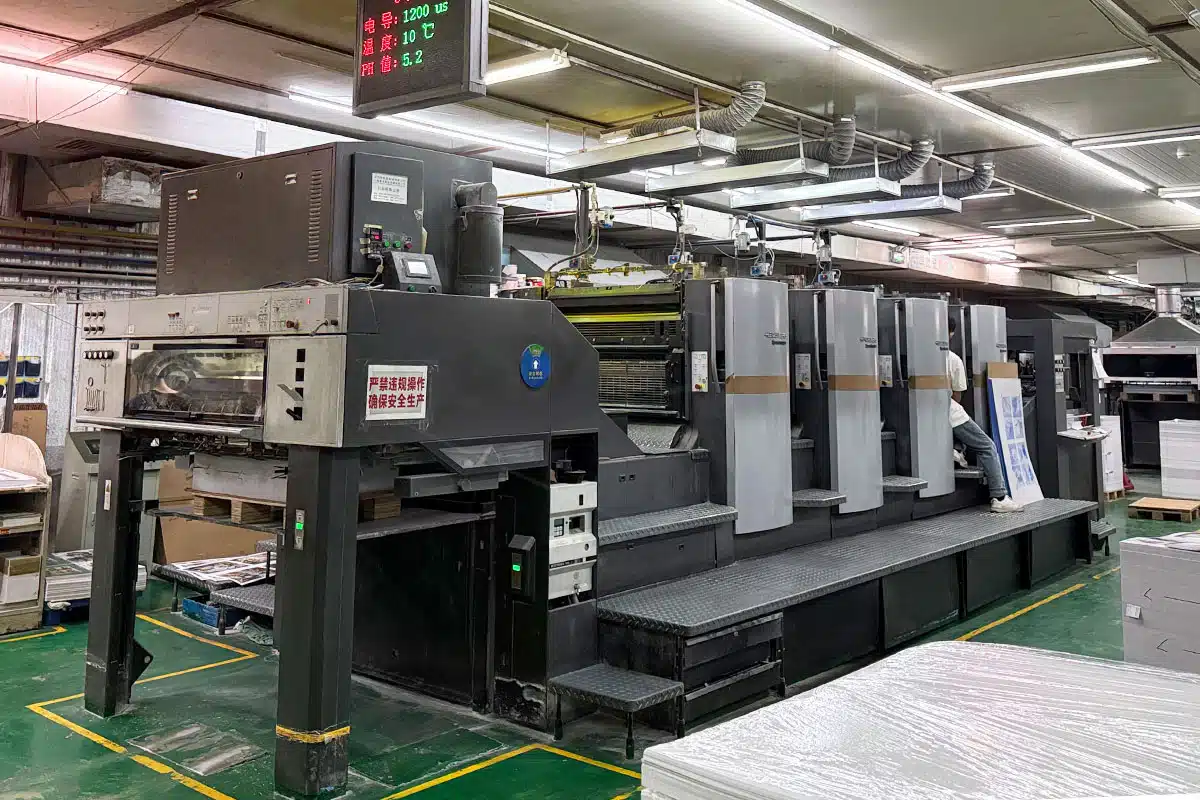
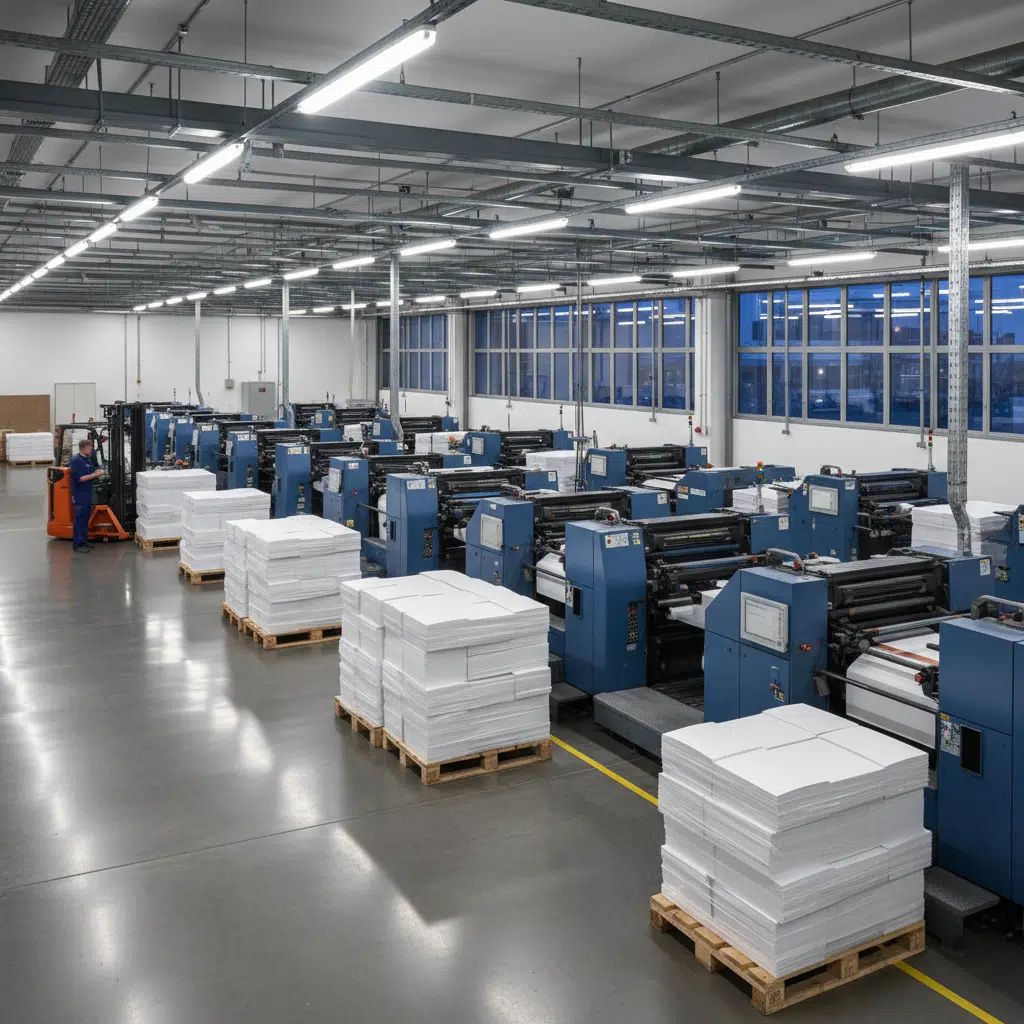
Offset lithography, commonly known as offset printing, remains the dominant method for bulk commercial printing. It is an analog process that relies on physical plates and wet ink.
How It Works
In this process, an image is burned onto a metal plate. The plate transfers (offsets) the ink onto a rubber blanket, which then rolls the ink onto the paper. This indirect method reduces wear on the plates and allows for high-speed consistency.
For a deeper dive into the mechanics of this process, read our article on What Is Offset Printing? The Standard for High-Quality Commercial Runs.
Advantages and Trade-offs
- Economy of Scale: Offset has high setup costs (making plates, machine setup) but extremely low variable costs. As the quantity increases, the unit price drops drastically.
- Superior Quality and Consistency: It offers sharp, clean type and rich images. It is the only method that can effectively use Pantone (PMS) spot colors for precise brand matching.
- Material Versatility: Offset presses can handle a vast array of paper stocks, weights, and textures, including rough uncoated papers and heavy cardstocks that digital presses may struggle with.
Best For: Print runs of 500 to 1,000 copies or more. It is the go-to for textbooks, catalogs, magazines, and mass-market retail books.
Digital Printing: Flexibility for Short Runs
Digital printing eliminates the mechanical steps required in offset. There are no plates to create and no lengthy setup times. Instead, the image is processed directly from a digital file (usually a PDF) to the paper using toner (laser) or liquid ink (inkjet).
Why Choose Digital?
- Speed: Without the need for plate creation, production can begin almost immediately. This makes digital ideal for tight deadlines.
- Variable Data Printing (VDP): Every sheet can be unique. This is essential for personalized marketing materials, serialized certificates, or books with individualized content.
- Cost-Effective for Small Batches: For runs between 50 and 500 copies, digital is often cheaper than offset because you avoid the setup fees.
Limitations
While quality has improved significantly, digital printing still struggles to match the perfect color fidelity of offset, particularly with solid blocks of color or specific Pantone matches. Paper options are also more limited compared to offset.
Print-on-Demand (POD): The Zero-Inventory Model
Print-on-Demand is technically a subset of digital printing, but it refers specifically to a business and fulfillment model rather than just the hardware. In a POD model, a book is printed only after an order has been placed.
Strategic Value for Publishers
POD is a risk-mitigation tool. It eliminates warehousing costs and the risk of unsold inventory (returns). However, the unit cost is significantly higher—often 2x to 5x the cost per book compared to a large offset run.
Best For:
- Backlist titles with low sales volume.
- Self-publishing authors testing the market.
- Technical manuals that require frequent updates.
Comparative Analysis: Cost, Quality, and Speed
To help procurement teams decide, here is a comparison of the key factors influencing the Printing process commonly used for books.
| Feature | Offset Printing | Digital Printing | Print-on-Demand (POD) |
|---|---|---|---|
| Ideal Quantity | 1,000+ copies | 50 – 500 copies | 1 – 50 copies |
| Setup Cost | High (Plates & Setup) | Low | None (per order) |
| Unit Cost | Decreases with volume | Flat rate (mostly) | High (Premium) |
| Turnaround | Days to Weeks | Hours to Days | Days (Single units) |
| Color Accuracy | Excellent (PMS support) | Good (CMYK only) | Good (Standard profiles) |
| Customization | Static content | Variable data capable | Static content |
Technical Specifications for Buyers
When requesting a quote for any of these methods, clarity on specifications is vital to avoid production delays.
Paper and Binding
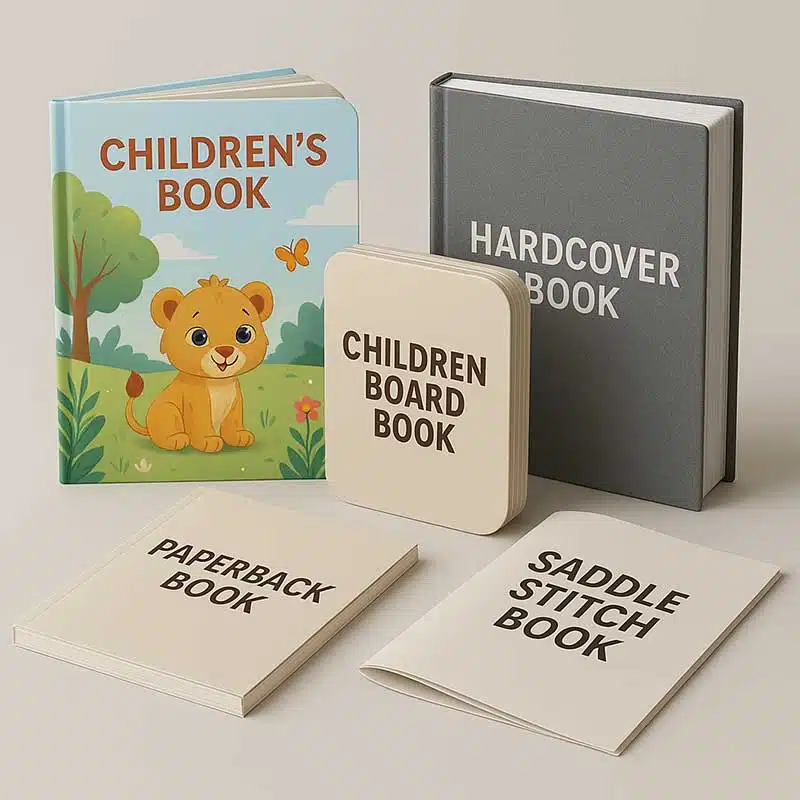
Offset printing allows for the widest range of custom sizes and binding techniques, including Smyth sewing, case binding with dust jackets, and special finishes like spot UV or foil stamping. Digital and POD often restrict you to standard trim sizes and paper weights to maintain efficiency.
File Preparation
Regardless of the method, professional file preparation is non-negotiable. Ensure your artwork is set to CMYK (not RGB) and includes proper bleed (usually 3mm). For offset jobs, high-resolution images (300 DPI) are mandatory to prevent pixelation.
Buying Guide: Choosing the Right Partner
Selecting a printing partner involves more than just comparing price lists. Consider the following factors:
- Minimum Order Quantity (MOQ): Does the printer have a strict MOQ? Many offset printers require at least 500 or 1,000 units.
- Proofing Process: For offset runs, always request a physical proof (wet proof or plotter proof) before the full run. Digital proofs (PDFs) are often sufficient for digital printing but can hide color discrepancies.
- Logistics: If you are printing overseas to save costs, factor in shipping times (ocean freight vs. air freight) and customs clearance.
Frequently Asked Questions
What is the “breakeven point” between digital and offset?
Typically, the breakeven point is around 500 to 750 books. Below this number, digital is cheaper due to the lack of setup fees. Above this number, the lower unit cost of offset printing outweighs the setup costs.
Can I use offset printing for a sample copy?
No. Due to the high setup costs involved in making plates, printing a single copy via offset is economically impossible. Samples are usually produced digitally, even if the final run will be offset.
Does POD quality match offset quality?
POD technology has improved, but discerning buyers can tell the difference. Offset ink absorbs into the paper, while digital toner sits on top. For text-heavy books, the difference is negligible, but for photography or art books, offset is superior.
Can I print hardcover books digitally?
Yes, short-run digital hardcover binding is available, though it is more labor-intensive and expensive per unit than mass-produced offset hardcovers.
Conclusion
There is no single “best” printing method—only the best method for your specific project constraints. Offset printing remains the king of quality and volume, offering the lowest unit costs for serious publishers. Digital printing provides agility for short runs and urgent deadlines, while POD offers a zero-risk entry point for new titles.
By aligning your choice with your budget, timeline, and quality requirements, you can ensure a successful production run.
Ready to start your next book project? Whether you need a high-volume offset run or a quick digital batch, our team can guide you through the specifications and provide a competitive estimate.