

Table of Contents
- Book reprint planning: define the repeat-order brief
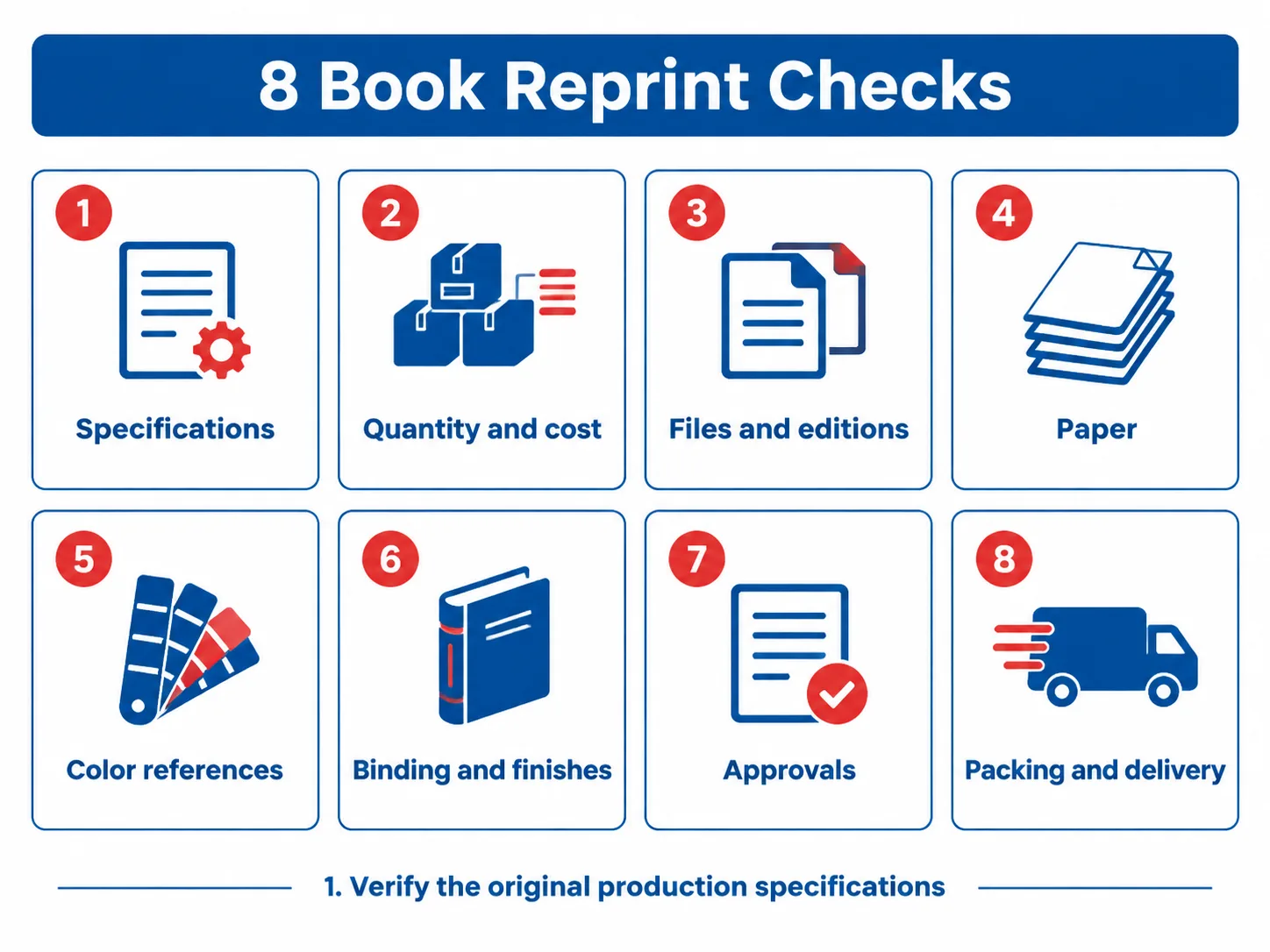
- 1. Verify the original production specifications
- 2. Confirm demand, quantity and landed cost
- 3. Lock files and establish edition control
- 4. Approve paper availability and substitutions
- 5. Agree on color references and proofing
- 6. Reconfirm binding, cover fit and finishing
- 7. Match approvals to the changes
- 8. Confirm packing, delivery and release authority
- Key takeaways before placing your repeat order
A successful book reprint starts with a verified production record. Use these eight checks to confirm files, materials, binding, proofs, quantities and delivery requirements before placing a repeat order.
Book reprint planning: define the repeat-order brief
Book reprint planning means verifying the files, manufacturing specifications and delivery requirements for another print run of an existing title. Before reordering, check the original specification, quantity, file version, paper, color reference, binding, approval requirements and shipping plan.
A previous order is a useful starting point, but its price, materials and schedule need reconfirmation. Even an unchanged PDF can produce a different-looking book if the paper, printing process or cover construction changes.
Definition: A repeat-order brief is the approved record of what must match the previous run, what may change, and who can authorize each change.
This guide assumes you have an existing title and at least some production records. If you are moving to another printer, provide a finished reference copy alongside the current files. The new supplier should confirm which details can be reproduced and which need fresh approval.
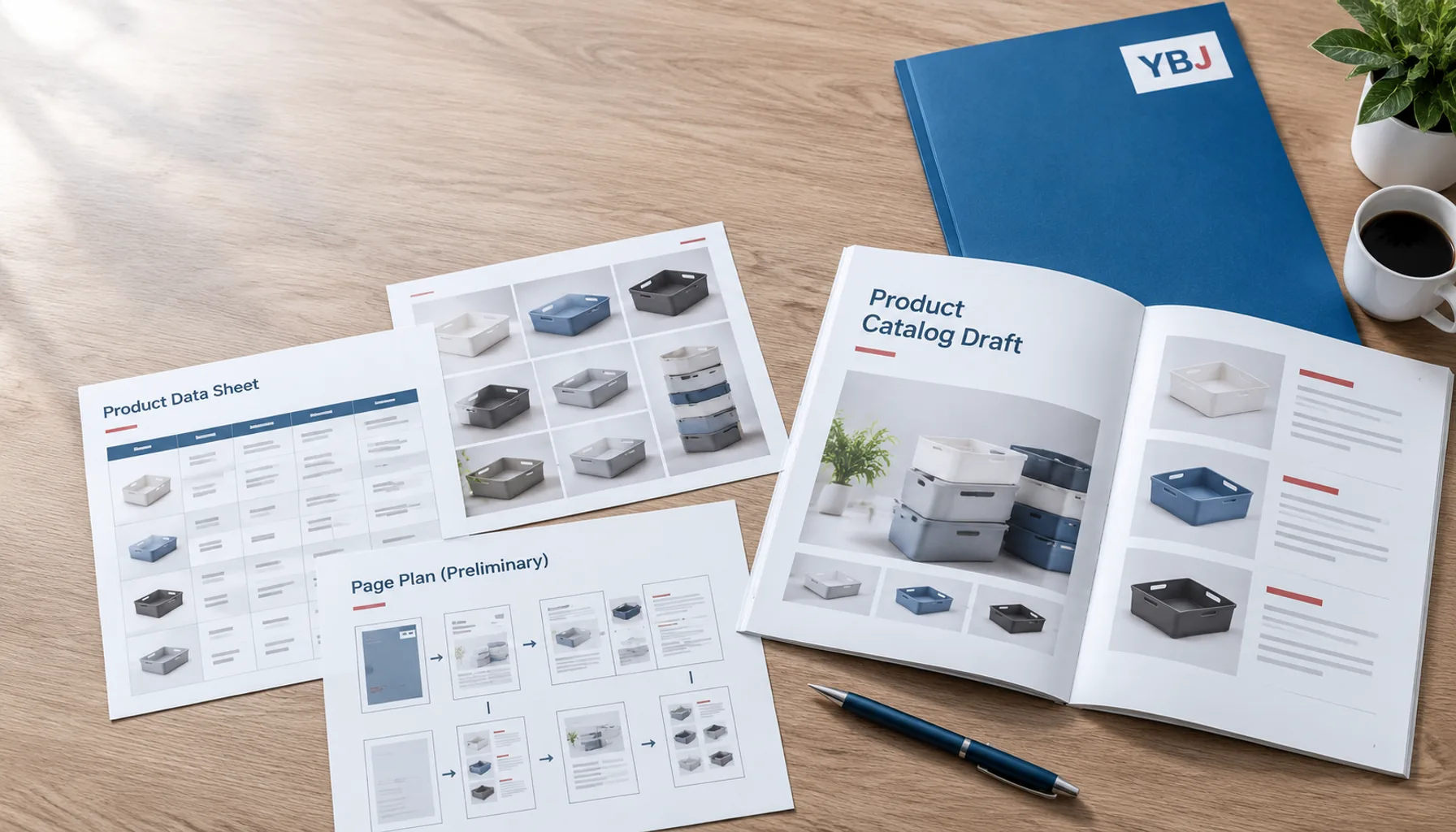
Keep all decisions in one job folder. A specification sheet, change log, reference copy and approval record give purchasing, editorial and production teams a shared basis for the reorder.
1. Verify the original production specifications
Start with the specification that was actually manufactured. An early quotation may describe materials or finishes that changed before production.
Collect the final order confirmation, approved artwork, proof records and a retained copy from the accepted run. Compare them and resolve discrepancies before requesting a repeat quotation.
Your book reprint specifications should record:
- Finished trim size, orientation and total page count, with covers and endpapers identified separately.
- Interior and cover paper, including grade, weight, finish and any recorded caliper.
- Interior and cover printing: black-only, CMYK or specified spot colors.
- Binding construction, cover material, board thickness where relevant, and endpaper details.
- Lamination, foil, embossing, varnish or other finishing, including placement.
- Packing method and any accessories or inserts supplied with the book.
Mark each item as confirmed, changed or awaiting verification. Avoid using “same as last time” as the complete instruction: it leaves too much dependent on individual memory.
If the earlier book had a known defect, record the requested correction explicitly. Reproducing the accepted appearance should not accidentally repeat a loose insert, incorrect barcode position or unsuitable packing arrangement.
2. Confirm demand, quantity and landed cost
Choose the reorder quantity from current demand and usable inventory. The quantity that suited the first launch may be unsuitable for replenishment.
Review recent sales, confirmed customer orders, stock reserved for replacements and the likely time until the next revision. Count damaged or obsolete copies separately from saleable stock. A large order can reduce unit production cost while increasing storage expense and the risk of holding outdated books.
Ask for quotations at two or three realistic quantities with the same specifications. Compare total production cost, freight, any quoted destination charges and your expected storage costs. Record the currency, delivery terms and quotation validity so the comparison remains meaningful.
The guide to choosing a practical book print quantity explains the relationship between order size and production setup. For a broader cost breakdown, consult the book printing pricing guide.
Price assumptions should include final page count, available stock, finishing, proof requirements and destination. For repeat print runs, do not assume that a previous unit price or freight charge remains valid.
3. Lock files and establish edition control
Release one clearly identified production file set, even when the content is unchanged. Edition control prevents a corrected interior from being paired with an outdated cover.
Use a job identifier and revision label for the interior, cover, endpapers and any inserts. Maintain a short change log showing the affected pages and the person who approved each correction. Archive superseded files outside the production folder.
Before release, verify:
- The title, copyright page, edition statement and publication details reflect the intended publication.
- The ISBN and barcode correspond to the format being ordered; check applicable ISBN agency guidance when the edition or format changes.
- Corrections have reached the final exported PDF, with no accidental changes elsewhere.
- Trim size, bleed, embedded fonts, image resolution and color settings meet the printer’s requirements.
- Any revised pagination is reflected in contents pages, indexes, cross-references and cover artwork.
A printer may retain old files, but retention periods and file availability vary. Confirm exactly which files will be used instead of assuming that the previous production archive is complete. When changing suppliers, establish that you have the rights and usable assets needed for the new run.
4. Approve paper availability and substitutions
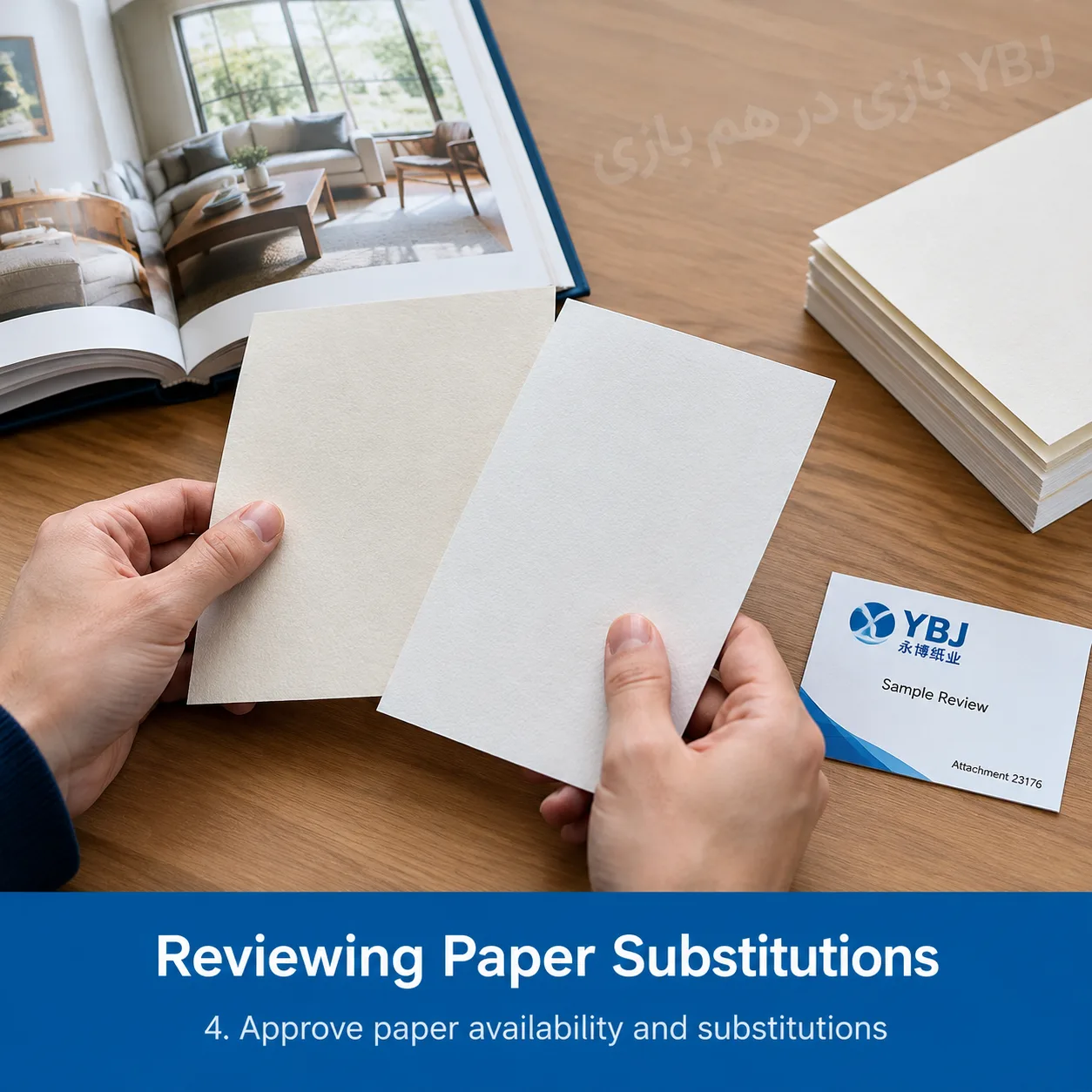
Confirm the original paper is available before treating the reorder as an exact material repeat. Paper substitutions need written approval because matching weight alone does not establish equivalence.
Two papers with the same gsm can differ in thickness, opacity, shade, surface and stiffness. Those differences can affect show-through, image appearance, page turning, finished book weight and spine width.
Ask the printer to identify the proposed replacement and explain its relevant differences. Evaluate a physical sample against the reference book. For an illustrated title, consider printed samples on the proposed stock; for a text-heavy book, inspect readability and show-through. The guide to textbook printing paper provides useful context for reading-focused interiors.
Record whether the substitute is approved for this run only or becomes the new standard. A changed interior stock may require a new spine calculation and cover file. Changes to cover stock or lamination can also alter stiffness and the finished appearance.
If keeping the original paper requires additional sourcing time, compare that schedule with the consequences of substitution. Price and lead time remain conditional until material availability and the approval route are confirmed.
5. Agree on color references and proofing
Define the color target before production. An approved proof and a retained finished copy serve different purposes, so state which reference governs each decision.
A finished book shows the combined effect of printing, paper and finishing. A suitable color proof supports assessment of image reproduction under its specified proofing conditions. A PDF viewed on an ordinary screen does not reliably predict printed color.
Choose representative pages containing sensitive images, neutral grays, dark areas or brand colors. Compare references under consistent lighting, and identify any pages that were unacceptable in the earlier run.
For color consistency, agree on the comparison method and any practical acceptance criteria with the printer. Do not assume a universal numerical tolerance applies to every book. Paper shade, coating, printing process and lamination can influence the result, even when the artwork stays unchanged.
If a different process is proposed, review its implications before approval. The comparison of offset and digital book printing explains factors relevant to run size and production choice. Book reprint planning should identify acceptable variation and a review process, rather than rely on an undefined request for an identical match.
6. Reconfirm binding, cover fit and finishing
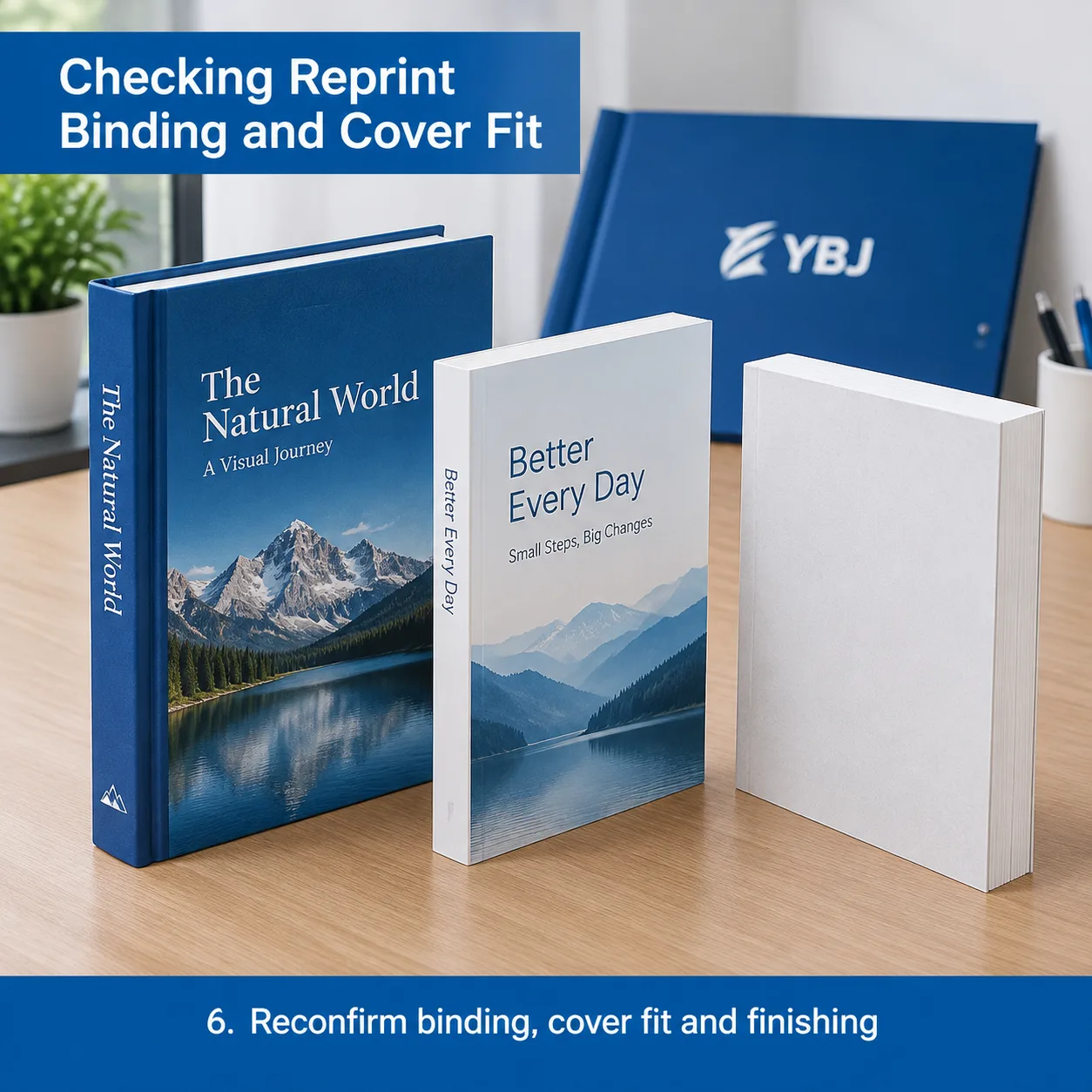
Recheck the finished construction whenever page count, paper thickness or binding changes. Keeping the same trim size does not ensure that the old cover template will fit.
Ask the printer to confirm the spine width from the approved materials and construction. Inspect cover alignment, opening behavior and finish placement against the reference copy. Use the following product-specific checks to focus the review.
| Book format | Details to reconfirm | Reason for checking |
|---|---|---|
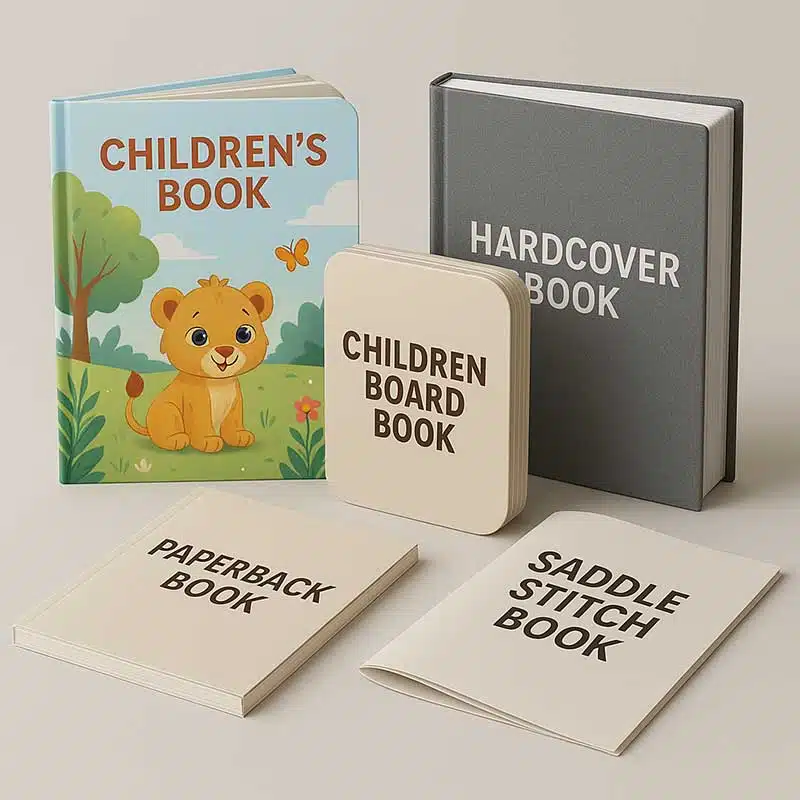
| Perfect-bound paperback | Text-block thickness, adhesive specification, spine artwork and cover scoring | Material changes can affect cover fit and opening behavior. |
| Casebound hardcover | Board thickness, case dimensions, hinges, endpapers and text-block construction | The case and text block must be designed to work together. |
| Saddle-stitched booklet | Page count, stock thickness, fold, trimming and creep allowance | Pagination and thickness affect imposition and page-edge alignment. |
| Board book | Board construction, finished thickness, page sequence and corner shape | Construction changes affect handling and artwork positioning. |
Confirm finishing details separately: foil artwork, embossing registration, lamination type and the location of coated or uncoated areas. If existing dies or tools may be reused, ask about their availability, condition and compatibility with the revised artwork.
A blank construction dummy can help assess dimensions and handling. It cannot establish printed color or the appearance of every finish; identify what the sample is intended to approve.
7. Match approvals to the changes
Choose the approval route according to what has changed and what the review must establish. An unchanged reorder still needs written confirmation of files and specifications.
| Reorder situation | Suggested review | Main limitation |
|---|---|---|
| Same supplier, confirmed files and materials | Written specification confirmation and agreed file or proof review | Previous approval does not establish current stock availability. |
| Text corrections only | Revised PDF review and preflight, including affected cross-references | A screen review cannot establish physical construction or printed color. |
| Paper or binding change | Material samples and a construction dummy where appropriate | Blank samples cannot show printed image reproduction. |
| New printer, process or color-sensitive revision | File review, agreed color proofing and construction assessment | Each sample needs a defined purpose and approval status. |
Record the reviewer, file version, sample identification and approval date. If an approval is conditional, state the remaining correction and how it will be verified. Avoid production instructions spread across conflicting email threads.
When changing printers, provide the previous book as a reference rather than expecting the new factory to infer its complete manufacturing recipe. Ask the supplier to document proposed differences and confirm proof availability before setting the schedule.
8. Confirm packing, delivery and release authority
Confirm the receiving requirements and production release conditions before placing the order. A book can meet its print specification and still cause problems if cartons are unsuitable for the receiving warehouse.
Recheck delivery country, full address, contact details, carton quantity, carton markings, pallet requirements where applicable and any receiving appointment rules. Clarify whether the shipment will go to one location or be split among destinations.
Build the schedule around confirmed milestones:
- Final files and specifications accepted.
- Required proofs or samples approved.
- Materials and production slot confirmed.
- Manufacturing, finishing and agreed inspection completed.
- Freight booked and destination delivery arranged.
Ask when the quoted production lead time begins. Material sourcing, proof shipping, revision cycles, holidays, freight availability and customs processing can affect the overall timeline. Separate the planned factory completion date from the expected arrival date.
Name the person authorized to release production and the person who approves substitutions. Finally, record who will receive finished samples and update the job archive. That closes this reorder and gives the next one a reliable starting point.
Key takeaways before placing your repeat order
A well-planned reprint has one approved specification, one released file set and a clear record of changes. Reconfirm current materials, pricing and delivery assumptions, even when the previous run was successful.
- Preserve: the accepted reference copy, manufacturing details and approved artwork.
- Verify: demand, material availability, cover fit and the proposed proofing route.
- Authorize: substitutions, corrections and production release in writing.
These eight checks help publishers turn a repeat order into a controlled replenishment process, with fewer unresolved decisions when manufacturing begins.
FAQ
Can I reorder a book using exactly the same files?
Yes, if the files remain correct and meet the printer’s current requirements. Confirm their revision identifiers, page count, publication details and barcode. The same files do not remove the need to verify materials, cover dimensions and production specifications.
Do I need a new proof for an unchanged reprint?
Agree on the review with the printer. An unchanged job may use a simpler approval route, but a new supplier, material substitution, process change or sensitive color requirement can justify additional proofing. State what each proof is intended to approve.
Is paper with the same gsm an acceptable substitute?
Not automatically. Papers with equal gsm can differ in caliper, opacity, shade and surface. Review a sample, assess the effect on appearance and handling, and reconfirm spine width if thickness changes. Approve the substitution in writing.
What should I send when moving a reprint to another printer?
Send the current interior and cover files, final specification sheet, retained finished copy, change log and relevant proof records. Include quantity, required finishes and delivery details. Ask the new printer to identify any proposed differences before you approve production.
Will a repeat order have the same price and lead time?
Not necessarily. Quantity, material availability, production capacity, proofing, finishing and freight can change. Obtain a current quotation with stated assumptions, and confirm when production lead time starts. Distinguish factory completion from destination arrival.
Ready to Plan Your Custom Printing Project?
Tell YBJ Printing about your book reprint: product type, trim size, page count, quantity, paper or binding preferences, finish requirements, file status and destination country. Include your previous specification sheet, reference copy and planned changes if available. Our team can review practical options and prepare a factory-direct quotation based on the confirmed requirements.