
Table of Contents
- What to Specify for Children's Bible Printing
- Choose a Size for the Reading Experience
- Select Paper for Text and Illustrations
- Compare Binding Options
- Children's Bible Format Comparison
- Buyer Checklist Before Requesting a Quote
- Prepare Artwork and Cover Files
- Relevant Children's Bible Book Options
- Request a Children's Bible Printing Quote
- Conclusion
A practical buyer guide to selecting the right size, paper, and binding for custom children’s Bible books, Bible storybooks, and illustrated faith-based titles.
What to Specify for Children's Bible Printing
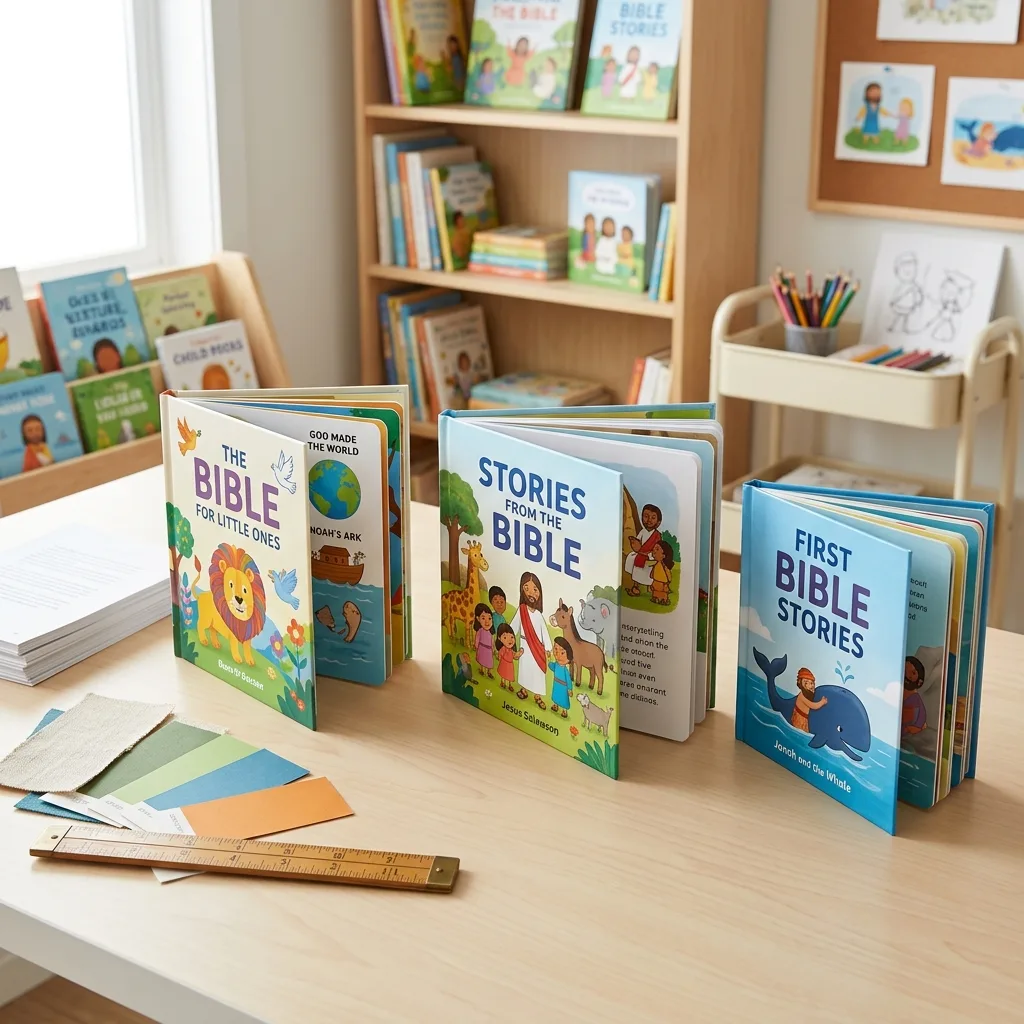
Children’s Bible printing is the production of age-appropriate Bible storybooks or scripture-based books using a size, paper, cover, and binding chosen for young readers. For most illustrated titles, the best specification balances clear image reproduction, comfortable handling, durable construction, and a realistic unit-cost target.
Start with the reader’s age and how the book will be used. A short Bible picture book for preschool children needs a different format from a 128-page story collection for family reading, school programmes, or retail. The content mix also matters: full-page illustrations generally benefit from a different paper choice than text-led devotionals.
Before asking a printer to quote, decide the intended trim size, finished page count, quantity, cover style, text paper, binding preference, finish, file status, and destination country. These variables affect price, production planning, shipping volume, and the physical feel of the finished book.
Choose a Size for the Reading Experience
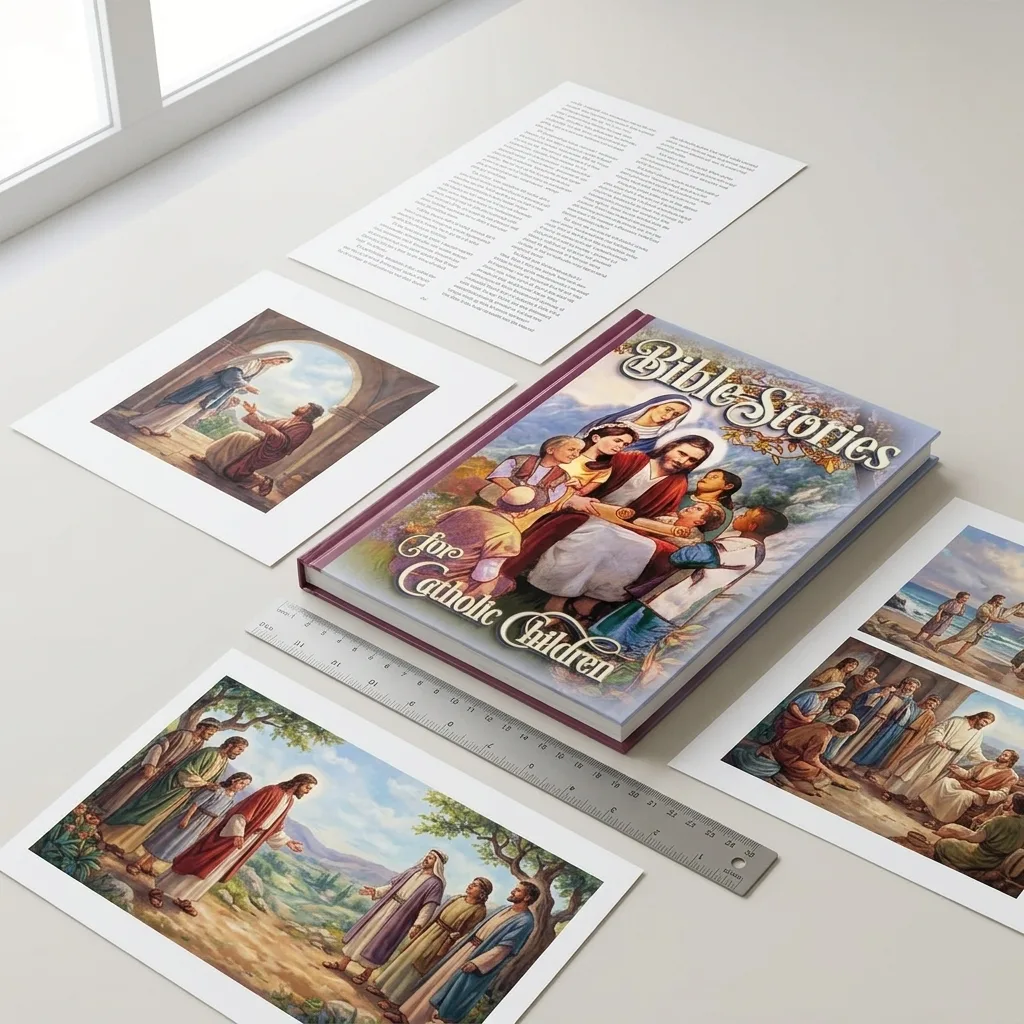
There is no single standard size for a children’s Bible. Choose the trim size around the illustration style, amount of text, distribution channel, and the age group rather than selecting a format only because it is familiar.
Square and landscape formats for visual storytelling
Square formats such as 210 x 210 mm or 8 x 8 inches give illustrators a balanced canvas for scenes, characters, and large type. A landscape format can work well when wide scenes or activity-led spreads are central to the concept. These formats are often suitable for Bible storybook printing where each spread carries a distinct story moment.
Portrait formats for longer reading
Portrait sizes such as 210 x 280 mm or 8 x 10 inches provide a conventional book shape and room for a clear title on the cover. They can suit a longer collection of stories, a children’s devotional, or a title that combines illustrations with more text. Smaller portrait books are convenient for packing and may reduce paper consumption, but type and illustrations need enough room to remain easy to read.
Ask your printer to confirm the final cover spread after the text paper and page count are agreed. Spine width is calculated from the completed text block, not estimated from page count alone. This guide to calculating book spine width before printing explains why paper caliper and binding construction need to be settled first.
Select Paper for Text and Illustrations
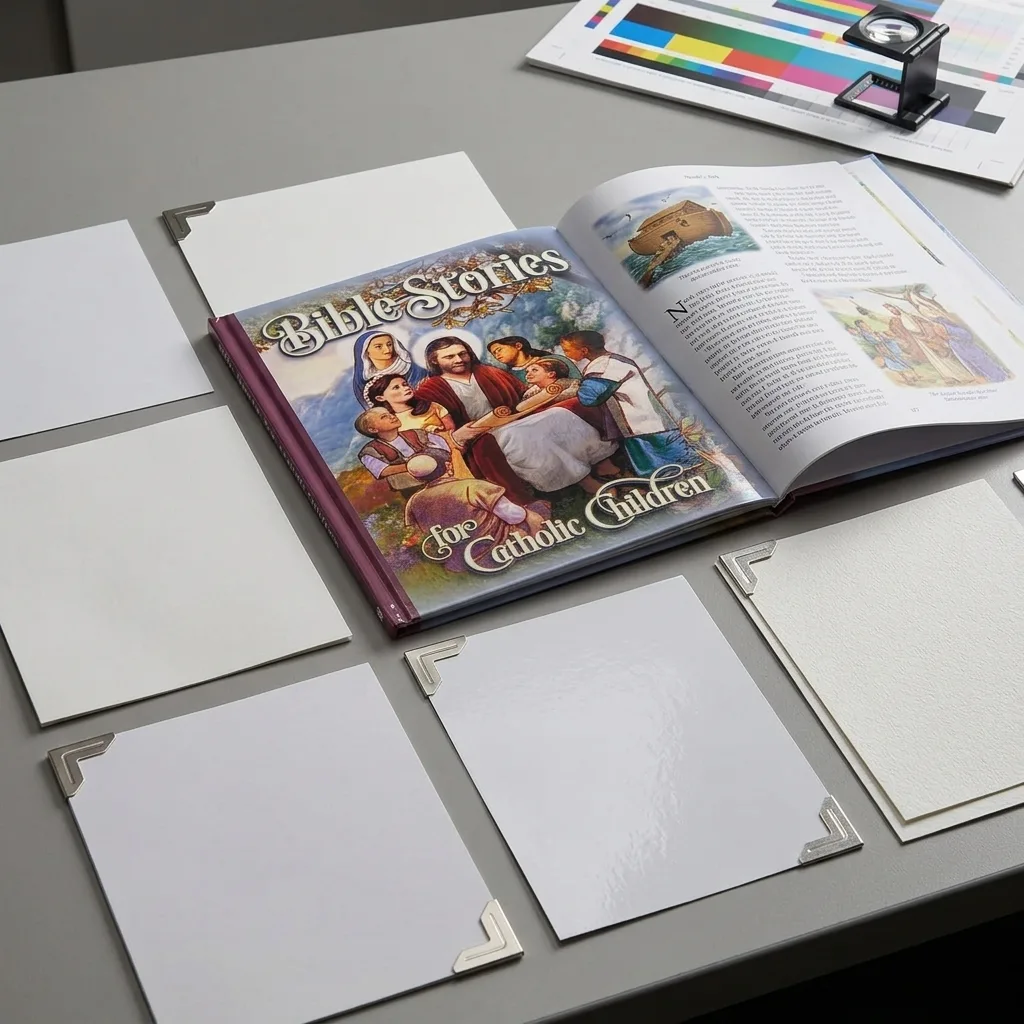
Paper selection affects colour appearance, show-through, page turning, thickness, and mailing weight. For children’s Bible book printing, choose the text stock based on the artwork coverage and reading purpose instead of choosing by weight alone.
Coated paper for image-heavy pages
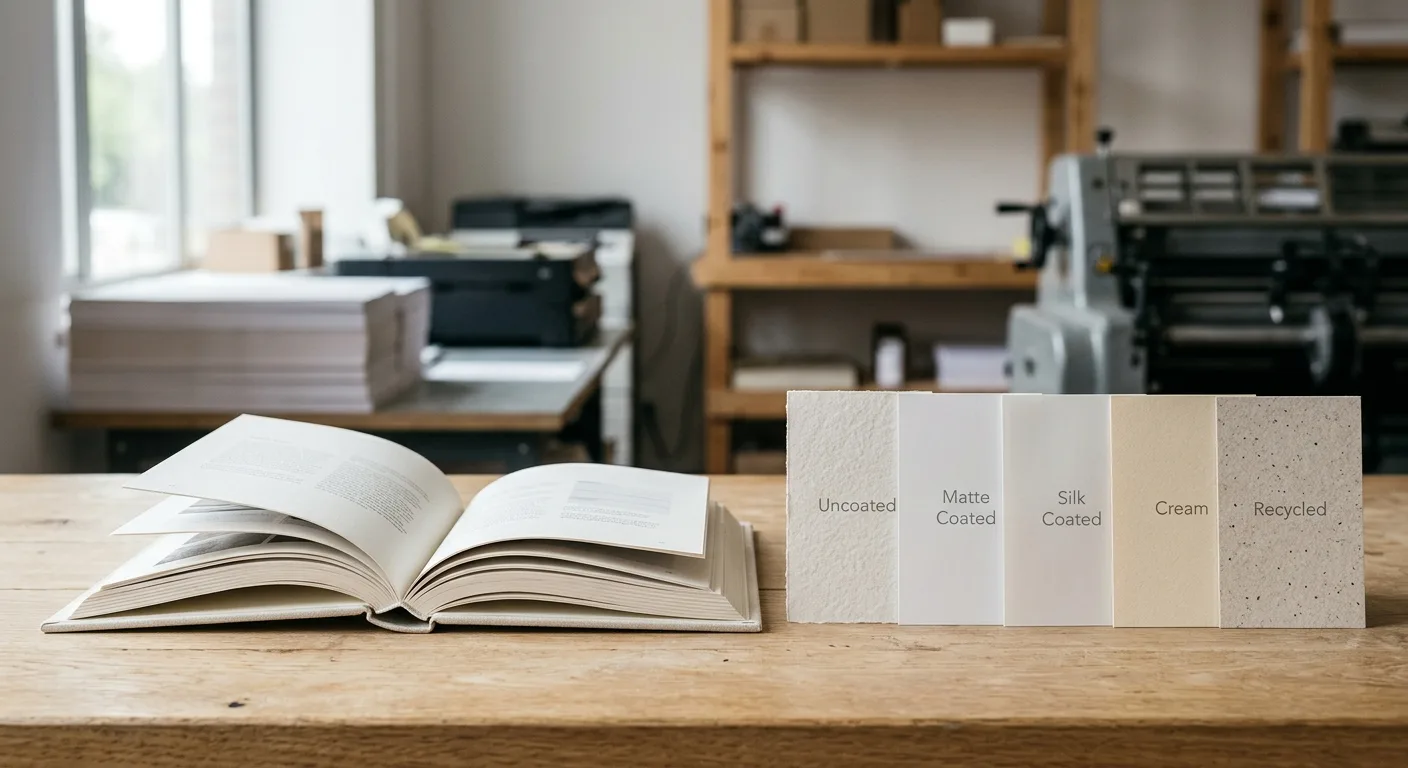
Gloss or matt coated paper is commonly considered for full-colour Bible picture book printing. A coating helps reproduce saturated illustrations and fine image detail. Matt coating reduces surface shine and can feel more subdued for reading, while gloss can make colourful artwork appear more vivid. The appropriate weight depends on page design and binding, but a moderate text weight is often practical for an illustrated book that must remain manageable for a child.
Uncoated paper for a softer reading surface
Uncoated paper can suit text-led story collections, activity pages, notes, or a warm, natural visual direction. It has a more absorbent surface, so colours may print differently from coated stock. If rich illustrations are essential, reviewing a proof or sample is useful before approving full production.
Cover stock needs more rigidity than text paper. A paperback cover is normally a heavier cover stock, while a casebound book uses printed cover material wrapped around boards. For a fuller explanation of surface, weight, opacity, and common stocks, see book printing paper types for custom books.
Paper choices should be confirmed with the printer because available stocks, paper caliper, colour expectations, finish, quantity, and destination can change the price and schedule.
Compare Binding Options
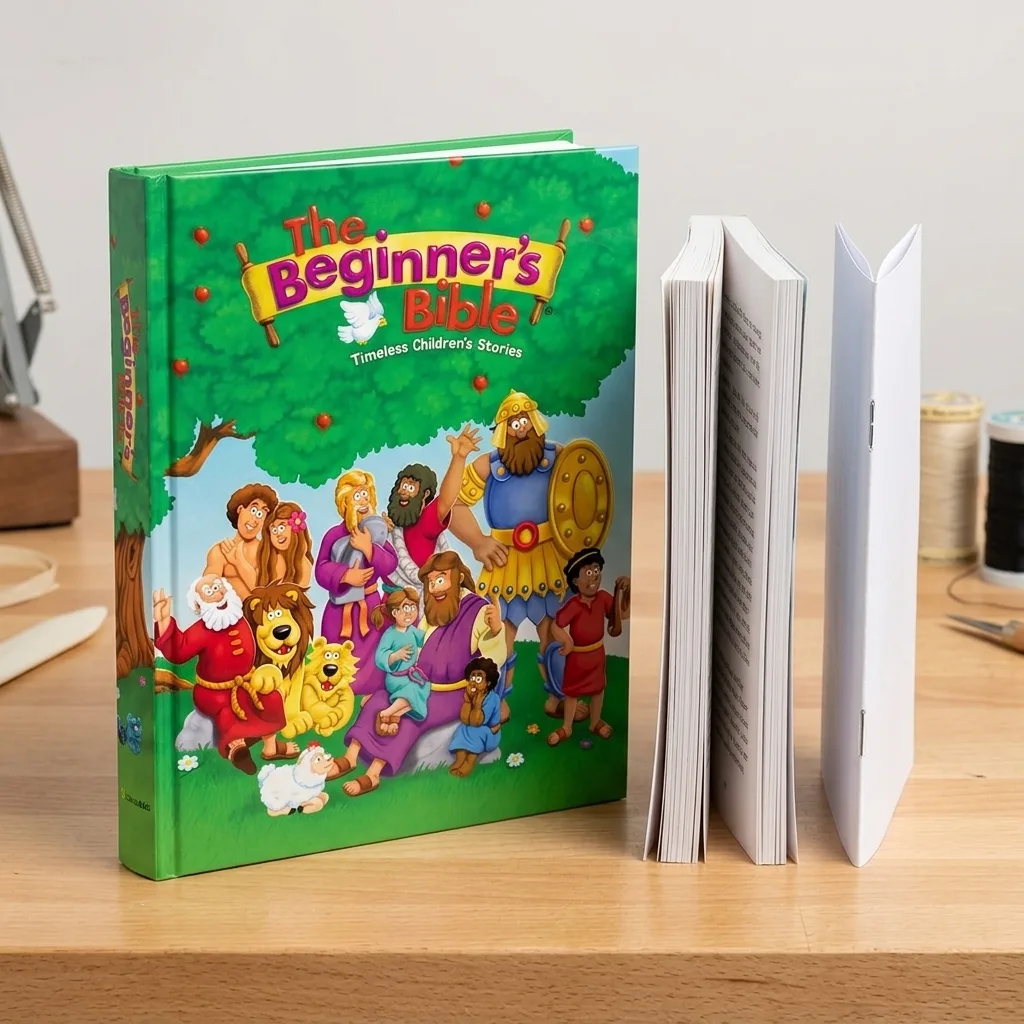
Binding determines how the book opens, how it stands up to repeat use, and how much spine space is available. Match it to page count and intended use before the cover is designed.
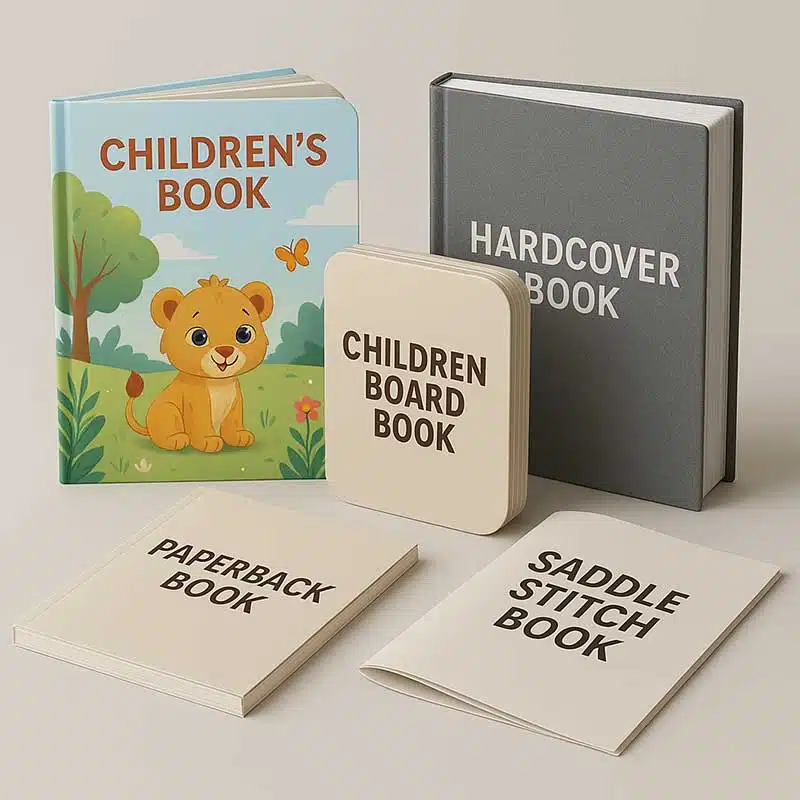
Hardcover or case binding
Case binding gives a children’s Bible a rigid cover and a substantial presentation. It is often a sensible choice for a keepsake title, gift edition, school resource, or book expected to be read repeatedly over time. A laminated printed case can add surface protection. Depending on the construction and page count, sewn sections may also be considered for a durable text block.
Perfect-bound paperback
Perfect binding suits many paperback Bible storybooks with sufficient page count for a square spine. It offers a lighter, more economical format than a hardcover. The book should be designed with realistic inner margins because a perfect-bound title will not open as flat as a saddle-stitched booklet.
Saddle stitching for short titles
Saddle stitching uses staples through the folded spine and is appropriate for short, page-count-efficient projects. It is usually a poor fit for a long children’s Bible collection, but can suit a short story sampler, church handout, or companion booklet. Page counts are normally planned in multiples of four.
For a hardcover storybook concept, review the construction shown on YBJ Printing’s hardcover children’s Bible story book printing product page. If the project is specifically for younger children, discuss edge, page, and cover construction with the printer based on the planned age range and local market requirements.
Children's Bible Format Comparison
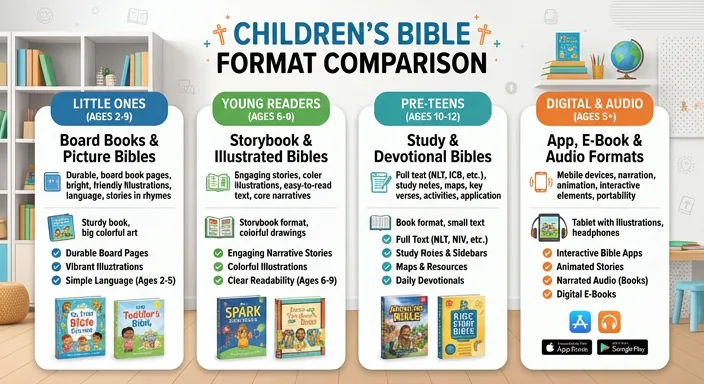
The following comparison is a planning tool, not a fixed manufacturing specification. Final suitability depends on the actual page count, paper, artwork, finishing, order quantity, and shipping destination.
| Format | Best suited to | Paper direction | Binding direction | Buyer consideration |
|---|---|---|---|---|
| Short illustrated storybook | Preschool or early readers; one story or a small story set | Moderate-weight coated or uncoated text stock, based on artwork | Saddle stitch for short page counts; perfect bind when page count supports it | Keep type large and plan pages in the correct binding increment. |
| Picture-led Bible collection | Full-colour retellings with substantial illustrations | Matt or gloss coated text paper | Perfect bound or hardcover | Review image colour and show-through in a proof. |
| Gift or keepsake children’s Bible | Family, school, ministry, or retail presentation | Text stock chosen for content and target thickness | Hardcover, with construction confirmed by page count | Allow for cover-spread and spine calculations before final artwork. |
| Text-led devotional or reading book | Older children; more reading per page | Uncoated or lightly coated text paper | Perfect bound or hardcover | Prioritise opacity, readable type size, and inner margin. |
Buyer Checklist Before Requesting a Quote
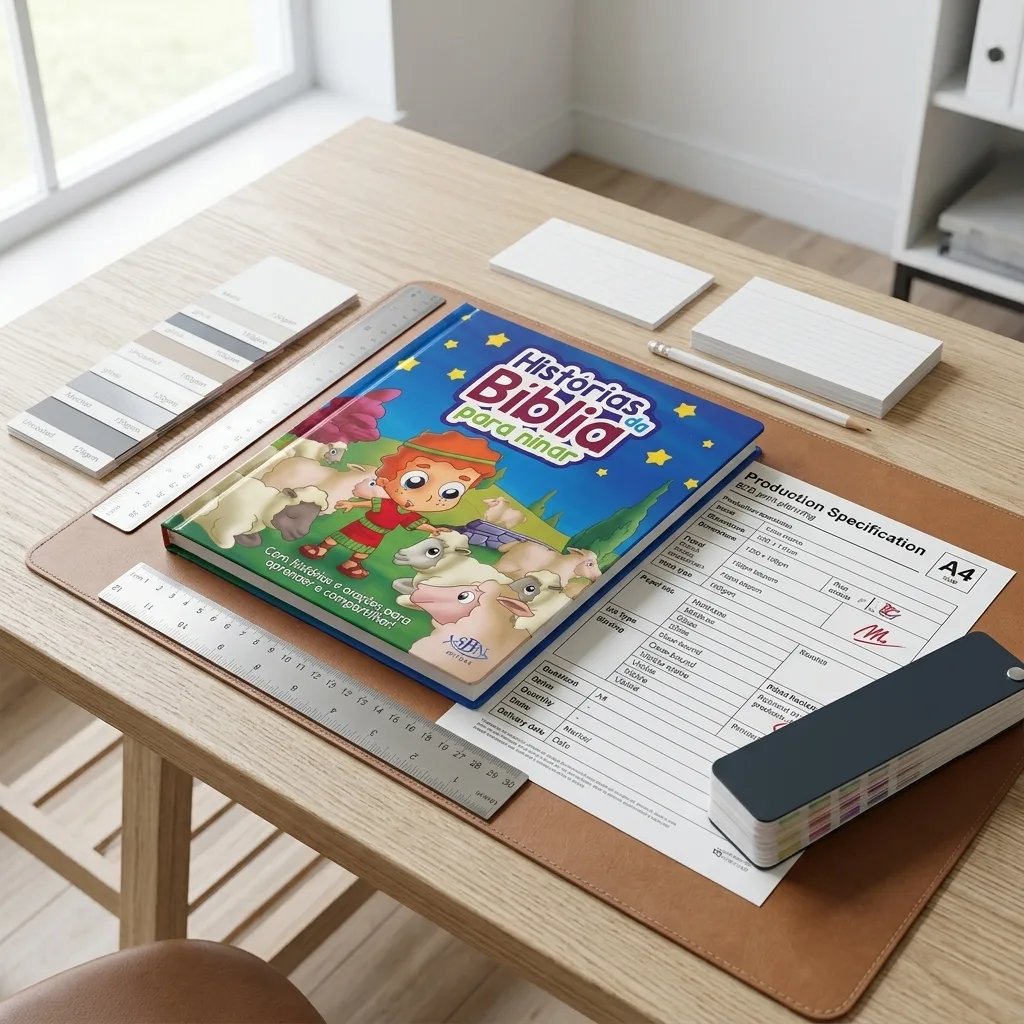
Use this checklist to make a children’s Bible printing enquiry clear and comparable:
- Product purpose: retail Bible storybook, school resource, church programme, gift, or promotional edition.
- Reader age: this informs trim size, type size, illustration density, and physical construction.
- Finished trim size: state width and height, plus portrait, landscape, or square orientation.
- Page count: include cover pages where applicable and confirm whether the count is final.
- Quantity: quote requirements can differ substantially by order volume.
- Text and cover paper: name a preference, or ask for options based on the artwork.
- Binding and finish: specify paperback, hardcover, laminate preference, and any special cover treatment under consideration.
- Artwork status: print-ready PDF, completed design requiring preflight, or files still in development.
- Delivery destination: country and, when available, delivery postcode or city.
For a Bible story title with a traditional hardbound appearance, YBJ Printing’s children’s Bible story book printing page provides a relevant product reference. A clear brief lets the printer suggest practical adjustments before cover files and production details are locked.
Prepare Artwork and Cover Files
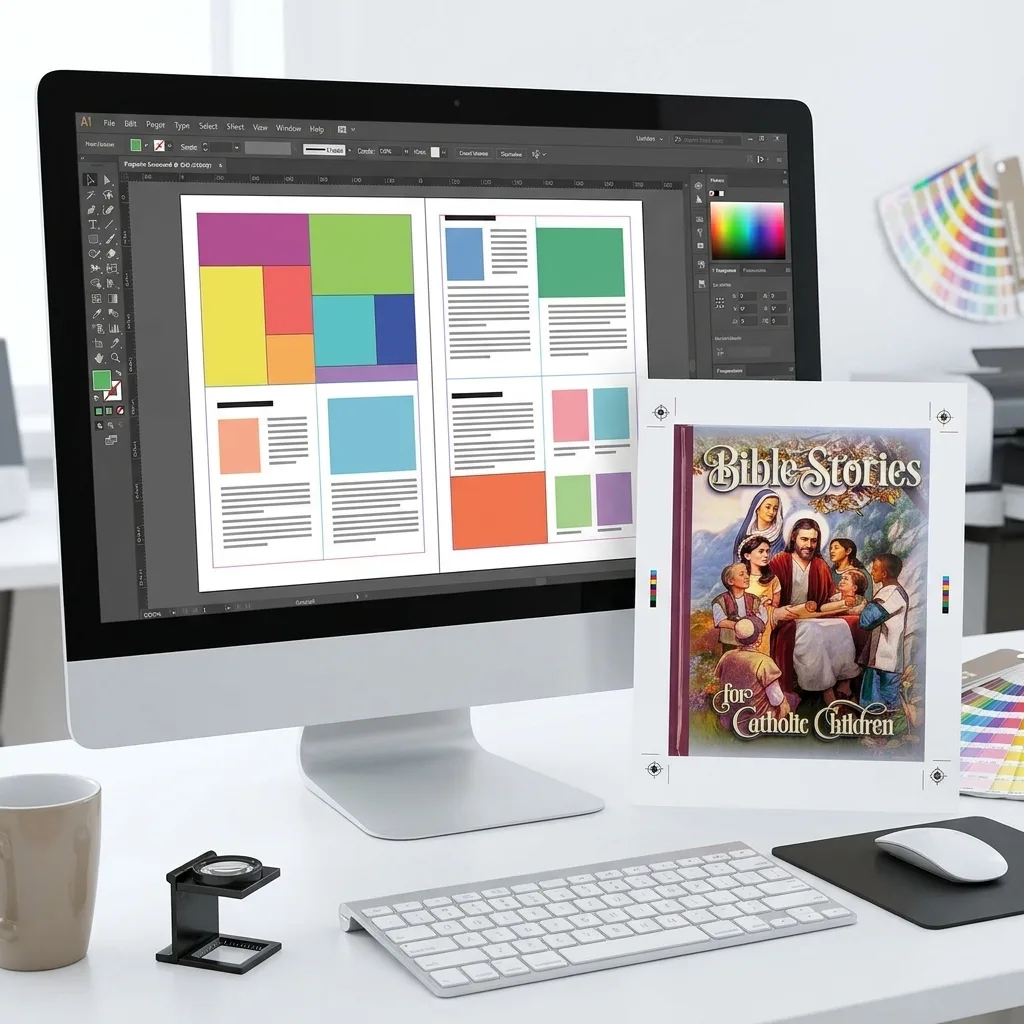
Good artwork preparation protects the reading experience and reduces avoidable revisions. Supply a print-ready PDF when possible, with the final trim size, bleed, safe margins, embedded fonts, and suitable image resolution. Keep essential text and faces away from trim edges, folds, and the binding side of each page.
For illustrations intended to print in colour, design in a print-appropriate colour workflow and discuss critical brand or illustration colours before production. Screen colours are not a final print reference. A proof helps check spelling, page order, image placement, colour expectations, and the position of important elements near the spine.
Hardcover cover files require a complete spread: back cover, spine, front cover, and the correct hinge allowances. Do not finalise the spine title location until the printer confirms the cover template from the selected paper and binding construction. For a compact, rounded-corner look aimed at younger readers, see the example format on the children’s Bible book printing page.
Relevant Children's Bible Book Options
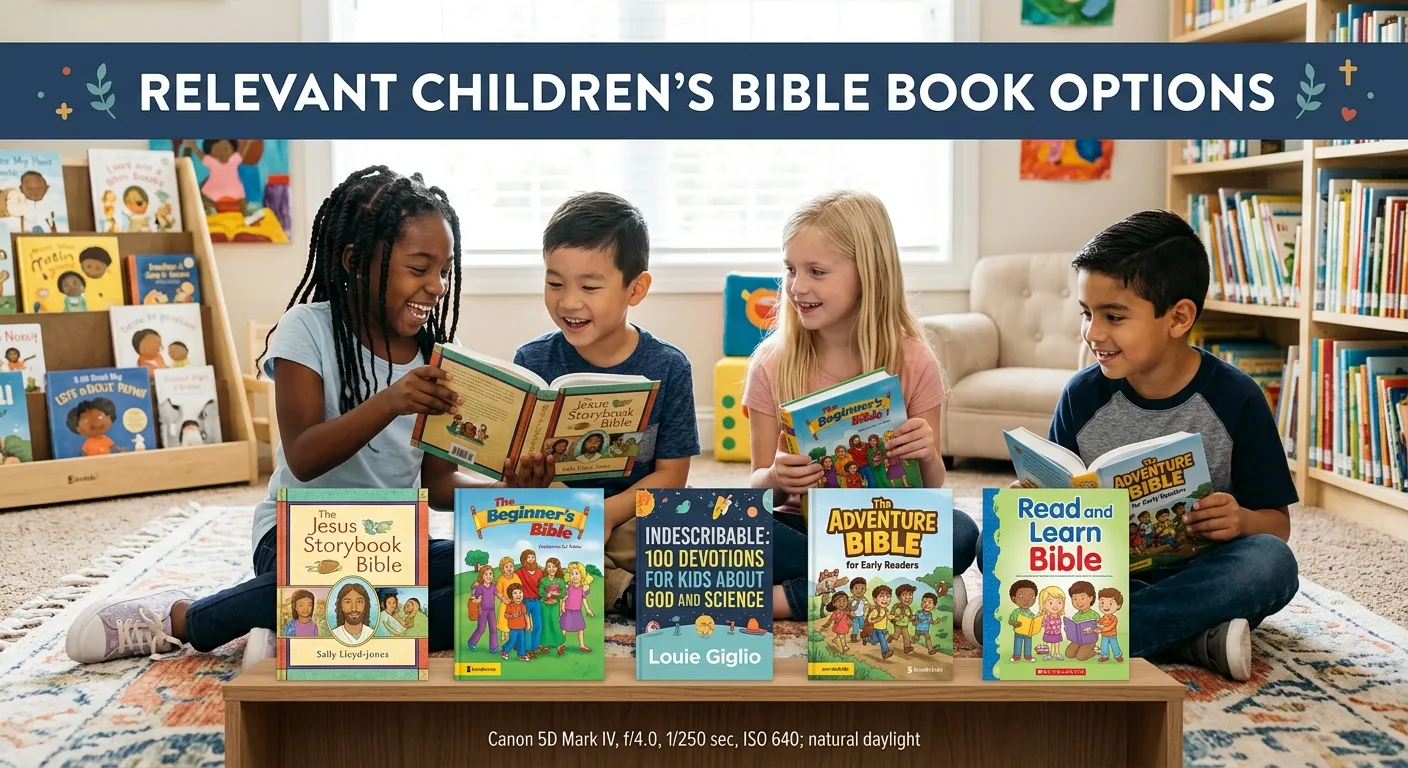
Choose the product direction that most closely matches the intended reader and content:
| Product option | Suitable project direction | Explore |
|---|---|---|
| Children’s Bible story book | Illustrated Bible stories presented as a substantial book. | View children’s Bible story book printing |
| Children’s Bible book | A compact, child-focused Bible story format. | View children’s Bible book printing |
| Hardcover children’s Bible story book | A rigid-cover direction for gift, school, or repeat-use editions. | View hardcover children’s Bible story book printing |
These pages are useful starting points for discussing custom Bible books for kids. The final materials and construction should still be confirmed against your own page count, artwork, budget, and delivery requirements.
Request a Children's Bible Printing Quote
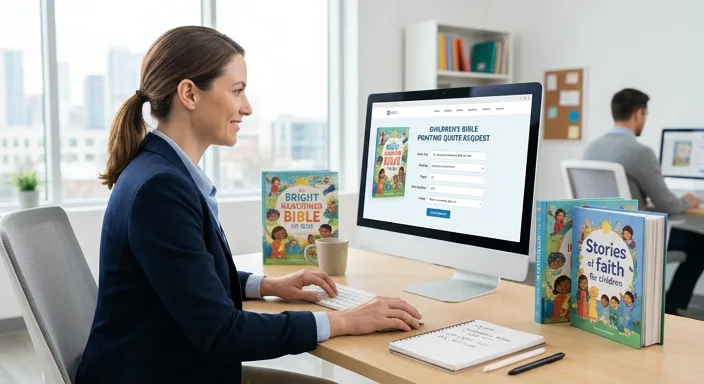
A useful quotation request identifies the product type, finished trim size, page count, quantity, paper or binding preference, cover finish, file status, and destination country. Attach the PDF or a representative sample of the artwork when available. This gives the production team the information needed to review the specification and respond with options appropriate to the project.
Conclusion
Successful children’s Bible printing begins with the reading experience: choose a trim size that supports the content, paper that suits the illustrations and text, and binding that matches the book’s page count and expected use. Confirm these decisions before completing cover artwork, especially for hardcover projects. A clear specification makes it easier to compare print options and plan a book that readers can use comfortably.
FAQ
What size is best for a children's Bible book?
A square or portrait format is often practical, but the best size depends on reader age, illustration style, text volume, and distribution needs. Square sizes support picture-led spreads, while portrait sizes can suit longer reading. Confirm the finished size before laying out the final PDF.
What paper is suitable for Bible picture book printing?
Matt or gloss coated text paper is often considered for full-colour illustrations because it supports detailed image reproduction. Uncoated paper may suit text-led or activity-focused content. The best weight and finish depend on the artwork, page count, binding, and desired book weight.
Should custom Bible books for kids be hardcover or paperback?
Hardcover is often selected for gift editions, school resources, and titles intended for frequent reuse. Paperback can be a lighter option for suitable page counts and budgets. Consider reader age, expected handling, distribution, and the desired presentation before deciding.
What information is needed to quote children's Bible printing?
Provide the product type, trim size, page count, quantity, paper or binding preference, finish, file status, and destination country. Artwork files or a sample layout help the printer check the specification and prepare a more relevant quotation.
When should the spine width be calculated?
Calculate or confirm spine width after the text paper, page count, and binding construction are selected. Paper thickness affects the text block, so a cover template made too early may not match the final book.
Discuss Your Children's Bible Book Project
Request a quotation for children’s Bible printing with your product type, trim size, page count, quantity, paper or binding preference, finish, file status, and destination country. YBJ Printing can review the details and help you move toward a practical production specification.