
Table des matières
- What are board book sizes?
- Choose size and page count together
- Common board book formats
- How to plan a board book page count
- Production factors that affect your choice
- Artwork and proofing considerations
- Final buyer checklist
- Conclusion
Board book size and page count shape the reading experience, illustration layout, production method and shipping profile. Use this guide to select a format that suits your age group, content plan and budget.
What are board book sizes?
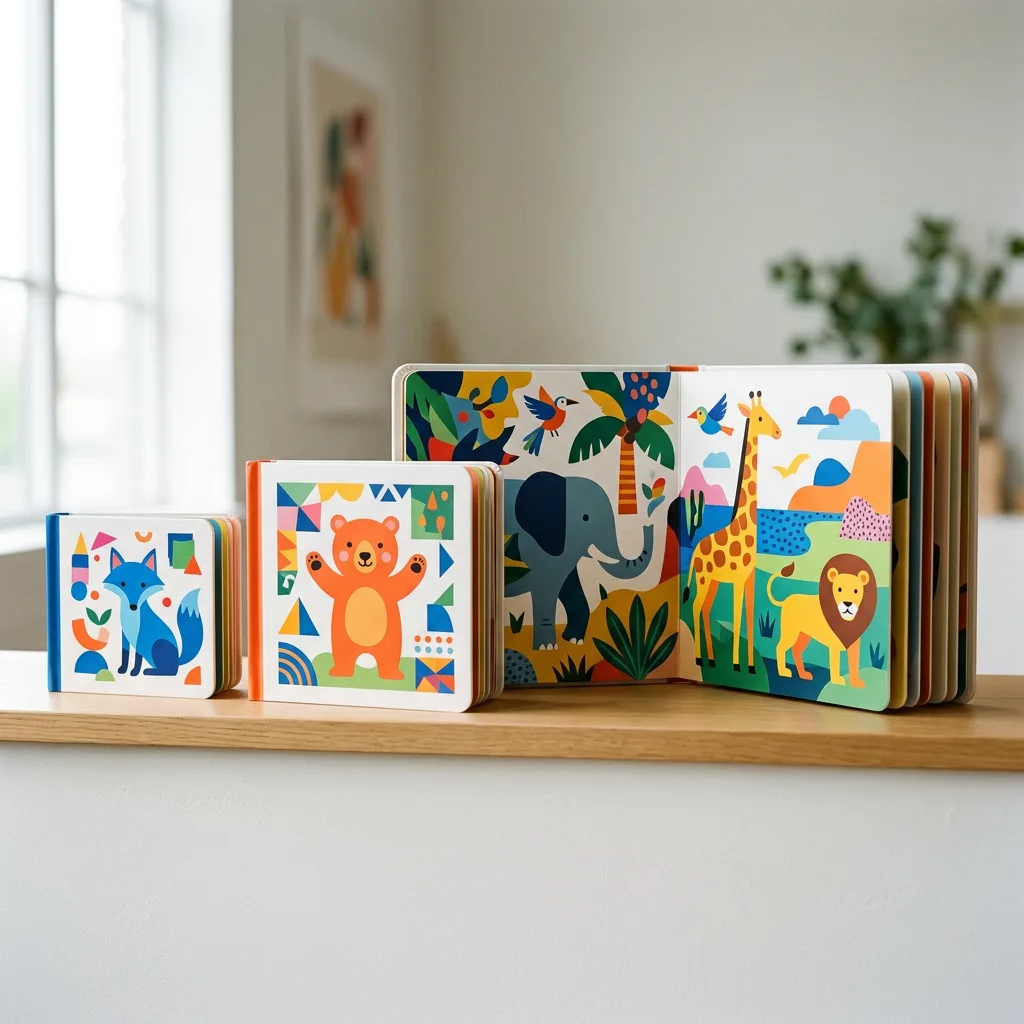
Board book sizes are the finished width and height of a children’s book made with thick paperboard pages. The right format is one that gives young readers comfortable handling, gives illustrations enough room, and supports the required content without adding unnecessary pages or material.
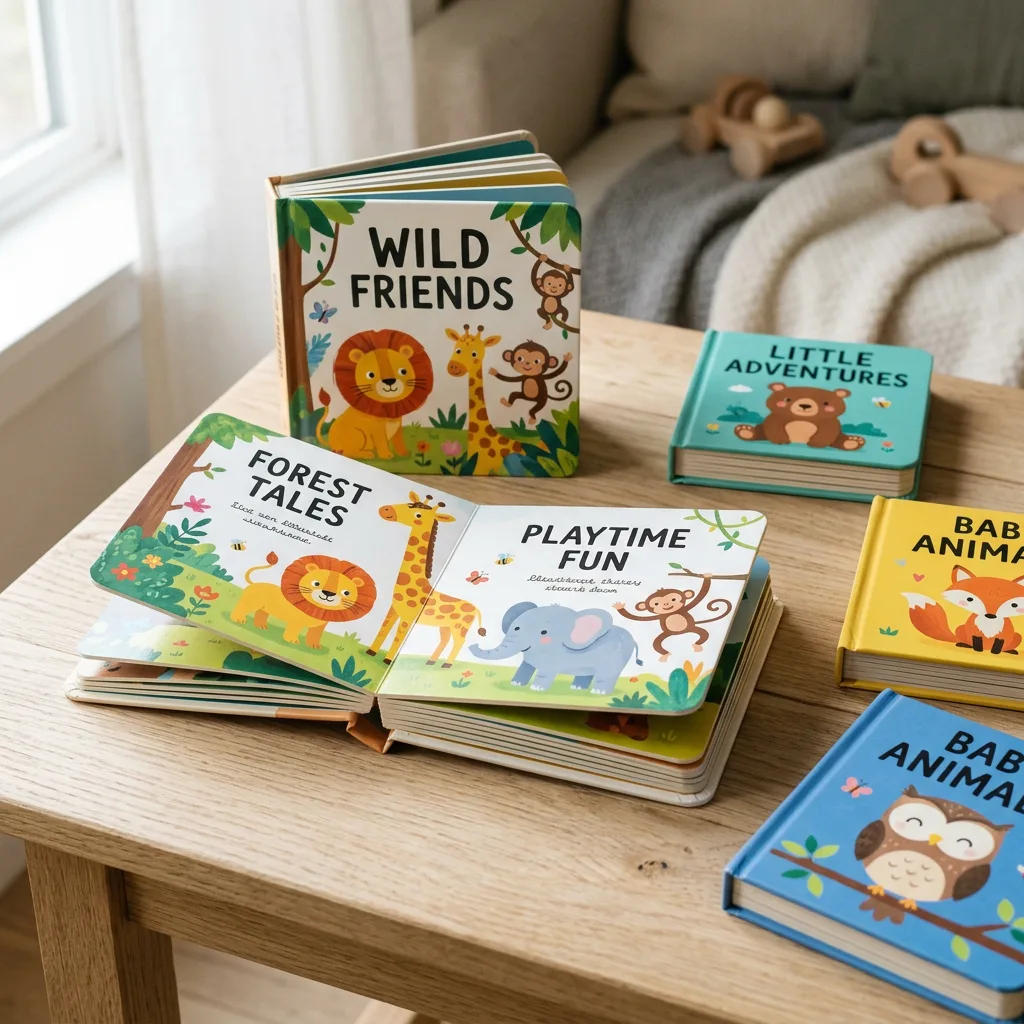
For many children’s titles, square formats around 150 × 150 mm to 200 × 200 mm are practical starting points. Smaller books are compact and easy for little hands; larger formats offer more visual impact but use more board material and take up more space in cartons. Portrait and landscape formats can be equally effective when they match the illustration style.
Size alone is not a complete specification. A board book quotation also depends on the page count, board thickness, cover treatment, special features, quantity, artwork readiness and shipping destination. This guide assumes a conventional printed board book with laminated board pages. Sound modules, lift-the-flap elements, die-cuts and other interactive features require additional engineering and assembly planning.
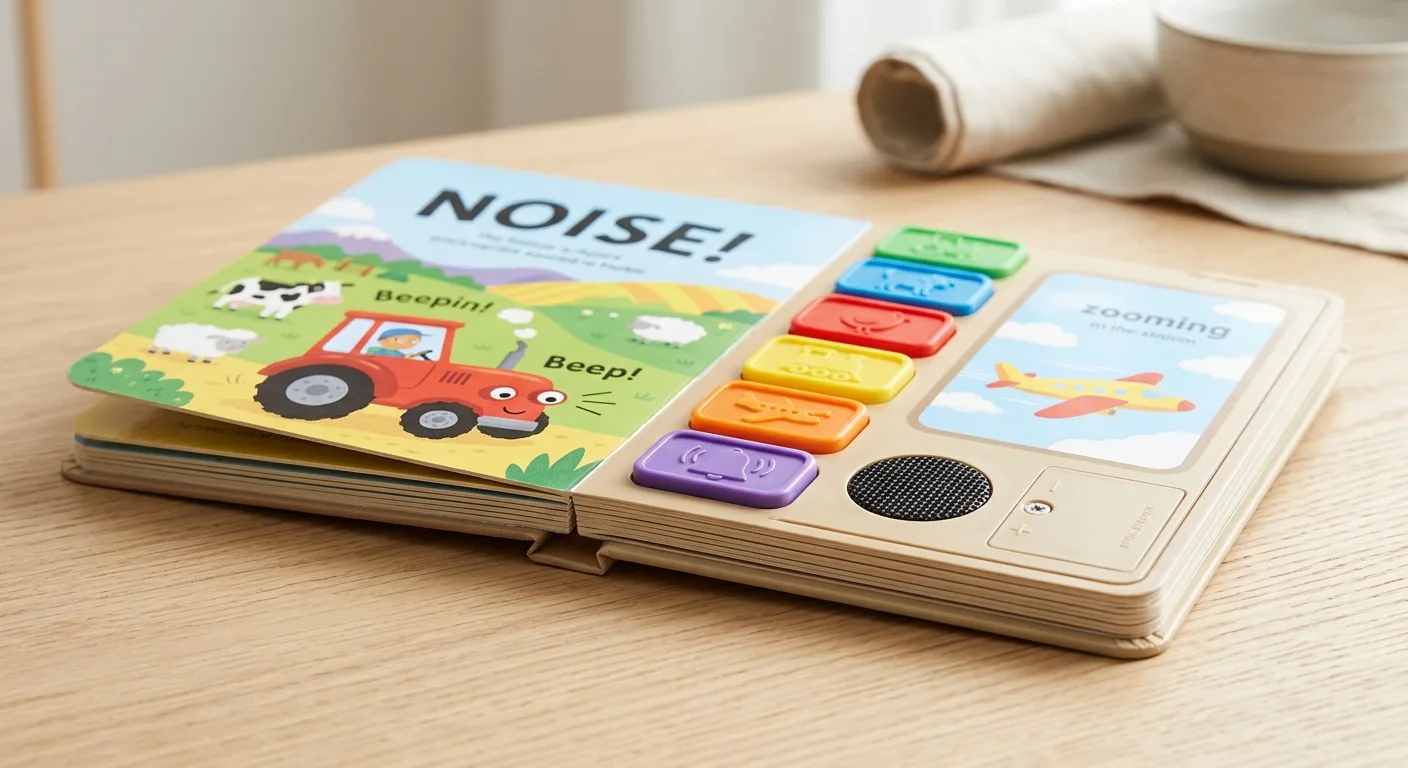
If your title includes audio, review our guide to custom children’s sound book printing before fixing the format. The placement of buttons, speakers and batteries can affect the usable page area and the final construction.
Choose size and page count together
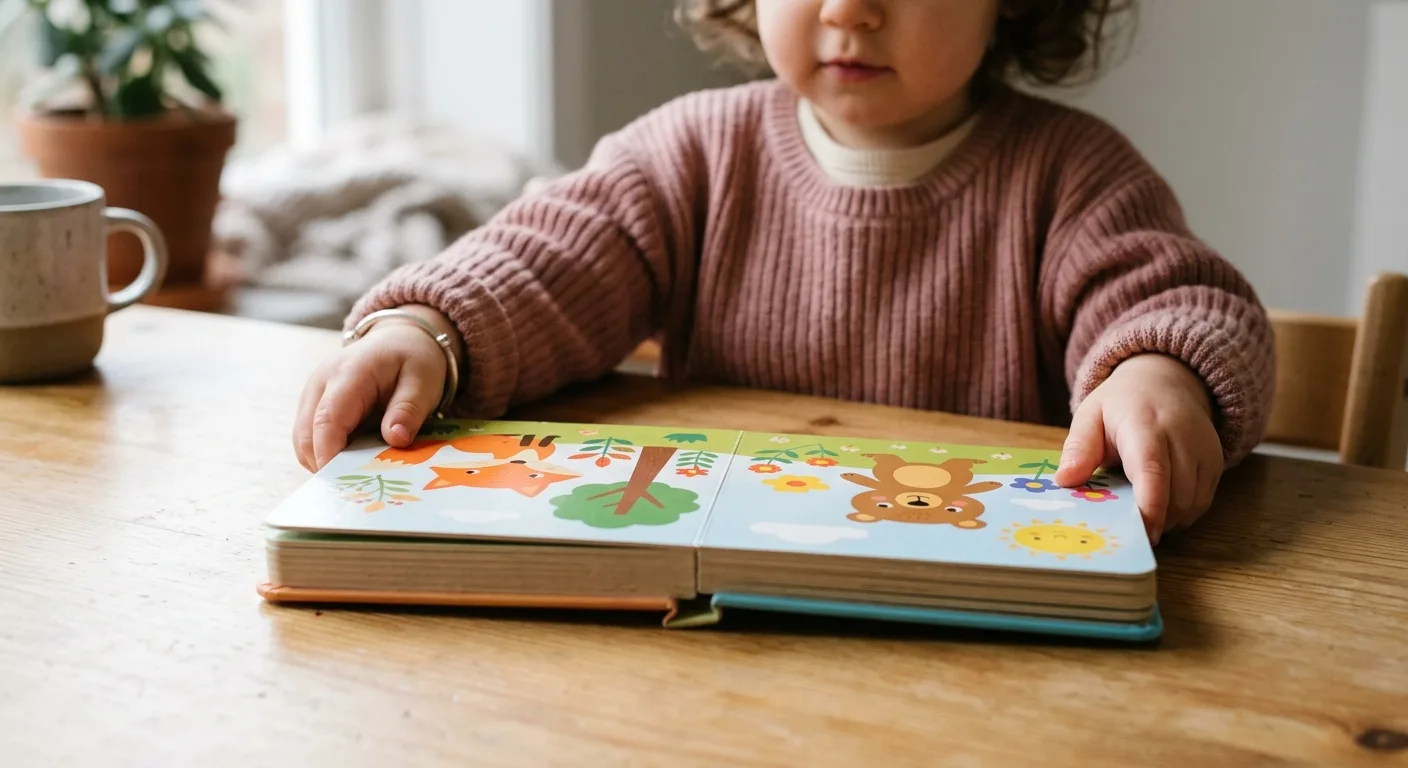
Start with the reading purpose, then select dimensions and page count as one decision. A first-words book, bedtime story, brand giveaway and educational title have different demands.
- Age group: Toddlers generally benefit from compact, robust books with simple page turns. Older preschool readers can use a larger format with denser scenes or longer text.
- Content density: A single object and word per spread needs less area than a busy seek-and-find scene, a sequence of instructions or a detailed educational illustration.
- Illustration orientation: Character-focused artwork often suits portrait or square pages. Wide scenes, vehicles, landscapes and before-and-after sequences often suit landscape pages.
- Retail and packaging: Consider shelf footprint, gift-box dimensions and master-carton efficiency. A non-standard size may be right creatively, but it should be evaluated as part of the full project.
- Durability and handling: More pages create a thicker book. This can feel substantial, but a very thick, small book may be harder for young children to hold open comfortably.
Define the finished trim size rather than only supplying a digital canvas size. The printer needs the final closed-book width and height, plus bleed, safe area and any required dieline. For a square 180 × 180 mm book, for example, both the individual page dimensions and the full layout requirements must be confirmed during prepress.
Common board book formats and when to use them
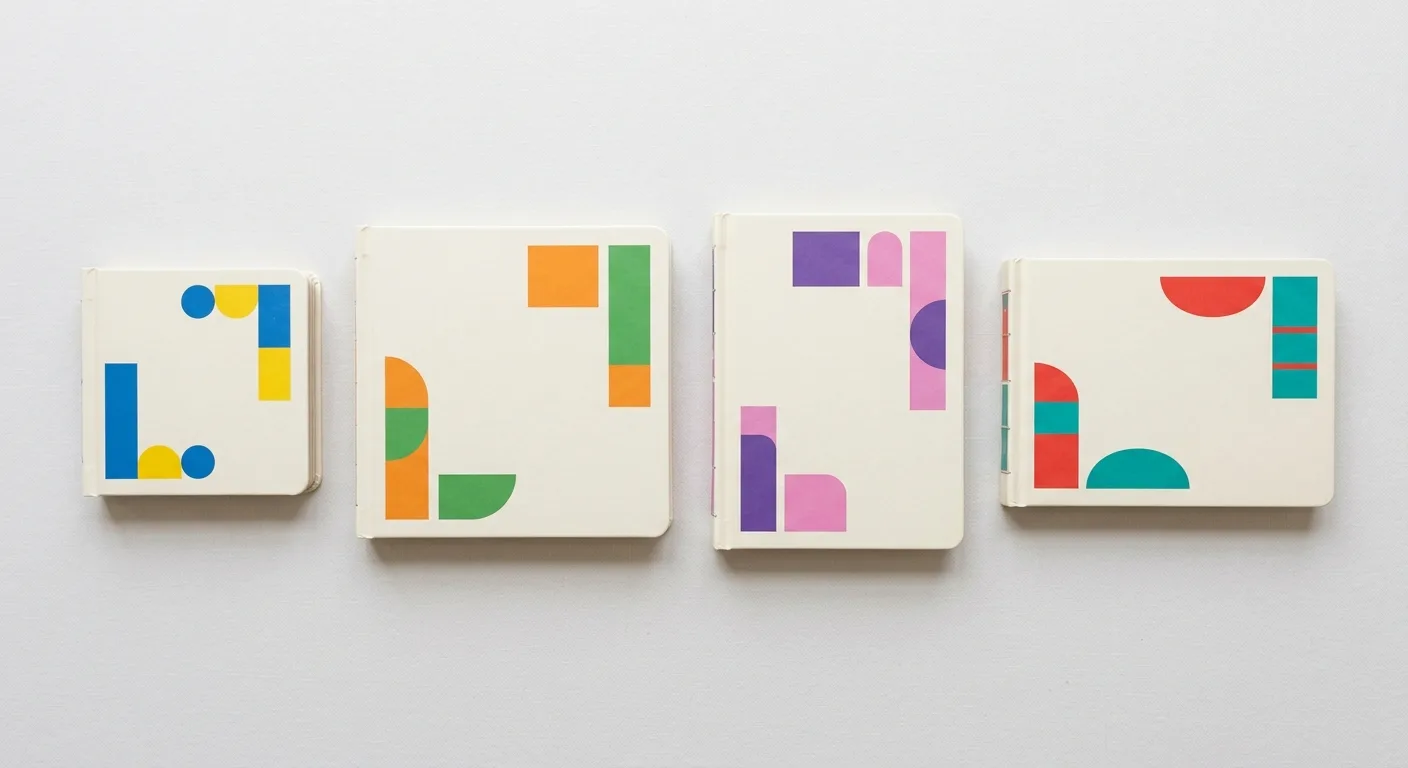
There is no single standard board book size for every market. The following formats are useful planning references; a custom trim size may be appropriate when it serves the content and packaging plan.
Small square: approximately 150 × 150 mm
A small square board book is portable and approachable for babies and young toddlers. It works well for first concepts, colours, animals, simple rhymes and short gifting titles. Because each page has limited area, keep type large and illustrations uncluttered. This format is also worth considering where compact packaging is important.
Medium square: approximately 180 × 180 mm
A medium square format provides a balanced canvas for many picture-led titles. It can accommodate a short sentence or two with a clear illustration on each spread, making it a flexible choice for early-learning series and storybooks. Square pages also make cover design and character placement straightforward.
Large square: approximately 200 × 200 mm or larger
A larger square book gives illustrations more presence and can support more detailed learning content. It may suit premium gifts, visual storytelling and titles intended to be read together by an adult and child. The trade-off is higher board consumption, a larger shipping volume and potentially more demanding carton planning.
Portrait and landscape formats
Portrait books suit vertical subjects such as people, trees, buildings and sequential learning cards. Landscape books create a natural stage for panoramic scenes, transport themes and spread-based storytelling. Do not force a layout into a format that fights the artwork. A thumbnail storyboard is the quickest way to test whether a chosen orientation supports the visual rhythm.
How to plan a board book page count
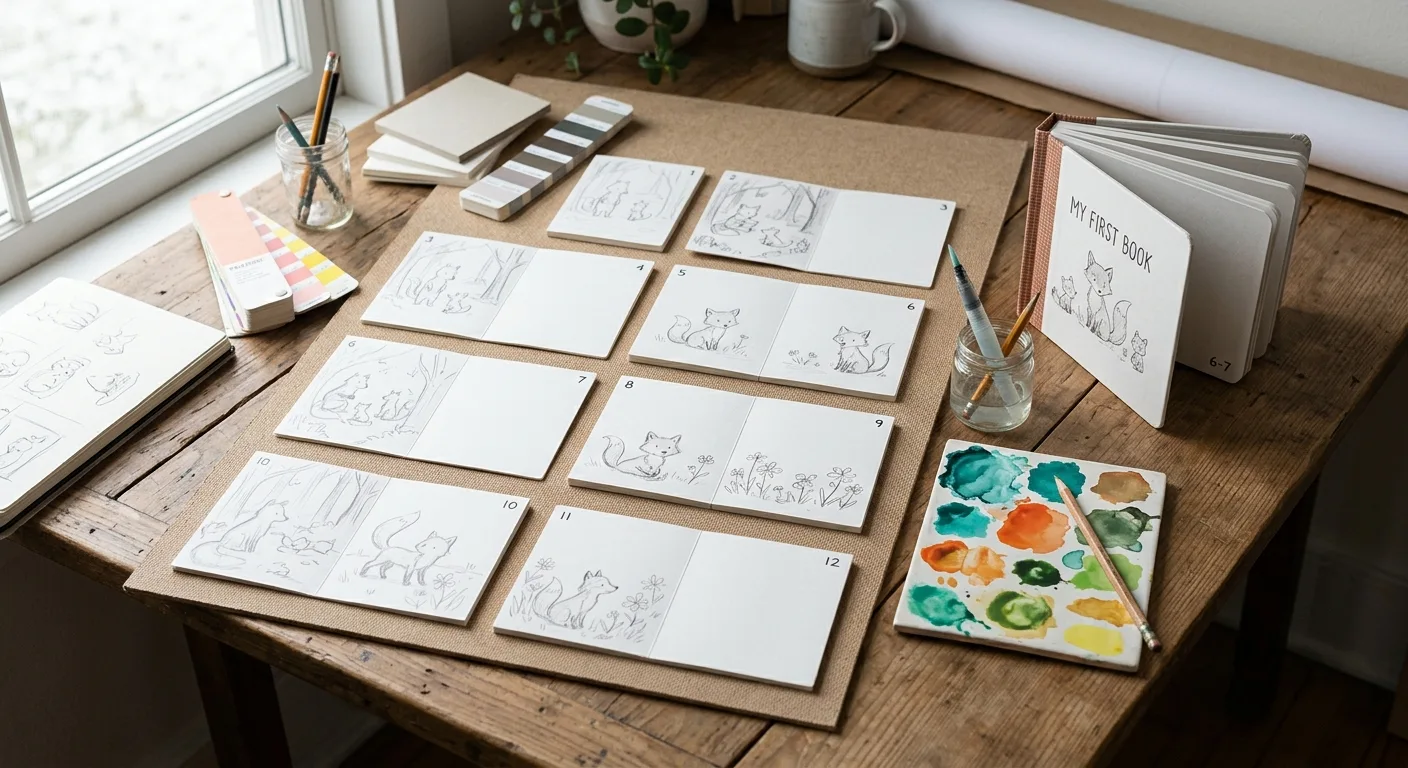
Board book page counts are commonly planned in even numbers because pages are paired through the manufacturing process. Exact available counts depend on the board construction, binding method and finishing specification, so confirm the final count with your printer before releasing artwork.
For planning purposes, a shorter book can suit simple concepts and very young readers, while a longer book allows a complete narrative, more vocabulary or repeated learning activities. Rather than beginning with a target thickness, build a page plan around the content.
- List the reading beats. For a concept book, each beat may be one item, word or action. For a story, each beat is a change in setting, action or emotion.
- Allocate spreads first. A spread is the left and right pages viewed together. Planning by spread helps you control pacing and avoid accidental crowding near the end.
- Reserve front and end matter. Include title, copyright, publishing details, acknowledgements, instructions or brand pages where needed.
- Check page-turn moments. Important surprises, questions and reveal moments are usually stronger after a page turn than when buried in a dense spread.
- Check physical thickness. A high page count in a small trim size can create a thick, compact object. Ask for guidance on a proportionate board specification.
Be precise about what “page” means in your request. Some buyers count individual board faces, while others refer to spreads. State the number of printed pages and, if possible, supply a numbered dummy or PDF. This avoids a preventable quotation or artwork mismatch.
For interactive titles, page planning must allow for component zones and safe operation. Our article on planning audio for a custom children’s sound book explains why button mapping and content flow should be considered early.
Production factors that affect board book format
Two board books with the same finished dimensions may not have the same cost, lead time or feel. The following assumptions should be agreed before comparing quotations.
- Board and construction: Board thickness and the way pages are mounted influence rigidity, book thickness and the appearance of edges.
- Page count: More pages generally mean more printed material, board and assembly work. The effect is not always linear because setup, finishing and packing also contribute.
- Print coverage and colours: Full-colour illustrations, large solid areas and special inks should be reviewed in relation to the intended appearance. Standard process printing uses CMYK; branded spot colours may require a separate specification.
- Surface finish: Lamination protects the printed surface and changes the tactile appearance. Gloss, matte and other finishes should be selected for the intended use and artwork style.
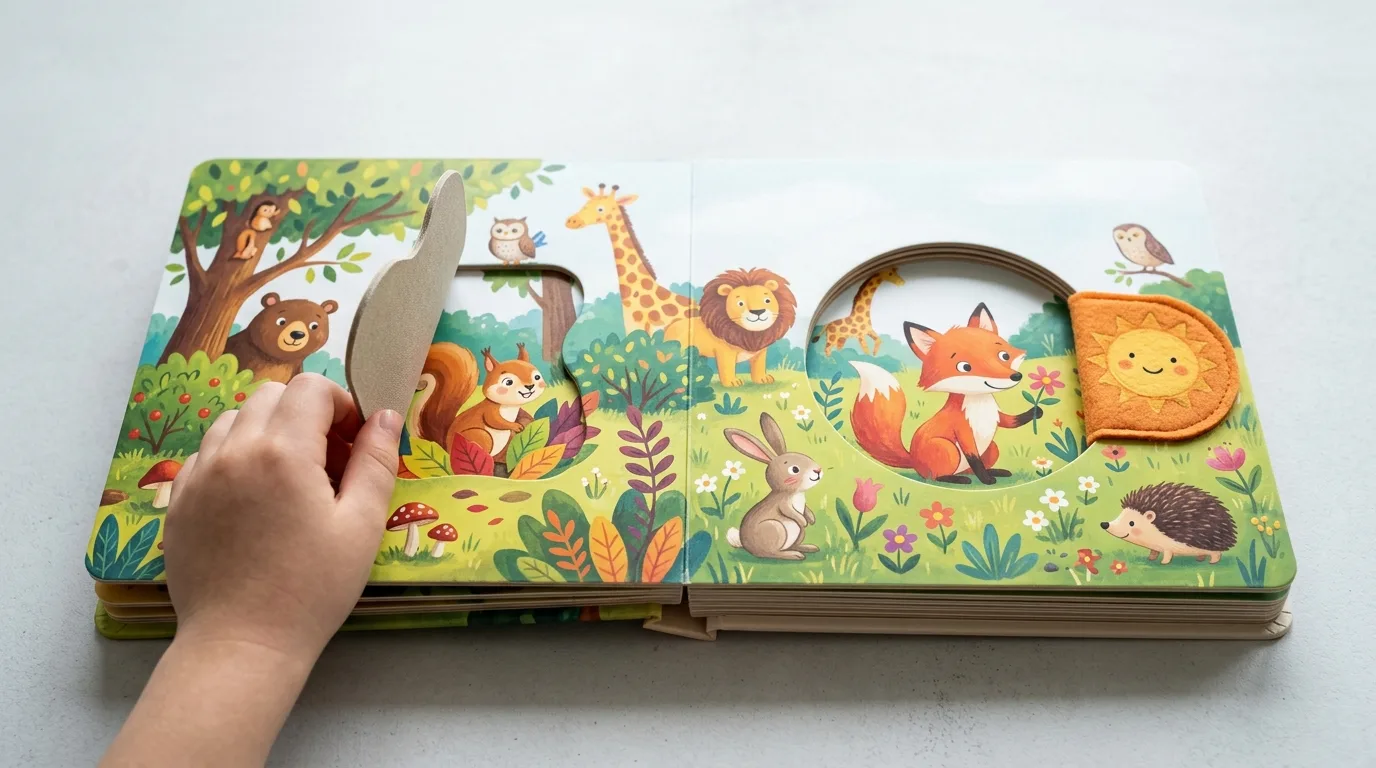
- Special features: Rounded corners, shaped pages, die-cuts, flaps, foil, embossing, sound modules and custom packaging add production steps and may affect the minimum practical quantity.
- Quantity and destination: Production quantity affects unit economics, while packed dimensions, carton count and destination country affect freight planning.
Use CMYK artwork for normal full-colour printing unless a project specifically requires a spot colour. Read CMYK, RGB and Pantone for book printing to understand how colour mode affects file preparation and expectations.
Unlike a casebound hardcover book, a typical board book does not rely on a conventional printed spine in the same way. However, thickness still matters for packaging and presentation. If your project also includes a slipcase, companion hardcover or other spine-based item, consult this guide to calculating book spine width for printing.
Artwork and proofing considerations
Good format decisions can be undermined by artwork that does not account for trimming, page edges and the centre fold area. Build the file to the printer’s confirmed template rather than assuming a template from a different book type will apply.
Keep critical text, faces, logos and small details within the safe area. Extend background colours and images through the required bleed. Avoid placing important visual information too close to the gutter or page edge, particularly where a spread must read as one continuous scene. Small text should be assessed at actual printed size, not only at screen zoom.
A physical dummy is valuable for a first edition, a new format or an interactive concept. It lets the team check pacing, hand feel, page turns, corner treatment and how a child interacts with the object. For sound projects, artwork proofing should also be coordinated with the audio files, button icons and component placement. See children’s sound book file setup and proofing for the additional checks involved.
Final buyer checklist before requesting prices
Use this checklist to turn an early concept into a clear board book printing enquiry:
- Finished trim size and orientation: square, portrait or landscape.
- Printed page count, clearly identified as pages rather than spreads where applicable.
- Reader age and intended use: retail, educational, promotional or gift.
- Board construction and desired thickness, if known.
- Colour specification, including any required brand or spot colours.
- Finish requirements, such as matte or gloss lamination, rounded corners or special cover effects.
- Interactive elements, die-cuts, flaps, shaped pages, packaging or sound components.
- Quantity, artwork status and required destination country.
A complete brief allows the printer to identify format issues early and give more relevant technical guidance. It also makes it easier to compare like-for-like quotations from different suppliers.
Conclusion: select a format that serves the content
The best board book size is the one that fits the child, the content and the commercial plan. Begin with a simple storyboard, choose an orientation that supports the artwork, then set a practical even page count with the intended construction in mind. Confirm the final trim, page count and template before completing production files.
Guangzhou YBJ Printing Co., Ltd has produced custom printed books and paper products for global customers since 1998. Our team can discuss the practical print considerations for your board book project and help you prepare a clear specification.
Discuss your custom board book project
Request a quotation or discuss your format with the YBJ Printing team. For an accurate quotation, please share the product type, finished trim size, page count, quantity, preferred board, paper or binding specification, finish requirements, file status and destination country.