
Table des matières
- Start with the images and intended use
- Choose paper for the photographs
- Compare common paper options
- Plan color proofing before production
- Compare photo book binding methods
- Match the format to the project
- Prepare files for print review
- Photo book buyer checklist
- Make decisions together, not in isolation
A photo book’s paper, proofing process and binding all affect how its images look and how the finished book opens. Use this guide to compare options and prepare a clear print specification.
Start with the images and intended use
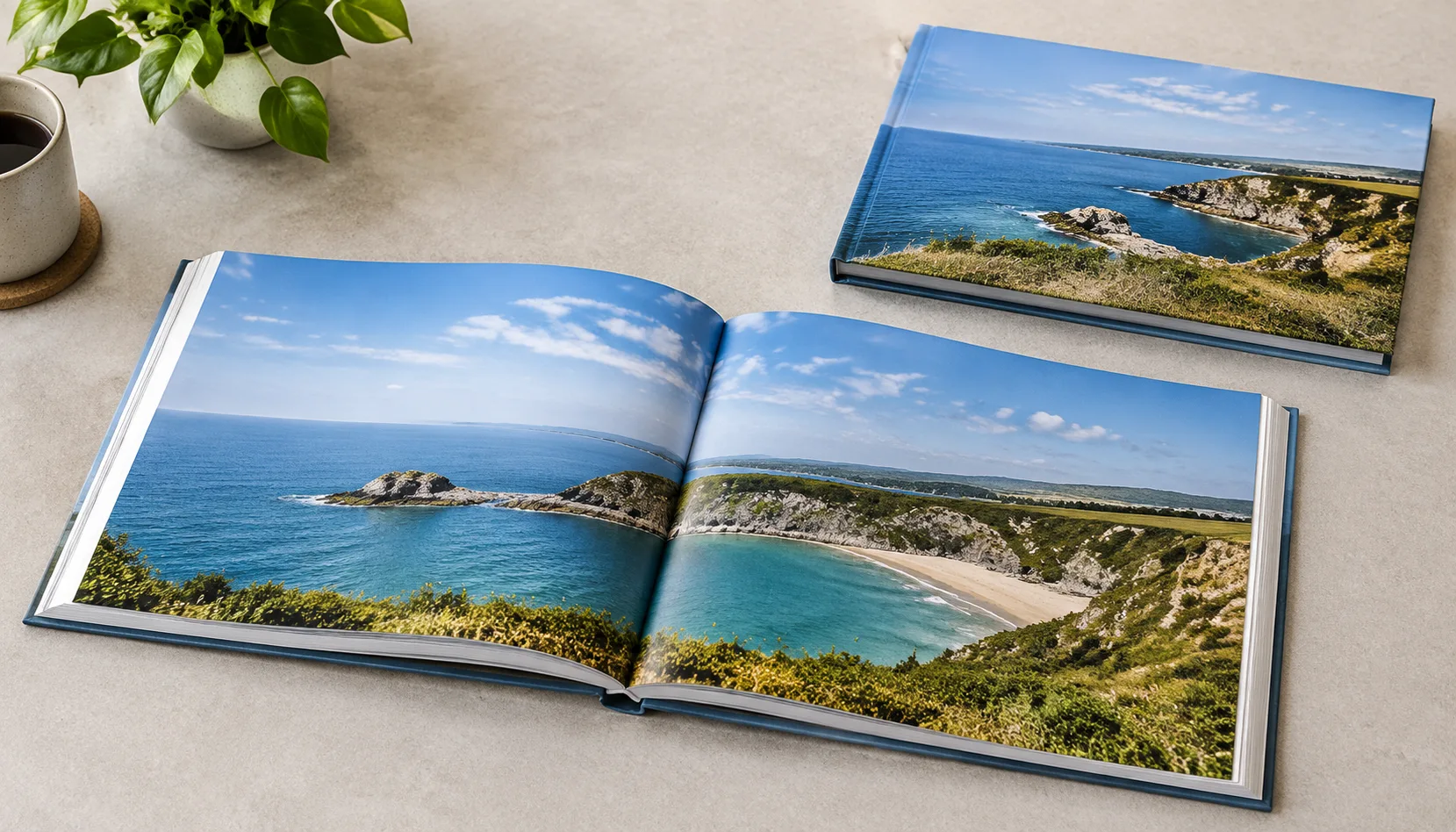
Custom photo book printing is the production of a book built around a buyer’s photographs, with specified size, paper, color treatment, cover and binding. The best specification depends on what readers need to see: fine detail, consistent color, uninterrupted panoramas or a durable book that will be handled often.
Before selecting materials, identify the book’s purpose. A portfolio used in client meetings may need a manageable size and a cover that withstands repeated handling. A landscape collection may prioritize wide spreads. A retail photography title may need a finish and format suited to its intended price point. These priorities affect paper, binding, packing and cost.
Also decide whether the photographs are mostly saturated, high-contrast images or softer work with subtle tonal transitions. Dark images, skin tones and neutral backgrounds deserve particular attention during proofing. If multiple photographers supplied files, allow time to bring their images to a consistent visual standard before print approval.
Choose paper for the photographs
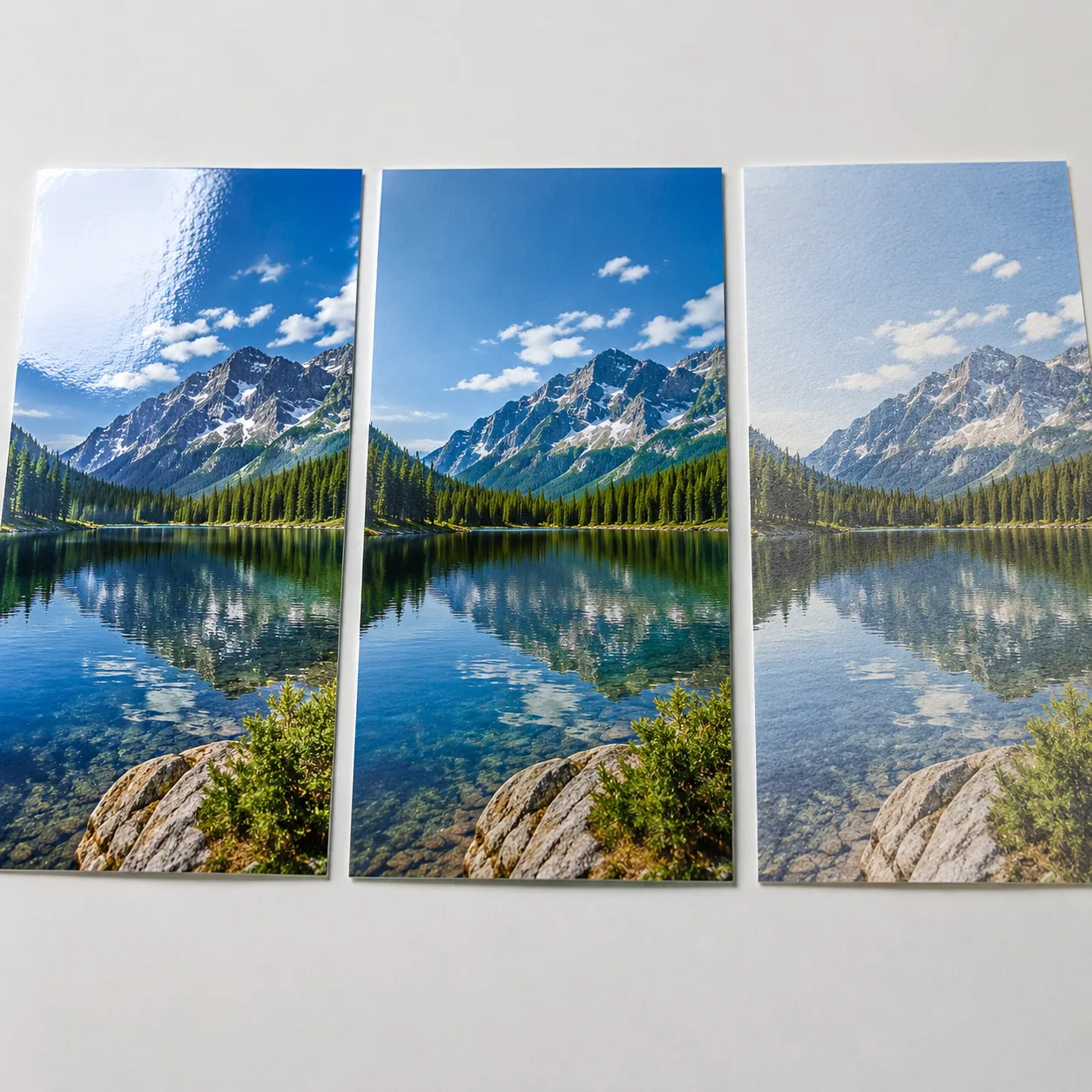
Paper changes how a photograph appears even when the same artwork and print settings are used. Coated paper generally supports sharper detail and stronger apparent contrast than uncoated paper because the ink sits closer to the surface. Gloss can emphasize vivid images, while matte or silk finishes reduce reflections during viewing. Uncoated stock can suit a quieter editorial style, but its absorbency can soften detail and reduce color intensity.
Specify both the surface and the weight. A heavier sheet can feel more substantial and help limit show-through, but it also increases the thickness and weight of a long book. Paper opacity matters when dark photographs face lighter pages. Request a physical stock sample when page feel, reverse-side visibility or surface reflection is important.
Paper names and weights do not describe the entire result: two stocks with similar stated weights can differ in thickness, whiteness and texture. Ask for the proposed stock by name and review it alongside your images. For a broader explanation of coated, uncoated and weighted stocks, see this Guide des types de papier pour l'impression de livres.
If the book will be shipped internationally, compare stock options using the finished book’s estimated weight as well as the appearance of a sample. Quantity, trim size, page count, cover construction and packing all affect the eventual shipping calculation.
Compare common paper options
Use this comparison to narrow the shortlist, then evaluate physical samples. The descriptions are general tendencies, not a substitute for testing a specified stock with your own images.
| Paper surface | Typical visual effect | Consider when | Check before approval |
|---|---|---|---|
| Gloss coated | Strong apparent contrast and a reflective surface | Vivid color and crisp photographic detail are priorities | Reflections under the lighting where the book will be viewed |
| Matte or silk coated | Controlled sheen with good image definition | Readers need to inspect images across a spread | Shadow detail, surface feel and fingerprints on samples |
| Sans revêtement | Softer detail and a less reflective, tactile page | An editorial or understated look fits the work | Color intensity, fine detail and show-through |
Paper choice and image preparation are linked. A file adjusted to look vibrant on one stock may need different treatment on another. Select the stock before signing off on the final color reference whenever possible.
Plan color proofing before production
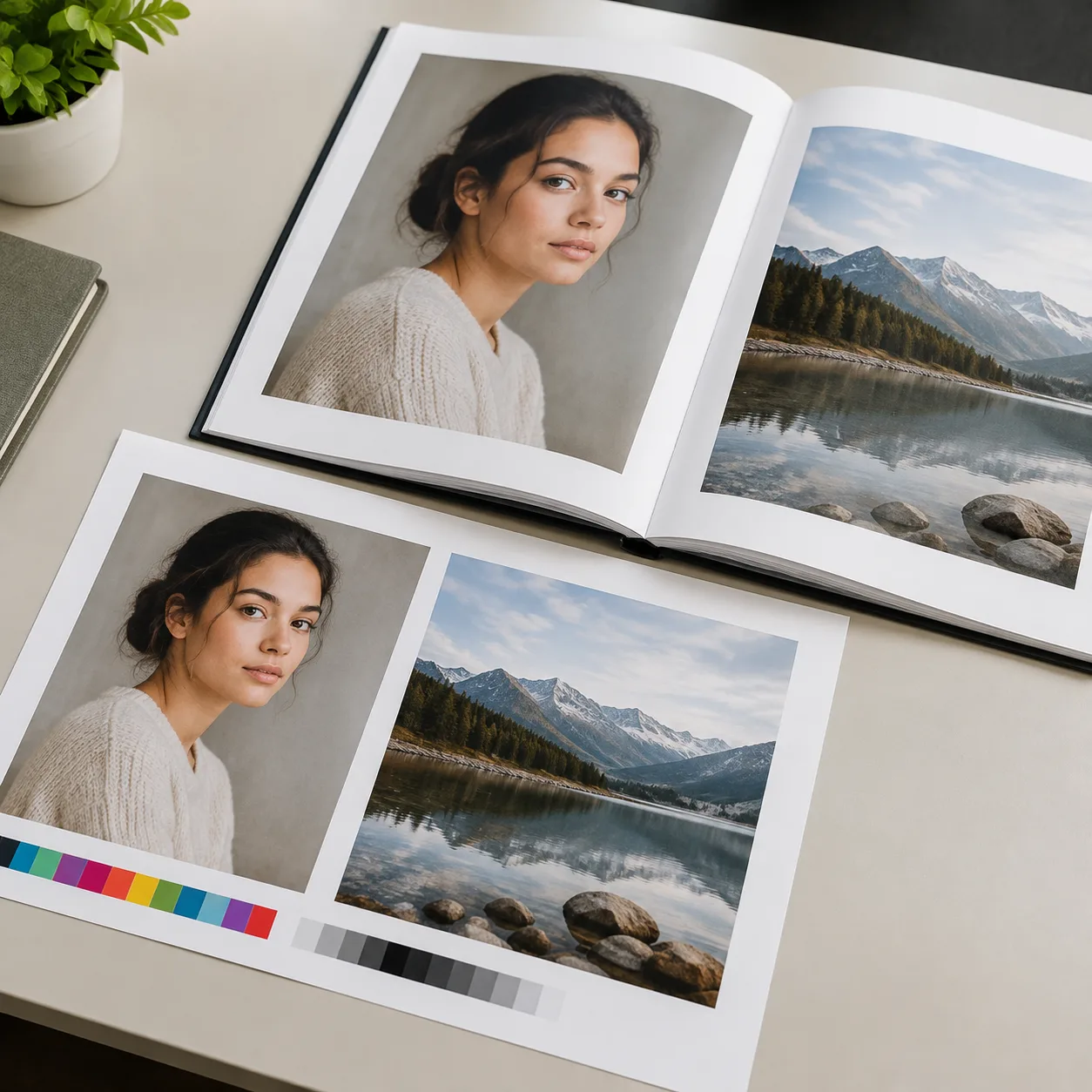
A screen preview is useful for editing but is not a reliable promise of printed color. Display brightness, calibration, color settings, ink and paper all influence what you see. Agree on the intended print process, paper and proofing method before treating any preview as an approval reference.
Ask the printer which proof is being supplied and what it is intended to verify. A digital PDF proof is well suited to checking page order, text, image placement and revisions; it does not reproduce the finished paper surface. A physical color proof can help assess image reproduction, but its value depends on how closely its process and substrate represent the production job. A finished or bound sample is useful for judging trim, sequence, opening behavior and overall construction. Confirm which aspects of each sample will serve as the production reference.
Review photographs that expose problems quickly: a portrait for skin tones, a neutral scene for unwanted color casts, a dark image for blocked shadows and a detailed image for sharpness. Include any important image that crosses the center of a spread. Judge physical proofs under consistent, suitable lighting; a warm room light can make a neutral print appear warmer than it is.
Record corrections by page number and image, then identify the final approved file version. If images are changed after proof approval, ask whether another proof is needed. Additional proof rounds and artwork revisions can affect the schedule and price, so include them in project planning rather than assuming they are included.
Compare photo book binding methods
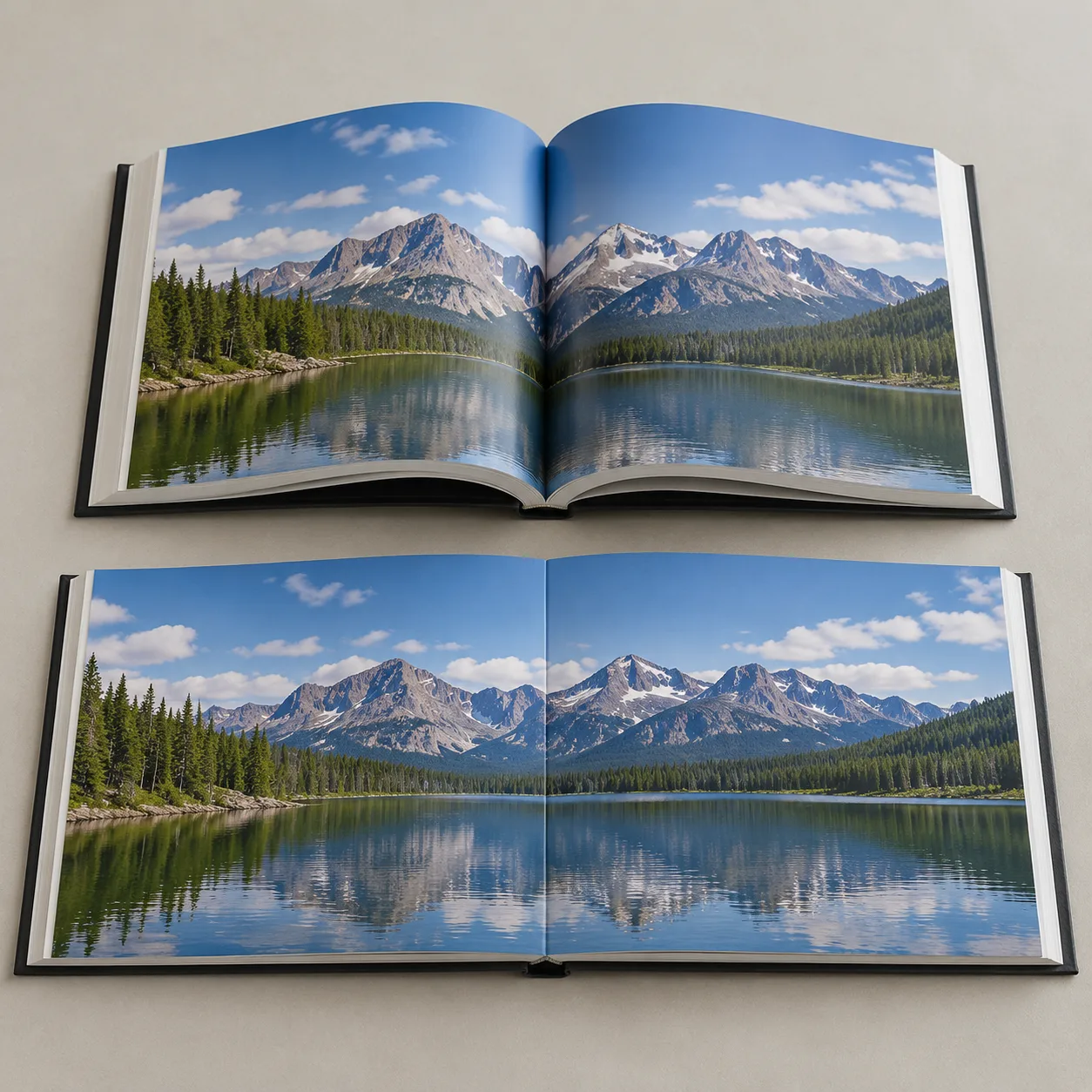
Binding determines how the book opens, how much of an image remains visible near the gutter and how the finished object feels. Confirm the proposed construction with the printer; binding names alone may not specify page attachment or opening behavior.
| Reliure | Useful for | Buyer consideration |
|---|---|---|
| Perfect-bound softcover | Photo books where a flexible cover and compact format are acceptable | Allow for image loss or distortion near the gutter; suitability depends on paper and page count |
| Case-bound hardcover | Books needing a rigid cover and substantial presentation | Ask about the page attachment method and how far spreads will open |
| Lay-flat construction | Panoramas and two-page photographs intended to be viewed across the center | Confirm the specific construction, available paper and page-count limits for the quoted format |
A book described as hardcover does not automatically open flat. Likewise, a lay-flat option should be checked with an actual sample if precise alignment across the center matters. Keep faces, captions and critical details away from the gutter unless the approved construction and sample demonstrate the result you need. For a wider discussion of opening requirements and page counts, see this guide to choosing binding by page count and use.
Match the format to the project
These YBJ Printing product pages illustrate two different starting points for a photography project. Treat them as references for a specification discussion, not as fixed configurations or a promise that every size, stock or finish is available.
| Product example | Project fit | Question to resolve |
|---|---|---|
| Large-format landscape photography book with lay-flat binding | Wide photographs and compositions spanning two pages | What is the proposed opening construction, and how will the approved spread align at the center? |
| Cloth-bound hardcover coffee table book | A photography or art collection where cover material and presentation matter | Which cover, interior paper and page attachment options suit the intended quantity? |
For either format, request a quote against the same trim size, page count and quantity when comparing options. Changing several specifications at once makes it harder to understand what is driving the difference in cost.
Prepare files for print review
Ask for the printer’s file specifications before exporting the final artwork. Supply pages in the requested order, with the required bleed and safe margins, and keep photographs intended to run to the edge extending beyond the trim line. Confirm whether the printer wants individual pages or designed spreads. A cover usually needs its own layout based on the approved paper, page count and binding; do not finalize its spine width from an estimate alone.
Check effective image resolution at the size it appears on the page, rather than relying on the pixel dimensions of the original photograph. A small source image enlarged across a spread may look soft in print. Inspect captions and fine lines at actual print size as well. Embed or otherwise supply fonts according to the requested PDF standard, and agree on the color profile or conversion workflow with the printer before final export.
Perform a final page-by-page check for duplicated photographs, inconsistent cropping, unexpected color shifts and text too close to trim. For images crossing a spread, review the center separately. If the binding does not open fully flat, visual continuity in the design file does not mean the printed center will be uninterrupted.
Send one clearly identified approval version. If revisions follow, include a concise change list so the printer can distinguish corrected pages from files supplied only for reference.
Photo book buyer checklist
Use this checklist to bring design, production and purchasing decisions into one conversation:
- Purpose and audience: Is this a portfolio, retail title, gift or presentation book?
- Format : Confirm trim size, orientation, page count and quantity.
- Images: Flag panoramas, critical skin tones, dark scenes and fine-detail photographs.
- Papier : Specify a preferred surface and weight, or request samples to compare.
- Binding and cover: State how the book should open and whether images must cross the gutter.
- Proof: Agree on the type of proof, what it can verify and who will approve it.
- Fichiers : Confirm artwork status, file requirements and the final approval process.
- Delivery: Provide the destination country and discuss packing or distribution needs.
For an accurate quotation, identify assumptions rather than leaving them implicit. Paper availability, final specifications, proof rounds, quantity, file readiness and delivery destination can affect price or lead time. Image quality also depends on the source files, chosen stock, print process and the approved proof reference.
Make decisions together, not in isolation
A strong photo book specification connects the images to the physical book. Choose paper for the intended viewing experience, approve color against a clearly defined reference and select binding according to how readers will use each spread. Once those decisions are documented, a printer can assess the files and quote a more clearly defined project.
FAQ
What paper is best for a photo book?
There is no single best stock. Gloss coated paper can suit vivid images, matte or silk coated paper can reduce reflections, and uncoated paper can support a softer editorial look. Compare physical samples using representative photographs before approval.
Will a PDF proof show the final printed color?
No. A PDF proof is useful for checking content, page order and placement, but screen appearance depends on the display and its settings. Ask which physical color proof, if any, will be used as the production reference.
Does every hardcover photo book lie flat?
No. Opening behavior depends on the book’s construction. If photographs cross the gutter, specify the required result and review a relevant physical sample or proof of the proposed binding.
What affects a custom photo book printing quote?
Trim size, page count, quantity, paper, binding, cover finish, proofing, file readiness and delivery destination all matter. Supply these details together so the printer can quote against a defined specification.
Discuss your photo book specification
Request a quote for your custom photo book project. Share the product type, trim size, page count, quantity, paper or binding preference, cover and interior finish, current file status and destination country. Flag any images that cross a spread or require particular attention during color proofing.