
Table des matières
- Start With the Cookbook's Use
- How to Choose Cookbook Interior Paper
- Choosing the Cover Material and Finish
- Cookbook Binding Options Compared
- Practical Cookbook Specification Combinations
- Cookbook Printing Buyer Checklist
- Conclusion
The best cookbook printing options depend on how the book will be used, the importance of food photography, the required page-opening behavior and the target budget. This guide explains how to choose interior paper, cover materials and binding for professional cookbooks, recipe books and culinary publications.
Start With the Cookbook's Use
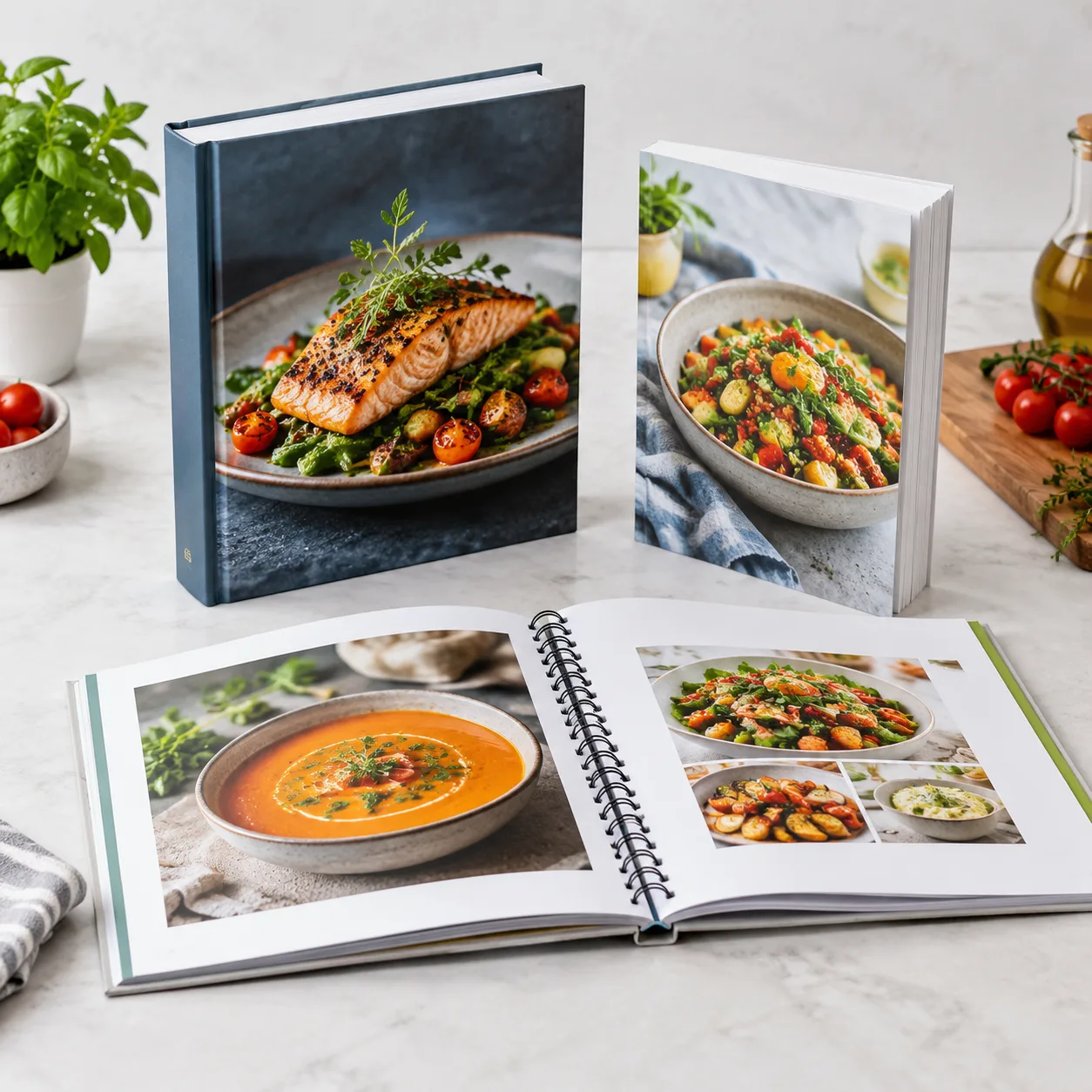
The best cookbook printing option is the one that supports the book’s actual use. A premium culinary gift book may need a rigid hardcover, coated paper and high-quality image reproduction. A working recipe book may be more practical with a lay-flat binding, a wipeable cover and paper that is easy to read under kitchen lighting.
Before selecting materials, define whether the book is intended for retail sale, restaurant use, classes, promotional distribution or personal gifting. Also consider how often readers will open it, whether it must stay open beside a cooking surface, and whether the pages contain full-page food photography, recipe text, notes or charts.
These decisions affect paper selection, binding, cover construction, page count, shipping weight and quotation accuracy. For a broader explanation of paper grades and weights, see this guide to book printing paper types.
Key questions to answer first
- Is the cookbook primarily a visual presentation book or a frequently used working reference?
- Should the book lie flat without holding the pages?
- Will the cover and pages need additional protection from handling?
- What finished size, page count and quantity are required?
- Will the finished books be shipped internationally, and does package weight matter?
How to Choose Cookbook Interior Paper
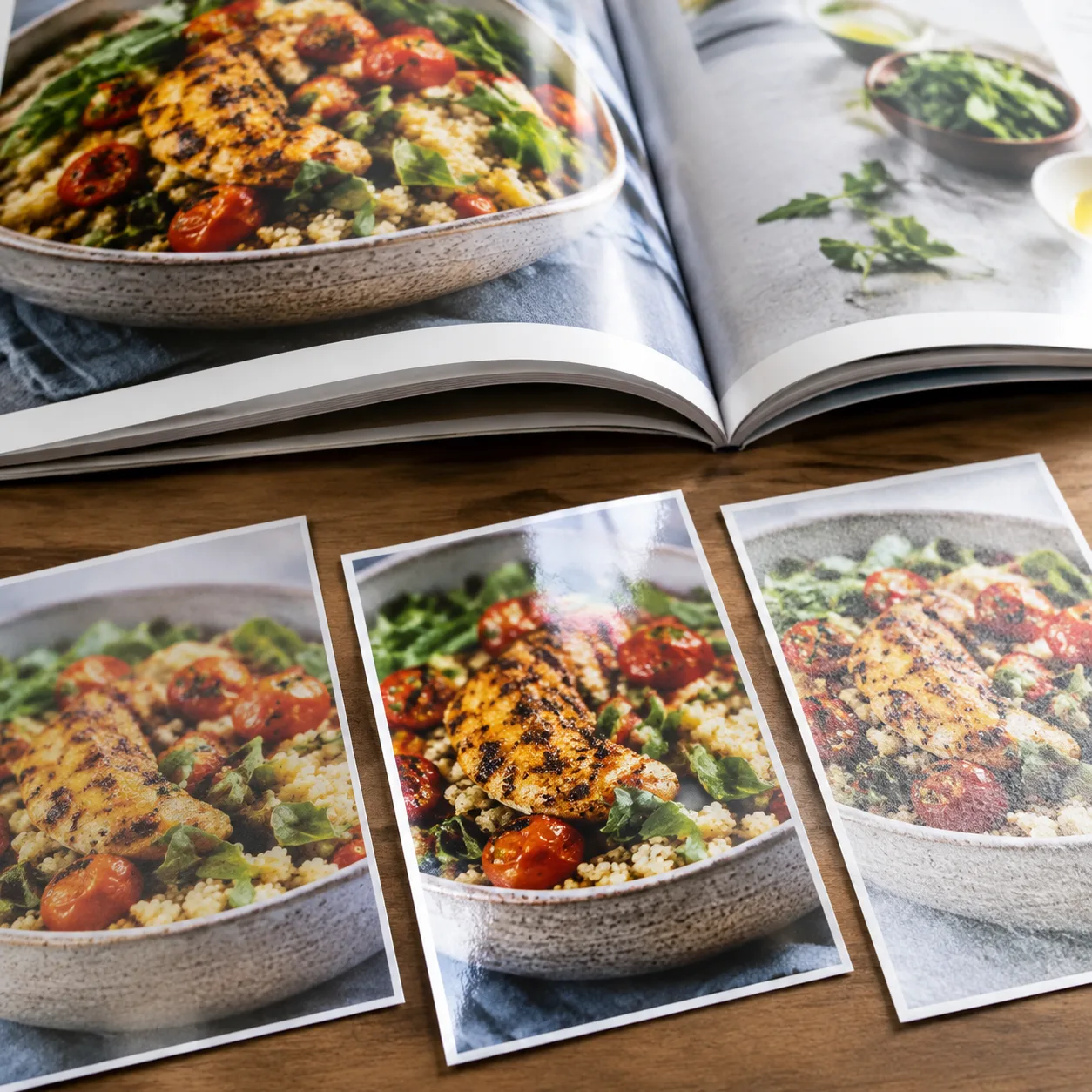
Cookbook interior paper should balance image quality, readability, page flexibility and handling. There is no single best paper for every recipe book. The right choice depends on the ratio of photographs to text, the desired color appearance, the book’s thickness and how the pages will be used.
Coated paper for food photography
Gloss or matte coated paper provides a smooth printed surface that can reproduce detailed food photography and saturated color effectively. Gloss coating generally creates a more reflective appearance, while matte coating reduces glare and gives the page a softer visual finish. Matte or silk-coated stock is often easier to read under strong overhead lighting.
Coated paper can make a cookbook feel more polished, but heavier or stiffer stock may make the book harder to open and increase shipping weight. It can also require a binding choice that accommodates the final bulk of the text block.
Uncoated paper for a softer reading experience
Uncoated paper has a more natural tactile surface and can work well for text-led recipe books, culinary essays, instructional content and books where readers may want to write notes. Its surface is less reflective, but image color and fine detail may appear different from the same artwork printed on coated stock.
Paper whiteness, opacity and basis weight matter as much as the coated or uncoated classification. Very lightweight paper can reduce bulk but may increase show-through, especially when pages contain dark photographs or dense color. A heavier text stock can improve opacity and feel, but it may make a thick book less flexible.
Paper selection checklist
- Choose coated stock when photographic detail and color impact are central to the book.
- Consider matte or silk surfaces when glare could reduce reading comfort.
- Consider uncoated stock when a natural texture, handwriting or text readability is important.
- Review opacity when dark images or two-sided color pages could show through.
- Check the paper weight together with page count and binding, rather than selecting weight in isolation.
Choosing the Cover Material and Finish
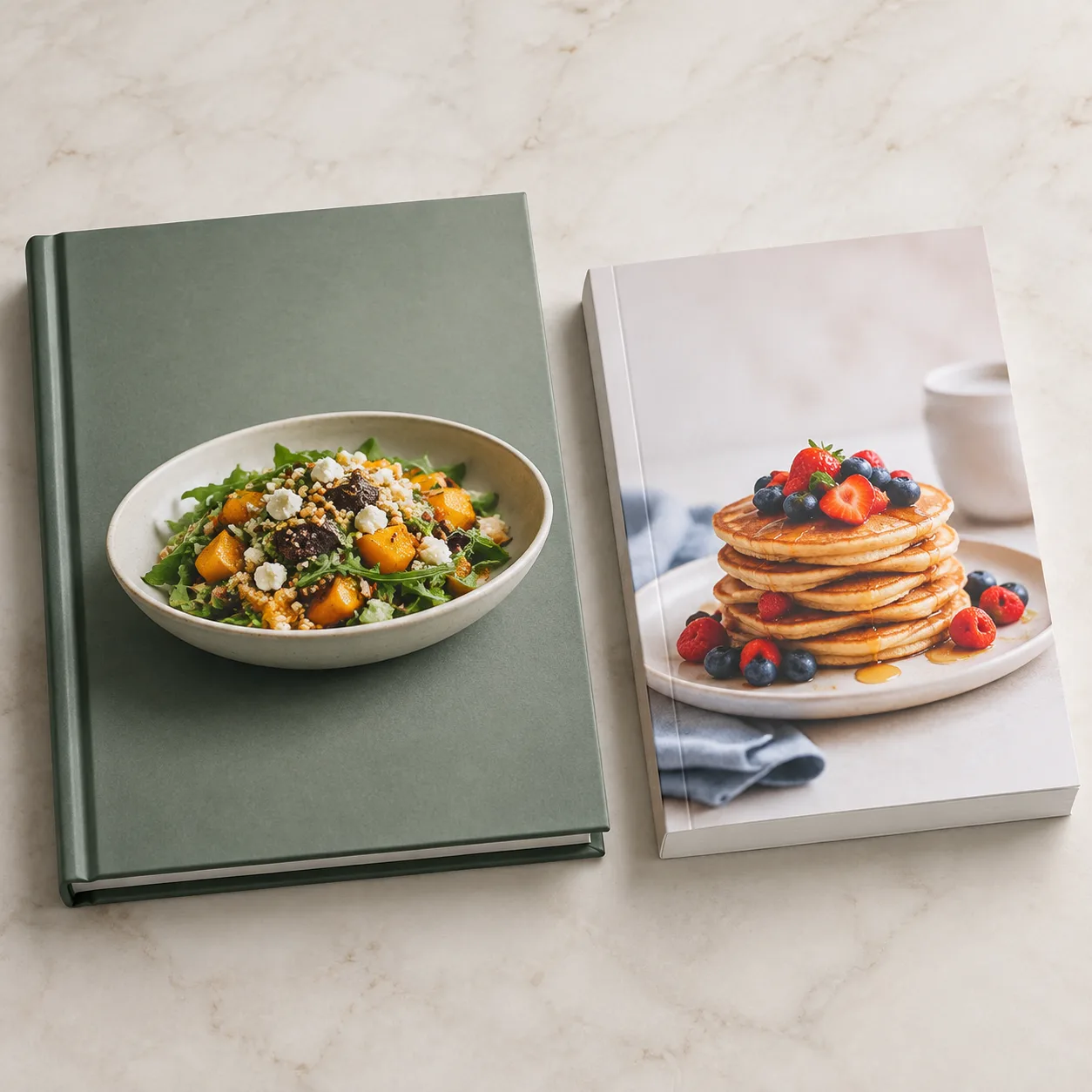
The cover protects the book and establishes its visual position. Paperback cookbooks typically use a printed cover stock, while hardcover cookbooks use a rigid board covered with printed paper, cloth or another cover material. The best choice depends on the expected handling, retail presentation, target price and desired shelf life.
Paperback cover construction
A paperback cover can keep the finished book lighter and more economical than a hardcover. A thicker cover stock with a protective film can improve resistance to scuffing and handling. Gloss lamination creates a more reflective finish, while matte lamination reduces glare and gives the cover a smooth, restrained appearance.
Hardcover construction
Hardcover is appropriate when the cookbook is positioned as a gift, collectible, premium retail item or durable reference book. It adds structure and visual presence, but it also increases material use, production complexity and shipping weight. The cover may be produced as a printed case or paired with a dust jacket, depending on the desired presentation.
Cover finishes should support the design rather than obscure important information. Foil stamping, embossing and spot UV can highlight a title, logo or selected image detail, but each adds a separate production consideration. Review the available hardcover cover finishes before finalizing the artwork.
For a detailed comparison of construction and cost drivers, see this guide to hardcover book materials and binding.
Cookbook Binding Options Compared
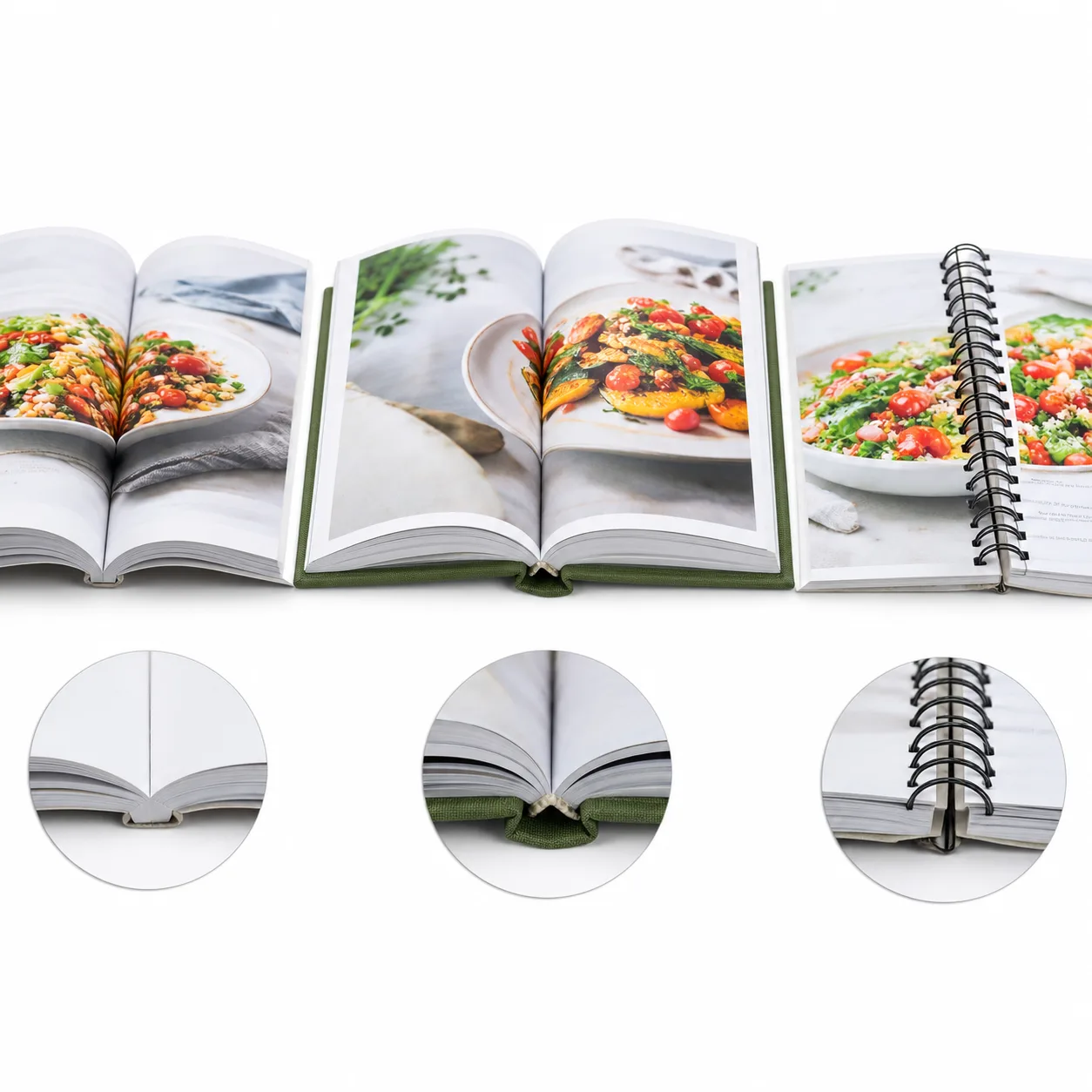
Binding determines how a cookbook opens, how much stress the pages can withstand and how the finished book looks on a shelf. Page count, paper bulk, cover type and the need for a lay-flat reading position should be reviewed together.
| Binding option | Best suited to | Advantages | Points to check |
|---|---|---|---|
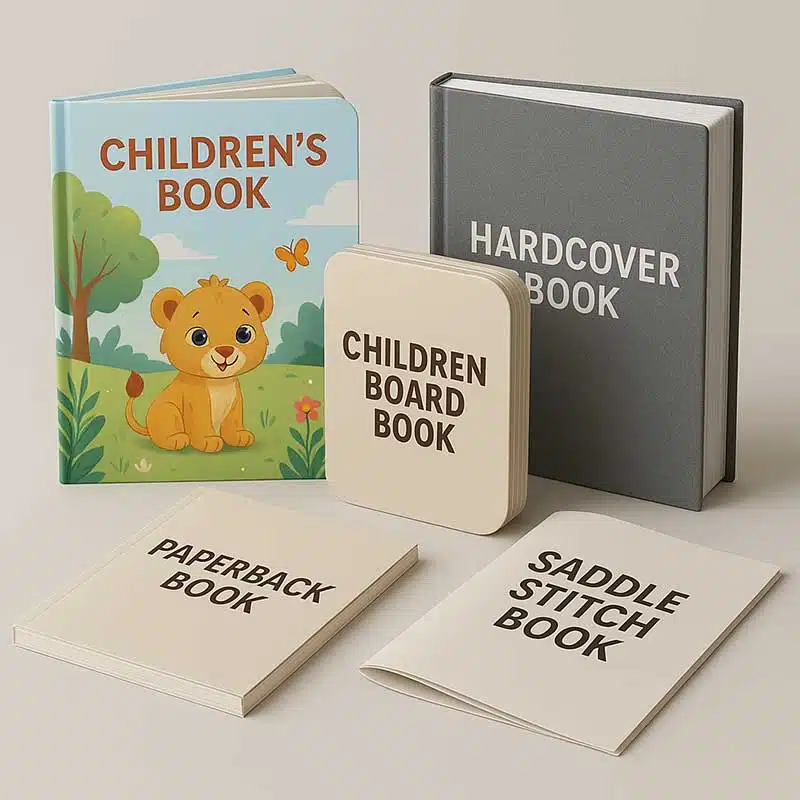
| Reliure parfaite | Paperback recipe books and moderate page counts | Clean square spine, efficient format and broad design flexibility | The book may not lie completely flat; spine performance depends on paper, page count and construction. |
| Case binding | Hardcover cookbooks, gift editions and premium retail books | Rigid cover, strong shelf presence and durable presentation | Higher material and production requirements; finished weight may increase. |
| Smyth sewn hardcover | Hardcover books that need improved opening behavior and repeated use | Sewn sections can support flexibility and durability when correctly specified | Requires suitable page signatures and may affect production cost and schedule. |
| Liaison Wire-O | Working cookbooks, classes and reference books that must stay open | Good lay-flat behavior and practical page turning | Spine appearance differs from a conventional book and the wire must be considered in packaging. |
| Reliure spirale | Functional recipe books and frequently handled kitchen references | Opens widely and can remain open for consultation | Less formal shelf presentation; coil size and cover construction need review. |
For a lay-flat project, compare Wire-O and spiral binding based on page turning, appearance, storage and packaging. For hardcover projects, the difference between sewn and glued construction should be considered alongside page count and paper bulk.
Practical Cookbook Specification Combinations
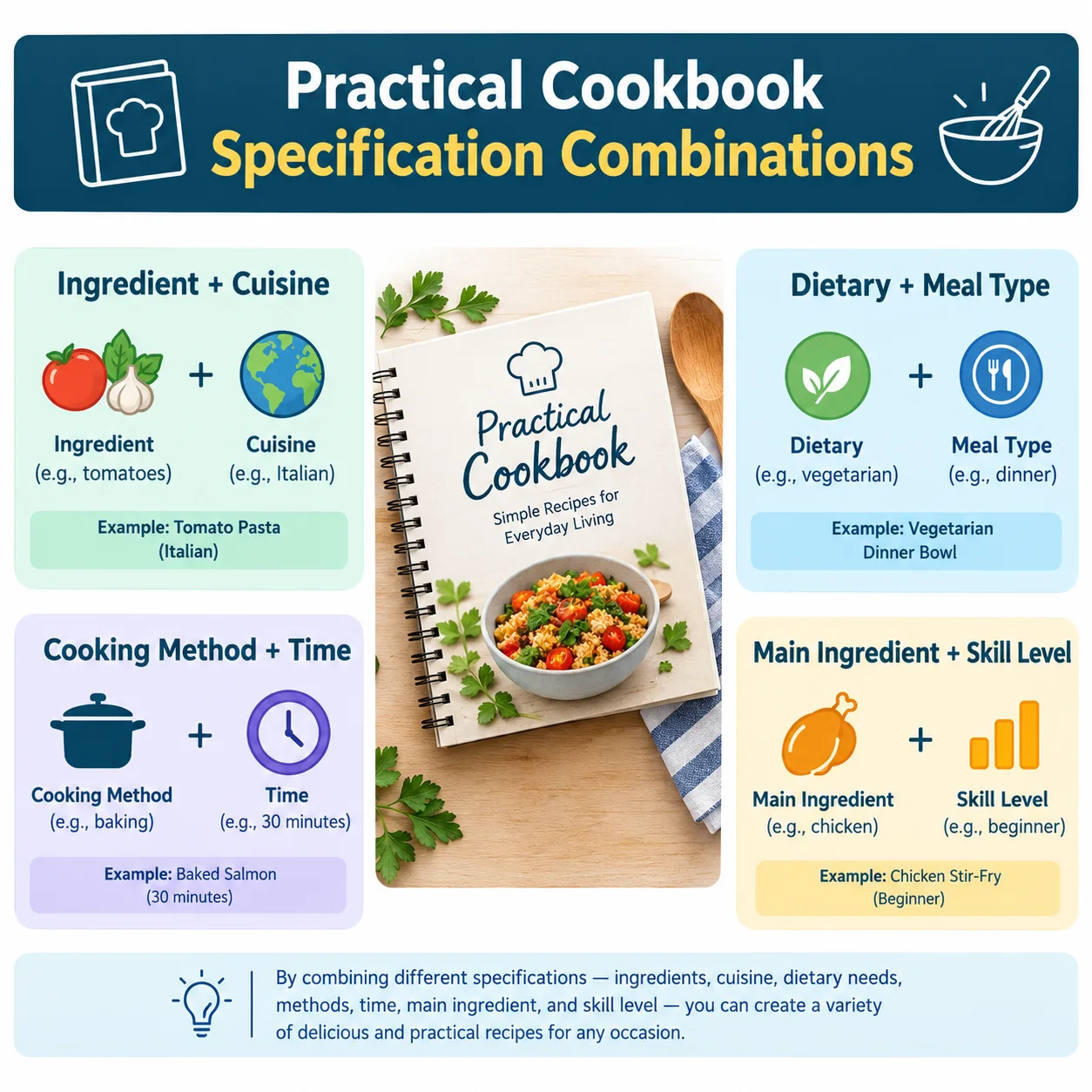
The following combinations are starting points rather than fixed product specifications. Actual recommendations depend on the final trim size, page count, artwork, quantity and destination. A print supplier should confirm whether the selected paper and binding are suitable after reviewing the complete specification.
| Project type | Interior direction | Cover and binding direction | Main trade-off |
|---|---|---|---|
| Premium photography cookbook | Matte or silk-coated paper selected for image reproduction and comfortable viewing | Hardcover case binding, with optional protective or decorative finish | Higher presentation and protection, with greater weight and cost. |
| Everyday family recipe book | Readable coated or uncoated paper matched to image and text content | Paperback with perfect binding and protective lamination | Balanced appearance and cost, but limited lay-flat performance. |
| Kitchen class workbook | Uncoated or practical text stock when readers need to write notes | Wire-O or spiral binding for open-page use | Better functionality, with a less traditional book appearance. |
| Restaurant or culinary training manual | Paper selected for dense text, diagrams and repeated reference | Durable paperback or lay-flat format, depending on workflow | Durability and usability must be balanced against shipping weight. |
These combinations should not replace a physical proof or production sample when color, paper feel, opening behavior or cover finishes are important. Images can appear different on screen from printed output, and a binding that looks suitable in a specification sheet may behave differently at the final page count.
Cookbook Printing Buyer Checklist
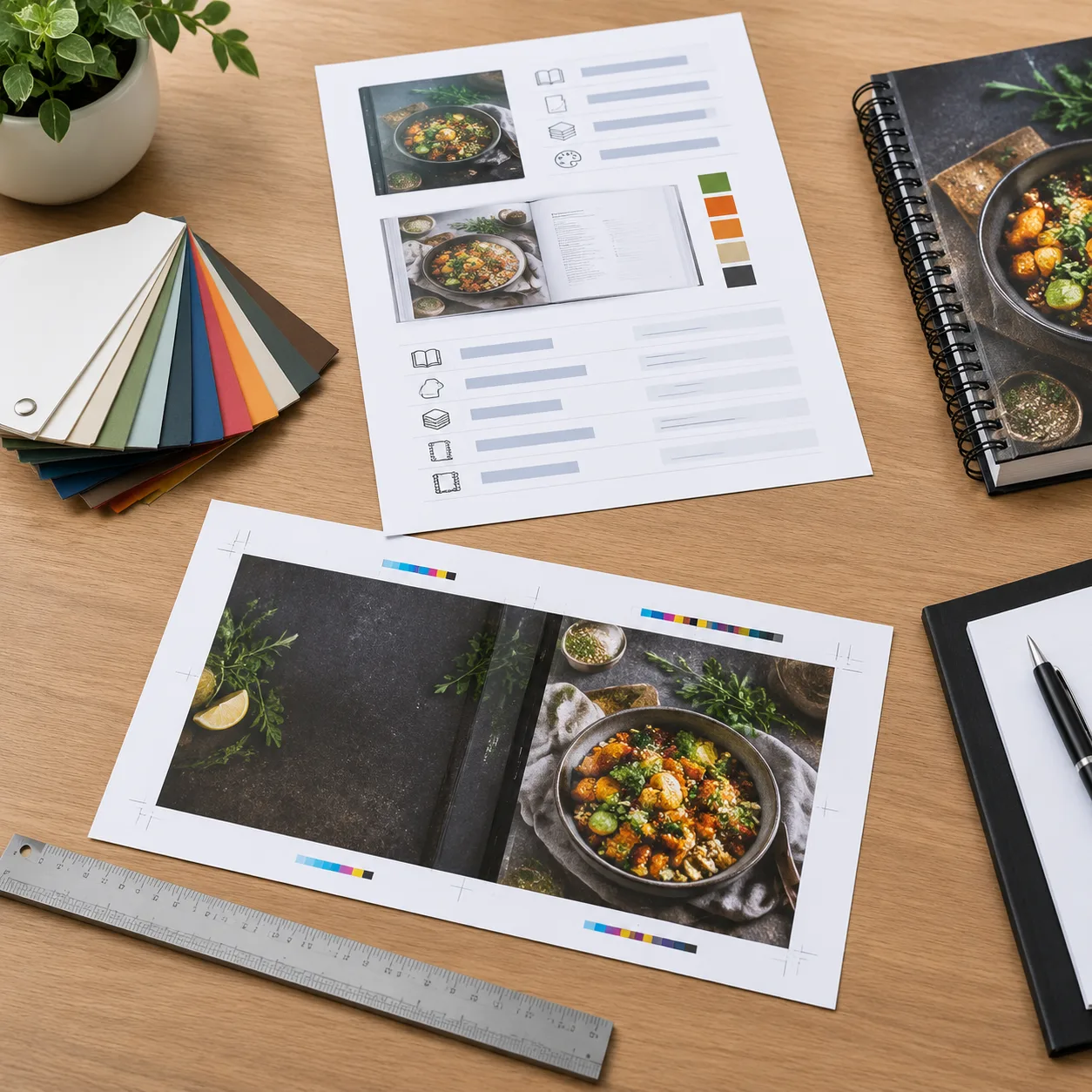
Provide the following information when requesting a cookbook printing quotation. Complete specifications help the manufacturer compare suitable materials and identify decisions that may affect price, lead time or print quality.
- Type de produit : cookbook, recipe book, culinary gift book, workbook or training manual.
- Format de coupe : finished width and height, including the preferred unit of measurement.
- Nombre de pages : interior pages, cover pages and any inserts or folded sections.
- Quantité : required quantity, possible reorder quantity and whether multiple versions are needed.
- Paper preference: coated or uncoated stock, approximate weight, desired whiteness and opacity.
- Préférence de reliure : perfect bound, hardcover, sewn, Wire-O or spiral, with the required opening behavior.
- Finition : lamination, foil, embossing, spot UV, varnish or other cover treatment.
- Statut du fichier : editable artwork, print-ready PDF, color profile, bleed and whether a proof is required.
- Pays de destination : destination affects packing, freight planning, delivery terms and landed cost.
Price and lead time cannot be judged from page count alone. Quantity, trim size, paper availability, binding construction, color coverage, finishing, packaging, proofing and destination all affect the quotation. Print quality also depends on the supplied artwork, image resolution, color management, paper behavior and approval process.
A supplier may recommend a different paper or binding after reviewing the full specification. Treat this as part of the technical discussion rather than selecting the lowest material weight or the lowest initial unit price without considering use and durability.
Conclusion

Choosing among cookbook printing options starts with the reader’s workflow. Use coated paper when food photography and color reproduction are central, uncoated paper when a natural reading or writing surface is more important, hardcover when presentation and structure justify the added weight, and Wire-O or spiral binding when the cookbook must remain open during use. Perfect binding and case binding remain practical choices when a conventional shelf format is the priority.
The final decision should be based on the complete combination of paper, page count, cover, binding, quantity, artwork and destination. A clear specification and an agreed proof help reduce avoidable changes during production.
FAQ
What is the best paper for cookbook printing?
Matte or silk-coated paper is often suitable for image-led cookbooks because it supports detailed food photography while reducing glare compared with gloss. Uncoated paper can be a better choice for text-led books, note-taking or a natural tactile feel. The final choice depends on image coverage, opacity, page count and binding.
Which cookbook binding stays open flat?
Wire-O and spiral binding are commonly selected when a cookbook must remain open during cooking or instruction. Sewn construction may improve opening behavior in some hardcover formats, but the result depends on the page structure and complete specification.
Is hardcover better than paperback for a cookbook?
Hardcover provides a rigid structure and premium presentation, while paperback is generally lighter and more economical. Choose based on expected handling, retail position, shipping weight, target price and whether the book is intended as a gift or everyday reference.
Does heavier paper make a cookbook more durable?
Heavier paper can improve opacity and handling feel, but durability depends on the complete construction, including cover, binding, paper properties, finishing and use. A heavier stock can also increase book bulk and shipping weight.
What information is needed for a cookbook printing quote?
Provide the product type, trim size, page count, quantity, paper or binding preference, cover finish, file status and destination country. Artwork details, packaging requirements, proofing and shipping terms may also affect the quotation.
Discuss Your Cookbook Printing Specification
Planning a custom cookbook? Request a quotation from YBJ Printing with your product type, trim size, page count, quantity, paper or binding preference, finish, file status and destination country. These details help us review the project requirements and prepare a more useful quotation for your team.