
Table des matières
- What Is Paper Grain Direction?
- Why Grain Direction Matters in Book Printing
- Which Way Should the Grain Run?
- Grain Orientation: A Practical Comparison
- Paper and Book Formats: What to Check
- Buyer Checklist for Paper Grain
- How to Confirm Grain Before Production
- Conclusion
Paper grain direction affects how book pages bend, fold and sit in a bound book. Learn why grain parallel to the spine is usually preferred, when exceptions may be practical, and what to confirm with your printer before production.
What Is Paper Grain Direction?
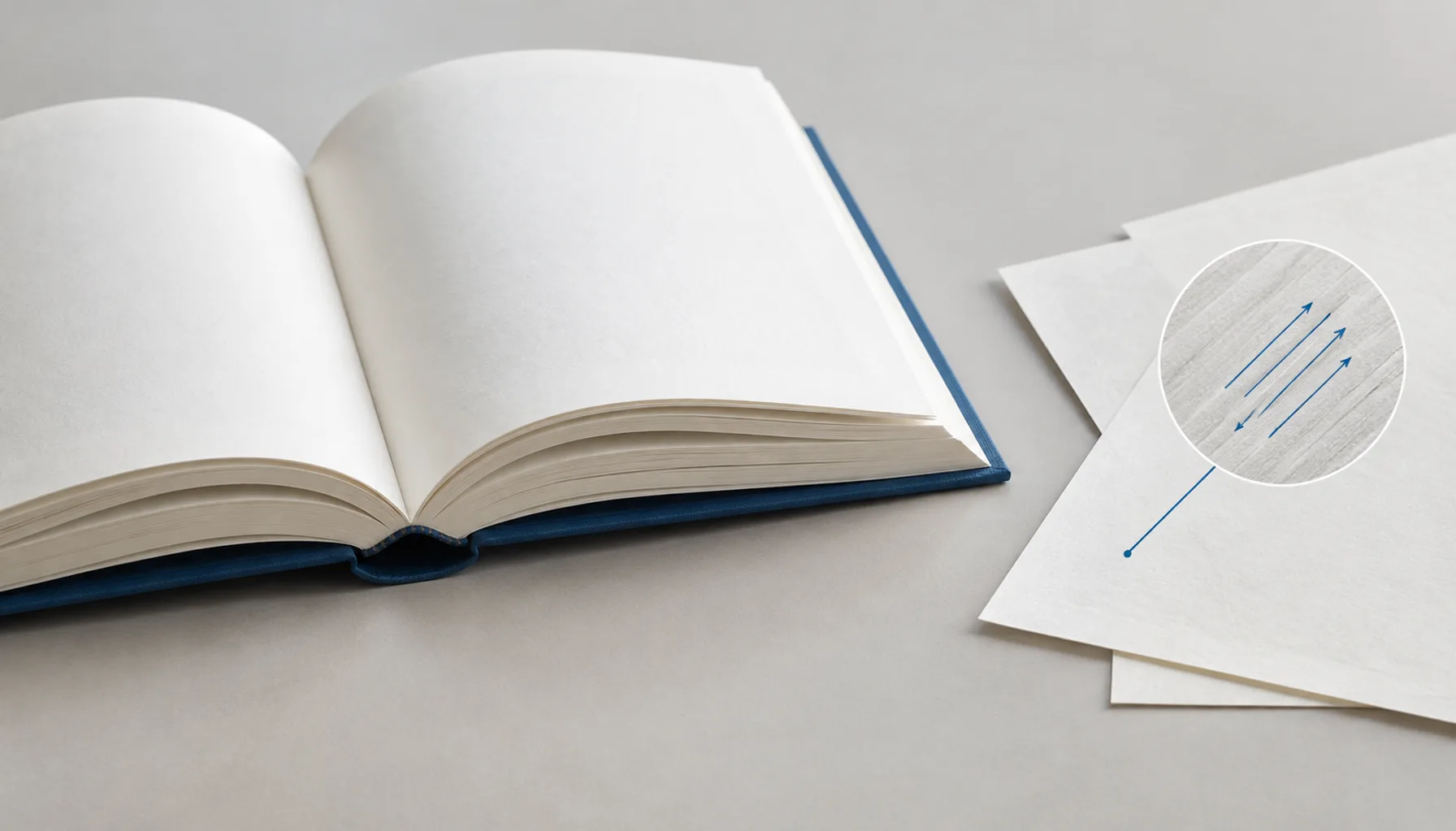
Paper grain direction describes the direction in which most paper fibres align as the sheet is made. In book printing, it matters because paper usually bends and folds more easily along the grain than across it. For many bound books, the preferred setup is grain parallel to the spine, although the best choice depends on the format, sheet layout, paper availability and binding construction.
Paper is not a perfectly uniform material. Its fibre orientation influences how a printed sheet responds to folding, moisture, handling and binding. Getting the grain direction right can help pages sit and turn more naturally; getting it wrong may contribute to stiff folds, page curl or a book that does not open as expected.
This is a production specification worth confirming with your printer, particularly for a high-page-count book, a sewn binding, a large format, or a project that needs to open comfortably. It does not replace decisions about paper weight, opacity, coating or binding, but it works alongside them.
Why Grain Direction Matters in Book Printing
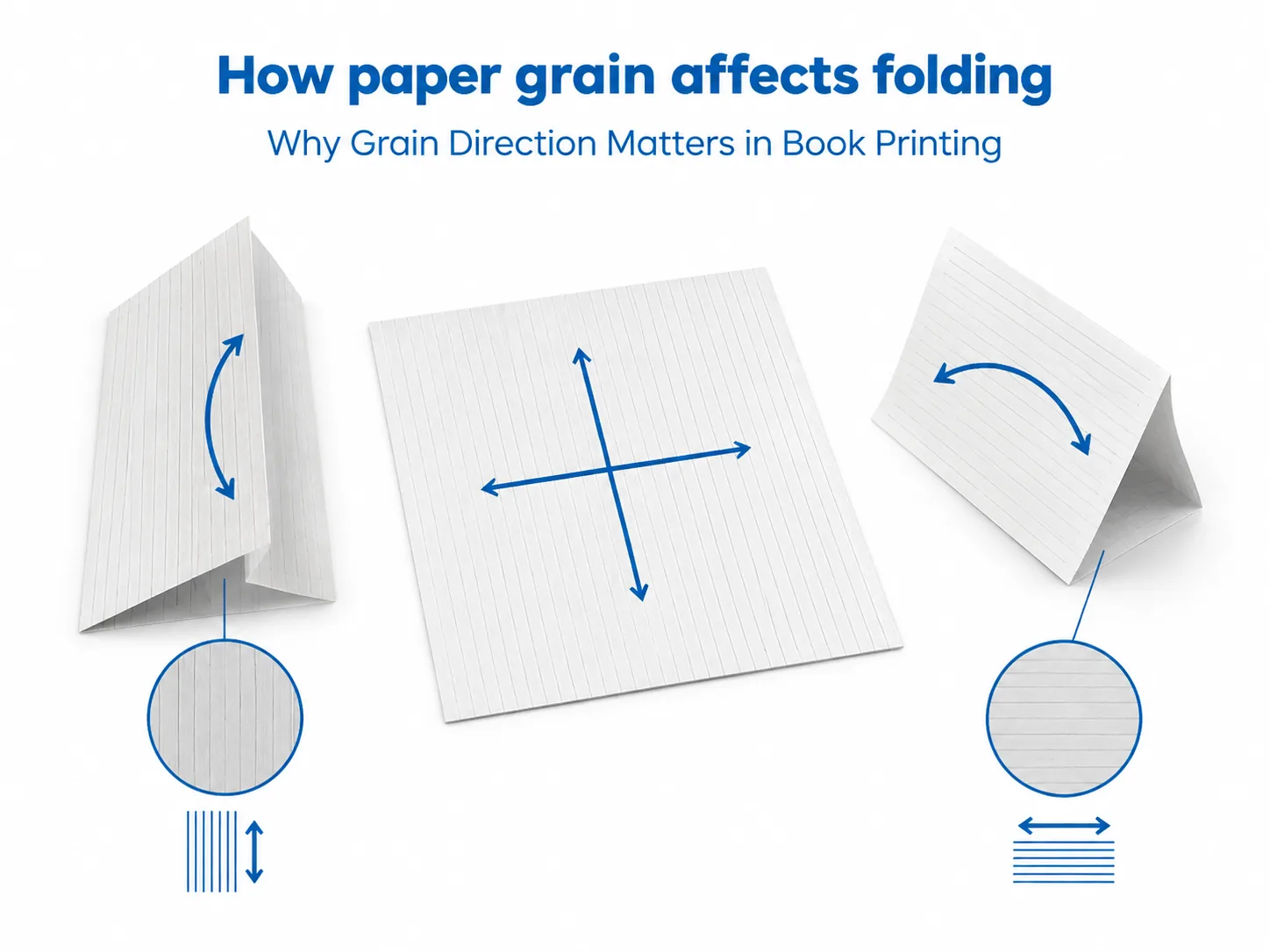
Grain direction affects more than a paper sample’s feel. It can influence fold quality, book opening behaviour, page movement and the way a sheet responds during converting and binding. The size of the effect varies with stock, grain orientation, humidity, paper thickness and the construction of the book.
Folding and creasing
Paper generally folds more readily with the grain. Folding across the grain can require more force and may produce a less clean fold, particularly on heavier or coated stocks. Depending on the material and job, the fold may show more cracking or resistance. A printer may use scoring or other production adjustments when a stock and fold combination calls for them, but those choices should be reviewed against the finished design.
Page turning and opening
When grain runs parallel to the spine, a leaf can often flex more naturally as the reader turns it. This can support a more comfortable opening and reduce the tendency for pages to spring away from the binding. However, grain orientation alone cannot guarantee a book will lie flat: binding style, adhesive or sewing, paper caliper, page count and cover construction all contribute.
Binding and finished shape
Paper reacts to changes in moisture and can expand differently across and along the grain. That behaviour may influence curl, alignment or the way sheets gather during binding. Grain orientation can therefore affect the relationship between the printed signature and the spine, especially in folded sections. It is one part of the broader paper grain and binding specification, not a substitute for a production sample or proof.
For a broader paper selection overview, see our guide to choosing paper types for book printing. If your project uses a Bible or another very high-page-count format, our explanation of Bible paper weight and show-through covers other important stock considerations.
Which Way Should the Grain Run?
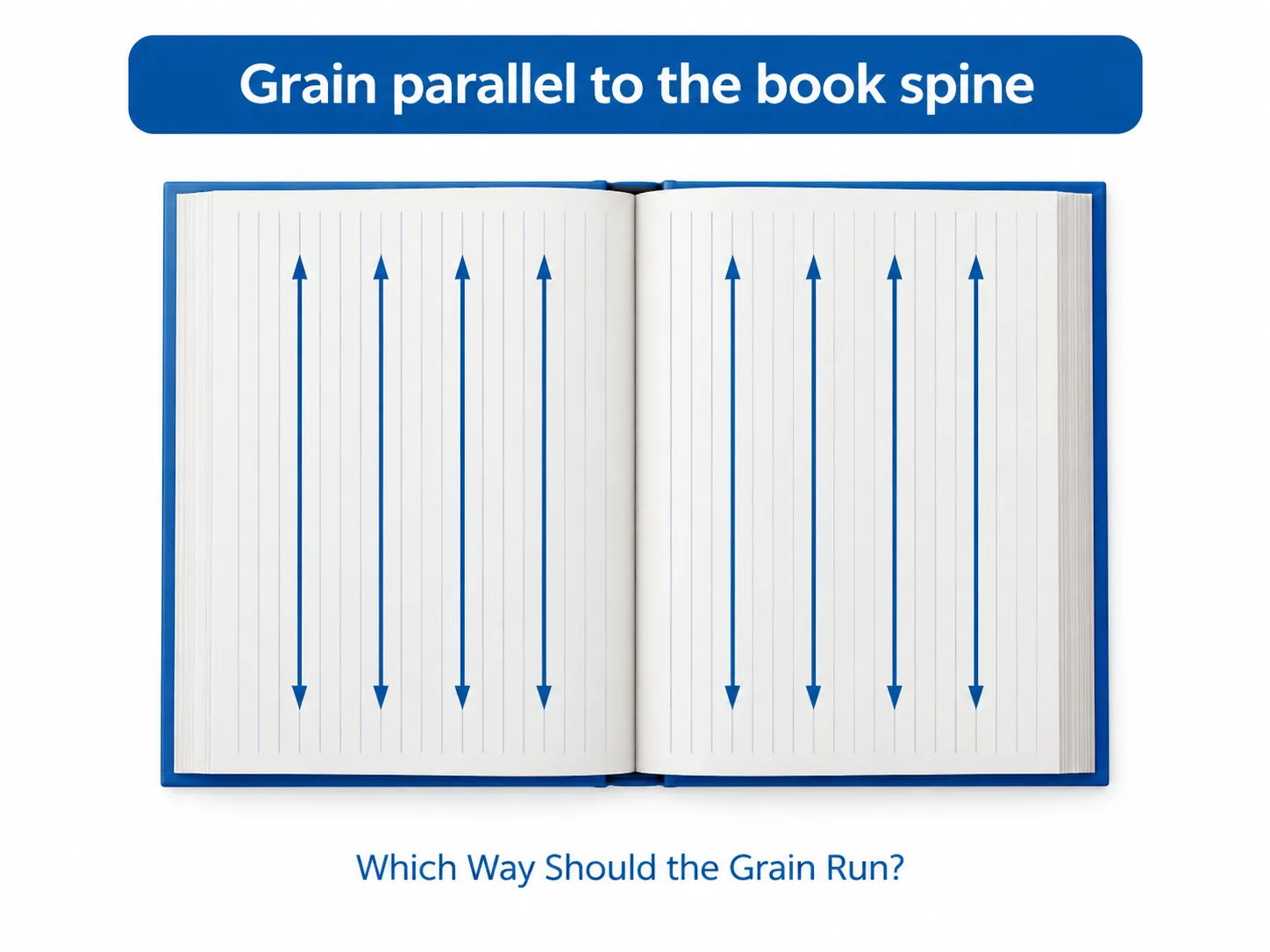
For a typical portrait-format book, the usual target is grain parallel to the book spine. This orientation lets the sheets flex along their length as pages are turned and can make folded signatures behave more naturally in binding. It is a widely used planning principle, not an absolute rule for every product or press layout.
In a landscape-format book, determine the relationship to the actual binding edge rather than assuming that the grain should run along the sheet’s longest side. A calendar, landscape art book or short-edge-bound product may have a different spine orientation. Likewise, one sheet may be imposed to produce several pages, so the grain should be checked against the final folded section, not just the flat press sheet.
Large sheets can sometimes be cut or imposed in more than one direction. Paper availability, required quantity, trim size, press format, sheet yield and waste can affect the practical choice. A printer may explain a compromise if the preferred grain orientation is not available or would create an impractical layout. Ask them to identify the trade-off before approving the production specification.
To understand how grain interacts with construction, review the options in our guide to perfect-bound, sewn and casebound books. The most suitable orientation should be confirmed for the specific binding and imposition plan.
Grain Orientation: A Practical Comparison
The table below describes common tendencies, not guaranteed outcomes. The result depends on the exact paper, fold, binding, finishing and production setup. Confirm the orientation with your printer for the final imposition.
| Orientation relative to spine | Typical behaviour | Potential concern | Buyer action |
|---|---|---|---|
| Grain parallel to spine | Pages may flex more naturally as they turn; folded sections often follow the intended fold direction. | May not be practical for every sheet size, layout or available stock. | Ask the printer to confirm it against the finished trim size and binding plan. |
| Grain perpendicular to spine | Sheets may feel more resistant when flexed or folded in the relevant direction. | Could contribute to stiff page movement, less favourable folds or unwanted curl, depending on stock and construction. | Request an explanation of the compromise and, where appropriate, review a dummy or production sample. |
| Grain orientation not specified | Production may proceed according to available paper and imposition decisions. | The buyer may not know whether the chosen direction suits the intended use. | Add grain orientation to the specification and obtain written confirmation before approval. |
Use this as a discussion tool, not as a quality score. A well-planned book still needs a suitable paper grade, binding method, file setup and finishing sequence.
Paper and Book Formats: What to Check
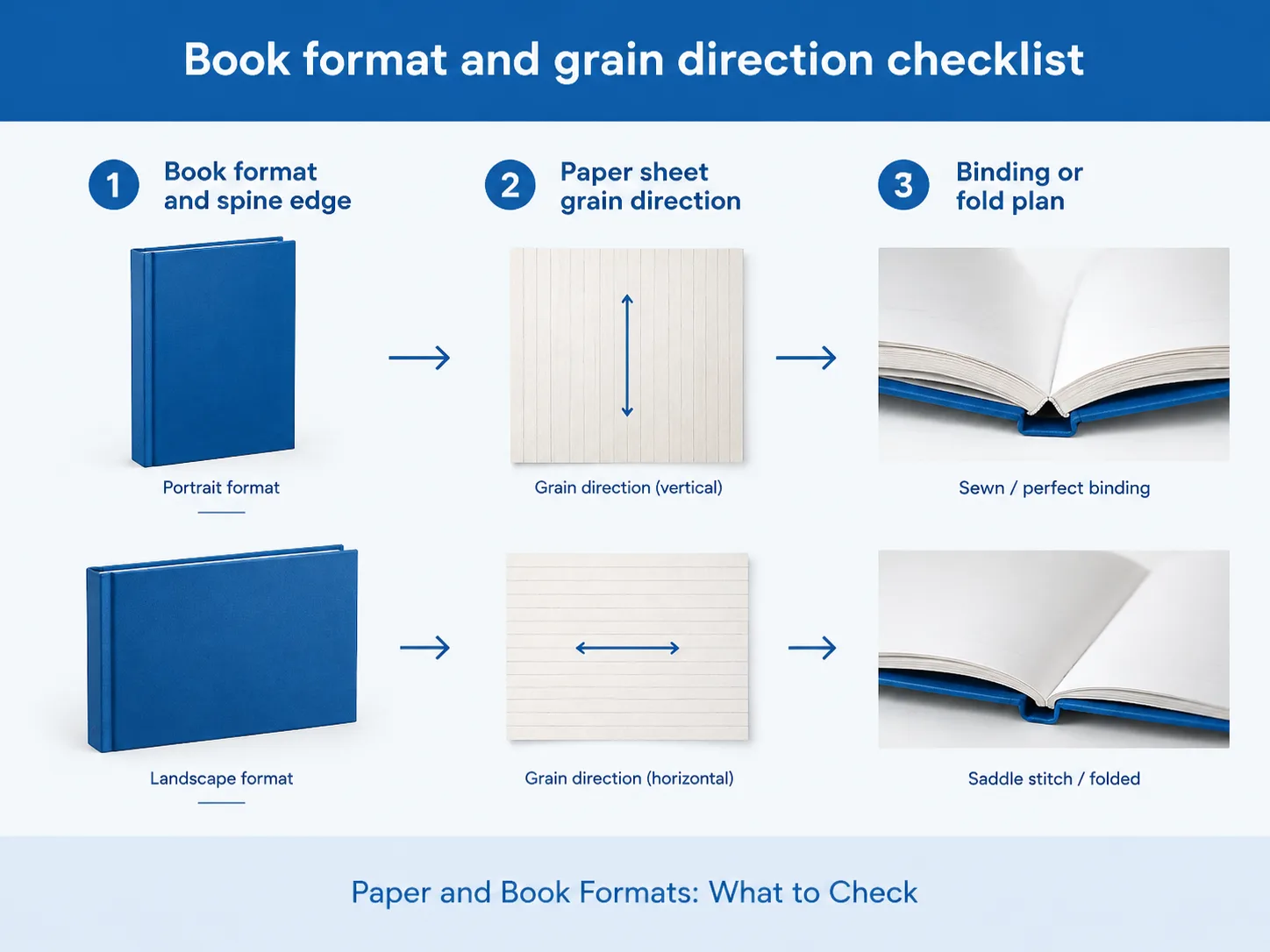
There is no single paper choice or grain setup that fits every book. Use this planning table to identify the questions that matter for your format. It is a specification guide, not a list of guaranteed product outcomes.
| Book or paper situation | Grain question | Other specifications to review |
|---|---|---|
| Standard portrait paperback | Can grain run parallel to the spine? | Paper weight and caliper, page count, adhesive binding and expected opening behaviour. |
| Sewn or casebound book | Does the grain suit the folded sections and spine direction? | Signature plan, sewing, endpapers, cover construction and whether a dummy is needed. |
| Landscape or unusual trim size | Which finished edge is the spine, and how does it relate to the imposed sheet? | Press sheet layout, trim, fold sequence and paper availability. |
| Coated or heavier paper | Will folds cross the grain, and is scoring appropriate? | Coating, fold position, cracking risk, image requirements and finishing method. |
| Thin, high-page-count paper | Will the grain support comfortable movement through the bound block? | Opacity, strength, bulk, page count and binding construction. |
For stock selection, also consider content, image coverage, opacity and intended handling. Grain is one component of book production specifications; it should be considered with paper weight, binding and finish rather than chosen in isolation.
Buyer Checklist for Paper Grain
Before approving a quote or production proof, use this short checklist:
- State the binding edge. Specify portrait or landscape format and identify which edge forms the spine.
- Request the grain orientation. Ask whether the text paper grain will run parallel to the spine and whether that is feasible for the planned sheet layout.
- Include folded sections. For signatures, ask the printer to confirm grain direction against the fold sequence and imposition, not only the flat sheet.
- Check the paper and finish. Note the stock, weight or caliper, coated or uncoated surface, and any scoring or finishing requirements.
- Review a physical sample when needed. A digital proof shows content and colour intent but cannot demonstrate page flexibility or actual folding behaviour.
- Record the decision. Put the agreed grain direction and any exception in the approved production specification.
For first-time buyers, a physical dummy can help assess the format, page movement and overall bulk, though it may not use the final printed paper. Ask what the sample represents before treating it as a production match.
How to Confirm Grain Before Production
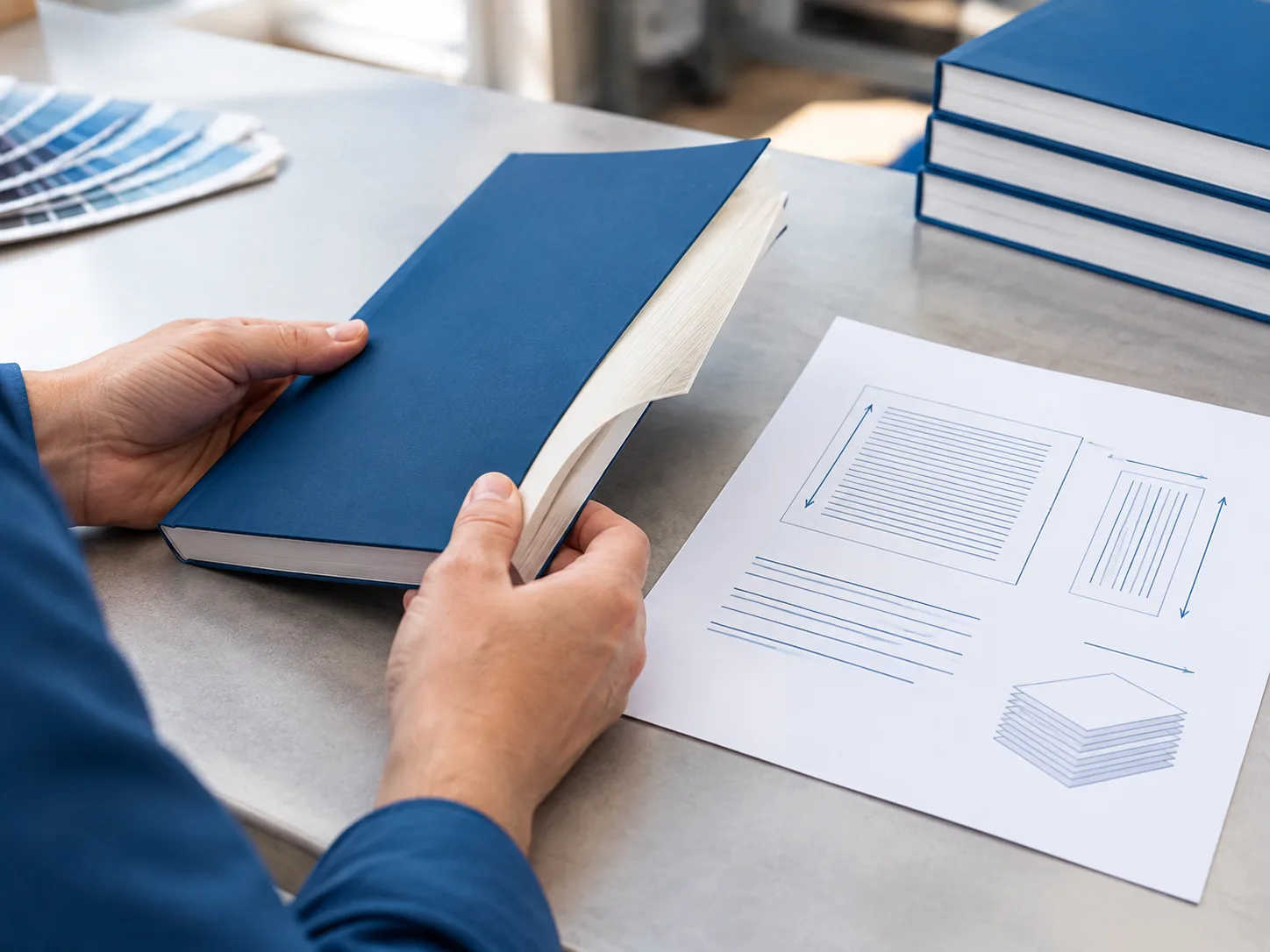
Grain direction is not always obvious from a finished book or a digital proof. Confirm it early enough for the printer to assess stock sourcing and imposition before the job is locked.
- Share complete book details. Provide trim size, page count, binding preference, paper preference, quantity and destination market. These details help the printer evaluate the sheet layout and manufacturing route.
- Ask a specific question. For example: “Please confirm whether the text paper grain will run parallel to the spine in the finished book. If not, please explain the planned orientation and its expected effect on folding and page movement.”
- Request a sample if the handling matters. For a premium edition, a frequently used reference book or a book with demanding folds, discuss a dummy or production sample that represents the intended paper and binding as closely as practical.
- Review and approve the specification. Check the paper description, grain direction, binding method, finishing and any agreed exception before production approval.
Proofing is still important for artwork, text, trim and colour, but those checks do not independently establish grain direction. Ask your manufacturer to clarify what each proof or sample can verify. YBJ Printing’s guide to book specifications, proofs and quotations explains how to prepare production details for a custom book project.
Paper behaviour also varies with the particular mill, stock, storage conditions and production environment. Any expected improvement in fold quality or page turning should therefore be treated as a practical tendency, not a promise of a specific result.
Key takeaway: specify the spine edge, ask for grain parallel to it where feasible, confirm the folded-sheet plan, and record any exception in writing.
Conclusion
Paper grain direction is a small but meaningful book production detail. Grain parallel to the spine is often preferred because it can support natural page flex and folding, but the correct plan depends on the binding edge, sheet layout, stock and finished format. Add grain to your production specifications, confirm it with your printer and review a representative sample when book handling is a key requirement.
FAQ
What does paper grain direction mean?
It is the direction in which most paper fibres align during manufacture. Paper commonly bends more easily along the grain than across it.
Should paper grain run parallel to a book spine?
For many bound books, yes. Grain parallel to the spine can support more natural page flex and folding, but the printer should confirm feasibility against the format, paper and imposition plan.
Can the wrong grain direction affect page turning?
It can contribute to greater resistance or less natural movement, depending on the stock and construction. Binding style, paper thickness and page count also affect how pages turn.
Can I tell grain direction from a PDF proof?
No. A PDF proof is useful for reviewing content and layout, but it does not show the physical grain of the paper. Ask the printer to confirm the planned orientation or arrange an appropriate physical sample.
Does grain direction affect the cost of a book?
It may affect stock selection, sheet yield or imposition, but the impact depends on the project. Ask your printer to explain any cost or production trade-off for the proposed orientation.
Prêt à planifier votre projet d'impression sur mesure ?
Tell YBJ Printing about your product type, trim size, page count, quantity, paper or binding preference, finish requirements, file status and delivery destination. If grain direction matters to how your book folds or turns, include that requirement so our team can discuss practical options and prepare a factory-direct quotation.