
Table of Contents
- What determines children’s sound book printing cost?
- The main cost drivers
- Why quantity changes the unit cost
- Buyer checklist for an accurate estimate
- Ways to control cost without weakening the product
- Quality, safety and logistics considerations
- How to request a useful sound book quote
- Conclusion
Children’s sound book printing cost depends on the printed board book plus the electronic system, assembly, packaging and destination logistics. This guide explains the main cost drivers and how publishers can prepare a practical quotation brief.
What determines children’s sound book printing cost?
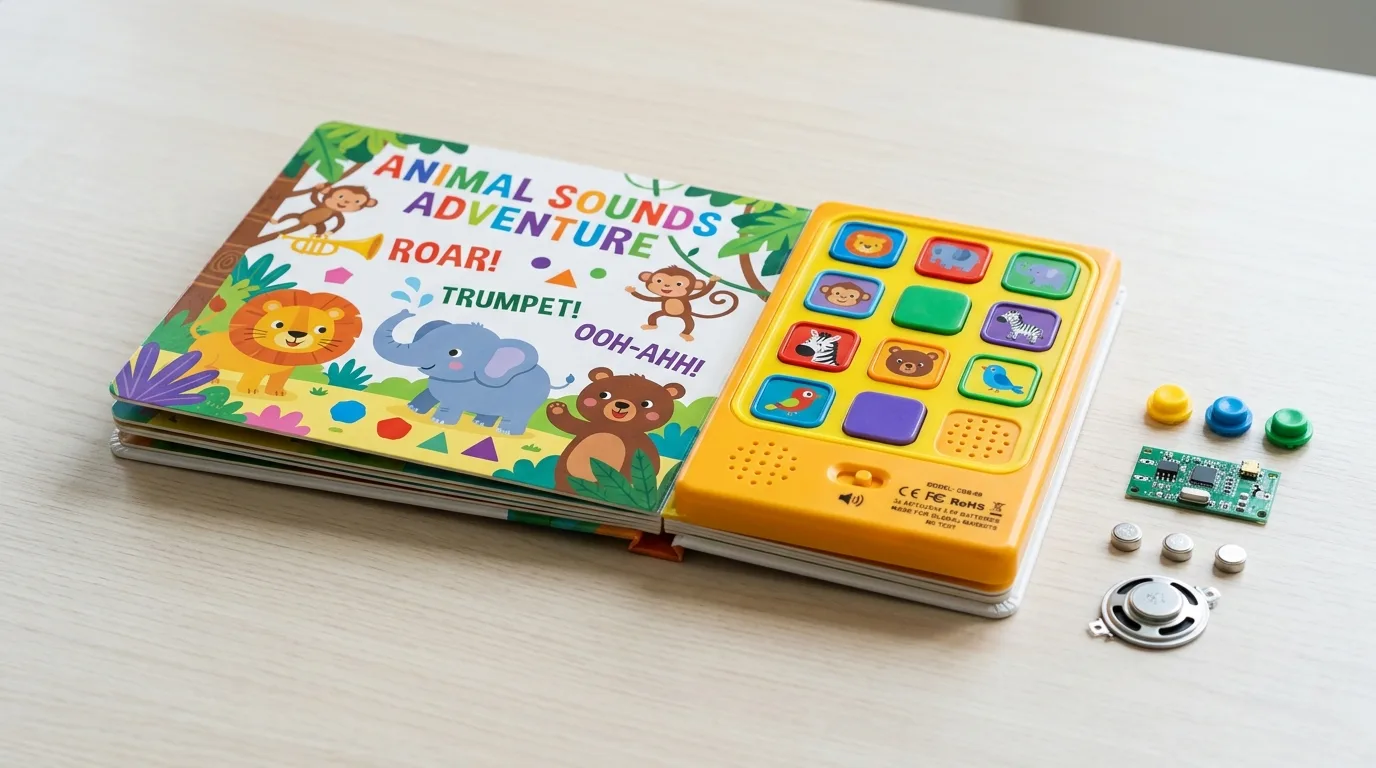
Children’s sound book printing cost is determined by both conventional board-book production and the electronic sound system built into the book. The biggest variables are quantity, book size, page count, board thickness, number of sound buttons, sound module specification, audio preparation, assembly, packaging, compliance requirements and shipping destination.
A sound book is not priced like a standard paperback or even a standard board book. It combines printed sheets, board mounting, die-cut components, electronic modules, speakers, batteries, wiring or contacts, hand assembly and functional checks. Because the physical design and electronics work together, an early specification change can affect several production stages at once.
For budgeting, buyers should evaluate the landed project cost, not only the factory unit price. Sample development, tooling or die-cutting where required, inspection, export packaging, test requirements and freight can all change the final procurement budget. The most reliable price is therefore based on a defined product specification rather than a broad “sound book” description.
Guangzhou YBJ Printing works with custom book specifications, so the practical starting point is to decide what the child will press, hear and handle before requesting a production quotation.
The main cost drivers
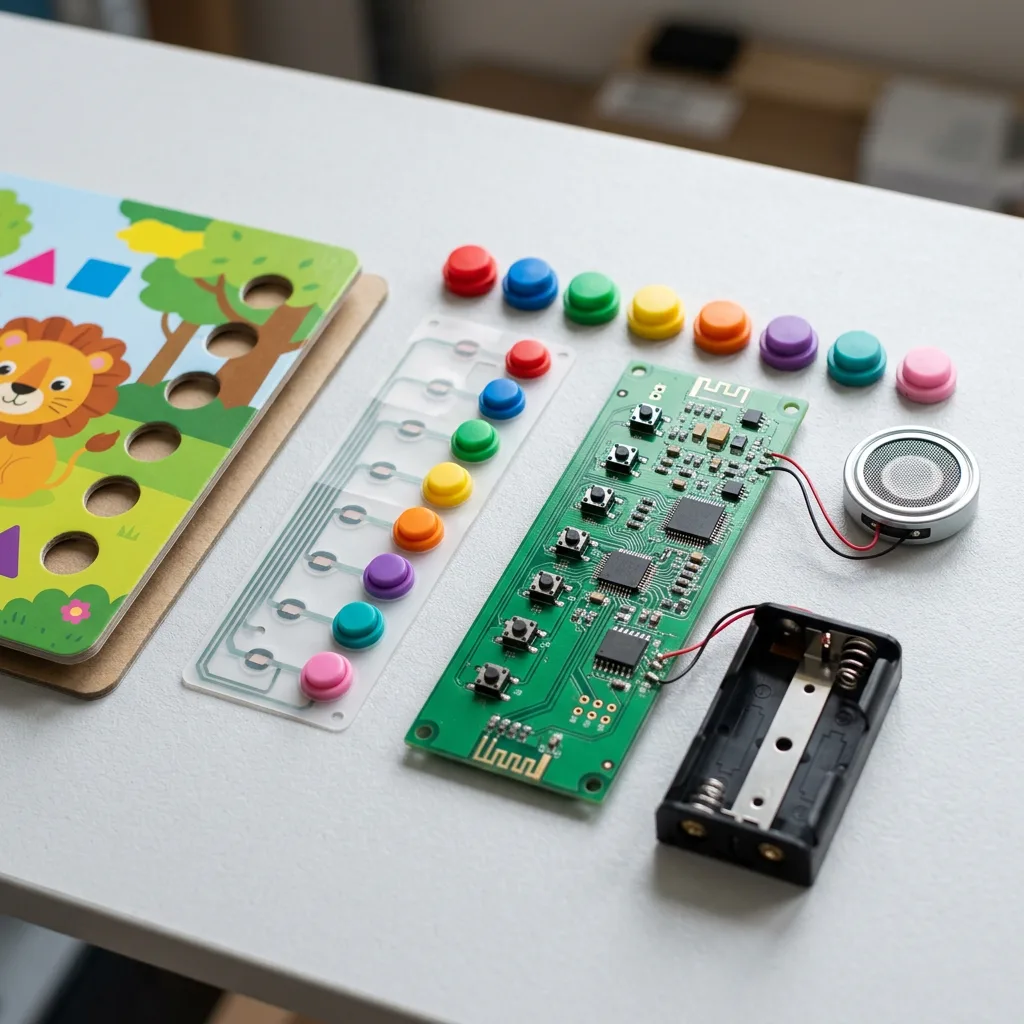
The cost of a custom sound book comes from a set of linked decisions. A lower-cost choice in one area may be unsuitable if it reduces durability, audio clarity or ease of use for the intended age group. Review the following elements as one specification.
1. Format, size and page count
Larger books consume more board, printed paper and laminate, while more spreads increase printing, mounting and assembly work. The page count also affects the physical space available for electronics and the book’s final weight. A compact format with a modest number of spreads is generally simpler to manufacture than an oversized, high-page-count title with sound on every spread.
2. Board, print and surface finish
Children’s sound books commonly use mounted paperboard pages rather than flexible text paper. The selected board construction, cover treatment and protective finish affect stiffness, edge durability, colour appearance and handling resistance. Full-colour illustration, spot colours, metallic effects, embossing, unusual die-cuts and specialty finishes may add production steps or setup cost.
3. Sound module and user interface
The electronic assembly is often a major part of the cost. Key details include the number of buttons, button style, speaker specification, module memory, battery arrangement, on/off function, activation method and internal wiring. A simple single-message module and a multi-button module with separate tracks are different products with different component and assembly needs.
Buyers should define the interaction clearly: whether one button plays all audio, each button plays a distinct sound, buttons are printed or separately fitted, and whether a child can replay tracks independently. Our article on sound book components, buttons, modules and batteries explains the decisions behind these parts.
4. Audio content and programming
Audio can include narration, music, sound effects or spoken vocabulary. Cost may be influenced by total audio length, track count, file format, editing work and programming requirements. Clear, final audio files reduce revision risk. If voice talent, recording, editing or licensing is still in progress, allow time and budget for those activities separately from physical manufacturing.
5. Assembly and quality checks
Sound books require more manual work than ordinary board books. Components must be fitted correctly, protected within the construction and tested for intended function. Complex layouts, multiple buttons, tight tolerances and special insert structures can increase assembly time. A functional check is important because the book must operate after binding, packing and normal handling.
Why quantity changes the unit cost
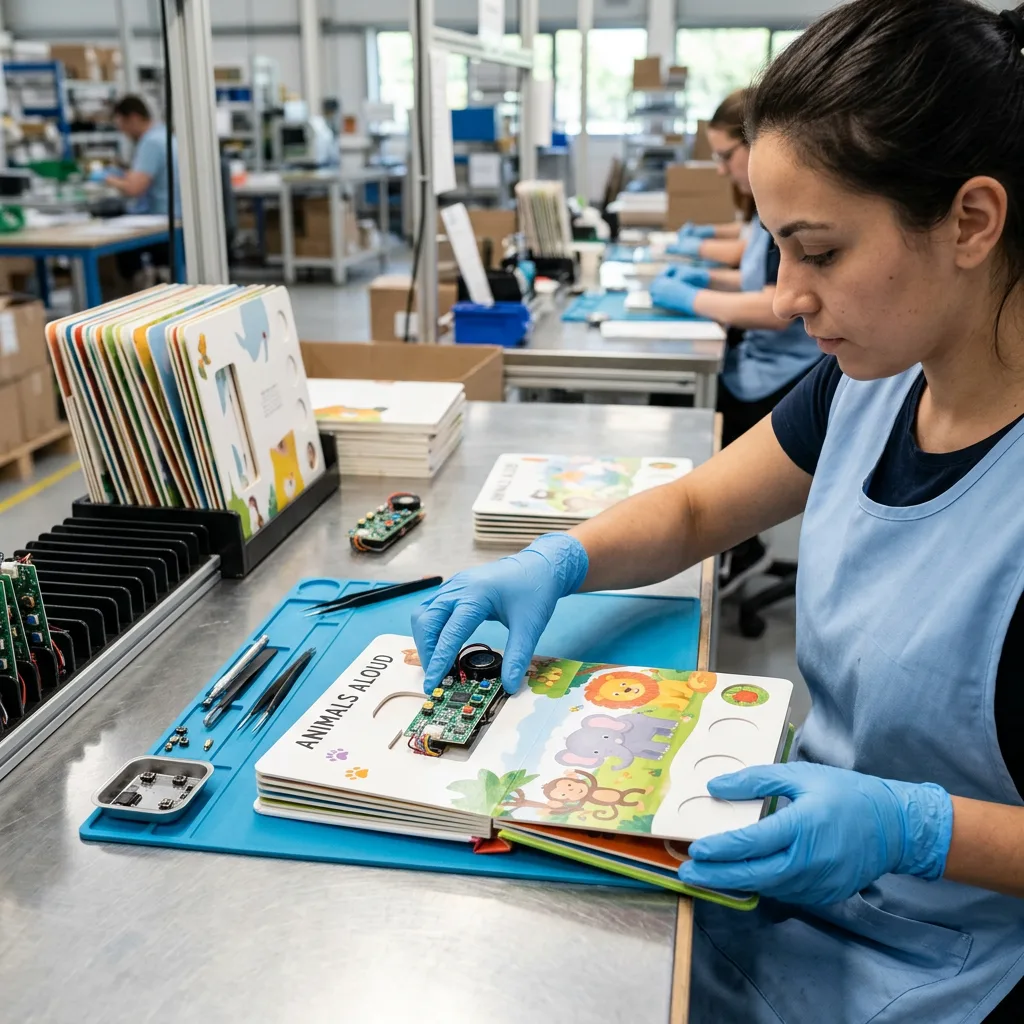
Quantity is one of the strongest influences on the per-book cost. Every production run has fixed or semi-fixed activities: prepress review, colour setup, module preparation, programming, sample work, die-cut setup when applicable, assembly planning and packing preparation. These costs are spread across more units in a larger order.
Component purchasing can also change with volume. Electronic modules, buttons, speakers and batteries are normally sourced against a defined specification, and larger component orders may produce a different cost structure from a small pilot run. However, volume does not remove the need for quality control or appropriate protective packaging.
For a new title, it is useful to request pricing for two or three realistic quantities. For example, compare a launch quantity, a replenishment quantity and a higher-volume forecast. This helps a publisher assess the trade-off between unit cost, inventory exposure, storage and cash flow.
Do not compare sound-book quotes by quantity alone. Confirm that each supplier is pricing the same trim size, page count, board construction, module type, number of buttons, audio specification, package format and delivery term. A cheaper quote may exclude a component, sample stage, protective packing or destination freight that another quote includes.
Buyer checklist for an accurate estimate
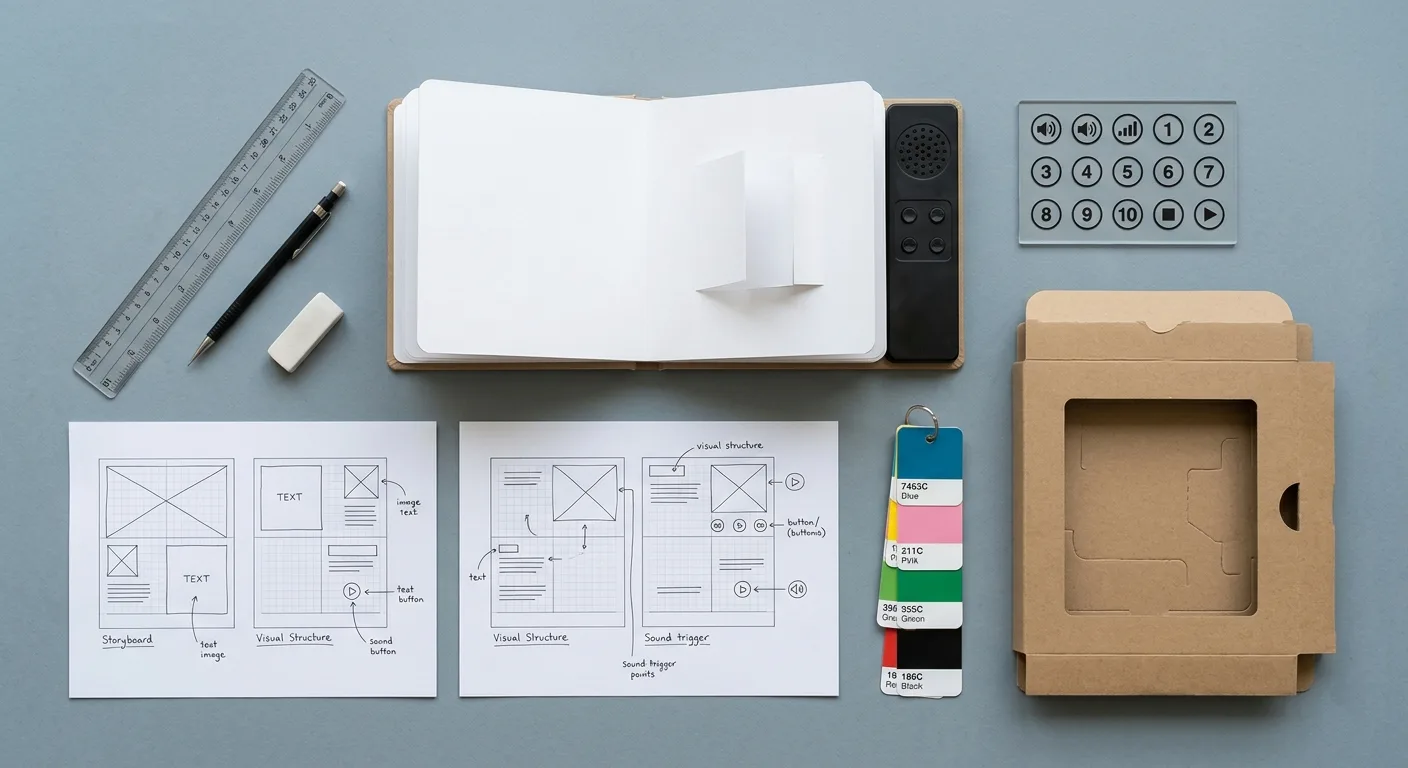
A complete brief reduces quotation delays and prevents assumptions that later alter the budget. Before asking for a children’s sound book printing cost, prepare the following checklist.
- Product type: board book, sound board book, novelty book or another interactive format.
- Trim size and orientation: finished width and height, plus portrait, landscape or square format.
- Page count: specify finished pages or spreads and identify the cover construction.
- Print details: colour process, spot colours if required, and any special finish such as gloss, matte, foil or embossing.
- Board and durability needs: expected age range, intended handling level and preferred protective surface treatment.
- Sound system: number of buttons, number of tracks, speaker requirement, battery arrangement, module location and activation functions.
- Audio status: final files available, files in editing, or audio still to be created.
- Artwork status: print-ready files, design files requiring prepress review, or artwork still under development.
- Quantity: initial order quantity and expected repeat-order volume.
- Packaging: individual polybag, sleeve, display box, carton requirements or retail-ready packing.
- Compliance expectations: intended sales market and any standards or test documentation requested by the buyer or retailer.
- Destination: country, city or port, and whether the quote should be EXW, FOB, CIF, DDP or another agreed delivery basis.
Some points are assumptions that directly affect cost, lead time and print quality. For example, final print-ready artwork shortens prepress work; a more complex sound mechanism increases assembly time; and a destination country affects freight, import processes and packing decisions.
Ways to control cost without weakening the product
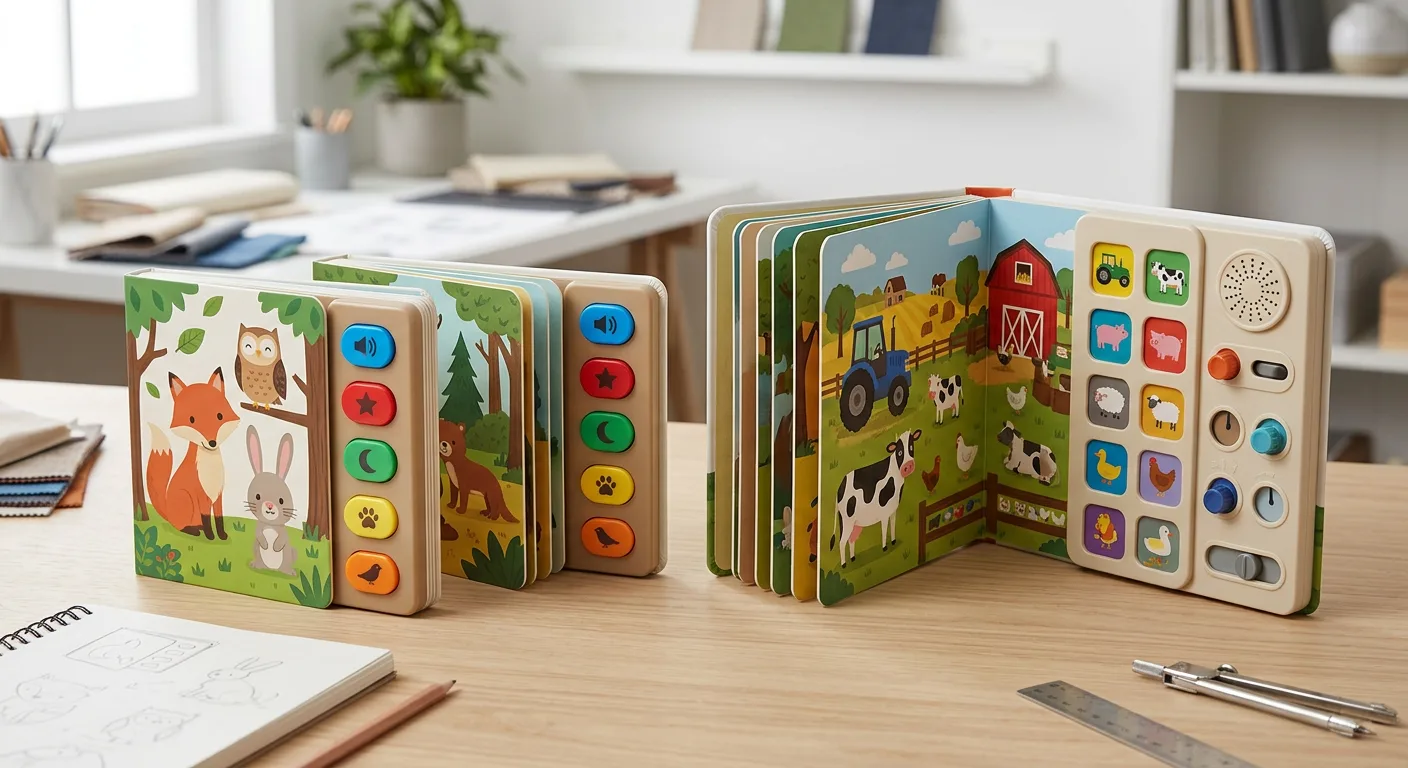
Cost control works best when it simplifies the product in ways that do not compromise the intended play and reading experience. Start with the purpose of the book: a first-words title, animal-sounds title, musical story or educational prompt book may not need the same sound architecture.
First, match the number of buttons and tracks to the content plan. Adding interactions that do not support the learning or story objective can raise component, programming and assembly cost without creating clear value for the reader. Second, select a practical standard trim size where possible. Efficient page layouts and consistent board shapes can reduce unnecessary material waste and production complexity.
Third, finalise the audio script and book layout before module programming. Late text or track changes can require new audio processing, revised programming and updated printed instructions. Fourth, choose packaging that protects the product through transport without adding retail features that the sales channel does not need.
Finally, consider production quantity against your sales plan. An extremely small run may have a high unit cost, while an overly large first run can create inventory risk. A supplier can normally provide comparable pricing once the specification and target quantities are clear.
If your concept combines sound with fabrics, flaps or textures, assess each feature separately. The manufacturing considerations in this guide to integrating fabrics and textures into touch-and-feel books can help you identify where interactive features add materials and handwork.
Quality, safety and logistics considerations
For children’s products, cost planning should include quality and safety expectations from the beginning. The intended market, age grading, retailer requirements and product design may affect the tests or documentation requested. Requirements differ by country and sales channel, so buyers should identify applicable obligations before production rather than assuming one approach applies everywhere.
Electronic components need appropriate integration into the book structure. Button travel, speaker openings, battery housing, wiring paths and protective layers must work with the printed board pages. A pre-production sample is especially valuable for checking button placement, volume, audio order, physical feel, colour, page turning and packaging fit before a full run begins.
Freight is another meaningful part of total cost because sound books are relatively dense products. Book dimensions, board weight, battery-related transport considerations, carton count and destination all influence logistics planning. Ask whether freight is included in a quotation and confirm the named delivery term. Factory price and delivered price are not interchangeable.
Build a reasonable schedule for artwork approval, audio approval, sampling, production, inspection and international transport. Lead time depends on final specifications, material and component availability, sample approval timing, order quantity and destination arrangements. A supplier should confirm the schedule only after reviewing the live project details.
How to request a useful sound book quote
The fastest route to a comparable quotation is to send one concise specification document with your available artwork and audio. If some details are undecided, identify them as options rather than leaving them unmentioned. For instance, request one price for six buttons and another for ten buttons, or compare two quantities using the same book format.
Include reference photos, a rough mock-up or a page plan when possible. These materials help communicate where the sound panel sits, how many buttons appear, whether buttons are printed, and how the book should open and close. For audio, label every track by button or page so the programming sequence is unambiguous.
Ask the printer to state what is included: samples, prepress, electronic components, programming, assembly, functional testing, individual packaging, export cartons and freight. This creates a clearer basis for internal budget approval and supplier comparison.
YBJ Printing is a China-based custom printing manufacturer serving global buyers with books, paper products and packaging. For a tailored review of your project, share the technical brief early enough to resolve construction and audio questions before mass production planning.
Conclusion
There is no single fixed children’s sound book printing cost because the product combines custom printing with electronics, assembly and logistics. The strongest budget levers are quantity, page count and size, board construction, number of buttons and tracks, audio readiness, packaging and destination.
The best way to control both cost and quality is to define the user experience first, then align the book format, sound components and production quantity with that goal. A complete specification gives suppliers the information needed to quote accurately and helps buyers compare proposals on a like-for-like basis.