
Índice
- What custom Bible printing involves
- Custom Bible specification checklist
- Paper, print and typography decisions
- Binding and cover comparison
- Bible format recommendations
- Preparing files for Bible printing
- Proofs and production approval
- Information required for a quotation
- Choosing a manufacturer and next steps
A buyer-focused guide to defining Bible specifications, comparing binding and cover options, preparing print files, reviewing proofs and requesting an accurate manufacturing quotation.
What custom Bible printing involves
Custom Bible printing is the manufacture of a Bible to a publisher’s specified text, trim size, paper, binding, cover design and finishing requirements. Unlike a standard book, a Bible often combines a high page count, compact dimensions, small type and thin paper. These factors must be planned together because changing one can affect spine width, opacity, readability, binding strength and shipping weight.
The most reliable starting point is a written specification sheet accompanied by representative artwork. A Bible printing company can then assess whether the proposed paper, page count and construction are compatible before preparing a quotation or physical sample.
Publishers must also confirm that they own or have permission to reproduce the selected translation, illustrations, commentary, maps and other protected content. The printer manufactures the supplied project; it does not automatically provide publishing or translation rights.
Price, lead time and final appearance depend on confirmed specifications, order quantity, approved files, proof requirements, material availability, packing and destination. For that reason, early prices based only on a page count and quantity should be treated as preliminary estimates rather than final production quotations.
Custom Bible specification checklist
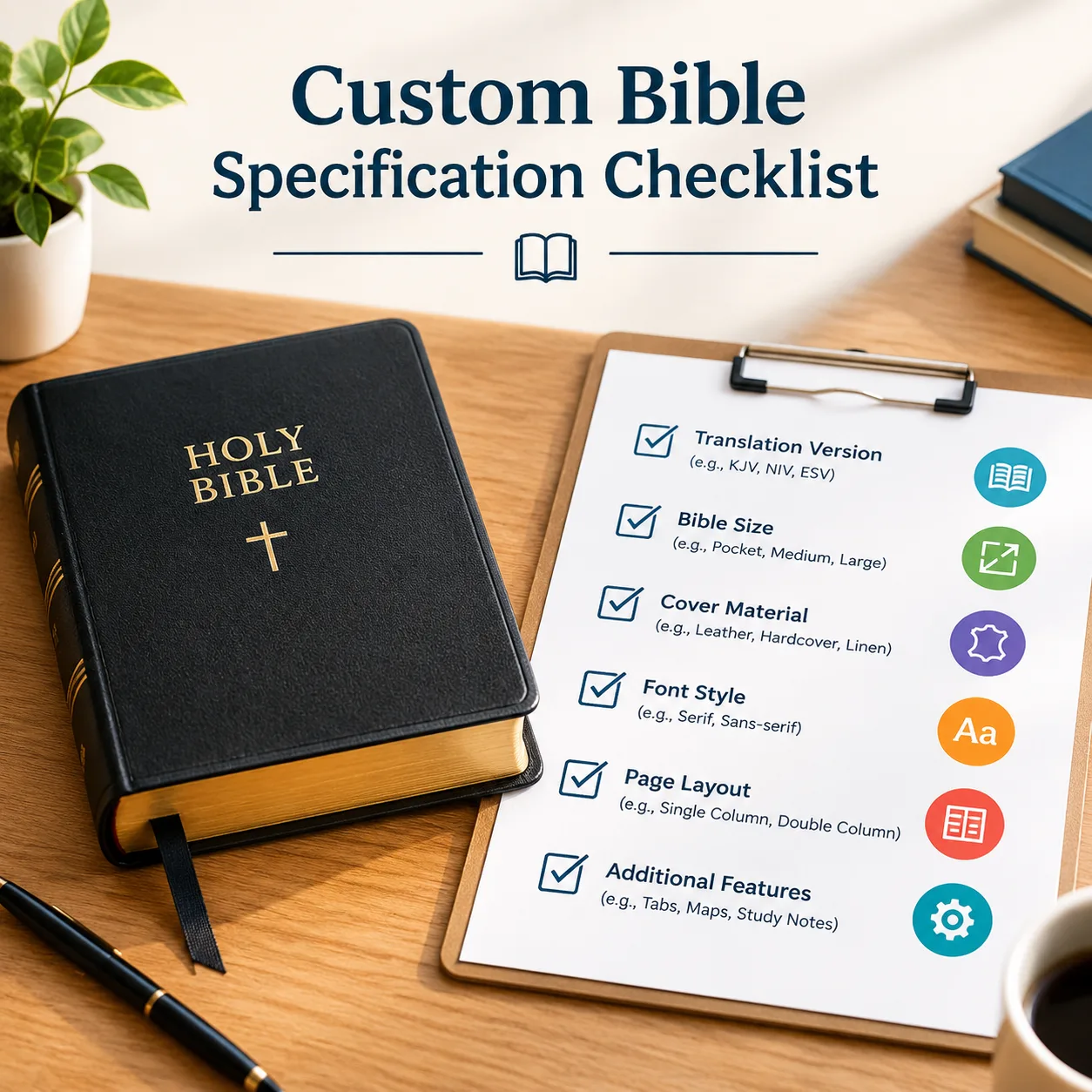
A complete specification helps a Bible book manufacturer evaluate manufacturability and compare like-for-like costs. Use the following checklist before requesting prices:
- Finished trim size: Give width × height in millimetres or inches and state whether rounded corners are required.
- Extent: Provide the exact interior page count, including blank pages, title pages, maps, indexes and notes.
- Interior colour: Specify black only, black plus a second colour, full CMYK, or a combination of sections.
- Papel: State the preferred paper type, weight and shade. If undecided, explain the target thickness and reading experience.
- Encuadernación: Identify whether the book should be sewn and casebound, hardcover, flexible PU-covered or another agreed construction.
- Tapa: List the covering material, board or flexible construction, printed artwork and decorative requirements.
- Acabados: Include foil stamping, embossing, debossing, edge gilding, ribbons, headbands, tabs, a slipcase or other components.
- Cantidad: Request prices for realistic order quantities rather than a broad range.
- Packing and delivery: Give the destination country, city or postal code and preferred shipping basis if known.
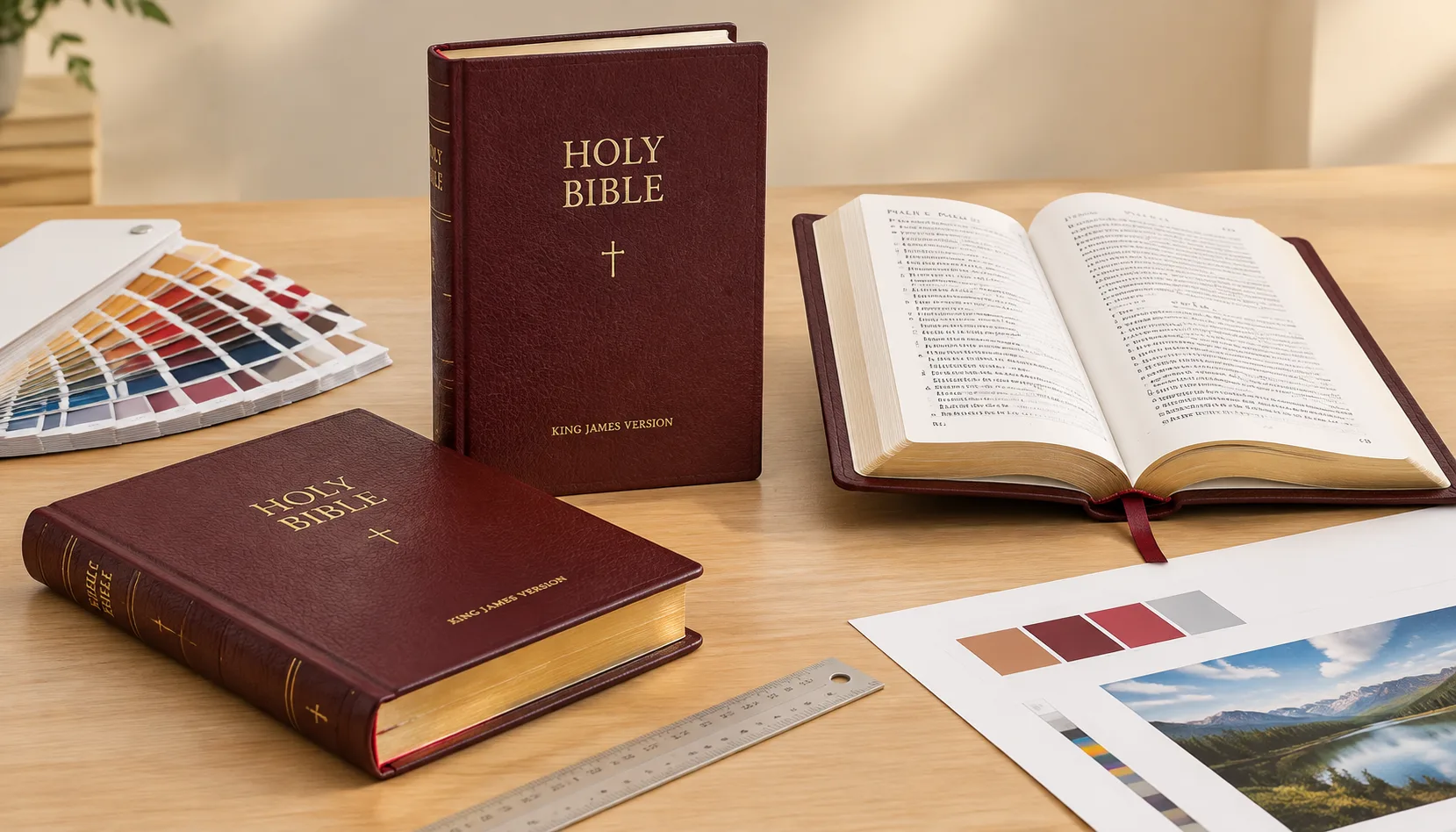
Also provide a reference image or sample when a tactile detail is difficult to describe. Terms such as “soft cover,” “leather style” and “gold finish” may be interpreted differently, so material samples and measurable specifications reduce ambiguity.
Paper, print and typography decisions
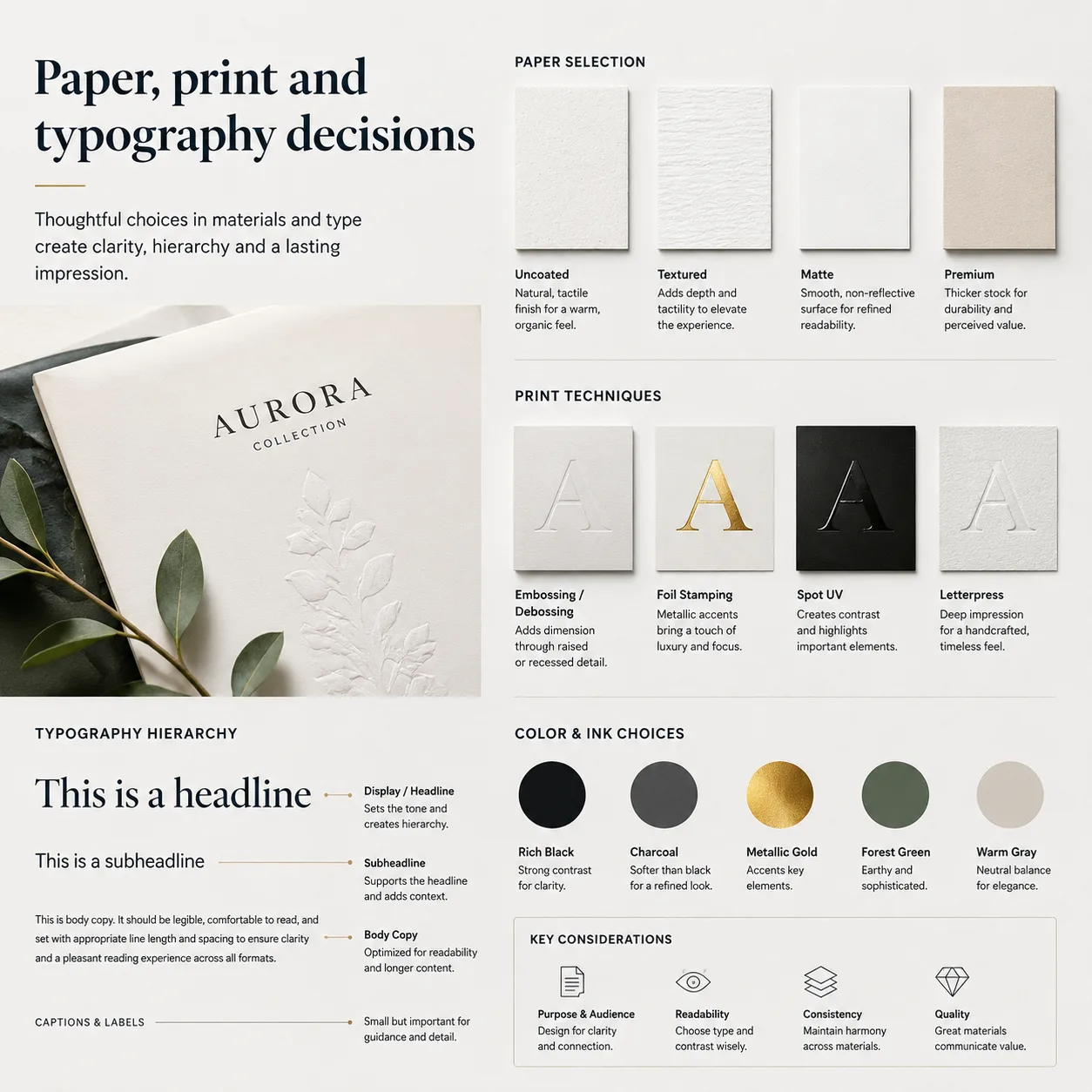
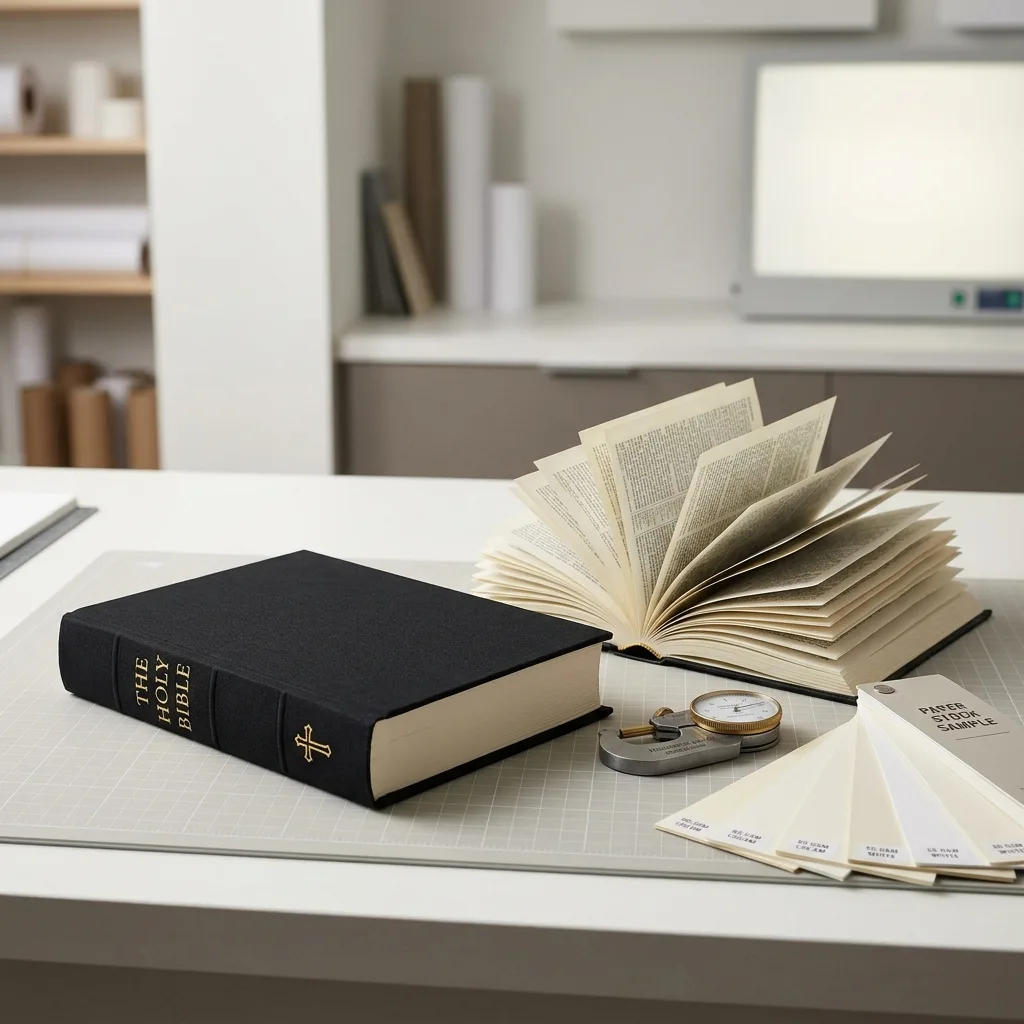
Thin paper helps control the thickness and weight of a high-page-count Bible, but weight alone does not determine suitability. Opacity, caliper, shade, surface, grain direction and ink behaviour also influence the result. A lower-opacity sheet can make text from the reverse side distracting, especially where lines do not align.
Ask the printer to confirm the proposed paper using its actual technical data and an available sample. The selected sheet must be evaluated with the final page count and binding rather than as an isolated choice. The practical considerations are explained further in this guide to Bible printing with thin paper and gilded edges.
Typography should be tested at final size. Review the typeface, point size, line spacing, column gap, running heads, footnotes and inner margins on a 100% scale printout. Small text that looks acceptable on a monitor may become tiring on paper. Adequate inner margins are particularly important in thick or tightly bound books.
If the edition uses red-letter text, maps or coloured study features, identify the relevant pages and colour method in the request. Colour expectations should be supported by reference values or an approved proof. Very fine reversed text, light tints and hairline rules should be avoided unless the printer confirms that they are suitable for the selected paper and process.
Compare Bible binding and cover options
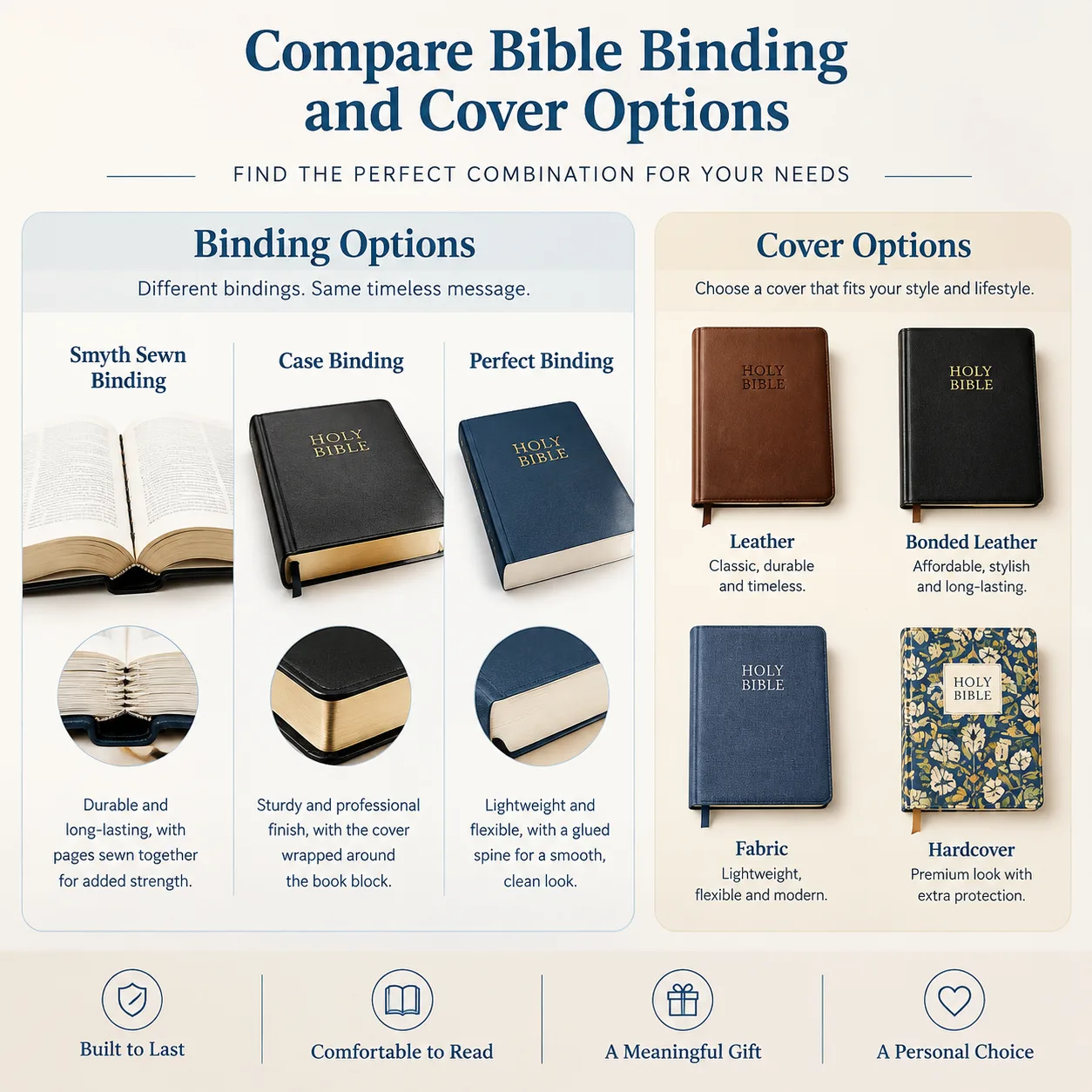
The binding must support the page count, paper and intended frequency of use. The terms below describe broad formats; the exact sewing, lining, board, hinge and cover details should be confirmed with the supplier.
| Format | Typical structure | Suitable applications | Points to confirm |
|---|---|---|---|
| Printed casebound | Rigid boards with a printed and protected paper wrap | Illustrated editions, institutional use and designs requiring full-cover graphics | Board thickness, surface protection, endpapers, spine shape and hinge |
| Hardcover with decorative finish | Rigid case with an agreed covering material | Presentation editions, study editions and long-term shelf use | Cover material, foil area, embossing depth, spine construction and ribbons |
| Flexible PU cover | Flexible or semi-flexible cover using PU material | Personal-use editions where a softer hand feel is preferred | Flexibility, edge stitching if applicable, corner treatment, foil and lining |
| Paperback or flexible printed cover | Printed paper cover attached to the text block | Lighter-distribution editions when compatible with the page count | Spine strength, cover lamination, opening behaviour and page-count limits |
Sewn construction is often considered for books that will be opened repeatedly, but its suitability and opening behaviour depend on the full structure. A round spine can change the appearance and handling of a thick hardcover, while a square spine gives a different profile. Review the implications in this round-back and square-back binding comparison.
No binding should be selected from appearance alone. Ask for a structural dummy when thickness, flexibility, opening or hand feel is important.
Bible format recommendations by project goal
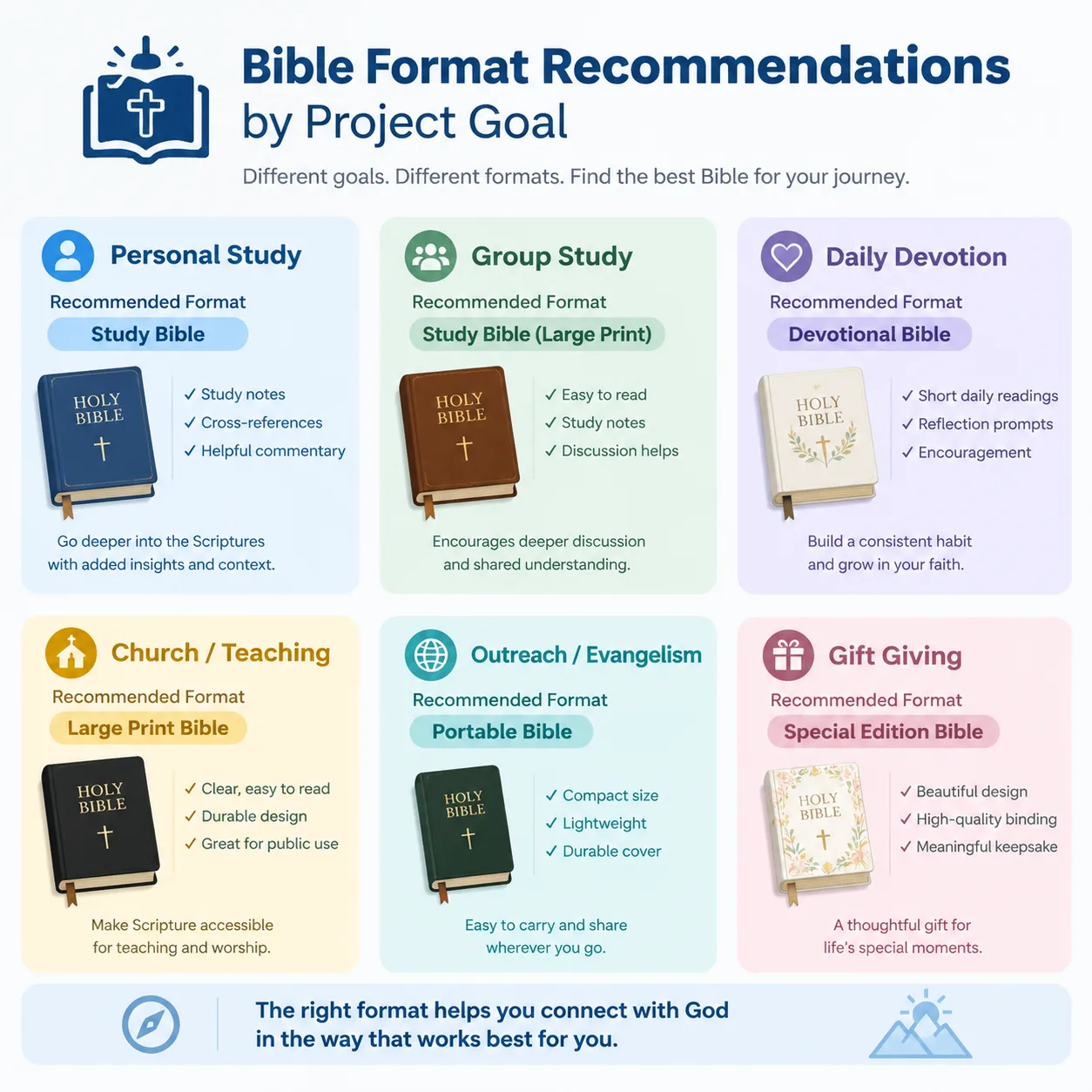
The following products are useful starting points for discussing construction with YBJ Printing. They are not fixed specifications: paper, size, page count and finishing still need to be evaluated for each project.
| Project starting point | Consider this format | Why it may fit |
|---|---|---|
| Full-colour cover artwork and a rigid structure | Casebound Bible book printing | A printed case can carry artwork across the front, spine and back while providing a hardcover structure. |
| Traditional hardcover edition | Hardcover Bible book printing | A practical starting category for discussing boards, endpapers, spine style and decorative cover treatments. |
| Softer cover feel with decorative page edges | PU leather cover Bible with golden edges | Relevant when the brief calls for a PU cover appearance and gilded edges. |
Choose according to use rather than label alone. A distribution edition, commemorative edition and frequently handled study Bible may require different constructions even when their trim sizes and page counts are similar. Request material swatches or a dummy before committing to appearance-sensitive details.
Prepare reliable files before you print custom Bibles
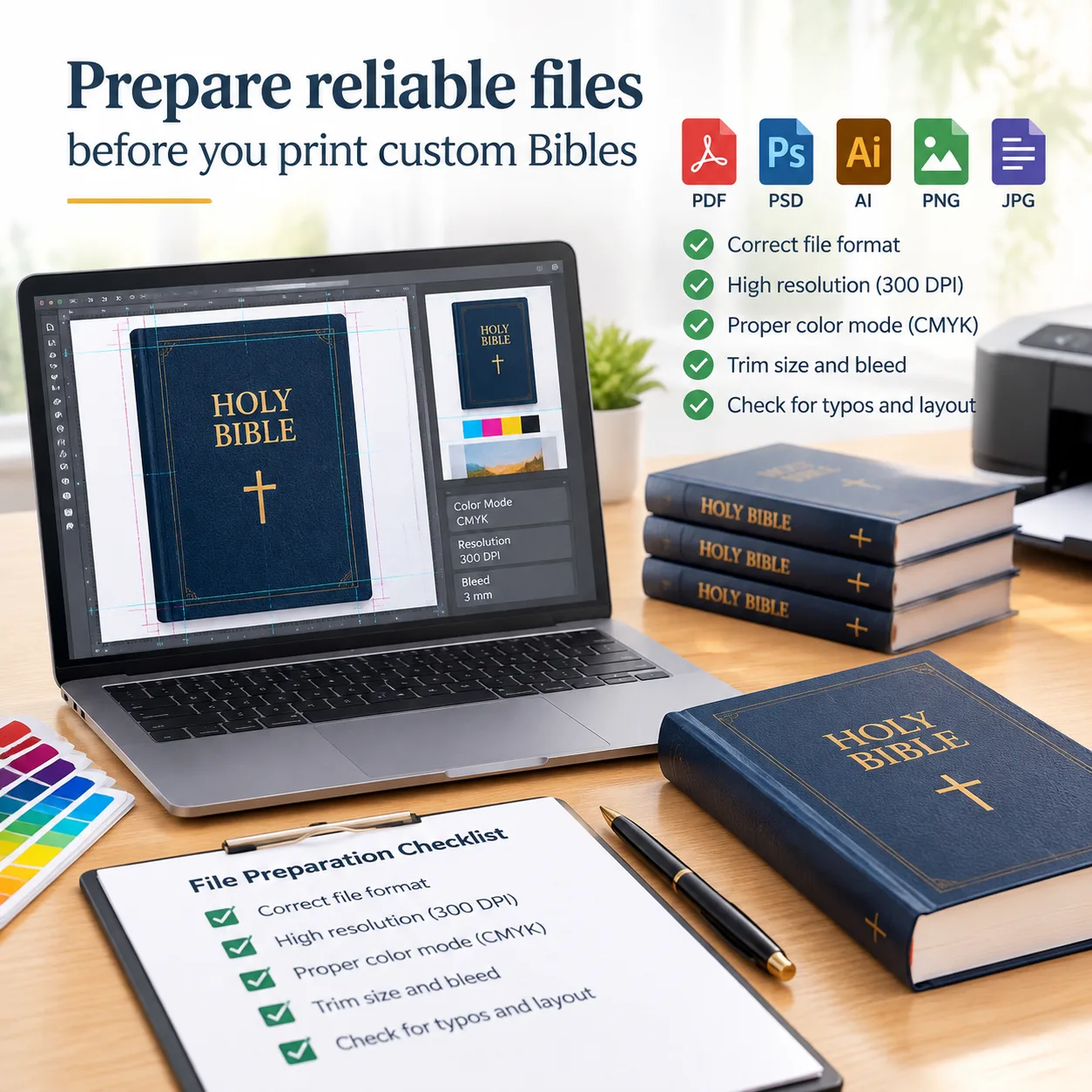
Submit the interior and cover as separate print-ready PDF files unless the manufacturer requests another format. The interior should normally contain single pages in reading order, not imposed printer spreads. Ask for the supplier’s current bleed, colour and PDF requirements before export.
Run these checks before uploading files:
- Confirm the PDF page count matches the quotation and specification sheet.
- Embed fonts and check that special characters, verse numbers and language glyphs display correctly.
- Use the agreed colour space and identify spot colours clearly.
- Add bleed to maps, illustrations or design elements intended to reach a trimmed edge.
- Keep text, page numbers and notes inside the agreed safe area.
- Check image resolution at final placed size and avoid enlarging low-resolution images.
- Verify blank pages, section starts, chapter order, cross-references and map orientation.
The final cover template should be based on the manufacturer’s confirmed text-block thickness. Do not calculate the spine solely from page count or a generic paper weight because the actual paper caliper, sewing, endpapers, boards and case construction can change the dimensions.
For foil, embossing, debossing or spot treatments, supply separate vector artwork using clearly named spot colours. Very small foil details and fine reversed lines may need adjustment after the supplier reviews the design.
Use the right proofs before production approval
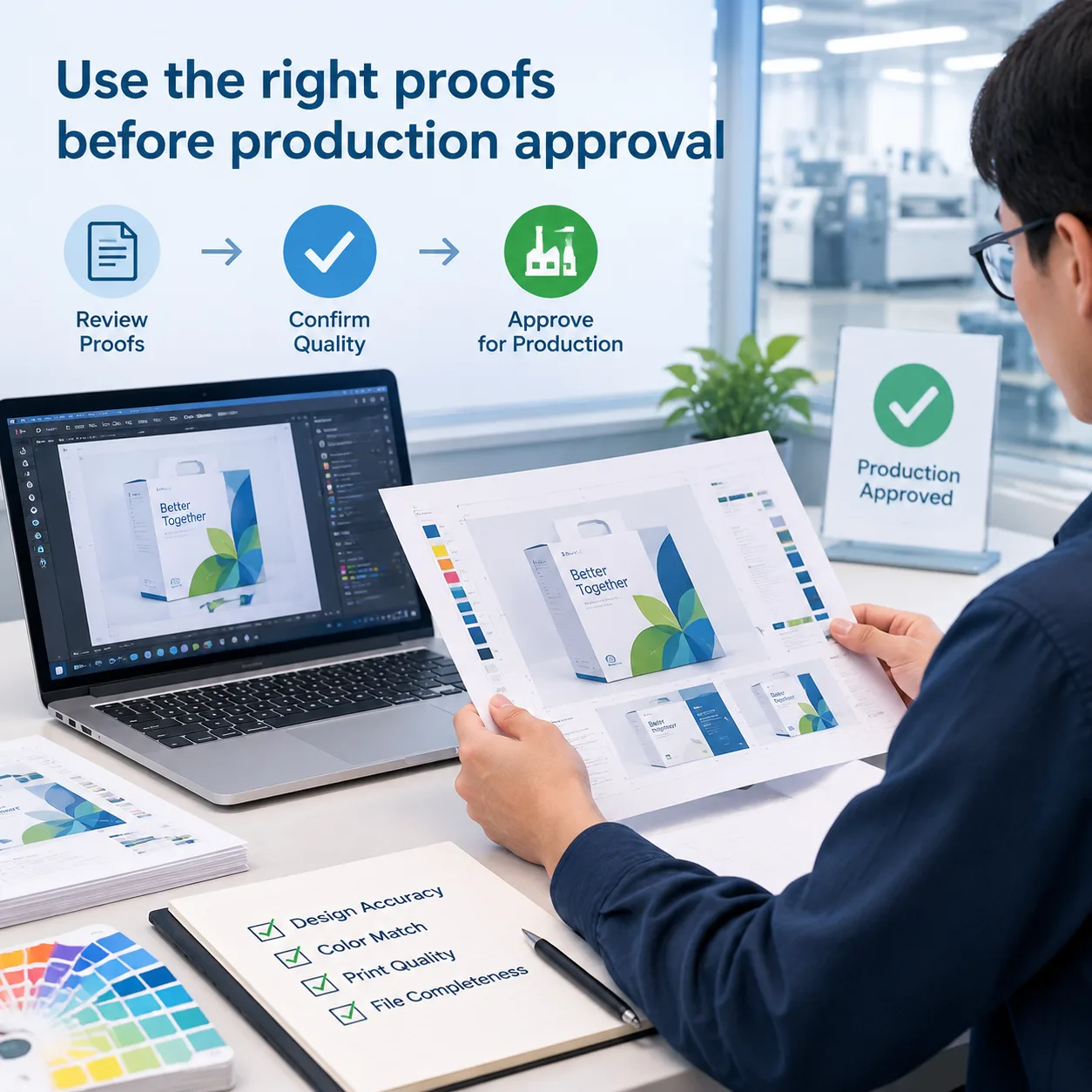
A proof is only useful when its purpose is understood. Buyers and suppliers should agree on what each sample represents and which characteristics are not production-representative.
- PDF proof: Check pagination, content, trim marks, bleed and basic artwork placement. This is not a physical colour or binding sample.
- Unprinted dummy: Check size, approximate bulk, construction, opening and handling using agreed or representative materials. It does not show print colour.
- Printed proof: Review content, scale and general image reproduction. A digitally produced proof may not match offset ink, thin production paper, binding or finishing exactly.
- Material and finish sample: Assess paper shade, cover texture, foil colour, ribbons, headbands or edge treatment. These samples may come from previous work and should not be treated as an exact finished copy unless stated.
- Production or press sample: Where agreed and practical, this can represent selected production materials and processes more closely. Its scope, cost and timing must be confirmed before ordering.
For a fuller explanation of these distinctions, see book dummy, proof and press sample differences.
Use a written approval checklist. Verify content, page sequence, colour expectations, dimensions, paper, binding, cover material, spine text, foil position, edge finish and packing marks. Record requested corrections by file name and page number, then approve only the final revised version. Changes after approval may affect cost and schedule or may no longer be possible.
What a Bible printing quotation should include
For comparable quotes, send every candidate supplier the same specification and ask each one to identify assumptions or substitutions. A useful request includes the product type, trim size, page count, quantity, interior colours, paper preference, binding, cover material, finishes, file status, packing and destination country.
Ask whether the quotation identifies:
- Unit quantity and any permitted production variance
- Interior and cover materials
- Printing and binding method
- Included ribbons, headbands, edge finishing or packaging
- Proof or sample type and whether its cost is separate
- Carton packing assumptions
- Shipping method, delivery basis and destination
- Payment terms and quotation validity
- Estimated production timing after final approval
Pricing assumptions: Unit cost can change with quantity, page count, trim size, paper availability, colour coverage, binding complexity and finishing. Freight changes with packed volume, weight, destination and transport method. Taxes, duties and local charges depend on the agreed delivery basis and importing country.
Lead-time assumptions: Timing should be discussed only after specifications, files, materials, proof requirements and quantity are known. Approval delays, file corrections, special materials and complex hand-finishing can extend the schedule. A custom Bible publisher should also reserve time for editorial checking before manufacturing approval.
For bulk Bible printing, compare total scope rather than unit price alone. A lower figure may exclude proofs, special finishes, export packing or freight that another supplier has included.
Choose a Bible book manufacturer using documented details
Before appointing a supplier, evaluate how clearly it answers technical questions. Ask who will review the files, how paper and cover materials will be approved, which proof stages are available and how approved specifications are recorded for production.
A practical supplier review should cover:
- Experience discussing thin paper and high-page-count book structures
- Clear identification of materials and approved substitutes
- A documented proof and change-approval process
- Explanation of packing and shipping assumptions
- Responsive communication about technical risks or missing information
Custom Bible printing works best when editorial, design, manufacturing and logistics decisions are connected from the beginning. Establish the page count and text layout first, match the paper to the required thickness and readability, confirm the binding with a dummy where necessary, and approve files and finishes through an agreed proof process. This produces a clearer quotation and reduces avoidable changes after manufacturing has been authorised.
PREGUNTAS FRECUENTES
What information is needed to quote custom Bible printing?
Provide the product type, finished size, exact page count, quantity, interior colours, paper preference, binding, cover material, finishes, file status, packing requirements and destination country. A city or postal code and preferred shipping basis help when freight is requested.
Which paper is suitable for a high-page-count Bible?
The choice depends on page count, trim size, desired thickness, opacity, readability, binding and budget. Do not select by paper weight alone. Ask the printer to confirm actual caliper, opacity, shade and availability and to provide a representative sample where possible.
Should a custom Bible use sewn binding?
Sewn construction is often considered for frequently opened, high-page-count books, but it is not an automatic requirement for every project. Suitability depends on paper, page count, signature plan, cover structure, opening expectations, quantity and budget.
Is a PDF proof enough to approve Bible production?
A PDF proof is useful for content, pagination and placement checks, but it cannot fully represent paper, thickness, binding, colour or tactile finishes. Consider a dummy, printed proof and material samples according to the risks in the project.
Why can a digitally printed proof look different from the final books?
The proof may use a different printing process, ink or toner, paper and finishing method from mass production. Confirm in writing which features the proof is intended to represent before using it for approval.
Can a printer supply the Bible translation text?
Translation and reproduction rights must be confirmed separately. The publisher should supply authorised content and verify permission to reproduce the translation, commentary, illustrations, maps and other protected elements.
How can buyers compare bulk Bible printing quotations?
Use one specification sheet for every supplier and compare materials, construction, proofing, finishing, packing, freight basis and exclusions. Unit prices are not directly comparable when the quoted scope differs.
Discuss your custom Bible printing project
Guangzhou YBJ Printing Co., Ltd can review your specification and discuss suitable production options. For an accurate quotation, send the product type, trim size, page count, quantity, paper or binding preference, required finishes, file status and destination country. Reference images or an existing sample are also helpful when the cover feel or construction is important.