
Table des matières
- What Does Book Printing MOQ Mean?
- What Determines the Minimum Order Quantity?
- How Many Copies Should You Order?
- Small Print Run Versus Bulk Order
- Cost Factors Beyond MOQ
- Buyer Checklist Before Ordering
- How to Request an Accurate Quote
- Conclusion
Book printing minimum order quantity depends on the book format, binding, materials, finishing and production setup. This guide explains how to choose a practical print run without ordering too many copies or paying unnecessary unit costs.
What Does Book Printing MOQ Mean?
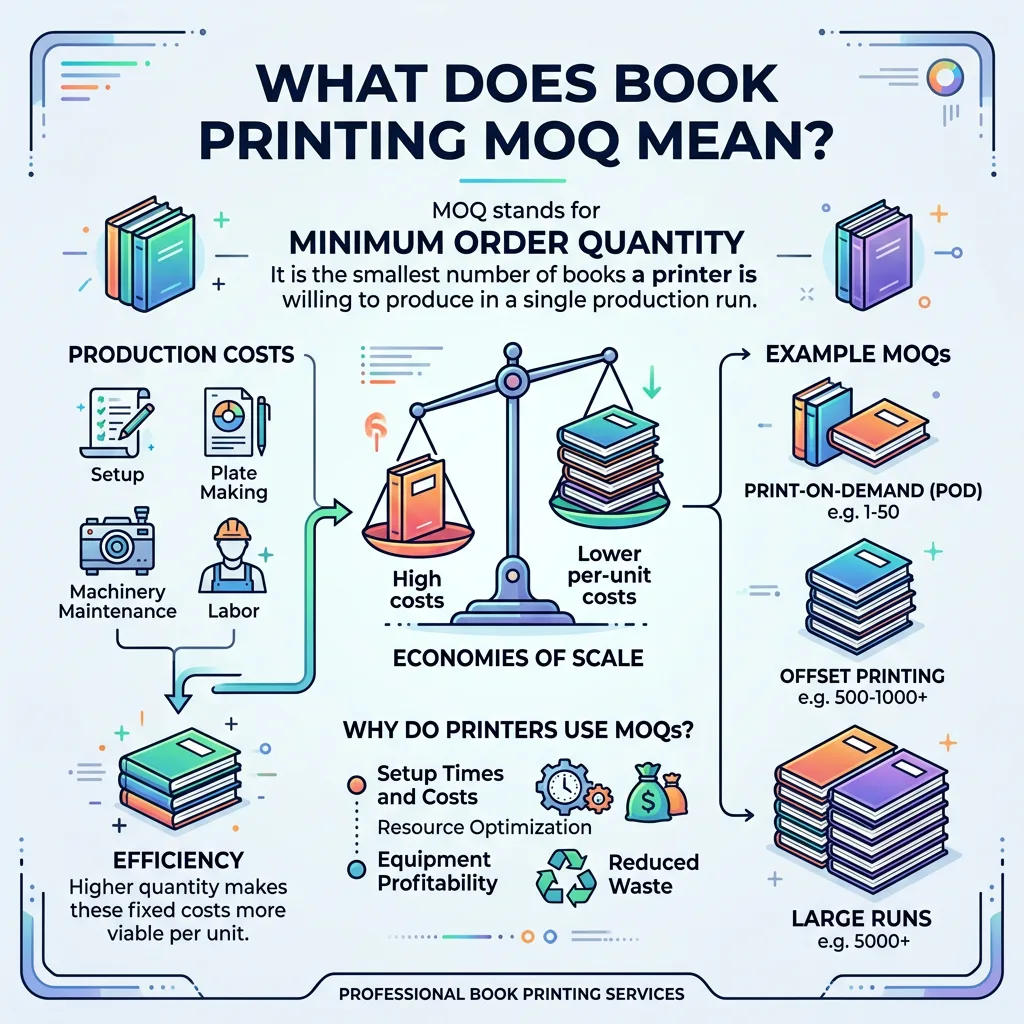
Book printing minimum order quantity, or MOQ, is the smallest number of copies a printing manufacturer will normally produce for one book specification and order. It is not a universal number. The practical MOQ changes according to the book’s size, page count, binding, paper, cover, colour requirements, finishing and packaging.
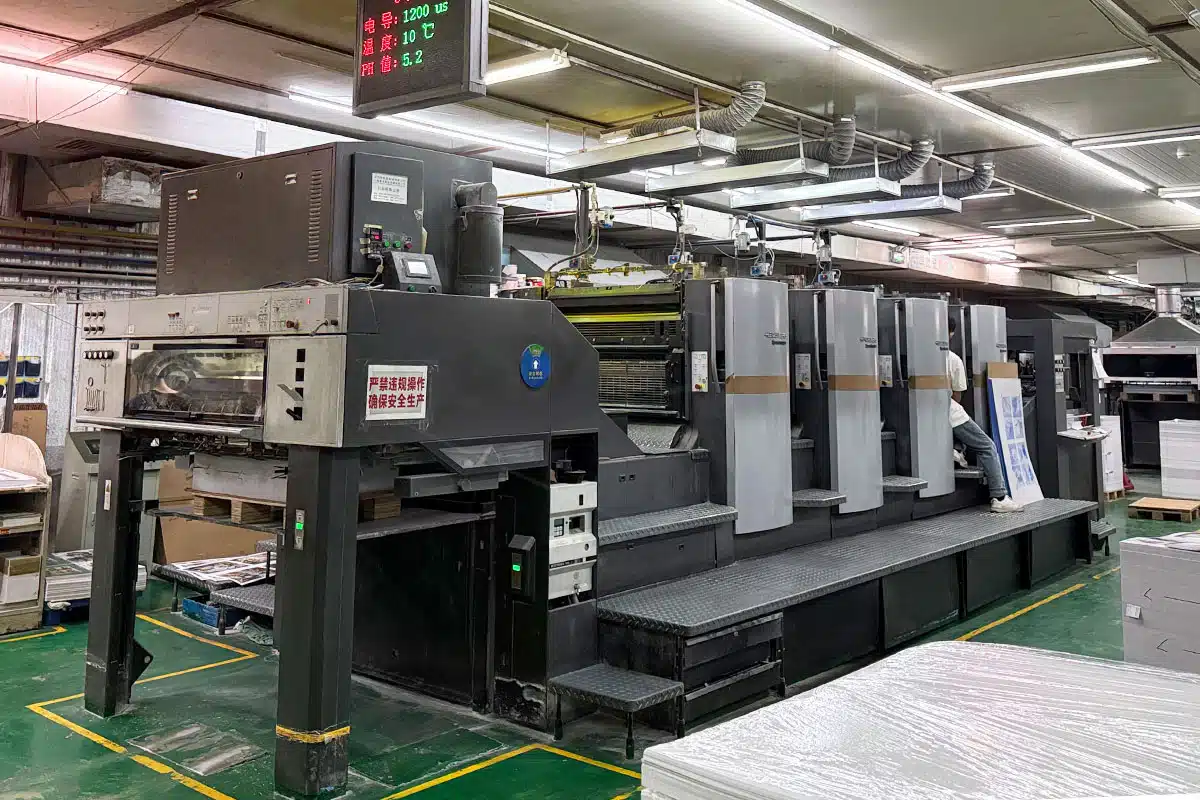
For example, a short black-and-white booklet with a simple cover may be suitable for a smaller run than a colour hardcover book with foil stamping, special paper and hand assembly. The reason is that every project requires some combination of prepress preparation, plate or digital setup, paper purchasing, machine scheduling, binding and packing. A larger quantity spreads these fixed or semi-fixed costs across more copies.
An MOQ should therefore be treated as a planning point rather than the only factor in your decision. Ordering exactly the minimum may reduce your initial inventory, but it can result in a higher unit cost or leave no copies for quality checks, marketing, replacements and future customer orders.
The right question is usually not only, “What is the lowest quantity you can print?” It is also, “What quantity gives us a reasonable total cost and manageable inventory for this project?”
What Determines the Minimum Order Quantity?
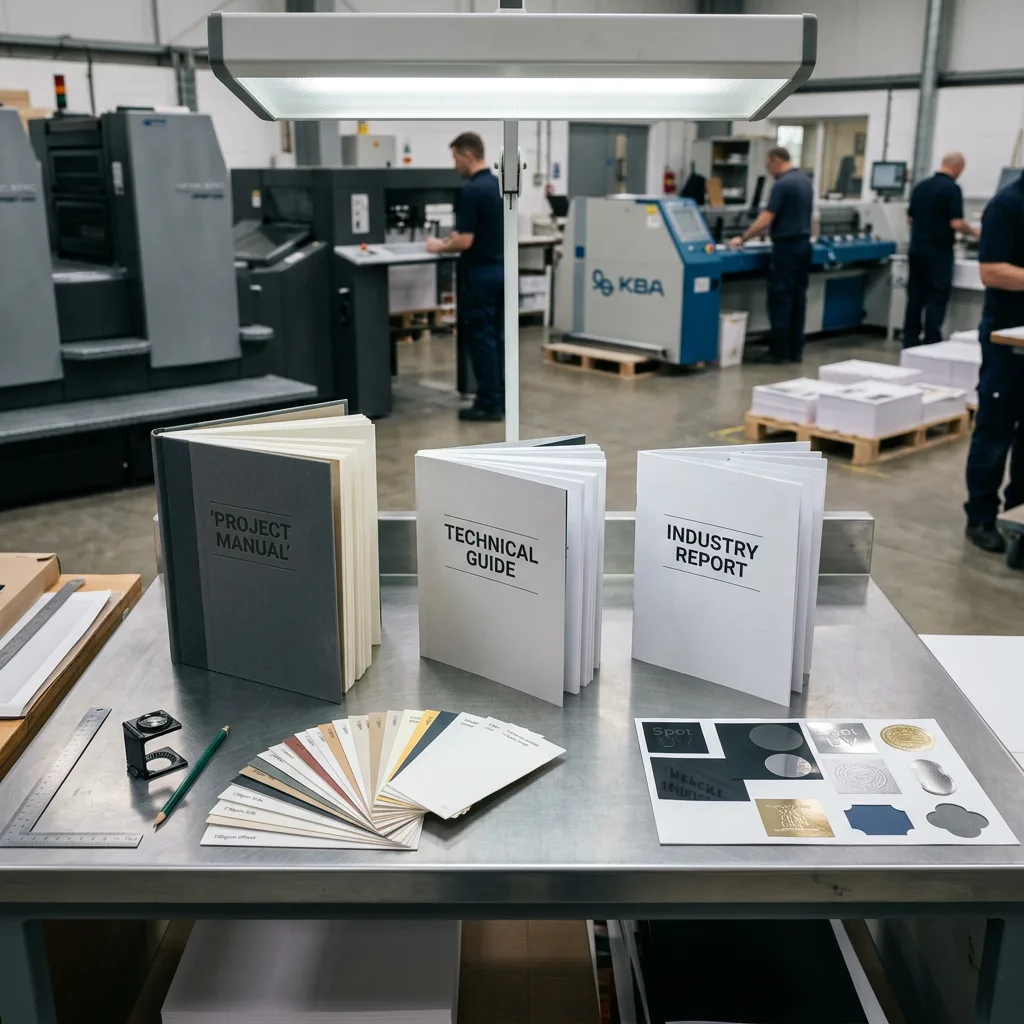
Manufacturers assess MOQ by looking at the complete production specification, not just the product name. The following factors commonly affect the quantity that is practical for a project.
Book format and page count
Trim size, landscape or portrait orientation, number of pages and the number of printed colours affect paper use and production setup. A larger book consumes more paper per copy, while a longer book requires more binding work and may need a different production arrangement.
Méthode de liaison
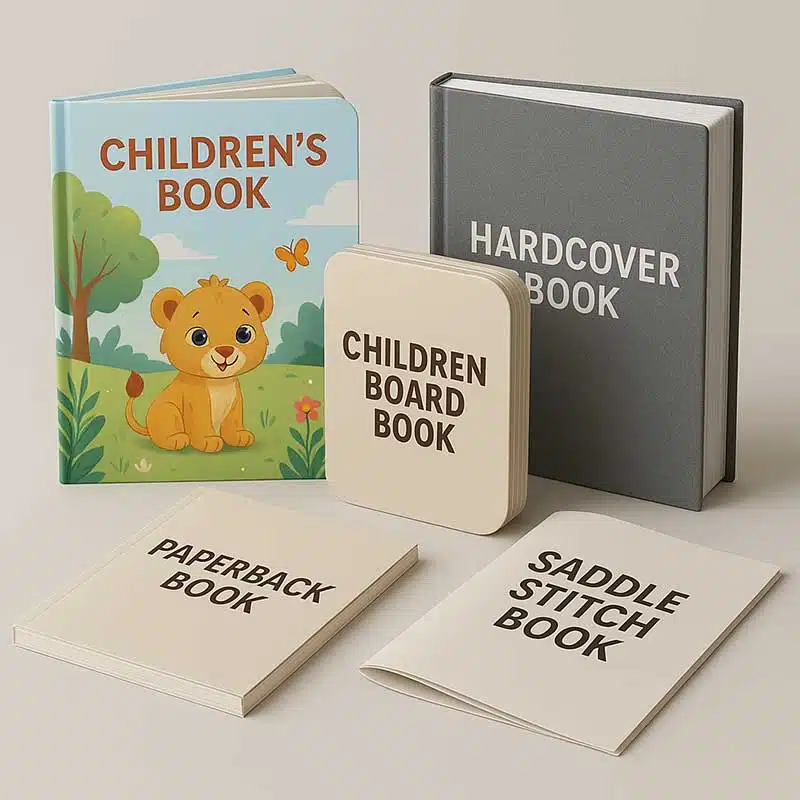
Perfect binding, saddle stitching, hardcover binding, sewn binding and lay-flat structures have different setup and assembly requirements. A standard binding may be easier to produce at a lower quantity, while a more specialised structure can make a larger run more efficient.
Paper and cover materials
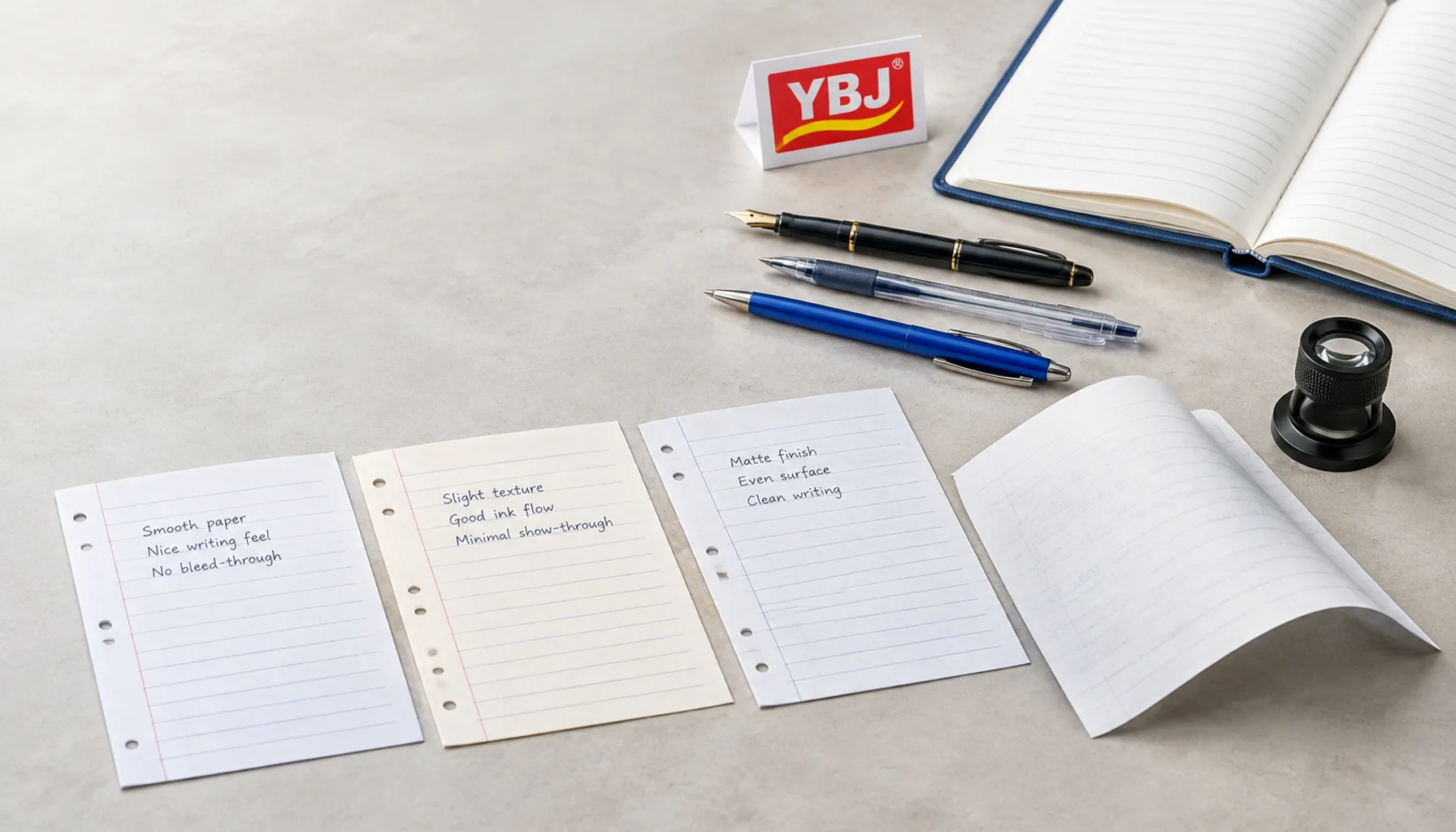
Common coated or uncoated papers are generally easier to source than unusual weights, colours or textures. Special paper may have a supplier pack size or purchasing requirement that influences the economical minimum. The same applies to cloth, textured cover stock, board and other cover materials.
Colour and finishing
Full-colour interiors, spot colours, foil stamping, embossing, debossing, lamination, varnish and die cutting each add process steps. These steps do not necessarily make a low-quantity order impossible, but they can change the setup cost and the quantity that gives good value.
Packaging and project coordination
Individual wrapping, custom boxes, inserts, labels or mixed shipping destinations may require separate coordination. If the books are part of a wider product kit, the quantity may need to match the packaging or other components.
Because these variables interact, a manufacturer should confirm the MOQ after reviewing the specification. A general number quoted before the project details are known may not apply to the final book.
How Many Copies Should You Order?
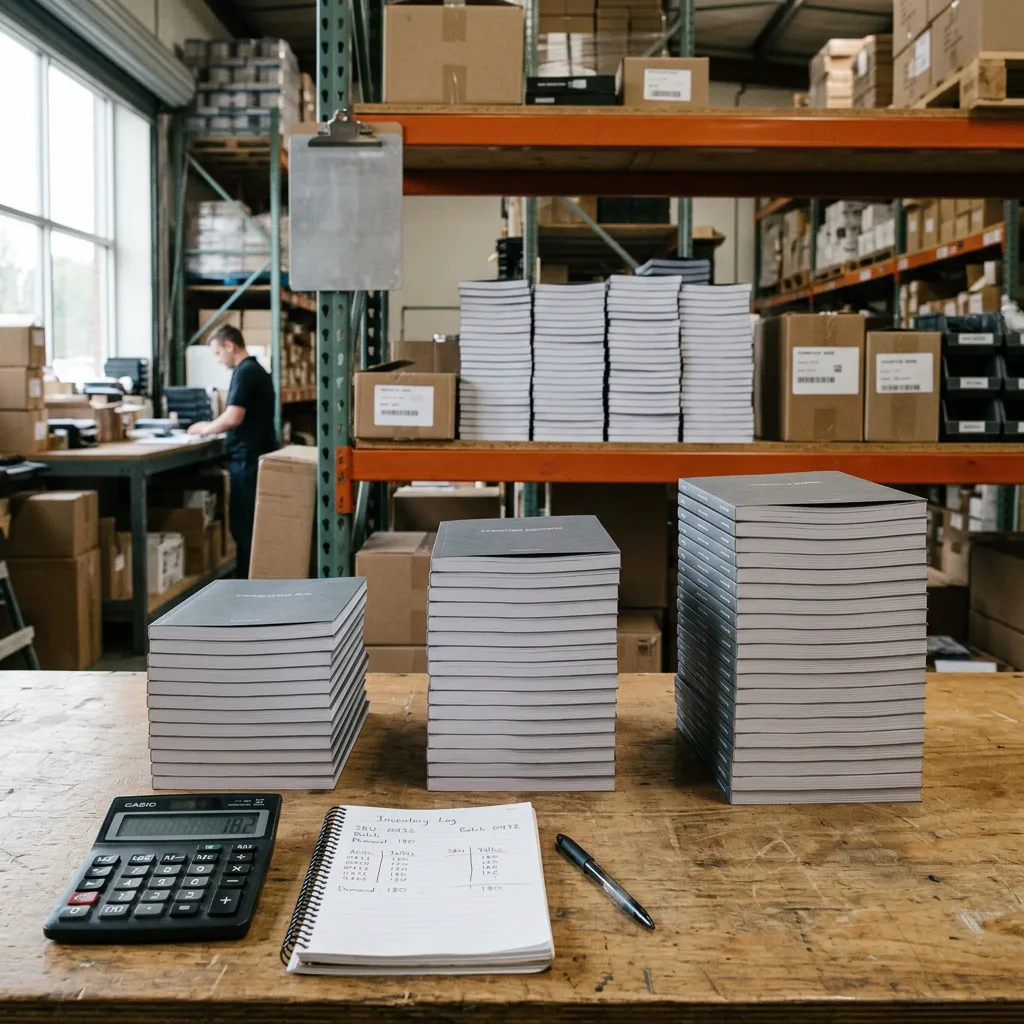
Choose a print run that reflects your expected demand, sales channels, available storage and tolerance for remaining inventory. There is no responsible single quantity for every buyer, but a simple demand model can make the decision more practical.
Start with your expected sales or distribution during the first selling period. This might be a launch, trade show season, school term, exhibition, retail cycle or planned marketing campaign. Then add copies for review, samples, media, sales representatives, internal approval and potential replacements. Finally, consider whether you need a modest buffer for unexpected demand or damaged stock.
A useful planning formula is:
Recommended print run = expected initial demand + planned samples and replacements + sensible inventory buffer
The buffer should be based on your ability to reorder and the risk of stock becoming outdated. A book with stable, evergreen content can justify more inventory than a dated catalogue, annual report, calendar or time-sensitive guide. A first edition with untested demand may be better served by a conservative run, even when a larger order has a lower unit cost.
Ask yourself these questions before confirming the quantity:
- How many copies can we realistically sell or distribute in the first three to six months?
- Do we have confirmed purchase orders, retail accounts, event requirements or institutional distribution plans?
- Will the content, prices, product information or branding change soon?
- How much warehouse space and working capital can we allocate?
- Will a reprint be acceptable, or would a stockout disrupt an important launch?
- Do we need copies for approval, sales outreach, press or regulatory review?
For a new title, a first order can be used to validate the final proof, colour, paper and binding before scaling up. For a repeat title with reliable sales history, the previous sales rate and remaining inventory provide a stronger basis for a larger print run.
Small Print Run Versus Bulk Order
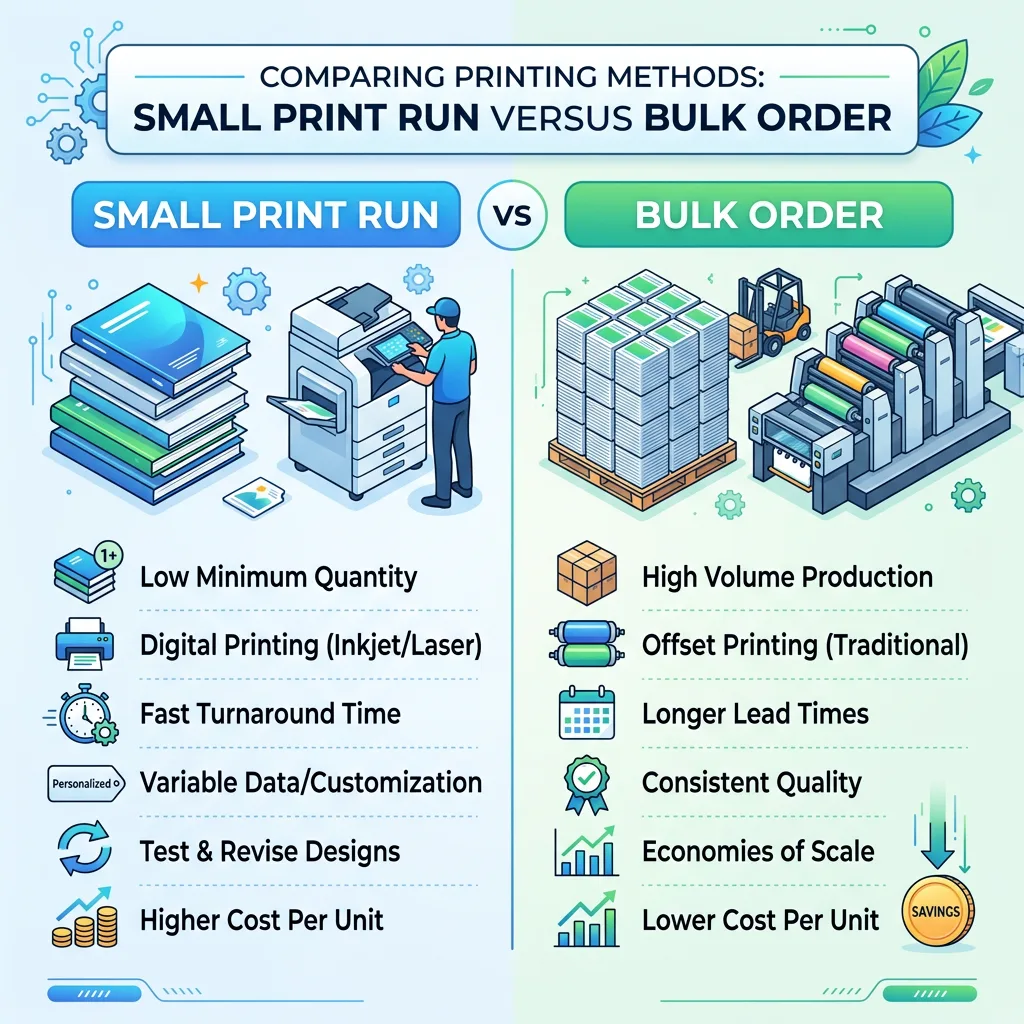
A smaller order reduces the amount of stock purchased at one time. This can be useful when demand is uncertain, the book may be revised, storage is limited or the buyer wants to test a market. The tradeoff is that fixed preparation and setup costs are spread over fewer copies, so the unit cost may be higher. A smaller run may also require more frequent reorders and repeated freight arrangements.
A larger order usually improves the opportunity to spread setup costs across the run and can support a lower unit cost. It may also make inventory available for multiple sales channels or regions. However, the buyer must fund the stock earlier, store it safely and accept the risk that copies remain unsold or become outdated. Shipping a large quantity can also affect the total landed cost through freight, customs handling, duties and local delivery.
The best option depends on total project cost, not only the factory unit price. Compare the cost of production, freight, import charges where applicable, storage, handling and the financial cost of holding inventory. Also consider the cost of a stockout, a rushed reorder or a content revision.
For example, a business launching a new training manual may prefer a conservative first print run because the content could change after customer feedback. A publisher with established demand for an unchanged backlist title may prefer a larger batch. A corporate buyer printing a fixed quantity for an event may order close to the confirmed attendee requirement plus a controlled number of spares.
Cost Factors Beyond MOQ
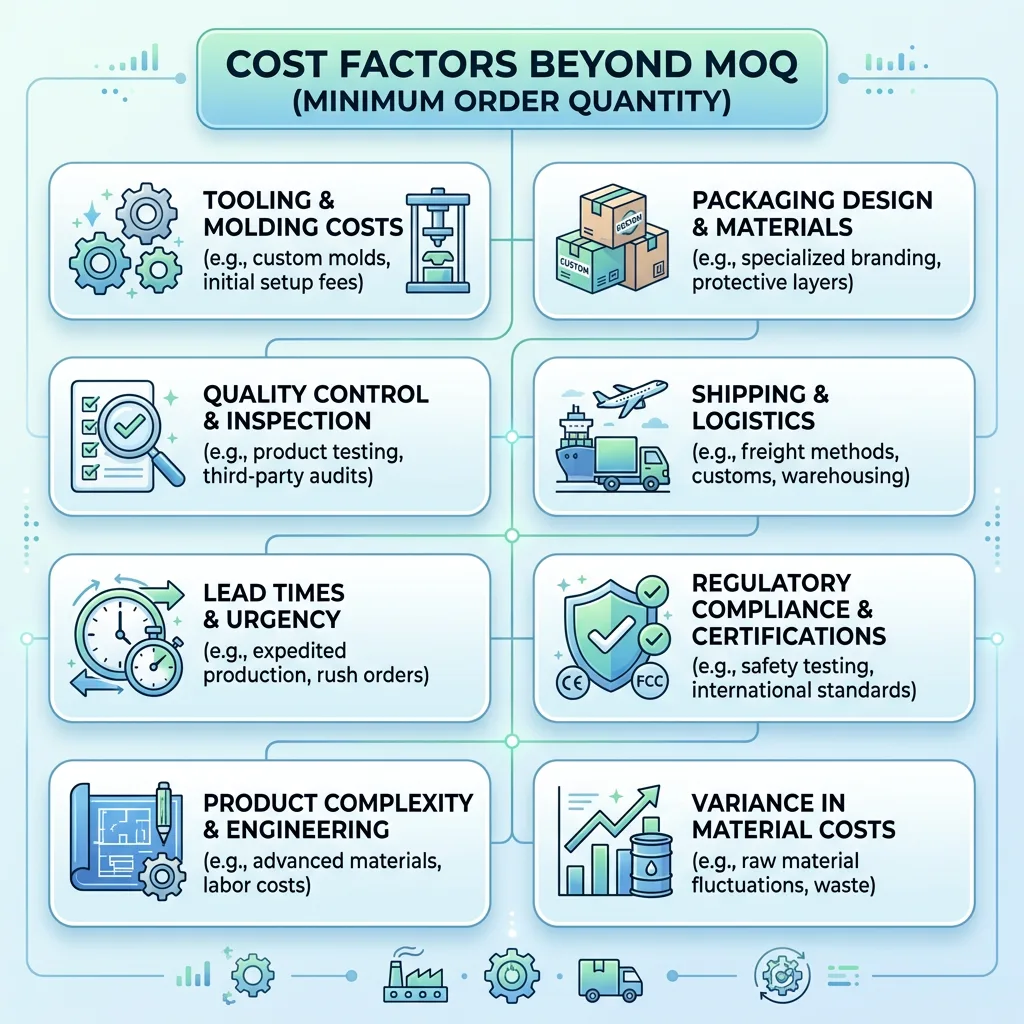
MOQ is only one part of a quotation. Buyers should ask the manufacturer to separate or explain the main cost assumptions so that quantity options can be compared fairly.
- Prepress and proofing: File checking, colour management, proofing and corrections may affect the preparation cost and approval process.
- Méthode d'impression : The selected production method influences setup, run efficiency and the suitable quantity range.
- Paper consumption: Trim size, page count, grain direction, paper weight and waste allowance affect material use.
- Reliure : Folding, gathering, sewing, gluing, casing-in and other assembly operations vary by book structure.
- Cover finishing: Lamination, foil, embossing, spot coating and special cutting add materials and processing steps.
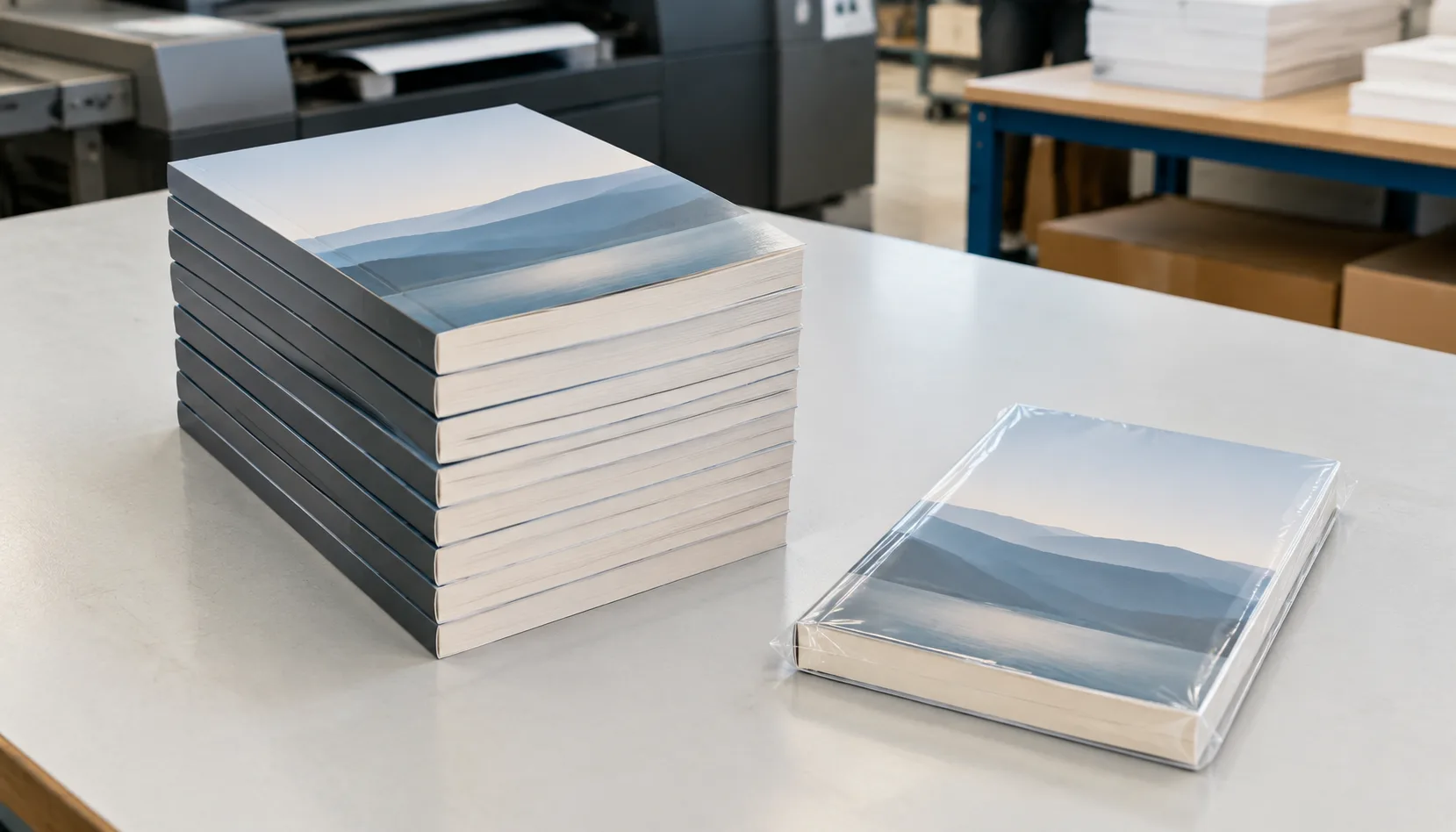
- Emballage : Cartons, protective materials, palletisation and individual packing affect the shipment.
- Freight and destination: The destination country, shipping method, delivery terms, order volume and final delivery address affect landed cost.
Requesting quotes for two or three quantities can reveal how the unit cost changes. Make sure each quote uses the same book specification, packaging assumption and delivery basis. Otherwise, a lower apparent unit price may simply exclude a cost included in another quotation.
Lead time is also quantity-dependent. Production scheduling, paper availability, proof approval, finishing complexity, packing and shipping all affect the timeline. Confirm the assumptions with the supplier before making a launch or event commitment.
Buyer Checklist Before Ordering
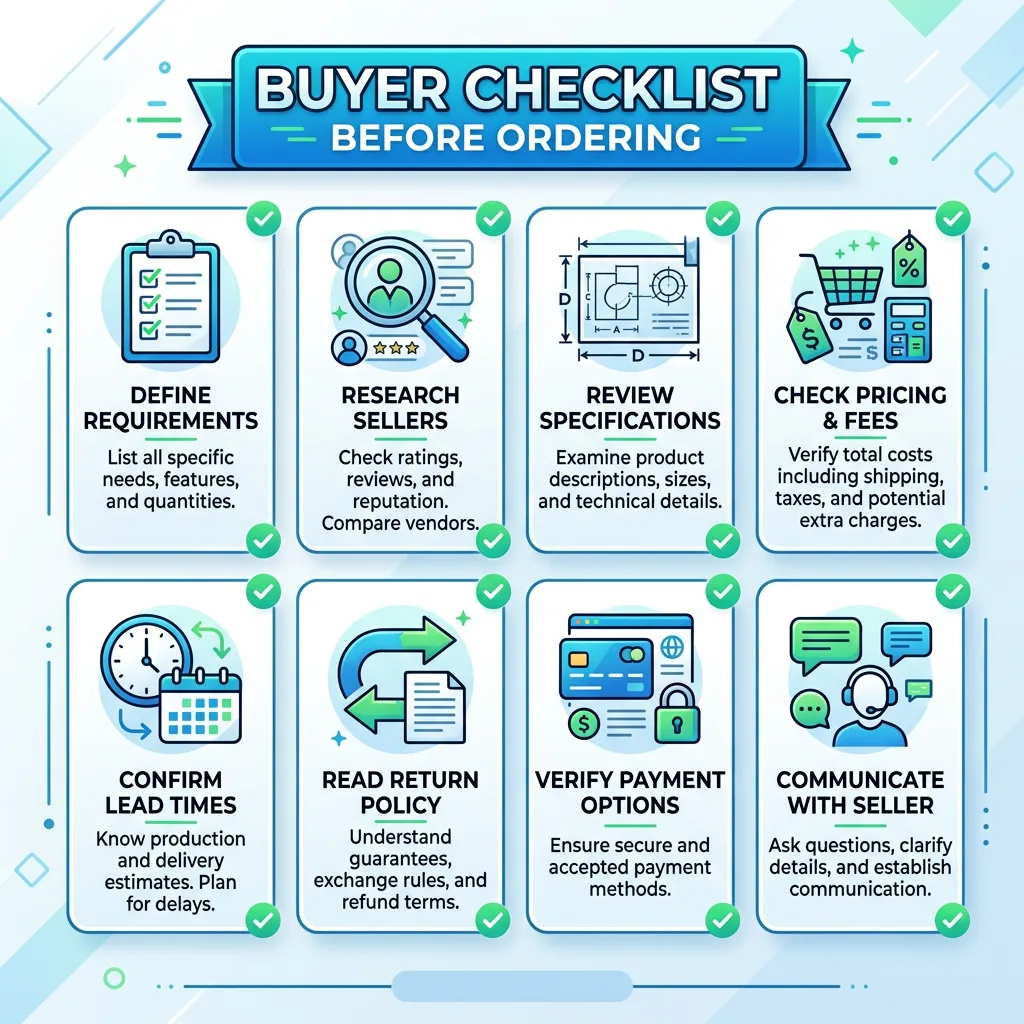
Before accepting a book printing MOQ, prepare the following information and use it to request a clear production recommendation:
- Final or estimated trim size and book orientation.
- Page count, including whether the pages are full colour, black and white or mixed.
- Interior paper type, weight, colour and any sustainability preference.
- Cover material, cover printing and surface finish.
- Preferred binding, such as perfect binding, saddle stitching, hardcover, sewn binding or lay-flat binding.
- Special processes, including foil stamping, embossing, spot coating, die cutting or inserts.
- Estimated quantity, possible alternative quantities and whether the order will be repeated.
- Packaging requirements, carton labelling, pallet requirements and whether products will be shipped to more than one address.
- Artwork status, file format, colour profile and whether a proof is required.
- Destination country and preferred shipping method.
Then ask the supplier:
- What is the MOQ for this exact specification?
- What changes if we order a lower or higher quantity?
- Are setup, proofing, packing and shipping included in the quoted price?
- Can the manufacturer provide a pre-production or physical proof?
- What quality inspection and approval steps are available?
- How will excess or replacement copies be handled?
- What information is needed to confirm the production schedule?
These questions help separate a genuine MOQ from an informal estimate. They also reduce the chance that the final order changes because a material, finish or packaging requirement was not included at the beginning.
How to Request an Accurate Quote
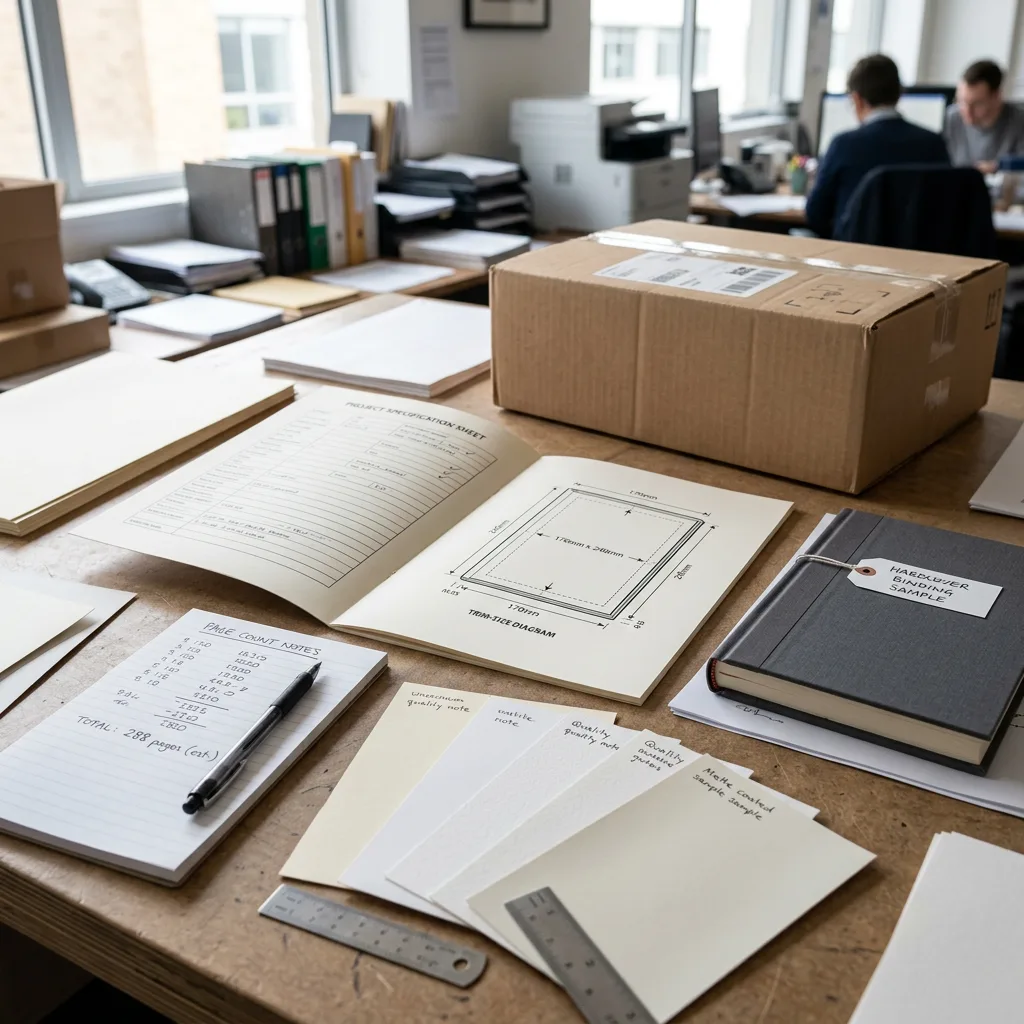
A quotation is most useful when the manufacturer can price the complete project rather than a general book category. Send a concise specification sheet or enquiry that lists the product type, trim size, page count, quantity, paper or binding preference, finish, file status and destination country.
If you are undecided about quantity, request multiple options, such as a conservative first run and a larger replenishment run. Ask the supplier to identify which assumptions change between the options. This lets you compare unit cost with total spend and inventory exposure.
Also state whether the files are final, whether you need a proof, whether the artwork is supplied as print-ready PDF files and whether the order includes a sample approval stage. If the book will be sold or distributed in more than one country, describe the packing and delivery plan as early as possible.
YBJ Printing works with global customers on books, paper products and packaging. A clear initial brief helps the project team assess production requirements and provide a more useful quotation for the selected print run.
Conclusion

Book printing minimum order quantity is determined by the complete production specification and the economics of preparing, printing, binding and shipping the order. The lowest possible quantity is not always the best commercial choice, while a large print run is not automatically more efficient once storage, cash flow and obsolescence are considered.
Estimate realistic initial demand, add the copies needed for samples and replacements, and compare several quantities using the same specifications. Confirm the MOQ, unit cost, setup charges, packaging, delivery assumptions and lead-time conditions with the manufacturer before approval. This approach gives B2B buyers a print run that is easier to finance, store and manage.
Discuss Your Book Print Run
Need help choosing a practical quantity for your custom book? Request a quotation from YBJ Printing with the product type, trim size, page count, quantity, paper or binding preference, finish, file status and destination country. These details help our team review the production requirements and compare suitable print-run options.