
Table des matières
- Which hardcover case should you choose?
- How a hardcover case is built
- Compare hardcover case materials
- Starting specifications by book type
- Choose finishes that suit the material
- Prepare artwork for the finished case
- Hardcover quotation checklist
- Make the final choice with a physical reference
The right hardcover case depends on how the book will be used, what the cover design needs to show and which details matter most to the buyer. This guide compares materials, finishes and practical specifications for a printing quote.
Which hardcover case should you choose?
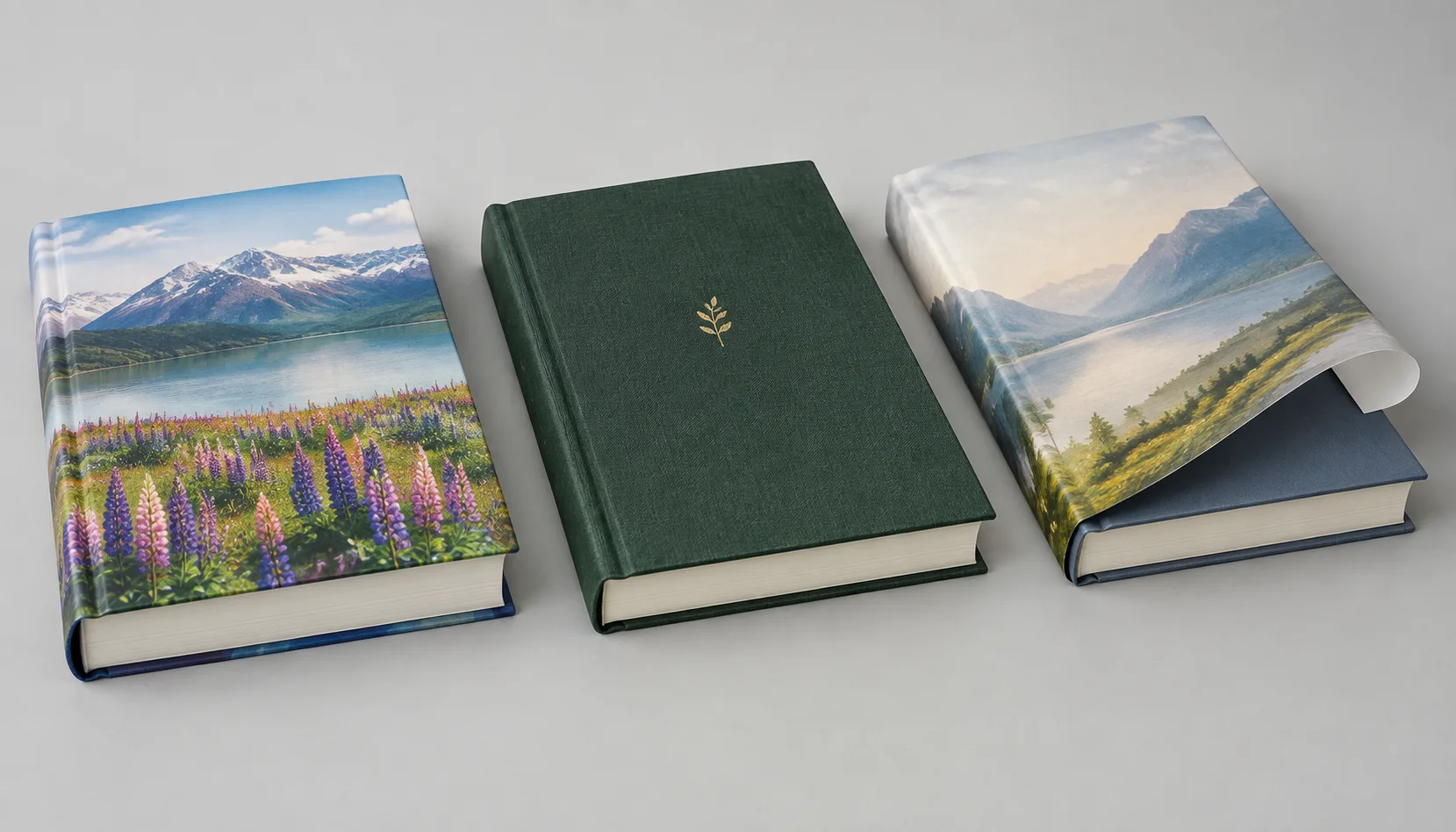
For an image-led book with full-colour artwork across the cover, start by considering a printed paper case. For a restrained, tactile presentation, consider cloth with a printed or foil-stamped title. If the book needs detailed cover artwork and a removable outer layer, discuss a printed dust jacket over a suitable case material.
A hardcover case is the rigid outer cover attached to the book block through endpapers. Its visible material is only one part of the specification: board, covering material, decoration and surface protection all influence the result. The best choice depends on the audience, expected handling, artwork and budget, not on a material name alone.
For a cloth-led project, cloth-bound hardcover coffee table book printing provides a relevant product starting point. Ask for material samples or a representative proof before approving a finish based only on a screen image.
How a hardcover case is built
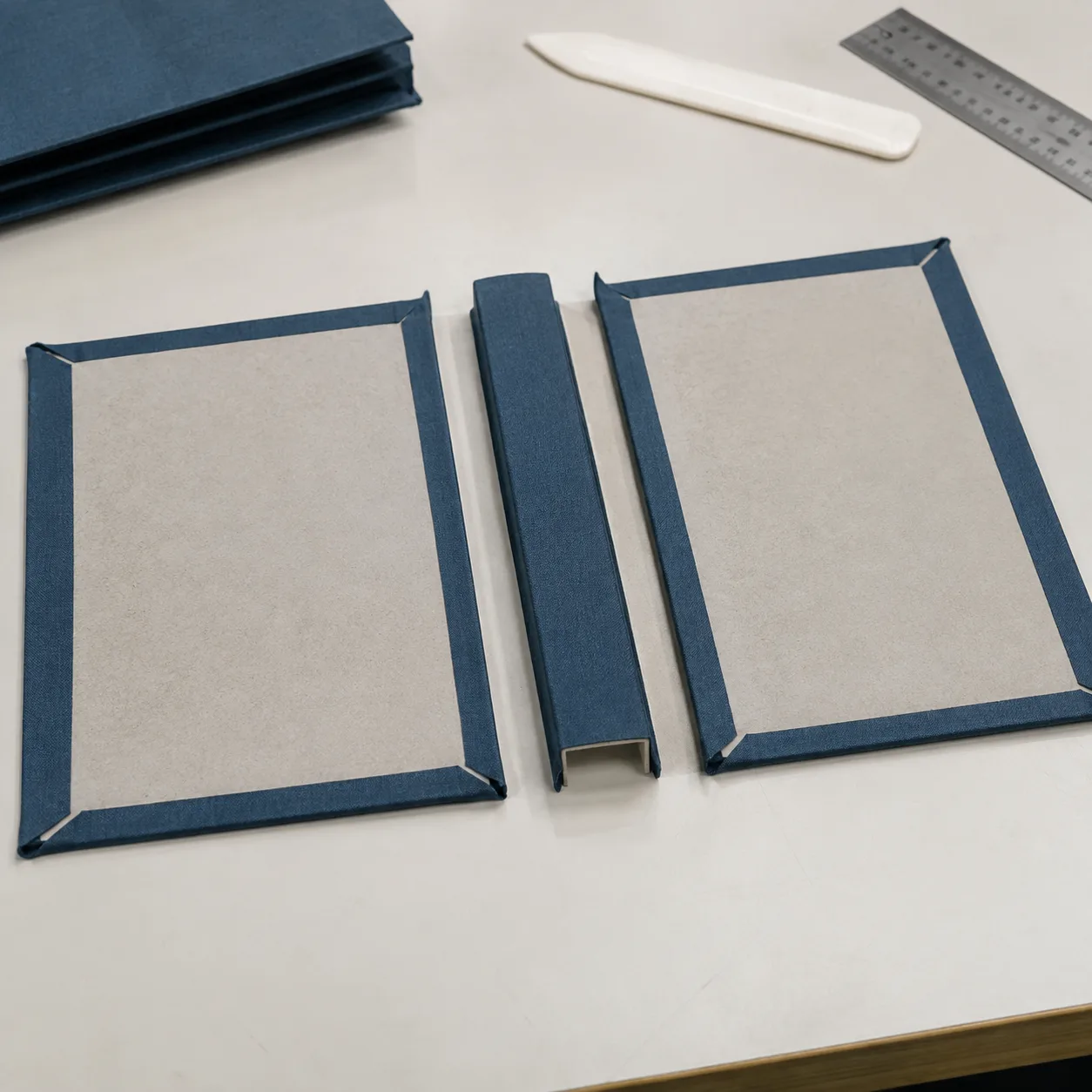
A conventional case uses separate front and back boards and a spine board, covered with paper, cloth or another specified material. The covering turns over the board edges onto the inside of the case. A gap between the spine and cover boards forms each hinge, allowing the covers to open. Endpapers connect the completed case to the book block.
This construction explains why a hardcover artwork file is not simply a front-and-back image. The printer needs space for the spine, hinges and material that wraps around the boards. A title placed too close to a hinge may become difficult to read; an image running across the spine must account for folds and construction tolerances. Board thickness also changes the feel and weight of the finished book, while the book block and paper determine much of the required spine width.
Confirm whether the requested appearance relies on the case itself, a removable dust jacket, or both. A jacket can carry extensive artwork and marketing copy, but the case underneath still needs a deliberate material and title treatment. Similarly, a textured covering may look attractive in isolation yet obscure small printed type. Agree on the physical construction before finalising artwork dimensions.
Compare hardcover case materials
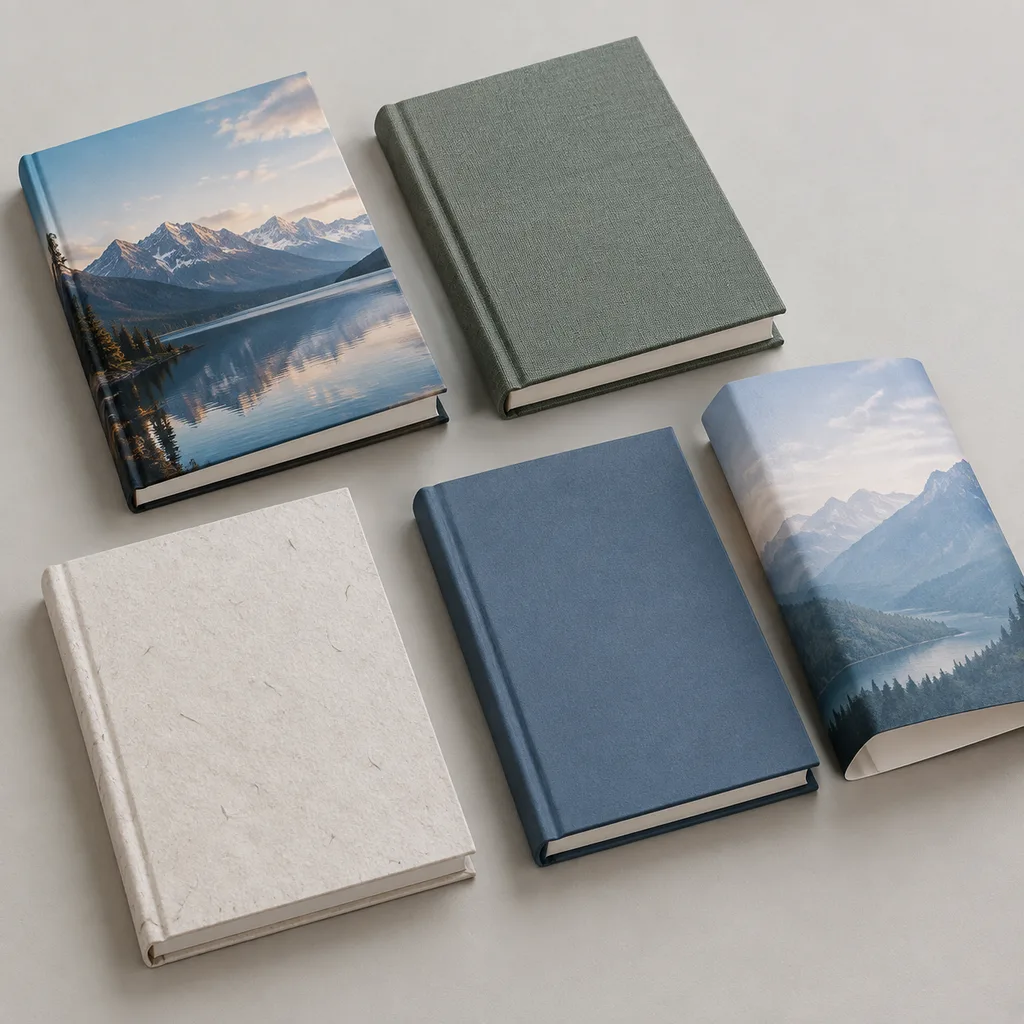
These are common material approaches, not interchangeable grades. Samples matter because texture, colour, print response and edge behaviour vary within each group. The table describes typical design uses; confirm the exact covering stock and compatible decoration with the printer.
| Case option | Best fit | Design advantage | Check before approval |
|---|---|---|---|
| Printed paper over board | Illustrated covers, photography and detailed branding | Supports full-colour artwork across the visible case | Protective finish, colour proof and artwork at hinges and turn-ins |
| Cloth over board | Art books, editions with a restrained visual style and tactile covers | Adds woven texture and a distinct feel | Cloth shade, weave, marking and legibility of the title treatment |
| Specialty covering paper over board | Minimal designs where paper texture or colour is central | Provides a material-led look without a full printed image | Availability, scuff behaviour and suitability for printing or foil |
| Case with printed dust jacket | Books needing substantial front, spine and flap artwork | Separates the outer printed presentation from the case beneath | Jacket fit, flap dimensions, coating and the uncovered case design |
A dust jacket is an addition to the case, not a case material. Likewise, a laminated printed case and a cloth case may serve the same title but create different handling and retail experiences. If comparing quotations, request the same trim size, board specification and book block for each option so the material difference is meaningful.
Starting specifications by book type
The examples below are briefs for a quotation discussion, not fixed product specifications. The same title may need a different case if it will be sold through retail, given as a gift, kept for reference or handled frequently. Use the final artwork and intended use to narrow the options.
| Book type | Case material to discuss | Finish or detail to evaluate | Buyer priority |
|---|---|---|---|
| Photography or illustrated book | Printed paper case | Matte or gloss lamination; optional jacket | Image colour, surface appearance and handling |
| Art or portfolio edition | Cloth or specialty covering paper | Foil-stamped or printed title, subject to material tests | Texture, title clarity and consistency with the artwork |
| Reference or institutional book | Printed paper or cloth case | Readable spine title and a practical surface treatment | Identification on a shelf and expected frequency of use |
| Gift or presentation book | Printed paper, cloth or a case with jacket | One carefully chosen accent finish | Presentation, packaging and the recipient’s first impression |
Material choice should also account for the interior. A thick, heavy book block affects the finished book’s weight and the case specification; a thin volume may leave limited room for spine lettering. If a project includes a slipcase, belly band or special packaging, list those separately so the cover quote remains comparable.
Choose finishes that suit the material
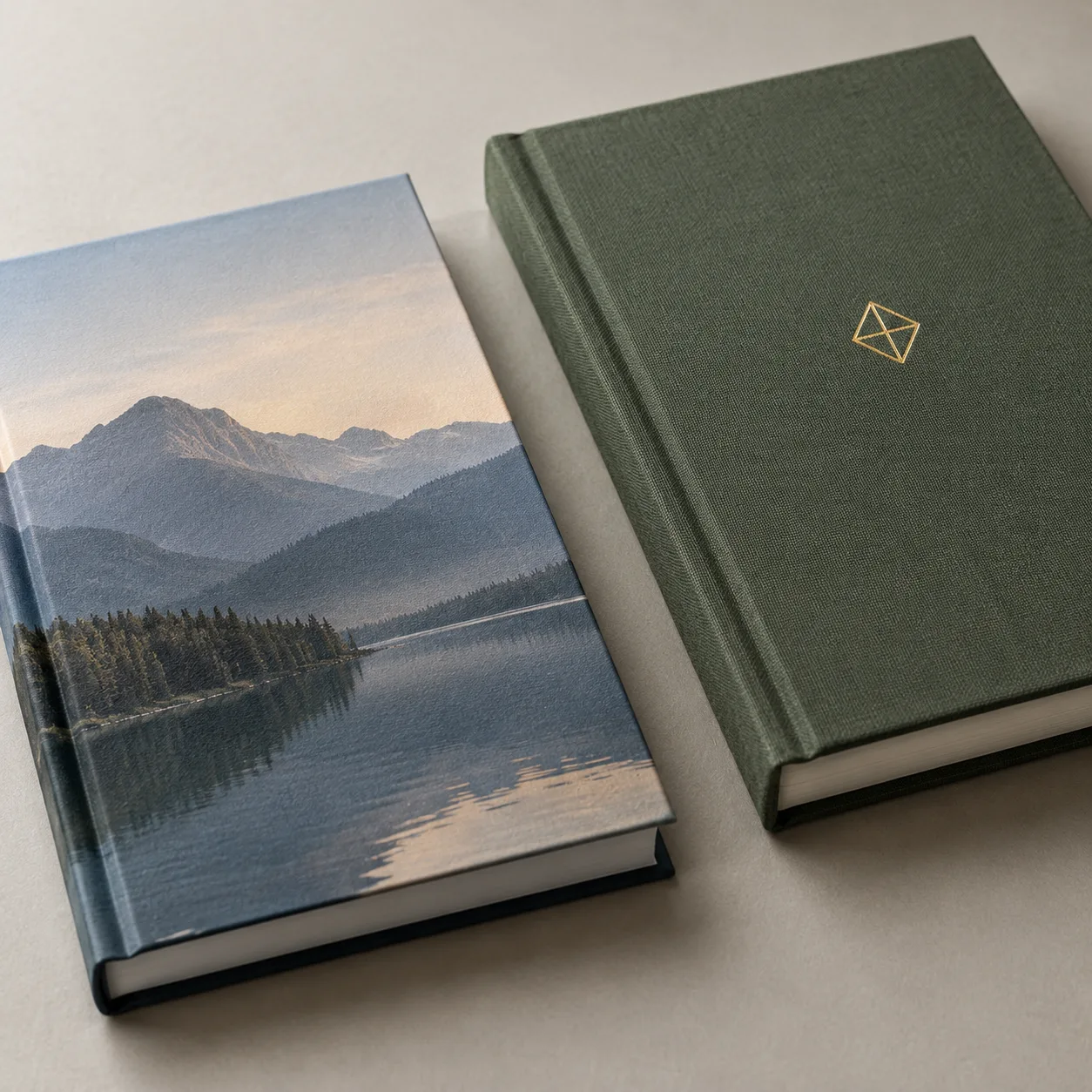
A finish should support the design and the way the book will be handled. For a printed paper case, lamination can protect the printed surface and change its appearance: gloss generally gives stronger reflections, while matte reduces them. Neither choice should be treated as automatically resistant to every scratch, fingerprint or scuff. Ask to examine a sample under the lighting in which the book will be viewed.
Foil stamping can make a title or small mark prominent on cloth or suitable paper coverings. Its result depends on the material’s texture, the size of the design and the foil selected. Embossing or debossing adds a raised or recessed impression, but fine lines and small lettering need particular care. Spot UV is usually considered for an appropriately prepared printed surface; do not assume it will behave the same way on cloth or textured paper.
Each additional treatment adds decisions about registration, tooling, material compatibility and proofing. For a first comparison, price a straightforward base case and one alternate finish using the same book specifications. That makes the visual benefit easier to judge against the quoted cost. Where exact colour, foil position or texture is important, request a suitable physical reference and confirm what the production proof can and cannot demonstrate.
Prepare artwork for the finished case
Ask for a case layout based on the approved trim size, page count, interior paper and binding construction before producing final cover files. The layout should identify the front and back boards, spine, hinges, wraparound turn-ins and any required bleed or safe areas. A flat mock-up can help with composition, but it does not replace the printer’s production dimensions.
Keep essential type and logos clear of folds and edges. Check how the design will read when the book is closed, open and shelved. If the case has a dust jacket, prepare its flaps and fold positions separately; jacket artwork should follow its own supplied template. For foil, embossing or spot UV, ask how the printer wants the artwork supplied, including any separate placement layer or file.
Spine dimensions are especially sensitive to interior specifications. The guide to calculating book spine width explains why page count and paper thickness are starting inputs, not a substitute for the printer’s final measurement. Confirm the case spine and any jacket spine against the approved construction before signing off. A digital proof can check content and positioning; a physical sample may be necessary to assess texture, folds and finish together.
Hardcover quotation checklist
Send one consistent specification to each printer and identify any options you want priced separately. For an accurate quotation, include:
- Product and format: book type, finished trim size, orientation and page count.
- Quantité : the required run and any alternate quantities you want compared.
- Interior: paper preference, colour requirements and binding preference, if known. The book printing paper guide can help define a starting stock.
- Case: printed paper, cloth or other preferred covering; board or sample requirements; and whether a dust jacket is needed.
- Decoration: lamination, foil, embossing, spot UV or other proposed finish, with the areas indicated.
- Files and delivery: current file status, proof or sample needs, destination country and any known packaging requirements.
Price and lead time depend on these specifications, material availability, finishing complexity, quantity, proofing and delivery arrangements. State which details are provisional. A printer can then identify assumptions in the quote and flag changes that may affect cost or schedule before production approval.
Make the final choice with a physical reference
Choose the case that communicates the book’s purpose clearly and remains practical for its expected use. Printed paper gives detailed artwork room to work; cloth and specialty coverings put more emphasis on material and restrained decoration; a jacket adds a separate printed layer. Before approval, compare real material and finish samples where possible, then check a representative proof against the agreed specifications. Final cost, timing and appearance depend on the selected materials, construction and approved files.
FAQ
What is the difference between a printed case and a dust jacket?
A printed case is the rigid cover itself, with printed covering material wrapped around its boards. A dust jacket is a separate, removable printed sheet folded around the completed case. A book can have both.
Is cloth always more durable than a printed paper case?
No. Performance depends on the specific cloth or paper, any protective finish, construction and how the book is handled. Compare physical samples and describe the intended use to the printer rather than relying on the material category alone.
Can foil stamping be used on every hardcover covering?
Not necessarily. The result depends on surface texture, covering material and artwork detail. Ask the printer to confirm compatibility and review a relevant sample before approving fine type or intricate designs.
Do I need a final page count before designing the hardcover spine?
Yes, for final artwork. Page count, interior paper and binding construction affect spine dimensions. A preliminary estimate can support early design, but use the printer’s confirmed case layout for production files.
What most affects the price of a hardcover cover?
Covering material, board and case construction, quantity, artwork preparation, finishes, proofing and a possible dust jacket can all affect the quote. Interior specifications and destination country also affect the price of the complete book order.
Discuss your hardcover book specification
Request a quote or discuss your custom print project with YBJ Printing. Share the product type, trim size, page count, quantity, paper or binding preference, proposed cover material and finish, file status and destination country. If you are comparing two case options, identify both so they can be assessed against the same book specification.