
Procurement Challenges in School Supply Manufacturing
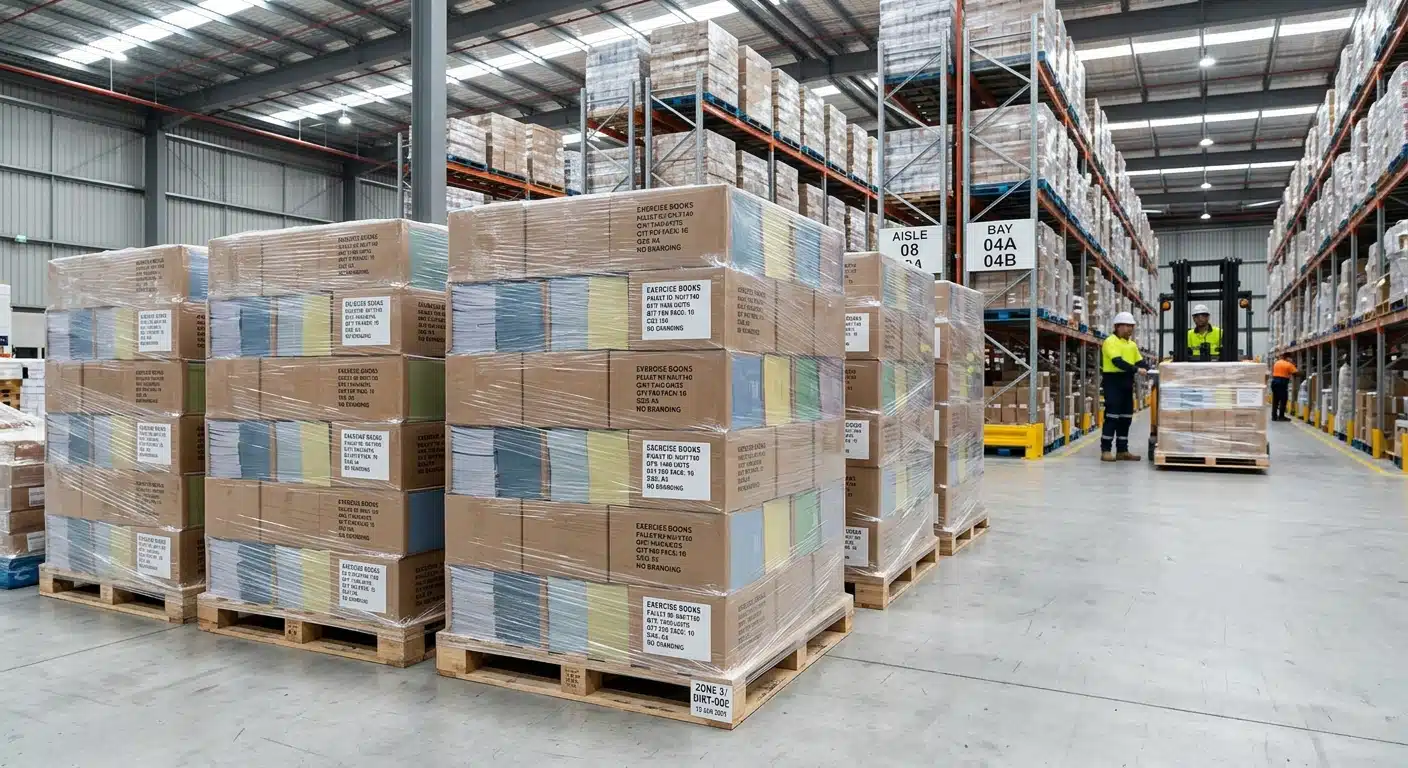
For educational institutions, school districts, and wholesale distributors, securing high-quality learning materials within strict budget constraints is an annual challenge. Bulk exercise book printing requires a careful balance between durability, usability, and unit cost. When ordering hundreds of thousands of units, even a fraction of a cent saved per book translates into significant budget optimization.
This guide outlines practical, cost-saving strategies for school supply manufacturing, focusing on optimal paper selection, manufacturing efficiencies, and the structural advantages of saddle-stitch binding.
Cost-Saving Strategies for Bulk Notebook Printing
Achieving a low cost-per-unit without compromising the student experience requires strategic decisions during the specification phase. Printing facilities optimize costs based on material usage, machine time, and finishing processes.
1. Optimizing Interior Paper Grades
The interior pages account for the majority of an exercise book’s material cost. Selecting the right paper grade is critical. For standard exercise book printing, uncoated wood-free paper (often called offset paper) is the industry standard because it absorbs ink well and reduces glare.
- 55gsm to 60gsm: Highly cost-effective, commonly used in developing markets or for scratch-pad style notebooks. However, it may suffer from ink bleed-through if students use heavy gel pens.
- 70gsm: The optimal standard for most school environments. It provides a sturdy feel, minimizes bleed-through from standard ballpoint pens and pencils, and keeps shipping weight manageable.
- 80gsm: Premium grade. Used for higher-end institutional notebooks or specialized subjects (like art or geometry), but increases both material and freight costs.
2. Standardizing Sizes and Page Counts
Custom sizes result in paper waste during the trimming process. To maximize cost-efficiency, adhere to standard international or regional sizes such as A4 (210 x 297 mm), A5 (148 x 210 mm), or B5 (176 x 250 mm). Furthermore, page counts should be multiples of 4 (or ideally 8 or 16) to align with standard printing press signatures. Common page counts include 32, 48, 64, and 80 pages.
3. Cover Materials and Finishes
Cover durability is essential for books that will endure daily use in backpacks. A 200gsm to 250gsm coated one side (C1S) or coated two sides (C2S) paperboard offers a good balance of rigidity and cost. To reduce expenses, limit high-end finishes like foil stamping or spot UV. Instead, opt for a standard aqueous coating or a thin lamination to protect against moisture and tearing.
Why Saddle Stitch Notebooks Dominate the Education Sector
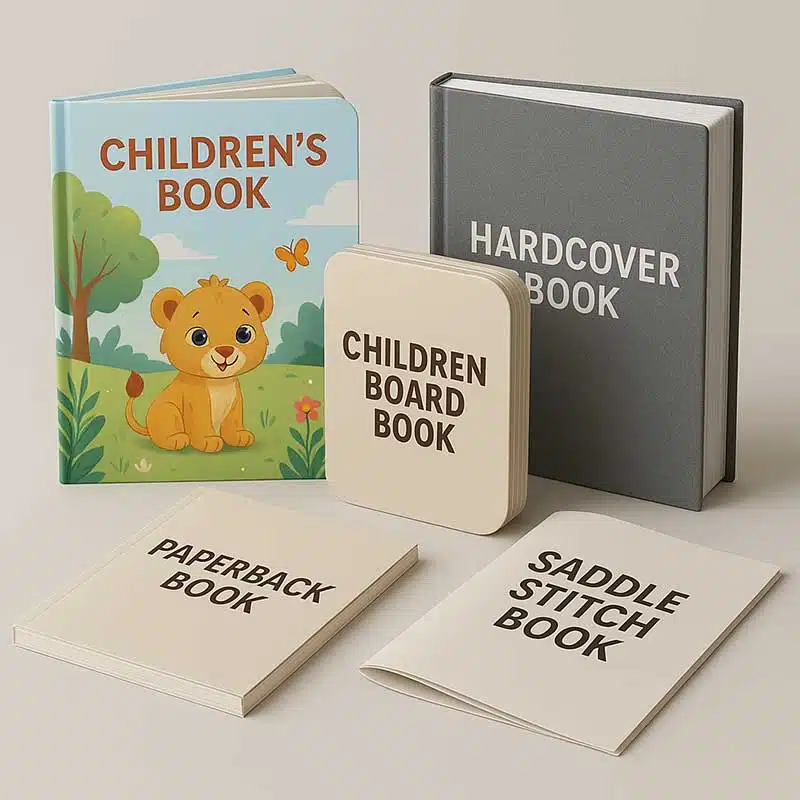
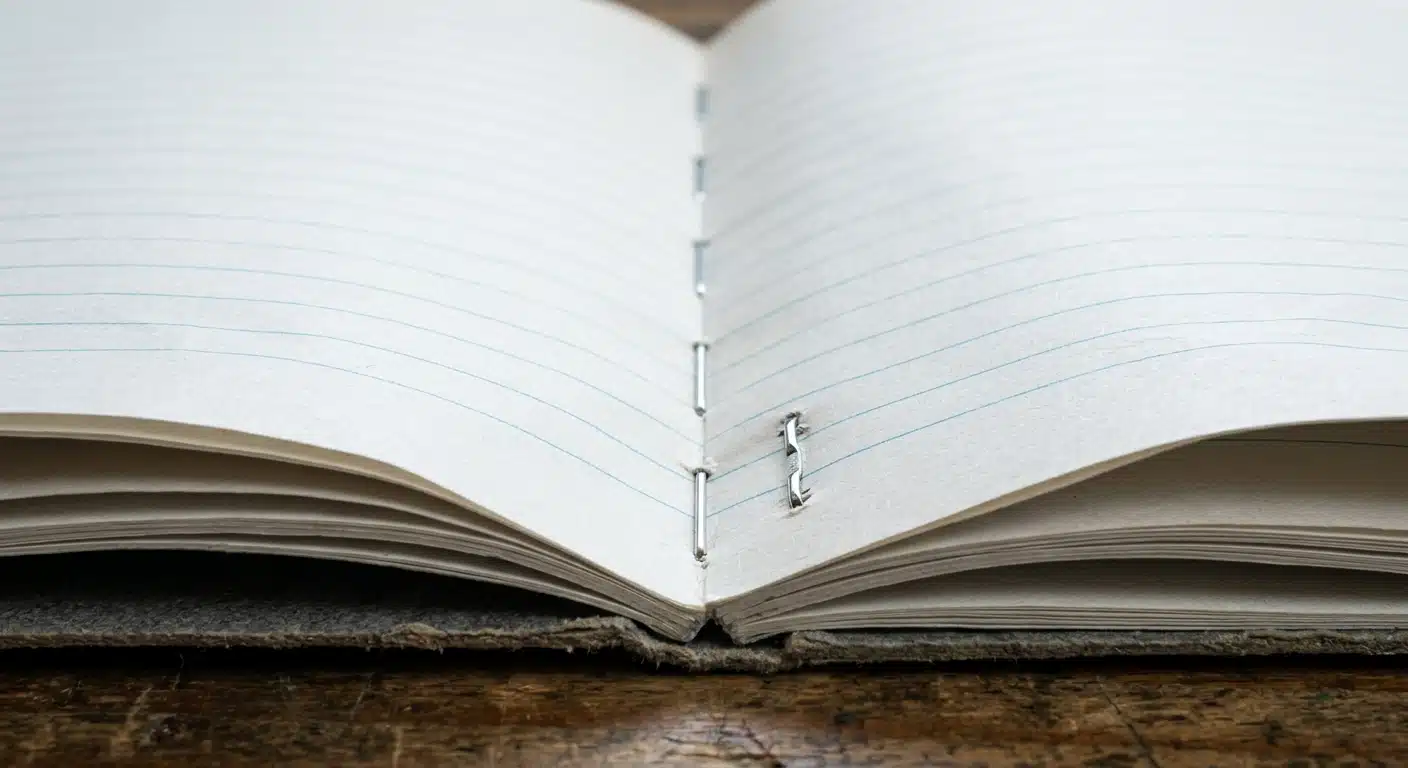
When specifying binding for thin to medium-thickness custom exercise books (typically up to 80 pages), saddle stitching is overwhelmingly the preferred method. This process involves folding the printed sheets and driving wire staples through the center fold.
| Binding Type | Cost Efficiency | Durability | Best For |
|---|---|---|---|
| Saddle Stitching | Very High | High (for low page counts) | Standard exercise books, exam booklets (up to 80 pages) |
| Perfect Binding | Moderate | Moderate to High | Thicker textbooks, journals (over 80 pages) |
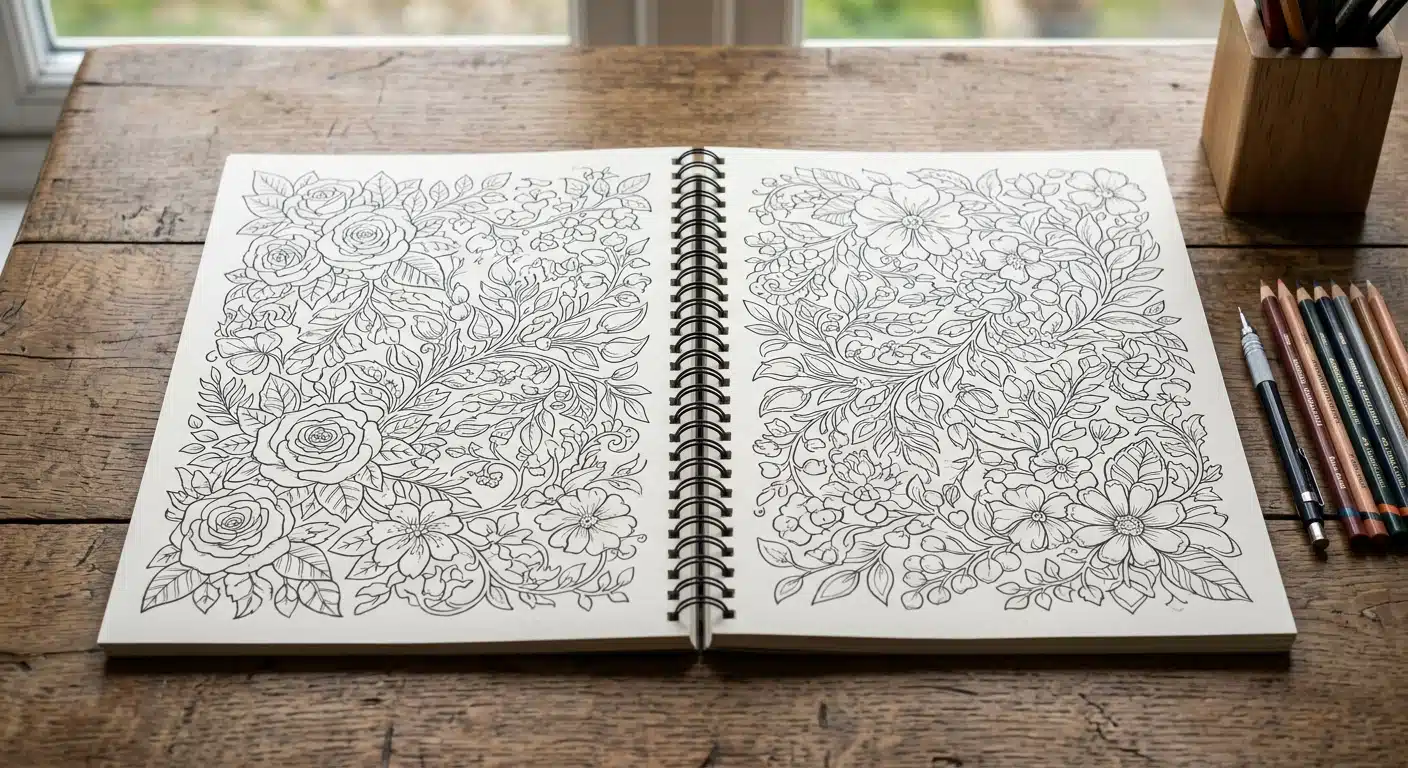
| Spiral / Wire-O | Low | High (lay-flat) | Specialty notebooks, premium wholesale retail |
Saddle stitch notebooks offer three primary advantages for schools:
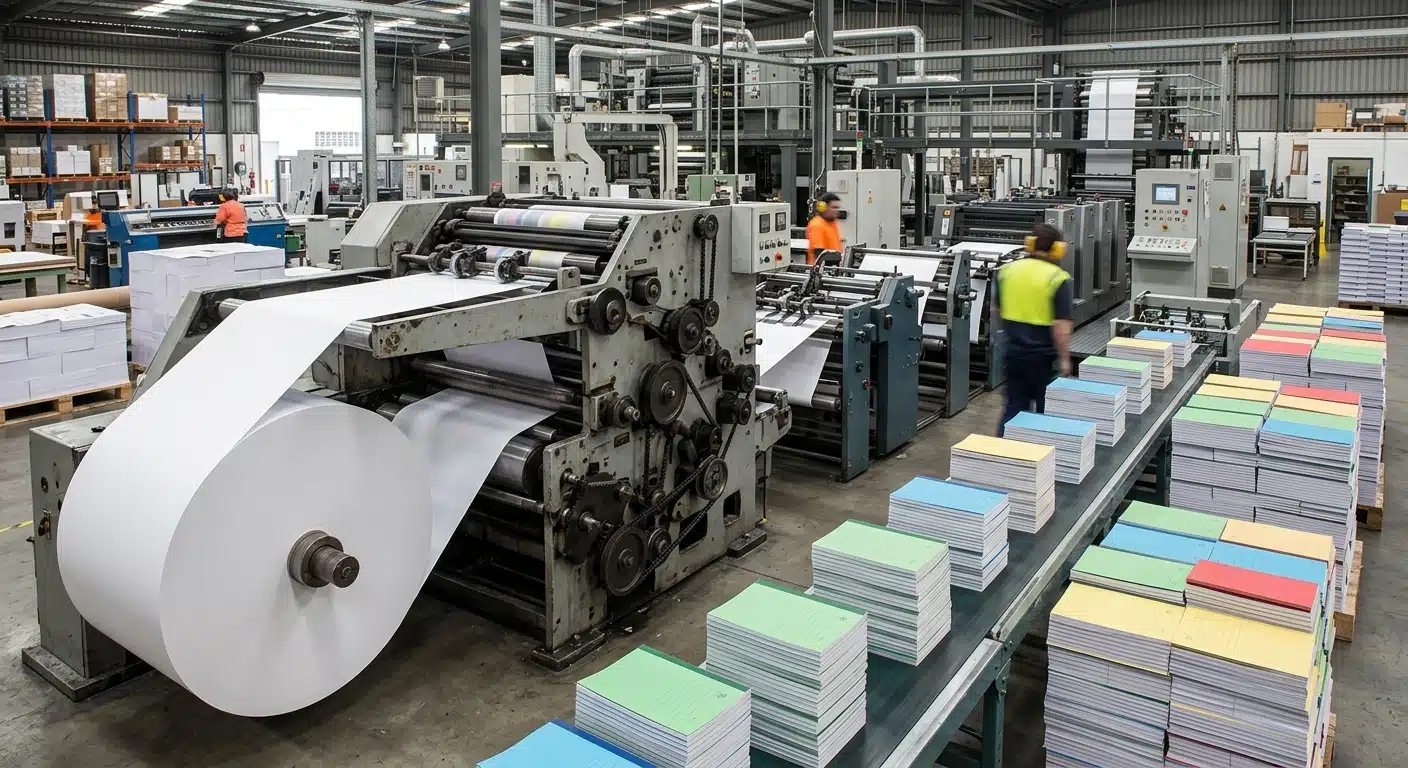
- High-Speed Manufacturing: Saddle stitching is a highly automated, inline process, significantly reducing labor costs and turnaround times for bulk orders.
- Safety and Usability: Unlike spiral binding, there are no sharp wire ends. The books also lay relatively flat, making it easier for students to write across the center margin.
- Minimal Waste: The process requires very little margin space for binding, maximizing the usable writing area on every page.
Custom Exercise Books: Balancing Customization and Scale
While generic notebooks are cheapest, many institutions and wholesale brands require custom exercise books tailored to specific educational standards.
Ruling and Templates
Interior ruling must often adhere to regional educational guidelines (e.g., college ruled, wide ruled, Seyès ruling, or specific grid sizes for mathematics). Printing standard rulings in a single Pantone color (usually light blue or grey) is highly cost-effective. Adding a second color (like a red margin line) slightly increases the setup cost but is easily absorbed in large production runs.
Institutional Branding
For school districts, printing the institution’s logo, core values, or a student information block on the cover adds significant value. Standardizing the interior pages across the entire district while only changing the cover plates for individual schools is a proven strategy to maintain high volumes while offering localized customization.
Quality Control and Manufacturing Considerations
When placing high-volume orders, ensure your manufacturing partner adheres to strict quality control tolerances:
- Trimming Tolerances: Bulk cutting can cause slight shifting. Professional printers maintain a trimming tolerance of ±1mm to ensure uniform sizing.
- Ink Safety: Especially for primary education, specify the use of eco-friendly, soy-based, or low-VOC inks to comply with international safety standards.
- Registration: Accurate print registration is critical for grid and lined paper to ensure lines on the front and back of the sheet align perfectly, preventing visual distraction.
Buying Guide for Wholesalers and Institutions
When preparing to source bulk exercise books, keep the following logistics and purchasing factors in mind:
- Minimum Order Quantities (MOQs): To achieve true economies of scale, MOQs for custom offset printing typically start at 5,000 to 10,000 units per design. Lower quantities are possible but will carry a higher unit cost.
- Sampling: Always request a pre-production sample (often an unprinted dummy to test paper weight and binding, followed by a digital print proof) before approving the full run.
- Packaging: Specify how the books should be bundled. Shrink-wrapping in packs of 10 or 20 before being placed in double-walled corrugated cartons protects the product from humidity during sea freight and simplifies inventory distribution at the school level.
- Lead Times: Factor in 2 to 4 weeks for production, plus an additional 3 to 6 weeks for ocean freight if ordering internationally. Plan procurement cycles well in advance of the academic year.
Frequently Asked Questions (FAQs)
What is the most cost-effective paper for school exercise books?
70gsm uncoated offset paper is generally the best balance of cost, weight, and writing quality, preventing ink bleed-through while keeping shipping costs manageable.
Can saddle-stitch binding handle thick notebooks?
Saddle stitching is ideal for up to 64-80 pages (16-20 folded sheets). Beyond this thickness, the book may not close flat (a phenomenon known as “creep”), and perfect binding or section sewing is recommended.
How can we reduce shipping costs for bulk notebook printing?
Optimize the book size to standard dimensions (like A5 or B5) to maximize carton and pallet space. Additionally, keeping paper weight at 70gsm rather than 80gsm significantly reduces the total gross weight of a shipping container.
Do custom rulings increase the price?
If you are ordering above the factory’s MOQ, custom interior rulings (such as specialized grids or handwriting lines) typically do not increase the unit price, as custom printing plates are created for the run regardless.
What files are required for manufacturing?
Submit your cover artwork and interior ruling designs as high-resolution (300 DPI) PDF files with crop marks and at least a 3mm bleed area.
Ready to Optimize Your School Supply Procurement?
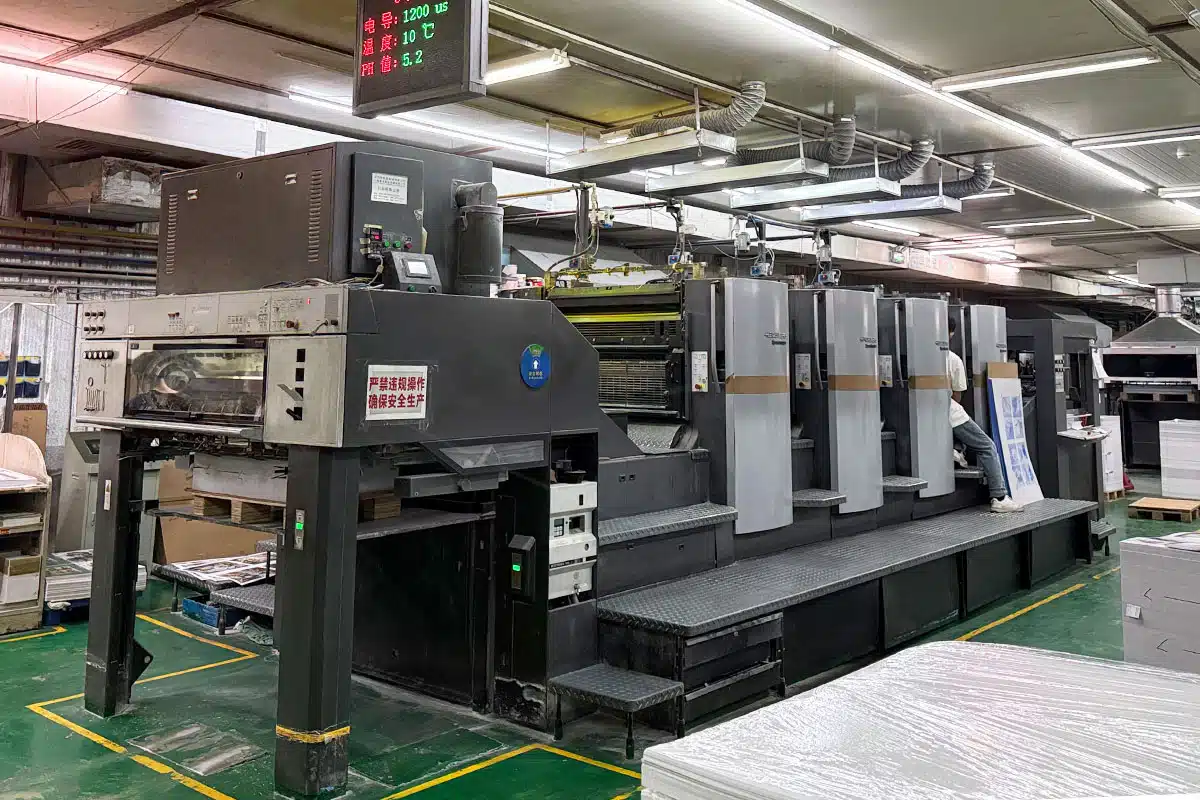
Whether you are outfitting a national school district or stocking a wholesale distribution center, strategic manufacturing choices can dramatically reduce your costs without sacrificing quality. Our facilities are equipped to handle high-volume, precision printing with rapid turnaround times.
Request a quote / Get a sample today to discuss your specifications, paper requirements, and bulk pricing options with our production team.