
Table des matières
- What is a book trim size?
- Common book printing trim sizes
- How to choose the right trim size
- Recommended sizes by book type
- Trim size, bleed, margins and cover setup
- Production factors affected by trim size
- Book trim size checklist
- Conclusion
Le format de coupe d'un livre correspond à la largeur et à la hauteur finales de celui-ci après impression et rognage. Ce guide pratique présente les formats courants, les choix de dimensions, la configuration des fichiers ainsi que les facteurs qui influent sur les coûts et la planification de la production.
What is a book trim size?
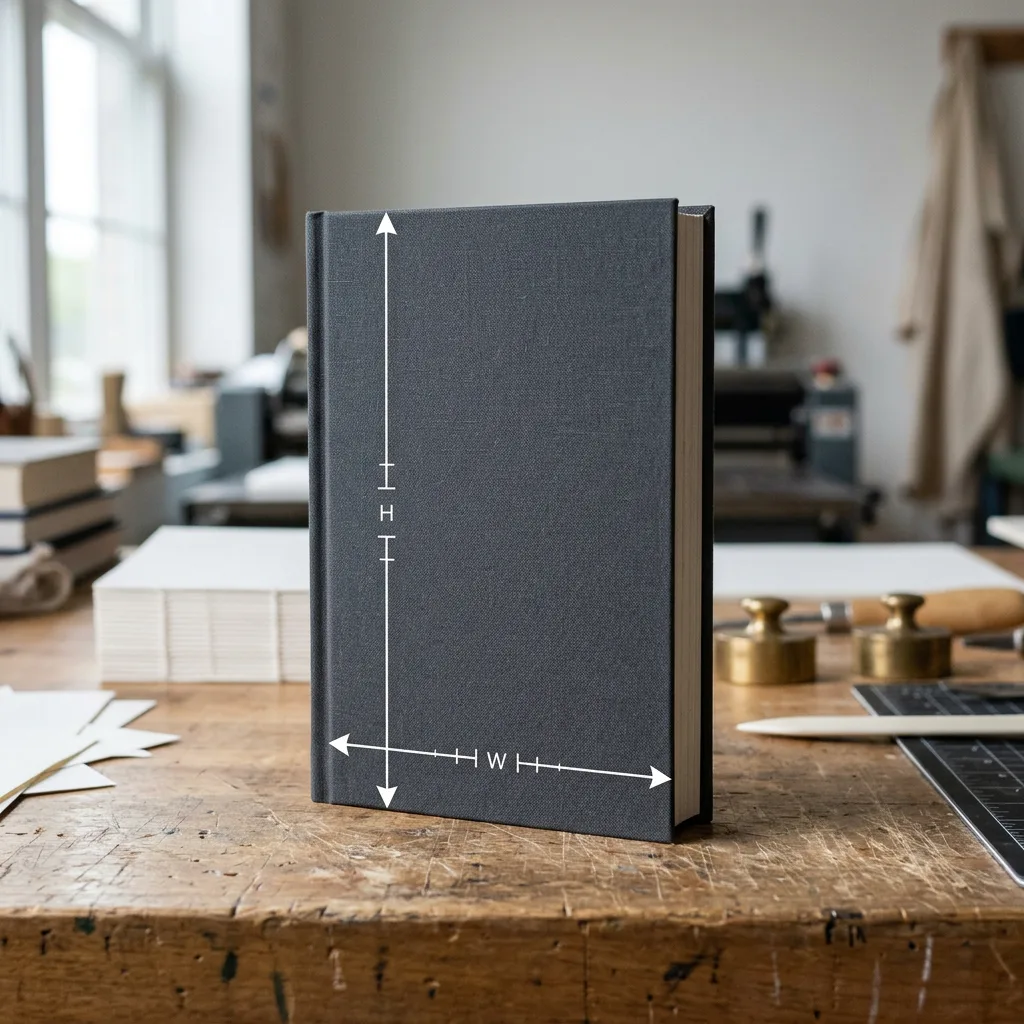
Book printing trim size is the final width and height of a book after the printed sheets have been folded, bound and cut to their finished edges. It is the size readers see and hold—not the size of the PDF page, flat cover artwork or press sheet.
For example, a portrait book with a trim size of 210 × 297 mm finishes at A4. If its interior pages contain full-page images or coloured backgrounds that reach the edge, the supplied artwork must be larger than the trim size because it includes bleed.
Trim size is one of the first specifications to confirm. It influences page layout, illustration scale, paper yield, binding suitability, cover dimensions, packaging and freight volume. There is no single correct size; the best choice depends on the content, intended reader, binding method and commercial purpose.
This guide assumes a conventional printed book with a rectangular portrait, landscape or square format. Very small booklets, unusually shaped products, board books and books with electronic components may need additional construction planning.
Common book printing trim sizes
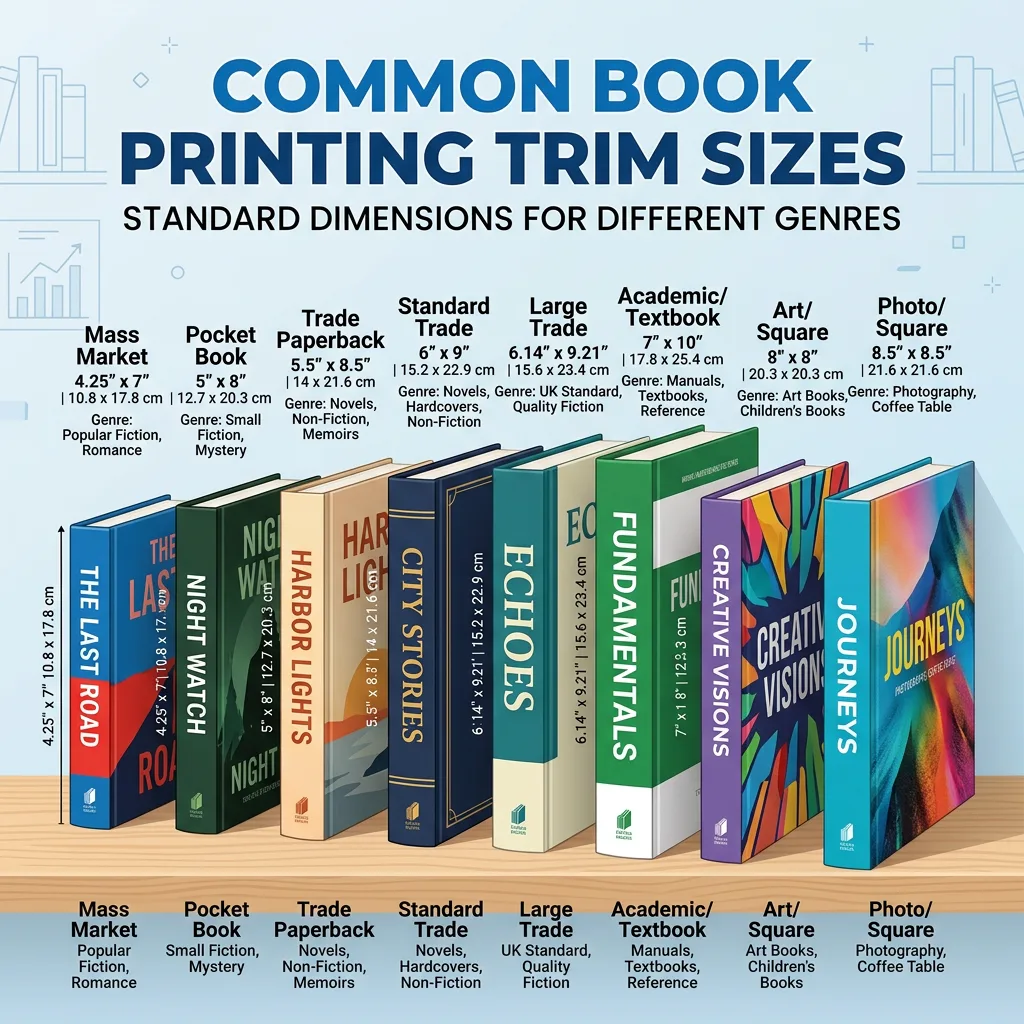
Common formats provide a useful starting point because they are familiar to readers and can be practical for layout and production. However, dimensions vary by market, publisher and project. Confirm the finished size in millimetres or inches rather than relying only on a format name such as “A5” or “trade paperback”.
ISO A-series sizes are widely used for workbooks, manuals, educational material and corporate publications. Trade-style sizes are common for novels and general non-fiction. Square and landscape sizes often suit visual publishing, children’s content and product-led books.
| Format | Finished trim size | Typical use | Practical note |
|---|---|---|---|
| A6 | 105 × 148 mm | Pocket guides, small journals, compact booklets | Limited space for type and detailed images |
| A5 | 148 × 210 mm | Novels, journals, training guides, reports | A versatile, portable format |
| A4 | 210 × 297 mm | Workbooks, manuals, catalogues, educational books | Good for diagrams and larger type; larger to ship |
| US letter | 8.5 × 11 in / 216 × 279 mm | North American workbooks and business documents | Confirm whether the destination market expects this format |
| Trade paperback | 5 × 8 in / 127 × 203 mm | Fiction and concise non-fiction | Compact reading format with economical page layouts |
| Trade paperback | 6 × 9 in / 152 × 229 mm | Non-fiction, memoirs, business books | Offers more room for headings, tables and notes |
| Square | 210 × 210 mm | Children’s picture books, art books, brand books | Supports image-led spreads but needs careful gutter planning |
| Landscape | 297 × 210 mm | Photography, portfolios, illustrated learning books | Works well for wide images and comparison layouts |
These examples are planning references, not mandatory standards. A custom size can be appropriate when it supports your content or brand, but it should be reviewed alongside paper and binding requirements.
How to choose the right trim size
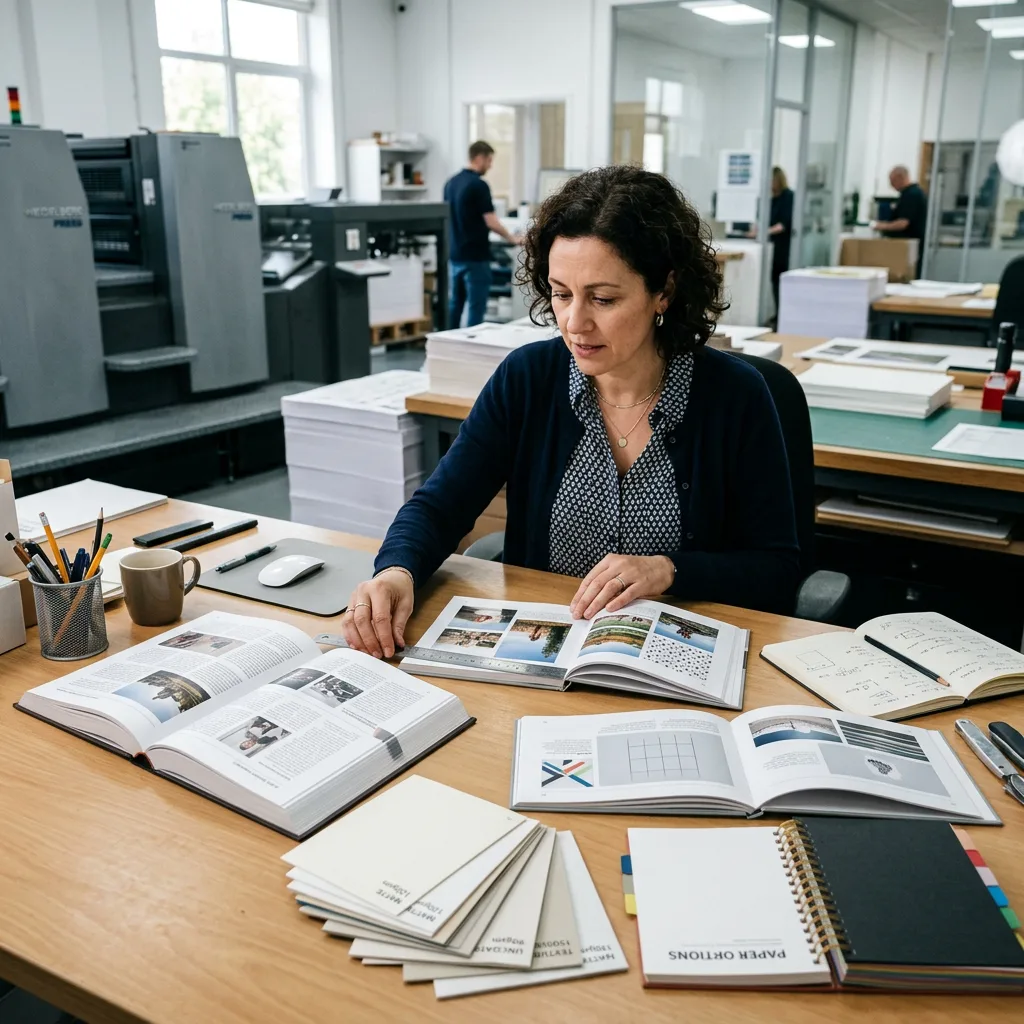
Start with the reading experience. Text-focused books normally benefit from a portable portrait format with comfortable line length. Image-heavy books need enough page area for photographs, illustrations, captions and white space. A workbook may require room for exercises, writing areas or tables.
Consider the content and page architecture
Review a representative set of pages before locking the trim size. Check the longest headings, table widths, image aspect ratios, sidebars and required type size. Shrinking a layout after design approval can make text too small or create crowded pages. Enlarging a book can increase white space and change its perceived value, but may also increase paper use and shipping volume.
Match the format to the reader and market
Children may find small or square formats easier to handle, while professional readers may expect manuals and reference content in A4 or letter-like dimensions. For international distribution, use units consistently and make sure the format is suitable for the primary sales region. A US letter workbook and an A4 workbook are close in size but are not interchangeable.
Decide whether a standard or custom size is more suitable
A standard size can simplify editorial templates and may use paper efficiently. A custom format can create a distinctive product or better accommodate a particular visual concept. The practical question is not whether custom is better; it is whether the design benefit justifies any effect on material usage, setup and logistics.
Binding also needs early consideration. A thicker perfect-bound book needs a readable spine, while a saddle-stitched booklet has different page-count and layout constraints. Review the guide to calculating book spine width when planning a full cover file for a bound book.
Recommended sizes by book type
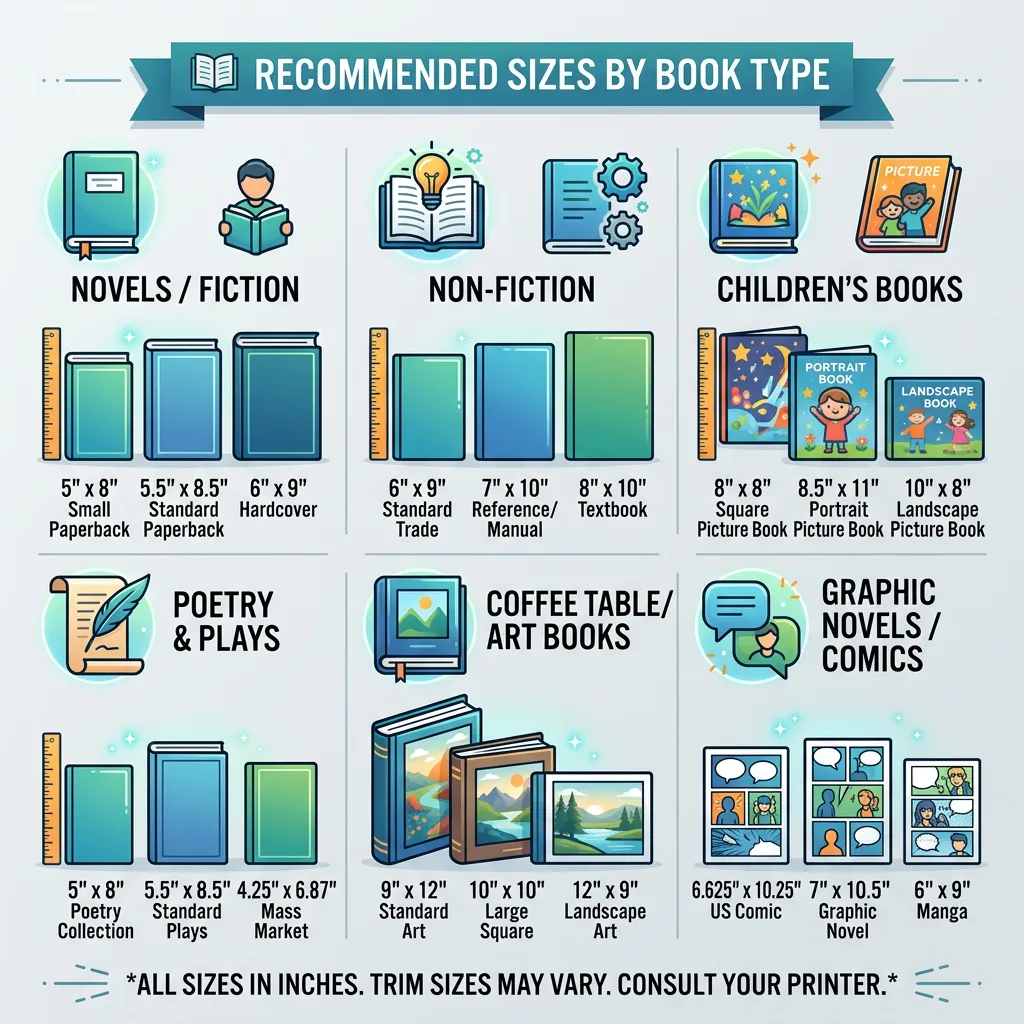
Book category can narrow the choice, but it should not replace a page-layout review. The following starting points are useful for buyer discussions.
Novels, memoirs and general non-fiction
Portrait sizes around 127 × 203 mm or 152 × 229 mm are widely used for text-led books. The smaller option feels compact and is suited to continuous reading. The larger option offers more flexibility for subheadings, pull quotes, illustrations, footnotes and business-style content.
Workbooks, manuals and training books
A4, US letter or a similar large portrait size is often suitable where readers need to write, compare diagrams or follow detailed instructions. Before selecting a large format, consider whether the book will be carried frequently and whether the added page area is genuinely needed.
Children’s picture books and board books
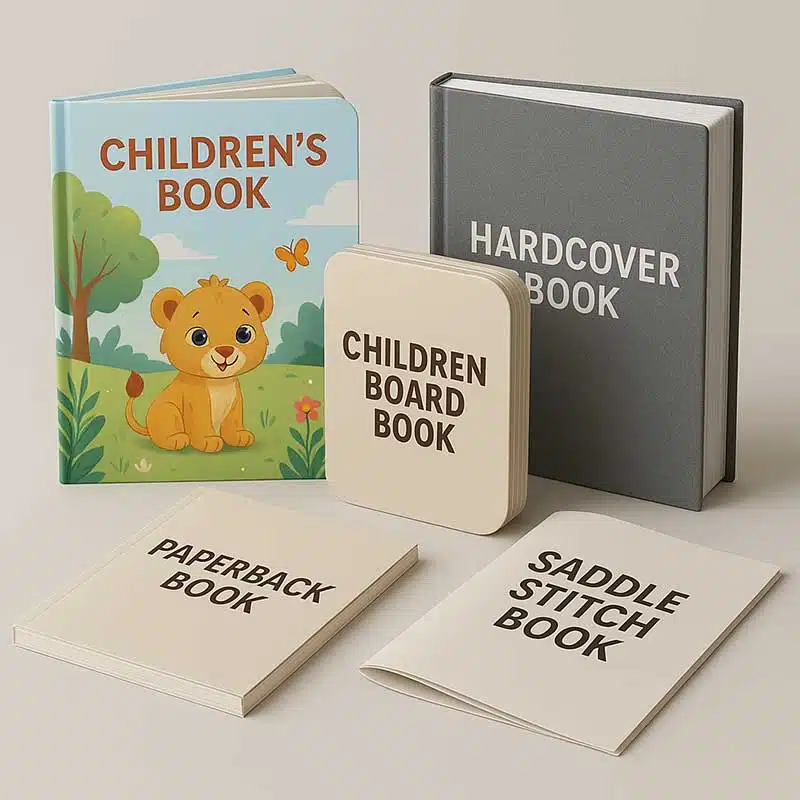
Square and landscape formats can give illustrations room to develop across a spread. The age group, page count and intended handling should guide the decision. For format-specific guidance, see formats et nombre de pages des livres cartonnés. When durability is central to the brief, it is also helpful to review board book safety and durability considerations.
Photography, art and portfolio books
Select a trim size that respects the dominant image orientation. Landscape pages suit panoramic work; portrait pages suit vertical imagery; square pages can handle a mixed image programme. Ask the designer to test a full spread, not only a single page, because centre-gutter loss can affect important image detail.
Catalogues and brand books
A4, square and bespoke formats are common choices. Prioritise product-image scale, legible specifications, tabular content and ease of handling. If a precise brand colour is essential, colour planning matters alongside size; read the practical guide to CMJN, RVB et Pantone pour l'impression de livres.
Trim size, bleed, margins and cover setup
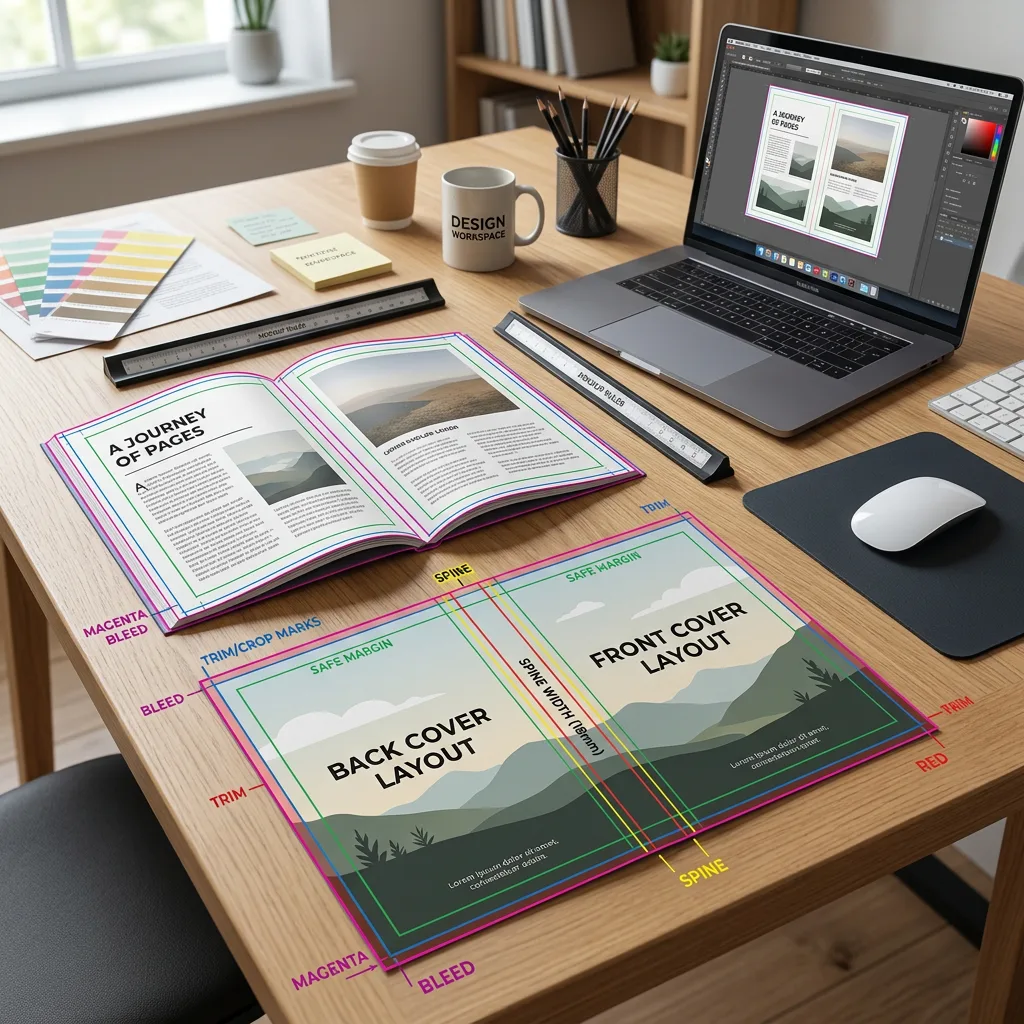
Choosing the finished size is only the first step. Your production file must also allow for trimming and binding.
Saignement
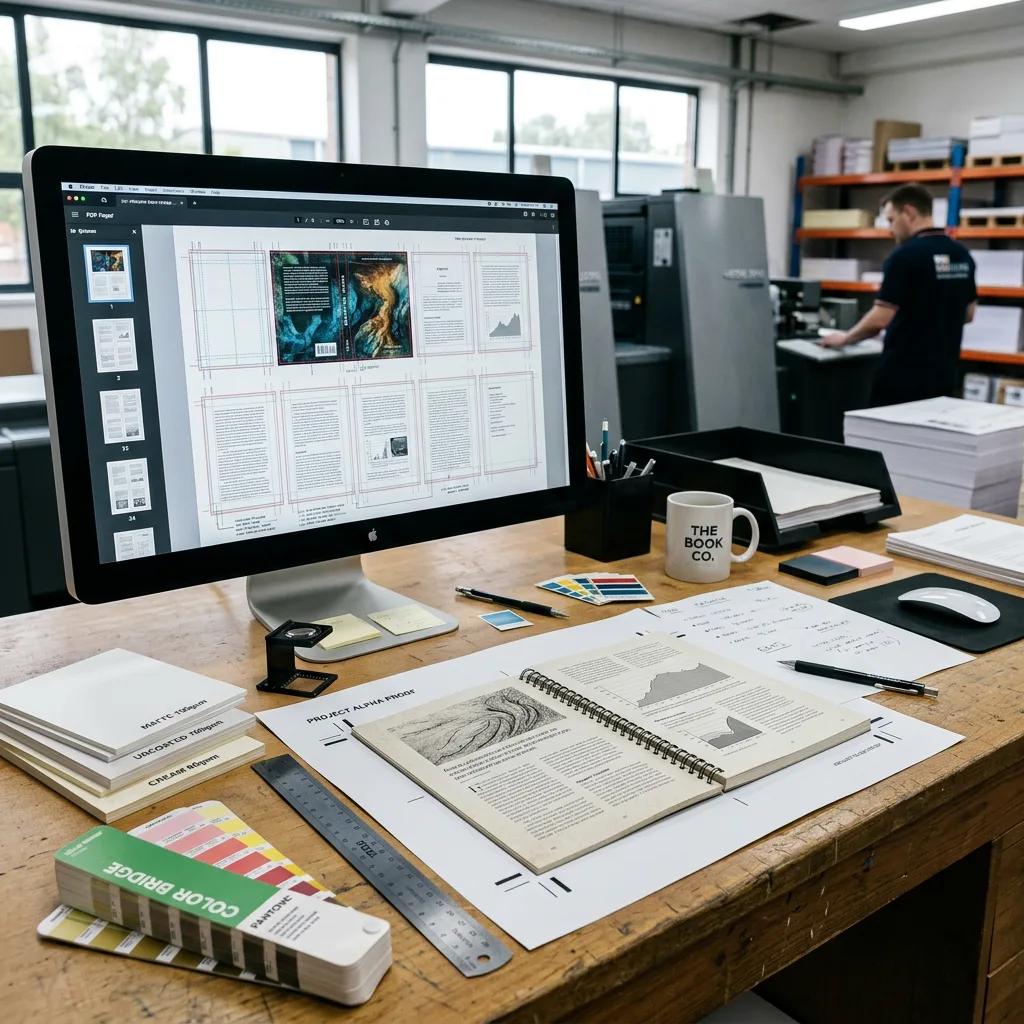
Bleed is extra image or background area extending beyond the trim edge. It allows for normal cutting tolerance so no unprinted sliver appears at the edge of a full-bleed page. A common requirement is 3 mm bleed on each outside edge, but confirm the required amount before exporting final files. Do not place text, logos or important image details in the bleed area.
Safe margins
Keep essential content inside a safe area. The inside margin, also called the gutter margin, generally needs more allowance than the outside margin because part of the page sits near the binding. The required gutter changes with the binding style, page count and paper thickness. Image-led spreads need particular care near the fold or spine.
Interior page count
Many book constructions have page-count increments based on printing and binding method. Saddle stitching commonly requires page counts in multiples of four. Other construction methods can have different requirements. Confirm the final page count, including blank pages where needed, before cover production.
Cover artwork
A full cover file normally includes the back cover, spine and front cover as one flat layout, plus bleed. Its total width is not simply twice the trim width: it also includes the spine. Do not estimate spine width from page count alone. Paper bulk, text stock, cover structure and binding all affect it.
For a broader production decision, compare offset and digital book printing options. Run size, colour requirements, paper choice and binding can influence the most appropriate method.
Production factors affected by trim size
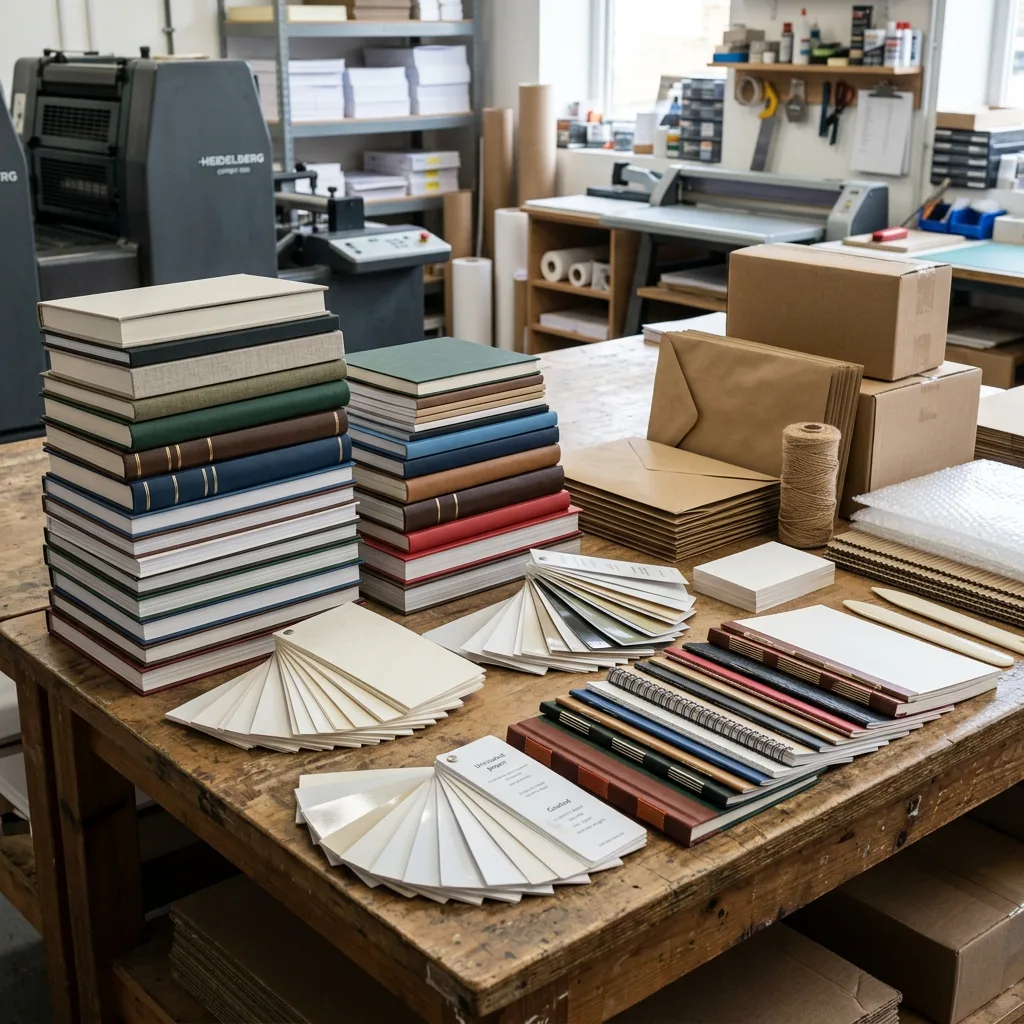
Trim size affects more than appearance. It can change material efficiency, the number of pages needed for the same content, cover construction and shipping profile. These effects should be assessed as part of the full specification rather than in isolation.
Price assumptions: quotation cost depends on the finished size together with quantity, page count, colour coverage, paper type and weight, binding, cover finish, special processes, packing and destination. A smaller book is not automatically less expensive if it requires more pages or uses an inefficient sheet layout.
Lead-time assumptions: timing depends on the final specification, file readiness, proofing and approval cycle, material availability, production scheduling, finishing complexity and transport arrangement. Unusual sizes or changes after approval may require additional planning.
Quality assumptions: trim accuracy and appearance depend on properly prepared bleed, sensible safe margins, suitable paper selection and a design that accounts for binding. Fine rules, small type and critical image details close to an edge or gutter need careful prepress review.
Ask for a production review before committing to packaging or launch dates, especially for large-format, square, thick or highly finished books.
Book trim size checklist
Use this checklist before requesting a book printing quotation or releasing artwork for prepress review.
- State the finished trim size as width × height, using mm or inches.
- Confirm portrait, landscape or square orientation.
- Identify the product type and intended reader or market.
- Confirm the final interior page count and whether pages include full bleed.
- Select a preliminary text paper, cover material and binding preference.
- Allow adequate inside margins for the selected binding.
- Build bleed into all artwork that reaches a finished edge.
- Request the confirmed spine width before finalising a perfect-bound, case-bound or other spined cover.
- Check that barcodes, logos, text and key image details remain inside the safe area.
- Provide the destination country so packing and delivery planning can be considered.
A clear specification reduces avoidable revisions and makes it easier to compare quotations on a like-for-like basis.
Conclusion
The best book printing trim size is the one that supports the content, reader and binding while remaining practical for production and delivery. Start with a familiar format where it fits the project, then test actual page layouts before final approval. Confirm bleed, safe margins, page count and spine width early so the print files match the finished product.
For an accurate quotation, prepare the product type, trim size, page count, quantity, paper or binding preference, finish, file status and destination country.